

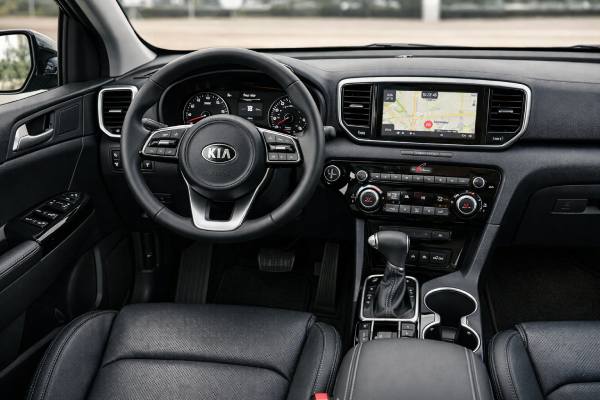
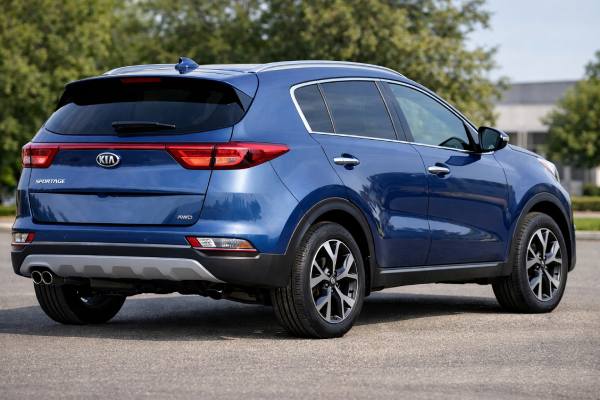
The facelifted Kia Sportage QL with the 1.6-liter diesel and AWD is one of the most rational versions of this generation. It keeps the solid body, comfortable driving position, and mature road manners that made the fourth-generation Sportage popular, but it adds the long-range economy and low-end pulling power many owners actually want in a compact SUV. In many markets this engine is commonly described as a 136 hp unit, while some factory literature lists it at 134 bhp. More important than the label is the character: 320 Nm gives the Sportage a relaxed, easy-going feel, and AWD makes it more secure on wet roads, winter surfaces, and steep trailer ramps. The main trade-offs are added weight, a more complex emissions system than the old 1.7 diesel, and higher used-buy risk if the car has lived a short-trip life. Buy carefully, though, and this is still one of the most balanced late-QL Sportages.
Fast Facts
- Strong diesel torque and manual AWD gearing make it feel easier and less strained than the base petrol Sportage.
- Official towing capacity reaches 1,600 kg braked in this AWD 1.6 CRDi form.
- Fuel economy is a genuine strength, with combined figures around 5.8 to 6.5 L/100 km depending on trim and wheel size.
- Short-trip use can trigger DPF, SCR, and general emissions-system complaints sooner than many buyers expect.
- Engine oil service is typically every 12 months or 20,000 miles, whichever comes first.
Jump to sections
- Sportage QL diesel in focus
- Sportage QL diesel numbers
- Sportage QL grades and ADAS
- Trouble spots and campaigns
- Upkeep plan and used-buy tips
- On-road character and fuel use
- Where it stands among rivals
Sportage QL diesel in focus
The facelifted QL Sportage diesel AWD is the version for buyers who value range, traction, and real-world usability more than showroom flash. Kia’s 2019 update gave the Sportage a cleaner front end, refreshed trim structure, revised safety equipment spread, and a newer 1.6 diesel family in place of the older 1.7. In many European listings, the AWD non-hybrid diesel appears as the 1.6 CRDi AWD with either 134 bhp or 136 hp depending on the market format. That difference is mostly a naming issue rather than a meaningful gap in real performance.
What makes this model attractive is not straight-line speed. It is how calmly it handles ordinary work. Peak torque arrives low in the rev range, so the Sportage pulls cleanly from suburban speeds, copes well with passengers and luggage, and feels more settled on hills than the petrol options. The AWD system is road-focused rather than built for serious off-roading, but it still adds useful confidence in wet weather, on muddy lanes, and when towing modest loads. For many owners in colder climates, that alone is enough to justify the extra mass and mechanical complexity.
This diesel Sportage also lands in a useful middle ground for ownership. It is newer and cleaner than the old 1.7 CRDi, yet it still belongs to a generation before large-screen, hybrid-heavy SUVs became more crowded with expensive modules and layers of extra software. The cabin remains practical, the driving position is strong, and late QL cars usually have the equipment level buyers expect from a family SUV: heated seats on better trims, decent infotainment, reversing camera, parking sensors, and a growing list of lane and collision aids higher up the range.
The caveat is that this is a modern Euro 6 diesel. That means the engine itself is only part of the ownership story. The DPF, SCR system, sensors, and the way the car has been driven matter a great deal. A Sportage used for long mixed runs is usually the safer buy than one that spent years doing cold starts and short city hops. In other words, this is a very sensible used SUV if its previous use matched its engineering. If it did not, the same diesel hardware that makes it efficient can also become its main source of hassle.
Sportage QL diesel numbers
The tables below condense the key figures that matter most for the facelifted 2019–2022 Kia Sportage QL AWD diesel with the D4FE 1.6 CRDi engine. A few values vary slightly by wheel size, trim, and market, so some entries are best treated as a normal factory range rather than one universal number.
Powertrain and efficiency
| Item | Kia Sportage QL AWD 1.6 CRDi diesel |
|---|---|
| Code | D4FE |
| Engine layout and cylinders | Inline-4, DOHC, 16 valves, 4 valves per cylinder |
| Bore × stroke | 77.2 × 84.5 mm (3.04 × 3.33 in) |
| Displacement | 1.6 L (1,598 cc) |
| Induction | Turbocharged |
| Fuel system | Common-rail direct injection |
| Compression ratio | Market-specific technical data varies; verify by VIN before parts or internal engine work |
| Max power | 136 hp / about 100 kW @ 4,000 rpm |
| Max torque | 320 Nm (236 lb-ft) @ 2,000–2,250 rpm |
| Timing drive | Belt-driven cam layout on this diesel family |
| Rated efficiency | About 5.8–6.5 L/100 km (36.2–40.6 mpg US / 43.5–48.8 mpg UK), depending on trim and wheel size |
| Real-world highway at 120 km/h | Usually around 6.0–6.8 L/100 km (34.6–39.2 mpg US / 41.5–47.1 mpg UK) |
Transmission, driveline, chassis, and dimensions
| Item | Kia Sportage QL AWD 1.6 CRDi diesel |
|---|---|
| Transmission | 6-speed manual |
| Drive type | On-demand AWD |
| Differential | Open axle differentials with electronically controlled AWD coupling |
| Front suspension | MacPherson strut |
| Rear suspension | Multi-link independent rear |
| Steering | Electric rack-and-pinion; about 14.4:1 in common technical listings |
| Brakes | Front 305 mm (12.0 in) ventilated discs; rear 302 mm (11.9 in) solid discs |
| Most common tyre sizes | 225/60 R17 or 245/45 R19 |
| Ground clearance | Typically around 172 mm (6.8 in), depending on market and wheel package |
| Length | 4,485 mm (176.6 in), or 4,495 mm (176.9 in) in GT-Line styling |
| Width | 1,855 mm (73.0 in) |
| Height | 1,635 mm (64.4 in), 1,645 mm (64.8 in) with roof rails |
| Wheelbase | 2,670 mm (105.1 in) |
| Turning circle | About 10.6–11.0 m (34.8–36.1 ft), depending on published method |
Weights, capacity, performance, fluids, and safety
| Item | Kia Sportage QL AWD 1.6 CRDi diesel |
|---|---|
| Kerb weight | Around 1,660–1,670 kg (3,659–3,682 lb), depending on trim |
| GVWR | About 2,210 kg (4,872 lb) |
| Fuel tank | 62 L (16.4 US gal / 13.6 UK gal) |
| SCR tank | 18 L (4.8 US gal / 4.0 UK gal) |
| Cargo volume, seats up | 467 L (16.5 ft³) |
| Cargo volume, seats down | 1,456 L (51.4 ft³) |
| 0–100 km/h | About 11.4–11.6 s |
| Top speed | 180 km/h (112 mph) |
| Braking distance | No widely published factory figure for this exact setup |
| Towing capacity | 1,600 kg (3,527 lb) braked / 750 kg (1,653 lb) unbraked |
| Payload | About 540–550 kg (1,190–1,212 lb), depending on exact trim |
| Engine oil | ACEA C2 / C3 / C5, commonly 5W-30; 4.4 L (4.6 US qt) |
| Coolant | Verify exact chemistry and fill quantity by VIN and market |
| Transmission fluid | Verify by gearbox code and service documentation |
| Differential and transfer case | Verify by VIN and workshop data |
| A/C refrigerant and compressor oil | Check under-bonnet label for exact fill and oil type |
| Key torque specs | Wheel nuts 107–127 Nm (79–94 lb-ft) |
| Crash ratings | Euro NCAP 5 stars for the QL generation |
| IIHS | Strong U.S.-market family results, including Top Safety Pick status on qualifying configurations |
| Headlight rating | Trim-dependent rather than consistent across all markets |
| ADAS suite | Forward collision warning and AEB, lane keeping, driver attention warning, blind-spot support, and speed-limit information varied by trim |
The main point behind these numbers is simple. This AWD diesel Sportage is not quick, but it is efficient, useful, and strong enough for normal family towing and long-distance work. Its weak point on paper is not outright performance. It is that the emissions hardware and service history matter more than they do on the simpler petrol versions.
Sportage QL grades and ADAS
Trim choice changes this Sportage more than the engine badge suggests. In many facelift markets, the diesel lineup spread across comfort-focused grades and sportier-looking upper trims, with the AWD 1.6 diesel sitting above the cheapest versions. The important split in the used market is often between cars on 17-inch wheels and those on 19s. The smaller-wheel cars are usually the better long-term family choice. The 19-inch cars look sharper and often carry more equipment, but they ride more firmly, generate more tyre noise, and cost more to re-shoe properly.
Quick identifiers help when browsing used ads:
- 17-inch 225/60 tyres usually point to a more comfort-focused trim.
- 19-inch 245/45 tyres usually mean a higher trim with more visual upgrades.
- GT-Line style cars usually add darker exterior trim and sport-themed interior details.
- Top trims often add the richest convenience and parking technology.
- Diesel badging can overlap with mild-hybrid variants in some markets, so check carefully that the car is the exact non-hybrid AWD diesel you want.
Safety equipment also climbs with trim. Basic structural and chassis safety systems are strong across the range, with ABS, ESC, hill-start assist, trailer stability assist, tyre-pressure monitoring, and multiple airbags forming the core package. Higher trims add more driver support: lane keeping, high beam assist, driver attention warning, blind-spot monitoring, rear traffic alerts, and stronger forward collision support. That matters in the used market because late registration alone does not guarantee the exact ADAS package a buyer expects.
Passive safety remains one of the stronger points of the QL shape. The body structure is solid, child-seat provision is straightforward, and the cabin feels substantial in a way some lighter rivals do not. ISOFIX points are easy to access, rear-seat room is good enough for family use, and upper trims often make daily ownership more pleasant with camera systems, better infotainment, and improved seat trim.
One more ownership detail is easy to miss: ADAS repair quality matters. A Sportage with lane or collision aids may need calibration after windshield replacement, bumper repair, or front-end accident work. So when inspecting a used car, do not stop at “the warning lights are off.” Test the camera-based systems, parking aids, and warning menus, and ask whether any windshield or front-structure work was followed by proper calibration. On a late QL, equipment is part of the value, so it should all work exactly as intended.
Trouble spots and campaigns
The reassuring news is that this Sportage is not defined by one notorious engine defect. The less reassuring news is that it is a modern diesel SUV, so condition matters more than headline reliability folklore. In practice, the trouble map is led by usage pattern, not by a single universal weak link.
Most common, low to medium severity:
- DPF loading on short-trip cars.
Symptoms: DPF light, exhaust-system warnings, forced-regeneration requests, rising fuel use.
Likely cause: repeated cold starts and short runs that never let the filter complete regeneration.
Best remedy: proper diagnosis, successful regeneration, and a driving pattern that suits a Euro 6 diesel.
Common to occasional, medium severity:
- SCR and AdBlue-related warnings.
Symptoms: low-urea alerts, refill messages, repeated warnings, and possible no-restart countdown behavior if ignored long enough.
Likely cause: low fluid level, poor-quality fluid, sensor issues, or age-related emissions-system faults.
Best remedy: refill promptly, scan for dosing or sensor faults, and do not ignore warning lamps.
Occasional, medium severity:
- Clutch and dual-mass flywheel wear.
Symptoms: vibration at take-up, rattle at idle, slipping under load, or a heavy, uneven pedal.
Likely cause: age, towing, town driving, and poor hill-start habits.
Best remedy: confirm with a road test on an incline and budget for proper clutch work rather than a patch repair.
Occasional, low to medium severity:
- Brake corrosion, tyre wear, and ordinary chassis wear.
Symptoms: pulsing brakes, uneven rear brake effort, inner-edge tyre wear, front-end knocks.
Likely cause: long idle periods, heavy road salt use, alignment drift, worn drop links, bushes, or wheel bearings.
Best remedy: full underbody and suspension inspection, not just a quick drive around the block.
Occasional, medium cost:
- Sensor or emissions-related limp mode.
Symptoms: reduced power, check-engine light, inconsistent boost, and weak regeneration behavior.
Likely cause: pressure sensors, NOx sensors, airflow problems, or boost leaks.
Best remedy: full scan-tool diagnosis with live data rather than guesswork.
Recalls and service campaigns still matter. On the wider QL Sportage family, market-specific campaigns have covered items such as hydraulic electronic control unit concerns in some regions. That does not automatically mean every facelift diesel AWD car is affected, but it does prove why VIN-based recall checking matters on any used Sportage.
For pre-purchase checks, ask for complete service history, proof of recall completion, evidence of proper diesel use, and a diagnostic scan that includes emissions and chassis modules, not just the engine ECU. A clean body and tidy interior are not enough on this model. A good example needs the right history for the kind of drivetrain it is.
Upkeep plan and used-buy tips
This Sportage responds well to routine care. The diesel engine is not fragile by design, but it becomes costly when servicing is stretched or when the car is used in ways that never let the emissions system work properly. For a used AWD diesel, the smartest maintenance approach is usually more conservative than the broadest factory interval.
A sensible real-world maintenance plan looks like this:
| Item | Practical interval | Notes |
|---|---|---|
| Engine oil and filter | Every 10,000–15,000 km or 12 months | Shorter intervals help diesel longevity and soot control |
| Engine air filter | Inspect every service; replace around 20,000–30,000 km sooner in dust | Cheap protection for turbo and MAF health |
| Cabin filter | Every 12 months | Keeps HVAC and demist performance strong |
| Fuel filter | Follow VIN-specific service data; inspect service history carefully | Important on common-rail diesels |
| Brake fluid | Every 2 years | Helps ABS, pedal feel, and corrosion control |
| Coolant | Verify by VIN and market schedule | Use only correct Kia-compatible coolant |
| Clutch and hydraulics | Inspect at each service | Especially important on tow cars |
| Timing belt system | Follow the correct VIN-specific replacement interval | Do not guess timing-service schedule on the diesel |
| Tyre rotation | About every 10,000 km if wear pattern allows | Check alignment at the same time |
| Brake inspection | Every service | Rear brakes can corrode on low-use cars |
| AWD and final drive fluids | Preventive service around 40,000–60,000 km in hard use is wise | Towing and winter use justify earlier attention |
| 12 V battery test | From year 4 onward | Weak voltage can trigger many false electronic complaints |
| DPF and SCR health | Review live data when buying | Especially on town-driven cars |
For buyer inspection, focus on the underbody as much as the cabin. Look for corrosion around subframes and fasteners, oil misting around the engine and turbo plumbing, dried coolant traces, cracked boost hoses, and tyre shoulder wear that points to alignment neglect. Then check for DPF and SCR warnings, slow cranking, rough cold idle, clutch chatter, and any reluctance to pull cleanly from low revs. If the car has 19-inch wheels, look even harder at tyres, wheel damage, and suspension noise.
The trim I would seek is simple: a well-kept AWD diesel with smaller wheels, full history, and evidence of mixed-road use. The cars I would approach with caution are short-trip examples, cars with repeated emissions warnings, and anything sold with vague “just serviced” language but no detailed invoices. Long-term durability is good when the maintenance story makes sense. It is much less convincing when the car’s usage history fights the way its diesel hardware was designed to work.
For essential torque values, wheel nut torque falls in the familiar 107–127 Nm range. For drain plugs, driveline fasteners, and other workshop-critical values, use VIN-specific service data only. That is the right way to protect the vehicle and avoid expensive mistakes.
On-road character and fuel use
On the road, this diesel AWD Sportage feels exactly how many family SUVs should feel: steady, quiet enough, and easier than its size suggests. The steering is not especially talkative, but the car tracks straight, stays composed on a motorway, and does not need constant correction in crosswinds. The manual gearbox suits the engine’s torque delivery well. You do not have to chase revs, and the Sportage feels happiest when driven on the mid-range rather than at the top end. That makes it a relaxed long-distance tool.
Ride quality depends heavily on wheel choice. On 17s, the Sportage is the better all-rounder. It rounds off broken surfaces, keeps cabin thump under control, and feels the most mature version of itself. On 19s, it still handles neatly enough, but impact sharpness rises and coarse-road tyre noise becomes more obvious. Body control remains sound either way, and the AWD layout gives the chassis a planted feel exiting wet junctions or climbing greasy hills. This is not a playful SUV, but it is a trustworthy one.
The diesel engine’s character is more about useful shove than excitement. With 320 Nm, it responds well from low revs and rarely feels breathless in ordinary use. Overtaking requires planning, but not drama. That is why the official acceleration figure tells only half the story. In daily traffic, the Sportage usually feels quicker than the number suggests because its torque arrives where you actually use it.
Real-world fuel use is this model’s main advantage. Official combined numbers for the AWD non-hybrid diesel land around 5.8 to 6.5 L/100 km depending on trim and wheel size. A realistic mixed-use result for a healthy car is usually somewhere close to that, and a steady 120 km/h motorway run should generally fall around 6.0 to 6.8 L/100 km if tyres, alignment, and weather are reasonable. In cold weather, repeated short runs can push the numbers up sharply because regeneration cycles, warm-up time, and denser air all work against a diesel SUV.
Towing and load behavior are strong points. The 1,600 kg braked tow rating is useful, and the Sportage’s chassis feels stable enough for moderate caravan or trailer work if the tyres are good and the rear brakes are healthy. Expect fuel use to rise by roughly 20 to 35 percent under meaningful towing load, and pay close attention to clutch smell or excessive slip on ramps. This is an honest tow car, not an effortless one. But within its rating, it does the job well.
Where it stands among rivals
The facelifted Sportage 1.6 diesel AWD makes the most sense when you compare it with rivals the same way used buyers actually shop: not by brochure glamour, but by cost, equipment, and how much hassle the car is likely to bring five years later.
Against the Hyundai Tucson of the same era, the Kia feels like the slightly bolder twin. The two share much of their engineering, so condition matters more than the badge, but the Sportage often feels a touch more distinctive inside and out. The Tucson can be the more conservative choice. The Sportage usually wins buyers who want stronger design without giving up everyday practicality.
Against the Volkswagen Tiguan 2.0 TDI 4Motion, the Kia typically loses a little polish in steering feel and powertrain refinement, but it often wins on value and equipment. A comparable Tiguan can feel more expensive in a good way, yet it can also be more expensive in the wrong way when age and mileage catch up with it.
Against a Mazda CX-5 diesel AWD, the Kia is less premium and less driver-focused, but often easier to justify as a used family purchase. The CX-5 has the richer cabin and sharper road feel. The Sportage counters with simpler packaging, usually lower entry price, and a less delicate image in rough everyday use.
Against a Nissan Qashqai, the Kia feels heavier and more substantial. It gives up some light-footed urban ease, but it offers better towing credibility, a stronger planted feel on the motorway, and a cabin that feels more SUV-like than crossover-light.
The real point is this: the QL diesel AWD Sportage is not the class superstar. It is the class pragmatist. It gives you useful torque, real winter traction, decent towing ability, and a well-equipped cabin in a shape that has aged well. That combination still matters. Choose a healthy example, and it remains one of the better-value late-2010s compact SUVs for drivers who still want a diesel to do diesel things well.
References
- sportage-specification.pdf 2019 (Specification)
- Engine Oil Grades and Capacities – Kia 2023 (Owner Information)
- Five-star safety ratings for all-new Kia Optima and Sportage 2015 (Safety Rating)
- 2021 Kia Sportage 2021 (Safety Rating)
- Part 573 Safety Recall Report 21V-137 2021 (Recall Database)
Disclaimer
This article is for informational purposes only and is not a substitute for professional diagnosis, inspection, or repair. Specifications, torque values, service intervals, fluid requirements, and procedures can vary by VIN, market, build date, drivetrain, and equipment, so always verify details against the official service documentation for the exact vehicle.
If this guide was useful, please consider sharing it on Facebook, X, or another social platform to support our work.