
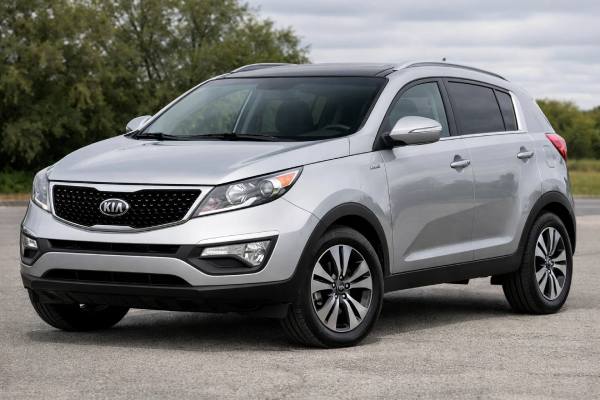
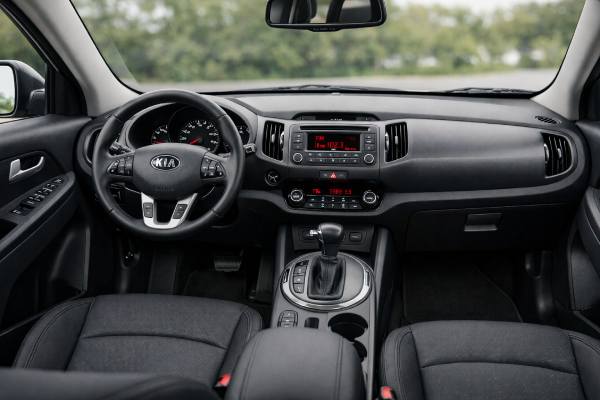
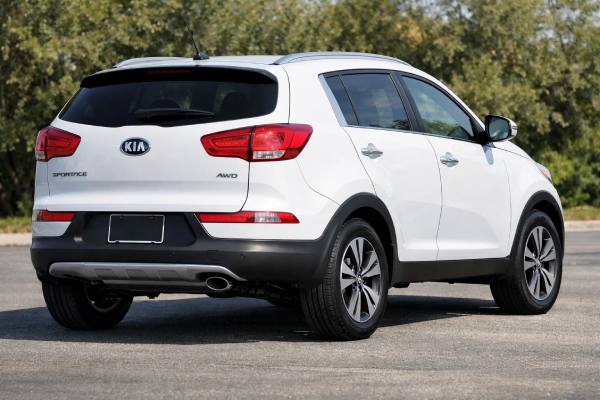
The facelifted 2014–2016 Kia Sportage AWD with the 2.0-liter D4HA diesel in 136 hp form is one of the most sensible versions of the SL-generation Sportage. It combines the quieter and more polished mid-cycle update with a strong-torque diesel, a proper on-demand AWD system, and the practical shape that made this generation popular across Europe. Official Kia material for facelift cars highlights improved refinement, updated steering, stiffer rear springs for better towing stability, and broader equipment availability, all of which matter more in daily use than the modest power figure suggests.
For owners today, the appeal is easy to understand. This version is usually cheaper to run than the 184 hp diesel, simpler than the turbo-petrol alternatives, and better in winter or on wet roads than a front-drive Sportage. The trade-off is that condition now matters more than brochure appeal. A good one still feels solid and useful. A neglected one can hide expensive AWD, emissions, and suspension catch-up work.
At a Glance
- The 136 hp diesel’s main strength is torque, with official Kia brochure data listing 373 Nm, which suits the Sportage’s weight and AWD layout well.
- The facelift brought worthwhile upgrades in noise control, steering response, cabin trim, and towing stability rather than just cosmetic changes.
- AWD adds genuine all-weather traction, and Kia’s brochure material describes an electronically managed system with an AWD lock function for low-grip surfaces.
- The biggest ownership risks are DPF and EGR problems from short-trip use, overdue AWD fluid service, and suspension wear on heavier diesel cars.
- Official Kia service schedules list 20,000 miles or 12 months for 2011–2015 Sportage models and the SL 2.0 R diesel oil sheet also shows a 20,000-mile / 12-month interval, though many owners are better served by shorter real-world oil changes.
Start here
- Kia Sportage SL diesel AWD
- Kia Sportage SL technical profile
- Kia Sportage SL trims and protection
- Reliability patterns and campaigns
- Service plan and buyer screening
- Driving impressions and real economy
- Sportage against its rivals
Kia Sportage SL diesel AWD
The facelifted SL Sportage is the version that made this generation feel fully matured. Kia did not reinvent the car in 2014, but it changed enough of the parts that owners notice every day. Official Kia Europe material for the enhanced Sportage points to a new soundproof windscreen, bush-mounted front subframe, revised transmission mounting, a softer front stabiliser, slightly stiffer rear springs, and a steering rack that is 4.5 percent quicker at 2.7 turns lock-to-lock. Those are not headline-grabbing changes, but together they explain why the facelifted car feels calmer, quieter, and a little more tied down than early 2011–2013 versions.
In 2.0 CRDi 136 hp AWD form, the Sportage lands in a very useful middle ground. It avoids the bigger running-cost footprint of the 184 hp diesel while still offering strong mid-range pull and the extra security of all-wheel drive. Official Kia brochure data for facelift AWD 136 hp cars lists 373 Nm, 4WD availability with both manual and automatic transmissions, and towing ratings that are meaningfully stronger than the smaller 1.7 diesel. That matters because the 136 hp car is not really about acceleration. It is about flexible torque, easy cruising, and enough driveline capability for wet roads, winter use, and light towing.
The AWD system itself is best understood as an all-weather aid rather than an off-road transfer case. Kia’s own brochure explains that the system automatically varies torque between the front and rear axles based on grip, with an AWD lock mode that can hold a 50:50 split on low-traction surfaces such as deep snow or sand. That makes the Sportage more useful than a front-drive crossover in poor conditions, but it does not turn it into a rock-crawler. Ground clearance, tyre choice, and cooling limits still define what it can do.
The facelift also helped the interior age more gracefully. Better trim textures, a 4.2-inch supervision display, revised lighting, broader equipment availability, and stronger perceived quality lifted the Sportage closer to the class leaders. In upper trims, some markets even offered features like blind-spot assist, rear cross-traffic alert, and lane-keep assist, which were not common across the compact-SUV class at the time. That means the later SL is not just the prettier Sportage. It is also the one that feels most complete.
Today, the main reason to seek this exact version is balance. It offers compact dimensions, useful cabin space, strong diesel efficiency, and AWD confidence, without drifting into the higher fuel and repair cost territory of bigger engines. That balance is what still makes it relevant on the used market.
Kia Sportage SL technical profile
The table below combines official Kia brochure data, published Kia service sheets, and period safety records for the facelifted 2.0 CRDi AWD. Some values differ slightly by market, gearbox, emissions calibration, and tyre package, so the safest rule is to confirm the VIN before ordering parts or quoting workshop figures.
Powertrain and efficiency
| Item | Typical figure for 2014–2016 Sportage AWD 2.0 CRDi 136 |
|---|---|
| Code | D4HA |
| Engine layout and cylinders | Front transverse inline-4, 4 cylinders |
| Valvetrain | DOHC, 4 valves per cylinder |
| Bore × stroke | 84.0 × 90.0 mm (3.31 × 3.54 in) |
| Displacement | 2.0 L (1,995 cc) |
| Induction | Turbocharged diesel |
| Fuel system | Common-rail direct injection |
| Compression ratio | Around 16.0:1 |
| Max power | 136 hp (100 kW) @ 2,750–4,000 rpm |
| Max torque | 373 Nm (275 lb-ft) @ 1,500–2,500 rpm |
| Timing drive | Chain |
| Rated efficiency | Official brochure figures cluster around 4.8–5.9 L/100 km combined depending on gearbox and market |
| Real-world highway @ 120 km/h | Roughly 6.2–7.0 L/100 km in healthy condition |
Transmission and driveline
| Item | Typical figure |
|---|---|
| Transmission | 6-speed manual or 6-speed automatic |
| Drive type | On-demand AWD with lock mode |
| Differential | Open axles with electronically managed centre coupling behavior |
Chassis and dimensions
| Item | Typical figure |
|---|---|
| Front suspension | MacPherson strut |
| Rear suspension | Independent multi-link |
| Steering | Motor-driven power steering |
| Brakes | Front vented discs / rear discs |
| Most popular tyre size | 225/60 R17 |
| Ground clearance | 175 mm (6.9 in) brochure figure in some markets; 172 mm in others |
| Length / width / height | 4,440 / 1,855 / 1,645 mm (174.8 / 73.0 / 64.8 in) |
| Wheelbase | 2,640 mm (103.9 in) |
| Turning circle | 5.27 m radius, about 10.5 m kerb-to-kerb (34.5 ft) |
| Kerb weight | About 1,701–1,784 kg (3,750–3,933 lb), gearbox dependent |
| GVWR | About 2,235–2,250 kg (4,928–4,960 lb) |
| Fuel tank | 62 L (16.4 US gal / 13.6 UK gal) |
| Cargo volume | 503 L seats up / 1,492 L seats folded (17.8 / 52.7 ft³) |
Performance and capability
| Item | Typical figure |
|---|---|
| 0–100 km/h (0–62 mph) | Roughly 11.0–12.0 s depending on gearbox |
| Top speed | About 184–186 km/h (114–116 mph) |
| Braking distance | No single open official figure published consistently for this exact trim |
| Towing capacity | Up to 2,200 kg (4,850 lb) braked on some AWD 136 hp manual specs; about 1,900 kg automatic in some brochures |
| Payload | Roughly 450–530 kg depending on trim and gearbox |
Fluids and service capacities
| Item | Typical figure |
|---|---|
| Engine oil | ACEA C3 5W-30; 7.6 L (8.0 US qt) |
| Coolant | Long-life ethylene-glycol type; about 8.0 L total is commonly cited, verify by VIN |
| Transmission / ATF | 6AT uses SP-IV type, total fill varies by code; manual gearbox oil varies by code |
| Differential / transfer case | AWD oils and capacities vary by housing; verify by VIN and workshop data |
| A/C refrigerant | R-134a; charge varies by HVAC version |
| A/C compressor oil | PAG type; charge varies by system label |
| Key torque specs | Wheel nuts 88–108 Nm (65–80 lb-ft); engine-oil drain plug typically about 35–45 Nm |
Safety and driver assistance
| Item | Typical figure |
|---|---|
| Euro NCAP | 5 stars; adult 93%, child 86%, pedestrian 49%, safety assist 86% |
| IIHS | Good in moderate overlap, side, roof strength, and head restraints; Poor in driver-side small overlap |
| Headlight rating | Not a major published differentiator for this generation in IIHS records |
| ADAS suite | Market-dependent blind-spot assist, lane-change assist, rear cross-traffic alert, and lane-keep assist on some high trims; no AEB or adaptive cruise control |
The specs underline the model’s main character. This is not a fast crossover, but it pairs useful diesel torque with compact size, decent towing ability, and real all-weather traction.
Kia Sportage SL trims and protection
Trim naming on the facelifted Sportage changed a lot by country, so it is more useful to think in equipment layers than in one global trim ladder. Most 136 hp AWD diesel cars sat in the middle or upper-middle part of the range. That usually meant 17-inch alloys, climate control, rear parking help, upgraded cabin trim, and the better seat and infotainment choices. Higher versions added leather or part-leather trim, panoramic roof, larger wheels, premium audio, and in some markets an unusually broad list of driver-assistance features for the period.
The facelift itself matters enough to influence which years are worth targeting. Kia Europe’s 2014 overview notes the new front grille, LED rear lamps, new alloy wheel designs, upgraded supervision cluster, more soft-touch materials, and additional features such as rear camera audio integration, Infinity sound, FlexSteer, a heated steering wheel, and powered driver’s seat depending on model. In plain terms, the later SL feels richer inside and a little more mature. That is why many buyers should stretch for a facelift car instead of an earlier 2011–2013 example.
Visual identifiers are useful when classified ads are vague:
- 17-inch wheels are common on mainstream AWD diesel trims.
- 18-inch and 19-inch wheels usually signal higher trim or GT Line packages.
- Panoramic roof, leather, and larger navigation screens often indicate upper-spec cars.
- Facelift cars show revised rear lamps, updated wheel styles, and a slightly more polished dash layout.
- In some regions, TPMS and extra safety tech arrived later in the SL lifecycle.
Safety equipment was strong for the era. Euro NCAP’s official 2010 result for the same generation used a Kia Sportage 2.0 diesel EX, left-hand-drive, and recorded a five-star overall rating with 93 percent adult occupant protection, 86 percent child occupant protection, 49 percent pedestrian protection, and 86 percent safety assist. The tested model also listed front pretensioners and load limiters, frontal airbags, side body airbags, and side head airbags, and the rating applied to all Sportages of the tested specification.
IIHS data adds the more nuanced part of the picture. For 2011–2016 Sportage models, IIHS shows Good ratings in moderate overlap, side impact for 2012–2016, roof strength, and head restraints, but a Poor result in the driver-side small-overlap test. That means the SL Sportage was genuinely competitive when new, but later test protocols exposed a structural weakness buyers should know about.
One interesting facelift detail is that some export brochures list driver-assistance systems beyond the usual ESC and hill controls, including blind-spot assist, lane-change assist, rear cross-traffic alert, and lane-keep assist. Those features were not universal, and they were not as sophisticated as today’s systems, but they do show that late SL cars could be well equipped for their time. Buyers should always verify the actual fitted hardware instead of assuming all facelift diesels received the same package.
Reliability patterns and campaigns
The facelifted 2.0 CRDi AWD Sportage is usually more straightforward to own than the petrol engines that dominate many North American Sportage discussions. That is the good news. The caution is that its age-related costs are still very real, and they usually build up in systems that owners ignore because the car feels normal until it no longer does.
The first cluster of problems is typical compact-diesel wear. On cars used mostly for short trips, the DPF, EGR path, and intake system can gradually fill with soot and oil residue. The symptoms are familiar: slower response, more frequent regeneration behaviour, higher fuel use, or an engine that feels flat compared with its torque figure. The recommended fix is diagnosis before parts swapping: confirm thermostat health, boost integrity, DPF loading, and sensor behaviour first, then clean or replace only what testing justifies.
The second cluster involves the AWD system. These Sportages are not fragile, but they do not like being treated as if the rear driveline is maintenance-free forever. Mismatched tyres, overdue driveline fluid changes, or ignored rear differential leaks can slowly load the coupling and rear hardware. The symptoms are often subtle at first: vibration under load, tyre scrub, reluctance to transfer torque cleanly, or noise from the rear end. Most expensive AWD failures begin as cheap maintenance problems that nobody addressed early enough.
The rest of the reliability picture is more ordinary. Suspension links, front bushes, wheel bearings, top mounts, and brake hardware are wear items on a heavy diesel crossover, not signs of a fundamentally bad model. Glow plugs, battery condition, injectors with rising leak-off, and tired thermostats also become more common as mileage rises. On manual cars, clutch and dual-mass flywheel costs can be significant. On automatic cars, lazy or slightly flared shifts usually point to neglected fluid rather than instant gearbox failure.
Recall and campaign history need a careful, VIN-based approach. Official Kia Europe guidance makes clear that recall coverage is checked by VIN and that dealer confirmation is the binding source of truth. That matters because recall exposure varies by market, production date, and equipment, and not every high-profile online Sportage recall applies to every diesel AWD export version. The safest advice is simple: ask for dealer proof of completed recall work and run the VIN through Kia’s official recall channels before buying.
So the verdict on reliability is not dramatic. This diesel AWD Sportage is not a vehicle defined by one unavoidable fatal flaw. It is a crossover that rewards preventive maintenance and punishes neglect. A documented example is usually a sensible buy. An undocumented one can easily become a lesson in deferred service costs.
Service plan and buyer screening
Kia’s published service material gives long official intervals for this generation, including a 20,000-mile or 12-month interval for 2011–2015 Sportage models and a 20,000-mile / 12-month line in the oil-capacity sheet for the SL 2.0 R diesel. That is useful as a warranty-era baseline, but on a used 2014–2016 diesel AWD car, a shorter real-world schedule is the safer plan. The goal is not to over-service blindly. It is to protect the turbo-diesel, keep the AWD system healthy, and catch chassis wear before it spreads.
| Item | Practical interval | Why it matters |
|---|---|---|
| Engine oil and filter | 6,000–8,000 miles or 12 months | Shorter cycles help the turbo, timing chain, and emissions hardware |
| Engine air filter | Inspect every service, replace 15,000–20,000 miles | Earlier in dusty use |
| Cabin filter | 12 months | Keeps HVAC and window demist performance strong |
| Fuel filter | About 20,000–30,000 miles or 24 months | Protects high-pressure diesel components |
| Coolant | About every 5 years, then every 2–3 years | Important for water pump, heater core, and stable thermal control |
| Automatic transmission fluid | 40,000–60,000 miles | Useful preventive maintenance on the 6AT |
| Manual gearbox oil | 40,000–60,000 miles | Relevant on the less common manual AWD version |
| Rear differential and transfer case / coupling oils | 40,000–50,000 miles | Usually ignored until expensive noises arrive |
| Brake fluid | Every 2 years | Important for ABS and pedal feel |
| Brake inspection | Every service | Rear brakes can corrode before they wear out |
| Tyre rotation and alignment | 6,000–8,000 miles | Critical on AWD to keep rolling diameters close |
| Glow plugs and battery test | Annually once age rises | Prevents false starting complaints |
| Timing components | Chain-driven, not belt-driven | Listen for chain noise and investigate correlation faults early |
The most useful published service figures are clear enough to guide decisions. Kia’s oil-capacity sheet lists the SL 2.0 R diesel at 7.6 liters with ACEA C3 5W-30. Wheel nuts fall in the usual 88–108 Nm range. Beyond that, some drivetrain fluid capacities vary by housing, transmission code, or regional spec, which is why a good workshop should ask for the VIN rather than guessing from a general database.
If you are buying one, inspect in this order:
- Full recall and dealer campaign history.
- Four matching tyres with even wear and correct load rating.
- Cold start, idle quality, smoke, and any excessive injector rattle.
- Evidence of recent DPF or EGR work, and whether it was diagnosis-led.
- Rear differential and underside leaks or heavy fresh cleaning.
- Front suspension play, rear brake condition, and wheel-bearing noise.
- Operation of all electronics, camera, parking sensors, panoramic roof, and climate control.
The best buy is usually a facelift automatic AWD on 17-inch wheels with complete maintenance paperwork and matching tyres. The one to avoid is the shiny but undocumented example with cheap mixed tyres, a lazy automatic, and no proof of driveline fluid service.
Driving impressions and real economy
The 136 hp diesel AWD Sportage is one of those cars that feels stronger than its power figure suggests. That is because the engine’s 373 Nm arrives low in the rev range, so the car does not need to be worked hard in normal driving. In traffic, it pulls away easily, and on the open road it usually feels more relaxed than a naturally aspirated petrol crossover of similar output. Official Kia figures put top speed around 184–186 km/h depending on gearbox, which tells you the drivetrain has enough strength even if outright acceleration is not the car’s headline feature.
Ride quality is one of the facelift car’s quieter strengths. Kia’s own facelift material explains that the revised front stabiliser, softer top mounts, changed damping logic, and stiffer rear springs were meant to improve both comfort and body control. In practice, that gives the later SL a calmer, more settled feel than early cars, especially on long undulating roads. It still rides like a compact crossover rather than a big SUV, but it usually avoids the brittle edge that can make some rivals tiring on poor surfaces.
Steering is lighter than sporty, but the facelift helped here too. Kia states that the steering rack became 4.5 percent quicker and remained at 2.7 turns lock-to-lock, which is enough to make the car feel cleaner on turn-in and a bit more precise at motorway speeds. The Sportage still prefers tidy inputs over aggressive driving, and you feel its height and weight if you push into bends. But for normal use, it is stable, predictable, and easy to place.
The AWD system adds reassurance more than excitement. In dry conditions the car feels front-biased. In rain, slush, or gravel, it tidies up traction and gives the Sportage a calmer, more secure step-off than a 2WD equivalent. AWD lock mode is helpful on low-speed snow, sand, or steep loose tracks, though it should be treated as a temporary low-grip aid, not something to leave engaged on dry roads.
Real-world fuel use is usually the main reason people still want this engine:
- City: about 7.0–8.2 L/100 km, or 33.6–28.7 mpg US and 40.4–34.4 mpg UK.
- Highway: about 5.8–6.8 L/100 km, or 40.6–34.6 mpg US and 48.7–41.5 mpg UK.
- Mixed use: about 6.3–7.2 L/100 km, or 37.3–32.7 mpg US and 44.8–39.2 mpg UK.
- Highway at 120 km/h: usually around 6.2–7.0 L/100 km.
- Cold weather or frequent regeneration: often adds 0.5–1.0 L/100 km.
- Moderate towing: often raises fuel use by roughly 20–30 percent.
That is respectable rather than miraculous, but it suits the car’s purpose well. The Sportage AWD diesel does not drive like a performance model. It drives like a well-judged family crossover with enough torque to feel easy and enough refinement after the facelift to remain comfortable.
Sportage against its rivals
The facelifted AWD 2.0 CRDi Sportage makes the most sense when compared with other mid-2010s compact AWD diesels: the Hyundai Tucson, Honda CR-V, Toyota RAV4, Nissan X-Trail, and Ford Kuga. It does not clearly beat all of them. What it does offer is a strong blend of value, design, torque, and useful equipment when bought carefully.
| Rival | Rival’s main advantage | Sportage’s reply |
|---|---|---|
| Hyundai Tucson | Shared engineering and very similar parts logic | Often slightly cheaper with the same core hardware |
| Honda CR-V diesel AWD | Stronger ownership reputation and very good cabin packaging | Better style value and often richer equipment per euro or dollar |
| Toyota RAV4 AWD diesel | Strong trust and resale confidence | Comparable utility at a lower initial buy-in |
| Nissan X-Trail dCi | Boxier rear packaging and a more overt SUV image | Smaller outside size and cleaner road manners |
| Ford Kuga TDCi AWD | Sharper steering and slightly more eager dynamics | Usually lower complexity and friendlier long-term running costs |
Its closest real rival is the Hyundai Tucson because the two share so much underneath. That is actually good news for the Sportage. It means the Kia is not an oddball alternative. It sits within a familiar engineering family with wide parts support and plenty of platform knowledge. If both are in equal condition, the purchase usually comes down to price, trim, and service history rather than any dramatic technical difference.
Against the CR-V and RAV4, the Sportage usually loses on blind-buy confidence. Those rivals built stronger reputations for people who shop by badge first and paperwork second. The Kia answers with sharper styling, better perceived value, and often a more generous equipment list for the same money. That is a real advantage on the used market, especially in upper-trim facelift cars.
Where this exact 136 hp diesel AWD specification makes its strongest case is balance. It is not the thirstiest, not the fastest, and not the most complicated. It gives you enough torque for easy real-world driving, enough AWD for winter and bad weather, and fewer long-term risks than the more stressed engines in the wider Sportage family. That does not make it the class champion. It makes it one of the more rational buys if you value condition, records, and usable everyday ability over badge prestige.
The final verdict is simple. A well-maintained 2014–2016 Sportage AWD 2.0 diesel can still be a very good used crossover. A neglected one can be a false economy. On this model, service history and four matching tyres matter almost as much as the vehicle itself.
References
- Kia Sportage 2017 (Brochure)
- Engine Oil Grades and Capacities – Kia 2023 (Service data)
- 7.2 Kia Service Intervals V25.12.xlsx 2026 (Service data)
- KIA Sportage 2010 (Safety Rating)
- 2015 Kia Sportage 2015 (Safety Rating)
Disclaimer
This article is for informational purposes only and is not a substitute for professional diagnosis or repair. Specifications, torque values, service intervals, procedures, and fitted equipment vary by VIN, market, trim, transmission, and production date, so always verify critical details against official service documentation for the exact vehicle.
If this guide helped you, please consider sharing it on Facebook, X, or other social platforms to support our work.