
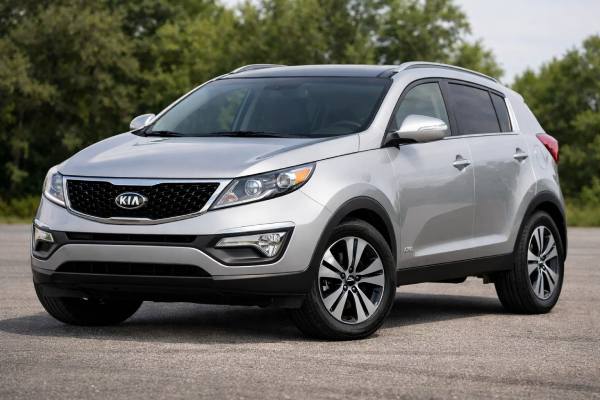
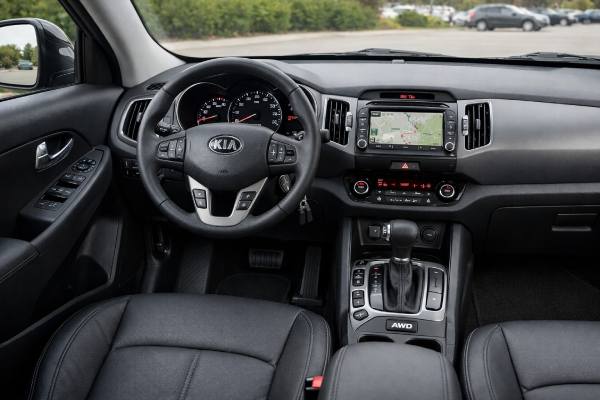
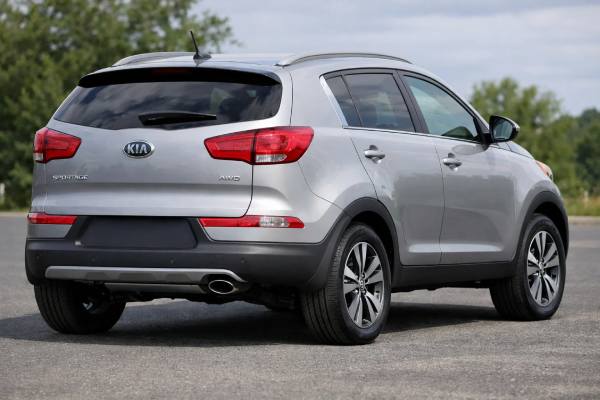
The facelifted Kia Sportage SL 2.0 diesel AWD is one of those SUVs that makes more sense the longer you look at it. It has the strong low-end torque many family buyers want, an on-demand all-wheel-drive system that adds useful winter traction, and a facelift package that improved refinement rather than just changing the lights. In many markets, this 184 hp D4HA version sat near the top of the regular Sportage range, so it often came with stronger equipment and better long-distance ability than the entry models. It also remains appealing on the used market because it can tow respectably, cruise quietly, and carry a family without feeling strained. The caution is equally clear: this is a modern diesel with AWD hardware, so short-trip use, poor fluid history, and neglected emissions maintenance can turn a good buy into an expensive one. For the right owner, though, this facelift Sportage is still a smart and capable all-rounder.
Fast Facts
- Strong diesel torque makes this version feel much easier than the smaller petrol models under load.
- AWD traction and a stable chassis suit winter roads, towing, and long motorway trips.
- The facelift brought useful NVH, steering, and cabin-equipment improvements.
- Short-trip use can accelerate DPF, EGR, and brake problems on poorly maintained cars.
- Factory service baseline is 20,000 miles or 12 months, though hard-use cars benefit from shorter oil intervals.
Navigate this guide
- Kia Sportage SL Diesel Snapshot
- Kia Sportage SL Technical Figures
- Kia Sportage SL Trims and Safety
- Known Faults and Service Campaigns
- Upkeep Schedule and Buyer Tips
- Road Manners and Fuel Use
- Sportage SL Against Competitors
Kia Sportage SL Diesel Snapshot
The facelift Sportage SL is the version that turned Kia’s compact SUV from a stylish value choice into a more mature long-distance machine. For 2014, Kia made a series of small but worthwhile changes rather than a full redesign. That matters because the improvements were concentrated in the areas owners notice every day: noise control, steering response, ride isolation, cabin equipment, and towing stability. Kia revised the front subframe mounting, adjusted the dampers and stabilizer tuning, used softer top mounts at the front, and stiffened the rear springs slightly. The goal was simple: better body control under load, more secure straight-line stability, and less harshness over rough surfaces. In practice, the facelift feels more settled than the earlier SL.
The 2.0-litre D4HA diesel is the reason many people seek this version out. In 184 hp form, it gives the Sportage the torque reserve the chassis always deserved. This is not a high-revving engine that needs to be worked hard. It delivers its strength low down, so the car feels relaxed with passengers, luggage, or a moderate trailer. Compared with the naturally aspirated petrol options, this diesel changes the whole character of the Sportage. It feels less like a crossover trying hard and more like a proper family workhorse.
The AWD system is also a useful part of the package. It is an on-demand setup in normal driving, sending torque where needed rather than locking the car into permanent four-wheel drive. There is also a lock function that can fix torque distribution at low speed, up to about 40 km/h, which helps on snow, loose surfaces, wet ramps, or muddy tracks. It does not turn the Sportage into a serious off-roader, because ground clearance and tyre choice still set the limits, but it does make the car more versatile than the front-drive versions.
The facelift also brought a few easy-to-spot equipment changes. Depending on trim and market, buyers may see LED rear lamps, a heated steering wheel, a 4.2-inch supervision cluster display, revised wheel designs, premium audio availability, and FlexSteer steering modes. Those details make later SL cars feel more modern inside, even if the basic architecture stayed the same.
There is one timing point to keep in mind. In Europe, the next-generation QL Sportage arrived during 2016, but facelift SL vehicles were still sold or registered into 2016 in some markets. That is why accurate identification matters. Check the VIN, build date, front and rear styling details, and interior layout rather than relying on a registration year alone.
For the right buyer, the appeal is easy to explain. This Sportage offers real diesel pulling power, useful AWD traction, solid family practicality, and a facelift that improved the engineering in meaningful ways. The trade-off is that age and diesel complexity now matter more than badge or trim.
Kia Sportage SL Technical Figures
The facelift SL 2.0 CRDi AWD was sold with slight market and transmission differences, so some figures vary by manual versus automatic gearbox, emissions calibration, and wheel package. The tables below focus on the core factory data for the facelift diesel AWD model and clearly flag items that should be verified by VIN where open public documents do not provide one universal value.
Powertrain and efficiency
| Item | Kia Sportage AWD (SL) 2.0 CRDi Facelift |
|---|---|
| Code | D4HA / R 2.0 CRDi |
| Engine layout and cylinders | Inline-4, DOHC, 4 cylinders, 4 valves per cylinder |
| Bore × stroke | 84.0 × 90.0 mm (3.31 × 3.54 in) |
| Displacement | 2.0 L (1,995 cc) |
| Induction | Turbocharged |
| Fuel system | Common-rail direct injection |
| Max power | 184 hp (135 kW) @ 4,000 rpm |
| Max torque | About 392–400 Nm (289–295 lb-ft) @ 1,800–2,500 rpm, depending on market calibration |
| Timing drive | Chain-driven camshaft system |
| Rated efficiency | About 6.0 L/100 km for common manual figures; about 7.1 L/100 km for common automatic figures |
| Real-world highway @ 120 km/h | Usually about 6.8–8.0 L/100 km, depending on tyres, weather, and load |
Transmission and driveline
| Item | Kia Sportage AWD (SL) 2.0 CRDi Facelift |
|---|---|
| Transmission | 6-speed manual or 6-speed automatic, market-dependent |
| Drive type | On-demand AWD |
| Differential | Open axle differentials with electronically controlled coupling |
| AWD lock function | 50:50 torque split available up to about 40 km/h |
Chassis and dimensions
| Item | Kia Sportage AWD (SL) 2.0 CRDi Facelift |
|---|---|
| Front suspension | Independent MacPherson struts |
| Rear suspension | Independent multi-link |
| Steering | Motor-assisted rack-and-pinion |
| Steering turns lock-to-lock | About 2.7 turns |
| Brakes | Four-wheel discs |
| Front brake diameter | 300 × 28 mm (11.8 × 1.1 in), vented |
| Rear brake diameter | 284 × 10 mm (11.2 × 0.4 in), solid on AWD models |
| Most popular tyre size | 225/60 R17 |
| Other common tyre size | 235/55 R18 |
| Length | 4,440 mm (174.8 in) |
| Width | 1,855 mm (73.0 in) |
| Height | 1,630 mm (64.2 in) |
| Wheelbase | 2,640 mm (103.9 in) |
| Turning circle | About 10.6 m (34.8 ft) |
| Kerb weight | About 1,587–1,648 kg (3,499–3,633 lb) |
| Fuel tank | 58.0 L (15.3 US gal / 12.8 UK gal) |
| Cargo volume | 564 L (19.9 ft³) seats up / 1,353 L (47.8 ft³) seats down, VDA |
Performance and capability
| Item | Kia Sportage AWD (SL) 2.0 CRDi Facelift |
|---|---|
| 0–100 km/h | About 9.4–9.8 s, depending on transmission and market |
| Top speed | About 190–195 km/h (118–121 mph) |
| Towing capacity | Verify by VIN and local type plate; market and gearbox differences matter |
| Payload | Verify by VIN and local type plate |
Fluids and service capacities
| Item | Kia Sportage AWD (SL) 2.0 CRDi Facelift |
|---|---|
| Engine oil specification | ACEA C3 |
| Engine oil viscosity | 5W-30 |
| Engine oil capacity | 7.6 L (8.0 US qt) |
| Coolant | Verify by VIN, market, and official workshop literature |
| Transmission / ATF | Verify by gearbox code and official workshop literature |
| Differential / AWD coupling fluid | Verify by VIN and driveline code |
| A/C refrigerant | Verify by under-bonnet label |
| A/C compressor oil | Verify by workshop literature |
| Key torque specs | Use official workshop data for wheel nuts, drain plugs, brake carriers, and suspension fasteners |
Safety and driver assistance
| Item | Kia Sportage AWD (SL) 2.0 CRDi Facelift |
|---|---|
| Euro NCAP | 5 stars |
| Euro NCAP scores | Adult 93%, Child 86%, Pedestrian 49%, Safety Assist 86% |
| IIHS 2014 | Good in moderate overlap, side, roof strength, and head restraints; Poor in small overlap driver-side |
| Headlight rating | Not published on the IIHS 2014 page |
| ADAS suite | No modern AEB or ACC package on mainstream facelift SL diesel models; stability and traction systems are the main electronic aids |
The main technical verdict is clear. This Sportage has enough torque, enough space, and enough chassis maturity to feel like a proper long-distance family SUV. Its weak point is not utility. It is the need for careful maintenance once diesel emissions hardware and AWD age begin to show.
Kia Sportage SL Trims and Safety
Trim names changed by country, but the facelift SL usually followed a familiar pattern: practical lower trims at the bottom, richer family-focused versions in the middle, and more polished or premium-looking grades at the top. The 184 hp AWD diesel generally appeared in better-equipped versions because it sat higher in the range and carried a price premium. That means used buyers often find this engine paired with equipment that makes the Sportage feel more substantial than an entry model, including larger wheels, upgraded infotainment, climate upgrades, heated seats, and better interior finishes.
The facelift brought a few especially useful identifiers. LED rear lamps are one of the easiest visual tells on richer versions. Inside, the 4.2-inch supervision cluster and heated steering wheel are clues that the vehicle is not a basic trim. FlexSteer, which lets the driver choose different steering assistance maps, also appeared as part of the facelift package. These are not dramatic changes, but together they give late SL cars a more polished feel.
Mechanical differences by trim were modest compared with the leap between engines. The 184 hp diesel AWD already provided the key functional upgrade: stronger torque and the all-wheel-drive system. Beyond that, the main variations were wheel and tyre size, seat trim, parking aid coverage, camera availability, panoramic roof options, and infotainment or audio tiers. On the road, tyre package matters more than trim badge. A 17-inch car on quality tyres often rides better and costs less to keep than an 18-inch car on cheap rubber, even if the latter looks more impressive.
Safety deserves a nuanced view. Structurally, the SL-generation Sportage is strong for its era. It earned a five-star Euro NCAP result, with particularly good adult and child occupant scores. Standard safety-assist content also looked respectable at the time, with ESC fitted across the range, along with stability functions that supported towing control and rollover mitigation. For a family SUV of this age, that baseline still matters.
At the same time, buyers should keep the era in mind. This facelift SL does not offer the broad modern ADAS suite buyers now expect from newer crossovers. Automatic emergency braking, adaptive cruise control, lane-centering support, and rear cross-traffic systems were not the core story here. The safety package is mostly about strong passive protection, a solid structure, airbags, ABS, ESC, and a predictable chassis rather than advanced collision-avoidance technology.
The IIHS picture also adds context. The Sportage did well in several tests, but the small-overlap driver-side result was Poor. That does not erase the car’s strengths, yet it is a reminder that “five-star” and “safe” are not one-dimensional labels. Test method, region, and year matter.
For used buyers, the smart approach is to shop by equipment and condition together. A clean mid-to-high trim diesel AWD can feel like a very complete vehicle. A neglected high-spec example with tired tyres, broken sensors, and deferred maintenance will feel far less impressive than a simpler car that has been cared for properly.
Known Faults and Service Campaigns
The facelift SL 2.0 CRDi AWD is generally durable, but it has the kind of age-related and diesel-specific problems that need honest attention. The pattern is familiar: the engine itself is often tough, while neglected support systems create the expensive stories. For buyers, the important question is not whether this model can be reliable. It can. The real question is whether the previous owner used it in a way that suited a diesel AWD SUV and maintained it accordingly.
Common low-to-medium cost issues include rear brake drag, rusty discs, sticky calipers, worn suspension drop links, ageing batteries, and sensor faults around parking aids or reversing cameras. These are typical used-SUV items rather than model-defining flaws. They become more common on cars that have sat for long periods, done repeated short trips, or lived in wet or salted climates.
The more important medium-cost problems come from the diesel side. DPF loading is a known ownership risk when these cars are used mainly for short urban trips. Symptoms can include frequent regeneration attempts, rising fuel consumption, warning lights, limp mode, or an unusually hot cooling fan after short drives. The root cause is usually incomplete regeneration rather than a failed part at first. If ignored, it can lead to forced regeneration, sensor replacement, or filter replacement. EGR contamination follows a similar pattern. A car that rarely gets a proper hot run can accumulate soot and deposits, leading to hesitation, rougher running, smoke complaints, or fault codes.
Manual cars can develop clutch and dual-mass flywheel wear, especially if they have towed often or spent years in stop-start use. The signs are classic: vibration at idle, shudder on take-off, or slip under heavy load. Automatic cars avoid the clutch issue, but they are not maintenance-free in real life. A well-kept 6-speed automatic usually lasts well, yet fluid neglect can still contribute to shift quality complaints as mileage rises.
AWD hardware needs the same honest view. Most facelift cars are not old enough for the very early AWD hydraulic actuator production issue covered by Kia’s bulletin, but the broader lesson remains important. If the AWD warning appears, if the car stores 4WD-related fault codes, or if there is driveline shunt or unusual rear-coupling behaviour, do not assume it is minor. These systems are robust when serviced and used properly, but they are not cheap once ignored.
Software and calibration are part of the picture too. One official service action for some 2014 Sportage SL vehicles addressed MIL illumination with DTC C1212 through a logic improvement update. That is exactly the kind of issue that makes service history valuable. Sometimes the fix is not a new part but a proper reflash.
Corrosion is not usually catastrophic on a sound car, but buyers should inspect rear subframe areas, brake lines, underbody seams, heat shields, wheel-arch edges, and lower tailgate areas. A diesel Sportage with a clean underside is worth paying extra for.
Before purchase, ask for full service history, proof of recall or service-action completion, recent fluid-service records, and evidence the DPF system has not been tampered with. A cold start, a full scan, and a good underbody inspection tell you far more than a shiny exterior.
Upkeep Schedule and Buyer Tips
Kia’s official baseline for this Sportage generation is generous at 20,000 miles or 12 months, whichever comes first. That is the correct factory reference, but it should not be treated as the ideal interval for every real-world use pattern. A diesel AWD SUV that spends its life on short urban trips, cold starts, or stop-start commuting benefits from shorter oil changes and more proactive fluid care. This is one of those vehicles where preventive maintenance costs far less than deferred repair.
Practical maintenance schedule
| Item | Sensible ownership plan |
|---|---|
| Engine oil and filter | Factory baseline 20,000 miles / 12 months; cautious real-world target 8,000–10,000 miles / 12 months in hard use |
| Engine air filter | Inspect every service; replace around 15,000–20,000 miles or sooner in dust |
| Cabin air filter | Replace every 12 months or about 10,000–15,000 miles |
| Fuel filter | Replace on schedule and do not delay on higher-mileage cars; diesel fuel cleanliness matters |
| Coolant | Check condition and level every service; replace by official schedule or confirmed service plan |
| Timing chain | No fixed replacement interval; inspect if noisy, if correlation faults appear, or if oil history is poor |
| Auxiliary belt and hoses | Inspect every service; replace by age, cracking, or noise |
| Manual gearbox oil | Inspect for leaks and shift feel; preventative change is wise in higher-mileage use |
| Automatic transmission fluid | Sensible preventative service around 40,000–60,000 miles |
| Rear differential / AWD coupling fluid | Preventative service around 40,000–60,000 miles is wise |
| Brake fluid | Replace every 2 years |
| Brake pads and discs | Inspect every service, especially rear brakes |
| Tyre rotation and alignment | Rotate around every 6,000–8,000 miles; check alignment after pothole impacts |
| 12 V battery | Test yearly from year four onward |
| DPF and EGR health | Give the car regular fully warm runs so regeneration can complete properly |
Fluid and capacity notes
| Item | Data |
|---|---|
| Engine oil spec | ACEA C3 |
| Engine oil viscosity | 5W-30 |
| Engine oil capacity | 7.6 L (8.0 US qt) |
| Coolant | Verify by VIN and official workshop data |
| ATF / gearbox oil | Verify by transmission code |
| AWD coupling and rear drive fluids | Verify by driveline code |
| Brake fluid | Confirm by reservoir cap and service literature |
| Essential torque values | Use official workshop documentation for wheel nuts, brake carriers, drains, and major suspension fasteners |
As a buyer’s guide, start with the service file. You want evidence of routine oil changes, fuel-filter replacements, and sensible diesel use, not just the bare minimum stamps. Then inspect the underbody closely. Look for rust, fluid weeping around the driveline, torn boots, damaged shields, and poor jacking. On the road, listen for wheel-bearing hum, feel for driveline thump on take-up, and watch for clutch slip or automatic hesitation.
The best cars are usually those that did regular motorway or mixed-distance work, kept original emissions equipment, and received preventive drivetrain fluid services. The cars to avoid are short-trip diesels with repeated warning-light resets, no DPF history, mismatched tyres, or vague explanations about the AWD system. A clean 2015 or 2016-registered facelift example with strong records is often the sweet spot.
Long-term durability is good when the car is used as intended. This Sportage likes regular heat cycles, clean fluids, and proper tyres. Give it that, and it can remain a dependable family SUV.
Road Manners and Fuel Use
The facelift SL 2.0 diesel AWD feels more grown-up than many compact SUVs of its period. The engine is the main reason. With around 392 to 400 Nm on tap low in the rev range, the Sportage moves with easy authority rather than urgency. It does not feel especially sporty, but it does feel strong in the way family SUVs should. Join a motorway, climb a grade, or carry four adults and luggage, and the advantage over the smaller petrol engines becomes obvious.
In manual form, the drivetrain feels direct and flexible. You do not need to shift often because the diesel torque covers ordinary road speeds well. In automatic form, the car becomes an even calmer cruiser, though usually at the cost of some fuel economy. The six-speed auto suits the engine’s character, especially for towing or city traffic, but it should never be treated as sealed-for-life hardware by a careful owner.
Ride quality is one of the facelift’s better qualities. The chassis revisions reduced harshness and improved straight-line stability, and the car feels composed on broken roads without becoming soft or loose. A 17-inch wheel package is often the sweet spot because it preserves the calm ride and keeps tyre costs reasonable. Larger wheels look good, but the benefit is mostly visual. Steering feel is tidy rather than rich, though the quicker rack and FlexSteer system help the car feel more precise than the early SL.
Noise levels are respectable for a diesel SUV of this age. There is still some diesel clatter at idle and under hard acceleration, but once warm and cruising, the car settles down well. Wind and tyre noise are moderate rather than intrusive, and the body feels solid at speed. That gives the Sportage one of its best qualities: it is easy to live with on longer trips.
Real-world economy depends heavily on use. In mixed driving, many owners should expect roughly 6.8–8.2 L/100 km. A steady highway run can bring that down into the high 6s or low 7s if tyres, speed, and weather are favourable. Dense urban use or repeated short trips can push consumption into the high 8s or worse, especially in winter or during frequent DPF regeneration. Automatic models and roof loads usually add a noticeable penalty.
The AWD system works well in poor conditions. In normal driving it stays unobtrusive, but on wet or loose surfaces it adds the kind of confidence front-drive crossovers cannot fully match. The lock function is useful in snow or mud at low speed, though this remains a road-biased SUV, not a serious trail vehicle.
Under load or towing, the Sportage feels stable and composed, helped by the facelift chassis tuning and trailer-stability support. Fuel use can rise by roughly 15–30 percent with a moderate trailer, but the diesel torque means the car still feels comfortable doing the job.
Sportage SL Against Competitors
The facelift Sportage SL 2.0 diesel AWD sits in an interesting place among its rivals. It is not the sharpest to drive, not the newest in safety technology, and not the most prestigious badge in the class. What it offers instead is a balanced mix of torque, traction, equipment, and value. That combination makes it especially attractive on the used market.
The closest natural rival is the Hyundai ix35, its corporate cousin. The two share broad engineering philosophy, and in some markets the Hyundai can be a slightly cheaper route into a very similar package. The Kia often feels a little more polished in design and trim, while the Hyundai can sometimes win on price. In used form, condition matters far more than brand loyalty between the two.
Against a Volkswagen Tiguan 2.0 TDI 4Motion of the same era, the Kia usually loses on badge image and some cabin-material finesse, but it often wins on value and can be less intimidating to buy at higher mileage. The Tiguan may feel more precise, yet the Sportage can offer a more straightforward ownership equation when purchase price and parts budget matter.
Compared with a Mazda CX-5 diesel AWD, the Kia is less engaging from the driver’s seat but often more relaxed in character. The Mazda tends to be the enthusiast’s choice, while the Sportage is the practical buyer’s choice. Against a Honda CR-V diesel AWD or Toyota RAV4 diesel AWD, the Kia competes well on styling, equipment, and often purchase cost, though those rivals may still appeal more to buyers who prioritize certain brand reputations.
The Sportage’s strongest arguments are easy to define. It offers strong diesel pulling power, useful AWD traction, good cargo space, a stable motorway manner, and facelift improvements that were genuinely engineering-led. It is also roomy enough for family use without feeling bulky in town. Those are meaningful strengths, especially for buyers in colder climates or those who regularly carry passengers and gear.
Its weaknesses are just as clear. This is an ageing diesel with DPF and EGR considerations, it does not have the modern ADAS breadth of newer rivals, and some crash-test context is less flattering than the top-line Euro NCAP star count suggests. Buyers who mostly drive short urban hops should think carefully before choosing any used diesel SUV in this class.
For the right buyer, though, the verdict remains strong. If you want a compact SUV that feels sturdy, pulls well, copes with winter, and offers better value than many German alternatives, the facelift Sportage SL 2.0 diesel AWD still makes a convincing case.
References
- Geneva Motor Show 2014 2014 (Press Kit)
- Engine Oil Grades and Capacities – Kia 2016 (Service Information)
- Service Intervals 2016 (Service Information)
- Kia Sportage – Euro NCAP Results 2010 2010 (Safety Rating)
- 2014 Kia Sportage 2014 (Safety Rating)
Disclaimer
This article is for informational purposes only and is not a substitute for professional diagnosis, inspection, or repair. Specifications, torque values, service intervals, procedures, and even equipment fitment can vary by VIN, market, transmission, and production date, so always verify critical details against the correct official service documentation for the exact vehicle.
If this guide was useful, please consider sharing it on Facebook, X, or another social platform to support our work.