
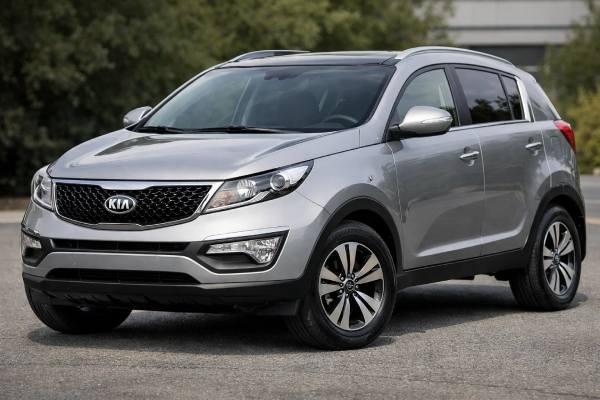
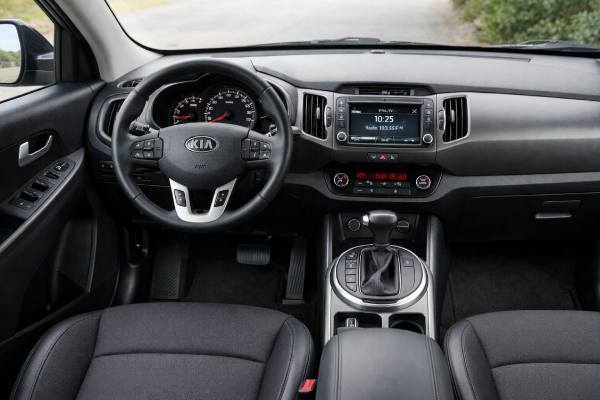
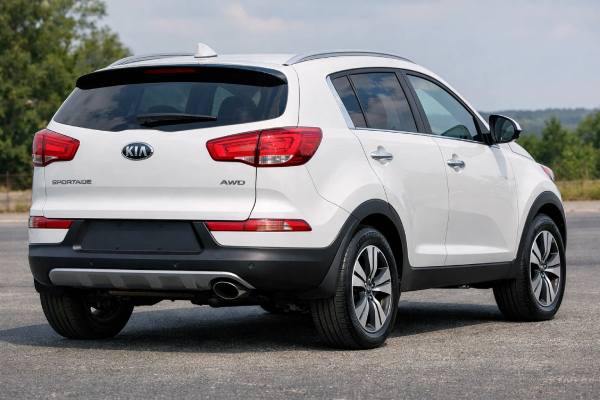
The facelifted Kia Sportage SL 1.7 diesel is the version many practical buyers end up respecting most. It kept the third-generation Sportage’s strong shape, roomy cabin, and settled chassis, then added sharper exterior details, a tidier interior, lower cabin noise, and better infotainment options. In FWD form with the D4FD 1.7-liter diesel, it also stayed focused on everyday economy rather than outright pace.
That matters because this model works best as a long-distance, family-use crossover, not a short-trip city car. The diesel engine offers useful low-rpm torque and sensible fuel use, but it relies on proper oil service, good fuel, and regular longer runs to keep the emissions hardware healthy. A well-kept example still feels modern enough in the cabin, stable on the road, and pleasantly efficient. A neglected one can become a DPF, EGR, suspension, and deferred-maintenance project very quickly. With this Sportage, usage history is as important as mileage.
Top Highlights
- The facelift added cleaner styling, better materials, and noticeably improved cabin refinement.
- The 1.7 diesel suits steady commuting and long-distance use better than stop-start city driving.
- Ride comfort remains a real strength thanks to the independent rear suspension.
- DPF and EGR health depend heavily on driving pattern and service quality.
- A sensible oil-service interval is every 10,000 to 15,000 km or 12 months.
On this page
- Kia Sportage SL facelift profile
- Kia Sportage SL facelift specs
- Kia Sportage SL facelift trims and safety
- Reliability hotspots and service actions
- Maintenance routine and buyer guide
- Daily driving and diesel economy
- Sportage FWD diesel versus rivals
Kia Sportage SL facelift profile
The 2014–2016 facelift did not reinvent the SL Sportage. It refined a design that was already strong. Kia updated the front grille, rear lamps, wheels, and trim details, then improved interior materials and added more modern cabin tech. For buyers today, that matters because the facelift cars feel less like an early-2010s transition model and more like a mature version of the SL formula.
In this exact FWD 1.7 diesel form, the Sportage was aimed at buyers who wanted crossover size and image without heavier running costs. The D4FD 1.7 CRDi is a turbocharged common-rail diesel with four cylinders, four valves per cylinder, a timing chain, and diesel particulate filter hardware. It was never the fast engine in the Sportage range, but it did give the car what matters in real use: accessible torque, relaxed cruising, and lower fuel consumption than the larger diesel and petrol options.
The facelift also helped the Sportage feel more complete. Kia made a point of reducing NVH, which means noise, vibration, and harshness. In plain terms, the later car feels quieter and more polished than the earlier SL. Soft-touch trim on the dashboard and upper doors, the available 4.2-inch cluster display, better audio options, and a more finished look inside all helped the Sportage compete better with the Nissan Qashqai, Hyundai ix35, and Volkswagen Tiguan of the same era.
The 1.7 diesel’s position in the range is important to understand. This was usually a front-wheel-drive, manual-gearbox version in European markets. It gave up the extra traction and towing strength of the 2.0 CRDi AWD models, but it also avoided their extra mass and higher fuel use. For buyers covering motorway miles, commuting between towns, or using the car as a family daily driver, that trade-off made sense. For drivers doing mostly short urban trips, it was a less natural fit because the diesel emissions system prefers longer, hotter running.
That is why the facelifted 1.7 diesel Sportage is best understood as a value-focused long-distance crossover. It has enough practicality for family work, enough refinement to feel current enough even now, and a diesel powertrain that makes sense only when used properly. The body and cabin improvements of the facelift make it easier to recommend than the earlier SL, but the engine and emissions hardware still demand a disciplined owner. Bought well, it is a sensible, grown-up compact SUV. Bought carelessly, it becomes an efficiency-focused diesel used in exactly the wrong way.
Kia Sportage SL facelift specs
The facelift Sportage 1.7 CRDi FWD is defined by moderate performance, useful torque, and practical size. The numbers below focus on the facelift-era front-wheel-drive diesel rather than mixing in AWD or larger-engine figures.
Powertrain and efficiency
| Item | Kia Sportage FWD (SL) 1.7 Diesel Facelift |
|---|---|
| Code | D4FD |
| Engine layout and cylinders | Inline-4, DOHC, 4 cylinders, 4 valves/cyl |
| Bore × stroke | 77.2 × 90.0 mm (3.04 × 3.54 in) |
| Displacement | 1.7 L (1,685 cc) |
| Induction | Turbocharged |
| Fuel system | Common-rail direct injection |
| Compression ratio | Around 15.7:1 to 16.0:1, market and emissions spec dependent |
| Max power | 115 hp (85 kW) @ 4,000 rpm |
| Max torque | About 260–280 Nm (192–207 lb-ft), market and emissions spec dependent |
| Timing drive | Chain |
| Rated efficiency | Commonly around 5.3–5.7 L/100 km combined |
| Rated efficiency in mpg | About 44.8–52.3 mpg US / 53.8–62.8 mpg UK combined |
| Real-world highway @ 120 km/h (75 mph) | Usually 5.8–6.6 L/100 km in healthy trim |
Transmission, chassis, and dimensions
| Item | Kia Sportage FWD (SL) 1.7 Diesel Facelift |
|---|---|
| Transmission | 6-speed manual |
| Drive type | FWD |
| Differential | Open |
| Suspension (front/rear) | MacPherson strut / multi-link |
| Steering | Electric motor-driven rack-and-pinion assist |
| Brakes | Front vented discs / rear discs |
| Wheels and tyres | 215/70 R16, 225/60 R17, or 235/55 R18 depending on trim |
| Ground clearance | About 172 mm (6.8 in) |
| Length / width / height | 4,440 / 1,855 / 1,635 mm (174.8 / 73.0 / 64.4 in) |
| Height with roof rails | 1,645 mm (64.8 in) |
| Wheelbase | 2,640 mm (103.9 in) |
| Turning circle | About 10.6 m (34.8 ft) |
| Kerb weight | Roughly 1,480–1,560 kg (3,263–3,439 lb), trim dependent |
| GVWR | VIN and market dependent; verify on vehicle plate |
| Fuel tank | 58 L (15.3 US gal / 12.8 UK gal) |
| Cargo volume | About 564 / 1,353 L (19.9 / 47.8 ft³), method varies by market |
Performance, fluids, and safety
| Item | Kia Sportage FWD (SL) 1.7 Diesel Facelift |
|---|---|
| 0–100 km/h (0–62 mph) | About 11.5–12.3 s |
| Top speed | About 173–176 km/h (107–109 mph) |
| Braking distance | Not consistently published in open official sources for this exact variant |
| Towing capacity | 1,200 kg (2,646 lb) braked; 750 kg (1,653 lb) unbraked |
| Payload | Usually around 450–550 kg, market dependent |
| Engine oil | 5.3 L (5.6 US qt) with DPF; ACEA C3 |
| Typical viscosity | 5W-30 |
| Manual transmission oil | 1.9–2.0 L (2.0–2.1 US qt); API GL-4 SAE 75W/85 |
| Coolant | About 8.5 L manual; ethylene glycol-based coolant for aluminum engine and radiator |
| Brake / clutch fluid | 0.7–0.8 L; DOT-3 or DOT-4 |
| A/C refrigerant | Verify by VIN and production date before service |
| Wheel-nut torque | 88–107 Nm (65–79 lb-ft) |
| Crash ratings | Euro NCAP 5 stars; adult 93%, child 86%, pedestrian 49%, safety assist 86% |
| IIHS | Good in original moderate overlap, roof strength, and head restraints; small overlap Poor |
| ADAS suite | No AEB, ACC, lane-keep assist, or blind-spot monitoring |
The spec sheet tells a clear story. This is a front-drive diesel built for efficiency, not speed. Its strengths are torque delivery, everyday packaging, and sensible fuel use. Its weakness is that it depends heavily on proper maintenance and the right type of driving to stay healthy.
Kia Sportage SL facelift trims and safety
The facelifted 1.7 diesel Sportage usually sat in the middle of the European SL lineup rather than at the absolute bottom or top. That is good news for used buyers. In many markets, the 1.7 diesel was paired with trims that offered enough comfort equipment to make the car feel properly modern without pushing it into the heavier, pricier part of the range dominated by the 2.0 diesel AWD versions.
The facelift itself brought meaningful visual and cabin changes. Kia gave the Sportage a revised front grille, updated LED rear lamp clusters, new wheel designs, and a shark-fin antenna. Inside, the dashboard and upper doors gained more soft-touch trim, and the cabin received a fresher look through revised materials, a clearer supervision instrument cluster, and newer infotainment options. Depending on market and trim, buyers could also get a 4.3-inch touchscreen with reversing camera, an Infinity premium sound system, heated steering wheel, powered driver’s seat, improved USB connectivity, and FlexSteer drive-mode steering weighting.
Trim names varied widely by country, so the safest used-car approach is to identify equipment rather than trust a badge. Most 1.7 diesel FWD cars wore 16- or 17-inch wheels, though better-equipped versions could use 18-inch alloys. Cloth upholstery was common, but mixed cloth and leather or full leather were available in some markets. Heated front seats, climate control, cruise control, parking sensors, rain-sensing wipers, and navigation became easier to find on facelift cars. These details matter because they shape ownership satisfaction far more than the trim label printed in the brochure.
Mechanically, the 1.7 diesel FWD is easier to live with than the AWD 2.0 diesel if your use is ordinary commuting and family driving. It is lighter, simpler, and cheaper to tyre. It also avoids rear-differential and transfer-case servicing because it is front-wheel drive only. That makes it a better fit for buyers who do not actually need towing strength or winter traction from AWD.
Safety is one of the SL generation’s biggest strengths. Euro NCAP awarded the Sportage five stars, with 93 percent for adult occupants, 86 percent for child occupants, 49 percent for pedestrian protection, and 86 percent for safety assist. That is a strong result for this era and a genuine step above the older KM generation. Structurally, the SL was a much more credible family crossover from the start, and the facelift did not lose that strength.
The U.S.-market version of the same generation also performed well in IIHS original testing, earning Good ratings in moderate-overlap frontal, roof-strength, and head-restraint evaluations. The later driver-side small-overlap result was Poor, which is the right reality check. This is a safe early-2010s crossover, not a current one. Most European facelift diesels also offered ABS, ESC, multiple airbags, hill-start assist, and child-seat anchors as standard or near-standard equipment. What they did not offer was modern driver assistance. There is no autonomous emergency braking, adaptive cruise, lane centering, or blind-spot monitoring here. The safety story is about structure and stability control, not automation.
Reliability hotspots and service actions
The facelift 1.7 diesel Sportage is neither a disaster nor a car you can neglect indefinitely. Its reliability is best described as usage-sensitive. The core engine can be durable, but the wider diesel system only stays healthy when the car is driven and serviced in a way that suits a modern turbo-diesel with emissions hardware.
The biggest pattern is DPF and EGR trouble on short-trip cars. A 1.7 diesel Sportage used for repeated cold starts, short city errands, and interrupted regeneration cycles can develop soot loading in the diesel particulate filter and carbon build-up around the EGR system. Symptoms include repeated regeneration behavior, a warning light, reduced power, high idle speed, cooling fans running after shutdown, or limp mode. The likely root cause is not one magic bad part. It is usually a combination of driving pattern, soot load, and postponed diagnosis. The remedy can range from a successful forced regeneration to cleaning, sensor replacement, EGR work, or DPF replacement on heavily neglected cars.
Turbo-related issues are less common but still worth noting. Split boost hoses, sticking variable-vane control, vacuum faults, or worn actuator hardware can all cause underboost, hesitation, or inconsistent torque delivery. These problems often masquerade as “the car just feels slow,” which is why a proper test drive matters. A healthy 1.7 diesel is not quick, but it should pull cleanly from low rpm without flat spots or surging.
The manual gearbox itself is usually not the problem. Instead, wear shows up around the clutch and, on higher-mileage cars, sometimes the dual-mass flywheel. Symptoms are vibration on takeoff, idle rattle, slipping under load, or a shudder when pulling away. None of that is unusual on a diesel crossover of this age, but it turns a cheap used buy into a much less attractive one very fast.
Suspension wear is normal rather than alarming. Front drop links, lower-arm bushes, dampers, and wheel bearings are the typical age-and-mileage items. The Sportage’s multi-link rear suspension helps ride and stability, but it also means there are more bushes and joints to age out than on a simpler rear setup. A tired diesel SL can feel heavier and rougher than it should because the suspension has simply been ignored.
Software and calibrations matter less here than on some later Kia powertrains, but they are not irrelevant. Dealer updates could affect drivability, regeneration strategy, and warning-light behavior on some market versions. Still, hard symptoms on a 1.7 diesel are usually mechanical or emissions-system related rather than solved by wishful reflashing.
Recall and campaign coverage varies by country. The safe rule is VIN-based checking through official dealer records and national recall systems. On this Euro-focused diesel, the most useful ownership habit is not memorizing one campaign code. It is verifying what has already been done. Ask for service invoices, emission-system work, and evidence that the car was maintained by someone who understood DPF-equipped diesels. On this Sportage, that history matters more than glossy paint and low advertised mileage.
Maintenance routine and buyer guide
A facelift 1.7 diesel Sportage rewards owners who maintain it ahead of trouble rather than after it. Kia’s published service guidance for this generation generally points to 20,000 km or 12 months for diesel servicing in many European schedules. That is the formal baseline. For a used DPF-equipped diesel, many careful owners shorten oil intervals, and that is often the smarter approach.
A practical maintenance routine should include the following:
- Engine oil and filter: every 10,000 to 15,000 km or 12 months. This is the single most useful real-world adjustment for long-term diesel ownership.
- Engine air filter: inspect every service and replace when dirty, usually every 20,000 to 30,000 km.
- Cabin filter: inspect at every annual service and replace regularly.
- Fuel filter: change on schedule and use good-quality parts. High-pressure common-rail systems do not tolerate dirty fuel or skipped filter service well.
- Coolant: inspect level and condition regularly, then replace by time and history rather than waiting for visible trouble.
- Brake fluid and clutch fluid: every 2 years.
- Manual gearbox oil: service on condition and mileage, especially if the car tows or does long high-speed running.
- DPF and EGR health: not fixed-interval items, but regeneration behavior, warning lights, and soot-related drive symptoms must be dealt with early.
- Timing chain: no scheduled routine replacement like a belt, but monitor for unusual chain noise or poor oil history.
- Auxiliary belt and hoses: inspect annually.
- Tyres and alignment: rotate and inspect regularly, because a tired front suspension shows up quickly in wear patterns and steering feel.
- Battery: test from year four onward. Weak batteries can create false fault complaints in diesel cars.
The official fluid data are useful for both owners and buyers. Engine oil capacity is 5.3 L with DPF and the required oil class is ACEA C3, typically 5W-30. Manual gearbox oil is 1.9 to 2.0 L of API GL-4 75W/85. Coolant capacity for the manual diesel is about 8.5 L. Brake and clutch fluid volume is about 0.7 to 0.8 L. Fuel tank capacity is 58 L, and wheel-nut torque is 88–107 Nm. These are the figures owners actually use when planning service or checking whether a recent invoice makes sense.
For buying, the inspection order matters. Start with usage history. A diesel Sportage that covered steady motorway miles is usually a better bet than a lower-mileage car that only did school runs and short city hops. Cold-start it if possible. It should fire quickly, idle steadily, and not show excessive smoke or obvious injector clatter beyond normal diesel noise. On the road, check for flat spots, warning lights, clutch vibration, and suspension knocks.
Underneath, inspect for leaking dampers, worn bushes, rusty brake hardware, and mismatched tyres. The facelift SL is not especially infamous for body rot, but neglected winter-use cars still deserve a proper underbody look. The best buys are clean manual 1.7 cars with consistent service records, healthy regeneration behavior, and evidence of regular longer-distance use. The cars to avoid are “cheap because it just needs a sensor” diesels with vague history, warning lights, or obvious city-only life.
Daily driving and diesel economy
The facelift Sportage 1.7 diesel is a car that rewards realistic expectations. It is not fast, and it does not try to hide that with an artificial sporty character. Instead, it feels like a solid, calm compact crossover with useful torque, a comfortable ride, and enough efficiency to make long-distance family use easy to justify.
The first thing you notice in normal driving is that the diesel suits the car better than the smaller petrol engines suited the earlier SL. It does not transform the Sportage into something quick, but it gives the body the torque it needs for real roads. Pulling away is easy, climbing is more relaxed, and the car feels less strained when passengers and luggage are on board. The six-speed manual is usually a good match because it lets you keep the engine in its strong mid-range without needing constant high revs.
Ride quality remains one of the Sportage’s best features. The independent rear suspension helps it stay composed over patched roads and quick undulations, and the facelift’s extra NVH work makes the cabin feel more finished than the earlier SL. Road and tyre noise are still present, especially on 18-inch wheels, but the overall experience is calmer than many budget-brand rivals of the same age. Smaller wheels usually give the best comfort and the lowest running costs.
Handling is secure rather than playful. Steering is light, especially around town, and the car tracks well on the motorway when the suspension is healthy. Body control is tidy, but the Sportage does not invite aggressive cornering. That is perfectly fine for the type of car it is. Braking is predictable, stability control is effective, and the overall road feel is one of steady competence.
The diesel’s refinement depends heavily on condition. A good one feels strong enough in the middle of the rev range and settles into a quiet cruise. A neglected one feels noisy, flat, and coarser than it should. That is why service history matters so much more here than on a simpler naturally aspirated petrol crossover.
Fuel use is one of the main reasons buyers choose this engine. Factory combined figures in the mid-five-liter range per 100 km looked strong when new, and a healthy car can still be efficient. In real life, mixed use often falls around 6.0 to 7.0 L/100 km. Town-heavy driving, especially with repeated cold starts, pushes that higher and also hurts DPF health. On steady highway runs at 100 to 120 km/h, 5.8 to 6.6 L/100 km is realistic for a clean, well-maintained example on the correct tyres.
Cold weather, winter tyres, low tyre pressures, repeated short trips, or a partially loaded DPF can all raise consumption noticeably. Under moderate towing or a full holiday load, expect fuel use to climb by around 15 to 25 percent. Even so, the diesel Sportage remains one of the easier SL variants to justify for drivers who actually cover distance. It feels mature, practical, and cost-effective in the kind of use for which it was designed.
Sportage FWD diesel versus rivals
The facelift 1.7 diesel Sportage sits in one of the busiest used-crossover segments of its era, so context matters. Its closest relative is the Hyundai ix35 or Tucson, and those two are mechanically similar enough that the decision often comes down to condition, specification, and price. If the Kia has the better service history or lower real running costs, it is just as rational a buy as the Hyundai.
Against the Nissan Qashqai, the Sportage feels more substantial and more SUV-like. The Qashqai can feel lighter and a touch easier in urban use, but the Kia often answers with a broader cabin feel, a calmer ride, and stronger road presence. Against the Volkswagen Tiguan, the Sportage usually gives up some badge appeal and some perceived interior polish, but it can win on value and on avoiding some of the aging complexity that makes certain European diesel rivals expensive later in life.
The Honda CR-V and Toyota RAV4 remain the used-market trust benchmarks, even though engine and drivetrain pairings differ by market. Those two generally hold value better and often feel like safer long-term bets for cautious buyers. The Sportage fights back with styling, equipment, and price-to-space value. The SL facelift still looks sharp enough today, and that matters more than people like to admit in this class.
Inside the Sportage range itself, the 1.7 diesel FWD has a clear place. It is more natural for long-distance and mixed-commute use than the base petrol engines, but it is cheaper and simpler than the AWD 2.0 diesel versions. It also avoids the higher purchase and tyre costs of the bigger-engined models. For buyers who do not tow heavily and do not need AWD, that makes it one of the most rational facelift SL derivatives.
The key comparison point is not speed. It is ownership profile. The Sportage is a strong value when the diesel engine has been used properly, serviced properly, and bought at the right price. If you want a town-only crossover for repeated short runs, one of the petrol rivals may make more sense. If you want a compact SUV for commuting, family travel, and regular open-road use, the 1.7 diesel facelift Sportage becomes much easier to defend.
That is the honest verdict. The facelift Sportage 1.7 diesel FWD is not the universal answer in its class, but it is a very sensible one for the right driver. It combines useful torque, solid comfort, practical cabin packaging, and respectable safety in a shape that still looks modern enough. Buy it on evidence, not on low price alone, and it can still be one of the better-value used compact SUVs from its era.
References
- Geneva Motor Show 2014 2014 (Press Kit)
- SLE Swd-FOREWORD.qxp 2013 (Owner’s Manual)
- Engine Oil Grades and Capacities – Kia 2023 (Owner’s Guide)
- Kia Service Intervals 2023 (Service Guide)
- KIA Sportage 2010 (Safety Rating)
- 2014 Kia Sportage 2026 (Safety Rating)
Disclaimer
This article is for informational purposes only and is not a substitute for professional diagnosis or repair. Specifications, torque values, service intervals, fluids, towing limits, procedures, and equipment can vary by VIN, market, trim, emissions standard, and production date, so always verify details against the official service documentation for the exact vehicle.
If this guide helped you, please consider sharing it on Facebook, X, or another social platform to support our work.