
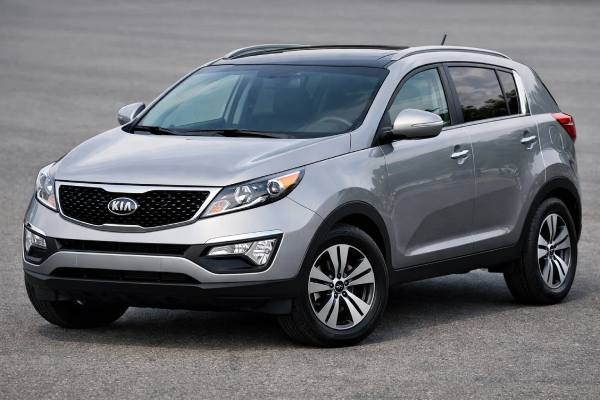
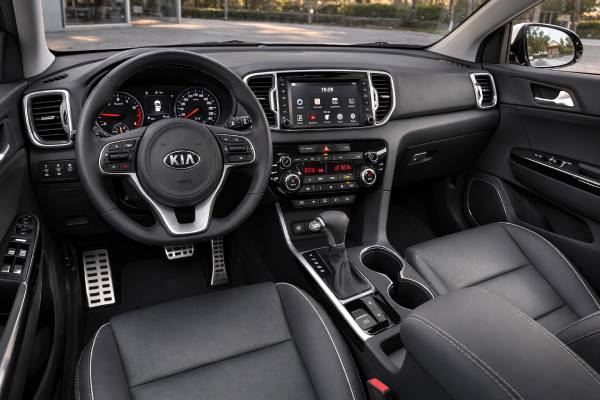
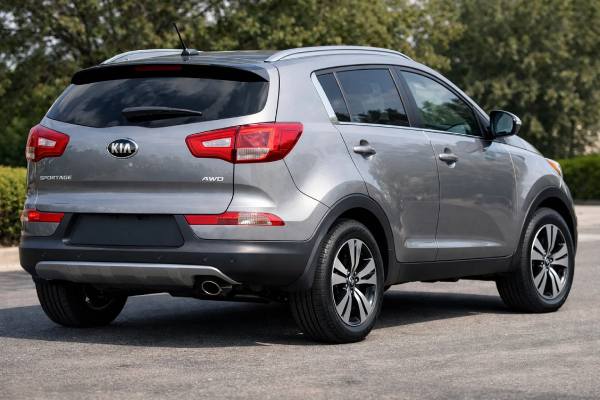
The facelifted 2014–2016 Kia Sportage SL with front-wheel drive and the 2.0-liter D4HA diesel is one of the more sensible versions of this generation. It keeps the sharp Peter Schreyer-era styling, practical cabin, and tidy road manners of the third-generation Sportage, but avoids the extra weight and servicing demands of AWD. The 136 hp diesel is not the most powerful engine in the range, yet it is often the most rational for buyers who want strong everyday torque, solid highway manners, and lower running costs than the higher-output AWD diesel models. The 2014 update also mattered more than its mild styling changes suggest. Kia improved refinement, cabin materials, steering response, and equipment, making the late SL feel more mature than early 2010–2013 cars. As a used compact SUV, this Sportage still has real appeal. The key is simple: buy the right one, service it on time, and treat diesel maintenance as part of ownership rather than as an occasional expense.
Top Highlights
- The 2.0-liter diesel gives the Sportage strong midrange pull and relaxed motorway cruising without the complexity of the turbo-petrol range topper.
- Front-wheel drive keeps weight, tyre sensitivity, and driveline servicing lower than on AWD versions.
- The 2014 enhancement improved noise control, steering calibration, and cabin quality in ways owners notice every day.
- DPF use patterns, EGR contamination, injector health, and timing-chain noise matter more than trim level alone.
- Official Kia interval guides list 20,000 miles or 12 months in some markets, but shorter oil services are wiser for long-term diesel health.
Quick navigation
- Sportage SL Diesel Priorities
- Sportage SL Diesel Numbers
- Sportage SL Diesel Trims and Safety
- Common Faults and Recall Watch
- Ownership Schedule and Buyer Tips
- Real-World Pace and Economy
- How It Faces Rivals
Sportage SL Diesel Priorities
The facelifted SL Sportage is a case study in careful improvement rather than reinvention. Kia did not replace the core package in 2014. Instead, it refined the details that make a good compact SUV easier to live with. The updated model received a revised grille, LED rear lamps, new wheel designs, a shark-fin antenna, improved soft-touch materials in the cabin, and more available comfort and infotainment equipment. More important for long-term owners, Kia also revised noise and vibration control, made the steering quicker, improved suspension tuning, and added an intermediate shaft to create equal-length front driveshafts. That gave the late SL a calmer, more polished feel than earlier cars.
This exact version also benefits from being honest about what it is. The D4HA 2.0-liter diesel is not a sporty flagship engine, but it suits the Sportage’s size and mission very well. It gives the car useful low-speed shove, relaxed highway gait, and better real-world efficiency than the petrol options. It also fits the model’s personality. The Sportage is at its best as a practical crossover that carries people, luggage, and daily errands without fuss, rather than as a pretend performance SUV.
Front-wheel drive sharpens that focus. Unless you regularly drive on snow-covered hills, muddy access roads, or steep low-grip surfaces, the FWD version is usually the easier one to justify. It avoids extra rear-driveline servicing, reduces tyre matching sensitivity, and feels a little lighter and cleaner in ordinary driving. For many buyers, that is exactly the right trade.
The 136 hp version of the D4HA also sits in a useful middle ground. In some markets, the stronger diesel trims attracted more attention because they promised higher towing capacity or quicker overtakes. In real ownership, though, the lower-output engine can be the calmer bet. It still pulls well enough for the class, yet it places less stress on the rest of the car and usually comes in simpler, more affordable trims. That matters now that these vehicles are long past warranty age.
There is also a used-market reason this version deserves attention. Sellers often blur late-SL and early-QL Sportages together, or mix up the 1.7 diesel, 2.0 diesel, and petrol versions in their listings. Some even describe every late car as “full option” or “facelift” without understanding the mechanical differences. The 2014–2016 FWD 2.0 diesel makes most sense when you verify the engine code, service records, emissions hardware, and trim content instead of trusting model-year shorthand. When bought carefully, it is one of the better-balanced diesel Sportages of its era.
Sportage SL Diesel Numbers
The facelifted SL Sportage with the D4HA 2.0 diesel was sold in multiple European and export-market forms, so some figures vary by gearbox, emissions stage, and local homologation. The table below reflects the common 2014–2016 front-wheel-drive 136 hp specification, with notes where published data differs.
| Powertrain and efficiency | Figure |
|---|---|
| Code | D4HA |
| Engine layout and cylinders | Inline-4, transverse, DOHC, 4 valves per cylinder |
| Bore × stroke | 84.0 × 90.0 mm (3.31 × 3.54 in) |
| Displacement | 2.0 L (1,995 cc) |
| Induction | Turbocharged, intercooled |
| Fuel system | Common-rail direct injection |
| Compression ratio | About 16.5:1 in common European data |
| Max power | 136 hp (100 kW) @ 4,000 rpm |
| Max torque | 320 Nm (236 lb-ft) @ 1,800–2,500 rpm manual / 373 Nm (275 lb-ft) @ 2,000–2,500 rpm automatic, depending on market |
| Timing drive | Chain |
| Rated efficiency | About 5.5–6.2 L/100 km (38–43 mpg US / 46–51 mpg UK) combined, depending on transmission and wheel size |
| Real-world highway @ 120 km/h (75 mph) | About 6.2–6.9 L/100 km (34–38 mpg US / 41–46 mpg UK) |
| Transmission and driveline | Figure |
|---|---|
| Transmission | 6-speed manual or 6-speed automatic, market dependent |
| Drive type | FWD |
| Differential | Open front differential |
| Chassis and dimensions | Figure |
|---|---|
| Suspension front | MacPherson strut with coil springs |
| Suspension rear | Multi-link with coil springs |
| Steering | Rack-and-pinion, motor-driven power assist |
| Steering turns lock-to-lock | About 2.7 after the 2014 steering revision |
| Brakes | Ventilated front discs / rear discs |
| Common brake sizes | About 300 mm (11.8 in) front / 284 mm (11.2 in) rear |
| Most popular tyre size | 225/60 R17 |
| Ground clearance | About 172 mm (6.8 in) |
| Length / Width / Height | 4,440 mm / 1,855 mm / about 1,630–1,635 mm |
| Wheelbase | 2,640 mm (103.9 in) |
| Turning circle | About 10.6 m (34.8 ft) |
| Kerb weight | About 1,530–1,600 kg (3,373–3,527 lb), depending on gearbox |
| GVWR | About 2,090–2,140 kg (4,608–4,718 lb), market dependent |
| Fuel tank | 58 L (15.3 US gal / 12.8 UK gal) |
| Cargo volume | 564 L (19.9 ft³) seats up / 1,353 L (47.8 ft³) seats down, VDA-style figures |
| Performance and capability | Figure |
|---|---|
| 0–100 km/h (0–62 mph) | About 10.8–11.5 s |
| Top speed | About 180–182 km/h (112–113 mph) |
| Braking distance | No dependable factory 100–0 km/h figure found in open official material |
| Towing capacity | Usually around 1,600–2,000 kg (3,527–4,409 lb) braked and 750 kg (1,653 lb) unbraked, depending on market and gearbox |
| Payload | Roughly 500–550 kg (1,102–1,213 lb), market dependent |
| Fluids and service capacities | Practical note |
|---|---|
| Engine oil | ACEA C3 5W-30 is a common safe choice for this engine family; many open datasets show about 8.0 L with filter, but confirm by VIN and dipstick |
| Coolant | Ethylene-glycol mix, usually 50:50; exact fill varies slightly by radiator and market |
| Transmission / ATF | Use Kia-approved fluid for the specific 6-speed manual or 6-speed automatic |
| Differential / transfer case | Not applicable for FWD |
| A/C refrigerant | R134a |
| A/C compressor oil | PAG type; verify the exact amount from the vehicle label or workshop data |
| Key torque specs | Wheel nuts typically sit in the 88–107 Nm (65–79 lb-ft) range; use VIN-specific workshop data for suspension and drivetrain fasteners |
| Safety and driver assistance | Figure |
|---|---|
| IIHS ratings | Good moderate overlap front, Good side, Good roof strength, Good head restraints and seats, Poor small overlap front |
| Euro NCAP | 5 stars for the third-generation Sportage platform in European testing |
| Headlight rating | No IIHS headlight score published for this generation |
| ADAS suite | None in the modern sense |
| Core safety equipment | Front airbags, side airbags, curtain airbags, ABS, ESC, and hill-assist functions depending on trim and market |
The biggest theme in these numbers is balance. The Sportage is not especially light or especially fast, but it is proportioned well, uses sensible tyre sizes, and offers enough diesel torque to feel easygoing in daily use. That is a strong recipe for a used family crossover.
Sportage SL Diesel Trims and Safety
On the facelifted SL Sportage, trim names matter less than many buyers think. In some markets the 2.0 diesel FWD sat in the middle of the range, above the smaller diesel and below the higher-output AWD diesel. In others, the same engine could be paired with more generous equipment and marketed as a near-top trim. The result is familiar in the used market: two seemingly similar 2015 or 2016 Sportages can differ in seat trim, wheel size, climate controls, parking sensors, camera fitment, audio system, heated seats, panoramic roof, and steering-wheel functions.
The 2014 enhancement improved the whole line-up, not just top trims. Kia added better soft-touch materials on the dashboard and upper door trims, a new Supervision instrument cluster with a 4.2-inch LCD display, an updated touchscreen audio system with camera integration on some versions, improved Infinity premium audio on upper trims, FlexSteer, heated steering wheel availability, and fresh seat-trim combinations. That means even modest late-run cars often feel better screwed together than early SL models.
Mechanically, the 2.0 diesel FWD does not change character dramatically across trim levels. The important differences are usually wheel size, tyre compound, seat comfort, noise insulation detail, and whether the car has the manual or automatic gearbox. Smaller wheel packages often ride better and cost less to keep on quality tyres. Higher trims may look more impressive, but on a used SL Sportage, a well-maintained mid-trim on sensible wheels is often the smarter long-term buy.
Safety is one of the Sportage SL’s strongest selling points relative to older Kia SUVs. The IIHS data for the 2016 Sportage shows Good ratings in moderate overlap front, side impact, roof strength, and head restraints and seats. That reflects the strength of the basic SL platform. The catch is the later small-overlap front test, where the same generation is rated Poor. That does not erase its strengths, but it is important context. By the standards of its original era, the SL Sportage was a capable compact SUV in crash performance. By newer test standards, it has a clear weak spot.
European safety results reinforce the same general message. Euro NCAP awarded the third-generation Sportage a five-star result, with strong adult and child occupant scores for its time. Since the facelift kept the same basic structure, that remains relevant background for the 2014–2016 car. Even so, trim-level equipment still matters. Airbag count, ESC fitment, tyre size, and seat hardware can differ by market, so buyers should check the actual car, not just the brochure.
There is no modern ADAS here. No autonomous emergency braking, no adaptive cruise control, no blind-spot monitoring, and no lane-centering. What you do get is a solid set of core protections for the era. For used buyers, that means the safest Sportage is not always the fanciest one. It is the one with a clean body structure, correct tyres, functioning ABS and ESC, and no unresolved safety-campaign history.
Common Faults and Recall Watch
The D4HA diesel is generally a capable engine, but like most modern common-rail diesels, it depends heavily on service quality and driving pattern. In a used Sportage, the question is rarely “Is this engine good or bad?” The better question is “How was it used?” A diesel that lived on long highway runs and timely oil changes is very different from one that spent years doing short urban trips and delayed maintenance.
The most common issue area is emissions hardware. On cars used mainly for short journeys, the diesel particulate filter can load up early, EGR passages can carbon up, and intake soot can affect smoothness and response. The symptoms usually arrive in stages: more frequent regeneration, rising fuel use, sluggish response below boost, warning lights, or limp-home episodes. The fix depends on severity. Sometimes the answer is a proper long run and a scan. Other times it is intake cleaning, EGR work, sensor replacement, or a forced regeneration. Cars that show repeated DPF trouble often reveal the wrong usage pattern rather than a single bad part.
Injector condition sits in the next tier. Common signs include rough cold starts, uneven idle, smoke under load, harder hot restarts, and a sharper diesel knock than normal. The likely causes range from fuel contamination and aging injectors to leak-off imbalance. This is one reason a cold-start inspection matters so much on the D4HA. A warmed-up seller car can hide early injector problems surprisingly well.
Timing-chain life is another point worth watching. Unlike an older belt-driven diesel, the D4HA uses a chain, but that should not be confused with zero maintenance risk. Chain systems usually last well when oil quality is good, yet neglected oil service can lead to tensioner wear, start-up rattle, and eventually timing-correlation faults. If the engine sounds loose for a few seconds on cold start, do not dismiss it. Chain noise on a neglected diesel is often the start of a larger front-of-engine job.
Turbo and boost-hose wear are less common than DPF or EGR issues, but still important. Oil mist around intercooler hoses, split pipework, tired boost-control hardware, and whistle or smoke under load all deserve attention. Many of these faults are medium cost rather than catastrophic, but they affect how the car drives and can quickly turn a “good deal” into a reconditioning project.
On the chassis side, the Sportage follows a familiar compact-SUV pattern. Front lower arms, drop links, dampers, wheel bearings, and rear bushings wear steadily with mileage. Because the 2014 update made the SL quieter and more refined, suspension slack stands out more when it appears. A tired car can feel much older than it really is.
Recall and campaign status must also be checked by market and VIN. On some 2014–2016 SL Sportage vehicles, official HECU-related safety actions were issued in certain markets because an internal electrical fault could raise fire risk. The exact coverage varies by region, so buyers should not assume a campaign in one country applies everywhere. The safe rule is simple: run the official VIN recall check for the country of registration and ask for dealer proof of completed campaign work. On this model, paperwork is part of the mechanical inspection.
Ownership Schedule and Buyer Tips
Official Kia interval guides in some markets list this era of Sportage diesel at 20,000 miles or 12 months. That is useful as a factory maximum, but it is not the most sensible ownership strategy for a used direct-injection diesel with emissions equipment and a turbocharger. A better plan is more conservative, especially once the car is outside early-life dealer care.
A practical maintenance schedule looks like this:
- Engine oil and filter: every 8,000–10,000 miles or 12 months. Frequent short trips justify shorter intervals.
- Engine air filter: inspect at every service and replace around every 15,000–20,000 miles, sooner in dusty use.
- Cabin air filter: every 12 months or around every 15,000 miles.
- Fuel filter: every 20,000–30,000 miles, especially where fuel quality is inconsistent.
- Coolant: every 4–5 years in practical ownership unless the exact history is known.
- Timing chain system: no routine replacement interval, but investigate start-up rattle, oil-pressure delay, or timing-correlation faults immediately.
- Automatic transmission fluid: every 40,000–60,000 miles if fitted with the 6-speed automatic.
- Manual gearbox oil: every 50,000–70,000 miles as preventive maintenance.
- Brake fluid: every 2 years.
- Brake pads, discs, and slider service: inspect at every routine service.
- Tyre rotation and alignment check: every 5,000–8,000 miles.
- Auxiliary belt and hoses: inspect every service and replace on age, cracks, noise, or contamination.
- 12 V battery and charging test: especially before winter.
- DPF and EGR health check: not at a fixed mileage, but whenever the car shows short-trip stress, regen frequency, or warning-light history.
For fluids, restraint is important. Use the correct low-ash oil grade that suits the engine and emissions hardware rather than treating all diesel oil as interchangeable. The same applies to the gearbox. A used diesel crossover usually suffers more from wrong fluids and stretched intervals than from design flaws.
The buyer’s checklist should go in a sensible order. First, confirm the engine code and transmission. Second, verify service history, especially oil and fuel-filter intervals. Third, check recall and campaign completion. Fourth, inspect for cold-start smoke, injector noise, chain rattle, and DPF warnings. Fifth, drive long enough to confirm steady boost, straight braking, quiet wheel bearings, and stable coolant temperature.
The best examples are usually late-facelift cars with modest trim, smaller wheels, boring service histories, and evidence of regular longer trips. That may sound unglamorous, but it is exactly what a used diesel Sportage wants. I would rather buy a simple, tidy 2015 car from a careful commuter than a shiny, heavily optioned one with vague maintenance and repeated short-trip use. Long-term durability is fair to good when the engine is exercised properly and serviced early. It becomes expensive when owners treat it like a city-only appliance.
Real-World Pace and Economy
On the road, the 136 hp diesel Sportage feels better than its headline power number suggests. The reason is torque. Even in the lower-output tune, the D4HA gives the car enough midrange shove to feel easy in daily traffic, on slip roads, and on rolling highways. It does not feel fast in a modern turbo-petrol sense, but it rarely feels strained. That suits the Sportage’s role very well.
The FWD layout helps. Without the added weight and drag of AWD hardware, the car feels a little cleaner in its responses and slightly more efficient on steady runs. Steering is light but accurate enough, and after the 2014 update it also became a bit quicker and more settled around center. The Sportage is not a driver’s crossover, but it is easy to position, calm in normal bends, and reassuring on poor surfaces.
Ride quality is one of the late SL’s better traits. Kia’s facelift work on NVH and suspension detail paid off. Soundproof windscreen glass, bush-mounted subframes, revised damper valves, softer top mounts, and other under-the-skin changes make the late diesel feel more mature than the early SL. Broken pavement, patched rural roads, and ordinary potholes are handled with decent composure, especially on 17-inch wheels. Larger wheels look good, but they rarely improve the ownership experience.
The engine itself has a workmanlike character. It is audible at idle, more so when cold, and never truly disappears under hard acceleration. Once warm and cruising, though, it settles nicely. At 100–120 km/h, the Sportage becomes an easy motorway companion if the tyres are decent and the cabin seals are still in good shape.
Real fuel economy is one of the strongest reasons to choose this version over the petrol models. In mixed driving, around 6.0–6.8 L/100 km is realistic for a healthy FWD example. City-heavy use often lands closer to 7.0–8.0 L/100 km, especially in winter or on short trips. On open roads, the Sportage can do noticeably better, particularly if driven smoothly. At a true 120 km/h, a well-kept car usually sits around 6.2–6.9 L/100 km. Those are respectable numbers for a compact diesel SUV with this size and weight.
The main dynamic limitation is not engine strength. It is tyres and suspension condition. A Sportage on tired dampers, cheap tyres, or worn front-arm bushings will feel far worse than the platform deserves. A sorted one feels stable, secure, and predictable. Braking is usually solid if the discs and sliders are healthy, though like many used SUVs, neglected rear brakes can quietly drag down refinement and economy.
This is not the Sportage for buyers who want excitement. It is the one for buyers who want a crossover that feels composed, sufficiently strong, and economical enough to justify diesel ownership.
How It Faces Rivals
The facelifted 2.0 diesel FWD Sportage sits in a crowded used-car field, but it still makes a clear case for itself. Against a Hyundai ix35 with a similar powertrain, the difference is naturally small because the two vehicles share so much underneath. In practice, condition, equipment, and maintenance history matter more than brand preference. The better-kept example wins.
Against a Honda CR-V diesel or Toyota RAV4 diesel of the same period, the Kia usually gives up some brand security and sometimes some resale confidence. What it often gives back is value. The Sportage tends to look newer for the money, and in facelifted SL form it still has a design that has aged well. Against a Nissan Qashqai, the Sportage feels a bit more substantial and more traditionally SUV-like. Against an early Ford Kuga diesel, it is usually less sharp to drive but often simpler in feel and less ambitious in a way that can help used ownership.
The strongest comparison is within Kia’s own range. Versus the turbo-petrol SL, this 2.0 diesel FWD is slower and less special, but usually easier to justify over the long term. Versus the AWD diesel, it is less capable in deep winter conditions and heavy towing, but cheaper to service and less sensitive to tyre mismatch. That middle position is why it works so well for ordinary buyers.
Its biggest strengths are clear. It offers a roomy cabin, good visibility, a late-facelift interior that still feels modern enough, respectable safety for the era, and a diesel engine with enough torque to suit the body. Its weaknesses are just as clear. Diesel emissions hardware demands the right use pattern, ride quality suffers on oversized wheels, and modern driver assistance is absent.
So who should buy one? A driver who wants a compact diesel crossover for mixed daily use, longer trips, and family duty, and who is willing to stay on top of servicing. Who should avoid it? Anyone who mainly does very short trips, anyone who wants modern active safety systems, or anyone who needs genuine snow-and-trail traction. In that context, the verdict becomes simple. The 2014–2016 Sportage 2.0 diesel FWD is not the most exciting SL. It may be one of the smartest.
References
- Geneva Motor Show 2014 2014 (Press Kit)
- Kia Service Intervals 2023 (Service Guide)
- 2016 Kia Sportage 4-door SUV 2026 (Safety Rating)
- KIA Sportage 2010 (Safety Rating)
- Vehicle Detail Search – 2016 KIA SPORTAGE SUV FWD 2026 (Recall Database)
Disclaimer
This article is for informational purposes only and is not a substitute for professional diagnosis or repair. Specifications, torque values, intervals, fluid capacities, procedures, emissions equipment, and fitted features can vary by VIN, market, trim, and transmission, so always verify details against the official service documentation for the exact vehicle.
If this guide helped you, please consider sharing it on Facebook, X, or another platform to support our work.