
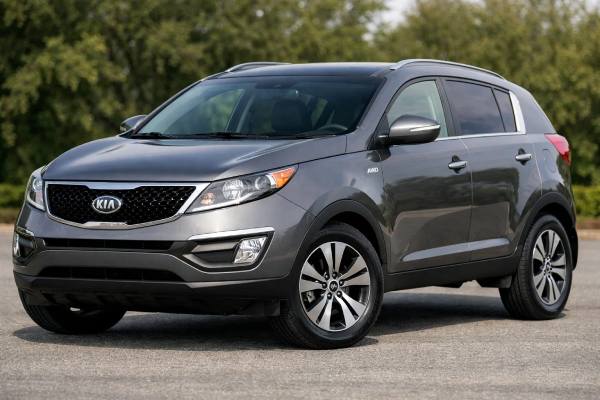
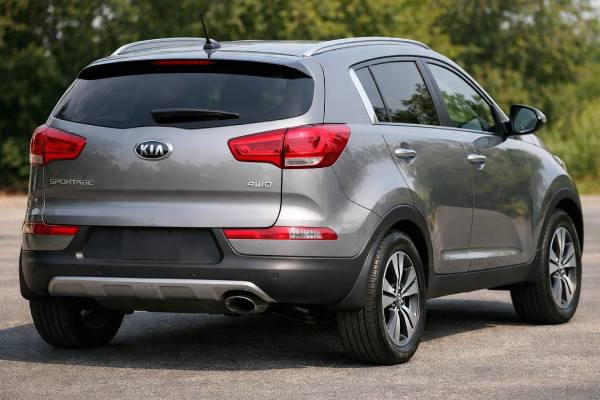
The facelifted 2014–2016 Kia Sportage FWD with the 2.0-liter D4HA diesel is one of the strongest real-world versions of the third-generation SL range. It combines the cleaner facelift styling with Kia’s torquey 184 hp common-rail diesel, a roomy crossover body, and front-wheel drive that keeps weight and complexity lower than the AWD model. For many owners, that is the sweet spot. You get strong mid-range performance, good long-distance economy, and a simpler driveline without giving up the Sportage’s practical cabin and useful cargo space.
This version also benefits from the SL’s mature platform tuning. It rides better than older Sportages, feels more modern inside, and still looks current enough to avoid feeling dated too quickly. The main caution is typical of powerful diesels from this era: DPF health, EGR contamination, clutch or flywheel wear, and overdue fluid changes matter a lot. Bought carefully, though, the facelift 2.0 diesel FWD Sportage remains a very convincing used family SUV.
At a Glance
- The 2.0 CRDi has strong torque and suits the Sportage’s size far better than the smaller diesel or base petrol engines.
- FWD versions are lighter and usually cheaper to maintain than equivalent AWD models.
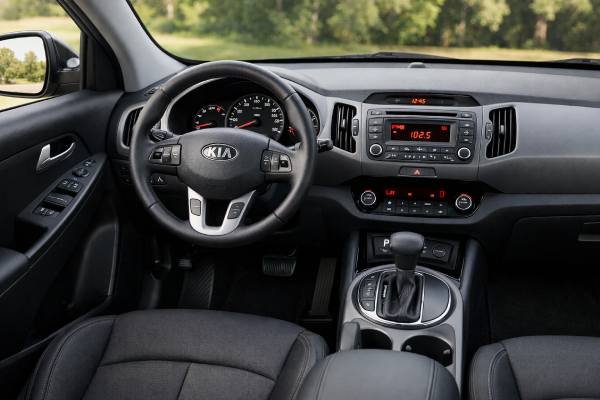
- The facelift cabin is roomy, well laid out, and still competitive for family use.
- Short-trip driving can create DPF, EGR, and intake-soot trouble if servicing and regeneration runs are neglected.
- Kia’s published service interval for 2011–2015 Sportage diesel models is 20,000 km or 12 months.
On this page
- Kia Sportage SL Diesel Character
- Kia Sportage SL 2.0 CRDi Facts
- Kia Sportage SL Trims and Occupant Protection
- Usual Problems and Market Campaigns
- Service Routine and Smart Buying Checks
- Everyday Driving and Fuel Results
- Best Rivals and Ownership Case
Kia Sportage SL Diesel Character
The facelift SL Sportage is one of those compact SUVs that makes more sense the longer you live with it. Its appeal is not based on novelty. It comes from a good combination of size, road manners, and straightforward utility. The 2014 update sharpened the grille, lights, wheel designs, and cabin details, but the bigger story for this specific version is how well the 2.0-liter diesel fits the platform. The 184 hp D4HA gives the Sportage the kind of low- and mid-range shove that suits a family crossover much better than a small naturally aspirated petrol engine.
That matters because this is not a light vehicle. The Sportage carries the weight and stance of a proper compact SUV, so it needs torque more than headline revs. In front-wheel-drive form, the diesel answers that need well. It feels easier to move from low speed, more relaxed on motorways, and more confident when loaded with passengers or luggage. FWD also helps the ownership picture. Compared with the AWD version, there is less driveline hardware to service, fewer expensive components under the car, and slightly lower fuel use in everyday driving.
This does not make it a basic or stripped-down Sportage. The SL platform was already a major leap forward over earlier generations in cabin design, body control, and safety structure. The facelift added useful refinement without changing the car’s simple, proven layout. Visibility is good, the dashboard is intuitive, the rear seat has enough room for real family duty, and the boot is large enough to make the car feel properly practical rather than merely fashionable.
The reason people still seek this engine is also the reason buyers need to be careful. A strong common-rail diesel can be excellent when used properly and costly when neglected. The D4HA likes regular oil changes, correct oil specification, and enough long-run driving to keep its DPF and intake system healthy. It is not the best engine for constant short urban hops. It is much better as a commuting, family-trip, or mixed-use tool.
That shapes the buying verdict. If you want a compact SUV with strong motorway pace, good carrying ability, and a simpler layout than the AWD version, this Sportage makes a lot of sense. If your use is mostly two-mile cold starts in city traffic, the 2.0 diesel is harder to recommend. The car itself is solidly judged. The key is matching the powertrain to the way it will actually be driven.
Kia Sportage SL 2.0 CRDi Facts
The facelift-era 2.0 CRDi FWD Sportage sold with some regional differences in wheel size, gearbox availability, and emissions calibration, so exact figures can move a little by market. The table below reflects the common European-spec front-wheel-drive diesel with the 184 hp D4HA engine and focuses on the numbers most useful to owners and buyers.
| Powertrain and efficiency | Specification |
|---|---|
| Code | D4HA |
| Engine layout and cylinders | Inline-4, 4 cylinders, DOHC, 4 valves per cylinder |
| Bore × stroke | 84.0 × 90.0 mm (3.31 × 3.54 in) |
| Displacement | 2.0 l (1,995 cc) |
| Induction | Turbocharged, intercooler |
| Fuel system | Common-rail direct injection |
| Compression ratio | 16.5:1 |
| Max power | 184 hp (135 kW) @ 4,000 rpm |
| Max torque | 392 Nm (289 lb-ft) @ 1,800–2,500 rpm |
| Timing drive | Chain |
| Rated efficiency | About 6.0–6.4 l/100 km combined (37–39 mpg US / 44–47 mpg UK), depending on tyre and transmission |
| Real-world highway @ 120 km/h | Usually about 6.5–7.3 l/100 km in healthy condition |
| Transmission and driveline | Specification |
|---|---|
| Transmission | 6-speed manual; 6-speed automatic in some markets |
| Drive type | FWD |
| Differential | Open front differential |
| Chassis and dimensions | Specification |
|---|---|
| Body structure | Unibody |
| Suspension front | MacPherson strut with stabilizer bar |
| Suspension rear | Multi-link independent rear suspension |
| Steering | Motor-driven power steering, rack-and-pinion |
| Steering ratio | About 14.3:1 |
| Turns lock-to-lock | About 2.7 |
| Brakes | Front ventilated discs, rear solid discs |
| Brake diameters | About 300 mm front / 284 mm rear |
| Most common tyre size | 225/60 R17; some trims use 235/55 R18 |
| Ground clearance | About 172–173 mm (6.8 in) |
| Approach / departure angle | About 28.1° / 28.2° |
| Length / width / height | 4,440 / 1,855 / 1,635 mm (174.8 / 73.0 / 64.4 in) |
| Wheelbase | 2,640 mm (103.9 in) |
| Turning circle | About 10.6 m (34.8 ft) |
| Weight, capacity, and performance | Specification |
|---|---|
| Kerb weight | About 1,500–1,560 kg (3,307–3,439 lb) |
| GVWR | About 2,120–2,170 kg (4,674–4,784 lb), market dependent |
| Fuel tank | 58 l (15.3 US gal / 12.8 UK gal) |
| Cargo volume | 564 l (19.9 ft³) seats up / 1,353 l (47.8 ft³) seats folded |
| 0–100 km/h | About 9.8–10.4 sec depending on transmission and tyre package |
| Top speed | About 194–195 km/h (121 mph) |
| Towing capacity | Usually up to 1,600 kg (3,527 lb) braked, 750 kg (1,653 lb) unbraked |
| Payload | Roughly 500–580 kg (1,102–1,279 lb) |
| Fluids and service capacities | Specification |
|---|---|
| Engine oil | ACEA C3 5W-30; 7.6 l (8.0 US qt) |
| Coolant | Ethylene-glycol based coolant; total system capacity varies by fill method and should be VIN-checked |
| Transmission fluid | Manual or automatic specification depends on gearbox code and market |
| Differential / transfer case | Not applicable on FWD |
| Brake fluid | DOT 3 or DOT 4 depending market documentation |
| A/C refrigerant | Verify on under-bonnet label before service |
| Key torque specs | Wheel fasteners commonly fall near 100–110 Nm; verify by wheel type and market manual |
| Safety and driver assistance | Specification |
|---|---|
| Euro NCAP | 5 stars; 93% adult, 86% child, 49% pedestrian, 86% safety assist |
| IIHS | Good in moderate overlap, side, roof strength, and head restraints; Poor in driver-side small overlap for the generation |
| Headlight rating | No widely used period IIHS headlight score for this model year |
| ADAS suite | No AEB, ACC, LKA, BSD, or rear cross-traffic braking |
The numbers tell the same story owners usually do. This version is not defined by extremes. It is defined by useful torque, strong practicality, and a drivetrain that feels well matched to the body.
Kia Sportage SL Trims and Occupant Protection
The facelift Sportage was offered with a wide spread of grades depending on market, so the badges on the tailgate do not always tell the full story. In the UK and many European markets, buyers will see straightforward trim ladders, local special editions, and equipment groups that can look confusing when you compare listings across countries. The best way to decode one is to identify the hardware first and the trim second. For this exact version, that means confirming the D4HA 184 hp diesel, front-wheel drive, and the transmission fitted to the car.
Most facelift 2.0 diesel FWD models sit in the middle or upper-middle part of the range rather than the entry point. That usually means a decent equipment baseline. Lower trims may carry 17-inch wheels, cloth seats, manual or basic automatic climate control, standard audio, and fewer cosmetic extras. Better-equipped versions add 18-inch wheels, navigation, rear camera, panoramic roof, leather or part-leather trim, heated seats, keyless entry, upgraded audio, and more exterior brightwork. Those features matter for comfort and resale, but mechanically the car is still the same basic package.
The facelift itself brought a useful quality lift. Cabin trim feels a little tighter, noise control is improved, and the car looks more resolved inside and out. That helps it as a used buy because the facelift years feel newer than the early SL without becoming much more complicated. There are no major chassis or differential split points to think about on the FWD 2.0 diesel. The real variation is wheel size, electronics, and gearbox choice.
Safety was strong for its original class. The SL-generation Sportage achieved a 5-star Euro NCAP result with strong adult and child occupant scores, which marked a major step forward for the model line. Most cars of this era carry front, side, and curtain airbags, ABS, ESC, hill-start assist, and downhill brake control. ISOFIX child-seat provision is straightforward, and the body shell was competitive when new.
However, safety expectations moved quickly in the early 2010s, and the Sportage now shows its age in two important ways. First, the IIHS record for the 2011–16 generation is mixed: good results in several classic crash tests, but a poor driver-side small-overlap result. Second, there is almost no modern driver-assistance technology here. You do not get autonomous emergency braking, adaptive cruise control, blind-spot monitoring, active lane support, or rear cross-traffic braking. Parking sensors and camera systems may be present on higher trims, but those are convenience aids, not modern crash-avoidance systems.
So the safest used example is not necessarily the most expensive trim. It is the one with a clean accident history, intact airbag and ABS systems, correct warning-light behavior, and proper tyres. In practical terms, trim can improve comfort, but it does not transform the safety story. Condition still does that.
Usual Problems and Market Campaigns
The facelift 2.0 CRDi FWD Sportage is generally a solid vehicle, but it has a predictable list of failure points. Most are normal for a high-output diesel crossover of this age. The problem is not that the issues are unusual. It is that several can be expensive if the previous owner ignored them.
The most common weakness is the diesel emissions and intake path. Cars used mostly for short trips can develop soot-related problems in the EGR system, intake tract, and diesel particulate filter. Symptoms usually include frequent regeneration, warning lights, flat response, poor fuel economy, or limp mode. A healthy D4HA prefers regular long runs. When it gets them, DPF life is much easier. When it does not, the owner ends up chasing sensors, cleaning, forced regens, or a heavily loaded filter.
The next layer of faults sits in the boost and fuel systems. Split intercooler hoses, tired clamps, or vacuum-control issues can make the engine feel slower than it really is. Injectors and glow plugs can also enter the picture on higher-mileage cars. Hard starting, rough cold running, diesel knock, smoke, or uneven idle all deserve proper diagnosis rather than guesswork. Turbocharger failure is less common than turbo plumbing or control faults, but old oil, repeated short runs, and neglect will shorten turbo life.
Manual cars deserve a clutch and flywheel check. The diesel’s torque is useful, but it also loads the drivetrain. Clutch slip under load, take-up shudder, or idle chatter can point to clutch or dual-mass flywheel wear. Automatic cars avoid that issue but should be checked for flare, harsh kickdown, or delayed engagement if fluid maintenance has been ignored.
Chassis wear is routine rather than alarming. Anti-roll-bar links, control-arm bushes, rear suspension bushes, brake drag, and wheel bearings are all fair game on a used example. Because the Sportage is not especially light, tired brakes can make a bigger impression than buyers expect. Rear discs and parking-brake performance deserve close inspection. Steering column noises or inconsistent electric-assist feel are less common but should not be dismissed.
On service actions, recall content varies by market, which matters for this model more than many buyers realize. One widely published North American campaign for 2014–2016 Sportage models concerned the HECU and a potential electrical short-circuit fire risk. That does not automatically mean the same remedy applies to every European diesel FWD car, but it is exactly why VIN-based recall checking matters. The right approach is simple: verify with Kia dealer records and the official market database, not with internet forum assumptions.
A good pre-purchase inspection should include cold-start behavior, full diagnostic scanning, underside checks, clutch or transmission evaluation, and proof of correct oil use. The Sportage itself is not fragile. What hurts it is diesel neglect. A well-kept one feels straightforward. A neglected one feels complicated.
Service Routine and Smart Buying Checks
This Sportage is a vehicle that rewards preventative maintenance. That is especially true for the 2.0 diesel because the engine is strong enough to hide developing problems until they become expensive. The safest ownership approach is to treat service items early and conservatively rather than waiting for symptoms.
A practical maintenance routine looks like this:
- Engine oil and filter: every 10,000–15,000 km on older real-world use, even if an official service sheet permits 20,000 km / 12 months.
- Air filter: inspect at every service and replace around 30,000 km, sooner in dusty use.
- Cabin filter: every 12 months or roughly 15,000–20,000 km.
- Fuel filter: replace on schedule and never stretch it on uncertain fuel quality.
- Coolant: refresh by age if the history is incomplete, and inspect hoses, thermostat, radiator, and expansion tank at the same time.
- Timing chain: there is no routine belt interval, but chain noise, startup rattle, or timing-correlation faults need immediate attention.
- Auxiliary belt and hoses: inspect yearly.
- Manual gearbox or automatic fluid: proactive service is wise on age and mileage, especially if the vehicle tows or lives in city traffic.
- Brake fluid: every 2 years.
- Brake inspection: at every service; check pad wear, disc condition, rear drag, and hose corrosion.
- Tyre rotation and alignment: every 10,000–12,000 km or yearly.
- Battery and glow-plug system: test before winter or whenever starts become slower.
Useful service figures for budgeting and planning include:
- Engine oil: ACEA C3 5W-30, 7.6 l.
- Fuel tank: 58 l.
- Brake fluid: DOT 3 or DOT 4 depending market documentation.
- Wheel-fastener torque: verify by wheel type, usually around 100–110 Nm.
- Manual and automatic fluid types: confirm by gearbox code before ordering.
As a used buy, the best examples are stock, unmodified cars with full records, sensible tyre brands, and evidence of recent fluid and brake work. Good signs include easy cold starts, no excess smoke, clean boost delivery, even tyre wear, no warning lights, and an underside that still looks structurally healthy. A motorway-used diesel with regular servicing is usually a better bet than a very low-mileage urban car.
Be careful with sellers who warm the engine before you arrive, cannot show oil-service records, or describe repeated DPF warnings as “normal.” Also be cautious with cars on oversized wheels, cheap tyres, or mixed-quality suspension parts. Common reconditioning items include links, bushes, brake discs, batteries, glow plugs, hoses, and clutch-related work. None of that is unusual. The real question is whether it has already been addressed or left for the next owner.
Long-term durability is decent when the car is maintained the way a diesel likes. That means clean oil, enough proper running, and early attention to drivability changes. If you can provide that, the 2.0 CRDi Sportage usually repays it.
Everyday Driving and Fuel Results
The facelift 2.0 CRDi FWD Sportage is a calm, effective road car. It does not try to feel sporty in the hot-hatch sense, but it is much stronger than many compact SUVs of the same age when you use it the way families actually drive. The engine’s torque arrives early, and that shapes the whole experience. It feels easy to move away, easy to carry speed, and easy to keep relaxed on the motorway.
That makes it a much better long-distance car than the smaller 1.7 diesel. The 184 hp engine is not only quicker on paper. It also feels less strained in normal use. Overtakes need less planning, climbing grades with passengers is easier, and loaded driving does not expose the car’s weight as quickly. The 6-speed manual suits the engine well because it keeps the diesel in its useful torque band. Automatic versions trade some sharpness for convenience, but both can work well when healthy.
Ride quality is one of the facelift SL’s strengths. The suspension is firm enough to control the body, yet compliant enough for poor surfaces and long journeys. On 17-inch wheels, it usually hits the best balance. Eighteens look better to some buyers but can add more road noise and sharp-edge impact. Straight-line stability is good, and the Sportage feels planted in bad weather even without AWD. That is one of the quiet advantages of a well-judged front-drive chassis with decent tyres.
Handling is predictable rather than playful. The steering is light and easy, though not especially talkative. Body roll is noticeable if you push, but the Sportage does not feel loose or uncertain. It is tuned for security, not excitement. Braking is stable and progressive when the system is maintained properly. A neglected one, on the other hand, can feel old very quickly through the pedal and rear-brake response.
Real-world economy remains one of the strongest reasons to buy this engine. In mixed driving, a healthy FWD 2.0 diesel usually returns around 6.2–7.2 l/100 km. A steady highway run around 120 km/h often lands in the high-6s or low-7s depending on temperature, load, tyre choice, and wind. Short winter trips can pull the result much higher, especially if DPF regeneration becomes frequent. That is why driving pattern matters so much. This is an excellent diesel for regular distance. It is a much less convincing diesel for repeated short errands.
Load carrying is good, and the engine helps the Sportage feel capable rather than merely adequate when full of people or luggage. Moderate towing is also realistic within the rated limit. The core verdict from behind the wheel is simple: this is a comfortable, stable, strong everyday crossover that makes most sense when it is used properly and maintained on time.
Best Rivals and Ownership Case
The facelift 2.0 diesel FWD Sportage sits in one of the busiest used-SUV classes of its era, so comparison matters. Its most natural rivals include the Hyundai ix35 2.0 CRDi, Honda CR-V 2.2 i-DTEC, Toyota RAV4 D-4D, Nissan Qashqai dCi, Volkswagen Tiguan TDI, and Ford Kuga TDCi. Each rival has a strength. The Sportage’s case is based on balance rather than class leadership in one narrow area.
Against the Hyundai ix35, the Kia is mostly a style, trim, and price decision because the two are so closely related under the skin. The Sportage often feels a little more resolved in design and usually carries a slightly stronger visual presence. Against the Honda CR-V, the Kia typically loses on refinement and steering polish, but it often wins on used-market value. Against the Toyota RAV4, the Sportage again struggles to match resale strength and Toyota’s reputation for worry-free ownership, but it can be a more affordable way into a similarly practical class of vehicle.
The Volkswagen Tiguan can feel more premium and more precise, while the Ford Kuga can feel more engaging to drive. Yet both can be less forgiving when maintenance has been skipped or the wrong repairs have been done. That is where the Kia pushes back. The Sportage is simple enough to make sense, roomy enough for family use, and strong enough in diesel 2.0 form to feel like a complete package rather than a compromise.
This specific FWD diesel version makes its strongest case against heavier or more complex rivals. By skipping AWD, it keeps service costs lower and avoids one more layer of hardware aging under the car. That helps its ownership argument. For buyers who want space, torque, and strong highway economy more than mud-plugging image, the front-drive model is often the smarter buy.
It is best for three kinds of owner:
- the high-mileage driver who wants good motorway economy and real overtaking torque;
- the family buyer who needs a roomy compact SUV without AWD costs;
- the used buyer who values service history and condition more than badge prestige.
It is less suitable for short-hop urban use, buyers who truly need AWD traction, or anyone who wants the quietest and most refined crossover in the class. It also is not ideal for owners who dislike proactive maintenance, because this diesel rewards care and punishes neglect.
Overall, the facelift 2.0 CRDi FWD Sportage stands up well because it offers a lot of useful vehicle for the money. It is not the flashiest rival, and it is not the most prestigious. It is the practical, strong, well-balanced one. In the used market, that can be exactly the right kind of advantage.
References
- Engine Oil Grades and Capacities 2023 (Service Data)
- Service Intervals 2016 (Service Data)
- Kia Sportage – Euro NCAP Results 2010 2010 (Safety Rating)
- 2016 Kia Sportage 4-door SUV 2026 (Safety Rating)
- Part 573 Safety Recall Report 22V-051 2022 (Recall Database)
Disclaimer
This article is for informational purposes only and is not a substitute for professional diagnosis, repair, inspection, or workshop procedure. Specifications, torque values, fluid requirements, service intervals, and repair methods can vary by VIN, market, trim, gearbox, emissions equipment, and production date, so always verify critical details against official service documentation for the exact vehicle.
If this guide was useful, please consider sharing it on Facebook, X, or another platform to support our work.