
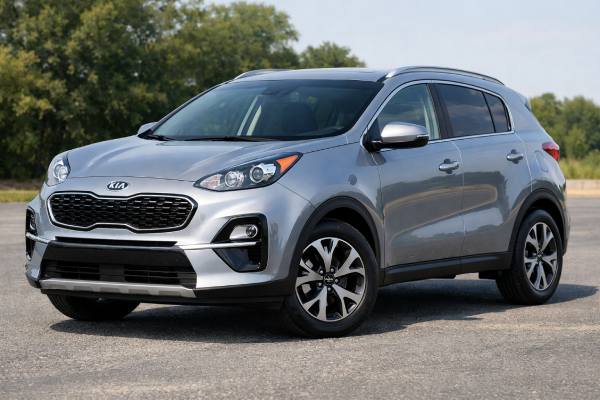
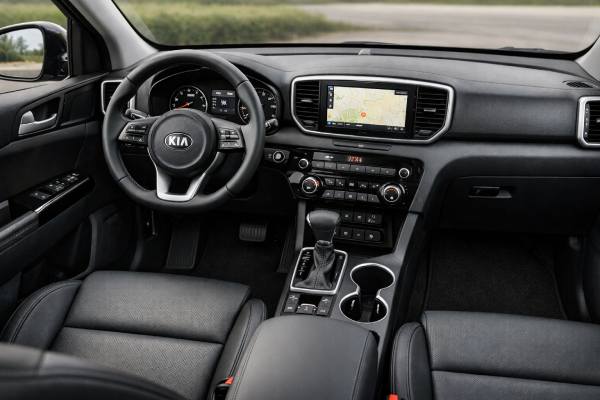
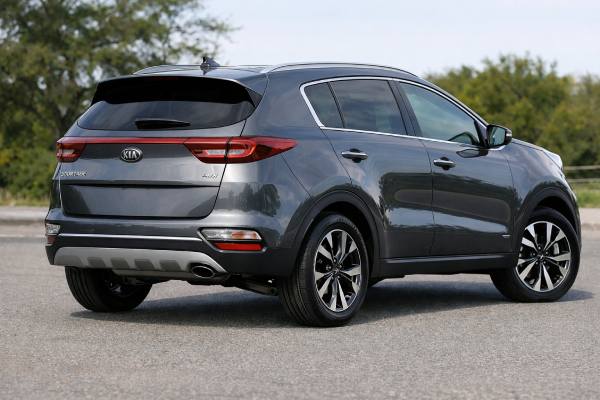
The facelifted 2019–2022 Kia Sportage QL with the G4NA 2.0-liter petrol engine is one of those compact SUVs that makes more sense the longer you own it. It does not chase headline acceleration figures or hybrid-style economy. Instead, it leans on a simpler naturally aspirated engine, a conventional 6-speed automatic, and a well-sorted chassis that suits family use, commuting, and mixed urban-highway driving. For many buyers, that matters more than spec-sheet drama.
This version is also easier to understand than turbocharged alternatives. The 2.0 MPI engine avoids some of the complexity that comes with direct-injection-only or dual-clutch setups, and the QL platform itself was already mature by the facelift years. The result is a Sportage that feels modern enough in design and safety, yet familiar and predictable to maintain. The main caveat is that equipment, dimensions, tyres, and service schedules vary by market, so the smart way to judge one is by VIN, trim, and service history.
Owner Snapshot
- Smooth 2.0 MPI engine and conventional 6-speed automatic make this one of the simpler Sportage combinations to own.
- Ride comfort is generally better on 17- or 18-inch wheels than on 19-inch GT-Line packages.
- Cabin practicality, rear-seat space, and cargo flexibility remain strong for a compact family SUV.
- Recall completion and evidence of regular oil changes matter more than flashy trim level.
- A sensible service rhythm is every 10,000 to 15,000 km or 12 months, depending on market and use.
Guide contents
- Sportage QL facelift essentials
- Sportage QL specs and data
- Sportage QL trims and safety
- Reliability and service actions
- Maintenance and buying advice
- Driving and real-world performance
- Comparison with key rivals
Sportage QL facelift essentials
The facelifted QL Sportage arrived as a refinement rather than a reinvention. Kia kept the strong points of the fourth-generation platform, then sharpened the styling, updated wheel and lighting details, improved infotainment in many markets, and broadened safety technology availability. In FWD 2.0 MPI form, the car sits at the practical center of the range: neither the sportiest nor the cheapest-looking, but often the easiest to live with over time.
The engine is the naturally aspirated G4NA, part of Kia’s Nu-family petrol line. In this application it produces 155 hp and 192 Nm, which means it feels adequate rather than fast. Around town, it responds cleanly and predictably. On the highway, it is happiest when driven with a light right foot, and when you need a quick overtake, the 6-speed automatic usually drops a gear or two without fuss. That may sound ordinary, but ordinary is often exactly what long-term owners want.
The biggest ownership advantage is the powertrain layout itself. A naturally aspirated multipoint-injected petrol engine paired with a torque-converter automatic usually ages more gracefully than a small turbo engine paired with a more sensitive transmission. That does not make the Sportage trouble-free, but it does reduce the number of expensive systems you need to worry about. For buyers keeping a car beyond the warranty period, that matters.
The chassis also deserves credit. Even in basic or mid trims, the Sportage QL feels planted, with a rear multi-link suspension layout instead of a cheaper torsion beam setup. Steering is light but tidy, and body control is better than many buyers expect from a comfort-focused crossover. The facelift did not turn it into a driver’s SUV, yet it gave the car a more finished feel.
The one thing to keep in mind is regional variation. A 2019–2022 2.0 FWD Sportage in Southeast Asia, Hong Kong, the Middle East, or another export market may share the same engine and core structure while differing in ride height, wheels, safety kit, infotainment, and even quoted cargo capacity. That is why the best way to assess this model is not by a single global brochure, but by matching the VIN to the exact market specification and then checking whether the actual car still matches it.
Sportage QL specs and data
For this exact facelift-era FWD petrol configuration, the core mechanical package stays very consistent across markets: Nu 2.0 MPI engine, 6-speed automatic, front-wheel drive, MacPherson strut front suspension, multi-link rear suspension, and four-wheel disc brakes. Equipment and wheel packages vary, but the bones of the car do not.
Powertrain and efficiency
| Item | Kia Sportage FWD (QL) facelift 2019–2022 |
|---|---|
| Code | G4NA / Nu 2.0 MPI |
| Engine layout and cylinders | Inline-4, 4 cylinders, DOHC, D-CVVT, 4 valves per cylinder |
| Bore × stroke | 81.0 × 97.0 mm (3.19 × 3.82 in) |
| Displacement | 2.0 L (1,999 cc) |
| Induction | Naturally aspirated |
| Fuel system | Multipoint injection |
| Compression ratio | 10.3:1 |
| Max power | 155 hp (114 kW) @ 6,200 rpm |
| Max torque | 192 Nm (142 lb-ft) @ 4,000 rpm |
| Timing drive | Chain |
| Rated efficiency | 7.9 L/100 km (29.8 mpg US / 35.8 mpg UK) in one official facelift FWD market sheet |
| Real-world highway at 120 km/h (75 mph) | Typically around 7.0–7.8 L/100 km, depending on wheel size, load, wind, and terrain |
Transmission and driveline
| Item | Kia Sportage FWD (QL) facelift 2019–2022 |
|---|---|
| Transmission | 6-speed torque-converter automatic |
| Drive type | FWD |
| Differential | Open front differential |
| Drive modes | Often Eco / Normal / Sport on better-equipped trims |
Chassis and dimensions
| Item | Common facelift-era figures |
|---|---|
| Suspension front / rear | MacPherson strut with stabilizer / Multi-link |
| Steering | Motor Driven Power Steering (MDPS) |
| Brakes | Front ventilated discs / rear solid discs |
| Most common tyre sizes | 225/60 R17, 225/55 R18, or 245/45 R19 depending on trim |
| Ground clearance | Around 172 mm (6.8 in) in one official 2.0 FWD brochure |
| Length | 4,480–4,495 mm (176.4–177.0 in), market dependent |
| Width | 1,855 mm (73.0 in) |
| Height | 1,645–1,655 mm (64.8–65.2 in), market dependent |
| Wheelbase | 2,670 mm (105.1 in) |
| Turning circle | 5.3 m (17.4 ft) |
| Kerb weight | Roughly 1,452–1,669 kg (3,201–3,680 lb), strongly trim dependent |
| GVWR | Around 2,020 kg (4,453 lb) in one official 2.0 FWD brochure |
| Fuel tank | 62 L (16.4 US gal / 13.6 UK gal) |
| Cargo volume | 466–491 L seats up and 1,455–1,480 L seats folded, depending on market method and trim |
Performance and safety
| Item | Notes |
|---|---|
| 0–100 km/h | Often omitted in public brochures for this variant; expect adequate rather than quick performance |
| Top speed | Market dependent and not consistently published in open brochures for this exact trim |
| Towing capacity | Varies significantly by market approval and equipment; verify by VIN and handbook |
| Euro NCAP | 5 stars for the fourth-generation Sportage body, with 90% adult occupant and 83% child occupant scores; safety assist 71% |
| IIHS | North American Sportage body earned strong results, with Top Safety Pick status tied to specific headlights and optional front crash prevention on certain trims |
| ADAS suite | AEB, lane support, blind-spot monitoring, rear cross-traffic alert, and traffic-sign functions were market and trim dependent |
Fluids and service data
Public brochures for this facelift 2.0 FWD Sportage do not publish all fluid capacities, refrigerant charges, or workshop torque values. That is not unusual. For oil grade, coolant type, automatic-transmission fluid, A/C charge, drain plug torque, and wheel torque, verify the exact VIN against the official owner’s manual or workshop data for the car’s market. That step matters because Kia changed recommendations by region, climate, and supplier.
Sportage QL trims and safety
The facelifted 2.0 FWD Sportage usually appeared in lower or mid-range petrol trims, with names such as LX, EX, or market-specific equivalents. In some places, a GT-Line appearance package was also offered with the same 155 hp engine. That means the badge on the tailgate does not always tell you whether the car is mechanically basic or simply visually upgraded.
At the entry end, a 2.0 FWD Sportage often came with 17-inch wheels, cloth or part-leather trim, manual or simpler automatic climate control, and fewer parking or camera aids. These versions are usually the best value on the used market because the drivetrain is the same, tyre replacement is cheaper, and ride quality is often slightly better. Mid trims tend to be the sweet spot. They add cruise control, better infotainment, reverse camera, parking sensors, smarter key access, dual-zone climate control, and a more complete feel without taking on the cost of the heaviest wheel package.
GT-Line-style versions are mostly about presentation. You may see larger 18- or 19-inch wheels, a more aggressive bumper design, sportier seats, paddle shifters, panoramic roof, power tailgate, and a richer interior finish. The trade-off is predictable: more equipment to maintain, pricier tyres, and sometimes a firmer edge to the ride. Mechanically, however, the 2.0 MPI FWD formula stays familiar.
Safety equipment also varies more than many buyers expect. Six airbags, ABS, ESC, hill-start assist, downhill brake control, tyre-pressure monitoring, and ISOFIX anchors were widely available, but not always universal in every base trim. The structure itself is a strong point. The QL Sportage body used a higher proportion of advanced high-strength steel than the generation before it, and that improvement helped crash performance.
For active safety, the facelift years are important because they broadened ADAS availability. Depending on region and trim, you may find autonomous emergency braking, lane-keeping support, speed-limit recognition, blind-spot detection, and rear cross-traffic alert. In other markets, the same exterior shape may have none of those features. That is why buyers should inspect the windshield camera area, bumper sensors, side mirrors, and instrument cluster menus rather than assuming every facelift Sportage has the same safety tech.
A final point for used buyers: equipment changes year to year were often quiet. Infotainment screen size, smartphone integration, parking camera availability, and trim upholstery could change without a dramatic badge update. Build sheet confirmation is more reliable than a seller’s description.
Reliability and service actions
In broad terms, the 2019–2022 Sportage QL 2.0 FWD is one of the safer long-term bets in the range. The engine is not highly stressed, the 6-speed automatic is conventional, and the chassis is mature. Most problems are not mysterious. They are the kind you can catch early if the car has a clean service record and you inspect it properly.
Here is the practical reliability map:
- Common, low to medium cost: battery weakness after four to six years, brake pad and disc corrosion on lightly used cars, worn drop links or suspension bushes, ageing ignition coils or spark plugs, and camera or parking-sensor faults.
- Occasional, medium cost: thermostat housing seepage, hose ageing, noisy accessory belt hardware, wheel bearings, and engine mounts that make the car feel rougher at idle.
- Less common, high consequence: oil-neglect-related timing chain noise, persistent overheating after ignored coolant loss, and unresolved ABS or EPB issues on cars that missed recall work.
The G4NA itself is usually happiest when it gets regular oil changes. Ignore that, and you increase the risk of chain noise, sludge, lazy cam timing response, and eventually more serious wear. Because this is a naturally aspirated MPI engine, it avoids the heavy intake-valve carbon pattern common to many direct-injection-only engines, which is a real advantage for long-term city use.
The automatic transmission is generally durable, but it does not like being treated as “sealed for life.” On neglected cars, you may feel delayed engagement when selecting drive, a dull thump on low-speed shifts, or rough kickdown behavior once the fluid is tired. Those symptoms do not always mean the gearbox is failing, but they do mean the car deserves a close inspection before purchase.
Software and service campaigns matter too. The most important headline item is the HECU-related recall affecting a large group of Sportage vehicles in North America. The official remedy involved lower-amperage fuses, and for EPB-equipped vehicles, an HECU software update as well. Even if your market differs, the lesson is simple: check the VIN for all completed campaigns and do not assume they were done just because the seller says so.
On pre-purchase inspection, ask for these checks:
- Cold start with the bonnet open, listening for chain rattle or top-end noise.
- A full scan for stored engine, transmission, ABS, ESC, EPB, and ADAS faults.
- Evidence of steady oil service, not just one recent change before sale.
- Smooth hot and cold shifting from the 6-speed automatic.
- Dry coolant joints, dry front timing cover area, and no burnt smell around the ABS module area.
- Even tyre wear and no rear-suspension clunks over sharp bumps.
The reliability verdict is straightforward: a good one ages well, a neglected one usually tells on itself.
Maintenance and buying advice
For maintenance, the most important thing to understand is that Kia published different interval schedules by region. Some official petrol Sportage schedules use 15,000 km or 12 months, while some non-turbo petrol schedules in other markets stretched farther. For longevity, especially on older used examples, a conservative plan is the better plan.
A sensible real-world maintenance routine looks like this:
- Engine oil and filter: every 10,000 to 15,000 km or 12 months. If the car does short trips, heavy city traffic, or hot-climate work, stay closer to 10,000 km.
- Engine air filter: inspect at each service and replace around 20,000 to 30,000 km, sooner in dusty areas.
- Cabin air filter: every 15,000 to 20,000 km or once a year.
- Spark plugs: usually around 40,000 to 60,000 km, depending on plug type and fuel quality.
- Brake fluid: every 2 years.
- Coolant: inspect yearly; replace according to the market manual, often around year 5 as a practical first major coolant service.
- Automatic transmission fluid: preventive service around 60,000 to 90,000 km is wise for long-term ownership.
- Serpentine belt and related pulleys: inspect every service; replace on cracks, chirping, or bearing noise.
- Timing chain: no routine belt-style replacement interval, but inspect immediately if there is rattle, timing-correlation faults, or poor oil-service history.
- Tyre rotation: every 8,000 to 10,000 km.
- Alignment check: yearly, and after pothole hits or suspension work.
- 12 V battery: test yearly after year 4.
- Brake pads and discs: inspect at every service, especially on low-mileage cars that sit outside.
For fluids, always use the exact handbook specification for the VIN. Public brochures do not publish enough detail to make universal claims about oil viscosity, coolant chemistry, ATF fill amount, or A/C charge. That is one place where guessing is not worth it.
As a used buy, the best versions are usually 2021–2022 cars with complete service records, 17- or 18-inch wheels, and a mid trim that includes reverse camera, cruise control, and climate upgrades without maxing out the options list. These tend to balance comfort, ownership cost, and resale appeal.
Approach with more caution if the car has:
- Missing service history.
- Uneven tyres or obvious alignment issues.
- Aftermarket wiring, alarms, or tow-electrics.
- ABS, ESC, EPB, or airbag lights.
- Poor idle quality, harsh shifts, or repeated overheating history.
- Large wheels paired with a harsh ride and underbody scrape marks.
Long-term durability is good rather than exceptional. The Sportage 2.0 FWD does not have the prestige of a premium SUV or the thrift of a hybrid, but as a mainstream family crossover with regular maintenance, it usually rewards owners who keep things simple and stay ahead of wear items.
Driving and real-world performance
The facelifted Sportage 2.0 FWD drives exactly the way many compact-SUV buyers want: calm, stable, and predictable. It is not a sporty crossover, but it rarely feels loose or underdeveloped. The steering is light at parking speeds and easy to place in town. On faster roads, it settles into a secure, straight-tracking rhythm that makes long drives less tiring than the numbers alone might suggest.
Ride quality depends heavily on wheel choice. On 17-inch or most 18-inch setups, the Sportage absorbs rough urban surfaces well and keeps body shake under control. On 19-inch GT-Line packages, it still feels composed, but sharp-edged impacts are more noticeable and replacement tyres cost more. That difference matters on a used car, because tyres are one of the first ownership costs you feel.
The powertrain character is honest. Step away from a stop and the naturally aspirated 2.0 responds smoothly, without turbo lag or sudden surges. Around 2,000 to 3,500 rpm, it feels perfectly acceptable for daily use. Above that, it starts to sound more purposeful, but it never turns truly quick. With a full cabin or a steep highway grade, you need to plan overtakes more than you would in a turbo rival. The 6-speed automatic helps by being familiar and predictable, even if its kickdown is deliberate rather than urgent.
Noise levels are decent for the class. Wind noise is acceptable at highway speed, road noise depends mostly on tyre brand and size, and the engine only becomes obvious when you hold higher revs for hills or passing. Braking feel is conventional and easy to judge, which suits family driving.
In real fuel use, expect roughly these patterns:
- City: about 9.0–11.0 L/100 km depending on traffic, climate, and tyre size.
- Highway: about 7.0–8.0 L/100 km at normal cruising speeds.
- Mixed driving: around 8.0–9.5 L/100 km for most owners.
Cold weather, short trips, and big-wheel trims push those numbers upward. The Sportage’s strong point is not class-leading economy. Its strong point is that the way it uses fuel is predictable and easy to understand. For many owners, that predictability feels like part of the car’s overall honesty.
Comparison with key rivals
Against its main rivals, the 2019–2022 Kia Sportage 2.0 FWD makes its case through balance rather than domination. It is not the fastest, roomiest, or most efficient option in the class. It is the one that often lands in the middle of the chart with fewer unpleasant surprises.
The closest rival is the Hyundai Tucson of the same era, because much of the engineering philosophy is shared. In practice, the choice often comes down to styling, seating feel, wheel package, and local trim structure. The Sportage usually feels a little more design-forward, while the Tucson can look more conservative.
Against a Mazda CX-5 2.0, the Kia gives up some steering feel and cabin polish, but it often wins on simplicity of ownership and a more relaxed, less premium-sensitive used-buy proposition. The Mazda may feel more special. The Kia may be easier to justify.
Compared with a Toyota RAV4 2.0, the Sportage usually offers a more conventional transmission feel and often better value on the used market, though the Toyota tends to hold value more strongly and can be the safer resale bet. Buyers who dislike CVT behavior may prefer the Kia’s 6-speed automatic even if the Toyota looks stronger on paper.
A Honda CR-V can beat the Sportage for rear-seat space and airy packaging, but not every market offered the same engine lineup. In places where the CR-V leaned on turbo or CVT combinations, the Kia’s simple MPI-plus-automatic formula becomes a real selling point for long-term ownership.
The Nissan X-Trail is another practical rival, often strong on packaging, but the Sportage typically feels more modern inside and more confidence-inspiring if you are specifically trying to avoid older CVT anxiety.
So who should choose the Sportage? The buyer who wants a compact SUV with modern styling, proven structure, straightforward petrol engineering, and broadly sensible running costs. Who should look elsewhere? Anyone who needs hybrid-level economy, class-leading rear room, or punchy overtaking performance.
References
- Specifica on Table : Sportage (QL PE) – Kia 2019 (Specification Table)
- Sportage 2021 (Price List)
- Kia Service Intervals 2023 (Maintenance Guide)
- Five-star safety ratings for all-new Kia Optima and Sportage 2015 (Safety Rating)
- Part 573 Safety Recall Report 21V-137 2021 (Recall Database)
Disclaimer
This article is for informational purposes only and is not a substitute for professional diagnosis, inspection, or repair. Specifications, torque values, service intervals, fluids, procedures, and equipment can vary by VIN, market, production date, and trim, so always verify details against the official owner’s manual and service documentation for the exact vehicle.
If this guide helped you, please consider sharing it on Facebook, X, or your favorite forum to support our work.