
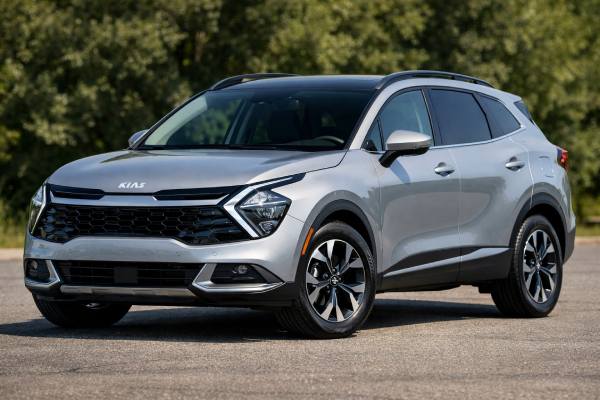
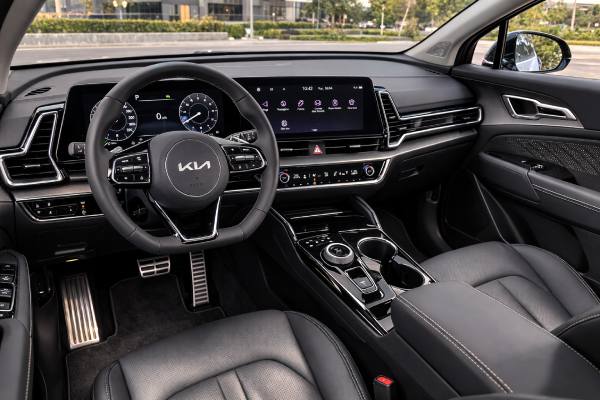
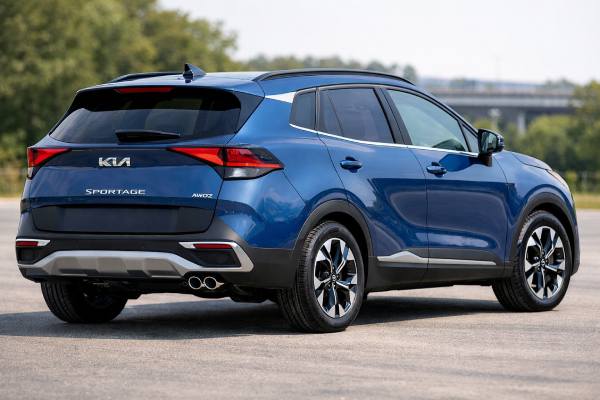
The Kia Sportage NQ5 1.6 petrol in front-wheel-drive form is one of the more interesting mainstream family SUVs of the current era because it blends modern cabin tech, generous packaging, and a lighter-duty ownership profile than the diesel versions many buyers used to choose. In the 160 hp-class version, the 1.6-litre turbocharged G4FP-family engine gives the Sportage enough mid-range pull for everyday driving without turning the car into a thirsty performance SUV. The key engineering story is the platform: this European-focused NQ5 is roomier, more refined, and more safety-led than the older QL. The key buying story is market variation. Depending on country and model year, this same NQ5 front-drive 1.6 T-GDi can appear as a manual petrol or as a 48-volt mild-hybrid DCT, and some markets now list closely related trims at 150 PS instead of 160. For that reason, smart buyers always verify the exact output, gearbox, and emissions version by VIN before comparing specs or ordering parts.
At a Glance
- Spacious rear seat and a very strong boot make it one of the more practical petrol SUVs in its class.
- The 1.6 turbo petrol suits mixed use better than a diesel if your driving includes short trips and town work.
- Safety equipment is strong, and Euro NCAP testing gave the NQ5 a five-star result.
- DCT mild-hybrid cars need smooth, consistent servicing and software updates to stay at their best.
- A sensible oil-service target is every 10,000 to 15,000 km or 12 months, depending on market and use.
Guide contents
- Kia Sportage NQ5 petrol snapshot
- Kia Sportage NQ5 numbers and specs
- Kia Sportage NQ5 grades and safety tech
- Known faults and campaign checks
- Service plan and used-buy tips
- On-road feel and real economy
- Against Tucson and other rivals
Kia Sportage NQ5 petrol snapshot
The NQ5 Sportage marked a bigger step forward than the basic family-SUV formula suggests. Kia did not just restyle the old car. It gave the European Sportage its own shorter-body format, tuned it around the newer N3 architecture, and leaned hard into space efficiency, screen tech, and safety equipment. That matters because the 1.6-litre front-drive petrol version is often bought by households that use one car for everything: school runs, commuting, motorway weekends, and holiday luggage. In that role, the NQ5 is a much more complete tool than the older QL.
This 1.6 T-GDi FWD version also sits in a useful middle ground. It is not the cheapest Sportage to buy, but it avoids the heavier cost and complexity of the hybrid and plug-in hybrid models while giving noticeably better flexibility than the basic naturally aspirated petrol crossovers that used to dominate this class. The engine’s broad torque band helps the car feel less strained than its size might suggest, especially once it is moving. Even so, this is not a fast SUV in an overtly sporty sense. It is better understood as a strong, modern family petrol with enough reserve for overtaking and loaded travel.
A crucial detail is that “160 hp Sportage 1.6 FWD” is really a family of closely related NQ5 variants, not one globally identical build. In several continental European markets, Kia sold the front-drive 1.6 T-GDi as a 160 PS six-speed manual and also as a 160 PS 48-volt mild-hybrid with a seven-speed DCT. In some later market documents, related non-hybrid front-drive cars are shown at 150 PS instead. So when owners compare economy, running costs, or service parts online, they often end up mixing two or three very similar but not identical cars. That is why VIN-led buying matters more on the NQ5 than many people expect.
From an ownership angle, the biggest strength is suitability for modern mixed use. If your mileage includes short cold starts, town errands, and medium-length family trips, this petrol Sportage is a safer bet than a diesel. It warms up faster, avoids diesel particulate filter worries, and generally tolerates stop-start life better. The biggest caution is transmission choice. The manual is simpler. The DCT mild-hybrid is easier in traffic and more efficient on paper, but it adds another layer of calibration, battery, and clutch behavior to monitor as the vehicle ages.
Overall, the NQ5 1.6 FWD succeeds because it is broad-spectrum competent. It is roomy, quiet enough, well equipped, and easier to recommend for mainstream use than many flashier rivals.
Kia Sportage NQ5 numbers and specs
Because Kia has sold the NQ5 1.6 T-GDi FWD in more than one market tune, the cleanest way to present the data is as the 160 hp-class front-drive family. The six-speed manual and the 48-volt mild-hybrid DCT share the same basic 1.6-litre turbo petrol engine architecture, but they differ in fuel use, kerb weight, cargo volume, and day-to-day character.
| Powertrain and efficiency | 1.6 T-GDi FWD MT | 1.6 T-GDi 48V FWD DCT |
|---|---|---|
| Code | G4FP / 1.6 T-GDi | G4FP / 1.6 T-GDi MHEV |
| Engine layout and cylinders | Inline-4, DOHC, 16 valves | Inline-4, DOHC, 16 valves |
| Bore × stroke | 75.6 × 89.0 mm (2.98 × 3.50 in) | 75.6 × 89.0 mm (2.98 × 3.50 in) |
| Displacement | 1.6 L (1,598 cc) | 1.6 L (1,598 cc) |
| Induction | Turbocharged | Turbocharged |
| Fuel system | Direct injection | Direct injection |
| Compression ratio | 10.5:1 | 10.5:1 |
| Max power | 160 hp-class (117 kW) @ 5,500 rpm | 160 hp-class (117 kW) @ 5,500 rpm |
| Max torque | 265 Nm (195 lb-ft) @ 1,500–3,500 rpm | 265 Nm (195 lb-ft) @ 1,500–3,500 rpm |
| Timing drive | Chain | Chain |
| Transmission | 6-speed manual | 7-speed dual-clutch automatic |
| Drive type | FWD | FWD |
| Differential | Open | Open |
| Rated efficiency | 6.9–7.0 L/100 km | 6.2–6.4 L/100 km |
| Real highway at 120 km/h | about 7.3–8.0 L/100 km | about 6.8–7.5 L/100 km |
| Chassis and dimensions | Figure |
|---|---|
| Front suspension | MacPherson strut, coil springs, gas dampers |
| Rear suspension | Independent compact multi-link |
| Steering | Electric power steering; about 2.45 turns lock-to-lock |
| Brakes | 320 mm front discs (12.6 in), 300 mm rear discs (11.8 in) |
| Most common tyre sizes | 215/65 R17, 235/55 R18, 235/50 R19 |
| Ground clearance | 170 mm (6.7 in) |
| Length | 4,515 mm (177.8 in) |
| Width | 1,865 mm (73.4 in) |
| Height | 1,650 mm (65.0 in) |
| Wheelbase | 2,680 mm (105.5 in) |
| Turning circle | about 10.9–11.0 m (35.8–36.1 ft) |
| Kerb weight | 1,526–1,670 kg MT / 1,580–1,728 kg DCT |
| GVWR | 2,085 kg MT / 2,145 kg DCT |
| Fuel tank | 54 L MT / 52 L DCT |
| Cargo volume, seats up | 591 L MT / 562 L DCT, VDA |
| Cargo volume, seats down | 1,780 L MT / 1,751 L DCT, VDA |
| Performance and capability | 1.6 T-GDi FWD MT | 1.6 T-GDi 48V FWD DCT |
|---|---|---|
| 0–100 km/h | 9.9 s | 9.4 s |
| Top speed | 194 km/h (120.5 mph) | 192 km/h (119.3 mph) |
| Towing, braked | 1,510 kg (3,329 lb) | 1,510 kg (3,329 lb) |
| Towing, unbraked | 750 kg (1,653 lb) | 750 kg (1,653 lb) |
| Payload, typical range | about 540–580 kg | about 540–580 kg |
| Fluids and service figures | Figure |
|---|---|
| Engine oil | API SN Plus or SP, 0W-20, 4.8 L (5.1 US qt) |
| Fuel | Unleaded petrol, 95 RON minimum |
| Wheel-nut torque | 107–127 Nm (79–94 lb-ft) |
| Coolant, transmission fluid, and A/C charge | Verify by VIN and market manual before service |
| Safety and driver assistance | Figure |
|---|---|
| Euro NCAP | 5 stars |
| Adult occupant | 87% |
| Child occupant | 86% |
| Vulnerable road users | 66% |
| Safety assist | 72% |
| Common ADAS availability | AEB, LKA, LFA, ISLA, DAW standard in many trims; BCA, RCCA, HDA, upgraded FCA often trim or package dependent |
The broad takeaway from the numbers is simple. The NQ5 is usefully roomy, its 1.6 turbo has enough torque for the class, and the DCT mild-hybrid version buys a modest efficiency gain rather than a dramatic performance jump.
Kia Sportage NQ5 grades and safety tech
For this NQ5 petrol, trim is almost as important as engine choice. The 160 hp-class front-drive car has been sold under different grade names across Europe, but the pattern stays fairly consistent. Entry or near-entry trims focus on value and core safety, mid-level trims add the comfort and convenience features most owners actually want, and GT Line-style trims add the visual attitude, bigger wheels, and some of the more desirable driver-assistance packages.
In German-market structure, the range is laid out around Core, Vision, Spirit, and GT-Line. In Belgium and nearby markets, the same car appears under names such as Pure, Pulse, Pace, Style Edition, and GT Line. The actual trim names vary, but the equipment ladder is familiar. Lower trims usually run 17-inch alloys, simpler seat trim, and fewer premium touches. Middle trims often add heated seats, heated steering wheel, climate upgrades, rain-sensing wipers, better interior trim, and more flexible cabin storage. High trims bring the bigger digital display setup, powered front seats, upgraded lights, powered tailgate, privacy glass, and sportier wheel packages.
Mechanically, the 160 petrol does not change as dramatically by trim as some rivals do, but there are still meaningful differences. GT Line versions commonly ride on 19-inch wheels, which sharpen visual appeal but add impact harshness and tyre cost. Some top trims also bring different steering hardware or electronically controlled damping in markets where Kia bundles chassis upgrades higher in the range. In practical ownership terms, that means the best-looking car is not always the best long-term value. A mid-trim 17- or 18-inch Sportage often rides better, costs less to re-tyre, and feels less busy on broken roads.
Safety is one of the NQ5’s major selling points. Euro NCAP tested the Sportage in 2022 and awarded it five stars, with strong child and adult scores and a respectable safety-assist result. The rating specifically applies to the 1.6 T-GDi 4×2 version in both left- and right-hand drive, which is exactly why it matters for this guide. Standard passive safety equipment is strong, too: seven airbags including a front center airbag, ISOFIX on the outer rear seats, ESC, emergency stop signaling, and eCall.
On active safety, even mainstream trims are well covered. Lane Keeping Assist, Lane Following Assist, Driver Attention Warning, Intelligent Speed Limit Assist, and forward collision warning with pedestrian and cyclist recognition are widely fitted. Higher trims or option packs add Blind Spot Collision Avoidance Assist, Rear Cross-Traffic Collision Avoidance Assist, upgraded Forward Collision-Avoidance Assist with turning and junction support, and Highway Driving Assist on automatic versions.
There is one ownership detail many used buyers miss: ADAS hardware raises repair standards. Windscreen replacement, bumper repair, radar disturbance, or poor wheel alignment can all affect calibration. So if a Sportage has had front-end repair work, ask not only what was replaced but whether the camera and radar systems were recalibrated correctly afterward.
Known faults and campaign checks
So far, the NQ5 1.6 petrol has not earned the kind of broad engine reputation problem that can poison an otherwise good used buy. That is the good news. The more realistic picture is a series of smaller issues that range from minor annoyance to moderate cost, plus a handful of market-specific campaigns that need checking by VIN rather than rumor.
The most common low-severity issue is software-related. Owners sometimes report infotainment lag, phone-pairing glitches, temporary black screens, or driver-assistance warnings that disappear after a restart. In many cases the cure is not parts but updates. Kia has steadily improved over-the-air and dealer-installed software support for the NQ5, so a car that feels electronically fussy can be much better after current infotainment and control-unit calibration is installed. This is one reason dealer history matters on newer vehicles.
The next issue cluster depends on gearbox. Manual cars are mechanically simpler and usually easier to judge. Look for clutch slip, a high bite point, and any sign of abused towing or repeated stop-start hill work. The DCT mild-hybrid cars deserve a different checklist. At parking speeds, a light hesitation or slightly elastic take-up can be normal for a dual-clutch box. Persistent shudder, jerky engagement, rough reverse take-up, or repeated gearbox warnings are not. Those symptoms can point to clutch wear, adaptation problems, or software that needs updating.
For the engine itself, the risks are familiar rather than exotic. This is a direct-injection turbo petrol, so long-term carbon build-up on intake valves is possible, especially if the car does mainly short, low-load trips and stretched oil changes. Most cars will not show serious symptoms early, but rough cold running, rising fuel use, or soft response at higher mileage deserve attention. Turbo plumbing should also be checked for oil misting, loose hose clips, or boost leaks after repair work.
The 48-volt mild-hybrid versions add another layer. Most problems are not catastrophic, but warning lights tied to the 48V system, belt-starter-generator behavior, or battery state should never be dismissed as a harmless electrical quirk. These cars need proper diagnosis, not battery guessing.
Brake and safety-system campaigns are the other major reason to check the VIN. In some 2022–2023 markets, Sportage-related brake-assist and vacuum-related recalls or service actions were issued. The symptom pattern is serious enough to take seriously: harder brake pedal effort, reduced assist, or abnormal warnings. The remedy depends on the campaign, but the buying rule is constant: use Kia’s official recall lookup or dealer records, and confirm completion rather than assuming “it would have been done.”
Pre-purchase, ask for these five things:
- full service history
- proof of software and campaign completion
- a cold-start test drive
- a scan for stored faults, not just dashboard lights
- evidence that all ADAS functions work normally after any body or glass repair
On balance, reliability looks decent, but the NQ5 rewards careful verification more than casual confidence.
Service plan and used-buy tips
The right maintenance approach for the NQ5 1.6 FWD is simple: follow Kia’s official schedule, but tighten it slightly if the car lives in traffic, makes repeated short trips, or spends a lot of time idling. Public Kia service material shows market-dependent petrol intervals around 10,000 to 15,000 km or 12 months. That is not a contradiction so much as a reminder that country, oil grade, and usage assumptions differ. For real ownership, 10,000 to 12,000 km is a sensible target if you want to protect the turbocharged direct-injection engine long term.
| Practical maintenance item | Sensible interval |
|---|---|
| Engine oil and filter | 10,000 to 15,000 km or 12 months |
| Engine air filter | Inspect every 15,000 km; replace around 30,000 km sooner in dust |
| Cabin air filter | Yearly or about every 15,000 km |
| Spark plugs | 75,000 km |
| Coolant | First change at 180,000 km or 120 months, then every 30,000 km or 24 months |
| Drive belts | Inspect every 15,000 km or 12 months; replace by official interval if worn or aged |
| Brake fluid | Inspect regularly; practical replacement about every 3 years |
| Brake pads and discs | Inspect at every service |
| Tyre rotation | About every 10,000 km |
| Wheel alignment | Check yearly or whenever tyre wear suggests a problem |
| Manual gearbox oil | No routine owner-manual interval, but many long-term owners change it early |
| DCT fluid | No routine owner-manual interval, but conservative long-term owners often refresh it earlier than “lifetime” language suggests |
| 12 V battery test | Yearly after year 4 |
| 48 V mild-hybrid system | Check promptly if any warning appears |
Fluid and decision-making figures that are worth having on hand are more limited than many buyers expect from public Kia sources. The strongest openly published items are engine oil, fuel, and wheel-nut torque:
- engine oil: 0W-20, API SN Plus or SP, 4.8 L
- fuel: 95 RON minimum
- wheel nuts: 107–127 Nm
For coolant volume, DCT fill amount, and A/C charge, do not work from internet guesswork. Verify the under-hood label, VIN-specific Kia documentation, or dealer system before major service.
As a used buy, the best examples are often mid-level trims with 17- or 18-inch wheels, full dealer or specialist history, matching premium tyres, and a clean software record. The cars to approach carefully are heavily optioned early examples with patchy servicing, cheap mixed tyres, or unexplained warning-light history. On DCT cars, drive from cold and include slow parking maneuvers, a light hill start, and a warm restart. On manual cars, check clutch bite, pedal smoothness, and whether the engine pulls cleanly from low revs.
Long-term durability should be respectable if the oil is changed on time, the car is not run on poor fuel, and small software or electrical faults are not ignored until they become larger ones.
On-road feel and real economy
The NQ5 1.6 FWD does not try to be a hot SUV, and that is actually part of its appeal. It feels composed, tidy, and modern rather than showy. Straight-line stability is good, the seating position is easy to settle into, and the suspension gives the Sportage a mature motorway feel for a mainstream family SUV. Compared with some lighter rivals, it can feel a little substantial rather than light on its feet, but most owners will read that as reassuring rather than dull.
Ride quality depends heavily on wheel size. On 17-inch wheels the Sportage is usually at its most rounded, with enough sidewall to soften sharp urban edges. Eighteens are a good compromise. Nineteens look best but ask more of the suspension and pass more impact noise into the cabin. That matters because the Sportage’s cabin is one of its quiet strengths. Wind and road noise are reasonably well controlled, and the car generally feels calmer than some cheaper-feeling rivals at 110 to 130 km/h.
The engine itself is better in the mid-range than at the top end. Around town, the turbo petrol has enough torque to avoid feeling breathless, though it still needs more revs than a larger diesel or hybrid when the car is heavily loaded. On the open road it is responsive enough for ordinary overtakes, but enthusiastic drivers will notice that the car is more effective than exciting. The manual suits that character well, because it lets you keep the engine in its stronger band and avoid unnecessary gearbox intervention. The DCT mild-hybrid is the easier daily driver, but low-speed clutch behavior can feel slightly mechanical compared with a conventional torque-converter automatic.
Real-world economy is acceptable rather than class-leading. Expect roughly 8.0 to 9.2 L/100 km in heavy city work, about 6.8 to 7.5 L/100 km on a steady motorway run in the DCT mild-hybrid, and about 7.3 to 8.0 L/100 km on the same run in the manual. Mixed driving for most owners usually lands in the 7.2 to 7.8 L/100 km zone, with winter use, cold starts, roof loads, and bigger wheels pushing consumption upward. That makes the 1.6 petrol cheaper to live with than a troubled diesel, but not as efficient as the hybrid.
Traction is predictable rather than heroic because this is the front-drive model. On good tyres it puts its power down cleanly in normal use, but you do feel the limits sooner than in the AWD versions on wet uphill starts or greasy winter roads. The fix is simple: buy the best tyres you can, because tyre quality changes this Sportage more than most buyers realize.
Towing performance is adequate for light to moderate trailer duties. The Sportage stays stable enough, but consumption typically rises by 20% to 30% when loaded or towing near its braked limit.
Against Tucson and other rivals
The Kia Sportage NQ5 1.6 FWD compares well because it does not rely on one gimmick. It offers space, safety, a modern interior, and a wide range of trims, and it usually does so at a price that still feels mainstream rather than premium. That makes it easy to recommend, but the exact rival it beats depends on what matters most to you.
The closest comparison is the Hyundai Tucson, because the two share core hardware. In many ways they are sibling choices rather than true opposites. The Tucson tends to look more conservative and can appeal to buyers who want something understated. The Sportage is bolder inside and out, often feels a touch more design-led, and sometimes comes with more eye-catching trim combinations. Mechanically there is little to split them, so history, price, and exact equipment should decide.
Against the Nissan Qashqai 1.3 DIG-T, the Sportage feels like the bigger, more relaxed family tool. It has stronger rear-seat room, a larger luggage area, and a more substantial motorway feel. The Nissan counters with lighter responses and often lower urban fuel use, but it does not feel as spacious or as substantial on a long holiday run.
Against the Volkswagen Tiguan 1.5 TSI, the Kia often wins on equipment and value. The VW still feels very polished in the way its controls and chassis are tuned, but the Sportage gives up less than buyers might expect. In some trims, the Kia’s cabin tech and practical packaging actually feel more current. The Tiguan usually answers with a slightly more mature road feel and a broader perception of quality.
Against the Mazda CX-5 petrol, the Sportage loses some steering feel and old-school driver appeal. The Mazda still has one of the sweeter chassis in the class. But the Kia answers with more interior space, fresher infotainment architecture, stronger safety-tech coverage in many trims, and a more obviously family-first cabin.
The strongest Sportage advantages are these:
- roomy rear seat and very useful boot
- strong safety package
- modern cabin and screen layout
- wide trim spread and good equipment
- more town-friendly ownership case than a diesel SUV
Its weaker points are also clear:
- fuel economy is decent, not exceptional
- DCT versions need careful test driving and software history
- top trims on 19-inch wheels lose some comfort
- the non-hybrid 1.6 petrol is competent, but not especially brisk
For most private buyers, the Sportage makes the most sense when chosen in a sensible trim, with good tyres, clean history, and the transmission that matches the way the car will really be used. In that form, it remains one of the more complete front-drive petrol SUVs in its class.
References
- PRESSEINFORMATION Kia Sportage (Modelljahr 2025) 2024 (Press Kit)
- Der Kia Sportage. 2026 (Price List)
- Official Kia Sportage 2022 safety rating 2022 (Safety Rating)
- Kia Recalls | Kia Europe 2026 (Recall Database)
- Engine Oil Grades and Capacities – Kia 2023 (Service Guide)
Disclaimer
This article is for informational purposes only and is not a substitute for professional diagnosis, repair, or VIN-specific workshop data. Specifications, torque values, service intervals, fluid capacities, software versions, and repair procedures can vary by market, model year, gearbox, mild-hybrid status, and individual equipment, so always verify the exact vehicle against official Kia service documentation before carrying out maintenance or repairs.
If this guide was useful, please consider sharing it on Facebook, X, or another platform to support our work.