
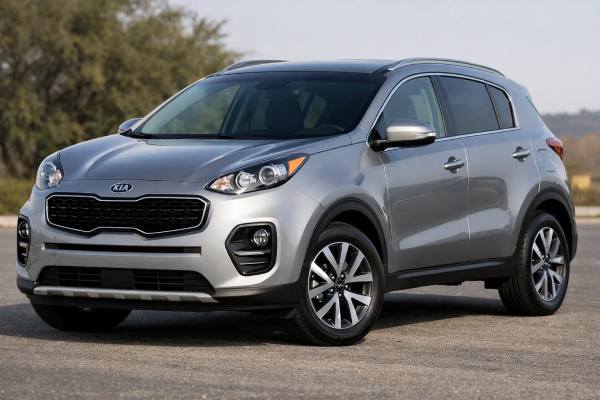
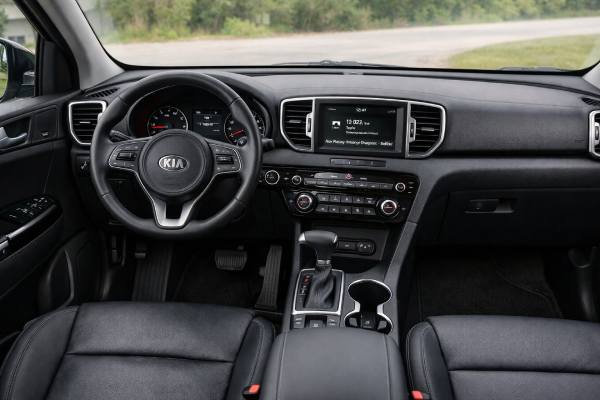
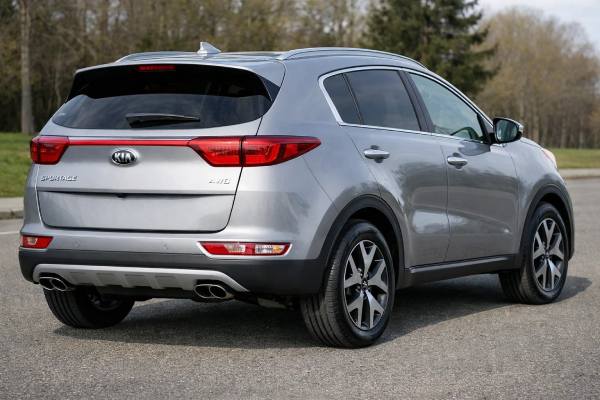
The 2016–2018 Kia Sportage QL with the G4NA 2.0-liter petrol engine and front-wheel drive sits in a useful middle ground of the compact SUV market. It is not the quickest Sportage of its generation, but it is often one of the most sensible to own. This version pairs a naturally aspirated Nu-series four-cylinder with a conventional six-speed automatic, which gives it a simpler long-term mechanical layout than the turbo and dual-clutch alternatives found in some markets. For many buyers, that matters more than outright speed.
In day-to-day use, the QL Sportage 2.0 FWD feels mature, comfortable, and easy to place on the road. It also benefits from the stronger body shell, better cabin finish, and improved refinement that came with the QL generation. The main caveat is that exact equipment, ride height, and safety tech vary a lot by market and trim, so buying by VIN and service history is smarter than buying by badge alone.
Owner Snapshot
- The 2.0 MPI engine is simpler than the turbo options and usually cheaper to keep long term.
- The conventional 6-speed automatic is smoother and typically less risky than a dual-clutch unit on an aging used SUV.
- Cabin space, rear-seat comfort, and cargo practicality are strong for a compact crossover.
- Safety kit and airbag count can change by market, so do not assume every 2.0 FWD has the same equipment.
- Engine oil service every 15,000 km or 12 months is a safe baseline, with shorter intervals for severe use.
What’s inside
- Sportage QL 2.0 FWD Explained
- Sportage QL G4NA Data
- Sportage QL Grades and Safety
- Reliability and Service Actions
- Maintenance and Buying Advice
- Driving and Real World Use
- Against Key Rivals
Sportage QL 2.0 FWD Explained
The QL-generation Sportage was a meaningful step forward over the older SL model. Kia improved the body structure, cabin materials, noise isolation, and suspension tuning, which gave the car a more solid and more mature feel. In 2.0 FWD form, the formula is straightforward: a naturally aspirated 1,999 cc petrol four-cylinder, multi-point fuel injection, a timing chain, and a torque-converter automatic driving the front wheels.
That mix is important because it defines the ownership experience. The G4NA 2.0 MPI does not rely on turbo boost to make its power, so delivery is linear and predictable. It also avoids one of the usual long-term concerns of some direct-injection engines: heavy intake carbon build-up. Power is modest for a modern SUV, but the engine is generally willing, smooth at light load, and better suited to steady commuting, school runs, and mixed suburban driving than to aggressive acceleration.
The QL chassis also helps this version more than the raw numbers suggest. The suspension is fully independent, steering is electrically assisted, and the body is stiffer than before, so the car feels planted on the highway and calmer over broken surfaces. A 17-inch or 18-inch wheel package is usually the sweet spot. Nineteen-inch wheels look better on GT-Line style trims, but they make the ride firmer and tyre costs noticeably higher.
Practicality is one of the Sportage’s stronger points. The rear seat is adult-friendly, the cargo area is useful rather than just class-competitive, and the cabin layout is easy to understand. That matters on an older used SUV, where simple ergonomics and lower electrical complexity often age better than flashy features.
The main caution is variation. A 2016 Philippine-market 2.0 gas Sportage is not equipped exactly like a 2018 Malaysian or Hong Kong example. Ride height, wheel size, cargo measurement method, airbags, parking aids, and driver assistance features can all differ. So the best way to judge one is to think of this car as a broad 2.0 MPI QL family with the same core mechanical package, but with market-specific trim and safety content.
Sportage QL G4NA Data
Below is a practical specification set for the common 2016–2018 Kia Sportage QL 2.0 MPI 155 hp front-wheel-drive automatic. Where public Kia brochures differ by market, the table notes the range or the reason.
Powertrain and driveline
| Item | Kia Sportage QL 2.0 MPI FWD |
|---|---|
| Code | G4NA / Nu 2.0 MPI |
| Engine layout and cylinders | Inline-4, 4 cylinders, DOHC, 4 valves per cylinder |
| Bore × stroke | 81.0 × 97.0 mm (3.19 × 3.82 in) |
| Displacement | 2.0 L (1,999 cc) |
| Induction | Naturally aspirated |
| Fuel system | MPI / MPFI |
| Compression ratio | 10.3:1 |
| Max power | 155 hp (114 kW) @ 6,200 rpm |
| Max torque | 192 Nm (142 lb-ft) @ 4,000 rpm |
| Timing drive | Chain |
| Rated efficiency | About 7.9 L/100 km (29.8 mpg US / 35.8 mpg UK), market dependent |
| Real-world highway @ 120 km/h (75 mph) | Typically 7.5–8.2 L/100 km (31.4–28.7 mpg US / 37.7–34.4 mpg UK) |
| Transmission | 6-speed torque-converter automatic |
| Transmission code | Not consistently published in public brochures for this export variant |
| Drive type | FWD |
| Differential | Standard open front differential |
Chassis and dimensions
| Item | Kia Sportage QL 2.0 MPI FWD |
|---|---|
| Suspension, front / rear | MacPherson strut / multi-link |
| Steering | Motor-driven power steering; about 2.71 turns lock-to-lock |
| Steering ratio | Not consistently published in public brochures |
| Brakes, front / rear | Ventilated disc 305 mm (12.0 in) / solid disc 302 mm (11.9 in) |
| Most common tyre size | 225/60 R17 or 225/55 R18; some higher trims use 245/45 R19 |
| Ground clearance | About 172 mm (6.8 in), market dependent |
| Length / width / height | 4,480–4,495 mm / 1,855 mm / 1,635–1,655 mm (176.4–176.6 / 73.0 / 64.4–65.2 in) |
| Wheelbase | 2,670 mm (105.1 in) |
| Turning circle | 5.3 m (17.4 ft) |
| Kerb weight | Roughly 1,450–1,670 kg (3,200–3,680 lb), depending on market and trim |
| GVWR | About 2,020 kg (4,453 lb) on lighter 2.0 gas trims; verify plate/VIN |
| Fuel tank | 62 L (16.4 US gal / 13.6 UK gal) |
| Cargo volume | 466–503 L seats up, about 1,455–1,480 L seats folded; VDA figures vary by wheel/spare setup |
Performance and capability
| Item | Kia Sportage QL 2.0 MPI FWD |
|---|---|
| 0–100 km/h (0–62 mph) | Usually around 11 seconds; not always listed by Kia for this trim |
| Top speed | Usually around 180 km/h (112 mph); market dependent |
| Braking distance 100–0 km/h | Not consistently published for the 155 hp FWD version |
| Towing capacity | Market dependent; verify local plate and owner documentation |
| Payload | Market dependent; verify door-jamb label |
Fluids and service capacities
| Item | Specification |
|---|---|
| Engine oil | SAE 5W-20 where specified, or 5W-30 in some hot-climate markets; API SM/ILSAC GF-4 or higher, or ACEA A5/B5; 4.0 L (4.2 US qt) |
| Coolant | Phosphate ethylene glycol coolant; 2.0 MPI AT around 5.4 L (5.7 US qt) |
| Transmission / ATF | Kia SP-IV family fluid; full capacity commonly listed around 6.7 L, but drain-and-fill is lower and should be VIN-verified |
| Differential / transfer case | Not applicable on this FWD model |
| A/C refrigerant | Varies by market and production date; confirm under-hood label before service |
| A/C compressor oil | Varies by refrigerant and market; confirm service label/manual |
| Key torque specs | Wheel nuts: 107–127 Nm (79–94 lb-ft) |
Safety and driver assistance
| Item | Notes |
|---|---|
| Crash ratings | Euro NCAP: 5 stars; adult 90%, child 83%, safety assist 71% |
| VRU / pedestrian score | Varies by protocol summary source; verify exact sheet for the tested market/protocol |
| IIHS | Not generally applied to this exact 155 hp export-market configuration |
| Headlight rating (IIHS) | Not applicable to this variant |
| ADAS suite | Basic trims often have ABS, ESC, HAC, DBC, TPMS; AEB, lane assist, blind-spot warning, and rear cross-traffic alert were market and trim dependent |
What matters in practice is that the specification sheet looks conservative but coherent. The engine is long-stroke and tuned for midrange usefulness rather than top-end excitement. The chassis is more advanced than many people expect from a non-performance Sportage. And the running gear is conventional enough that independent workshops can usually service it without drama.
Sportage QL Grades and Safety
Trim names for the 2.0 FWD Sportage change by country, but the structure is usually familiar. The entry-to-mid 2.0 MPI versions were sold as trims similar to SL, EX, PE, or plain 2.0 FWD automatic. Above them, some markets offered a GT-Line appearance and equipment upgrade while keeping the same 155 hp naturally aspirated engine and front-wheel drive.
The easiest way to identify trim level is to look at the hardware rather than the badge. A 17-inch-wheel car with cloth seats, manual air conditioning, a smaller cluster display, and simpler headlamps is usually a lower or mid trim. An 18-inch or 19-inch car with leather trim, dual-zone climate control, paddle shifters, a larger infotainment screen, panoramic roof, power tailgate, and parking camera is usually a higher-grade or GT-Line-style version. In some export markets, six airbags, ESC, hill-start assist, ISOFIX, and rear parking aids were bundled into better-equipped 2.0 trims, while lower trims could be more basic.
Mechanically, most 2.0 MPI FWD models are very similar. The key differences are usually tyre package, brake feel from wheel and tyre changes, seat trim, infotainment, and convenience equipment. Unlike more performance-focused rivals, the Sportage does not hide a major suspension or differential upgrade inside most trim steps for this engine. That is good news for used buyers, because it means you can choose a trim based on comfort and cost rather than chasing a different mechanical setup.
Safety is one of the stronger points of the QL generation. The platform used a much higher proportion of advanced high-strength steel than the previous model, which improved crash performance and body rigidity. Euro NCAP awarded the QL Sportage five stars, with particularly strong adult and child occupant scores. Standard stability systems such as ESC and vehicle stability management were widely available, and Kia also offered newer active safety features such as autonomous emergency braking, lane-keeping support, blind-spot detection, rear cross-traffic alert, and speed-limit information in some markets and trims.
A used-car buyer should still read the equipment list carefully. Not every 2016–2018 2.0 FWD has the same airbag count, rear camera setup, or driver assistance calibration. If the car has forward camera-based systems, ask whether the windshield has ever been replaced and whether recalibration was performed properly afterward. On a basic 2.0 FWD without those systems, the safety story depends more on the strong structure, ESC, good tyres, and brake condition than on advanced electronics.
For most buyers, the sweet spot is a 2017 or 2018 car with 17-inch or 18-inch wheels, six airbags, ESC, rear camera, and full service history. It gives you the stronger QL platform without adding unnecessary cost or the rougher ride of the largest wheel packages.
Reliability and Service Actions
In broad terms, the QL Sportage 2.0 MPI FWD is one of the safer used choices in this generation because its engine and transmission are simpler than the 1.6 turbo and dual-clutch combination. That does not make it trouble-free, but most of its common issues are easier to diagnose and cheaper to solve.
Common and usually low to medium cost
- Ignition misfires at age or mileage
Symptoms: rough idle, flashing engine light, hesitation under load.
Likely cause: worn spark plugs or a weak coil pack.
Remedy: replace plugs, test coils, and inspect for oil contamination in plug wells. - Front suspension wear and alignment drift
Symptoms: light clunks, uneven front tyre wear, vague straight-line tracking.
Likely cause: drop links, bushes, or tired dampers, especially on large wheels.
Remedy: inspect suspension arms and links, correct alignment, fit quality tyres. - Brake drag or corrosion on lightly used cars
Symptoms: steering pull, hot wheel, grooved discs, pulsing pedal.
Likely cause: sticking caliper hardware or rusted disc surfaces.
Remedy: clean and lubricate hardware or replace discs, pads, and sliders as needed. - 12 V battery and charging complaints
Symptoms: slow crank, random warning lights, weak stop-start behavior where fitted.
Likely cause: aging battery rather than a major module fault.
Remedy: proper battery load test before chasing electronics.
Occasional and worth watching
- Cooling system seepage
Symptoms: coolant smell, falling expansion-tank level, heater performance changes.
Likely cause: hose joints, thermostat housing, or water-pump seepage on older cars.
Remedy: pressure-test the system and repair leaks early to avoid overheating. - 6-speed automatic shift quality degradation
Symptoms: flare, delayed engagement, harsh 2–3 shift, or hunting when warm.
Likely cause: aged fluid, adaptation issues, or neglected maintenance under heavy use.
Remedy: fluid service with the correct SP-IV type fluid, software check, and road test. - Wheel bearing noise
Symptoms: humming that changes with speed and cornering load.
Likely cause: normal wear, often accelerated by potholes or oversized wheels.
Remedy: replace the affected hub assembly.
Less common but more important
- HECU recall-related fire risk in some markets
Some 2017-and-later Sportage vehicles were recalled for a potential short circuit in the hydraulic electronic control unit area. If unresolved, this is a high-priority safety issue. Verify recall completion by VIN and dealer history. - Timing chain wear on neglected engines
The 2.0 MPI uses a chain, not a belt, so there is no fixed replacement interval. But long oil-change intervals, low oil level, or poor oil quality can still accelerate chain, guide, and tensioner wear. Listen for cold-start rattle and scan for timing-correlation faults.
Corrosion and age-related checks
In snowy or coastal regions, inspect the rear subframe, exhaust joints, brake pipes and brackets, suspension bolts, and tailgate lower lip. The body is generally decent, but underbody hardware and brake components can age faster than the engine.
What to ask for before buying
- Complete service history, not just stamped intervals.
- Recall proof, especially safety-related campaign completion.
- Evidence of recent tyre, brake, and battery work.
- A cold-start video or cold-start inspection.
- A scan for stored ABS, ESC, transmission, and steering faults.
The durability outlook is good when maintenance has been sensible. The main risk is not the basic design. It is neglected servicing on a family SUV that may have spent years doing short trips on old fluids and cheap tyres.
Maintenance and Buying Advice
Kia service schedules vary by market, climate, and operating conditions, so a practical used-car plan works better than blindly following the longest official interval you can find. For an aging 2016–2018 Sportage 2.0 MPI, preventive maintenance pays back quickly.
Practical maintenance schedule
| Item | Practical interval | Notes |
|---|---|---|
| Engine oil and filter | Every 10,000–15,000 km or 12 months | Use the correct viscosity for climate and market; shorten to 7,500 km for severe use |
| Engine air filter | Inspect every 15,000 km; replace around 30,000–45,000 km | Dusty roads shorten life |
| Cabin air filter | Every 15,000 km or 12 months | Cheap and worth doing regularly |
| Spark plugs | Inspect by 60,000–90,000 km; replace by 90,000–120,000 km in real use | Some official schedules stretch much longer, but earlier replacement reduces coil stress |
| Coolant | Age matters on older cars; refresh if unknown | Some schedules allow a long first interval, but that is less useful on a used vehicle with unknown history |
| Brake fluid | Every 2–3 years | DOT-4 LV spec; moisture hurts pedal feel and ABS components |
| Brake pad and rotor inspection | Every service | Check inner pad wear, slider movement, and corrosion |
| ATF | Every 60,000–90,000 km under mixed or severe use | Many manuals call it lifetime under normal use, but aging used SUVs benefit from fluid service |
| Serpentine belt and hoses | Inspect every 30,000 km or 24 months | Replace on cracks, glazing, swelling, or noise |
| Timing chain | No fixed interval | Inspect for rattle, stretch symptoms, and timing faults |
| Tyre rotation | Every 8,000–10,000 km | Helps wear on FWD front axle |
| Alignment check | At least yearly, or after tyre wear/pothole impacts | Essential on 18-inch and 19-inch wheel cars |
| 12 V battery test | Yearly after year 4 | Replace proactively if cranking is weak |
| Valve clearance | No routine schedule for most owners | Check only if noisy, rough, or flagged during diagnosis |
| Fuel filter | Usually not a regular external service item | Investigate only for pressure or running issues |
Fluids and decision-making numbers
- Engine oil: about 4.0 L
- Coolant, 2.0 MPI automatic: about 5.4 L
- Fuel tank: 62 L
- Wheel nut torque: 107–127 Nm
The buyer’s checklist should focus on condition, not cosmetics alone. Check for oil seepage around the valve cover and front engine area, dried coolant marks, rough idle, delayed gear engagement, steering knock, and uneven tyre wear. Test every electrical item: mirrors, camera, parking sensors, climate control, power tailgate if fitted, and seat heaters or ventilation on upper trims.
Best versions to look for
- Best value: 2017–2018 2.0 MPI FWD with 17-inch or 18-inch wheels, rear camera, ESC, and full service history.
- Best comfort: Higher trim with better seats and dual-zone climate, but still on 18-inch wheels if possible.
- Approach with caution: First-year cars with patchy records, 19-inch wheel cars with cheap tyres, or any example with unresolved warning lights.
Long-term view
A good Sportage 2.0 MPI FWD can age well because the major hardware is conventional. Buy the cleanest, best-documented car you can find, and do an early baseline service even if the seller insists it needs nothing. That first round of fluids, filters, tyres, and inspection often determines whether ownership stays easy.
Driving and Real World Use
On the road, the 2.0 FWD Sportage feels balanced rather than exciting. That is not criticism. It suits the car’s mission. The steering is light at parking speed, accurate enough on the highway, and calmer than older Kia crossovers. Straight-line stability is good, and the body feels solid over rough asphalt. The QL chassis also filters small bumps better than you might expect, especially on 17-inch wheels.
Ride quality depends heavily on the tyre package. With 17-inch tyres, the Sportage is comfortable and well suited to daily commuting. On 18s it still works well. On 19s it looks sharper and turns in a little faster, but road noise rises and sharp edges come through more clearly. The brakes are strong enough for the class, with a stable, confidence-building feel when the system is in good condition.
The powertrain is smooth but not fast. Throttle response is clean at low speed, and the six-speed automatic behaves more naturally than many CVTs. Kickdown is acceptable, but overtaking from 80 to 120 km/h needs planning, especially with passengers or luggage. That said, the engine’s linear feel and the automatic’s predictable behavior make the car easy to drive in traffic and easy to live with.
Real-world fuel use is reasonable for a non-hybrid petrol SUV:
- City: around 8.8–10.0 L/100 km
- Highway: around 6.8–8.0 L/100 km
- Mixed: around 7.6–8.8 L/100 km
That works out to roughly 26.7–30.9 mpg US in mixed use, with the best highway numbers landing near 34.6 mpg US on a gentle run. Cold weather, short trips, heavy air-conditioning use, and 19-inch tyres all make a visible difference.
Performance is adequate rather than brisk. Expect roughly 0–100 km/h in the low-11-second range in normal trim, and a relaxed rather than urgent passing feel. But the cabin refinement, seating position, and stable chassis mean the car usually feels more grown-up than the stopwatch suggests.
For traction, this FWD Sportage depends heavily on tyres. In rain it is secure. In snow, it can cope well on proper winter tyres, but it is not a substitute for AWD on steep or slippery roads. Under full load, the engine feels the weight, and fuel use can rise by 10 to 20 percent. Still, for daily family use, the balance between comfort, refinement, and predictable controls is one of the model’s biggest strengths.
Against Key Rivals
The 2016–2018 Sportage 2.0 MPI FWD competes most directly with cars like the Hyundai Tucson 2.0 MPI, Mazda CX-5 2.0, Honda CR-V 2.0, and Nissan X-Trail 2.0 in many export markets. Each rival has a clear edge in one area, but the Kia remains easy to recommend when value and ownership risk matter.
Against the Hyundai Tucson, the Sportage is a close mechanical relative. The decision often comes down to price, condition, and interior preference. The Kia tends to feel slightly more design-led inside, while the Hyundai can look a little more conservative. Mechanically, there is usually very little between them.
Against the Mazda CX-5 2.0, the Sportage loses on steering feel and driver engagement. The Mazda is the better car for keen drivers. But the Kia often rides more softly in everyday use, can be cheaper to buy on the used market, and may be the wiser choice for buyers who care more about simple ownership than cornering feel.
Against the Honda CR-V 2.0, the Sportage gives up some rear-seat packaging cleverness and, in some markets, some resale strength. The Honda is often the roomier family tool. But the Kia usually offers stronger value per dollar, a fresher interior design, and a good blend of comfort and equipment.
Against the Nissan X-Trail 2.0, the Kia’s conventional six-speed automatic is a real advantage for many used buyers. The Nissan can offer flexible practicality, but the Sportage’s automatic transmission is often seen as the safer long-term choice than an aging CVT.
The Sportage’s real advantage is balance. It is not the class leader in performance, cargo, or handling, but it avoids major weak spots. The 2.0 MPI engine and conventional automatic make it one of the more rational picks in the segment for buyers who want fewer mechanical surprises. If your priority is a compact SUV that feels solid, comfortable, and straightforward to own, the QL Sportage 2.0 FWD deserves a place near the top of the shortlist.
References
- QLPE 2018 (Specification Sheet)
- KIA_Sportage_Brochure_2017 (Web) 2017 (Owner’s Brochure)
- Five-star safety ratings for all-new Kia Optima and Sportage 2015 (Safety Rating)
- Part 573 Safety Recall Report 21V-137 2021 (Recall Database)
- Engine Oil Grades and Capacities 2023 (Service Guide)
Disclaimer
This article is provided for informational purposes only and is not a substitute for professional diagnosis, repair, or official workshop guidance. Specifications, torque values, service intervals, fluid requirements, and repair procedures can vary by VIN, market, production date, and equipment level, so always verify details against the correct official service documentation for the exact vehicle.
If this guide was useful, please consider sharing it on Facebook, X/Twitter, or another social platform to support our work.