
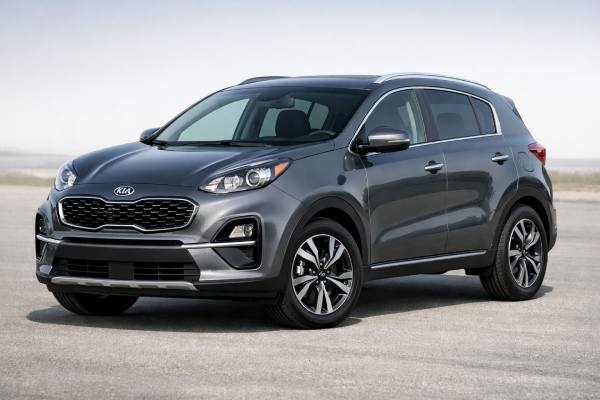
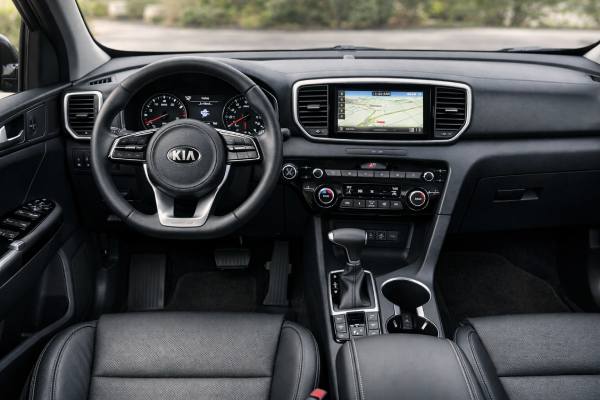
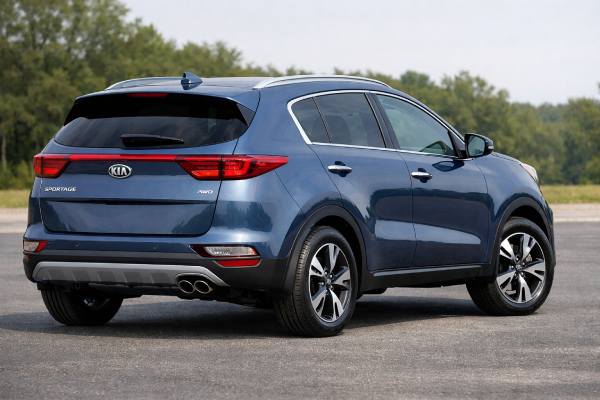
The front-wheel-drive Kia Sportage QL with the G4KJ 2.4-liter engine is one of the more straightforward compact SUVs of its era. It uses a naturally aspirated four-cylinder and a conventional 6-speed automatic, so it avoids some of the complexity that came with small turbo engines and CVTs in rival crossovers. Output is a modest 181 hp, but packaging is good, cargo space is useful, and later models gained a stronger equipment mix. One important detail needs clearing up: in North America, the visible facelift really arrives for 2020, while 2019 remains a carryover QL with the same 2.4-liter foundation but the earlier nose, headlights, and option structure. That matters when you compare safety tech, headlight performance, and trim value. For ownership, the main questions are service history, recall completion, and whether the specific car shows oil-use or knock-sensor campaign history. Get those right, and this Sportage can still be a sensible daily SUV.
Owner Snapshot
- The 2.4-liter engine and 6-speed automatic keep the drivetrain simple by class standards.
- Cabin packaging is better than the shape suggests, with strong cargo space for a compact SUV.
- EX and later Nightfall or Value-package cars usually offer the best feature balance.
- Check recall completion, oil level history, and any P1326 or knock-related records before buying.
- Rotate tyres and inspect oil level every 12,000 km / 7,500 mi or 12 months.
Guide contents
- Kia Sportage QL facelift profile
- Kia Sportage QL technical data
- Kia Sportage QL trims and safety
- Reliability issues and recall watch
- Maintenance plan and buyer checks
- On-road character and efficiency
- How this Sportage stacks up
Kia Sportage QL facelift profile
This version of the Sportage makes sense for buyers who want a compact crossover that still behaves like a conventional car. The G4KJ 2.4-liter direct-injected engine sends 181 hp and 175 lb-ft through a 6-speed automatic to the front wheels, and that simple layout is the core of its appeal. You are not buying this Sportage for class-leading speed or fuel economy. You are buying it because it is easy to understand, easy to drive in traffic, and usually cheaper to buy than an equivalent Honda CR-V or Toyota RAV4 with the same level of comfort and equipment.
There is a detail many listings blur: 2019 is not the true facelift year in the U.S. market. The QL platform and the 2.4-liter drivetrain carry over, but the visible nose, trim naming, and some equipment logic change for 2020. In practice, that means a 2019 LX or EX can feel older in lighting and option structure even though the underlying vehicle is very close to a 2020–2022 2.4 FWD model. If you are shopping by parts support, ride feel, space, or engine character, 2019 still belongs in the same family. If you are shopping by appearance, standard safety tech, or package value, split 2019 from 2020–2022 in your head.
The best ownership traits are easy to spot. Ride comfort is solid, the rear suspension is a proper multi-link design, and cargo space is strong for a compact SUV at 30.7 cu ft behind the second row and 60.1 cu ft with the rear seat folded. Steering is electric and light, but parking effort stays low and the turning circle is tidy. Front-wheel-drive trims also avoid the extra weight and complexity of AWD, which helps both cost and economy. Later LX Value, Nightfall, and EX trims added the features most owners actually use, such as heated seats, blind-spot warning, better wheel packages, and convenience upgrades.
The weak spots are just as clear. The 2.4 is adequate, not eager. Headlight performance varies sharply by trim. Fuel economy is acceptable rather than impressive. And while the vehicle itself is not unusually complicated, your ownership outcome depends heavily on recall completion, oil-change history, and whether any product-improvement campaigns were performed on time. That is why this Sportage works best for careful buyers who inspect records as closely as the paint and interior.
Kia Sportage QL technical data
The figures below reflect the U.S.-market 2.4-liter FWD Sportage QL, with 2019 carrying the same core engine and gearbox as the facelifted 2020–2022 cars. Where Kia did not publish a stable figure across all years, it is marked as market- or VIN-dependent rather than guessed.
| Item | Specification |
|---|---|
| Code | G4KJ |
| Engine layout and cylinders | Inline-4, 4 cylinders, DOHC, 4 valves per cylinder, CVVT, mechanical lash adjusters |
| Bore × stroke | 88.0 × 97.0 mm (3.46 × 3.82 in) |
| Displacement | 2.4 L (2,359 cc) |
| Induction | Naturally aspirated |
| Fuel system | Gasoline direct injection |
| Compression ratio | 11.3:1 |
| Max power | 181 hp (135 kW) @ 6,000 rpm |
| Max torque | 237 Nm (175 lb-ft) @ 4,000 rpm |
| Timing drive | Timing chain |
| Transmission | 6-speed automatic |
| Drive type | FWD |
| Differential | Open |
| Rated efficiency | Usually 9.0 L/100 km combined (26 mpg US / 31 mpg UK) on later FWD 2.4 trims |
| Typical city / highway EPA | 10.2 / 7.8 L/100 km (23 / 30 mpg US) on most later FWD 2.4 trims |
| Real-world highway @ 120 km/h (75 mph) | Typically about 8.0–9.0 L/100 km (26–29 mpg US / 31–35 mpg UK), depending on tyres, weather, and load |
The powertrain is not exciting, but it is predictable. Later FWD LX, Nightfall, and EX trims commonly carry the 23/30/26 mpg rating, while some 2019 EX configurations were rated slightly lower. The highway figure is decent; the mixed result is only average for the class.
| Item | Specification |
|---|---|
| Front suspension | MacPherson strut |
| Rear suspension | Multi-link independent |
| Steering | Motor-driven power steering; 14.4:1 ratio |
| Turning circle, kerb-to-kerb | 10.6 m (34.8 ft) |
| Brakes, front | Disc, 305 mm (12.0 in) |
| Brakes, rear | Disc, 302 mm (11.9 in) |
| Most common tyre sizes | 225/60 R17 or 225/55 R18 |
| Ground clearance | 163 mm (6.4 in) |
| Approach / departure / breakover | 16.7° / 23.9° / 18.6° |
| Length | 4,481 mm (176.4 in) |
| Width | 1,854 mm (73.0 in) |
| Height | 1,636 mm (64.4 in) without roof rails; about 1,646 mm (64.8 in) with rails |
| Wheelbase | 2,670 mm (105.1 in) |
| Kerb weight | About 1,499–1,631 kg (3,305–3,596 lb), trim-dependent |
| Fuel tank | 62.1 L (16.4 US gal / 13.7 UK gal) |
| Cargo volume | 869 L / 1,702 L (30.7 / 60.1 ft³), SAE, seats up / seats folded |
| Towing capacity | 907 kg (2,000 lb) braked / 750 kg (1,653 lb) unbraked |
These dimensions explain why the Sportage still feels useful today. It is not the roomiest compact SUV in rear-seat space, but the cargo area is square enough to be practical, and the short turning circle makes it easy in town. The 17-inch wheel setup rides a little sweeter than the 18-inch package, while 18s improve stance and trim appeal.
| Item | Specification |
|---|---|
| Engine oil | Drain and refill: 4.8 L (5.1 US qt); use VIN- and market-correct full-synthetic viscosity and API/ILSAC grade |
| Coolant | Use aluminum-safe, phosphate/ethylene-glycol type specified for the car; capacity varies by source, so verify by VIN before major refill work |
| Transmission / ATF | Kia media lists 6.7 L drivetrain lubricant capacity for the 6AT transaxle; use the exact Kia-approved ATF spec for your market and VIN |
| A/C refrigerant | Verify from under-hood label or VIN-specific service data |
| Key torque spec | Wheel nuts are typically 107–127 Nm (79–94 lb-ft); verify for wheel type and market before tightening |
For safety, the key headline is IIHS rather than Euro NCAP for this U.S.-spec 2.4 FWD vehicle. The 2022 Sportage earns a Top Safety Pick, but only when fitted with optional front crash prevention and specific headlights. Core crashworthiness is mostly Good, the updated side test is Marginal, LATCH ease of use is Acceptable, and headlight ratings vary sharply by trim.
Kia Sportage QL trims and safety
Trim logic matters a lot on this Sportage because the 2.4-liter FWD version appears in several grades, but the value changes year by year. In 2019, the main non-turbo choices were LX and EX, with the SX Turbo above them. For 2020, the facelift arrived and the range shifted to LX, S, EX, and SX Turbo. In 2021, the S was reworked into the Nightfall Edition themes, and for 2022 Kia revised the value story again with the LX Value Edition package and a standalone Nightfall trim. That means a later EX or well-optioned LX or Nightfall often makes more sense than a basic early car, even if mileage is similar.
Mechanically, the 2.4 FWD trims are closer to each other than the styling suggests. LX, S, Nightfall, and EX all use the 181 hp 2.4-liter and 6-speed automatic. The big differences are wheel size, appearance, and equipment. LX is the plainest buy, often on 17-inch wheels and cloth trim. S and later Nightfall models add darker trim, unique wheel finishes, and a sportier visual package more than they add true mechanical changes. EX is usually the sweet spot because it layers comfort and convenience features on top of the same dependable basic hardware. Nightfall models are easy to identify by blacked-out trim and special badging, while EX cars tend to show more chrome, more comfort equipment, and a more upscale interior look.
Safety equipment improves across the run. In 2019, features such as autonomous emergency braking and lane departure warning were not equally spread across the range, and some desirable systems were optional on EX or standard mainly on SX Turbo. By 2021, Kia’s Drive Wise content was broader, with forward collision-avoidance assist and lane warning or lane-keeping features listed as standard across the lineup. For 2022, the LX Value package added blind-spot collision warning and rear cross-traffic collision warning, which helped close the gap between basic and mid-range trims.
The second half of the story is trim-specific performance in testing. The Sportage’s structural ratings are mostly Good, but the award applies only with optional front crash prevention and specific headlights. The SX Turbo’s LED projector headlights score better than the halogen projector lights fitted to many LX, Nightfall, and EX versions. So if safety is your top filter, do not assume all Sportages tested the same way in the dark. Also remember that camera-based lane and forward-warning systems may need calibration after windshield replacement, bumper work, or front-end repairs. That service detail is easy to miss on a used car.
Reliability issues and recall watch
As a used SUV, the 2.4 FWD Sportage sits in the middle ground. It is simpler than some turbo-CVT rivals, but it is not a buy-anything, ignore-everything vehicle. Most cars age normally if they get regular oil service, decent tyres, and recall work on time. The problems worth caring about are not cosmetic annoyances. They are campaign-related fire risks, engine-monitoring updates, and signs that the 2.4 GDI engine has lived with low oil or long service gaps.
Common, usually low to medium cost
- 12-volt battery aging, especially on short-trip cars.
- Rear brake drag or uneven brake wear in cold or wet climates.
- Tyre shoulder wear from poor alignment or repeated pothole hits.
- Cabin rattles, weak struts, and the occasional infotainment lag on higher-mileage cars.
Occasional, medium cost
- Direct-injection carbon buildup over time, usually showing up as rough idle or softer throttle response.
- Coil, plug, or sensor-related misfires.
- Oil seepage and owner-reported oil use between services on poorly maintained examples.
- Suspension bush and wheel-bearing wear on rough-road cars.
Occasional, potentially high cost
- Some 2020 Sportage QL vehicles with the 2.4 GDI received a Kia product-improvement campaign for KSDS, the knock-sensor detection system. The update was designed to detect early connecting-rod-bearing wear, set a blinking MIL, log P1326, and place the vehicle in limp mode before severe engine failure. A documented KSDS update is important on affected early-build 2020 vehicles.
The biggest official service actions are easy to summarize. Recall 21V-137 covers 2017–2021 Sportage vehicles not equipped with Smart Cruise Control because an electrical short in the HECU could raise the risk of an engine-compartment fire. Kia’s remedy included fuse changes, and some vehicles with electronic parking brake also received an HECU software update. Recall 22V-703 covers 2017–2022 Sportage vehicles fitted with a Genuine Kia tow hitch harness accessory because contamination and moisture could cause a short and fire risk, even while parked. If the car has a tow harness, that item matters as much as the engine.
For a pre-purchase inspection, ask for five things: full service history, proof of recall completion, evidence of regular oil-level checks, a cold-start video or inspection, and a scan for stored or pending codes. On the test drive, listen for startup rattle, watch for smoke, check for low-oil warnings, feel for brake drag, and inspect the underbody for curb or pothole damage. A cheap Sportage with gaps in those areas can become expensive quickly.
Maintenance plan and buyer checks
For this Sportage, the safest long-term strategy is simple: shorten nothing critical, monitor oil level, and treat the 6-speed automatic as a serviceable unit rather than a sealed lifetime mystery. Kia’s owner-facing maintenance material points to oil changes and tyre rotations every 7,500 miles under normal service, and cabin filter replacement every 15,000 miles is a common scheduled item. That is a good baseline, but city use, heat, dust, towing, and repeated short trips justify doing more, not less.
A practical ownership schedule looks like this:
- Engine oil and filter: every 12,000 km / 7,500 mi or 12 months in normal use; sooner for short-trip or severe service. Check level between services.
- Tyre rotation: every 12,000 km / 7,500 mi; align if you see inner or outer edge wear.
- Cabin air filter: about every 24,000 km / 15,000 mi, or sooner in dusty use.
- Engine air filter: inspect every service; replace by condition, often around 48,000 km / 30,000 mi.
- Spark plugs: budget for replacement around the major midlife service, commonly near 96,000 km / 60,000 mi, unless VIN-specific documentation calls earlier.
- Brake fluid: inspect regularly and replace on time rather than waiting for feel changes.
- Automatic transmission fluid: a preventive service in the 96,000–144,000 km / 60,000–90,000 mi window is sensible for city-driven cars.
- Coolant, belts, and hoses: inspect at every service; replace coolant only with VIN-correct chemistry.
- 12 V battery: test yearly after year four.
- Timing chain: no routine replacement interval, but investigate startup rattle, correlation faults, or chain-noise complaints immediately.
The hard data worth keeping in your notes is short: engine oil drain-and-fill is 4.8 L, the 6AT transaxle capacity is published by Kia media at 6.7 L, and wheel nuts are typically tightened to 107–127 Nm, though you should verify exact torque and fluid specs by VIN before any work.
For buyers, the best targets are usually 2021 EX FWD, 2022 EX FWD, or a clean Nightfall if you like the look and accept 18-inch tyre costs. A well-documented 2020 can also be smart value, but only if campaign work is complete. Be more cautious with cars showing patchy oil history, repeated top-up notes, unresolved recalls, poor cold starts, or signs of front-end repair that may affect ADAS calibration. Long term, this Sportage can age well as a commuter and family runabout, but it is a vehicle that rewards careful maintenance more than blind brand trust.
On-road character and efficiency
On the road, the 2.4 FWD Sportage is better described as calm than quick. The engine is responsive enough at low and medium speeds, and the fixed-ratio 6-speed automatic feels more familiar than many class rivals that used CVTs. That helps the Sportage in traffic, parking, and stop-start suburban driving, where the car feels easy to place and easy to predict. The facelifted Sportage also has a solid, confidence-building feel, approachable controls, and comfortable commuter manners, even if economy and outright pace sit in the middle of the segment.
Ride and handling follow the same pattern. Straight-line stability is good, and the chassis feels planted enough for daily driving, but steering feedback is not a standout and the vehicle does not hide its weight when pushed. Brake feel is easy to modulate. If you choose the 17-inch wheel setup, the Sportage generally rides a little more softly over broken pavement. The 18-inch tyres on S, Nightfall, and many EX cars sharpen the look, but they also add tyre replacement cost and a bit more edge over rough surfaces.
Real-world efficiency is acceptable rather than special. Later FWD 2.4 trims are commonly rated at 23 mpg city, 30 mpg highway, and 26 mpg combined. In practice, owners should expect roughly 8.8–10.0 L/100 km in mixed driving, about 8.0–9.0 L/100 km at a steady 120 km/h, and 10.0–11.5 L/100 km in heavy urban use or winter conditions. That makes the Sportage respectable on the highway, but not class-leading in mixed use.
Performance numbers are less important here than drivability. Kia did not consistently publish U.S. 0–100 km/h figures for the 2.4 FWD variant, and that tells you something by itself: this is not the fast Sportage. Passing performance is adequate if the transmission drops a gear early, but it never feels eager with a full load. The modest 2,000 lb braked towing limit also frames its role clearly. It will handle a light trailer, bike rack, or utility duty, but it is not the version to choose for frequent heavy towing or mountain hauling.
How this Sportage stacks up
This Sportage works best when you judge it against used-car priorities, not brochure fantasies. Against a same-era Honda CR-V, the Kia usually gives you a more conventional automatic transmission and a strong feature-per-dollar story, while the Honda counters with better packaging and thrift. Against a Toyota RAV4, the Kia often feels like the cheaper way into a well-equipped compact SUV, while the Toyota usually wins on efficiency reputation and resale strength. Against a Mazda CX-5, the Kia gives up steering polish and premium feel, but often offers a softer commuter setup and a better equipment deal for the money.
The closest rival is the Hyundai Tucson, because it shares the same basic platform family and much of the same logic. In the used market, that means you should shop Tucson and Sportage by condition, records, trim, and recall completion more than by badge loyalty alone.
So where does that leave the 2.4 FWD Sportage? It is not the enthusiast’s choice. It is not the fuel-economy leader. It is not the one to buy sight unseen. But it remains an appealing used compact SUV for drivers who want a conventional powertrain, useful space, good mid-trim features, and predictable day-to-day manners. Buy the right year, demand records, verify the campaigns, and it still makes a strong practical case.
References
- 2019 Kia Sportage Overview 2018 (Model Overview)
- 2022 Kia Sportage Specifications 2021 (Specifications)
- 2022 Kia Sportage 2022 (Safety Rating)
- Part 573 Safety Recall Report 21V-137 2021 (Recall Database)
- Part 573 Safety Recall Report 22V-703 2022 (Recall Database)
Disclaimer
This article is for informational purposes only and is not a substitute for professional diagnosis, repair, or VIN-specific technical documentation. Specifications, torque values, service intervals, fluid requirements, recalls, and procedures can vary by VIN, market, build date, and equipment, so always confirm details against the official owner and service information for the exact vehicle.
If this guide helped you, please share it on Facebook, X, or another platform to support our work.