
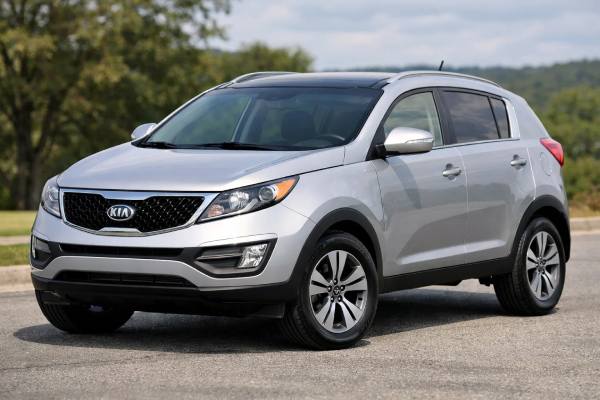
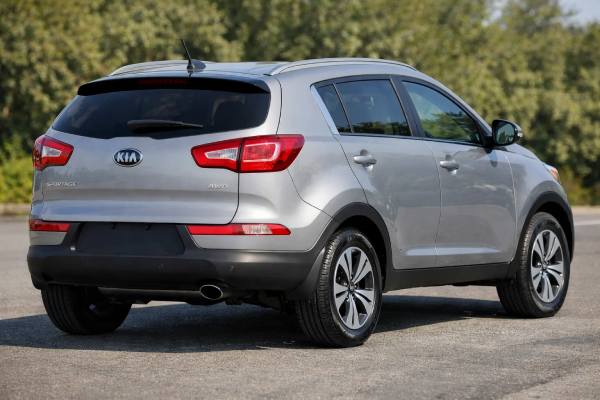
The 2010–2013 Kia Sportage FWD with the 2.0-liter G4KD petrol engine is one of the cleaner, simpler versions of the third-generation Sportage story. It combines sharp Peter Schreyer-era design, a roomy cabin, and a naturally aspirated four-cylinder with front-wheel drive, which keeps weight, driveline complexity, and service demands lower than AWD or turbocharged versions. In daily use, that matters. This Sportage is not especially fast, but it is easy to live with, predictable in traffic, and cheaper to maintain than many later compact SUVs with downsized turbo engines, dual-clutch gearboxes, or more demanding all-wheel-drive systems.
For buyers today, the appeal is practical rather than emotional. You get a well-packaged family SUV with decent safety credentials for its era, strong parts availability in many markets, and straightforward maintenance if the car has been looked after. The main risks are chain-related neglect, suspension wear, corrosion in harsh climates, and the usual used-car issues hidden behind glossy dealer photos.
Essential Insights
- The G4KD 2.0-liter petrol engine is simple, naturally aspirated, and usually less costly to own than later turbo alternatives.
- FWD versions are lighter, slightly more efficient, and mechanically simpler than AWD Sportages from the same generation.
- Cabin space, visibility, and cargo flexibility remain strong for a compact SUV from the early 2010s.
- Timing-chain noise, overdue oil changes, and worn suspension parts are the main ownership warnings.
- A sensible routine service point is every 12 months or about 15,000–20,000 km, depending on market and use.
Section overview
- Kia Sportage SL in context
- Kia Sportage SL data sheet
- Kia Sportage SL grades and safety gear
- Known trouble spots and recalls
- Service plan and smart buying
- On-road manners and efficiency
- Rival matchups and value
Kia Sportage SL in context
The SL-generation Sportage marked a major shift in how Kia positioned its compact SUV. Earlier Sportages leaned more heavily on ruggedness and value. The 2010-on SL moved decisively toward mainstream family-crossover territory. It became wider, lower, more stylish, and more car-like to drive. For many buyers, that is exactly why this generation still feels relevant. It no longer behaves like a compact 4×4 with compromises. Instead, it feels like a modern front-drive crossover from the period when that class was becoming dominant.
The FWD 2.0 G4KD version is especially interesting because it avoids two cost drivers at once. First, it skips the active AWD system and rear driveline parts, so there is less hardware to service and less weight to carry. Second, it uses the naturally aspirated 2.0-liter petrol engine rather than a turbocharged unit. That engine is part of Hyundai-Kia’s Theta family and uses a chain rather than a belt. It is not a powerhouse, but it offers respectable smoothness, predictable throttle response, and fewer high-pressure fuel system concerns than many newer direct-injection turbo engines.
In real ownership, the FWD layout suits how most compact SUVs are actually used. Most SL Sportages spend their lives in cities, suburbs, and on motorways, where front-drive traction is fully adequate. If you do not need snow-road confidence, muddy field access, or tow-heavy use, the FWD model makes practical sense. It is lighter on its front tyres and driveline, usually a little cheaper to buy, and slightly easier on fuel. That makes it one of the more rational entries in the SL range.
The platform itself was strong for its day. The SL shares much with the Hyundai ix35, which means wide parts support and familiar independent suspension geometry at both ends. The body is also a better use of space than the rakish styling first suggests. The rear seat is adult-friendly, the tailgate opening is usable, and folded cargo space is enough for bikes, flat-pack furniture, or a week of family travel.
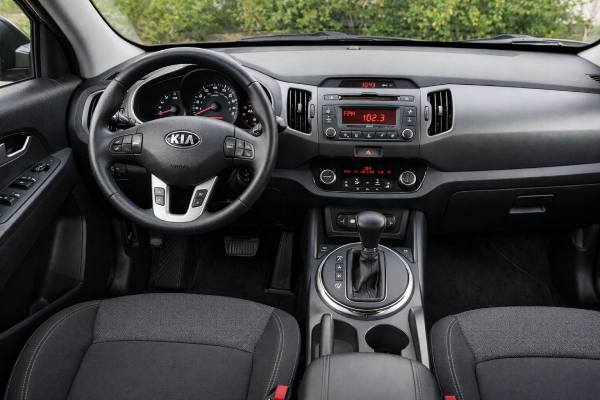
What keeps this model appealing in 2026 is that it still feels modern enough to use daily without feeling fragile or overcomplicated. The dashboard design is dated, but the ergonomics are sound. Visibility is good, ingress is easy, and the ride is settled enough for long commutes. The biggest caveat is age-related condition. By now, even the newest 2013 example is well into older-used-car territory. Regular oil changes, cooling-system health, chain-noise checks, and suspension maintenance matter more than trim badge. A clean, documented Sportage can still make excellent sense. A neglected one can burn through your budget faster than its modest purchase price suggests.
Kia Sportage SL data sheet
The figures below focus on the 2010–2013 Kia Sportage SL with front-wheel drive and the naturally aspirated 2.0-liter G4KD petrol engine. Exact values can vary slightly by transmission, trim, tyre size, and market specification, so the table uses the most consistent published figures for the European-style 163 hp version.
| Powertrain and efficiency | Specification |
|---|---|
| Code | G4KD |
| Engine layout and cylinders | Inline-4, 4 cylinders, DOHC, 4 valves per cylinder |
| Bore × stroke | 86.0 × 86.0 mm (3.39 × 3.39 in) |
| Displacement | 2.0 L (1,998 cc) |
| Induction | Naturally aspirated |
| Fuel system | Multi-point fuel injection |
| Compression ratio | about 10.5:1 |
| Max power | 163 hp (120 kW) @ 6,200 rpm |
| Max torque | 194–195 Nm (143–144 lb-ft) @ about 4,600 rpm |
| Timing drive | Chain |
| Rated efficiency | about 7.8–8.4 L/100 km combined, or roughly 28–30 mpg US / 34–36 mpg UK |
| Real-world highway @ 120 km/h | usually 7.5–8.5 L/100 km in healthy condition |
| Transmission and driveline | Specification |
|---|---|
| Transmission | 5-speed manual or 6-speed automatic, market dependent |
| Drive type | FWD |
| Differential | Open front differential |
| Chassis and dimensions | Specification |
|---|---|
| Suspension front | MacPherson strut with anti-roll bar |
| Suspension rear | Independent multi-link |
| Steering | Power-assisted rack-and-pinion |
| Brakes | Front vented discs, rear discs |
| Wheels and tyres | 225/60 R17 common; 235/55 R18 on higher trims |
| Ground clearance | about 170–172 mm (6.7–6.8 in) |
| Length | 4,440 mm (174.8 in) |
| Width | 1,855 mm (73.0 in) |
| Height | about 1,635 mm (64.4 in) |
| Wheelbase | 2,640 mm (103.9 in) |
| Turning circle | about 10.6–11.0 m (34.8–36.1 ft) |
| Kerb weight | about 1,455–1,500 kg (3,208–3,307 lb) |
| GVWR | about 1,980–2,020 kg (4,365–4,453 lb) |
| Fuel tank | about 55 L (14.5 US gal / 12.1 UK gal) |
| Cargo volume | about 465 L (16.4 ft³) seats up / 1,353 L (47.8 ft³) seats down, market method dependent |
| Performance and capability | Specification |
|---|---|
| Acceleration 0–100 km/h | about 10.4–11.3 s |
| Top speed | about 180–184 km/h (112–114 mph) |
| Braking distance 100–0 km/h | typically around 39–41 m on good tyres |
| Towing capacity | up to about 1,400–1,900 kg braked, market and transmission dependent |
| Payload | about 480–525 kg (1,058–1,157 lb) |
| Fluids and service capacities | Specification |
|---|---|
| Engine oil | ACEA A3 / A5, 5W-30 or 5W-40; 5.8 L (6.1 US qt) |
| Coolant | Ethylene-glycol based coolant, usually 50:50 mix; verify by VIN before refill |
| Automatic transmission fluid | Kia-approved specification only; verify exact fluid by transmission ID |
| Manual transmission fluid | GL-4 type manual transmission fluid; verify viscosity by market manual |
| Differential / transfer case | Not applicable on FWD |
| A/C refrigerant | R-134a on this era; verify exact charge on under-bonnet label |
| A/C compressor oil | Verify by compressor label and service data |
| Key torque specs | Wheel nuts commonly around 88–107 Nm depending on wheel type; confirm by VIN |
| Safety and driver assistance | Specification |
|---|---|
| Euro NCAP | 5 stars; 93% adult, 86% child, 49% pedestrian, 86% safety assist |
| IIHS | Moderate overlap front Good, side Good, roof strength Good, head restraints Good, later small overlap Poor |
| Headlight rating | No modern IIHS headlight score for this generation |
| ADAS suite | No AEB, ACC, lane centering, blind-spot monitoring, or traffic-sign assist |
A few figures need context. The 163 hp output is strong enough for everyday use, but this is still a naturally aspirated two-liter in a family SUV, so it does not feel rapid. The most meaningful engineering detail is not the power figure. It is the chain-driven, non-turbo layout paired with front-wheel drive. That combination largely defines the ownership experience: simpler, lighter, and easier to maintain than more complicated alternatives in the same range.
Kia Sportage SL grades and safety gear
The SL Sportage was sold in a wide range of trims, and trim naming changed by country, so the safest way to shop one now is by equipment and function rather than by badge alone. In broad terms, most markets offered entry, mid, and upper-level versions, with the 2.0 petrol FWD sitting as a sensible middle ground. It was usually specified for buyers who wanted more performance than the 1.6 petrol but did not need diesel torque or AWD hardware.
That means the differences between trims can matter quite a lot. On entry cars, you may find simpler cloth trim, smaller wheels, manual air conditioning, and a basic audio system. Step up to mid-grade versions and the Sportage starts to feel much more complete, often adding alloy wheels, cruise control, improved seat trim, parking sensors, Bluetooth or USB audio on later cars, and upgraded interior finishes. Higher trims can add climate control, larger wheels, panoramic roof options, leather, navigation, better speakers, and more exterior detailing.
For buyers, the mechanical differences are more important than cosmetic ones. The FWD 2.0 does not bring the extra rear driveline hardware of the AWD model, but trim can still change wheel size, tyre profile, seat design, steering wheel controls, visibility aids, and electronic convenience features. In the used market, those differences affect both comfort and repair cost. A simple cloth-trim car on 17-inch wheels often ages more gracefully than a panoramic-roof model on larger wheels with more electrical equipment.
Useful quick identifiers include:
- 17-inch wheels and taller tyre sidewalls on many mid-grade cars,
- 18-inch wheels and more visual trim on upper versions,
- dual-zone climate control on better-equipped examples,
- panoramic roof on selected high trims,
- touchscreen navigation only on top-spec or option-packed cars,
- rear parking sensors and camera more common later in the run.
Safety equipment was good for the period. The SL-generation Sportage earned a strong Euro NCAP result, helped by a stable passenger cell, six-airbag availability, seatbelt reminders, and standard electronic stability control in the tested specification. That matters because the compact-SUV class was rapidly moving from “basic family transport” to “safety-led mainstream choice” at the time, and Kia kept up better than many buyers remember.
Still, there are limits. The Sportage predates the real spread of modern active safety systems. You do not get automatic emergency braking, lane-centering, radar cruise, or blind-spot monitoring. The IIHS picture is also more nuanced than the Euro NCAP headline suggests. Early core crash tests were strong, but later small-overlap performance was poor on the U.S.-market-related structure. That does not make the car unsafe for its era, but it does remind buyers that a five-star result from 2010 is not the same as a five-star result today.
The best safety-focused used buy is a 2012 or 2013 car with ESC, six airbags, ISOFIX, good tyres, and no crash damage or rust. On an older crossover, equipment matters, but condition matters even more. A clean mid-spec car with intact structure and working restraint systems is often a smarter purchase than a glamorous high-spec example with hidden accident repairs.
Known trouble spots and recalls
The 2.0 G4KD FWD Sportage is usually a sound ownership proposition, but it is not trouble-free. Most of its issues follow a simple pattern: oil-service neglect, timing-chain complaints, suspension wear, and ordinary age-related electrical faults. That makes diagnosis easier, but it also means buyers need to separate normal used-car wear from signs of serious neglect.
The engine itself is generally robust when oil changes happened on time. The biggest warning area is chain and top-end health. Unlike the older belt-driven Kia petrol engines, the G4KD uses a timing chain, so there is no fixed belt replacement job. That sounds like an advantage, and it often is, but it shifts the burden onto oil quality and oil-change discipline. Long drain intervals, low oil level, or cheap oil can accelerate chain and tensioner wear. The symptom pattern is familiar: cold-start rattle, correlation faults, rough idle, or a lazy feel that suggests cam timing is drifting. The remedy is not to ignore it. Inspect, confirm the cause, and replace the chain set and worn guides or tensioners before the problem moves deeper.
A practical issue map looks like this:
- Common, medium severity: suspension links, control-arm bushes, dampers, and top mounts.
- Common, low to medium severity: blower motor resistor, door lock actuators, window regulators, and parking sensors.
- Occasional, medium severity: chain-noise complaints, cam or crank sensor faults, ignition-coil misfires, thermostat or radiator leaks.
- Occasional, medium to high severity: worn automatic fluid causing shift quality complaints, steering coupling wear, noisy wheel bearings.
- Rare, high severity: crash-damaged shells, heavily corroded subframes, or engines damaged by chronic oil neglect.
Suspension wear is the main chassis issue. The Sportage is not unusually fragile, but it is heavy enough that front-end consumables do not last forever. Drop links, bushes, and top mounts can make the car clatter over sharp bumps or wander slightly at speed. Rear bushes can also soften and affect stability. None of this is alarming on its own, but if several worn parts pile up at once, the car feels older than it should.
Steering complaints are usually minor. Some owners report play or knocking related to couplings or bushings rather than to the entire rack itself. Brake drag at the rear and tired handbrake hardware also appear often enough to deserve a check, especially on cars that spent long periods sitting between services.
Recall and service-action history matters. On certain U.S.-market Sportage vehicles, Kia issued campaigns for engine oil pan leaks and later engine-compartment fire-risk concerns involving specific systems. These do not automatically mean every 2.0 FWD European-spec car is affected, but they do prove an important point: recall status must be checked by VIN and market, not by forum rumour. A seller who cannot show recall completion should expect scrutiny.
Before purchase, ask for:
- complete stamped or invoiced service history,
- proof of regular oil changes,
- documentation of chain or top-end work if already done,
- recent brake and suspension invoices,
- recall check printout or dealer confirmation,
- a cold-start inspection before the engine is warmed.
The Sportage rarely hides genius-level mechanical surprises. It usually tells you what it needs. The trick is catching those needs before they become a long shopping list.
Service plan and smart buying
If you want a third-generation Sportage that stays affordable, the FWD 2.0 petrol is one of the better choices, but it still benefits from disciplined maintenance. Official Kia interval sheets differ by market, with some listing 20,000 miles or 12 months for 2011–2015 petrol Sportage models and others working in kilometer-based schedules. In real use on an older G4KD, a more conservative oil routine is wise, especially because chain health depends on clean oil.
A practical maintenance schedule for long-term ownership looks like this:
| Item | Practical interval |
|---|---|
| Engine oil and filter | Every 6,000–10,000 miles or 12 months |
| Engine air filter | Inspect every service; replace about every 15,000–20,000 miles |
| Cabin air filter | Every 12 months or about 15,000 miles |
| Spark plugs | About 30,000–60,000 miles depending on plug type |
| Coolant | Around 5 years, then shorter by age and condition |
| Timing chain | No fixed replacement interval; inspect for noise, stretch signs, and timing faults |
| Auxiliary belt | Inspect every service; replace on cracks, noise, or glazing |
| Manual transmission fluid | Around 50,000–60,000 miles is sensible preventive practice |
| Automatic transmission fluid | About 30,000–50,000 miles on aging vehicles |
| Brake fluid | Every 2 years |
| Pads, discs, hoses, and sliders | Inspect every service |
| Tyre rotation | Every 6,000–8,000 miles |
| Alignment check | Annually or after tyre or suspension work |
| 12 V battery test | Yearly after year 4 |
For fluids, the official Kia oil-capacity guide is especially useful here. It lists the SL 2.0 Theta petrol at 5.8 liters with ACEA A3 or A5 oil, usually in 5W-30 or 5W-40 grades. That is a useful anchor because oil quality is central to this engine’s reputation. Coolant, gearbox fluid, and refrigerant quantities should still be checked against the VIN-specific manual or service literature before major work.
Because this is a FWD model, maintenance is slightly simpler than on an AWD Sportage. There is no rear differential fluid, no coupling fluid service, and no transfer-case concerns. That alone can save both money and diagnostic time over several years.
When shopping, focus on these inspection points:
- listen for chain rattle on cold start,
- inspect the underside for subframe corrosion and bent suspension arms,
- check the front tyres for inner-edge wear that suggests alignment or bush problems,
- verify smooth steering with no clunks through parking-speed turns,
- test the air conditioning fully,
- operate every window, lock, mirror, and steering-wheel button,
- look for damp carpets or blocked drain signs,
- read the dashboard for any airbag, ABS, or engine warning lights.
Common reconditioning jobs after purchase include tyres, brakes, drop links, battery, fluid changes, and often a proper alignment. That is normal. What you want to avoid is a car that also needs chain work, major paint correction, a cracked panoramic roof mechanism, and multiple electrical fixes at the same time.
The smartest version to buy is usually a mid-spec 2012 or 2013 FWD 2.0 with 17-inch wheels, full history, and simple equipment. It gives you the stronger petrol engine without the cost creep of top-spec toys. Long term, these cars age well when serviced on time and driven regularly. They age badly when owners rely on the idea that “Japanese-designed Korean engines run forever.” This one runs well when maintained, not when ignored.
On-road manners and efficiency
The SL Sportage is best understood as a comfort-first crossover with a clean, slightly firm road feel. It does not float like an old soft-riding SUV, and it does not try to be a hot hatch on stilts either. Around town, the car feels light enough on its feet, with a high seating position, easy visibility, and tidy responses at low speed. The FWD layout helps here because it keeps the steering calmer than some heavier AWD versions.
Ride quality is generally one of the model’s strengths. On standard 17-inch wheels, the Sportage absorbs everyday potholes and expansion joints without feeling brittle. Eighteen-inch cars can feel a little sharper over rough edges, but the chassis is fundamentally well sorted for family use. At motorway speed, the car tracks straight and feels settled if the suspension is healthy. When it does not, worn bushes or poor tyres are usually the cause.
The G4KD engine has a straightforward character. There is no turbo surge and no dramatic low-end shove. Instead, it builds power progressively and likes a clean pull through the mid-range into the upper revs. That makes the five-speed manual a better match for drivers who want the car to feel awake. The automatic is smoother in traffic, but it makes the Sportage feel more relaxed than energetic.
Noise levels are acceptable for the class and era. Tyre roar depends heavily on rubber choice, and wind noise is present but not intrusive. At steady cruising speeds, the car is quieter than many people expect from an early-2010s Kia. That is one reason the SL still works well as a commuting SUV.
Real-world fuel use is fair, not class-leading. A healthy FWD 2.0 petrol usually returns something like this:
- city driving: about 9.5–11.0 L/100 km,
- highway driving: about 7.2–8.2 L/100 km,
- mixed driving: about 8.0–9.0 L/100 km.
That roughly translates to:
- 21–25 mpg US in town,
- 29–33 mpg US on the highway,
- 26–29 mpg US combined.
Cold weather, short trips, cheap tyres, roof boxes, and clogged filters can all move those numbers in the wrong direction. The engine is also sensitive to overdue maintenance in a way that shows up first in fuel economy and refinement before it shows up in hard fault codes.
Because this article covers the FWD model, traction behaviour is simple. On dry and wet roads, the front-drive setup is predictable and honest. You do not get the extra pull of AWD in snow or on loose climbs, but you also avoid the extra mass and friction losses. Good tyres matter more than many owners admit. A well-shod FWD Sportage with ESC will outperform a neglected AWD one in many real-world situations.
Load carrying is decent, but not unlimited. With five people and luggage aboard, the engine still copes well enough, though overtaking needs more planning. For towing, the car is fine within its rated envelope, but fuel use will rise sharply under load. Expect a 20–30 percent penalty with a moderate trailer. In short, the Sportage drives like a well-judged family crossover: comfortable, stable, and more competent than exciting.
Rival matchups and value
The 2010–2013 Sportage FWD 2.0 lives in one of the most competitive used-SUV spaces around. Its natural rivals include the Hyundai ix35, Honda CR-V, Toyota RAV4, Nissan Qashqai, and Volkswagen Tiguan. Each offers something the Kia does not. The reason to choose the Sportage is that it often gets close enough in the important areas while costing less to buy.
Against the Hyundai ix35, the Sportage is essentially a style and specification choice because the mechanical package overlaps so heavily. Buy whichever has the cleaner body, better service record, and healthier suspension. Against the Honda CR-V, the Kia loses some long-term polish and cabin finesse, but it can match it on everyday comfort and beat it on purchase cost. Against the Toyota RAV4, the Kia usually loses on resale and reputation, but not always by enough to justify the price premium.
The Tiguan offers a more premium feel and stronger turbo performance in some versions, but it can also bring higher complexity and more expensive age-related failures. The Qashqai is often easier to park and can be cheaper to run in some engine forms, yet it does not always match the Sportage on cabin width or perceived sturdiness.
The Sportage makes the most sense for these buyers:
- drivers who want a simple naturally aspirated petrol SUV,
- families who value space and easy access over sharp handling,
- owners who do not need AWD,
- buyers trying to avoid expensive turbo or diesel issues,
- people willing to shop by condition instead of badge prestige.
Its weakest areas are also clear. It is not the most efficient. It is not the sharpest to drive. It does not have modern active safety systems. And once neglected, it can quickly ask for a chain inspection, tyres, suspension work, and overdue fluids all at once.
That said, the value case remains strong. A clean FWD 2.0 SL can still offer handsome styling, a useful cabin, respectable safety for its era, and reasonably straightforward ownership. That makes it more appealing than many buyers expect, especially if they arrive thinking of it only as the cheaper alternative to a CR-V or RAV4. In the used market, being the “second-choice badge” can actually help when the car itself is the better-kept example.
The verdict is simple. The Kia Sportage FWD SL 2.0 is not the flashiest pick in the segment, but it is one of the more rational ones. Buy the best-maintained car, not the cheapest listing, and it can still be a durable, comfortable, and sensible compact SUV.
References
- Engine Oil Grades and Capacities – Kia 2023 (Service Guide)
- 7.2 Kia Service Intervals V25.12.xlsx 2026 (Service Intervals)
- Kia Sportage – Euro NCAP Results 2010 2010 (Safety Rating)
- 2011 Kia Sportage 2026 (Safety Rating)
- SC174 – 2011-2012 MY SPORTAGE ENGINE OIL PAN LEAK 2019 (Recall Campaign)
Disclaimer
This article is for informational purposes only and is not a substitute for professional diagnosis, repair, or inspection. Specifications, torque values, service intervals, fluid types, procedures, and equipment can vary by VIN, market, transmission, trim, and production date, so always verify the exact details against the correct official service documentation for the vehicle in front of you.
If this guide helped you, please consider sharing it on Facebook, X, or another platform to support our work.