
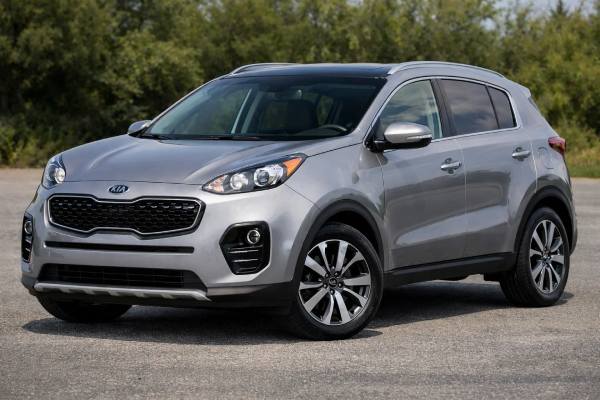
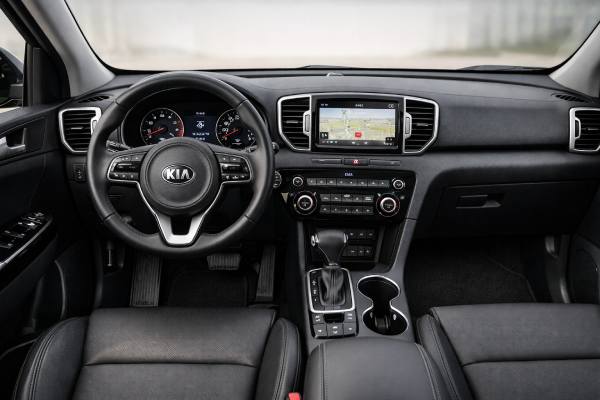

The front-wheel-drive Kia Sportage QL with the naturally aspirated 2.4-liter GDI engine is the practical middle ground in this generation’s lineup. It gives you more usable low- and mid-range response than smaller base engines, but it avoids the extra cost and heat load of the turbo model. For many used buyers, that matters more than badge appeal. You get a compact SUV with a roomy cabin, a strong parts network, a conventional six-speed automatic, and a chassis that feels mature on the highway. The trade-off is that this engine belongs to Kia’s broader Theta-family 2.4 GDI group, so maintenance history and campaign completion matter a great deal. Oil quality, software updates, and proof of bearing-related service actions should weigh more heavily than trim or paint color. In short, a well-kept 2.4 FWD Sportage can be an honest, useful family SUV. A neglected one can become expensive quickly.
Owner Snapshot
- Strong cargo space, stable highway manners, and a simple FWD automatic layout make it easy to live with.
- The 2.4-liter engine suits the Sportage better than the numbers suggest, especially in everyday traffic.
- Parts supply and service familiarity are usually better than with rarer turbo trims.
- The big ownership caveat is engine-history risk: recall and campaign checks are essential on this 2.4 GDI family.
- A sensible oil-service interval is every 6,000–7,500 miles or 6–12 months, depending on use.
Navigate this guide
- Kia Sportage QL 2.4 Identity
- Kia Sportage QL Technical Figures
- Kia Sportage QL Grades and Protection
- Trouble Spots and Campaigns
- Service Plan and Used-Buy Tips
- Road Manners and Fuel Use
- Rival SUVs in Context
Kia Sportage QL 2.4 Identity
This version of the Sportage is best understood as the mainstream North American QL powertrain. It pairs Kia’s 2.4-liter naturally aspirated direct-injection four-cylinder with a six-speed torque-converter automatic and front-wheel drive. That sounds ordinary, but it defines the ownership experience in useful ways. Compared with the 2.0 turbo SX, the 2.4 FWD is slower and less distinctive. Compared with smaller-entry engines used in other markets, it feels better matched to the Sportage’s weight and family-SUV role. It does not need boost to move the car confidently around town, and it avoids the extra thermal and calibration complexity of the turbo variant.
There is one detail buyers should keep straight. The QL generation arrived during the 2016–2018 window, but open North American factory material for the exact 181 hp 2.4 FWD setup is centered on 2017 and 2018 model-year documentation. That is why ads, VIN checkers, and parts listings sometimes blur calendar year, build year, and model year. The safest habit is to verify by VIN, because one year’s listing title can hide another year’s equipment mix.
Mechanically, the appeal is simplicity. This engine is a naturally aspirated GDI unit, not a turbo. The transmission is a conventional automatic, not a dual-clutch. The driveline is FWD, not AWD. For a used buyer, that combination matters. Fewer high-cost systems sit between the engine and the road, and the car tends to be easier for general repair shops to understand. The downside is that this simplicity does not erase the engine-family concerns that surround some Hyundai-Kia 2.4 GDI applications. So while the 2.4 Sportage is easier to own than some alternatives, it is only a good bet when the maintenance and campaign record is solid.
The chassis is one of the quiet strengths of the QL. The body structure feels tighter and more modern than older Sportages, and the suspension layout is proper compact-SUV hardware rather than bargain-basement engineering: MacPherson struts up front, a multi-link rear, and motor-driven power steering. The result is not sporty in the hot-hatch sense, but it is composed and predictable. On a longer trip, that matters more than a few tenths in an acceleration run.
This version also makes sense as a family tool. Cargo space is generous for the class, rear-seat packaging is useful, and the overall dimensions are manageable in town. In higher trims, the Sportage adds just enough comfort and safety equipment to feel modern without becoming overcomplicated. That is really the heart of the model’s appeal: it is not the most exciting compact SUV of its era, but in the right spec it is sensible, roomy, and mechanically straightforward. The ownership question is never “Is it powerful enough?” It is “Was it cared for properly?”
Kia Sportage QL Technical Figures
The table set below focuses on the front-wheel-drive 2.4-liter QL Sportage as sold in North America. Where figures vary slightly by trim, that is noted. Where a value depends on test method or exact configuration, it is qualified rather than guessed.
| Powertrain and efficiency | Value |
|---|---|
| Code | G4KJ |
| Engine layout and cylinders | Inline-4, DOHC, 16 valves, 4 valves per cylinder |
| Bore × stroke | 88.0 × 97.0 mm (3.46 × 3.82 in) |
| Displacement | 2.4 L (2,359 cc) |
| Induction | Naturally aspirated |
| Fuel system | Gasoline direct injection |
| Compression ratio | 11.3:1 |
| Max power | 181 hp (135 kW) @ 6,000 rpm |
| Max torque | 175 lb-ft (237 Nm) @ 4,000 rpm |
| Timing drive | Chain |
| Rated efficiency | 23/30/26 mpg US for LX FWD, about 10.2 / 7.8 / 9.0 L/100 km; 22/29/25 mpg US for EX FWD, about 10.7 / 8.1 / 9.4 L/100 km |
| Real-world highway @ 120 km/h (75 mph) | Usually about 8.0–8.8 L/100 km, depending on tyre package, weather, and traffic |
| Transmission and driveline | Value |
|---|---|
| Transmission | 6-speed automatic |
| Transmission type | Torque-converter automatic |
| AT fluid capacity | 6.7 L (7.1 US qt) |
| Final drive ratio | 3.064:1 in FWD form |
| Drive type | Front-wheel drive |
| Differential | Open front differential |
| Chassis and dimensions | Value |
|---|---|
| Suspension, front | MacPherson strut |
| Suspension, rear | Multi-link |
| Steering | Motor-driven power steering, rack-and-pinion |
| Steering ratio | 14.4:1 |
| Turns lock-to-lock | 2.71 |
| Brakes | 12.0 in front disc / 11.9 in rear disc |
| Wheels and tyres | 225/60 R17 on LX, 225/55 R18 on EX |
| Ground clearance | 6.4 in (163 mm) FWD |
| Approach / departure / breakover | 16.7° / 23.9° / 18.6° |
| Length / width | 176.4 in / 73.0 in (4,481 / 1,854 mm) |
| Height | 64.4 in without roof rails, 64.8 in with roof rails |
| Wheelbase | 105.1 in (2,670 mm) |
| Turning circle | 34.8 ft curb-to-curb (10.6 m) |
| Kerb weight | About 3,305–3,596 lb FWD depending on trim and equipment |
| Fuel tank | 16.4 US gal (62.1 L) |
| Cargo volume | 30.7 ft³ seats up / 60.1 ft³ seats down, SAE |
| Performance and capability | Value |
|---|---|
| 0–100 km/h | Roughly 9.3–9.8 s in real-world FWD form |
| Top speed | Usually limited near 114 mph (183 km/h) |
| Braking distance 100–0 km/h | Usually around 36–38 m on good tyres; tyre-dependent |
| Towing capacity | 2,000 lb braked / 1,650 lb unbraked |
| Payload | Varies by trim and options; verify from certification label |
| Fluids and service capacities | Value |
|---|---|
| Engine oil | 4.8 L (5.1 US qt); use the exact specification required by the market and service literature |
| Coolant | 2.7 L appears in factory spec summaries for engine system volume reference; verify full refill procedure and exact service fill by VIN |
| Transmission / ATF | 6.7 L; SP4-family fluid as specified by Kia service documentation |
| A/C refrigerant | Verify by under-hood label before service |
| A/C compressor oil | Verify by under-hood label before service |
| Key torque spec | Wheel nuts commonly 79–94 lb-ft (107–127 Nm), but always confirm by local service data |
| Safety and driver assistance | Value |
|---|---|
| Euro NCAP | Not directly tied to this North American 2.4 FWD powertrain; the QL Sportage body shell did earn a 5-star result in Europe |
| IIHS | Top Safety Pick in 2017 with optional front crash prevention; 2018 Top Safety Pick with optional front crash prevention and specific headlights on later builds |
| IIHS headlight rating | Poor on many configurations |
| Standard passive safety | Dual front airbags, front seat-mounted side airbags, full-length side curtain airbags, LATCH |
| Common ADAS availability | Rear camera standard; BSD, LCA, RCTA, LDWS, and AEB depend on trim, package, and year |
The big practical lesson from the numbers is that the 2.4 FWD Sportage is not trying to be a fast SUV. It aims to be a roomy, reasonably efficient, conventional compact crossover with enough engine to avoid feeling labored. That sounds modest, but for many owners it is exactly the point.
Kia Sportage QL Grades and Protection
For this 181 hp engine, the key U.S.-market trims are LX and EX. The SX belongs to the turbo side of the lineup, so most buyers looking at the 2.4-liter FWD car are really deciding between a value-oriented LX and a better-equipped EX. That matters because this engine is usually bought for balance rather than image. The best-used version is often the one with the right options, not the one with the biggest wheel or glossiest trim detail.
The LX is the simpler car. It typically rides on 17-inch wheels with 225/60 R17 tyres, which gives it the more forgiving ride and lower replacement-tyre cost. It still gets the main mechanical hardware: the 2.4 GDI engine, the six-speed automatic, motor-driven power steering, multi-link rear suspension, and standard rear camera. It also gets the essential safety base of dual front airbags, side airbags, curtain airbags, ABS, stability control, hill-start assist, downhill brake control, pretensioners, and LATCH anchors. In a used-car context, that makes the LX a strong practical choice if you value lower running cost and less gadget risk.
The EX adds much of what many owners actually want. It typically moves to 18-inch wheels, richer interior trim, stronger infotainment options, more power adjustment, and a more upscale cabin feel. On 2017 vehicles, blind-spot monitoring, rear cross-traffic alert, autonomous emergency braking, lane-departure warning, and front-and-rear parking sensors were available or standard depending on package and trim. By 2018, Kia expanded safety and convenience content further. The EX gained more standard driver-assistance equipment, while the LX could be configured with a technology package that added several of the features buyers now expect on a newer used crossover.
That year-to-year shift matters in real shopping. A 2017 EX can overlap heavily with a 2018 LX Technology Package car in price, but they will feel different to own. The EX often looks and feels richer inside. The later LX package car can give you more of the safety tech without the larger wheels and higher trim cost. That is why listings should be decoded carefully. Badge alone does not tell the full story.
Quick identifiers help. LX cars usually have the 17-inch wheel setup and more basic interior trim. EX cars often have 18-inch wheels, a more upgraded dashboard finish, stronger infotainment and audio options, and more convenience features such as power tailgate or dual-zone climate control. The engine is the same, but the ownership feel can differ a lot.
Safety ratings need context. IIHS rated the QL Sportage well overall in crashworthiness, and it earned Top Safety Pick status when equipped with the right front crash prevention system. For 2018, the award condition became more specific, tying the better result to optional crash prevention and certain headlight setups on later builds. That means a seller saying “Top Safety Pick” is not enough by itself. You want the actual equipment level.
The passive safety package is solid for the class, and the body structure is one of the better points of the QL generation. The bigger question on used examples is active safety availability and calibration. A Sportage with AEB or lane warning that has had front-end work, windshield replacement, or sensor damage should be checked carefully. Modern driver aids only help when they are present and properly calibrated. On this vehicle, trim decoding and repair history matter almost as much as the crash-test headline.
Trouble Spots and Campaigns
The reliability story of the 2.4 FWD Sportage starts with one uncomfortable truth: the biggest risk is the engine family, not the transmission. The six-speed automatic is usually the calmer part of the ownership picture. The 2.4 GDI engine can be perfectly serviceable when maintained well, but it sits inside a broader Theta-family history that makes campaign completion and oil-service discipline essential.
The issue that matters most is connecting-rod-bearing risk. Kia’s product-improvement material for the broader 2.4 GDI Sportage population added a Knock Sensor Detection System, or KSDS, to detect the onset of bearing wear before a full failure. On the used market, that translates into a very practical question: was the campaign completed, and is there documentation to prove it? If the answer is unclear, the car deserves caution. If the answer is yes, that is a meaningful positive.
Here is how the common trouble map looks in real ownership:
- Common, low to medium cost: worn spark plugs, carbon-related roughness from short-trip use, weak batteries, tired engine mounts, brake wear, and suspension consumables such as links and bushes.
- Occasional, medium cost: transmission shift quality degradation when fluid ages, wheel bearings, front-end noise, and cooling-system seepage at higher age.
- Occasional, high cost: bottom-end bearing damage, oil-consumption complaints on neglected engines, and chain-noise concerns on poorly serviced cars.
- Campaign-related: software updates, start-logic improvements on certain 2018 vehicles, oil-leak service actions, and HECU recall work on certain vehicles without Smart Cruise Control.
A second known issue path involves the E-CVVT cover and motor plug area on some 2017 vehicles. The symptom pattern is usually a malfunction lamp with cam-actuator-related fault codes, or visible oil leakage around the motor plug area. It is not the most common failure, but it is a useful example of why dealer-campaign history matters. If the repair was done in period, ownership becomes less dramatic.
Some 2018 vehicles also had a service action for extended cranking or intermittent hard starting. In plain terms, the fix was an ECU logic update. That means a car with a crank-time complaint is not always telling you the starter or fuel system is dead. Sometimes it is a software-history question first.
The HECU fire-risk recall is another important check. On affected Sportages not equipped with Smart Cruise Control, the hydraulic electronic control unit could short and create an engine-compartment fire risk. Any used example should be checked by VIN, and if recall status is open, it should be resolved before normal use.
For pre-purchase inspection, I would ask for five things in writing: full oil-change history, proof of campaign completion, confirmation of any P1326 or engine-related code history, cold-start behavior, and evidence of recent ignition service. On the test drive, listen for lower-end knock, feel for hesitation under load, and watch for any flashing check-engine light. Also inspect for oil seepage, underbody corrosion, and repair quality around the front bumper and windshield on cars with driver-assistance features.
This is not a model to buy on blind optimism. It is a model to buy on paperwork, smooth mechanical behavior, and confirmed updates.
Service Plan and Used-Buy Tips
A 2.4 Sportage with a conservative maintenance plan is far easier to trust than one maintained only when a reminder appeared. The official material gives the framework, but on an aging direct-injection engine the smarter approach is usually to tighten the schedule rather than stretch it.
A practical service plan looks like this:
- Engine oil and filter: every 6,000–7,500 miles or 6–12 months. If the vehicle sees short trips, heat, traffic, or long idle time, use the shorter interval.
- Engine air filter: inspect at every oil service and replace as needed, usually around 15,000–30,000 miles.
- Cabin air filter: replace about every 15,000 miles or yearly.
- Spark plugs: do not leave them until they create misfires. Around 60,000 miles is a sensible real-world target for a used 2.4 GDI.
- Coolant: inspect condition regularly and follow the official schedule for replacement, but verify the exact coolant type and fill method before service.
- Automatic transmission fluid: many factory schedules treat it lightly, but on a used example with unknown history a careful drain-and-fill in the 60,000–90,000 mile range is sensible.
- Brake fluid: replace by time as well as mileage. Around every two to three years is a good working rule.
- Brake pads, rotors, hoses, and slides: inspect at every service.
- Drive belt and hoses: inspect from midlife onward and replace by condition.
- Timing chain: no routine replacement interval, so inspect by symptoms, start-up noise, and fault history.
- Tyres and alignment: check often. Cheap tyres change how this car brakes and steers more than owners expect.
- 12 V battery: test yearly once it is more than four years old.
Useful reference figures include 4.8 liters of engine oil, 6.7 liters of automatic-transmission fluid capacity, and common wheel-nut torque in the 107–127 Nm range. For actual repair work, VIN-specific service documentation always takes priority over a summary guide like this.
For buyers, the inspection checklist should be strict:
- Verify campaign and recall completion by VIN.
- Ask whether KSDS was installed and documented.
- Check for engine noise cold and hot.
- Scan for stored or pending engine codes, especially knock or cam-related faults.
- Confirm smooth hot restarting and normal cranking.
- Inspect for oil leaks, coolant residue, and underbody corrosion.
- Check the gearbox for harsh shifts, flare, or delayed engagement.
- Inspect tyre wear for alignment or suspension issues.
- Test every camera, sensor, and ADAS function fitted to the car.
- Prefer original-size wheels with quality tyres over oversized aftermarket setups.
Which years should you target? A later 2018 example can be attractive because some equipment and software updates were already rolled in, and safety content improved on certain trims. A 2017 can still be a good buy if the history is better. I would avoid any car that has vague recall answers, inconsistent oil records, or obvious signs of repeated code-clearing.
The long-term durability outlook is fair to good, not bulletproof. The body, cabin, and basic chassis age reasonably well. The engine is where discipline matters. Buy the history first, the trim second.
Road Manners and Fuel Use
The 2.4 FWD Sportage drives like a compact SUV tuned by people who expected owners to spend real time on highways. It is not especially lively at low speeds, but it is settled and predictable. The steering is light in town, stable at speed, and fast enough to make the car feel tidy on a winding road. What it does not deliver is strong feedback. This is a calm, competent crossover, not a driver’s toy.
Ride quality depends heavily on wheel choice. On 17-inch tyres, the Sportage is comfortably damped and reasonably quiet. On 18-inch tyres, it still rides well, but impacts sharpen and road noise becomes more noticeable. This is one reason the LX can feel like the better long-term ownership spec even when the EX looks richer on paper. A smaller wheel with a taller sidewall suits the chassis.
The 2.4 engine’s character is straightforward. Throttle response is linear, and because it is naturally aspirated there is no turbo lag to work around. The downside is that peak torque arrives at 4,000 rpm, so the car feels merely adequate until you ask more from it. Around town, that is fine. On a fast uphill merge or a two-lane overtake with passengers aboard, it can feel like it needs a strong kickdown and more revs than buyers expect from a modern SUV. That does not make it slow in daily life. It just means the engine works harder than the turbo version when the road opens up.
The six-speed automatic is generally well matched to the engine. It is smoother at low speed than many dual-clutch alternatives from the same era, and it makes the Sportage easy to drive in traffic. The weak point is not design drama but aging fluid and software state. When neglected, the transmission can feel lazier or less decisive than it should. A healthy one behaves predictably, with no major surprises.
Real-world efficiency is reasonable for a non-hybrid 2.4-liter compact SUV, but not impressive by modern standards. Expect roughly these numbers:
- City: about 10.5–11.5 L/100 km in dense urban use.
- Highway at 100–120 km/h: about 8.0–8.8 L/100 km.
- Mixed driving: about 9.0–10.0 L/100 km.
Cold weather, short trips, roof accessories, worn plugs, and cheap tyres can push those numbers upward. The EX usually gives away a small amount of fuel economy to the LX because of wheel and tyre choice.
Noise, vibration, and harshness are well controlled for the segment. Wind noise is acceptable, the body feels rigid, and the suspension does a decent job of keeping secondary motions in check. The car is especially good at relaxed cruising. Braking feel is progressive, and straight-line stability is one of the Sportage’s better traits.
With moderate towing or a full family load, the 2.4 FWD remains competent but clearly not energetic. Expect a noticeable fuel-use penalty, often 15–25 percent depending on speed and load. Front-wheel drive also means traction matters on wet ramps, loose surfaces, and steep grades. This is a useful light-duty tow vehicle, not a relaxed heavy-load SUV.
In the end, the dynamic verdict is simple. The 2.4 FWD Sportage is pleasant, composed, and honest. It will not charm an enthusiast, but it can quietly satisfy an owner who wants comfort, space, and predictable behavior more than excitement.
Rival SUVs in Context
Against its direct rivals, the 2.4 FWD Sportage makes the most sense for buyers who value straightforward ownership and usable equipment over badge prestige or class-leading efficiency. It is rarely the best compact SUV in one category. Its strength is how many areas it covers well enough at once.
Against a Honda CR-V of the same era, the Kia usually loses on fuel economy and rear-seat cleverness, but it can feel more solidly equipped for the money on the used market. The CR-V is the safer recommendation for buyers who want maximum efficiency and an easy resale story. The Sportage is often the better value buy when condition and equipment matter more than absolute class leadership.
Against a Toyota RAV4, the Kia again trails in reputation for powertrain durability, especially once the Theta-family engine history enters the discussion. That is the hard truth. But the Sportage can feel more upscale in cabin design and usually offers a richer feature set per dollar. Buyers choosing the Kia should do so with eyes open: they are trading some long-term peace of mind for price, equipment, and a more polished interior experience.
Against a Mazda CX-5, the Sportage is less engaging to drive. The Mazda steers better, feels more cohesive, and tends to deliver a more polished engine-transmission match. The Kia answers with softer pricing, good packaging, and often lower entry cost into features such as blind-spot monitoring, heated items, and upgraded infotainment.
Against its corporate cousin, the Hyundai Tucson, the comparison is especially close. The decision often comes down to trim, styling, and the specific vehicle’s history rather than any dramatic engineering difference. In used form, the better-documented car is the better buy. The Sportage tends to appeal more to buyers who like the design and interior presentation. The Tucson usually appeals to buyers who want the same basic recipe in a more conservative wrapper.
So who should buy this exact Sportage? The best owner is someone who wants a compact SUV with a conventional automatic, solid cargo room, useful safety features, and manageable purchase cost, and who is willing to be disciplined about verification before purchase. This is a car for a careful buyer, not a casual one.
Who should skip it? Anyone who wants the least risky long-term engine reputation in the class, or anyone who dislikes doing homework on campaigns, service history, and VIN-specific equipment. There are easier vehicles to buy quickly.
The final verdict is balanced. The Kia Sportage FWD QL 2.4 is not the obvious class champion, but it can be a smart used compact SUV when bought correctly. If the recall file is clean, the engine sounds healthy, the service history is complete, and the trim matches your needs, it offers honest value, comfort, and practicality. If those things are missing, walk away. This model rewards selectivity more than optimism.
References
- 2018 Kia Sportage Specifications 2017 (Technical Data)
- 2018 Kia Sportage What’s New 2017 (Model Update)
- Scheduled maintenance service n.d. (Owner’s Manual)
- 2018 Kia Sportage 4-door SUV 2018 (Safety Rating)
- Consumer Alert: Important Kia Sportage and Cadenza Recall for Fire Risk | NHTSA 2021 (Recall Database)
Disclaimer
This article is for informational purposes only and is not a substitute for professional diagnosis, repair, or market-specific technical advice. Specifications, torque values, service intervals, capacities, procedures, recalls, and equipment can vary by VIN, market, trim, production date, and emissions certification, so always verify against the official Kia service documentation for the exact vehicle before maintenance or repair work.
If this guide helped you, please consider sharing it on Facebook, X, or another platform to support our work.