
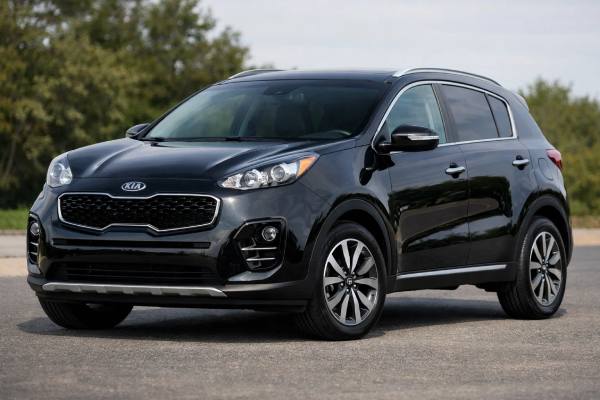


The Kia Sportage QL with the G4KH 2.0-liter turbo engine and all-wheel drive sits in an interesting spot in the compact SUV market. It is quick enough to feel genuinely strong in everyday driving, yet still practical enough for family use, winter commuting, and long-distance travel. In this configuration, the Sportage leans more toward refined road manners and torque-rich response than rugged off-road character. That matters, because many buyers expect “AWD” to mean trail-ready hardware, while this version is really tuned for wet roads, snow, and confident on-road traction.
There is one detail worth clearing up early. For North America, the 237 hp AWD tune is mainly associated with the 2017 and 2018 SX Turbo AWD, even though QL-generation Sportage production began in the 2016 time frame in some markets. For owners and used-car shoppers, that distinction helps when matching parts, software updates, and service records. The result is a compact SUV with real strengths, but also a few ownership points you should check closely.
Owner Snapshot
- Strong mid-range torque and confident AWD traction make it easy to drive in mixed weather.
- The turbo 2.0-liter feels more relaxed at highway speeds than the base naturally aspirated engine.
- SX Turbo trims add useful comfort and safety features, not just cosmetic upgrades.
- Service history matters: check recall completion, air-conditioning performance, and any oil-consumption complaints.
- Engine oil service is typically every 10,000 km or 6 months in normal use, or 5,000 km or 3 months in severe use.
Guide contents
- Kia Sportage QL turbo AWD overview
- Kia Sportage QL specs and technical data
- Kia Sportage QL trims, safety and driver assistance
- Reliability, common issues and service actions
- Maintenance and buyer’s guide
- Driving and real-world performance
- How the Sportage QL AWD compares to rivals
Kia Sportage QL turbo AWD overview
The QL-generation Kia Sportage moved the model toward a more mature, road-focused character. In G4KH 2.0T AWD form, it became the performance version of the range. This is the variant for buyers who liked the Sportage shape and interior quality but did not want the slower feel of the base 2.4-liter engine. The turbo motor changes the experience more than the spec sheet alone suggests. Peak torque arrives early, so the car feels stronger in everyday overtakes, uphill driving, and full-load highway merging.
Mechanically, this Sportage uses a transverse 2.0-liter direct-injected turbocharged inline-four, a conventional 6-speed automatic, and an on-demand AWD system that can actively send torque rearward when front-wheel slip is detected. In low-grip conditions, that system gives the car a secure, planted feel. It is not a low-range 4×4 and it does not have the wheel articulation or underbody protection of a true off-road SUV, but for rain, slush, gravel roads, and winter commuting, it is well judged.
The broader QL package is also important. Kia gave this generation a stiffer body shell and a quieter cabin than the earlier Sportage. On the road, that translates to decent straight-line stability, reduced shake over broken pavement, and a more upscale impression than many compact crossovers from the same period. The steering is light rather than sporty, yet predictable, and the ride is firm without becoming harsh on standard road surfaces.
From an ownership perspective, the appeal is clear. You get a compact footprint, raised seating position, strong turbo performance, and a trim level that often includes leather, larger wheels, upgraded infotainment, and more advanced safety equipment. The drawback is equally clear: the turbo drivetrain adds heat, complexity, and sensitivity to maintenance quality. This is not a model to buy on looks alone. Service records, recall completion, fluid history, and software updates matter.
For buyers browsing “2016–2018” listings, the key is to verify the exact year, trim, drivetrain, and engine by VIN. Many Sportage QL vehicles in that range are 2.4-liter units, and some market descriptions are inaccurate. The 237 hp AWD setup is the one worth targeting if you want the strongest factory turbo version with the extra security of all-wheel drive. When properly maintained, it is one of the more satisfying compact Kia crossovers of its era, especially for drivers who value usable torque over headline sportiness.
Kia Sportage QL specs and technical data
Below are the key figures for the Kia Sportage QL AWD with the G4KH 2.0-liter turbocharged engine in 237 hp form. Values can vary slightly by year, market, tyre package, and equipment, so treat these as the correct baseline for this specific AWD turbo configuration rather than a universal Sportage spec sheet.
Powertrain and driveline
| Item | Specification |
|---|---|
| Engine code | G4KH |
| Engine layout | Inline-4, DOHC, 16 valves |
| Displacement | 2.0 L (1,998 cc) |
| Bore × stroke | 86.0 × 86.0 mm (3.39 × 3.39 in) |
| Valves per cylinder | 4 |
| Induction | Turbocharged |
| Fuel system | Direct injection |
| Compression ratio | 10.0:1 |
| Max power | 237 hp (177 kW) @ 6,000 rpm |
| Max torque | 352 Nm (260 lb-ft) @ 1,450–3,500 rpm |
| Timing drive | Chain |
| Transmission | 6-speed automatic |
| Drive type | AWD |
| Differential type | Open differentials with electronically managed torque transfer |
Efficiency and performance
| Item | Specification |
|---|---|
| Rated fuel economy | 11.8 / 10.2 / 11.2 L/100 km city/highway/combined |
| Rated fuel economy | 20 / 23 / 21 mpg US city/highway/combined |
| Real-world highway at 120 km/h | Usually about 9.5–10.8 L/100 km depending on wind, tyres, and load |
| 0–100 km/h | About 7.8–8.3 seconds |
| Top speed | About 200–210 km/h (124–130 mph) |
| Braking, 100–0 km/h | Typically around 35–38 m depending on tyres and surface |
| Towing capacity | Market-dependent; verify by VIN and hitch equipment |
Chassis, dimensions and capacities
| Item | Specification |
|---|---|
| Front suspension | MacPherson strut |
| Rear suspension | Multi-link |
| Steering | Electric power steering |
| Front brakes | Ventilated discs |
| Rear brakes | Solid discs |
| Common tyre size | 245/45 R19 |
| Ground clearance | About 172 mm (6.8 in) |
| Length | 4,481 mm (176.4 in) |
| Width | 1,854 mm (73.0 in) |
| Height | About 1,656 mm (65.2 in), depending on rails and tyres |
| Wheelbase | 2,670 mm (105.1 in) |
| Turning circle | About 10.6 m (34.8 ft) |
| Kerb weight | Up to about 1,813 kg (3,997 lb) |
| Fuel tank | 62 L (16.4 US gal / 13.6 UK gal) |
| Cargo volume | 869 L / 1,702 L (30.7 / 60.1 ft³), seats up/down |
Fluids and service capacities
| Item | Specification |
|---|---|
| Engine oil | SAE 5W-30; API SM or higher / ILSAC GF-4 or higher; about 4.8 L (5.1 US qt) |
| Coolant | Ethylene glycol, phosphate-based; about 7.2 L (7.6 US qt) |
| Automatic transmission fluid | Kia ATF SP-IV; about 7.8 L (8.2 US qt) dry capacity |
| Rear differential oil | API GL-5 SAE 75W/90; about 0.58 L (0.61 US qt) |
| Transfer case oil | API GL-5 SAE 75W/90; about 0.35 L (0.37 US qt) |
| Brake fluid | DOT 3 or DOT 4 |
| A/C refrigerant | Verify by label under hood; charge varies by year and market |
Safety and driver-assistance baseline
| Item | Specification |
|---|---|
| Airbags | Front, front side, side curtain, driver knee on many higher trims |
| Stability systems | ESC, traction control, ABS, brake assist |
| Child-seat anchors | LATCH / ISOFIX depending on market |
| Available ADAS | AEB, lane departure warning, lane keeping assist, blind-spot detection, rear cross-traffic alert, smart cruise control |
| Crash performance | Strong results for the generation, but equipment and headlight ratings vary by trim |
The important takeaway is that this is not just a regular Sportage with extra power. The turbo engine, AWD hardware, and larger-wheel SX specification give it a distinct character, heavier curb weight, and slightly higher running costs, but also a much more convincing performance envelope.
Kia Sportage QL trims, safety and driver assistance
For the 237 hp AWD setup, the main reference point is the higher-spec turbo trim, most commonly the SX Turbo AWD in North America. That matters because equipment level changes the ownership experience almost as much as the engine does. A buyer who expects the same safety tech, infotainment, and seating quality from a lower Sportage trim will often be disappointed.
In practical terms, the turbo AWD model usually sits at the top of the range. The easiest identifiers are the larger alloy wheels, stronger exterior detailing, turbo badging in some markets, upgraded interior trim, and a broader list of standard comfort equipment. Many examples include leather seating surfaces, heated and ventilated front seats, panoramic roof availability, upgraded headlamps, and a larger touchscreen with navigation or premium audio depending on market and package. Because it is the range-topping version, it is also the one most likely to have the best resale appeal if condition is good.
Mechanical differences are not cosmetic. The turbo engine is paired with the 6-speed automatic and AWD system, while lower trims may use the naturally aspirated 2.4-liter engine, front-wheel drive, smaller wheels, and a simpler equipment mix. Wheel and tyre package differences affect ride and road noise. The 19-inch setup looks right on the SX Turbo, but it can feel firmer over sharp edges and replacement tyres cost more than the smaller sizes used on lower trims.
Safety equipment is one of the strongest reasons to seek a well-optioned Sportage QL. The body structure for this generation was improved significantly, and higher trims often added advanced driver-assistance systems that were optional or unavailable lower in the range. Depending on exact year and package, you may see autonomous emergency braking, lane departure warning, lane keeping assistance, blind-spot detection, rear cross-traffic alert, parking sensors, and adaptive cruise control. Buyers should check for the actual hardware on the vehicle rather than trusting a sales description, because used-car listings often overstate ADAS content.
Crash-test reputation is solid, but it is worth separating trim-level marketing from tested configuration. The generation earned very good scores in major safety testing, yet headlight performance and front-crash-prevention ratings could vary depending on the fitted lamps and active-safety package. That means one Sportage can be materially safer in night driving and crash avoidance than another, even when both look similar online.
There were also year-to-year changes. For used buyers, later production examples can be more attractive because Kia refined feature availability and packaging. Some safety technology became easier to find, while software updates and service campaigns also improved certain ownership concerns. When shopping, ask for the VIN, confirm the build date, and match it to the original equipment list. That is the cleanest way to know whether you are buying the true turbo AWD flagship rather than a lower trim with added badges or aftermarket wheels.
Reliability, common issues and service actions
The Sportage QL 2.0T AWD is not a disaster-prone vehicle, but it is one that rewards careful ownership. Most of its trouble spots are known and manageable if you catch them early. The best way to judge one is by grouping issues by prevalence, cost, and how clearly they show up in service records.
Common low-to-medium cost concerns include air-conditioning faults, battery-drain complaints, and normal wear accelerated by heavy wheel-and-tyre packages. On some QL models, intermittent weak A/C performance has been traced to compressor control issues, related hardware, or system calibration. Owners may describe it as cold air that fades in traffic, poor cooling on hot restart, or inconsistent output between city and highway driving. If a seller says “it just needs a recharge,” inspect more deeply.
A second issue area is oil consumption. Not every G4KH develops a meaningful problem, but enough complaints and diagnostic guidance exist that buyers should ask directly. The pattern is usually increased oil use between services, sometimes with no major smoke and no obvious external leak. Short-trip use, overdue oil changes, and hard driving can make the picture worse. A properly documented oil-consumption test history is valuable, especially on higher-mileage examples.
Occasional medium-to-high cost concerns involve the fuel system and turbo-related heat load. High-pressure fuel system hardware, seals, and pipe fitment should be checked carefully after any engine work. A badly fitted or incorrectly torqued fuel pipe is not a small mistake on a direct-injection turbo engine. Ask whether the engine has ever been replaced or removed, because some service actions specifically targeted post-repair fuel-line inspection.
Driveline and chassis issues are more conventional. Listen for wheel-bearing noise, inspect front lower-arm bushings, check rear suspension for clunks, and look for uneven tyre wear that suggests alignment neglect. The AWD system itself is generally dependable if fluid condition is not ignored, but a neglected rear differential or transfer case is never a good sign. On a road test, tight low-speed turns should feel smooth, with no shudder or dragging sensation.
Software and recalls matter here. Certain vehicles were subject to important fire-risk recall work involving hydraulic electronic control unit concerns, while others were affected by accessory tow-hitch harness recall actions. These are not details to postpone. Verify completion through official VIN records and dealer history. Also ask whether any ECM or body-control software updates were applied, because some campaigns addressed battery draw or logic faults.
Pre-purchase, request five things: full service history, proof of recall completion, evidence of correct oil-change intervals, confirmation of recent AWD fluid inspection, and a cold-start plus hot-idle test drive. A clean-looking Sportage with missing paperwork is far riskier than a higher-mileage one with complete records.
Maintenance and buyer’s guide
The best maintenance plan for the Sportage QL 2.0T AWD is simple: follow the official schedule, but treat severe-service rules as the real baseline if the car sees city traffic, short trips, dust, heat, winter salt, or frequent full-load driving. For many used examples, that is the honest category.
A practical maintenance approach looks like this:
- Engine oil and filter: every 10,000 km or 6 months in normal use; every 5,000 km or 3 months in severe use.
- Tyre rotation: every 12,000 km or about 7,500 miles.
- Engine air filter: inspect regularly and usually replace around 48,000 km intervals, sooner in dusty use.
- Cabin air filter: inspect often and replace roughly every 24,000 km or sooner if airflow drops.
- Spark plugs: around 72,000 km for the turbo engine.
- Coolant: first major replacement around 192,000 km or 10 years, then shorter intervals afterward.
- Brake fluid: inspect regularly and replace by condition or time, commonly every 2–3 years in real use.
- ATF: treat as serviceable even if “lifetime” language appears; many owners do well with about 96,000 km intervals in severe use.
- Rear differential and transfer case oil: inspect and service on schedule, especially on vehicles used in snow or heat.
- Drive belts and hoses: inspect from midlife onward.
- 12 V battery: load-test after about 4 years.
Useful fluid and decision numbers include about 4.8 L of engine oil, 7.2 L of coolant, 7.8 L of automatic transmission fluid dry capacity, 0.58 L rear differential oil, and 0.35 L transfer-case oil. For a buyer, that matters because it helps you spot incomplete or incorrect service invoices.
The chain-driven timing system does not have a routine belt-style replacement interval, but it does need attention if you hear startup rattle, see timing-correlation faults, or find evidence of poor lubrication history. With this engine, prevention is cheaper than waiting for a major timing or oiling complaint.
For inspection, focus on these points:
- Check for oil use between services and ask how often the owner topped up.
- Inspect underbody corrosion on subframes, fasteners, exhaust hardware, and suspension arms.
- Check for coolant smell, heat-soak issues, and weak A/C at idle.
- Look for mismatched tyres, because AWD systems dislike large rolling-diameter differences.
- Scan for stored engine, transmission, and ADAS faults.
- Confirm all keys, infotainment functions, cameras, heated-seat functions, and power-tailgate operation if fitted.
The best examples are later-build, well-documented turbo AWD vehicles with recall work completed and no vague story about “just needs a sensor.” The ones to avoid are cars with missing oil-change history, poor tyre matching, unresolved warning lights, or evidence of prior major engine work without detailed invoices. Long-term durability can be good, but only when maintenance is treated as a system, not a series of postponed fixes.
Driving and real-world performance
On the road, the Sportage QL 2.0T AWD feels more substantial than many compact crossovers from the same period. The first impression is torque. This engine does not need to be revved hard to move the car briskly. In daily traffic, that means easier gap selection, less strain on highway merges, and a more relaxed feel with passengers aboard. It is not a razor-sharp performance SUV, but it is clearly the drivetrain to choose if you want the Sportage to feel effortless rather than merely adequate.
Throttle response is decent once rolling, though there can be a small pause from a standstill if you ask for full boost abruptly. That is typical for a small turbocharged crossover with a conventional automatic. The 6-speed transmission is generally smooth and predictable, but it is not especially fast. It prefers clean, measured shifts over aggressive snap. In normal driving, that suits the car’s character. In harder use, you may notice delayed kickdown compared with newer eight-speed rivals.
Ride quality is a mixed but mostly positive story. The QL body is stiff enough to feel settled, and the suspension keeps the car composed over undulating roads. The trade-off comes from the larger wheels and lower-profile tyres often fitted to turbo trims. Sharp potholes and broken urban edges are felt more clearly than in lower trims on smaller wheels. Highway comfort, however, is strong. Straight-line stability is good, wind noise is controlled, and the cabin generally feels more expensive than the badge alone might suggest.
AWD behavior is reassuring rather than dramatic. In rain, slush, and cold-weather starts, the system helps the car pull away cleanly with less front-wheel scrabble. It is useful for mountain roads and poor weather, but owners should not confuse it with true off-road hardware. Tyre choice changes the result more than most buyers expect. A Sportage on quality all-season or winter tyres will feel far more capable than one on worn budget rubber, regardless of drivetrain.
Real-world fuel use is fair, not exceptional. Expect roughly 12–13 L/100 km in heavy city driving, around 9.5–10.8 L/100 km at 120 km/h highway cruising, and about 10.5–11.8 L/100 km in mixed use. Cold weather, short trips, and aggressive boost use raise those numbers quickly. That is the price of the stronger engine and AWD weight penalty.
In summary, the driving experience is mature, secure, and pleasantly muscular. The Sportage QL turbo AWD works best for drivers who want a compact SUV that feels stable and easy to live with, rather than overtly sporty or especially economical.
How the Sportage QL AWD compares to rivals
Against its main rivals, the Sportage QL 2.0T AWD makes the strongest case as an all-round road car. It does not dominate every category, but it blends performance, refinement, and equipment in a way that still makes sense on the used market.
Compared with the Mazda CX-5 2.5 AWD of the same era, the Kia usually feels torquier in mid-range driving when equipped with the turbo engine, while the Mazda counters with sharper steering and a more naturally balanced chassis. The CX-5 is the better choice for drivers who care most about handling polish. The Sportage is the better choice for buyers who want easier low-rpm shove, richer top-trim equipment, and a more isolated feel on long motorway trips.
Against the Honda CR-V of the period, the Sportage feels more distinctive and often more upscale in upper trims, especially in seat comfort and interior atmosphere. The CR-V typically wins on packaging efficiency, rear-seat space, and fuel economy. If cargo space and family practicality are the top priorities, the Honda remains hard to beat. If the goal is a more premium-feeling compact SUV with a stronger engine, the Kia becomes much more attractive.
Against the Ford Escape 2.0 EcoBoost AWD, the Sportage generally feels better finished and less nervous on the highway. The Ford can feel quicker in some conditions and more eager in transient handling, but the Kia is the calmer long-distance companion. The same comparison applies to some extent with the Hyundai Tucson of the era, which shares platform logic but usually presents a slightly different equipment and style balance. The Sportage often feels like the more expressive and upscale sibling.
Where the Kia falls short is simple. Rear cargo packaging is not class-leading. Fuel economy is average at best in turbo AWD form. Long-term ownership risk is also more dependent on service quality than on simpler naturally aspirated rivals. A neglected Sportage 2.0T can become expensive faster than a well-kept CR-V or RAV4.
Where it wins is equally simple. It offers strong everyday performance, solid all-weather traction, a quiet and stable highway demeanor, and a high-spec cabin when bought in SX Turbo form. For buyers who want a compact SUV that feels substantial and do not mind staying on top of maintenance, it remains a convincing used option. The best strategy is not to buy the cheapest example. Buy the most thoroughly documented one.
References
- 2018 Kia Sportage Specifications 2017 (Specifications)
- 2018 Kia Sportage Features and Options 2017 (Specifications)
- 2017 Kia Sportage 2026 (Safety Rating)
- Consumer Alert: Important Kia Sportage and Cadenza Recall for Fire Risk | NHTSA 2021 (Recall Database)
- 2018 Kia Sportage owner’s manual – StartMyCar 2026 (Owner’s Manual)
Disclaimer
This article is provided for informational purposes only and is not a substitute for professional diagnosis, inspection, or repair. Specifications, torque values, service intervals, fluid requirements, procedures, and equipment can vary by VIN, model year, market, drivetrain, and trim level. Always confirm details against the correct official service documentation and parts information for the exact vehicle you are working on or planning to buy.
If this guide helped you, please consider sharing it on Facebook, X, or another social platform to support our work.