

The diesel Kia Stonic sits in an interesting spot in the small crossover market. It has the higher seating position many buyers want, but underneath it is much closer to a Kia Rio than to a heavy SUV. That matters, because the 1.6 CRDi version feels lighter, more direct, and more efficient than many B-segment crossovers from the same years. In 110 hp form, the 1.6-litre diesel is not fast on paper, yet its 260 Nm torque output gives it the easy, low-rpm pull that suits commuting, motorway driving, and full-load use far better than the base petrol engines.
For ownership, the big story is balance. The Stonic offers useful space, strong fuel economy, simple front-wheel-drive running gear, and Kia’s long warranty backing when new. The trade-off is that this diesel makes the most sense for drivers who do regular longer trips. Used mostly for short urban hops, it can bring the usual diesel aftertreatment headaches. There is also an important late-run caveat: some 2019–2020 markets moved from the older U-II diesel to a newer 1.6 CRDi unit, so VIN-level confirmation matters.
Owner Snapshot
- Strong low-rpm torque makes it easier and more relaxed than the smaller petrol engines on hills and motorways.
- Compact outside, yet still practical with a 352 L boot and a useful 1,155 L seats-folded load area.
- Steering and chassis tuning are sharper than many small crossovers from the same period.
- Short-trip use can trigger DPF and regeneration trouble, so this is not the ideal diesel for mostly urban errands.
- Factory service interval is typically 20,000 miles or 12 months, whichever comes first.
Guide contents
- Kia Stonic YB diesel profile
- Kia Stonic YB technical specs
- Kia Stonic YB trims and safety
- Reliability and known faults
- Maintenance and buying advice
- Road manners and economy
- Rivals and best alternatives
Kia Stonic YB diesel profile
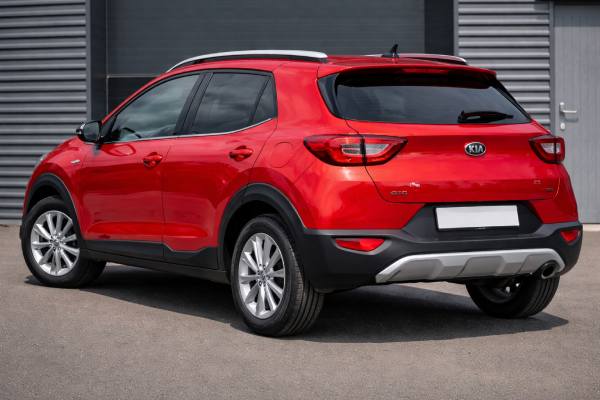
The 2017–2020 Kia Stonic YB is best understood as a Rio-based crossover rather than a scaled-down Sportage. That sounds obvious, but it explains why the car works as well as it does. The Stonic keeps the Rio’s light-footed feel, reasonable curb weight, and tidy dimensions, then adds a more upright driving position, extra ground clearance, and more visual punch. In diesel form, that recipe makes a lot of sense.
The launch-era 1.6 CRDi version used Kia’s U-II diesel and produced 110 hp at 4,000 rpm with 260 Nm from 1,500 to 2,750 rpm. Those are modest headline numbers, but the torque curve matters more than the peak output. In normal driving, this engine rarely feels strained. It pulls cleanly from low revs, suits the six-speed manual well, and gives the Stonic the kind of easy overtaking response that the naturally aspirated petrol models lack.
This variant also fits the Stonic’s real mission. It is a crossover for drivers who want supermini running costs with a slightly more versatile body. The diesel strengthens that idea because it makes the car a credible long-distance tool. A daily motorway run, regional commute, or mixed rural route suits it better than dense stop-start city use. On those longer drives, the engine’s efficiency, low cruising effort, and decent refinement become clear strengths.
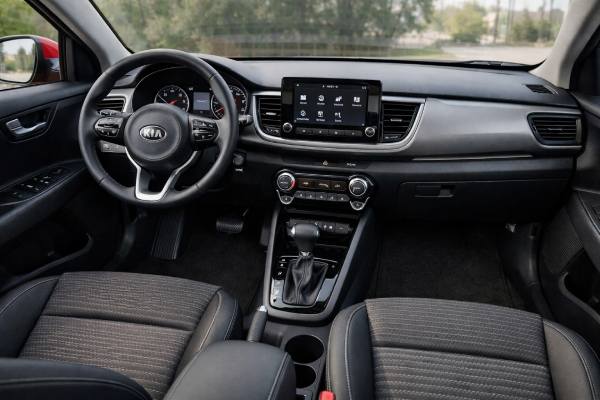
There are practical reasons buyers still seek this version out. The boot is genuinely useful for the class, rear seats fold flat enough for bulky items, and the cabin is simple to operate. Physical climate controls, clear instrumentation, and a straightforward manual gearbox all make it easy to live with. The steering is also quicker than many rivals, so the Stonic feels more settled and precise than its tall body shape suggests.
The key ownership caveat is diesel suitability. If the car is used mainly for short cold trips, interrupted regeneration cycles can lead to DPF complaints, higher oil dilution risk, and general frustration. That is not unique to Kia, but it matters here because many used B-segment crossovers end up as urban second cars.
One more detail deserves attention. The exact 110 hp U-II diesel matches early Stonic production best. In some 2019–2020 European markets, Kia moved to a newer 1.6 CRDi diesel with slightly different output and service data. So when shopping, treat the VIN and engine label as the final authority. For buyers who get the correct 110 hp car and use it as intended, the Stonic diesel is one of the more sensible small crossover packages of its era.
Kia Stonic YB technical specs
The table below focuses on the launch-spec 1.6 U-II CRDi 110 hp Stonic. Where 2019–2020 market overlap exists, I note it clearly so the buyer can verify by VIN before ordering fluids or parts.
Powertrain and efficiency
| Item | Kia Stonic YB 1.6 CRDi 110 |
|---|---|
| Code | 1.6 U-II CRDi diesel |
| Engine layout and cylinders | Inline-4, 4 cylinders, 16 valves |
| Bore × stroke | 77.2 × 84.5 mm (3.04 × 3.33 in) |
| Displacement | 1.6 L (1,582 cc) |
| Induction | Turbocharged |
| Fuel system | Common-rail direct injection |
| Compression ratio | 16.0:1 |
| Max power | 110 hp (81 kW) @ 4,000 rpm |
| Max torque | 260 Nm (192 lb-ft) @ 1,500–2,750 rpm |
| Timing drive | Commonly chain-driven on this engine family; verify by VIN and engine tag |
| Emissions class | Euro 6b launch spec |
| Rated efficiency | 4.2 L/100 km (56.0 mpg US / 67.3 mpg UK) |
| Real-world highway at 120 km/h | Typically about 5.5–6.0 L/100 km (39–43 mpg US / 47–51 mpg UK) |
Transmission and driveline
| Item | Kia Stonic YB 1.6 CRDi 110 |
|---|---|
| Transmission | 6-speed manual |
| Key ratios | 1st 3.636/3.615, 2nd 1.962, 3rd 1.257, 4th 0.905, 5th 0.702, 6th 0.596 |
| Final drive | 3.941 (15 in) / 4.188 (17 in) |
| Drive type | FWD |
| Differential | Open |
Chassis, dimensions, and capacities
| Item | Kia Stonic YB 1.6 CRDi 110 |
|---|---|
| Front suspension | MacPherson struts, coil springs, anti-roll bar |
| Rear suspension | Coupled torsion beam axle, coil springs, anti-roll bar |
| Steering | Electric rack-and-pinion |
| Steering ratio | 14.1:1 |
| Front brakes | 280 mm ventilated disc (11.0 in) |
| Rear brakes | 262 mm solid disc (10.3 in) |
| Most common tyre size | 205/55 R17 |
| Ground clearance | 165 mm (6.5 in) on 15 in wheels / 183 mm (7.2 in) on 17 in wheels |
| Length | 4,140 mm (163.0 in) |
| Width | 1,760 mm (69.3 in) |
| Height | 1,520 mm (59.8 in) with roof rails and 17 in wheels |
| Wheelbase | 2,580 mm (101.6 in) |
| Turning circle | 10.4 m (34.1 ft) |
| Kerb weight | 1,255 kg (2,767 lb) |
| GVWR | 1,700 kg (3,748 lb) |
| Fuel tank | 45 L (11.9 US gal / 9.9 UK gal) |
| Cargo volume | 352 L seats up / 1,155 L seats down (12.4 / 40.8 ft³, VDA) |
| Towing | 1,110 kg braked / 450 kg unbraked (2,447 / 992 lb) |
| Payload | About 445 kg (981 lb) |
Performance and safety data
| Item | Kia Stonic YB 1.6 CRDi 110 |
|---|---|
| 0–100 km/h | 11.3 s |
| 80–120 km/h | 11.1 s |
| Top speed | 175 km/h (109 mph) |
| Crash rating | Euro NCAP dual rating in 2017: 3 stars standard equipment, 5 stars with optional safety pack |
| Euro NCAP sub-scores | 85% adult, 84% child, 62% VRU, 25% Safety Assist on the published 2017 safety-pack result page |
| IIHS | Not rated |
| Headlight rating | Not applicable |
| ADAS | FCA, BCW, RCCW, LDW and later LKA varied by year, trim, and safety pack |
Fluids and service data
| Item | Practical guidance |
|---|---|
| Engine oil | ACEA C2/C3 5W-30; 5.3 L (5.6 US qt) on U-II diesel |
| Important later-run note | Some 2019–2020 cars in certain markets used a newer 1.6 diesel with a 4.4 L oil fill, so confirm by VIN |
| Coolant | Long-life ethylene-glycol type, normally 50:50 mix; verify exact spec and fill by VIN |
| Manual gearbox fluid | Use the correct Kia manual transmission fluid specification; verify fill quantity before service |
| Brake/clutch fluid | DOT 4 LV type is the safe starting point; verify reservoir cap and service data |
| Wheel nut torque | 107–127 Nm (79–94 lb-ft) |
Public factory documents do not consistently publish every refrigerant charge, coolant fill, or gearbox fill figure for every Stonic diesel market. For refill work rather than inspection work, use VIN-specific service data.
Kia Stonic YB trims and safety
Trim structure depended heavily on country, which matters when buying used. In Ireland, buyers saw grades such as K1, K2, and K3. In other European markets, names such as Motion, Active, Design, Premium, First Edition, or numbered trims were more common. The important point is not the badge itself, but the equipment attached to it.
On lower trims, the Stonic diesel was usually a fairly simple car: 15-inch wheels, cloth trim, smaller screen, manual climate control, and fewer driver-assistance systems. Mid-grade cars often added the better infotainment setup, rear camera, cruise control, nicer trim, and alloy wheels. Higher trims tended to bring 17-inch wheels, climate control, heated front seats, heated steering wheel, navigation, smarter key access, privacy glass, and two-tone paint.
For used buyers, quick identifiers help more than brochure names. A 17-inch wheel car often signals a higher trim. So does factory navigation, climate control, the heated steering wheel button, or the presence of blind-spot warning and rear cross-traffic warning. Base cars are not necessarily bad buys, but their resale appeal is lower and their safety equipment is more basic.
Safety is where the Stonic needs the most careful reading. It did not have a single, simple Euro NCAP story. In 2017, Euro NCAP gave the Stonic a dual result: three stars in standard form and five stars with the optional safety pack. That matters because many small crossovers of the era advertised the best-possible rating even when the specific car on the used market did not have the matching equipment. If you are shopping an early car, do not assume every Stonic is a five-star car in the same configuration.
Standard safety hardware was respectable for the class: six airbags, ESC, VSM, hill-start assist, ISOFIX points in the rear, and a strong steel body shell. But active driver assistance was more patchy. Forward Collision-avoidance Assist with pedestrian recognition, blind-spot warning, rear cross-traffic warning, and lane-departure warning were optional or trim-dependent. Lane Keeping Assist was added later, from around mid-2018 availability in Europe.
That leads to one practical buying rule: prioritize equipment over trim name. A mid-grade car with the safety pack is often the smarter buy than a cosmetically nicer car without it. After service work, cars with camera-based driver aids also need proper calibration, especially after windscreen replacement or front-end repairs. This is easy to overlook on an otherwise simple small crossover.
Year-to-year changes also matter. Early 2017–2018 cars best match the launch specification. By 2019–2020, emissions, engine choice, and equipment listings began to shift in some markets. If safety gear is important to you, treat the VIN, the equipment list, and a physical inspection as more reliable than seller descriptions.
Reliability and known faults
The Stonic diesel is generally sound when it gets the kind of use a small diesel wants: regular longer trips, decent fuel, and on-time servicing. Most problems are not catastrophic design flaws. They are usually usage-related, maintenance-related, or tied to a few known weak spots.
Common, low to medium cost: DPF regeneration trouble. This is the issue most likely to affect urban-driven cars. Symptoms include a DPF or exhaust-system warning, fans running after shutdown, a rising oil level from dilution, or reduced performance. The root cause is usually interrupted regeneration from repeated short journeys. The fix can be as simple as a proper regeneration drive if caught early. Left too long, it can lead to forced regeneration, sensor checks, oil service, or DPF cleaning.
Occasional, low to medium cost: fuel filter and water contamination complaints. Diesel Kias are sensitive to poor fuel quality. Hard starting, surging, loss of power, or fuel-filter warnings point toward filter restriction or water accumulation. A timely filter replacement is cheap compared with injector or pump damage.
Occasional, medium cost: suspension wear and wheel-end noise. On rough roads, front drop links, bushes, and wheel bearings can become wear items. Listen for front-end clunks, humming that rises with speed, and uneven tyre wear. The Stonic’s steering is good when the front end is tight, but a tired example loses that neat, accurate feel.
Occasional, medium to high cost: clutch wear. The 260 Nm diesel is not extreme, but it is enough to show up hard use, poor technique, or repeated urban crawling. A high bite point, slip under load in higher gears, or vibration on take-off is worth attention.
Rare, but important: tandem pump recall-related problems on some later cars. UK recall records show a recall involving blockage of the mesh filter inside the tandem pump, with risk to vacuum assistance and braking feel. On a used car, ask specifically whether recall work has been completed and get proof.
Electrical and software issues: compared with more complex rivals, the Stonic is fairly simple. Still, weak 12 V batteries can cause stop-start faults, random warning lights, or sluggish infotainment behavior. Cars with ADAS or camera equipment also need correct calibration after glass or body repairs.
Corrosion is not a headline Stonic weakness, but used buyers should still inspect the underside, rear axle area, brake lines, exhaust mounts, and the lower edges of the tailgate and doors on salt-road cars.
For a pre-purchase inspection, ask for a cold start, a fault-code scan, proof of oil changes, recall confirmation, and evidence the car has not spent its whole life doing only low-speed short trips. A well-used motorway car can be the better buy here.
Maintenance and buying advice
The Stonic diesel rewards disciplined servicing. Kia’s published diesel interval is generous, but practical long-term ownership often benefits from a slightly more conservative approach, especially if the car does mixed or urban work.
Practical maintenance schedule
| Item | Practical interval |
|---|---|
| Engine oil and filter | Every 12 months or 10,000–15,000 km for mixed use; factory published diesel interval is up to 20,000 miles or 12 months in some markets |
| Fuel filter cartridge | Inspect at each service; replace roughly every 20,000–30,000 km, sooner with poor fuel or water contamination |
| Engine air filter | Inspect yearly; replace about every 20,000–30,000 km |
| Cabin air filter | Inspect yearly; replace about every 24 months or 20,000–30,000 km |
| Coolant | First replacement around 100,000 km or 60 months, then every 20,000 km or 24 months |
| Brake fluid | Replace about every 48 months |
| Brake pads and discs | Inspect at every service |
| Manual gearbox oil | Inspect for leaks and shift quality; many owners choose a preventive change around 100,000–120,000 km |
| Tyre rotation | Every 10,000–12,000 km if wear pattern allows |
| Wheel alignment | Check yearly, or after pothole damage, tyre wear, or steering pull |
| 12 V battery | Test from year 4 onward; many need replacement around years 4–6 |
| Timing system | Treat as chain-driven inspection by condition: listen for cold-start rattle, check timing-correlation faults, and verify engine variant by VIN |
Fluid and torque notes
The safest hard numbers to keep handy are the U-II diesel engine oil fill of 5.3 L with ACEA C2/C3 5W-30, and the wheel-nut torque range of 107–127 Nm. Beyond that, always confirm coolant type, brake fluid, and gearbox fill data against the VIN. This is especially important because some later 2019–2020 Stonic diesels changed engine family and oil fill quantity.
Buyer’s checklist
- Check for recall completion, especially pump-related braking recalls where applicable.
- Confirm whether the car is truly the 110 hp U-II diesel or a later 115 hp diesel in a late registration car.
- Start the engine cold and listen for rattles, injector knock, or uneven idle.
- Check for smoke under load and for any DPF, MIL, or glow-related warnings.
- Drive at steady speed and under full-load acceleration to test clutch slip and bearing noise.
- Inspect underbody corrosion, suspension bushes, tyres, and rear brake condition.
- Verify service invoices list the oil grade used, not just “oil changed.”
Best version to buy
For most buyers, a 2018 or early 2019 car with confirmed 110 hp diesel spec, 17-inch wheels only if you accept a firmer ride, and the optional safety pack is the sweet spot. Base cars are cheaper, but mid- to high-grade diesels with proper maintenance history are easier to recommend. Avoid neglected low-mileage urban cars with patchy history; that is exactly the pattern that creates diesel trouble.
Long-term durability looks good if the car is used appropriately. The engine is not especially stressed, the chassis is simple, and parts supply is usually manageable. The biggest risk is buying the wrong usage history, not the wrong badge.
Road manners and economy
The 1.6 diesel gives the Stonic the driving character the body style arguably needed from day one. The base petrol engines are fine, but the diesel adds effortless shove that suits the crossover shape better. Around town, the engine is not especially eager off idle, yet once rolling it feels strong and flexible. On a country road or motorway slip road, the extra torque makes the car feel more mature than the smaller-engined versions.
Straight-line stability is good. The Stonic’s wheelbase is not long, but it tracks cleanly and feels more settled at speed than some tall, short-wheelbase rivals. Steering is one of its better traits. It is not full of feedback, but it is quick, accurate, and predictable. That helps the car feel lighter than it is. Body roll is controlled, and the Stonic changes direction neatly for a small crossover.
Ride quality depends heavily on wheel size. Cars on 15-inch wheels are the better bet for broken roads and everyday comfort. Cars on 17s look better and grip well, but they can feel firmer and more restless over sharp edges. Braking performance is reassuring, with generously sized discs for the class, though pedal feel is more secure than sporty.
Noise levels are mixed. At idle, the diesel sounds like what it is. Once warm and cruising, it settles down and is easy to live with. Wind and tyre noise are acceptable rather than exceptional. On coarse surfaces, the cabin does not feel as plush as the best newer rivals, but the simple controls and relaxed diesel torque make it a pleasant long-distance companion.
Real-world fuel use is one of the main reasons to buy it. In mixed driving, many owners should see around 4.8–5.5 L/100 km. On steady highway runs, around 5.0–5.8 L/100 km is realistic, rising to about 5.5–6.3 L/100 km at a true 120 km/h depending on weather, tyres, and load. Urban-only use usually lands higher and is exactly where the diesel makes least sense. Cold weather can add roughly 0.5–1.0 L/100 km and increase regeneration frequency.
Performance is adequate rather than brisk. The official 0–100 km/h time of 11.3 seconds tells the story. This is not a hot hatch in crossover form. But the 80–120 km/h figure of 11.1 seconds is more relevant in real use, and that mid-range pull is what makes the diesel worthwhile. With decent tyres, traction is predictable, and the FWD layout stays easy to manage in wet weather.
Rivals and best alternatives
The Stonic diesel competed in one of the busiest classes in Europe, so the best comparison depends on what matters most to you.
Against the SEAT Arona 1.6 TDI, the Kia feels slightly simpler and less polished inside, but it counters with a strong value proposition and Kia’s long warranty history. The Arona generally has the more mature cabin and, in equivalent condition, often the stronger safety story. The Stonic feels just as tidy to drive and is usually easier to buy at a sensible price.
Against the Renault Captur 1.5 dCi, the Kia is the more straightforward ownership choice. The Captur often offers a softer ride, a more flexible rear cabin, and clever packaging. The Stonic fights back with simpler ergonomics, sharper steering, and fewer gimmicks. For buyers who prioritize uncomplicated daily use, the Kia is often the calmer bet.
Against the Hyundai Kona 1.6 CRDi, the Stonic feels lighter and more affordable, while the Kona usually feels more substantial, more refined, and more upmarket. If budget allows, the Kona can be the more complete used buy. But the Stonic still makes sense for buyers who want the lower purchase price and a more supermini-like feel.
Against the Skoda Kamiq or later Volkswagen T-Cross diesels, the Kia usually loses on rear-seat room, perceived cabin quality, and in some cases active safety sophistication. But it can win on simplicity, cost of entry, and sometimes reliability confidence when matched with full service history.
So where does the Stonic stand? Its strongest arguments are easy to understand:
- efficient real-world diesel economy,
- honest and simple controls,
- tidy handling,
- useful cargo space,
- and a strong record of everyday usability.
Its weak points are just as clear:
- standard safety equipment on early cars was not class-leading,
- rear-seat space is only average,
- the interior is durable rather than plush,
- and the diesel is a bad match for a short-trip-only life.
That means the best buyer is not everyone. The Stonic 1.6 CRDi suits the driver who wants a compact crossover shape without crossover-like running costs, and who regularly drives far enough to keep a diesel healthy. For that person, it remains a smart used choice. For a mostly urban owner, a petrol rival is usually the wiser long-term answer.
References
- Kia Motors Ireland Announces Details of the All New Stonic: an eye-catching and confident compact crossover 2018 (Press Release)
- Official Kia Stonic safety rating 2017 (Safety Rating)
- Fading Stars 2017 (Safety Rating)
- Engine Oil Grades and Capacities 2023 (Service Guide)
- Service Intervals 2026 (Service Guide)
Disclaimer
This article is for informational purposes only and is not a substitute for professional diagnosis, repair, or model-specific workshop guidance. Specifications, torque values, service intervals, fluid fills, safety equipment, and procedures can vary by VIN, market, production date, emissions version, and trim. Always verify the exact data for your vehicle against official Kia service documentation and the vehicle identification number before carrying out maintenance or repairs.
If this guide helped you, please consider sharing it on Facebook, X, or another social platform to support our work.