

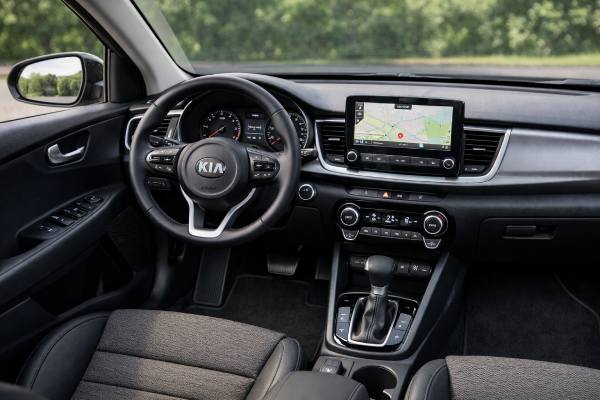
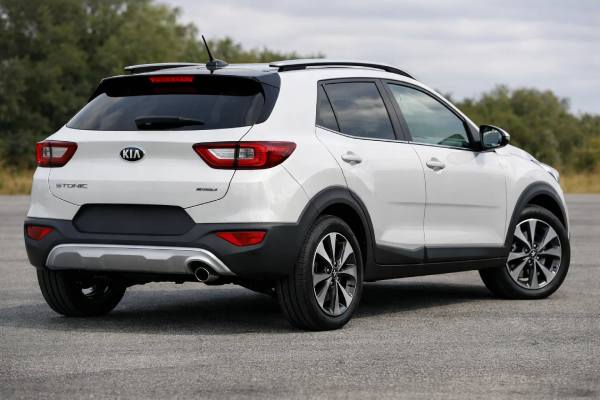
The facelifted 2020–2023 Kia Stonic YB with the 1.0-litre Kappa T-GDi mild-hybrid system is a smart example of how far a small crossover can go without becoming heavy or complicated. It keeps the basic Stonic formula intact: compact size, straightforward packaging, light controls, and honest practicality. What changes with this version is the powertrain. The 48-volt mild-hybrid system adds energy recuperation, torque assistance, smoother stop-start behavior, and, in some markets, a sailing function that can shut the engine off while coasting. That makes the car feel more modern in daily use, especially in traffic. It is not a full hybrid, so expectations need to stay realistic, but it is more efficient and slightly more polished than the earlier non-hybrid 1.0 T-GDi. As a used buy, it makes sense for owners who want low running costs, simple size, and modern safety tech without jumping into a larger or more expensive electrified SUV.
Essential Insights
- The 1.0 T-GDi MHEV adds useful low-speed refinement and better fuel efficiency without changing how the car is driven.
- Compact size, a 352 L boot, and good visibility make it easy to use as a daily family or commuter car.
- The 120 hp version is the most appealing facelift powertrain, especially when paired with the stronger safety and tech trims.
- The 48 V system is still another layer of hardware, so battery condition and warning-light checks matter more than on the older plain petrol car.
- A sensible routine is service every 10,000 miles or 12 months, with careful attention to correct oil specification.
What’s inside
- Kia Stonic YB Facelift Profile
- Kia Stonic YB MHEV Technical Data
- Kia Stonic YB Grades and Safety Tech
- Common Faults and Service Campaigns
- Maintenance Plan and Used-Buying Tips
- Road Feel and Real Efficiency
- Stonic MHEV Against Rivals
Kia Stonic YB Facelift Profile
The 2020 facelift did not try to turn the Stonic into a different vehicle. Instead, Kia refined the original idea. That is important, because the Stonic was already strongest when judged as a practical, slightly taller supermini rather than a serious SUV. The facelift kept the car’s compact body, front-wheel-drive layout, and simple chassis, but added sharper styling details, updated infotainment, broader driver-assistance availability, and the mild-hybrid 1.0 T-GDi powertrain that matters most in this version.
That powertrain is the reason this facelift deserves separate attention. Kia paired the 1.0-litre direct-injection turbo three-cylinder with a 48-volt lithium-ion battery and an integrated electric system that can recover energy during deceleration and feed it back as torque assistance during acceleration. In practice, the system does not create an EV mode like a full hybrid. Instead, it trims wasted fuel use around the edges of real driving. The effect is most noticeable in urban traffic, gentle cruising, and stop-start conditions, where engine restarts feel smoother and the car wastes less energy.
Kia also made the facelift easier to recommend from the cabin. Material quality did not leap into a premium class, but the usability story improved. The infotainment offering became more competitive, smartphone integration was better handled, and the trim walk grew clearer in many markets. The Stonic still feels straightforward rather than flashy inside, but that is not a weakness in a used small crossover. It means fewer gimmicks and a lower chance that a core control feels dated or awkward after a few years.
The mild-hybrid Stonic also benefits from staying physically modest. It is still easy to park, still easy to see out of, and still large enough to carry out normal family or commuting work without feeling like a compromise on every journey. The boot remains useful, rear-seat folding is simple, and the car’s upright shape helps day-to-day practicality more than its external footprint suggests.
Its limits are equally clear. This is not a full hybrid efficiency champion, not a high-end refinement benchmark, and not the roomiest B-segment crossover on sale. Some buyers will also find that the exact trim matters more than expected. A well-equipped facelift with the better ADAS package, good tyres, and a clean maintenance record feels like a different proposition from a cheaper example with basic equipment and weak servicing history. That is the real theme of this model: the engineering is sensible, but specification and condition decide whether the car feels merely acceptable or genuinely strong as a used buy.
Kia Stonic YB MHEV Technical Data
For the facelifted 1.0 T-GDi MHEV, it helps to choose one market baseline and then explain the differences. Continental European data is the clearest place to start because it preserves the 88 kW, 120 PS identity that most buyers associate with this version. UK material often lists the same engine as 113 bhp, which sounds different but reflects the same 88 kW output in another unit system. The more important distinction is transmission: manual or iMT versions usually carry 172 Nm, while some DCT versions are listed with 200 Nm.
| Item | Kia Stonic 1.0 T-GDi MHEV Facelift 2020–2023 |
|---|---|
| Engine family | Kappa 1.0 T-GDi MHEV |
| Code | YB CUV 1.0 Kappa (K) – T-GDi MHEV |
| Engine layout | Inline-3, DOHC, 3 cylinders, 12 valves |
| Displacement | 1.0 L (998 cc) |
| Bore × stroke | 71.0 × 84.0 mm (2.80 × 3.31 in) |
| Induction | Turbocharged |
| Fuel system | Direct injection |
| Compression ratio | 10.5:1 |
| Mild-hybrid hardware | 48 V lithium-ion battery with integrated e-system |
| E-motor output | 12 kW electric assistance motor in official brochure material |
| Max power | 120 hp (88 kW) @ 6,000 rpm |
| Max torque | 172 Nm (127 lb-ft) @ 1,500–4,000 rpm manual/iMT; up to 200 Nm (148 lb-ft) @ 2,000–3,500 rpm DCT in some markets |
| Timing drive | Chain |
| Rated efficiency | About 5.3–5.7 L/100 km (44.8–52.3 mpg US / 49.6–53.3 mpg UK), market and trim dependent |
| Real-world highway at 120 km/h | Roughly 5.8–6.6 L/100 km in good condition |
| Item | Transmission and Driveline |
|---|---|
| Transmission | 6-speed manual or iMT, and 7-speed DCT |
| Drive type | FWD |
| Differential | Open |
| Drive modes | Drive Mode Select available in several trims |
| Item | Chassis and Dimensions |
|---|---|
| Front suspension | MacPherson strut |
| Rear suspension | Coupled torsion beam axle |
| Steering | Electric power steering |
| Brakes | Disc brakes front and rear on higher published facelift trims |
| Most common tyre sizes | 195/55 R16 or 205/55 R17 |
| Ground clearance | 165 mm (6.5 in) |
| Length | 4,140 mm (163.0 in) |
| Width | 1,760 mm (69.3 in) |
| Height | 1,485 mm (58.5 in), about 1,500 mm with roof rails; around 1,505 to 1,520 mm on 17-inch wheel/roof-rail combinations |
| Wheelbase | 2,580 mm (101.6 in) |
| Kerb weight | About 1,125 kg (2,480 lb) manual; about 1,160 kg (2,557 lb) DCT in one European spec list |
| GVWR | 1,680 kg (3,704 lb) manual; 1,710 kg (3,770 lb) DCT |
| Fuel tank | 45 L (11.9 US gal / 9.9 UK gal) |
| Cargo volume | 352 L / 1,155 L (12.4 / 40.8 ft³), VDA |
| Towing capacity | 900 kg braked / 450 kg unbraked |
| Item | Performance |
|---|---|
| 0–100 km/h | About 10.4 s manual; about 10.6 s DCT |
| Top speed | 185 km/h (115 mph) |
| Braking distance | Exact official open figure not consistently published across markets |
| Payload | Market dependent and verify by VIN plate |
| Item | Fluids and Service Capacities |
|---|---|
| Engine oil | 3.6 L (3.8 US qt) |
| Oil grade and viscosity | Kia UK public data lists API SN PLUS and 0W-20 entry for 2021-on MHEV, with dealer-recommended product shown as 0W-30; verify by VIN and market |
| Coolant | Verify by VIN-specific service data |
| Transmission fluid | Verify by gearbox type and VIN |
| A/C refrigerant and compressor oil | Verify by VIN-specific service data |
| Key torque values | Use official service documentation only |
| Item | Safety and Driver Assistance |
|---|---|
| Euro NCAP public reference | 2017 Stonic rating based on Rio crash tests and additional Stonic data |
| Euro NCAP stars | 3 stars standard equipment, 5 stars with safety pack |
| Adult / Child / VRU / Safety Assist | 85% / 84% / 62% / 25% |
| ADAS availability | FCA, pedestrian detection, LKAS, LFA, DAW, HBA, blind-spot systems, rear cross-traffic alerts, and adaptive cruise on higher trims in some markets |
The important reading of the data is not just that the Stonic is reasonably quick for its class. It is that the facelift MHEV version keeps the car’s small-crossover practicality while adding a more polished powertrain and broader equipment spread. The exact trim still matters more than the headline 120 hp figure.
Kia Stonic YB Grades and Safety Tech
The facelift improved the Stonic’s trim logic, but it did not make the range simple in every country. Naming varied by market, and Kia often paired the 120 hp mild-hybrid setup with better-equipped trims rather than treating it as a basic powertrain. In practice, that means many facelift 120 MHEV cars sit in the most desirable part of the range, but not all of them carry the same safety, lighting, or comfort equipment. Buyers should still decode the real spec sheet.
A useful continental-Europe style trim walk runs from ComfortLine or an equivalent base grade through DynamicLine or mid-level versions, then into GT-Line and GT-PlusLine style trims. The mechanical differences are not dramatic, but the functional differences are real. Wheel sizes move from 15-inch or 16-inch setups to 17-inch packages. Interior trim changes from cloth to mixed cloth and leather-look material. Higher trims add features like climate control, navigation, heated seats, heated steering wheel, privacy glass, LED lighting, and more complete parking assistance.
The facelift also improved its ADAS story. In one official European trim list, even the lower grade includes six airbags, autonomous emergency braking with pedestrian recognition, lane following assist, lane-keeping assist, driver attention warning, high-beam assist, hill-start assist, tyre-pressure monitoring, and an 8-inch audio display. That is a much stronger starting point than the earliest Stonic story, where safety equipment could vary more dramatically.
The upper trims matter if you want the fullest modern safety suite. GT-PlusLine-style versions add blind-spot detection, rear cross-traffic warning or assistance, front parking sensors, and, on DCT versions in some markets, adaptive cruise control and speed-limit information functions. Those additions make the facelifted 120 MHEV feel much more current than the original Stonic safety impression suggests. They also improve resale logic, because buyers increasingly search for these features in small crossovers.
Crash-test context still needs care. The public Euro NCAP result tied to the Stonic remains the 2017 assessment, which was based on Kia Rio tests plus additional Stonic data. That is still the formal public reference point, but it is not the same thing as a fresh 2021 retest of the facelift with every updated assistance feature. For buyers, the right conclusion is practical rather than academic: rely less on the star headline alone and more on the exact equipment fitted to the car you are considering.
The best-used combinations are therefore not hard to identify. Seek a 120 hp MHEV with the stronger mid- or upper-tier trim, active safety features you can confirm, and preferably LED lighting if night driving matters to you. Check the wheels too. A 17-inch GT-Line car looks more appealing and usually carries better equipment, but a 16-inch car can ride more calmly and cost less to tyre. On this facelift Stonic, trim is not just about style. It shapes the ownership experience in a very direct way.
Common Faults and Service Campaigns
The facelift 1.0 T-GDi MHEV looks fundamentally sound, but it is still a small turbocharged direct-injection petrol car with added electrification hardware. That means reliability is best judged through patterns, not myths. There is no strong public evidence of a single catastrophic design flaw defining the whole model. Instead, the used-car reality is a mix of ordinary turbo-petrol concerns, mild-hybrid battery condition, and transmission-specific behavior.
A practical issue map looks like this:
- Common, low to medium severity: rear brake corrosion and light chassis wear on low-mileage town cars. Symptoms are rough braking feel, uneven pad wear, or seized sliding hardware after infrequent use. Remedy is routine brake service, cleaning, and parts replacement where needed.
- Occasional, medium severity: ignition or running-quality faults. Symptoms include rough cold idle, hesitation under load, or small drops in fuel economy. Likely causes include spark plugs, coils, intake leaks, or early intake deposit build-up from direct injection. Remedy is scan, ignition-system service, and air-intake inspection.
- Occasional, medium to high severity: DCT crawl-speed shudder on automatic cars. Symptoms are vibration or awkward take-off in traffic or on inclines. Likely cause is clutch wear, adaptation drift, or calibration need. Remedy ranges from software checks and adaptation work to clutch-pack repair.
- Occasional, low to medium severity: 48 V or 12 V battery complaints. Symptoms include reduced stop-start function, no sailing, warning messages, or weak restart feel. Cause is often battery state of health, repeated short-trip use, or age. Remedy is battery testing and replacement where required.
- Rare but important: ADAS faults after windscreen or front-end repair. Symptoms include warning lights or inconsistent assistance behavior. Cause is poor camera or radar calibration. Remedy is proper calibration with dealer-level equipment.
For the MHEV system, the main ownership truth is that it is simpler than a full hybrid but not invisible. The 48-volt battery and its supporting electronics add efficiency and smoother operation, yet they also create extra points to inspect. Kia UK makes this easy to interpret from an ownership angle: the 48 V and 12 V batteries sit under a shorter warranty window than the rest of the car, so buyers should not treat them like lifetime components.
The engine side is less dramatic. The Kappa 1.0 T-GDi remains a chain-driven, small-capacity turbo engine that rewards correct oil, correct plugs, and regular servicing. Missed oil changes, cheap fuel habits, or repeated short trips can slowly turn a smooth, efficient engine into a slightly rough, less economical one. That usually happens gradually rather than suddenly.
As for recalls and service actions, the smartest approach is VIN-based rather than rumor-based. Public recall data does not show a broad, obvious MHEV-specific campaign defining all facelift Stonics in open sources reviewed here, but that does not mean every individual car is clear. Buyers should ask for dealer printouts, campaign proof, and a VIN recall check. On a car this modern, service history matters, but software and campaign completion matter too.
Maintenance Plan and Used-Buying Tips
A mild-hybrid Stonic should be maintained like a modern turbo petrol first and a light electrified car second. That means the engine still sets the rhythm of ownership, while the 48 V system adds a few extra checks rather than replacing the normal service logic. Kia’s public UK material gives a useful anchor: 10,000 miles or 12 months. For a used buyer, that is the right mindset even if local schedules differ slightly by country.
A practical maintenance schedule is:
| Item | Distance / Time | Notes |
|---|---|---|
| Engine oil and filter | 10,000 miles / 12 months | Do not stretch on a small turbo MHEV |
| Engine air filter | Inspect yearly, replace around 30,000 km as needed | Sooner in dusty use |
| Cabin air filter | About every 2 years | Replace sooner if airflow drops |
| Spark plugs | Plan around 60,000–75,000 km | Use correct specification |
| Timing chain | No fixed routine interval | Inspect for noise, stretch symptoms, or timing faults |
| Auxiliary belts and hoses | Inspect yearly, closer after 5 years | Replace on condition |
| Brake fluid | Every 24 months | Important on lightly used cars |
| Coolant | Follow VIN-specific schedule | Check condition at routine services |
| DCT fluid | Follow official gearbox schedule by VIN | Do not guess across markets |
| Manual gearbox oil | Inspect for leaks and condition | Replace on condition or hard use |
| Tyre rotation and alignment | Inspect regularly | Alignment check when wear pattern changes |
| 12 V and 48 V battery test | Start checking after year 3 | Especially important on short-trip cars |
| Brake pads and rotors | Inspect every service | Rear corrosion can build quietly |
The most useful fluid figure available in public official data is engine oil: 3.6 L. The subtle point is oil specification. Kia UK public guidance for 2021-on Stonic MHEV lists API SN PLUS and a 0W-20 viscosity entry, while also showing a dealer-recommended TotalEnergies 0W-30 product. That tells you two things. First, you should never assume this engine can take any generic small-turbo oil. Second, VIN and market matter, so official documentation should win over workshop guesswork.
For a used inspection, focus on the things that reveal how the car lived:
- Smooth cold start and stable idle.
- No hesitation, misfire feel, or jerky response under load.
- DCT take-off behavior in repeated slow traffic, if fitted.
- Proper operation of stop-start and mild-hybrid functions.
- No battery or charging-system warnings.
- Even tyre wear and no steering pull.
- Clean brake action with no binding after the car sits.
- Full operation of parking sensors, camera, infotainment, and lane or radar systems.
- No evidence of poor windscreen replacement or front-end repair without recalibration.
The most attractive used examples are the 120 hp MHEV trims with stronger safety equipment and complete service records. A manual or iMT car is usually the simplest long-term choice. A DCT can still be a good buy, but only if it behaves properly in real traffic. Avoid cars with vague battery stories, skipped oil services, or sellers who cannot explain why stop-start or sailing functions are inactive. Long-term durability looks good when the basics are respected. The Stonic MHEV does not need pampering, but it definitely rewards disciplined maintenance.
Road Feel and Real Efficiency
The facelifted 120 hp mild-hybrid Stonic is not a dramatic car to drive, but it is a good one in exactly the ways that matter for this class. The first impression is lightness. The nose does not feel heavy, the steering is easy at low speed, and the car feels compact without becoming nervous. In town, that makes it very simple to place. You can thread it through traffic, park it quickly, and live with its dimensions without thinking about them.
The mild-hybrid system improves the feeling of polish more than it changes outright pace. On paper, 120 hp and roughly 172 to 200 Nm do not make the Stonic quick in an absolute sense, but they suit the car. There is enough mid-range pull to make everyday overtakes easy, and the torque assistance smooths the transitions that sometimes make small turbo engines feel thin at low speed. It still feels like a turbo three-cylinder, not like a large-capacity petrol or a full hybrid, but it is more refined in traffic than the earlier plain 1.0 T-GDi.
Ride quality depends strongly on wheel size. Cars on 16-inch tyres usually deliver the best compromise, with a calmer edge over patched city roads and expansion joints. Seventeen-inch GT-Line cars look better and respond a little more sharply on turn-in, but they also bring a firmer low-speed ride and more tyre noise on poorer surfaces. Straight-line stability is good enough for motorway work, though the Stonic still feels like a B-segment crossover rather than a bigger family SUV when the surface gets rough or the weather turns windy.
Cabin noise is respectable but not exceptional. City refinement is good, the engine is rarely intrusive when driven gently, and the mild-hybrid start-stop behavior is smoother than many older systems. At highway speed, wind and road noise remain more noticeable than in a larger crossover. That is the price of the Stonic’s class and weight, not a special flaw.
Real fuel economy is where the mild-hybrid version earns its keep. Official combined figures around the mid-5 L/100 km range are believable in mixed use if the car is healthy and driven sensibly. In the real world, many owners can expect around 5.5–6.2 L/100 km in mixed driving, around 5.8–6.6 L/100 km at a true 120 km/h highway cruise, and higher numbers in short-trip winter use. The system helps most in urban and suburban work, where recuperation, smoother restarts, and coasting functions pay back.
The overall verdict on driving is clear. This Stonic is not trying to be sporty or luxurious. It aims to feel modern, easy, and efficient. In that mission, the 120 hp MHEV succeeds. It is the version of the Stonic that feels closest to the car’s best self.
Stonic MHEV Against Rivals
The facelifted Stonic MHEV sits in one of the busiest parts of the market, so its value depends on what you want most. Against the Ford Puma 1.0 EcoBoost mild hybrid, the Kia usually gives away some chassis sparkle and boot cleverness. The Puma feels more athletic and often more polished in steering response. The Stonic answers with simpler character, clear controls, and, in many markets, a reassuring warranty story when bought with history intact. If driving enjoyment is the priority, the Ford is stronger. If ownership simplicity and straightforward packaging matter more, the Kia stays very competitive.
Against the Renault Captur mild hybrid or standard turbo petrol versions, the Stonic feels smaller and less versatile, but also easier to size up and less dependent on style-led packaging. The Captur usually wins on rear-seat flexibility and family usability, while the Stonic counters with a tidier footprint and a more direct, less layered dashboard feel. Buyers who want the roomier family tool may lean Renault. Buyers who want the easier everyday city crossover may prefer the Kia.
The Hyundai Bayon is an especially relevant comparison because it shares part of the group engineering logic and competes in the same broad space. The Bayon often feels like the more rational choice on pure cabin packaging and freshness, while the Stonic holds onto a slightly more crossover-like stance and a more established used-market presence. In practice, the decision often comes down to price, equipment, and which design you prefer.
The SEAT Arona is another natural rival. It often feels more like a raised hatchback than a mini crossover, which helps road manners and maturity. The Stonic feels a little more style-conscious and a little simpler in its cabin logic. The Kia’s mild-hybrid system gives it a modern efficiency story, but the Arona may appeal more to buyers who prioritize a slightly more planted road feel over design flair.
So where does the Stonic MHEV land overall? It is not the class leader in boot space, not the sharpest to drive, and not the most premium inside. But it combines useful strengths in a very coherent way: efficient mild-hybrid assistance, compact size, sensible running costs, decent technology, and easier daily use than many trendier crossovers. That combination makes it especially appealing for urban and suburban owners who want one car to do everything reasonably well. Buy the right trim, check the 48 V and transmission behavior carefully, and the facelift 120 hp mild-hybrid Stonic stands up well against better-known rivals.
References
- The Stonic Specifications & Features | Kia UK 2026 (Technical Data)
- Der Kia Stonic. 2022 (Brochure)
- Official Kia Stonic safety rating 2017 (Safety Rating)
- Engine Oil Grades and Capacities 2023 (Service Guide)
- Terms and Exclusions: Kia 7 Year Warranty | Kia UK 2026 (Warranty Guide)
Disclaimer
This article is for informational purposes only and is not a substitute for professional diagnosis or repair. Specifications, torque values, intervals, procedures, and equipment vary by VIN, market, model year, transmission, and trim, so always verify critical details against the vehicle’s official service documentation and dealer records before maintenance or repair work.
If this guide helped you, please consider sharing it on Facebook, X, or another platform to support our work.