
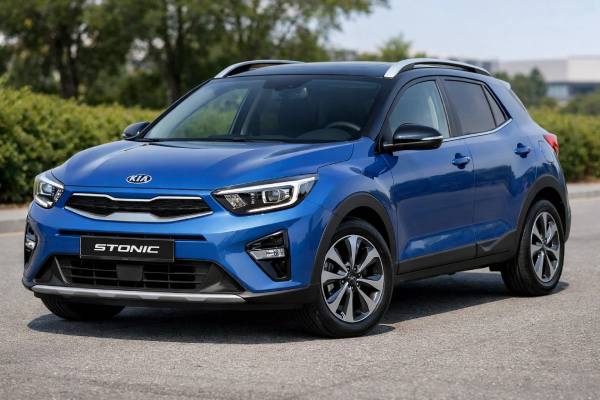
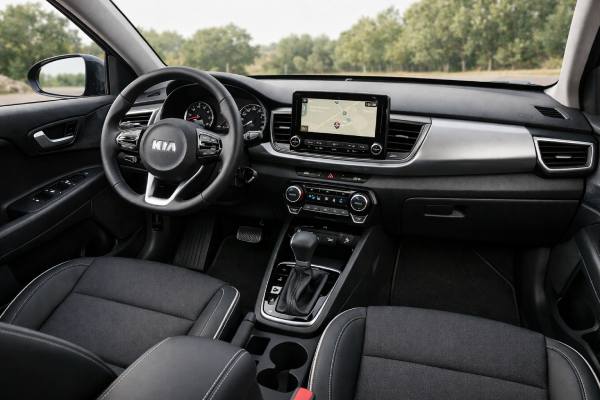
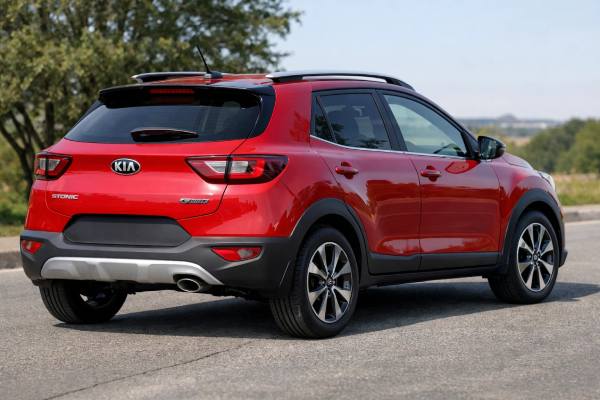
The facelifted Kia Stonic YB with the 1.2-litre 84 hp petrol engine is the quiet achiever of the range. It is not the Stonic people usually talk about first, because the turbocharged 1.0 models grab the headlines. Yet for many owners, the naturally aspirated 1.2 is the version that makes the most long-term sense. It keeps the drivetrain simple, stays with a five-speed manual in most European markets, avoids mild-hybrid and dual-clutch complexity, and delivers predictable running costs. Official facelift-era Kia material also shows that this engine stayed central to the value end of the range, especially in Urban, Style, and similar trims.
The trade-off is straightforward. You get simplicity and steady ownership costs, but not much urgency. This Stonic works best as a city and suburban crossover for buyers who want easy packaging, light controls, and proven mechanical basics rather than strong motorway pace. That is why service history, trim choice, and tyre size matter more here than chasing headline performance.
Fast Facts
- The 1.2-litre engine is slower than the 1.0 turbo, but it is mechanically simpler and cheaper to own long-term.
- Official facelift specs list 84 hp, 118 Nm, a 5-speed manual, and front-wheel drive.
- The Stonic still offers a useful 352 L boot, which is strong for a small crossover.
- On used cars, the main caveat is not a major engine flaw but whether routine servicing was actually done on time.
- Kia’s normal petrol service rhythm is 15,000 km or 12 months, with shorter oil intervals in severe use.
Navigate this guide
- Kia Stonic Facelift 1.2 In Context
- Kia Stonic Facelift 1.2 Data Tables
- Kia Stonic Facelift Grades and ADAS
- Durability Patterns and Known Trouble Spots
- Upkeep Schedule and Used-Buy Tips
- Everyday Driving and Fuel Use
- Against Other Small Crossovers
Kia Stonic Facelift 1.2 In Context
The 2020 facelift did not turn the Stonic into a different vehicle. It sharpened the styling, broadened connectivity and safety tech, and reshuffled the engine line-up. In that new range, the 1.2-litre 84 hp petrol sat at the simple end of the family. Kia’s own facelift-era technical sheets describe it as a 1.2 DPi with dual-port injection, 1,197 cc, 84 hp at 6,000 rpm, and 118 Nm at 4,200 rpm. That matters because many third-party listings loosely call it “MPI” or even attach broader Hyundai-Kia engine-family labels, but official facelift documents consistently present it as the non-turbo 1.2 DPi unit.
This engine suits the Stonic’s mission better than its modest numbers suggest. The car remains compact, light, and front-wheel drive, so it does not need much power to feel usable in town. Official facelift data places kerb weight around 1,155 kg, with a 45 L fuel tank and a 352 L boot. Those numbers explain the ownership appeal: this is a light crossover with simple hardware, real cargo usefulness, and few exotic service demands.
The facelift also made trim choice more important. In several 2023 European price lists, the 1.2 stayed available in value-focused grades such as Urban and with better-equipped versions such as Style. That means the same engine can feel either basic and budget-minded or unexpectedly complete, depending on wheels, lighting, camera gear, and driver-assistance content. The mechanical core does not change much. The ownership experience does.
From an engineering standpoint, the 1.2’s biggest advantage is what it does not have. No turbocharger, no direct-injection soot or intake-valve worries, no dual-clutch gearbox in the standard manual version, and no 48 V mild-hybrid system. It is a simpler car to understand and usually a simpler car to keep healthy. The downside is equally clear: 13.5 seconds to 100 km/h and a 165 km/h top speed mean overtaking and motorway merging need planning.
For buyers who mostly drive in cities, on ring roads, or on modest two-lane routes, that trade is often worth making. For buyers who regularly carry four adults at highway speed, it is the reason to consider the 1.0 T-GDi instead. That is the core Stonic 1.2 verdict in one sentence: slow, simple, and easy to justify.
Kia Stonic Facelift 1.2 Data Tables
The tables below focus on the facelifted European Kia Stonic YB 1.2 petrol, 84 hp, with the five-speed manual. Where open official material does not publish a workshop figure, the table says so rather than guessing. Public Kia brochures are strong on dimensions, performance, and trim equipment, but less complete on full workshop torque data.
Powertrain and efficiency
| Item | Specification |
|---|---|
| Code | 1.2 DPi petrol |
| Engine layout and cylinders | Inline-4, 4 cylinders, DOHC, 4 valves/cyl |
| Bore × stroke | 71.0 × 75.6 mm (2.80 × 2.98 in) |
| Displacement | 1.2 L (1,197 cc) |
| Induction | Naturally aspirated |
| Fuel system | Dual Port Injection |
| Compression ratio | 11.0:1 |
| Max power | 84 hp (62 kW) @ 6,000 rpm |
| Max torque | 118 Nm (87 lb-ft) @ 4,200 rpm |
| Timing drive | Chain-driven valvetrain in normal service use; no routine belt replacement schedule is published for this engine family in Kia’s public material |
| Rated efficiency | WLTP combined 5.5–6.1 L/100 km (42.8–38.6 mpg US / 51.4–46.3 mpg UK) |
| Real-world highway @ 120 km/h (75 mph) | Typically about 6.4–7.0 L/100 km (36.8–33.6 mpg US / 44.1–40.4 mpg UK), an inference from WLTP and gearing rather than an official Kia figure |
The official facelift spec sheets and 2023 European price lists align on the key figures above: 84 hp, 118 Nm, a 5-speed manual, and a combined WLTP band around 5.5–6.1 L/100 km.
Transmission, chassis, and dimensions
| Item | Specification |
|---|---|
| Transmission | 5-speed manual |
| Drive type | FWD |
| Differential | Open |
| Suspension, front / rear | MacPherson strut / CTBA torsion beam |
| Steering | Rack-and-pinion with MDPS electric assist |
| Turning circle, kerb-to-kerb | About 10.2 m (33.5 ft), inferred from Kia’s 5.1 m turning radius |
| Brakes | Front ventilated discs 280 × 22 mm (11.0 × 0.87 in); rear discs 262 × 10 mm (10.3 × 0.39 in) |
| Wheels and tyres | 185/65 R15 common on 1.2 trims; some markets also list 195/55 R16 |
| Ground clearance | 165 mm (6.5 in) on 15-inch wheels; some 17-inch Stonics quote 183 mm (7.2 in) |
| Length / Width / Height | 4,140 / 1,760 / 1,520 mm (163.0 / 69.3 / 59.8 in) in Kia Greece spec format; some markets quote 4,165 mm and height bands around 1,485–1,505 mm depending on trim and rails |
| Wheelbase | 2,580 mm (101.6 in) |
| Kerb weight | 1,155 kg (2,546 lb) |
| GVWR | 1,600 kg (3,527 lb) |
| Fuel tank | 45 L (11.9 US gal / 9.9 UK gal) |
| Cargo volume | 352 / 1,155 L (12.4 / 40.8 ft³), VDA-style published figure; 332 / 1,135 L with spare wheel in some markets |
Official Kia sources agree on the Stonic’s core packaging: 45 L tank, 352 L boot, 2,580 mm wheelbase, and towing up to 910 kg braked for the 1.2 manual.
Performance, fluids, and safety
| Item | Specification |
|---|---|
| 0–100 km/h (0–62 mph) | 13.5 s |
| Top speed | 165 km/h (103 mph) |
| Braking distance 100–0 km/h | 38.3 m (125.7 ft) |
| Towing capacity | 910 kg (2,006 lb) braked / 450 kg (992 lb) unbraked |
| Payload | About 445 kg (981 lb), derived from published kerb and gross weight |
| Engine oil | 3.5 L (3.7 US qt), full-synthetic; owner-manual family data lists API latest or ILSAC latest / ACEA C5 depending market notes |
| Coolant | Phosphate-based ethylene-glycol coolant; about 5.5 L (5.8 US qt) in owner-manual family data |
| Manual transmission fluid | 1.3–1.4 L (1.4–1.5 US qt), SAE 70W API GL-4 |
| Differential / transfer case | Not applicable |
| Brake fluid | DOT-4 LV / ISO 4925 Class 6 / FMVSS 116 DOT-4 |
| A/C refrigerant | Verify from VIN label and under-bonnet sticker before service |
| Key torque specs | Not published in open public Kia spec sheets; use VIN-specific workshop data |
| Crash ratings | Euro NCAP public 2017 Stonic result: 85% adult, 84% child, 62% vulnerable road user, 25% safety assist; rating based on Rio data and now expired |
| IIHS | Not applicable |
| ADAS | FCA, LKA, LFA, HBA, DAW availability varies strongly by trim and market |
The safety entry needs one caution. Euro NCAP states the Stonic result is based on the related Rio and that AEB and lane-support functions were part of an optional safety pack not included in the published standard-equipment rating shown on the public page.
Kia Stonic Facelift Grades and ADAS
The facelifted Stonic 1.2 is a good reminder that trim can matter more than engine. In 2023 European price lists, Kia paired the 84 hp engine with accessible trims such as Urban and with better-equipped versions such as Style. GT Line usually shifted attention toward the turbo or mild-hybrid powertrains, but depending on market and stock policy, buyers could still see some overlap in appearance packs and options.
For used buyers, the easy way to separate trims is to look at three things first: wheels, lighting, and safety tech. Urban-spec 1.2 cars typically carry 15-inch alloys or simpler wheel packages, an 8-inch infotainment screen with Apple CarPlay and Android Auto, a reversing camera, and parking sensors. Style brings the more interesting equipment step because it adds features such as Lane Following Assist, Lane Keeping Assist, Forward Collision Avoidance Assist for vehicles, pedestrians, and cyclists, a larger 4.2-inch supervision cluster, full-LED headlamps, and usually 17-inch wheels. GT Line adds the styling and comfort layer: different trim detailing, automatic climate control, keyless start on some markets, and sportier cabin cues.
That trim spread changes how the car feels to own. A 1.2 Urban is a straight value buy. A 1.2 Style is the sweet spot for many private owners because it gets the better safety kit without forcing the more complex turbo drivetrain. That is important because the facelift-era Stonic never made every ADAS item standard across the full range. In some market material, ABS, ESC, HAC, airbags, TPMS, and ISOFIX are standard across the line, but DAW, FCA, HBA, LFA, and LKA sit higher in the range.
Safety ratings need careful reading. Euro NCAP’s published Stonic page is still the reference point, but it is not a facelift-specific retest. Euro NCAP says the Stonic is structurally identical to the Rio tested in 2017 and bases the Stonic assessment on Rio test data plus additional review. The public page also makes clear that some active-safety content was optional rather than universal. In other words, the category scores are useful, but they do not remove the need to check the actual equipment fitted to the car in front of you.
One more used-car note matters here: camera-based systems such as LKA, LFA, HBA, and FCA depend on correct windscreen, sensor, and front-end alignment. After windscreen replacement or front-end repair, calibration quality matters. On a car like the Stonic, that is often the difference between a neatly functioning ADAS suite and a dashboard full of small but annoying warnings.
Durability Patterns and Known Trouble Spots
The facelifted 1.2 Stonic is not a car with a long public list of dramatic engine campaigns. Its main reliability appeal is its simplicity. This engine is naturally aspirated and port-injected, so it sidesteps several issues that can complicate small turbo petrol ownership. That does not make it problem-free. It makes most problems more ordinary, easier to diagnose, and usually cheaper to correct.
A practical way to map the car is by prevalence and cost.
Common and low-cost
- Brake wear in urban use. Symptoms: thin front pads, lip on discs, occasional squeal. Cause: city-heavy duty cycle. Remedy: routine pad and disc service.
- Weak 12 V batteries on short-trip cars. Symptoms: lazy starts, intermittent stop-start behavior, random low-voltage faults. Cause: age and short journeys. Remedy: test and replace the battery before winter.
- Cabin filter neglect. Symptoms: weak HVAC flow and musty smell. Cause: overdue replacement. Remedy: cabin filter service, usually simple.
- Tyre and alignment wear. Symptoms: outer-shoulder wear and tramlining. Cause: potholes, curb strikes, or cheap tyres. Remedy: alignment check and decent tyres.
Occasional and medium-cost
- Clutch wear. Symptoms: high bite point, slip under load, or shudder pulling away. Cause: town use and repeated hill starts. Remedy: clutch replacement when slip is confirmed.
- Suspension consumables. Symptoms: front-end knock over small bumps. Cause: anti-roll-bar links or bush wear. Remedy: straightforward suspension refresh.
- Cooling-system age faults. Symptoms: slow warm-up, coolant smell, or minor seepage. Cause: thermostat or hose aging. Remedy: inspect early, especially before overheating becomes a bigger issue.
Rare and higher-priority
- Recall-linked brake vacuum issue on some earlier Stonics. The UK recall database lists a Stonic recall entry for 2019 vehicles involving the tandem-pump mesh filter, which could restrict oil supply and risk vacuum-pump failure. That does not automatically mean every 2020-registered facelift car is affected, but build date overlap is exactly why VIN checking matters.
For a used example, ask for three things: full service history, proof of recall completion, and a cold start. This engine should start cleanly, idle smoothly, and pull without hesitation. Because it is a simple unit, drivability faults usually point to ordinary items such as plugs, battery condition, vacuum leaks, or overdue basic service rather than an exotic root cause. That is one of the 1.2’s biggest strengths.
Upkeep Schedule and Used-Buy Tips
Kia’s published Europe-facing maintenance rhythm for petrol Stonics is straightforward: routine service every 15,000 km or 12 months, whichever comes first, with oil shortened to 7,500 km or 6 months in severe use. Official owner-manual material also lists long spark-plug and coolant intervals, but on an aging used car it is sensible to be more conservative once history gets patchy.
Practical maintenance schedule
| Item | Sensible interval | Notes |
|---|---|---|
| Engine oil and filter | 15,000 km / 12 months; 7,500 km / 6 months in severe use | Most important routine job |
| Engine air filter | Inspect every service; replace around 60,000 km in normal use | Replace sooner in dust or city grime |
| Cabin air filter | Replace every 30,000 km / 24 months | Official Europe schedule shows regular replacement |
| Coolant | First at 210,000 km / 120 months, then every 30,000 km / 24 months | Check level and leaks yearly |
| Spark plugs | 150,000 km official interval | Many owners replace earlier around 90,000–120,000 km on older cars |
| Brake fluid | Inspect yearly; replace every 30,000 km / 24 months in Europe schedule material | Time matters more than mileage |
| Manual gearbox oil | Public owner-manual family data says no routine service required | Many careful owners still refresh it around 100,000–120,000 km |
| Drive belts | Inspect at 90,000 km / 72 months, then every 30,000 km / 24 months | Replace on cracks or noise |
| Brake pads and discs | Inspect at every service | City cars consume fronts sooner |
| Tyres and alignment | Inspect every service; align on uneven wear | Cheap tyres hurt ride and grip quickly |
| 12 V battery | Test annually after year four | Replace proactively if voltage is unstable |
The official open owner-manual material also lists 3.5 L engine oil fill, about 5.5 L coolant capacity, and 1.3–1.4 L manual gearbox fluid capacity for the 1.2 MPI family.
For used buyers, the shortlist is simple. Prioritize:
- a complete stamped or invoiced history
- correct tyre sizes and matched tyres
- smooth clutch action
- no coolant smell or staining
- no steering knock over broken surfaces
- working camera and lane-support systems where fitted
- recall verification by VIN and dealer record
The best-value picks are usually mid-trim 1.2 cars with Style-level safety equipment and modest wheel size. Cars to avoid are the ones with no paperwork, mixed budget tyres, and obvious deferred maintenance. Long-term durability looks good when the basics are respected, because the 1.2 Stonic is a simple machine by modern small-crossover standards.
Everyday Driving and Fuel Use
The 1.2 Stonic does not try to feel fast. Instead, it feels light and honest. Around town, that works well. The clutch is easy, visibility is good, the body is compact, and the steering stays light enough for easy parking. Kia’s official turning-circle figure works out to about 10.2 m kerb-to-kerb, which is a useful number in older car parks and tight residential streets.
At lower speeds, the chassis is one of the car’s better qualities. The Stonic never feels bulky, and the ride-control balance is tidy rather than floaty. That means it changes direction more like a supermini than a small SUV. The downside is that refinement is only average. On coarse roads, the cabin picks up tyre and suspension noise sooner than larger crossovers do, and the 1.2 has to work hard when the road opens up. That is where the 84 hp output shows itself.
The powertrain character is predictable. There is no turbo step and no clever hybrid fill. Response is linear, which makes the car easy to meter in traffic, but the engine needs revs when you want brisker progress. If you drive one after a 1.0 turbo rival, the missing low-rpm torque is obvious. Still, the simple five-speed gearbox suits the engine well enough, and because the Stonic is not heavy, the drivetrain rarely feels strained in ordinary suburban use. Official figures of 13.5 seconds to 100 km/h and 165 km/h top speed describe it accurately: adequate, not eager.
Real-world fuel use should land a little above the official combined WLTP band unless you drive gently. A fair expectation is:
- city: about 6.8–7.6 L/100 km
- highway at 110–120 km/h: about 6.4–7.0 L/100 km
- mixed driving: about 6.2–6.9 L/100 km
Those are informed owner-use estimates from the official WLTP window of 5.5–6.1 L/100 km, the five-speed gearing, and the car’s modest output, not separate Kia test data. Cold weather and full-load motorway use can add another 0.5–0.8 L/100 km.
Load carrying is acceptable rather than special. The official 910 kg braked towing figure shows the chassis can cope with light duty, but this is not the engine to choose for frequent towing or mountainous full-load work. It is best at everyday errands, commuting, and family use where simplicity matters more than pace.
Against Other Small Crossovers
The Stonic 1.2 facelift sits in a very specific place among B-segment crossovers. It is not the quickest, the softest, or the most luxurious option. Its strength is that it gives you the small-crossover format without piling on drivetrain complexity. That makes it easy to compare.
Against a SEAT Arona 1.0 TSI, the Kia loses on effortless torque and motorway flexibility. The turbo SEAT feels stronger with passengers and luggage. The Stonic answers with simpler hardware and, in 1.2 form, fewer expensive systems to age out.
Against a Renault Captur TCe 90 or 100, the Kia again gives away punch and some cabin richness. The Captur feels more modern in some areas and rides more softly. The Stonic feels a little more direct, a little less insulated, and easier to understand mechanically.
Against a Hyundai Bayon 1.2 MPI, the comparison is especially close. The Bayon usually feels a touch more recent inside, but the Stonic counters with sharper styling and a slightly tidier, more planted character. Buyers choosing between them are usually deciding on cabin taste and equipment rather than fundamentals.
Against the turbo Stonic 1.0 T-GDi, the 1.2 is slower in every meaningful measure. But it is also the more conservative used buy. No turbocharger, no mild-hybrid hardware, and no DCT in the version covered here means fewer expensive variables once the car gets older.
That is why the facelifted 1.2 Stonic makes sense for three buyers in particular:
- the urban owner who values simplicity over speed
- the private buyer planning long ownership on a sensible budget
- the used-car shopper who wants modern safety and packaging without a heavily stressed drivetrain
Its weak points remain real. Rear-seat room is decent, not generous. Motorway overtaking needs planning. Refinement is class-average. And because Euro NCAP’s published Stonic result reflects older Rio-based testing and equipment context, buyers still need to check exactly which safety kit is fitted.
Its advantages are just as real. The Stonic is compact outside, useful inside, simple to service, and honest in the way it drives. In the right trim, that is enough to make it one of the more sensible small crossovers in this power class.
References
- Kia Stonic 2023 (Technical Specifications)
- Stonic 2023 (Price List and Technical Data)
- Official Kia Stonic safety rating 2017 (Safety Rating)
- Engine Oil Grades and Capacities 2023 (Service Guide)
- 7.2 Kia Service Intervals.xlsx 2025 (Service Intervals)
Disclaimer
This article is for informational purposes only and is not a substitute for professional diagnosis, repair, or workshop guidance. Specifications, torque values, maintenance intervals, procedures, and fitted equipment can vary by VIN, market, build date, and trim level, so always verify details against official Kia service documentation for the exact vehicle.
If this guide was useful, please consider sharing it on Facebook, X, or another social platform to support our work.