
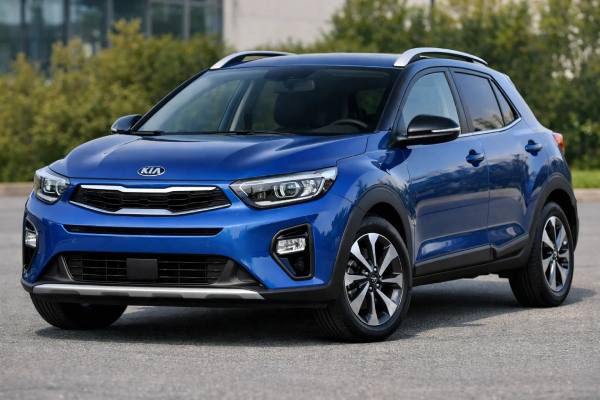
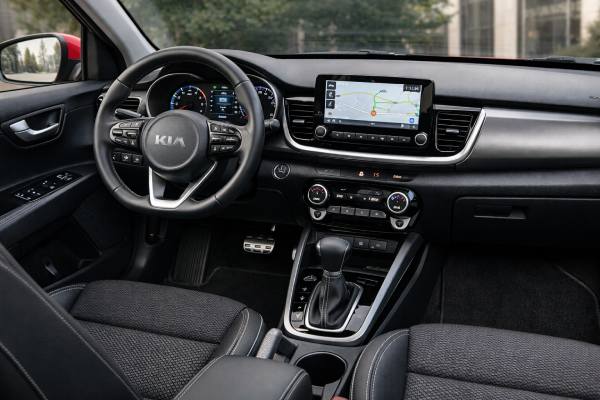
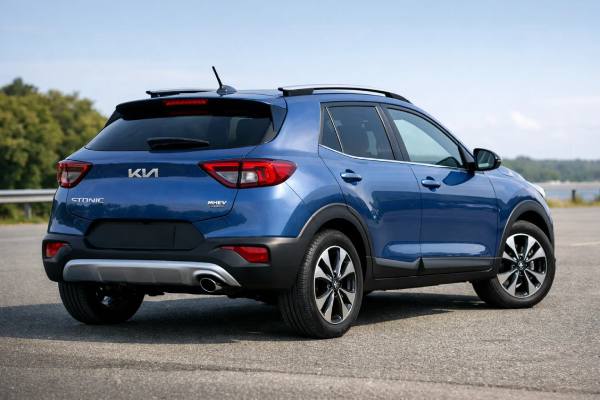
The facelift Kia Stonic 1.2 MPi is the simple, entry-petrol side of the current Stonic range. It keeps the same tidy crossover footprint, upright seating position, and practical hatchback-based packaging that made the model easy to live with in the first place, but avoids the extra complexity of turbocharging, mild-hybrid hardware, and a dual-clutch gearbox. That is the main reason it deserves attention. For some buyers, this is the smartest Stonic to own long term, even if it is not the quickest. One important note comes first: current official European price lists usually describe the facelift 1.2 as a 79 PS or 57–58 kW unit, not the older 84 PS figure often seen in legacy listings. In practice, buyers searching for a “1.2 84 hp” Stonic should verify the VIN and registration output carefully. The real appeal of this version is simple running gear, predictable costs, and lower mechanical risk than the turbo models.
Quick Specs and Notes
- The 1.2 MPi is the least complex current Stonic petrol engine and the easiest one to understand mechanically.
- It keeps the useful 352 L boot and compact size that make the Stonic easy to park and easy to use daily.
- Port fuel injection and no turbocharger help reduce long-term repair risk compared with the 1.0 T-GDi.
- Performance is modest, so motorway overtakes and steep grades need more planning than in the turbo versions.
- A realistic service rhythm is every 12 months or about 15,000 km, with shorter oil intervals for hard short-trip use.
Explore the sections
- Kia Stonic YB Entry-Petrol Character
- Kia Stonic YB 1.2 MPi Figures
- Kia Stonic YB Trim Logic and Safety
- Known Weak Points and Campaigns
- Upkeep Routine and Purchase Advice
- Behind the Wheel and Fuel Use
- Where It Sits Against Rivals
Kia Stonic YB Entry-Petrol Character
The facelift-era Stonic 1.2 MPi only makes sense if you judge it by the right criteria. It is not the Stonic for buyers who want the strongest acceleration or the richest equipment list. It is the Stonic for buyers who want the simplest current petrol version, the lowest mechanical complexity, and a crossover that still feels compact and manageable rather than heavy or overdone.
That identity matters because the facelift Stonic range split into two very different ownership paths. The 1.0 T-GDi versions add better torque, more effortless overtaking, and a more modern powertrain feel, but they also add direct injection, turbo hardware, mild-hybrid components in many markets, and often a dual-clutch transmission. The 1.2 MPi goes the other way. It keeps a naturally aspirated four-cylinder and simple front-wheel-drive layout, usually with a five-speed manual and, in some markets, a five-speed automated manual. For long-term owners, that is a real advantage.
There is, however, one important naming issue. Current official facelift-era Stonic documents in markets such as Italy and France usually list this engine at around 79 PS and roughly 57–58 kW, not the older 84 PS rating familiar from earlier Stonics. So if you are shopping ads, dealer listings, or export stock labeled “1.2 84 hp,” treat that as a search term rather than a guarantee. The underlying car may still be the correct facelift 1.2 MPi family, but the official output shown on registration papers can differ.
On the road, this version behaves exactly as you would expect from the numbers. It is smooth, predictable, and easy to modulate at low speed, but it does not mask its modest output. The engine suits urban work, light commuting, and calm mixed driving better than repeated fast motorway use with a full load. That does not make it a bad engine. In fact, it often makes it the right engine for buyers who care more about trustworthiness than pace.
The chassis side of the Stonic remains familiar. It is still a light B-segment crossover with MacPherson struts in front, a torsion-beam rear axle, electric steering, and a small footprint. That gives it two ongoing strengths: easy placement in town and useful cabin packaging for the class. It also means the 1.2 MPi does not carry extra powertrain weight it does not need.
So the real verdict starts here: the facelift 1.2 MPi is not the “best” Stonic in the showroom sense. It is the most conservative current Stonic. For some buyers, especially long-term private owners, that can be the better answer.
Kia Stonic YB 1.2 MPi Figures
The facelift 1.2 MPi needs a careful read because current official documents are not perfectly uniform. The biggest difference is output naming. Several facelift-era European Kia documents now show the 1.2 MPi or DPi at about 79 PS and 57–58 kW, while older Stonic technical material and many secondary listings still use the earlier 84 PS label. That is why the best way to present the specs is to show the official current figures and note where legacy naming still appears.
| Powertrain and efficiency | Facelift Kia Stonic YB 1.2 MPi |
|---|---|
| Code | Smartstream / DPi-MPi 1.2 petrol family, market naming varies |
| Engine layout and cylinders | Inline-4, DOHC, 4 valves per cylinder, about 71.0 × 75.6 mm (2.80 × 2.98 in) |
| Displacement | 1.2 L (1,197 cc) |
| Induction | Naturally aspirated |
| Fuel system | Multi-point / dual-port style injection, depending on market naming |
| Compression ratio | About 11.0:1 |
| Max power | Current facelift official documents commonly show 79 PS / about 57–58 kW @ 6,000 rpm; older Stonic references often show 84 PS |
| Max torque | About 113–118 Nm (83–87 lb-ft) @ 4,200 rpm, depending on document |
| Timing drive | Chain |
| Rated efficiency | About 5.2–6.2 L/100 km WLTP combined depending on trim and market |
| Real-world highway @ 120 km/h | Usually about 6.4–7.0 L/100 km |
| Transmission and driveline | Facelift Kia Stonic YB 1.2 MPi |
|---|---|
| Transmission | 5-speed manual, with a 5-speed automated manual in some markets |
| Transmission code | Not clearly published in the open market documents reviewed |
| Drive type | FWD |
| Differential | Open |
| Chassis and dimensions | Facelift Kia Stonic YB 1.2 MPi |
|---|---|
| Suspension (front/rear) | MacPherson strut / CTBA torsion beam |
| Steering | Electric power steering |
| Brakes | Front disc / rear disc; open current public documents do not consistently list rotor diameters for the 1.2 |
| Wheels/Tyres | 185/65 R15 steel or 195/55 R16 alloy are the common 1.2 setups |
| Ground clearance | About 165 mm (6.5 in) on the smaller wheel packages |
| Length / Width / Height | About 4,165 / 1,760 / 1,500 mm (164.0 / 69.3 / 59.1 in) |
| Wheelbase | 2,580 mm (101.6 in) |
| Turning circle (kerb-to-kerb) | About 10.2 m (33.5 ft) |
| Kerb weight | About 1,155 kg (2,546 lb) |
| GVWR | About 1,600 kg (3,527 lb) |
| Fuel tank | 45 L (11.9 US gal / 9.9 UK gal) |
| Cargo volume | 352 / 1,155 L (12.4 / 40.8 ft³), VDA; 332 / 1,135 L with a space-saver spare in some versions |
| Performance and capability | Facelift Kia Stonic YB 1.2 MPi |
|---|---|
| 0–100 km/h | About 13.5–14.2 s in official open market data |
| Top speed | About 165 km/h (103 mph) |
| Braking distance | Not clearly published in the open sources reviewed |
| Towing capacity | About 500–510 kg braked / 450 kg unbraked (1,102–1,124 / 992 lb) |
| Payload | Roughly 445 kg (981 lb), trim dependent |
| Fluids and service capacities | Facelift Kia Stonic YB 1.2 MPi |
|---|---|
| Engine oil | Verify by VIN; open current Stonic-specific public documents do not clearly publish one universal 1.2 facelift fill figure |
| Coolant | Verify by VIN and market-specific service literature |
| Transmission/ATF | Verify by gearbox type and VIN |
| Differential / Transfer case | Not applicable |
| A/C refrigerant | Verify from under-bonnet label |
| A/C compressor oil | Verify from workshop data |
| Key torque specs | Wheel and chassis torques should be confirmed from the market-specific owner or workshop documentation |
| Safety and driver assistance | Facelift Kia Stonic YB |
|---|---|
| Crash ratings | Euro NCAP 3 stars; Adult 85%, Child 84%, VRU 62%, Safety Assist 25% |
| IIHS / headlight rating | Not applicable |
| ADAS suite | AEB, LKA, LFA, ISLA, ESC, TPMS, camera, and parking aids vary by trim and market |
The core takeaway is simple. This is not a numbers car. It is a lightweight, entry-petrol crossover whose value lies in simple engineering and usable packaging, not headline pace.
Kia Stonic YB Trim Logic and Safety
The facelift 1.2 MPi is not sold the same way in every country, so the trim names can mislead buyers. In Italy, current public pricing has shown trim groups such as City, Style, Special Edition, and Black Edition. In France, the range structure is different again. That means a Stonic 1.2 in one country can have a very different equipment profile from a Stonic 1.2 in another, even when the engine is the same.
The good news is that the equipment hierarchy still follows a pattern. The simpler 1.2 versions usually sit lower in the range and tend to emphasize value, easy operation, and sensible equipment rather than sporty styling. Basic cars usually bring smaller wheels, simpler lighting, fewer cosmetic details, and a more straightforward cabin. Mid-spec cars often add automatic climate control, alloy wheels, more attractive trim, front and rear parking sensors, and richer multimedia. The top 1.2-compatible trims, where available, may add 17-inch wheels, darker detailing, better upholstery, and more visual flair, though those bigger wheels do not improve the basic 1.2 engine’s character.
The more important story is safety. The facelift Stonic can now offer a broader safety package than early Stonics did. Current public market sheets show systems such as:
- Forward Collision Avoidance Assist,
- Lane Keeping Assist,
- Lane Following Assist,
- Intelligent Speed Limit Assist,
- ESC and ABS,
- TPMS,
- ISOFIX anchor points,
- parking sensors,
- rear camera,
- and in some automatic or higher-spec versions, Smart Cruise Control and enhanced intersection support.
That is a meaningful improvement in daily usability, even if the Euro NCAP headline score itself still points back to the older Stonic test context. The published Stonic rating remains the 2017 result, and the important nuance is that the safety score reflects standard-equipment fitment from that earlier test environment rather than the full potential of a better-equipped facelift car.
For buyers, that means the rating should be read as a baseline, not the final word. A facelift 1.2 MPi with camera, AEB, lane support, and speed-sign assistance is a more reassuring daily car than a bare-bones early Stonic, even if the published star headline does not change.
There are a few quick identifiers worth using when shopping:
- 15-inch wheel cars are usually the simpler entry models,
- 16-inch alloys often mark the more sensible mid-spec sweet spot,
- 17-inch wheels tend to mean a more style-focused trim,
- manual air conditioning usually signals a lower trim,
- automatic climate control and extra parking aids usually signal the better-equipped versions.
One final point matters more than it did a few years ago. If the car has lane-camera or AEB hardware, glass replacement and front-end repair quality matter. Ask whether the windscreen is original. If it is not, ask whether calibration followed. That question is now just as useful on a small crossover as it is on a premium car, because the Stonic’s best safety equipment depends on that calibration being right.
Known Weak Points and Campaigns
The facelift 1.2 MPi should be one of the lower-risk Stonic powertrains, mainly because it avoids the turbo and mild-hybrid complexity of the 1.0 T-GDi versions. That does not mean it is trouble-free. It means the likely problems are more familiar, easier to diagnose, and usually cheaper to solve.
The most useful way to think about reliability is by prevalence and cost.
Common, low-cost or medium-cost issues
- 12 V battery weakness: The Stonic is sensitive to battery condition, especially on cars that do repeated short trips. Symptoms include lazy starting, stop-start irregularity, or nuisance warnings.
- Brake corrosion: Lightly used cars can build rear disc corrosion or uneven pad wear sooner than owners expect.
- Tyre and alignment neglect: Because the car is light, poor tyres or poor alignment show up quickly as road noise, reduced grip, or vague straight-line feel.
- Cabin trim noise: Not serious, but tailgate-area trim, parcel-shelf fittings, and door seals can develop squeaks.
Occasional, medium-cost issues
- Clutch wear: The 1.2 is not powerful, so owners often use more revs and more clutch slip in hills or traffic. A high bite point or take-off shudder needs inspection.
- Ignition misfire: Plugs and coils remain straightforward, but rough running under load still deserves a fault-code check before random parts replacement.
- Cooling leaks: Hose joints and minor seepage should be caught early rather than ignored.
Less common but worth watching
- Automated-manual drivability complaints: In markets where the 1.2 was offered with an automated manual, low-speed hesitation or awkward shift behavior matters more than on the plain five-speed manual.
- Timing-chain noise: This is not a known panic item, but any chain-driven small petrol engine still depends on clean oil and consistent service.
- Steering or suspension knocks: Usually linked to wear items rather than major design defects.
One of the 1.2 MPi’s long-term strengths is the fueling system. Because it is a simple naturally aspirated port-injected engine, it avoids the intake-valve deposit pattern that worries owners of some direct-injection turbo engines. It also avoids turbocharger heat and boost-control hardware. That is a genuine ownership advantage.
Software and campaigns are less dramatic here than on more complex models. The main updates tend to concern infotainment, warnings, or calibration details rather than powertrain rescue work. But the official advice remains the same: check the car by VIN. Recalls and service actions vary by market, production batch, and fitted equipment. Before purchase, ask for:
- dealer service history,
- proof of completed recalls or field actions,
- a recent battery test if possible,
- and confirmation that any ADAS-equipped car was calibrated after windscreen or front-end repair.
Overall, the reliability outlook is good provided expectations stay realistic. This engine is slow, but slow and simple is often easier to own than quick and complicated.
Upkeep Routine and Purchase Advice
The facelift 1.2 MPi responds best to routine, conservative maintenance. This is not a highly stressed engine, but it is still better served by regular annual attention than by long gaps and optimistic assumptions. For most owners, an annual service or about 15,000 km is the correct baseline. Cars used mostly for short city trips deserve even more care with oil and battery checks.
| Maintenance item | Practical interval |
|---|---|
| Engine oil and filter | Every 12 months or about 10,000–15,000 km |
| Engine air filter | Inspect every service; replace around 30,000–45,000 km |
| Cabin air filter | Every 12 months or about 15,000–20,000 km |
| Spark plugs | Inspect by 45,000–60,000 km; replace according to VIN-based schedule |
| Coolant | Inspect at every service; replace by official market schedule |
| Brake fluid | Every 24 months is a strong real-world interval |
| Manual gearbox oil | Check for leaks at each service; refresh on condition or around 60,000–90,000 km |
| Automated-manual transmission service | Follow gearbox-specific guidance; watch shift quality closely |
| Brake pads and discs | Inspect every service |
| Tyre rotation | About every 10,000–12,000 km |
| Alignment check | Yearly, and after pothole impacts or uneven wear |
| 12 V battery test | Begin annual testing from year 3 onward |
| Timing chain | No fixed replacement interval; inspect when noisy or if timing faults appear |
| Auxiliary belt and hoses | Inspect every service |
The open public maintenance data on the facelift 1.2 is thinner than it should be, so buyers need to be comfortable with VIN-based verification. That is especially true for oil quantity, coolant fill, and exact torque values. For a used buyer, that is not a drawback if the seller has good records. It only becomes a problem when the car has been maintained vaguely.
The best inspection checklist for this version is simple:
- Start the engine cold and listen for a clean, even idle.
- Check clutch take-up for shudder or a high bite point.
- Drive over poor surfaces and listen for suspension knocks.
- Inspect all four tyres for age, brand mismatch, and uneven wear.
- Look closely at rear brake condition.
- Test the camera, parking sensors, and any lane-support systems.
- Ask whether the windscreen has ever been replaced.
- Read the service records for time and distance, not just stamps.
For reconditioning, the most likely first spend on a neglected car will be tyres, brakes, battery, and a full fluids reset. That is not unusual, but it should influence price.
The best facelift 1.2 MPi to buy is usually a mid-spec example on 15- or 16-inch wheels with full service history and confirmed ADAS function. The 17-inch cars look sharper, but they do not help this engine. Long-term durability looks solid if the car is maintained on time. The simpler the powertrain, the less excuse there is for poor records.
Behind the Wheel and Fuel Use
The facelift 1.2 MPi drives exactly the way the numbers suggest: smooth, calm, and honest, but not quick. In town, that is often enough. The naturally aspirated four-cylinder responds cleanly to gentle throttle inputs, the clutch and gearbox are easy to manage, and the compact body remains one of the Stonic’s biggest strengths. Parking is simple, visibility is good, and the car feels lighter than many small crossovers that have grown too close to the compact class.
The engine’s character is straightforward. There is no turbo lag because there is no turbo, but there is also no extra reserve torque to rescue a lazy gear choice. Low-rpm response is acceptable in light use, then better once the engine is spinning freely. Owners coming from an older small hatchback will probably find it normal. Owners stepping out of a turbocharged crossover will find it noticeably flatter.
The chassis continues to suit the car. Straight-line stability is decent, steering weight is light to moderate, and the car turns in tidily without pretending to be sporty. Braking feel is easy to read. The main ride difference comes from wheel choice. On 15-inch or 16-inch tyres, the Stonic feels more compliant and better matched to the engine. On 17s, it looks tougher but rides a bit more sharply and feels more cosmetic than functional.
Noise levels are acceptable for the class. Around town the engine stays unobtrusive, but on the motorway it needs more revs than the turbo cars, and that naturally raises cabin noise. This is not a serious refinement flaw, just the expected result of modest power and shorter gearing.
Real-world economy is respectable rather than spectacular. The official combined range sits around the mid-5s to low-6s L/100 km depending on market and trim. In practice, owners can expect something like this:
- city: about 6.6–7.5 L/100 km,
- steady secondary-road cruising: about 5.2–5.8 L/100 km,
- 120 km/h motorway use: about 6.4–7.0 L/100 km,
- mixed use: about 5.8–6.6 L/100 km.
These numbers show the real trade-off. The 1.2 is not fast, but it is not thirsty either. It makes the most sense when driven smoothly and without trying to force it into a role the 1.0 turbo does better.
Load and towing are limited. Official braked towing is only around 500–510 kg in current published data, so this is not the Stonic for regular trailer work. With passengers and luggage, the car remains usable, but overtakes and hills need more planning. In daily commuting, school-run duty, and urban family use, though, it does its job with very little drama.
Where It Sits Against Rivals
The facelift Stonic 1.2 MPi occupies a very specific place in the small-crossover class. It is not the fastest base-engine rival, and it is not the one with the richest interior. Its case rests on simplicity, predictable ownership, and sensible packaging.
Against a Renault Captur entry petrol, the Kia usually gives away some perceived cabin sophistication and sometimes rear-seat flexibility, but it often feels more mechanically conservative. Against a Peugeot 2008 base petrol, the Stonic loses design drama and showroom flair, but many cautious used buyers will prefer its simpler nature and easier long-term ownership logic. Against a Volkswagen T-Cross entry petrol, the Kia can feel less polished in details, though often more straightforward to inspect and buy. Against the Hyundai Bayon, the comparison is especially close because the Bayon brings similar small-Kia/Hyundai logic with a stronger tilt toward practicality, while the Stonic leans slightly harder into crossover style.
The main question is whether this version is the right Stonic, not just whether it is the right small SUV. That depends on the buyer.
Choose the 1.2 MPi if you want:
- the simplest current petrol Stonic,
- lower long-term drivetrain risk than the turbo model,
- lower purchase price than the better-equipped 1.0 T-GDi versions,
- and an easy urban crossover with manageable running costs.
Skip it if you want:
- strong motorway acceleration,
- regular towing,
- effortless full-load performance,
- or the most satisfying drivetrain in the Stonic range.
That is why the 1.2 MPi works best for calm owners. It suits buyers who value easy servicing, simple mechanical layout, and lower stress ownership more than they value performance. In that context, it can be one of the more rational choices in the segment.
Its biggest weakness is not reliability. It is pace. If you accept that, the rest of the package makes sense. If you do not, the 1.0 T-GDi is the better Stonic. But for a buyer who wants a current small crossover that still feels simple enough to own well beyond warranty, the facelift 1.2 MPi remains a quietly smart option.
References
- Tarif Gamme 2026 – Kia 2026 (Price list and technical data)
- Stonic – Kia 2025 (Price list and technical data)
- Especificaciones Técnicas Nuevo Kia Stonic 2017 (Technical data)
- Official Kia Stonic safety rating 2017 (Safety Rating)
- Engine Oil Grades and Capacities – Kia 2023 (Service Guide)
Disclaimer
This article is for informational purposes only and is not a substitute for professional diagnosis, repair, or VIN-specific service guidance. Specifications, torque values, service intervals, procedures, software status, and equipment can vary by VIN, market, trim, and production date, so always verify them against the official owner documentation, workshop literature, and dealer records for the exact vehicle.
If this guide helped you, please consider sharing it on Facebook, X/Twitter, or another platform to support our work.