
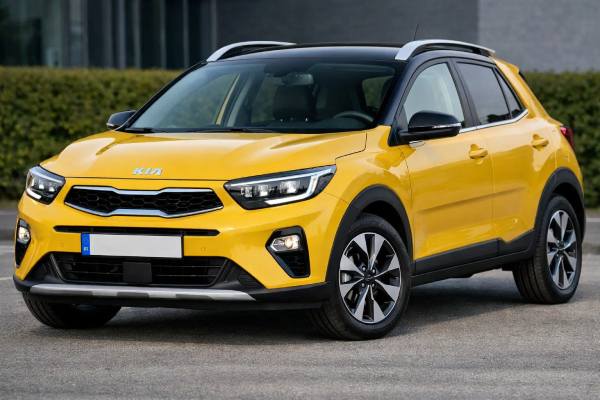
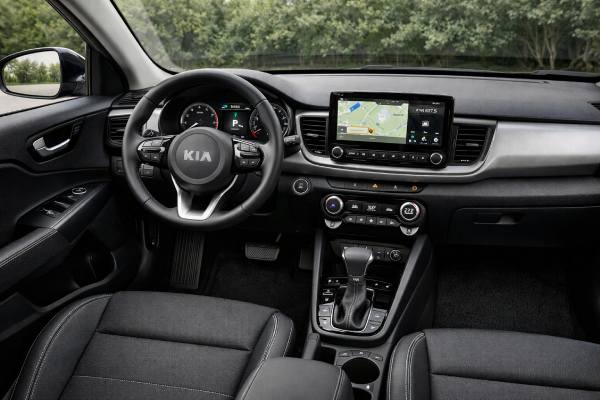

The facelifted Kia Stonic YB with the Smartstream 1.0 T-GDi mild-hybrid powertrain is the version that gives the small crossover its best mix of efficiency, usable torque, and modern tech without turning it into a heavy or expensive car to own. In 100 hp form, it sits in a practical middle ground. It is stronger and more flexible than the naturally aspirated 1.2, yet simpler and usually cheaper than larger hybrid or full-electric alternatives. The 48-volt system does not drive the car on its own, but it does help with smoother stop-start operation, energy recovery, and reduced engine load under light acceleration.
For owners, that means a Stonic that still feels compact and easy to park, yet more relaxed on mixed roads than the base petrol. The main question is not whether it works well. It does. The real question is whether you want the added turbo and mild-hybrid complexity in exchange for better real-world pace and cleaner fuel numbers.
What to Know
- The 100 hp mild-hybrid is the best all-round Stonic engine if you want stronger mid-range pull without moving to a larger class.
- The 48-volt starter-generator improves stop-start smoothness and helps fuel economy in traffic and on rolling roads.
- Current European specs show useful cargo space at 352 L seats up and 1,155 L seats folded.
- Ownership is still straightforward, but this version needs stricter oil discipline than the simpler 1.2 petrol.
- A sensible routine is an oil and filter service every 10,000 miles or 12 months, whichever comes first.
Contents and shortcuts
- Kia Stonic YB Hybrid Snapshot
- Kia Stonic YB MHEV Specifications
- Kia Stonic YB Equipment and Driver Aids
- Known Weak Spots and Service Actions
- Maintenance Plan and Buying Checks
- Road Behavior and Real Economy
- Where It Beats the Alternatives
Kia Stonic YB Hybrid Snapshot
The 2023-present Stonic mild-hybrid is still, at heart, a compact front-wheel-drive crossover built on small-car principles. That is important, because it explains why the car works so well with a modest output figure. The Stonic is not trying to be a heavy family SUV. It is a B-segment crossover with a relatively light body, tidy footprint, and road-biased chassis. Add a torque-rich turbo three-cylinder and a 48-volt assist system, and the result is a car that feels more effortless than its 100 hp headline suggests.
The mild-hybrid layout is simple compared with a full hybrid. There is no large traction battery and no EV-only driving mode. Instead, Kia uses a belt-driven starter-generator and a 48-volt lithium-ion polymer battery to support the turbo petrol engine. In practice, the benefits show up in smoother restart behavior, cleaner low-load transitions, and better energy recovery when lifting off or slowing down. On DCT versions, the system also supports coasting strategies that help real-world economy. That does not transform the Stonic into something exotic. It simply makes the existing 1.0 turbo drivetrain more polished.
This matters because the Stonic’s mild-hybrid system is best understood as a refinement tool first and an economy tool second. Buyers expecting dramatic electric assistance will be disappointed. Buyers wanting a more mature version of the 1.0 turbo will understand the appeal quickly. The engine still does the main work. The hybrid hardware trims the rough edges.
The facelift-era range also made this version more relevant. By 2025, some European price lists show the 100 hp mild-hybrid as a core mainstream powertrain, offered with a six-speed manual and also with a seven-speed dual-clutch automatic, depending on market and trim. That broader availability makes it easier to recommend because it is no longer a niche derivative. It is one of the main Stonic drivetrains.
From an ownership angle, the strengths are clear:
- better torque and flexibility than the 1.2 petrol
- lower running complexity than a full hybrid
- useful standard safety tech on many current trims
- good packaging for the class
- modest fuel use without feeling underpowered in ordinary driving
The trade-offs are just as clear:
- more drivetrain complexity than the 1.2
- higher sensitivity to missed oil services
- possible DCT hesitation or calibration annoyance on poorly maintained cars
- slightly less underfloor luggage-floor flexibility on mild-hybrid packaging
That is the key verdict for this variant. It is the Stonic for buyers who want the range’s best balance, not its lowest purchase price.
Kia Stonic YB MHEV Specifications
For the 2023-present Stonic 1.0 T-GDi MHEV, public Kia sources are strongest on engine output, drivetrain layout, dimensions, and trim-dependent efficiency. Workshop-level data is available for key fluids and capacities, but some service-torque figures remain VIN-level information rather than brochure data. The table below focuses on the current European 100 hp mild-hybrid variant and notes where market differences matter.
Powertrain and efficiency
| Item | Specification |
|---|---|
| Code | Smartstream G1.0 T-GDi MHEV |
| Engine layout and cylinders | Inline-3, DOHC, 12 valves, 4 valves/cyl |
| Bore × stroke | 71.0 × 84.0 mm (2.80 × 3.31 in) |
| Displacement | 1.0 L (998 cc) |
| Motor | Belt-driven starter-generator, single front-mounted assist unit, 48 V system, lithium-ion polymer battery |
| Induction | Turbocharged |
| Fuel system | Direct injection |
| Compression ratio | Public current Europe sources do not publish a single confirmed figure for every market version; verify by VIN for workshop use |
| Max power | 100 hp (74 kW) @ 4,500–6,000 rpm |
| Max torque | 172 Nm (127 lb-ft) MT / 200 Nm (148 lb-ft) DCT, depending on transmission calibration |
| Timing drive | Chain |
| Rated efficiency | WLTP combined about 5.2–5.7 L/100 km (45.2–41.3 mpg US / 54.3–49.6 mpg UK) |
| Real-world highway @ 120 km/h (75 mph) | About 5.9–6.6 L/100 km (39.9–35.6 mpg US / 47.9–42.8 mpg UK), depending on wind, tyres, and transmission |
Transmission, chassis, and dimensions
| Item | Specification |
|---|---|
| Transmission | 6-speed manual or 7-speed dual-clutch transmission |
| Drive type | FWD |
| Differential | Open |
| Suspension, front / rear | MacPherson strut / CTBA torsion beam |
| Steering | Electric power steering; about 2.52 turns lock-to-lock |
| Brakes | Discs all around; current brochures confirm front and rear discs, but open-market diameter figures are not consistently published for this exact variant |
| Wheels and tyres | 195/55 R16 common; 205/55 R17 on upper trims |
| Ground clearance | About 165 mm (6.5 in) on 15- and 16-inch setups; up to about 183 mm (7.2 in) on 17-inch setups |
| Length / width / height | About 4,140–4,165 / 1,760 / 1,485–1,520 mm (163.0–164.0 / 69.3 / 58.5–59.8 in), depending on measuring method and roof rails |
| Wheelbase | 2,580 mm (101.6 in) |
| Turning circle | 10.4 m (34.1 ft) |
| Kerb weight | About 1,225 kg (2,701 lb) MT / 1,260 kg (2,778 lb) DCT |
| GVWR | About 1,680 kg (3,704 lb) MT / 1,710 kg (3,770 lb) DCT |
| Fuel tank | 45 L (11.9 US gal / 9.9 UK gal) |
| Cargo volume | 352 / 1,155 L (12.4 / 40.8 ft³), with tyre mobility kit |
Performance, fluids, and safety
| Item | Specification |
|---|---|
| 0–100 km/h (0–62 mph) | 11.3 s MT / 12.4 s DCT |
| Top speed | About 179–185 km/h (111–115 mph), market and test-cycle dependent |
| Braking distance 100–0 km/h | No open official Kia figure published for this exact current variant |
| Towing capacity | 710 kg (1,565 lb) braked / 450 kg (992 lb) unbraked |
| Payload | About 420–455 kg (926–1,003 lb), depending on trim and transmission |
| Engine oil | 3.6 L (3.8 US qt); SAE 0W-20, API SN Plus/SP or ILSAC GF-6 |
| Coolant | 5.9 L (6.2 US qt) for 6MT; phosphate-based ethylene-glycol coolant |
| Manual transmission fluid | 1.5–1.6 L (1.6–1.7 US qt); SAE 70W, API GL-4 |
| DCT fluid | 1.6–1.7 L (1.7–1.8 US qt); Kia-approved 70W synthetic DCT fluid |
| Brake / clutch fluid | 0.7–0.8 L (0.7–0.8 US qt); DOT-4 LV / ISO 4925 Class 6 |
| A/C refrigerant | Verify by VIN and under-bonnet label before service |
| Key torque specs | Not published in open Kia consumer documents; use VIN-specific workshop data |
| Crash ratings | Euro NCAP public Stonic result remains the reference, based on Rio-derived test data from 2017 |
| IIHS | Not applicable |
| ADAS suite | FCA, LKA, LFA, ISLA, DAW, HBA broadly available; SCC, junction-turn FCA, BCA and rear cross-traffic functions depend on trim, market, and often DCT pairing |
The important takeaway from the numbers is that the 100 hp MHEV Stonic is not a fast crossover, but it is a genuinely useful one. The torque band and modest mass do most of the work.
Kia Stonic YB Equipment and Driver Aids
Used buyers should pay close attention to trim, because the current mild-hybrid Stonic can feel very different depending on equipment level. The core mechanical package stays mostly the same, but wheels, lighting, cabin trim, and safety tech all influence how the car feels day to day.
A good example is the current Italian-market lineup. The 100 hp mild-hybrid appears in City, Style Special Edition, and Black Edition forms, with both manual and DCT options depending on grade. City is the value-led version. It typically brings the 8-inch navigation screen, Apple CarPlay and Android Auto, a 4.2-inch digital supervision cluster, manual climate control, cruise control, and Intelligent Speed Limit Assist. It is not bare. It is simply the cleanest route into the powertrain.
Style Special Edition is often the sweet spot. It adds 16-inch alloys, automatic climate control, full-LED headlamps, front and rear parking sensors, darker rear glass, and a more upscale cabin feel. Black Edition goes further with 17-inch dark-finish alloys, keyless start, richer seat trim, and a more distinct visual identity. That does not make it drive differently in any fundamental sense, but it does change tyre cost, ride sharpness, and perceived quality.
Safety and ADAS content have improved meaningfully in the facelift era. In some current European trim sheets, the Stonic now carries FCA for vehicles, pedestrians, and cyclists, LKA, LFA, ISLA, TPMS, ISOFIX, ESC, HAC, and a reversing camera across much of the range. That is a strong base for a small crossover. Higher up the ladder, or when paired with the DCT, the Stonic can add smarter features such as junction-turn FCA, Smart Cruise Control, blind-spot support, and rear cross-traffic braking support. That is where market variation matters. One country may make those functions standard on an upper trim; another may tie them to a pack or gearbox choice.
A few practical identifiers help when shopping:
- 15-inch steel or basic covers usually mean the entry car.
- 16-inch alloys and full-LED lamps often mark the mid-trim sweet spot.
- 17-inch wheels, darker styling, and keyless start point to the richer trim.
- DCT cars are the ones most likely to include adaptive cruise and turn-assist braking functions.
- Current-model ISLA and newer digital cluster details can help distinguish later production from earlier facelift stock.
One caution is easy to miss: ADAS-equipped Stonics need proper calibration after windscreen replacement, radar service, or front-end repair. A seemingly minor bumper or glass job can leave a car with warning messages, poor lane-centering behavior, or disabled front-safety systems. On a used mild-hybrid Stonic, a clean bill of health for camera- and radar-based systems matters almost as much as a clean mechanical inspection.
In simple terms, the best buys are usually mid- to upper-trim manual cars if you want low running cost, or upper-trim DCT cars if you want the fullest ADAS suite and the most polished urban experience.
Known Weak Spots and Service Actions
The good news is that the 2023-present Stonic 1.0 T-GDi MHEV does not carry the reputation of a deeply flawed drivetrain. Public official documents show a mature, broadly established package rather than a troubled launch product. The caution is that this is still a small turbo petrol with added hybrid support hardware, so maintenance quality matters more than it does on the simplest naturally aspirated version.
A practical reliability map looks like this.
Common and low-cost
- Tyre and alignment wear: 17-inch cars wear badly when alignment is off or tyre quality is poor. Symptoms are outer-shoulder wear, tramlining, and extra road noise. Remedy: alignment check and decent tyres.
- 12 V battery weakness: Short-trip use can trigger stop-start complaints, warning messages, and hesitant restarting even when the main issue is ordinary battery health. Remedy: proper testing before winter and replacement when voltage reserve drops.
- Brake wear and corrosion: Urban use and long inactive periods can mean rear-disc surface rust and front pad wear earlier than owners expect. Remedy: regular inspection, not just mileage-based replacement.
Occasional and medium-cost
- Turbo-side maintenance sensitivity: Rough cold running, oil-use complaints, or sluggish response are often linked to poor service history before anything more dramatic. Remedy: strict oil grade and interval discipline, plus careful inspection of intake and boost plumbing.
- DCT behavior on neglected cars: Hesitation, low-speed shuffle, or poor shift quality can come from adaptation issues, worn clutch behavior, or delayed fluid attention. Remedy: software checks, adaptation review, and fluid verification where applicable.
- 48 V system warnings: A mild-hybrid car that throws intermittent electrical or restart-related faults deserves inspection of the belt starter-generator circuit, 48 V battery state, and associated wiring rather than guesswork.
Rare but higher-cost
- Starter-generator and belt-drive system wear: Public Kia material explains the mild-hybrid layout clearly, and that tells you where the extra long-term risk lives. This is not a full hybrid with a big traction motor. It is a belt-driven assist system, so belt condition, tension, and electrical health matter.
- Sensor and calibration faults: The more ADAS the car has, the more sensitive it becomes to windscreen quality, bumper work, and front-end alignment.
Software and service actions deserve their own mention. Since early 2023, Kia has supported over-the-air map and software updates on newer Stonics, which helps infotainment freshness and user interface polish. That is helpful, but it does not replace dealer-level updates for drivability, DCT behavior, or safety-system calibration. A used car with a full dealer digital history is worth more here than it would be on a simpler base model.
One warranty point is easy to overlook. In some current Kia Europe market documents, the vehicle warranty is broad, but normal aging of the 12 V and 48 V battery set is not treated like long-term EV battery coverage. In plain language: do not assume every battery-related problem is someone else’s bill.
Maintenance Plan and Buying Checks
This is the Stonic that rewards disciplined routine care. The mild-hybrid system itself is not maintenance-heavy, but the turbo petrol engine and the transmission choices do not respond well to neglected servicing. A buyer who wants easy long-term ownership should treat the factory schedule as a baseline and tighten it slightly if the car does lots of urban mileage, short trips, or frequent cold starts.
Practical maintenance schedule
| Item | Sensible interval | Notes |
|---|---|---|
| Engine oil and filter | Every 10,000 miles / 12 months | The single most important service item on this engine |
| Engine air filter | Inspect yearly; replace about every 20,000–30,000 km | Sooner in dusty or dense urban use |
| Cabin air filter | Every 20,000–30,000 km or 24 months | Cheap and worth staying on top of |
| Spark plugs | About every 60,000–75,000 km | Earlier on hard-used cars is sensible |
| Coolant | Inspect yearly; replace to official schedule and whenever contamination or leakage is suspected | Correct phosphate-based coolant matters |
| Manual transmission fluid | Check condition at higher mileage; many careful owners refresh around 80,000–100,000 km | Not expensive compared with gearbox wear |
| DCT fluid | Follow model-specific service guidance and inspect for shift quality issues | Do not ignore poor low-speed behavior |
| Brake fluid | Every 24 months | Time matters more than distance |
| Brake pads and discs | Inspect at every service | Rear discs deserve special attention on low-use cars |
| Timing chain | No fixed routine replacement interval | Investigate startup rattle, timing faults, or poor oil history early |
| Auxiliary belts and 48 V drive system | Inspect regularly | Especially important on the mild-hybrid starter-generator setup |
| Tyres and alignment | Rotate and inspect about every 10,000 km | Upper trims are more sensitive to tyre quality |
| 12 V battery | Test yearly after year four | Replace before winter if reserve is weak |
| 48 V system check | Include during dealer inspection or pre-purchase scan | Look for stored faults, restart irregularities, and charging issues |
What to inspect before buying
- Start it fully cold and listen for chain noise, rough idle, or weak restart behavior.
- Check for clean, consistent pull from low rpm in second and third gear.
- Inspect the service record for annual oil changes with the correct grade.
- Scan the car for stored drivetrain and ADAS faults, even if no warning lights are on.
- On DCT cars, test repeated low-speed crawling and hill starts.
- Inspect tyre brand, wear pattern, and wheel condition.
- Verify windscreen and front-end repairs if the car has lane and forward-safety systems.
The safest trim choices are usually mid-trim manual cars with strong paperwork or better-equipped DCT cars with full dealer history and clean calibration records. Cars to avoid are the ones with patchy service history, mixed budget tyres, lingering electrical warnings, or evidence of accident repair around the camera and radar area.
Long-term durability should be good if the car is maintained properly. The platform is simple, the packaging is honest, and Kia’s parts ecosystem is mature. The weak link is not the concept. It is deferred maintenance.
Road Behavior and Real Economy
On the road, the 100 hp mild-hybrid Stonic feels like the version the chassis wanted all along. It is still not fast, but it no longer feels as if the body is asking more from the engine than the engine can give. That matters most in daily driving, not in headline acceleration.
In town, the Stonic is easy and light on its feet. Visibility is good, the steering is light at parking speeds, and the mild-hybrid system helps the engine cut and restart more cleanly than a simple stop-start setup. The benefit is subtle, but noticeable. You get less of the clumsy stop-start interruption that can make small turbo manuals feel fussy in traffic.
At suburban and back-road pace, the powertrain is at its best. The early torque delivery means you do not need to chase the redline just to keep up with traffic, and the car’s modest weight helps it feel alert. Manual versions feel more direct and a bit more eager. DCT cars trade some sharpness for smoother urban convenience and, in some markets, more ADAS availability.
Ride and handling remain classic Stonic traits. The car feels more like a slightly raised hatchback than a soft, mini SUV. Body control is tidy, steering is direct enough to inspire confidence, and the front axle responds cleanly. The trade-off is that larger-wheel cars can feel busy on poor surfaces. If your roads are rough, the 16-inch tyre package usually makes more sense than the 17s.
NVH is acceptable, not class-leading. The three-cylinder note is present under load, and on coarse motorway surfaces road noise becomes the bigger factor. That said, the mild-hybrid drivetrain does help the car feel less strained than the older non-hybrid turbo in stop-go use.
Real-world fuel use is one of the Stonic MHEV’s strongest arguments. Reasonable expectations are:
- City: about 6.0–6.8 L/100 km (39.2–34.6 mpg US / 47.1–41.5 mpg UK)
- Highway at 110–120 km/h: about 5.9–6.6 L/100 km (39.9–35.6 mpg US / 47.9–42.8 mpg UK)
- Mixed: about 5.5–6.2 L/100 km (42.8–37.9 mpg US / 51.4–45.6 mpg UK)
Cold weather, winter tyres, and short-trip use can add around 0.6–1.0 L/100 km. Full-load motorway driving also hurts this engine more than the stronger 120 hp setup. The Stonic will manage it, but you will use more throttle and more fuel to do so.
Towing is possible, but not the point. The 710 kg braked limit is fine for light duty, yet this is not the version to choose for repeated trailer work or long mountain grades. It is best as an efficient, everyday crossover that feels more grown-up than the raw output number suggests.
Where It Beats the Alternatives
The Stonic 1.0 T-GDi MHEV 100 sits in a useful niche among small crossovers. It is not the most powerful option in the class, but it is one of the more sensible. It offers a modern turbo-hybridized petrol drivetrain without the extra mass, cost, or packaging compromise of a full hybrid.
Against the SEAT Arona 1.0 TSI, the Kia is a close match in basic concept. The SEAT often feels a touch more polished in cabin finish and sometimes a little more refined at speed, but the Stonic counters with strong packaging, a more straightforward ownership feel, and good trim value in the right markets.
Against the Renault Captur mild hybrid petrol range, the Kia is the more compact, tighter, more hatchback-like machine. The Renault often rides more softly and feels more family-oriented. The Stonic feels lighter, simpler, and a little more honest in the way it turns and responds.
Against the Hyundai Bayon 1.0 T-GDi hybridized versions, the comparison is especially close because the engineering brief overlaps. The Bayon often feels more recent in dashboard design. The Stonic usually wins on sharper styling and a slightly more planted, less MPV-like road feel.
Against the non-hybrid Stonic 1.2, the verdict is easier. The mild-hybrid 1.0 is the better car for almost anyone who drives outside dense city limits. It is more flexible, easier to overtake with, and usually not dramatically more expensive to run if serviced correctly. The only reasons to choose the 1.2 are maximum simplicity and minimum purchase price.
Where the mild-hybrid Stonic wins:
- better real-world flexibility than the base petrol
- useful efficiency without full-hybrid complexity
- compact size with honest cargo space
- strong current safety content on many trims
- broad usability as a one-car household solution
Where it falls short:
- motorway refinement is decent, not outstanding
- upper trims on 17-inch wheels can ride firmly
- DCT versions demand a little more care and scrutiny when buying used
- mild-hybrid hardware adds complexity without giving true EV running
That leaves the final verdict clear. For buyers who want one of the most balanced versions of the Kia Stonic YB, the 100 hp Smartstream 1.0 T-GDi MHEV is usually the one to choose. It keeps the Stonic light, useful, and efficient, while adding just enough torque and drivetrain polish to make the crossover format feel worthwhile.
References
- Stonic – Kia 2025 (Price List and Technical Data)
- PRESSEINFORMATION Kia Stonic (Modelljahr 2025)* 2025 (Press Information)
- Official Kia Stonic safety rating 2017 (Safety Rating)
- Recommended lubricants and capacities – Kia Owner’s Manual 2026 (Owner’s Manual)
- Service Intervals 2026 (Service Guide)
Disclaimer
This article is for informational purposes only and is not a substitute for professional diagnosis, repair, or VIN-specific workshop guidance. Specifications, torque values, service intervals, warranty terms, procedures, and fitted equipment can vary by market, production date, trim, transmission, and vehicle identification number, so always verify details against official Kia service documentation for the exact car.
If this guide helped you, please consider sharing it on Facebook, X, or another social platform to support our work.