

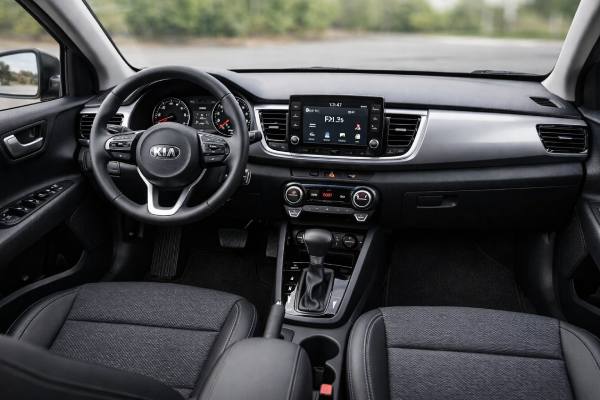
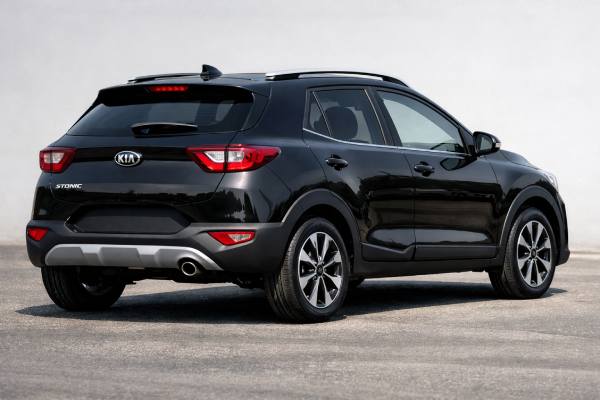
The 2017–2020 Kia Stonic 1.4 MPi sits in a sweet spot that many used-car buyers now overlook. It does not chase headline performance, and it does not rely on turbocharging or a dual-clutch gearbox to feel modern. Instead, it pairs a light B-segment crossover body with a simple naturally aspirated 1.4-liter petrol engine, a six-speed manual, and straightforward front-wheel-drive hardware. That matters in ownership. The 1.4 MPi version is usually cheaper to run long term than more complex small crossovers, and it avoids some of the higher repair risk that comes with turbo engines and more fragile transmissions. The trade-off is clear: you get honest, predictable performance rather than punchy acceleration. For buyers who value reliability, low running stress, and easy everyday use, the Stonic 1.4 MPi is often one of the smarter versions of the early Stonic range.
Essential Insights
- The 1.4 MPi is one of the simplest Stonic powertrains and is usually the safest bet for long-term ownership.
- Ride comfort is best on 15-inch wheels, and the manual gearbox suits the engine better than a heavier, more complex setup would.
- Port fuel injection helps this engine avoid the carbon build-up concerns common on small direct-injection turbos.
- Equipment varies a lot by market, so confirm AEB, lane warning, and camera features by VIN rather than trim name alone.
- A sensible service rhythm is every 10,000 miles or 12 months, whichever comes first.
Guide contents
- Kia Stonic YB 1.4 MPi Profile
- Kia Stonic YB 1.4 MPi Specs
- Kia Stonic YB Trims and Safety
- Reliability and Known Issues
- Maintenance and Buying Advice
- Road Manners and Economy
- Against Class Rivals
Kia Stonic YB 1.4 MPi Profile
The Kia Stonic is closely related to the Kia Rio underneath, and that is one of the main reasons the 1.4 MPi version makes sense. It takes a small hatchback platform, adds a slightly taller driving position, crossover styling, and modest extra ground clearance, then keeps the mechanical layout simple. In 1.4 MPi form, the formula is easy to understand: a naturally aspirated 1,368 cc four-cylinder, multi-point fuel injection, a six-speed manual, and front-wheel drive.
That simplicity shapes the whole ownership experience. The 1.4 MPi does not deliver the low-rpm shove of the 1.0 T-GDi turbo engine, but it also avoids the heat, boost plumbing, and extra drivetrain stress that come with a downsized turbo setup. In daily use, it feels most comfortable when driven smoothly and kept in the mid-range. Around town it is light on its feet, easy to place, and more refined than its modest output suggests. On faster roads, it is stable and predictable, though not especially quick when overtaking.
From an engineering point of view, the Stonic’s strengths are packaging and balance. It is compact enough for city parking, yet it still offers useful rear-seat room for the class and a practical 352-liter boot. The steering is electric but fairly direct, the chassis uses a conventional MacPherson-strut front and coupled torsion-beam rear setup, and there is nothing exotic underneath to make routine maintenance difficult.
Ownership appeal depends on expectations. Buyers looking for a lively small SUV may prefer the turbo model. Buyers who want a durable, uncomplicated crossover with lower long-term risk should pay attention to the 1.4. It is especially appealing if you prioritize:
- simpler fueling and ignition hardware,
- a conventional manual gearbox,
- lower sensitivity to neglected maintenance than many turbo rivals,
- predictable service costs, and
- easier used-market inspection.
The main caveat is that equipment varies more than many people expect. A 2017 Nordic-market Stonic can have a different safety and convenience mix from a UK or Southern European car with the same engine. For that reason, the best way to shop a Stonic 1.4 MPi is to treat the engine as the constant and the trim as the variable. Confirm the exact safety kit, wheels, infotainment, and parking aids on the car in front of you instead of assuming all 1.4s are equally equipped.
Kia Stonic YB 1.4 MPi Specs
Below is the key factory-style data for the 2017–2020 Stonic 1.4 MPi 100 hp class model. Public Kia material is strong on core dimensions, performance, and oil data, but lighter on some workshop-only capacities. Where public factory literature is unclear, it is better to say so than guess.
| Powertrain and efficiency | Kia Stonic YB 1.4 MPi |
|---|---|
| Code | 1.4 MPi, 1,368 cc; engine-family naming varies by market database |
| Engine layout and cylinders | Inline-4, 4 cylinders, 16 valves, 72.0 × 84.0 mm (2.83 × 3.31 in) |
| Displacement | 1.4 L (1,368 cc) |
| Induction | Naturally aspirated |
| Fuel system | Multi-point injection |
| Compression ratio | 10.5:1 |
| Max power | 100 PS (74 kW) @ 6,000 rpm |
| Max torque | 133 Nm (98 lb-ft) @ 4,000 rpm |
| Timing drive | Not clearly stated in the public Kia sources used here |
| Rated efficiency | 5.5 L/100 km combined on 15-inch wheels (42.8 mpg US / 51.4 mpg UK) |
| Real-world highway at 120 km/h | Usually about 6.3–6.9 L/100 km in steady use |
| Transmission and driveline | Kia Stonic YB 1.4 MPi |
|---|---|
| Transmission | 6-speed manual |
| Transmission code | Not stated in the public factory release |
| Drive type | FWD |
| Differential | Open |
| Chassis and dimensions | Kia Stonic YB 1.4 MPi |
|---|---|
| Suspension, front | MacPherson strut |
| Suspension, rear | Coupled torsion beam axle |
| Steering | Electric motor-driven rack-and-pinion; 14.1:1 |
| Brakes | 280 mm ventilated front discs (11.0 in), 262 mm solid rear discs (10.3 in) |
| Wheels and tyres | 185/65 R15 most common; optional 205/55 R17 |
| Ground clearance | 165 mm (6.5 in) on 15-inch wheels; 183 mm (7.2 in) on 17-inch wheels |
| Length / width / height | 4,140 mm (163.0 in) / 1,760 mm (69.3 in) / 1,500–1,520 mm (59.1–59.8 in) |
| Wheelbase | 2,580 mm (101.6 in) |
| Turning circle | 10.4 m (34.1 ft) |
| Kerb weight | 1,160 kg (2,557 lb) |
| GVWR | 1,610 kg (3,549 lb) |
| Fuel tank | 45 L (11.9 US gal / 9.9 UK gal) |
| Cargo volume | 352 L / 1,155 L (12.4 / 40.8 ft³), VDA |
| Performance and capability | Kia Stonic YB 1.4 MPi |
|---|---|
| 0–100 km/h | 12.6 s |
| Top speed | 172 km/h (107 mph) |
| Braking distance | Not published in the public factory material used here |
| Towing capacity | 1,000 kg braked / 450 kg unbraked (2,205 / 992 lb) |
| Payload | About 450 kg (992 lb), based on gross minus curb weight |
| Fluids and service capacities | Kia Stonic YB 1.4 MPi |
|---|---|
| Engine oil | ACEA C2; Kia UK oil chart lists 3.5 L (3.7 US qt) fill and 0W-20 baseline, with VIN-market verification recommended |
| Coolant | Phosphate-based ethylene glycol coolant, typically 50:50 mix; public Stonic-specific capacity not clearly published |
| Manual transmission fluid | VIN-specific service data recommended; public Stonic-specific capacity not clearly published |
| Differential / transfer case | Not applicable |
| A/C refrigerant and compressor oil | Verify from under-bonnet label or VIN-based service data |
| Key torque specs | Wheel nuts: 107–127 Nm (79–94 lb-ft) |
| Safety and driver assistance | Kia Stonic YB |
|---|---|
| Euro NCAP | 3 stars; Adult 85%, Child 84%, VRU 62%, Safety Assist 25% |
| Rating note | Based on Kia Rio tests and additional data; rating applies to all Stonics in that assessment |
| IIHS / headlight rating | Not applicable for this model range |
| ADAS suite | Market-dependent; AEB, lane assist, speed assistance, camera, and parking aids varied by trim and region |
The important reading of these numbers is simple. The Stonic 1.4 MPi is not a performance crossover, but it is light enough to stay usable. The key ownership win is that it offers decent cabin practicality and adult-friendly road manners without relying on more complex hardware.
Kia Stonic YB Trims and Safety
Trim strategy on the early Stonic is more regional than many buyers realize. In some Nordic markets, the 1.4 MPi was offered in trims such as Action, Advance, and Advance Plus. In the UK, the same engine was more narrowly placed and often tied to mid-level equipment. That means the badge alone does not tell you enough. For used buying, the useful approach is to identify the car by wheel size, climate system, seat trim, parking tech, and screen specification.
A typical 1.4 MPi equipment ladder works like this:
- lower trims usually bring 15-inch wheels, manual air conditioning, cloth seats, a smaller appearance package, and fewer parking aids;
- mid trims often add rear sensors, a camera, alloy wheels, roof rails, and better cabin trim; and
- upper trims tend to add 17-inch wheels, climate control, part-leather upholstery, rain sensing wipers, cosmetic add-ons, and upgraded lighting signatures.
Quick identifiers matter. A basic car is often easiest to spot by 15-inch steel or simple alloy wheels, plain black cloth, and manual climate controls. A higher-grade car will usually show 17-inch alloys, more colorful cabin trim, darker privacy glass, and camera or sensor hardware.
Mechanically, most 1.4 MPi cars share the same core setup. The big differences are usually tyre size, wheel size, and feature content, not gearing or suspension tune. That is good news for ownership, because parts compatibility is generally straightforward. It also means you can choose based on comfort and safety equipment rather than chasing a “better” engine calibration.
Safety is where market variation becomes especially important. Euro NCAP’s published 2017 result gave the Stonic three stars in standard form, with strong adult and child occupant scores but a weak Safety Assist score by later standards. The published assessment also notes that some active systems sat in an optional safety pack rather than the base car used for rating. At the same time, some market brochures show AEB with pedestrian detection, lane-departure warning, high-beam assist, driver-attention warning, ESC, TPMS, and six airbags fitted very early in certain regions.
That sounds inconsistent, but the explanation is simple: base safety spec changed by market. So when you inspect one of these cars, verify:
- six-airbag count and warning lights,
- ESC and TPMS operation,
- rear ISOFIX anchor points and top tether hardware,
- front camera or radar-based AEB equipment if claimed,
- lane-warning or lane-keep menus in the cluster or infotainment,
- parking camera image quality, and
- windscreen replacement history on ADAS-equipped cars.
If the car has AEB or lane-support hardware, proper calibration after windscreen replacement or front-end repair matters. A bargain-priced Stonic with an aftermarket windscreen and no calibration paperwork can be more trouble than a slightly older car with complete records. For most buyers, the best sweet spot is a well-kept 2018–2020 car with 15-inch or 16-inch wheels, rear camera, and confirmed active safety features rather than a cosmetically flashier car on 17s.
Reliability and Known Issues
The 1.4 MPi is one of the safer Stonic choices if you want lower mechanical drama. It is simpler than the turbocharged 1.0 T-GDi and avoids the dual-clutch issues that attract more attention in other Kia applications. That does not make it fault-free, but its common problems are usually easier to diagnose and cheaper to fix.
A practical way to read Stonic reliability is by prevalence and cost.
Common, low to medium cost
- Weak 12 V battery and stop-start faults: Symptoms include lazy starting, ISG stop-start not operating, random warning lights, or intermittent sensor messages. The likely cause is age-related battery drop or low charging state from short-trip use. Remedy: battery test first, then charging-system and parasitic-draw checks if needed.
- Brake corrosion or sticky rear brakes: Cars used gently or parked outside can develop rusty discs, uneven pad wear, or a dragging feel. Remedy: clean and service early, replace pads and discs if corrosion is established.
- Cabin squeaks and trim rattles: The Stonic is fairly solid, but hatch-area trim, door seals, and parcel-shelf hardware can rattle as mileage rises. Remedy: usually low-cost trim adjustment and seal treatment.
Occasional, medium cost
- Ignition misfire under load: Rough running, hesitation, or a flashing engine light often points to tired plugs or a weak coil. Remedy: read fault codes, inspect plug condition, and replace coils only after confirming the misfiring cylinder.
- Suspension clunks: Front drop links, top mounts, or bushes can start knocking on rough roads. Remedy: identify the exact source before replacing parts in pairs.
- Cooling leaks: Watch for sweet smell, falling coolant level, or dried residue near hose joints and housing connections. Remedy: pressure test the system and repair the specific leak, not just top it up.
Rare, higher-risk
- Neglected clutch wear: The manual gearbox itself is usually durable, but urban abuse can wear the clutch earlier than expected. High bite point, shudder on take-off, or release-bearing noise are the clues.
- Steering knocks or sensor faults: Less common, but worth checking on a test drive over broken surfaces.
One real ownership advantage is the fuel system. Because this is a port-injected MPI engine, it is far less prone to intake-valve carbon build-up than a direct-injection turbo rival. That matters over years of short-trip use.
Software matters too, but less dramatically than on more complex Stonics. The 1.4 MPi does not depend on a DCT control strategy or hybrid module logic, so updates are usually about infotainment, warning management, or minor driveability refinements rather than major mechanical rescue. Still, dealer history is valuable.
For recalls and service actions, think by market. Public recall activity around Stonic often centers on specific regions and sometimes on other engines. The right move is always a VIN check through an official portal and a dealer printout showing completed actions. Before purchase, ask for full service history, proof of recall completion, recent brake work, battery age, and evidence that any warning lights were fixed properly rather than cleared for sale.
Maintenance and Buying Advice
The Stonic 1.4 MPi rewards simple, steady maintenance. The official petrol service interval commonly published for this model line is 10,000 miles or 12 months, whichever comes first. That is the outside limit. On older used examples that do short trips, cold starts, and city work, a slightly shorter oil interval is cheap insurance.
| Item | Practical interval |
|---|---|
| Engine oil and filter | Every 10,000 miles / 16,000 km or 12 months max; shorten to 8,000–10,000 km for hard short-trip use |
| Engine air filter | Inspect every service; replace around 30,000–45,000 km sooner in dust |
| Cabin air filter | Every 12 months or about 15,000–20,000 km |
| Spark plugs | Inspect by 60,000 km; replace by VIN-specific schedule, or earlier if history is incomplete |
| Coolant | Inspect yearly; replace by official schedule or earlier if service history is unclear |
| Brake fluid | Replace every 2–4 years; many used buyers choose the early side of that range |
| Manual gearbox oil | Check for leaks at service visits; a refresh around 60,000–90,000 km is sensible even if not always treated as routine |
| Brake pads and discs | Inspect every service |
| Tyre rotation | About every 10,000–13,000 km |
| Alignment check | Yearly, and after pothole hits or uneven tyre wear |
| Auxiliary belt and hoses | Inspect every service; replace on condition |
| 12 V battery | Test from year 4 onward, sooner if stop-start becomes erratic |
For decision-making, the key consumables and specs are straightforward:
- engine oil fill is about 3.5 L;
- brake fluid is DOT 4;
- coolant should be a phosphate-based ethylene glycol mix;
- wheel nuts tighten to 107–127 Nm.
The buyer’s checklist is where a good Stonic separates itself from a merely tidy one. Inspect these carefully:
- Cold start quality. It should fire quickly and idle evenly.
- Clutch take-up. Avoid heavy shudder or a very high bite point.
- Brake condition. Rear discs tell you a lot about how the car was used.
- Tyres. Mixed brands or odd wear patterns usually point to skipped maintenance.
- Suspension noise. Listen for front-end knocks over low-speed bumps.
- Cooling system. Check for low coolant, stains, or sweet smell.
- Electronics. Confirm camera, sensors, infotainment, TPMS, and stop-start behavior.
- Body and corrosion. Look at lower door seams, tailgate edges, rear arches, and the front subframe in salted climates.
The best versions to seek are not always the most expensive. A mid-trim 2018–2020 car with a camera, good service history, 15-inch or 16-inch wheels, and documented maintenance is usually a smarter buy than a higher-trim car with neglected brakes and stretched service intervals. Long-term durability looks good as long as the car gets regular oil changes, decent tyres, and prompt brake and battery attention.
Road Manners and Economy
On the road, the Stonic 1.4 MPi feels honest rather than exciting. That is not criticism. It is part of the reason this version ages well. The steering is light at parking speeds and reasonably direct once moving, helped by a 14.1:1 ratio and a compact 10.4-meter turning circle. In town, it feels nimble and easy to judge. The slightly raised seating position helps visibility without making the car feel tall or top-heavy.
Ride quality depends heavily on wheel size. On 15-inch wheels, the Stonic is usually the most comfortable and rounded. It takes potholes and expansion joints with less sharpness, and cabin noise stays more controlled. On 17-inch wheels, it looks more assertive, but there is more thump over broken surfaces and more tyre noise on coarse roads. That trade-off matters if your driving is mostly urban or suburban.
The engine itself is smooth enough, but it needs revs. Below about 2,000 rpm it feels adequate, not eager. Around 3,000 to 5,500 rpm it responds more cleanly, and that is where the six-speed manual works best. The gearbox is a good match because it lets you keep the engine in its useful range. Overtakes need planning, especially with passengers or on uphill roads. This is not the Stonic for lazy, low-rpm overtaking.
Real-world fuel use is usually a little above the old official combined number. A realistic ownership picture looks like this:
- city: about 7.2–8.0 L/100 km,
- steady highway: about 6.0–6.5 L/100 km at moderate speed,
- 120 km/h motorway running: about 6.3–6.9 L/100 km,
- mixed use: about 6.5–7.2 L/100 km.
Cold weather, short trips, roof bars, and heavier 17-inch wheels all push the number upward. The benefit is predictability. Unlike some small turbo engines, the 1.4 MPi does not swing as wildly between test-cycle figures and real-world use.
Braking feel is stable and easy to modulate, though ultimate stopping data is not widely published in public Kia material. Straight-line stability is good for the size, and the chassis is secure rather than playful. If you want a small crossover that feels light, simple, and easy to live with every day, the Stonic 1.4 MPi delivers that. If you want fast in-gear response, it does not.
Against Class Rivals
The Stonic 1.4 MPi does not beat every rival on paper, but it does occupy a very useful niche. Its strongest argument is not speed or badge appeal. It is ownership simplicity.
Against a SEAT Arona 1.0 TSI, the Kia usually loses on torque and effortless overtaking. The turbo SEAT feels quicker and more modern. The Stonic fights back with simpler fueling, less thermal stress, and a more conservative mechanical package for long-term ownership.
Against a Renault Captur of the same era, the Stonic often feels tighter and more straightforward, especially in manual petrol form. The Captur can offer a more lounge-like cabin and softer styling, but the Kia generally makes a cleaner case for buyers who value simplicity over flair.
Against a Peugeot 2008 1.2 PureTech, the Kia gives away some engine sparkle and cabin design drama. But many careful used buyers will gladly accept the Stonic’s plainer personality in exchange for avoiding a small turbo triple and its more demanding long-term risk profile.
Against a Nissan Juke 1.6 non-turbo, the Stonic often feels roomier, more modern inside, and easier to recommend on ergonomics. The Juke has stronger design character; the Kia is usually the more rational buy.
Against its close family rival, the Hyundai Kona, the Stonic is basically the lighter, simpler, more value-led choice. The Kona can feel more substantial, but it is often pricier in the used market.
So who should pick the Stonic 1.4 MPi? Three buyers stand out:
- the commuter who wants a small crossover without turbo complications,
- the household that needs easy parking and decent practicality, and
- the long-term owner who cares more about dependable service than quick acceleration.
Its weaknesses are real. It is not fast, and some rivals feel richer inside. But as a used buy, the Stonic 1.4 MPi makes a compelling case because it knows exactly what it is: a simple, well-packaged crossover that asks for regular maintenance, not heroics. For many buyers in 2025, that is a stronger advantage than it was when the car was new.
References
- Kia Motors Ireland Announces Details of the All New Stonic: an eye-catching and confident compact crossover 2017
- Official Kia Stonic safety rating 2017 (Safety Rating)
- Engine Oil Grades and Capacities 2023 (Service Guide)
- 7.2 Kia Service Intervals.xlsx 2025 (Service Guide)
- Car Safety Recalls | What They Are & What To Do | Kia UK 2025 (Recall Information)
Disclaimer
This article is for informational purposes only and is not a substitute for professional diagnosis, repair, or VIN-specific technical guidance. Specifications, torque values, service intervals, procedures, and equipment can vary by VIN, market, trim, and production date, so always verify details against the official owner’s manual, service documentation, and dealer records for the exact vehicle.
If this guide helped you, please share it on Facebook, X/Twitter, or another community where it may help other owners and buyers.