
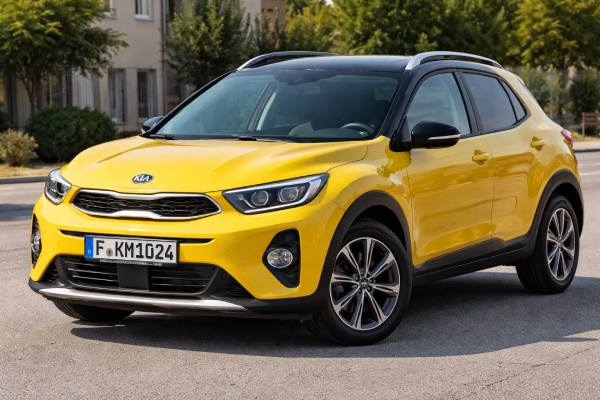
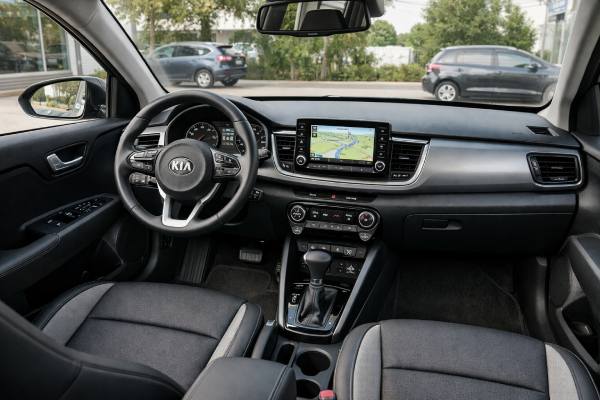
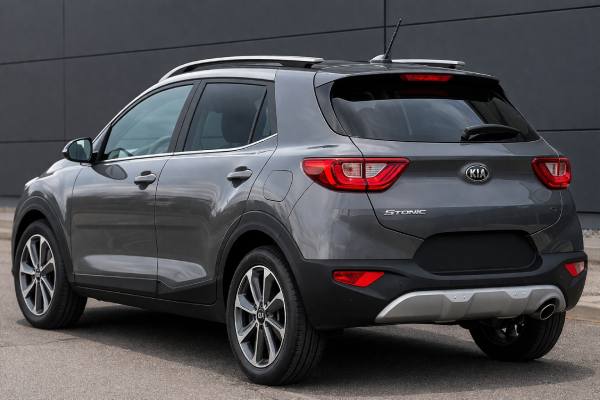
The Kia Stonic YB with the 1.0-litre Kappa T-GDi is one of those small crossovers that makes most sense when you look past the badge and focus on the engineering brief. It is light, front-wheel drive, simple in layout, and powered by a compact turbo three-cylinder that gives it enough torque to feel livelier than many entry B-SUV rivals. This guide focuses on the pre-facelift 2017–2020 generation in European form, with the 100 hp tune that sat below the stronger 120 hp version and became a sensible middle ground for buyers who wanted lower running costs without falling back to the naturally aspirated engines.
For owners, the Stonic’s biggest strengths are its tidy packaging, direct steering, strong parts commonality with the Rio, and generally modest maintenance demands when the oil service history is right. Its main caveats are small-car NVH at motorway speeds, limited rear-seat generosity, and the usual turbo-petrol sensitivity to skipped servicing.
Owner Snapshot
- The 1.0 T-GDi gives the Stonic better low-rpm pull than the 1.25 and 1.4 petrols, especially in town.
- Cargo space is usefully square for the class, with 352 L seats up and 1,155 L seats folded.
- Steering is sharper than many soft-riding rivals, so the car feels lighter and more alert than it looks.
- Buy on service history, not mileage alone; neglected oil changes matter more here than on the simpler MPI engines.
- A safe ownership rhythm is an oil and filter service every 10,000 miles or 12 months, whichever comes first.
Guide contents
- Kia Stonic YB 1.0 T-GDi Basics
- Kia Stonic YB 1.0 Specs
- Kia Stonic YB Trims and Safety
- Reliability Issues and Service Actions
- Maintenance Plan and Buying Advice
- Road Manners and Economy
- How It Stacks Up Against Rivals
Kia Stonic YB 1.0 T-GDi Basics
The Stonic arrived as Kia’s answer to the fast-growing B-SUV class, but it never tried to be a mini off-roader. Underneath, it stayed close to the Rio YB formula: light weight, front-wheel drive, compact dimensions, and a focus on road manners rather than fake toughness. That matters because it explains why the Stonic often feels more like a raised hatchback than a mini SUV. For many owners, that is exactly the point.
The 1.0 T-GDi version is the engine that gives the car its best balance. In 100 hp form, it is not quick in absolute terms, but it is flexible and better matched to the Stonic’s size than the smaller naturally aspirated petrols. Peak torque arrives low enough in the rev range to make urban driving easy, and the turbo engine hides the car’s modest output well when you are carrying one or two adults rather than a full load.
There is one important year-range nuance. The Stonic launched in 2017, but the 100 PS tune was not the main story at launch in every market. Early press material centered more on the 120 PS turbo and the other petrol and diesel options. By the late pre-facelift period, however, the 100 hp version had become a very sensible mainstream choice. In some English-language brochures it appears as 99 bhp, while continental literature often rounds it to 100 ch or 100 PS. In real ownership terms, they describe the same basic place in the range: the lower-output Kappa turbo petrol.
The appeal of this version is simple. It is lighter over the nose than larger engines, it usually carries lower fuel and tyre costs than the most aggressive trim lines, and it keeps the Stonic’s friendly character intact. Kia also backed the car with its long warranty in Europe, which helped the model build a strong reputation with private buyers and fleets.
The downside is equally clear. This is still a small crossover with a short wheelbase, firm suspension tuning, and a three-cylinder engine. That means more road noise on coarse surfaces, more audible engine texture under load, and less relaxed overtaking than a 120 hp or 1.5-litre rival. Buyers who expect effortless motorway pace may find it merely adequate. Buyers who want a tidy, efficient, easy-to-own daily crossover will usually find it well judged.
Why this version makes sense
- It keeps the Stonic light and responsive.
- It is cheaper to run than many stronger B-SUV alternatives.
- It avoids the flat feel of the lower non-turbo petrols.
- It is simple enough to own long-term if maintenance stays on schedule.
Kia Stonic YB 1.0 Specs
For a buyer or owner, the most useful way to read the Stonic 1.0 T-GDi is as a compact, front-drive crossover with modest mass and a torque-rich small turbo engine. Public Kia data for the 2017–2020 run varies by country and trim, so the table below centers on the closest match to this guide: the pre-facelift European 1.0 T-GDi 100 with manual transmission, while noting trim- or market-dependent differences where they matter.
Powertrain and efficiency
| Item | Data |
|---|---|
| Code | Kappa 1.0 T-GDi |
| Engine layout and cylinders | Inline-3, 3 cylinders, 12 valves, 4 valves/cyl |
| Bore × stroke | 71.0 × 84.0 mm (2.80 × 3.31 in) |
| Displacement | 1.0 L (998 cc) |
| Induction | Turbocharged |
| Fuel system | Direct injection |
| Compression ratio | Public pre-facelift Europe sheets do not state a single consistent figure; verify by engine code for parts work |
| Max power | 100 hp (74 kW) @ 4,500–6,000 rpm |
| Max torque | 171.5–172 Nm (126.5–126.9 lb-ft) @ 1,500–4,000 rpm |
| Timing drive | Chain |
| Rated efficiency | WLTP combined about 5.8–6.2 L/100 km (40.6–37.9 mpg US / 48.7–45.6 mpg UK), depending on trim and wheel size |
| Real-world highway @ 120 km/h (75 mph) | Typically about 6.3–6.8 L/100 km (37.3–34.6 mpg US / 44.8–41.5 mpg UK) |
Transmission, chassis, and dimensions
| Item | Data |
|---|---|
| Transmission | 5-speed manual on the late pre-facelift 100 hp version covered here |
| Drive type | FWD |
| Differential | Open |
| Suspension, front | MacPherson strut |
| Suspension, rear | Torsion-beam axle |
| Steering | Rack-and-pinion with electric assist (MDPS); steering ratio about 14.1:1 |
| Brakes | Front ventilated discs 280 × 22 mm (11.0 × 0.87 in); rear solid discs about 260 × 10 mm (10.2 × 0.39 in) |
| Wheels and tyres | Base cars often 185/65 R15; popular upper-trim fitment 205/55 R17 |
| Ground clearance | About 165 mm (6.5 in) on 15-inch setup; about 183 mm (7.2 in) on higher wheel package |
| Length / width / height | 4,140 / 1,760 / 1,505 mm (163.0 / 69.3 / 59.3 in); about 1,520 mm (59.8 in) with roof rails |
| Wheelbase | 2,580 mm (101.6 in) |
| Turning circle, kerb-to-kerb | About 10.4 m (34.1 ft) |
| Kerb weight | About 1,180 kg (2,601 lb), rising with trim |
| GVWR | About 1,640 kg (3,616 lb) |
| Fuel tank | 45 L (11.9 US gal / 9.9 UK gal) |
| Cargo volume | 352 / 1,155 L (12.4 / 40.8 ft³), VDA |
Performance, fluids, and safety
| Item | Data |
|---|---|
| 0–100 km/h (0–62 mph) | 10.8 s |
| Top speed | 179 km/h (111 mph) |
| Braking distance | Not published in Kia’s public pre-facelift Europe spec sheets |
| Towing capacity | 1,000 kg (2,205 lb) braked / 450 kg (992 lb) unbraked |
| Payload | About 460 kg (1,014 lb), depending on trim |
| Engine oil | ACEA C2, typically 0W-30; about 3.6 L (3.8 US qt) |
| Coolant | Ethylene-glycol type coolant for aluminum systems; public Europe PDFs do not list a single fill capacity |
| Transmission fluid | Public brochures do not list fill quantity; verify by gearbox and VIN |
| Differential / transfer case | Not applicable |
| A/C refrigerant | Verify under-bonnet label and VIN-specific service data |
| Key torque specs | Public Kia Europe brochures do not publish service torques; use the official workshop information for wheel nuts, spark plugs, and drain plug values |
| Crash ratings | Euro NCAP: 5 stars with safety pack context; 85% adult, 84% child, 62% vulnerable road user, 25% safety assist |
| IIHS | Not applicable for this Europe-focused model |
| ADAS | ESC, VSM, HAC standard; FCA, DAW, LKA, HBA, and blind-spot/rear cross-traffic features vary by year, pack, and trim |
What stands out is that the Stonic is not an especially powerful car, but it does not need to be. The useful numbers are the low-end torque band, modest kerb mass, and compact footprint. Those three ingredients make it feel quicker in daily driving than the headline figures suggest. The tables also show a recurring theme for owners: published public data is strong on basic vehicle specs, but thinner on workshop-level fluid and torque detail. That is why VIN-based service information matters once you move beyond normal maintenance.
Kia Stonic YB Trims and Safety
Trim structure is one area where the Stonic can confuse used-car shoppers, because Kia named grades differently across markets. The safest way to shop is to think in terms of equipment level rather than badge alone. In the pre-facelift period, the 100 hp turbo version could appear in relatively simple trims or in much better-equipped upper grades, and that changes the ownership experience more than the engine itself does.
A useful late pre-facelift example is the French-market ladder of Motion, Active, Design, and Premium. In that structure, the 1.0 T-GDi 100 with 5-speed manual could be ordered across the range. Motion cars tend to be the most basic: smaller wheels, plainer lighting, and fewer driver-assistance features. Active and Design usually add the equipment most owners actually want, such as alloy wheels, roof rails, better infotainment, and more convenience items. Premium tends to be where the rarest safety and comfort features live, including blind-spot monitoring and rear cross-traffic warning on some years.
Mechanical differences are smaller than many buyers expect. Suspension layout remains the same. The big changes are usually wheels, tyre size, interior equipment, and whether the car has extra safety packs. That matters because the Stonic rides and sounds different on 15-inch tyres than on 17-inch wheels. The larger-wheel cars look better and steer a little more crisply, but they also tend to transmit more road texture and carry slightly higher tyre costs.
Quick identifiers help when viewing used examples:
- Base cars often have 15-inch steel wheels and fewer chrome or gloss-black exterior details.
- Mid and upper trims often add 17-inch alloys, roof rails, tinted rear glass, LED rear lamps, and a larger central screen.
- Premium-level cars are the ones most likely to carry blind-spot and rear cross-traffic hardware.
- Navigation-equipped cars are usually easier to spot by the larger infotainment interface and camera-based parking support.
Safety is a mix of strong fundamentals and patchy equipment distribution. Structurally, the Stonic was a credible class contender. Euro NCAP awarded it a five-star result in the context of the available safety pack, but that rating is tied closely to the related Rio platform and the exact equipment fitted. Standard passive safety is solid: six airbags, ISOFIX on the rear seats, ESC, VSM, hill-start assist, and seatbelt reminders. Active safety is where trim matters. Early cars did not all get AEB or lane-support systems as standard, so a lower trim can be much simpler than the five-star headline suggests.
That makes used buying straightforward: do not assume every Stonic has the same safety kit. Check for FCA, LKA, DAW, and blind-spot functions individually. Also remember that cars with camera- or sensor-based driver aids may need recalibration after windscreen replacement, bumper work, or front-end accident repair.
Reliability Issues and Service Actions
The Stonic 1.0 T-GDi is generally a sound used buy, but only if you respect what it is: a small direct-injection turbo engine in a light crossover. The car usually ages well when it gets timely oil changes, decent plugs, and regular inspections. It becomes far less impressive when it spends years on missed services and short trips.
Common, lower-cost issues
- Ignition wear and minor misfire: A rough idle, hesitation under boost, or an engine light under load often points first to spark plugs or a coil pack rather than anything major. On this engine, plugs are not a “forget about them forever” item.
- 12 V battery weakness: Cars used mostly for short city trips can show lazy starts, stop-start faults, or low-voltage warning behavior earlier than expected.
- Front brake wear: The Stonic is not heavy, but urban use still eats pads faster than many owners expect. Disc lip and pad thickness need regular checks.
- Small suspension consumables: Anti-roll-bar links, bushes, and other minor front-end parts can begin to add light knocking noises well before the rest of the car feels worn out.
Occasional medium-cost faults
- Clutch wear on manual cars: A high bite point, slip in higher gears, or shudder when pulling away usually means hard city use or repeated hill-start abuse rather than a design flaw.
- Boost or intake-side leaks: Whistling, flat acceleration, or uneven throttle response can come from hoses, clamps, or intake plumbing rather than the turbocharger itself.
- Direct-injection deposits: Like most GDi petrols, the 1.0 T-GDi can collect intake-side carbon over time, especially on short-trip cars. Symptoms are usually rough idle and softer response rather than sudden failure.
- Cooling-system sensors and thermostatic behavior: A car that runs colder than expected or warms up too slowly deserves inspection because turbo engines dislike poor thermal control.
Rare but higher-priority items
- Oil-neglect damage: This is the main one. Dirty or overdue oil can hurt the chain system, turbo lubrication, and long-term timing accuracy.
- Timing-chain noise: There is no routine replacement interval like a timing belt, but cold-start rattle or timing-correlation faults need attention early.
- Vacuum-assist recall concern on affected cars: Some late cars require VIN-based recall verification for the tandem-pump mesh-filter issue because reduced vacuum assistance affects braking feel and safety.
Software and calibration updates are worth asking about even when no warning lights are on. On cars like this, dealer updates often tidy up cold starts, idle quality, stop-start behavior, and sensor plausibility faults that feel like mechanical problems but are not.
For a pre-purchase inspection, request the full service record, proof of recall completion, evidence of annual oil servicing, and a true cold start. A good test drive should include light-throttle town driving, a full-throttle pull in third gear, and a steady motorway stretch. That combination usually reveals more than a quick loop around the block.
Maintenance Plan and Buying Advice
A Stonic 1.0 T-GDi does not need exotic care, but it does reward disciplined maintenance. The safest long-term mindset is to service it like a small turbo engine, not like an old-school naturally aspirated runabout. That means clean oil, timely plugs, proper coolant condition, and a close eye on anything connected to boost, heat, and ignition.
Practical maintenance schedule
| Item | Practical interval | Notes |
|---|---|---|
| Engine oil and filter | Every 10,000 miles / 12 months; shorten for heavy city use | The single most important service item for turbo and timing-chain life |
| Engine air filter | Inspect yearly; replace about every 20,000 km / 24 months | Replace sooner in dusty use |
| Cabin air filter | Inspect yearly; replace about every 20,000 km / 24 months | Cheap and worth doing on time |
| Spark plugs | About every 70,000 km | Earlier replacement is sensible if misfire or rough running appears |
| Coolant | First major change around 100,000 km / 60 months, then about every 20,000 km / 24 months where schedule requires | Market schedules vary, so confirm by VIN |
| Brake fluid | About every 36 months | Time matters as much as mileage |
| Brake pads and discs | Inspect at every service | Urban cars often need fronts sooner than expected |
| Manual gearbox oil | Inspect around 60,000 km; many owners refresh it by 60,000–80,000 km | Public Kia brochures do not list a single fill quantity |
| Timing chain | No fixed replacement interval | Investigate cold-start rattle, fault codes, or poor oil history |
| Auxiliary belts and hoses | Inspect from about 50,000 km onward | Replace on cracks, glazing, or noise |
| Tyres | Rotate about every 10,000 km; align when wear pattern changes | 17-inch cars are more sensitive to poor alignment |
| Valve clearance | Inspect if noisy or rough at higher mileage | Not a routine big-ticket item on healthy cars |
| 12 V battery | Test yearly after year four | Short-trip use shortens life |
Buyer’s guide
The best buys are usually mid-trim cars with the 1.0 T-GDi 100, a clean service record, and sensible wheel size. They feel lighter and cheaper to own than the flashiest versions, while still having enough torque to avoid feeling underpowered in daily traffic.
Look closely for:
- Uneven front tyre wear, which can point to alignment or suspension wear
- Clutch slip or a very high bite point on manual cars
- Turbo hesitation, boost leaks, or misfire under load
- Cooling-system odor, low coolant level, or slow warm-up
- Missing recall evidence
- Cheap mixed tyres on 17-inch cars, which can spoil ride and wet grip
The safest cars to seek are those with documented annual servicing and no gaps in oil-change history. Cars to approach carefully are ex-urban delivery or short-trip family cars with poor paperwork, multiple warning lights cleared before sale, or obvious signs of skipped maintenance.
Long-term durability is better than the Stonic’s lightweight feel suggests. The platform is fundamentally simple, body corrosion is not a major early talking point in normal climates, and parts commonality helps repair costs stay reasonable. The catch is that the engine gives less warning than older non-turbo units when maintenance standards fall.
Road Manners and Economy
On the road, the Stonic’s personality is more “eager hatchback” than “soft crossover.” Kia tuned it with firmer body control and quicker steering than some rivals, and you feel that within the first few corners. The nose turns in cleanly, the body does not loll around much, and the steering has enough weight to make the car feel tidy at speed. For drivers who dislike vague small SUVs, that is a real strength.
The trade-off is ride polish. On smooth roads, the Stonic feels settled and mature. On broken town surfaces, especially on larger wheels, it can feel a little busy. It is not harsh in a crude way, but it does not isolate bumps as well as the softest French rivals.
The 1.0 T-GDi 100 suits the chassis well. In normal traffic it feels stronger than the power figure suggests because the useful torque arrives early. You do not need to thrash it to make progress. Around town, second and third gears cover most situations well. On an open road, however, the engine shows its limits. With a full load or a steep motorway grade, you need a downshift sooner than you would in a stronger 115–125 hp rival.
NVH is typical of the class and engine type. There is a distinct three-cylinder note when cold and under harder acceleration. At motorway speed, the bigger factor is usually road and tyre noise rather than pure engine boom. Cars on 17-inch tyres are the least relaxed on coarse asphalt.
Real-world economy is respectable rather than miraculous. A sensible owner can expect roughly these numbers:
- City: about 6.8–7.6 L/100 km (34.6–31.0 mpg US / 41.5–37.2 mpg UK)
- Highway: about 6.1–6.8 L/100 km (38.6–34.6 mpg US / 46.3–41.5 mpg UK)
- Mixed: about 6.3–6.9 L/100 km (37.3–34.1 mpg US / 44.8–40.9 mpg UK)
Cold weather, short trips, and heavy traffic can add around 0.5 to 1.0 L/100 km. The Stonic is light enough that it does not become ruinous when loaded, but you feel the extra mass in acceleration before you feel it in fuel use.
Braking is confident and easy to judge, though the pedal feel is tuned more for stability than sportiness. Traction is predictable because this is a front-drive crossover with conservative electronics. It will not pretend to be an all-weather off-roader, but on decent tyres it is composed and confidence-inspiring in ordinary wet and winter use.
How It Stacks Up Against Rivals
The Stonic’s closest rivals are the SEAT Arona 1.0 TSI, Renault Captur TCe 100, Ford EcoSport 1.0 EcoBoost, and its corporate cousin, the Hyundai Kona 1.0 T-GDi. All of them chase the same buyer: someone who wants compact-SUV looks with hatchback running costs.
Against the SEAT Arona, the Kia usually feels less overtly polished inside, but it counters with strong practicality, straightforward controls, and a strong ownership case. The Arona often feels a bit more refined on the move, yet the Stonic is competitive on steering response and cargo usability.
Against the Renault Captur TCe 100, the Stonic is the more direct and mechanically simple-feeling car. The Captur tends to offer a softer ride and a more lounge-like cabin. The Kia feels more honest and lighter on its feet, while the Renault often wins on family comfort.
Against the Ford EcoSport, the Stonic is the cleaner package. The Ford’s 1.0 EcoBoost can feel punchy, but the Kia usually presents as the more modern, better-packaged, and more cohesive car overall. Interior space use and cargo shape are especially strong points for the Kia.
Against the Hyundai Kona 1.0 T-GDi, the choice is closer. The two share some engineering philosophy, but the Stonic feels slightly more compact and simple, while the Kona often comes across as a touch more substantial. If you mostly drive in tight urban areas, the Stonic’s lighter, tidier feel can actually be the advantage.
Where the Stonic wins is not in class-leading speed, luxury, or off-road ability. It wins when the buyer wants:
- compact exterior dimensions
- useful boot space
- direct steering
- reasonable service costs
- a turbo petrol that feels stronger than its size suggests
- a sensible long-term ownership proposition
Where it loses ground is in rear-seat space, long-distance quietness, and the fact that early ADAS coverage was not as universal as some later rivals. In short, the Stonic 1.0 T-GDi 100 is not the most glamorous B-SUV. It is one of the easier ones to justify.
References
- Kia Stonic: an eye-catching and confident compact crossover 2017 (Press Kit)
- KIA-France-Fiche-Technique-Stonic-Mai2020.pdf 2020 (Technical Data)
- Official Kia Stonic safety rating 2017 (Safety Rating)
- Engine Oil Grades and Capacities – Kia 2023 (Service Guide)
- 7.2 Kia Service Intervals V25.12.xlsx 2026 (Service Intervals)
Disclaimer
This article is for informational purposes only and is not a substitute for professional diagnosis, repair, or model-specific service advice. Specifications, torque values, intervals, procedures, and equipment can vary by VIN, market, production date, and trim, so always verify details against the official Kia owner’s literature and workshop documentation for the exact vehicle.
If this guide helped you, please consider sharing it on Facebook, X, or your favorite forum to support our work.