
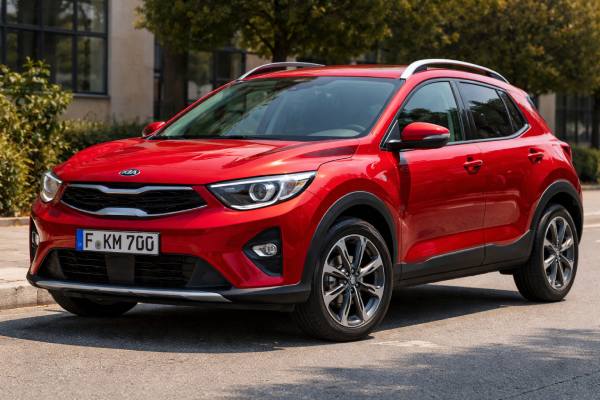
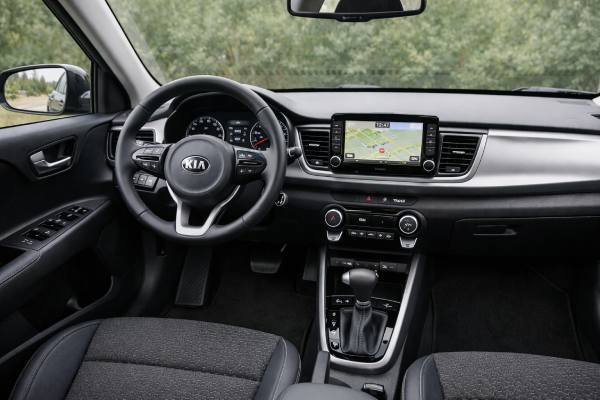
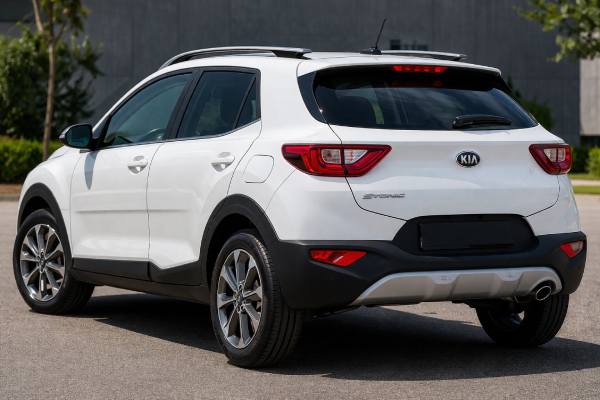
The 2017–2020 Kia Stonic YB with the 1.0-litre Kappa T-GDi is one of those small crossovers that makes more sense in daily use than its size suggests. It combines a compact footprint with a useful boot, light controls, and a turbocharged three-cylinder engine that gives it more flexibility than the lower-output petrol versions. Kia positioned it as a stylish B-segment crossover, but the engineering story is more practical than fashionable: modest weight, front-wheel drive, simple packaging, and enough torque to make everyday driving easy. That balance is why the Stonic still holds interest as a used buy. It is easy to park, easy to see out of, and generally easy to own when maintained properly. The main caution is specification. Safety equipment, gearbox choice, and trim differences matter more than many buyers expect, so the exact car is more important than the badge alone.
Owner Snapshot
- The 1.0 T-GDi gives the Stonic enough torque to feel lively without making the car heavy or overly complex.
- A 352 L boot and upright body make it more practical than many superminis from the same period.
- Manual cars are usually the safer used bet; DCT cars deserve a careful low-speed shudder check.
- Safety equipment varies a lot by trim and year, so appearance alone does not confirm the best specification.
- A sensible service rhythm is every 10,000 miles or 12 months, with clean oil being especially important for this engine.
Guide contents
- Kia Stonic YB Snapshot
- Kia Stonic YB Specs and Data
- Kia Stonic YB Trims and Safety
- Reliability and Service Actions
- Maintenance and Buyer’s Guide
- Driving and Real-World Use
- Comparison with Rivals
Kia Stonic YB Snapshot
The pre-facelift Stonic arrived as Kia’s entry in the fast-growing B-SUV class, but it was engineered more like a lightly raised supermini than a mini off-roader. That matters, because it explains both its strengths and its limits. The platform keeps the car light and easy to place, while the 1.0 T-GDi engine gives it the mid-range flexibility the lower-powered versions lack. With 120 PS and around 172 Nm available from low rpm, it delivers exactly the kind of response a small crossover needs for merging, urban driving, and moderate overtaking without asking the driver to work hard.
Dimensionally, the Stonic sits in a useful middle ground. At 4,140 mm long and 1,760 mm wide, it is small enough for tight parking but still offers a 2,580 mm wheelbase and a genuine 352-litre VDA boot. Fold the rear seats and that rises to 1,155 litres. It is not class-leading, but it is enough for family shopping, weekend luggage, or everyday bulky items. The upright shape also helps the cabin feel roomier than some style-led rivals, especially in the front seats.
There are a few worthwhile engineering details behind that usability. Kia built the Stonic with a high proportion of high-strength steel and paid real attention to structural stiffness. The suspension layout is simple and conventional, with MacPherson struts at the front and a torsion beam at the rear. That is not exotic, but in this class it is a sensible choice. It keeps costs, weight, and repair complexity under control while still allowing predictable handling and acceptable ride comfort.
This practical design is what makes the 1.0 T-GDi Stonic appealing on the used market. It mixes compact size, decent utility, and enough performance for modern traffic without becoming needlessly complicated. But it is also a car where the details matter. Some examples have stronger safety equipment than others. Some have the 6-speed manual, while others use the 7-speed dual-clutch transmission. Wheel size, infotainment, and assistance systems vary by trim and market. As a result, a good Stonic is genuinely easy to recommend, while a poorly specified or poorly maintained one can feel far less convincing. This is not a car to buy purely on looks or price. It rewards buyers who check the exact equipment list and service history.
Kia Stonic YB Specs and Data
The 1.0 T-GDi Stonic was sold across several markets, so a few figures vary slightly by gearbox, wheel package, and test cycle. The core hardware is consistent: a 998 cc turbocharged direct-injection three-cylinder driving the front wheels. The small differences between markets are normal for a car sold in several regions, and they do not change the overall character of the model.
| Item | Kia Stonic 1.0 T-GDi 2017–2020 |
|---|---|
| Engine family | Kappa 1.0 T-GDi |
| Engine layout | Inline-3, DOHC, 4 valves per cylinder |
| Displacement | 1.0 L (998 cc) |
| Induction | Turbocharged |
| Fuel system | Direct injection |
| Compression ratio | Market-specific; verify by VIN-level documentation |
| Max power | 120 PS (88.3 kW, about 118 bhp) @ 6,000 rpm |
| Max torque | 171–172 Nm (126–127 lb-ft) @ 1,500–4,000 rpm |
| Timing drive | Chain |
| Drive type | FWD |
| Differential | Open |
| Transmission | 6-speed manual at launch; 7-speed DCT in some later markets |
| Rated combined economy | 5.0–5.4 L/100 km |
| Real-world highway at 120 km/h | Typically around 5.5–6.5 L/100 km in good condition |
| Fuel tank | 45 L (11.9 US gal / 9.9 UK gal) |
| Item | Dimensions and Chassis |
|---|---|
| Front suspension | MacPherson strut |
| Rear suspension | Coupled torsion beam |
| Steering | Electric power steering |
| Length | 4,140 mm (163.0 in) |
| Width | 1,760 mm (69.3 in) |
| Height | 1,485–1,520 mm (58.5–59.8 in), market and wheel dependent |
| Wheelbase | 2,580 mm (101.6 in) |
| Ground clearance | About 165–183 mm (6.5–7.2 in), depending on market and wheels |
| Turning circle | About 10.4 m kerb-to-kerb |
| Kerb weight | Roughly 1,150–1,250 kg (2,535–2,756 lb), depending on trim |
| Fuel tank | 45 L (11.9 US gal / 9.9 UK gal) |
| Cargo volume | 352 L / 1,155 L (12.4 / 40.8 ft³), VDA |
| Most common tyre sizes | 15-inch and 17-inch packages, depending on trim |
| Item | Performance |
|---|---|
| 0–100 km/h | 10.3–10.6 s |
| Top speed | Up to 185 km/h (115 mph) |
| 80–120 km/h passing | Respectable for class, but strongly dependent on gear choice |
| Braking distance | Varies by tyre and market; verify by tested source for exact figure |
| Towing capacity | Market dependent; verify by VIN and handbook |
| Payload | Market dependent; verify by VIN plate |
| Item | Fluids and Service Data |
|---|---|
| Engine oil specification | ACEA C2 |
| Recommended oil viscosity | 0W-30 in common Kia UK guidance for this engine |
| Engine oil capacity | 3.6 L (3.8 US qt) |
| Coolant | Verify by VIN and official service data |
| Manual gearbox fluid | Verify by VIN and official service data |
| DCT fluid | Verify by VIN and official service data |
| A/C refrigerant and compressor oil | Verify by VIN and official service data |
| Key torque specifications | Use VIN-specific service data before repair work |
| Item | Safety Snapshot |
|---|---|
| Euro NCAP | 3 stars standard equipment; 5 stars with optional safety pack |
| Euro NCAP breakdown | 85% adult, 84% child, 62% vulnerable road user, 25% safety assist |
| Standard core safety kit | Six airbags, ESC, Vehicle Stability Management, Hill-start Assist, ISOFIX |
| ADAS availability | AEB, lane support, blind-spot warning, rear cross-traffic warning, and driver attention warning varied by trim and year |
The practical lesson is simple. The paper specification is sound, and the key numbers are strong enough for the class. But the useful ownership differences come from gearbox choice, wheel size, and safety equipment rather than from small market-by-market power or economy variations.
Kia Stonic YB Trims and Safety
Trim structure is one of the hardest parts of buying a used Stonic because Kia varied the naming by country. In one market you might find simple entry and mid-grade versions; in another, the same underlying car carries sportier branding or a local equipment name. That means buyers should decode equipment rather than trust the badge. The practical identifiers are wheel size, infotainment screen type, climate-control setup, heated seat and steering-wheel availability, navigation, reversing camera, and the presence of radar- or camera-based driver-assistance systems.
Mechanically, the most important trim difference for the 1.0 T-GDi is usually the gearbox and wheel package. Early cars were commonly sold with the manual transmission, while later examples in some markets added the 7-speed DCT. The 17-inch wheel package can sharpen the appearance and bring slightly crisper turn-in, but it often introduces a firmer edge over broken roads and can add tyre replacement cost. For many used buyers, the ideal Stonic is not the highest trim but the best-maintained car with the most useful safety equipment.
Safety is where specification changes the verdict most clearly. Euro NCAP awarded the Stonic 3 stars in standard form and 5 stars when equipped with the optional safety pack. That difference is significant, and it should directly affect buying decisions. The underlying occupant protection scores were decent, but the Safety Assist score was held back on cars that lacked the extra systems. In effect, the structure itself was not the main weakness; the main issue was that advanced active safety was not standardized across the range.
The most valuable safety equipment on a used Stonic includes forward collision warning and autonomous emergency braking, lane-departure warning, lane-keeping support on later cars, blind-spot warning, rear cross-traffic alert, and driver attention warning. Core systems such as ESC and hill-start assist were broadly available, but the higher-level driver-assistance features were trim- and year-dependent. That is why one Stonic can look like a strong modern used buy on safety, while another similar-looking car is much less impressive.
Passive safety was more consistent. Six airbags were standard, ISOFIX child-seat anchors were included, and the body structure was designed with a strong emphasis on stiffness. For family buyers, that gives the Stonic a credible safety baseline. Still, the active systems matter more than usual because they affect the real-world gap between a fair spec and a genuinely desirable one.
For used-car shopping, the safest approach is to request the original brochure, a VIN-spec printout, or dealer confirmation of the exact equipment. On this model, that is not excessive caution. It is the only reliable way to know whether you are looking at a standard-equipment 3-star car or a 5-star safety-pack car with the features most buyers now expect.
Reliability and Service Actions
Viewed as a whole, the 1.0 T-GDi Stonic is a reasonably solid small crossover when serviced properly. It does not carry the same broad public reputation for major design flaws as some rival downsized turbo engines, but that does not make it immune to neglect. Small turbocharged direct-injection petrol engines are sensitive to oil quality, short-trip use, overdue spark plugs, and poor maintenance habits, so a Stonic with incomplete records should be treated more cautiously than its friendly image might suggest.
The biggest reliability split in the range is the transmission. Manual cars are usually the lower-risk option. They are simpler, easier to assess on a test drive, and generally better suited to long-term low-cost ownership. DCT cars are not automatically a problem, but they deserve a careful crawl-speed test in traffic, on an incline, and during repeated gentle pullaways. Low-speed judder, hesitation, or awkward clutch engagement should not be brushed aside as normal. A dual-clutch transmission can feel acceptable at higher speeds while still hiding an expensive low-speed issue.
Beyond the gearbox, the likely trouble areas are less dramatic but still worth checking. Occasional misfire, coil, spark-plug, or consumption complaints can appear on small turbo engines like this, especially when maintenance has been stretched. On a test drive, pay attention to cold idle stability, throttle response under light load, and whether the engine feels smooth when asked to pull from low rpm. A car that hesitates slightly or feels rough under acceleration may need plugs, coils, intake inspection, or software attention.
Because this is a direct-injection turbo engine, carbon build-up is also worth keeping in mind over higher mileage, especially on cars that have lived a short-trip urban life. It is not something to panic about, but if a high-mileage example feels lazy, uneven, or less efficient than expected, intake deposits become a reasonable diagnostic target. Cooling system condition also matters. Check for correct warm-up behavior, stable temperature control, and no signs of neglected hoses or past overheating.
On the chassis side, the Stonic uses straightforward hardware, which helps. Suspension wear, wheel bearings, bush deterioration, and brake corrosion are normal used-car concerns rather than special Stonic weaknesses. The usual inspection points apply: uneven tyre wear, vague steering, rear brake binding after long inactivity, and knocks from worn anti-roll-bar links or bushes.
The right pre-purchase checklist is simple and effective: full service history, proof of recall completion, evidence of correct oil use, a genuine cold start, and a test drive that includes both city traffic and open-road driving. If the car is a DCT, repeated gentle take-offs are essential. If it has camera-based safety systems, confirm there are no warning lights and that windscreen replacement or front-end repair has not left the systems improperly calibrated.
Maintenance and Buyer’s Guide
The best maintenance plan for the 1.0 T-GDi Stonic is conservative and consistent. A 10,000-mile or 12-month oil-service rhythm is a sensible anchor point, and this engine benefits from high-quality oil changed on time. For buyers, the goal should not be minimum theoretical maintenance cost. The goal should be keeping a small turbo petrol engine healthy over years of normal use.
A practical schedule looks like this:
| Item | Practical interval for buyers |
|---|---|
| Engine oil and filter | Every 10,000 miles or 12 months; sooner for heavy short-trip use |
| Engine air filter | Inspect yearly; replace around 30,000 km or sooner in dusty use |
| Cabin filter | Replace roughly every 2 years or when airflow drops |
| Spark plugs | Around 70,000–75,000 km is a sensible planning point |
| Timing chain | No fixed routine replacement; inspect if noise, stretch symptoms, or timing faults appear |
| Auxiliary belts | Inspect around 90,000 km or 72 months, then more frequently |
| Brake fluid | Replace about every 24 months |
| Coolant | Follow VIN-specific schedule; inspect level and condition during routine service |
| Manual gearbox oil | Check for leaks and condition; replace on condition or heavy use |
| DCT fluid | Follow official schedule and severe-use guidance where applicable |
| Brake pads and rotors | Inspect at each service |
| Tyres and alignment | Rotate and inspect regularly; check alignment if wear pattern changes |
| 12 V battery | Test after year 4; replace on condition |
| Hoses and intercooler plumbing | Inspect annually |
For fluids, the most useful public figure is engine oil: ACEA C2, typically 0W-30, with a capacity of 3.6 L. That is the one service item buyers should verify closely in the records. On this engine, evidence of regular oil changes with the correct specification matters more than an attractive trim or a fresh detail job.
The buyer’s inspection should cover the following:
- Cold start quality and idle stability.
- Clean pull under load with no misfire feel.
- Smooth clutch engagement on manual cars.
- No shudder or hesitation from DCT take-off.
- Even tyre wear and no steering pull.
- No underbody corrosion beyond normal surface ageing.
- No coolant staining, oil seepage, or damaged boost hoses.
- Full function of infotainment, cameras, sensors, and driver aids.
- Proof that all recalls and campaign work were completed.
The best used examples are usually manual 1.0 T-GDi cars with a strong history and the optional safety pack. A DCT car can still be a good buy, but only if it feels consistently smooth in real traffic. Cars to avoid or heavily discount are those with missed services, unclear oil history, dashboard warning stories that “went away,” or signs that several maintenance items have been postponed at the same time.
Long-term durability looks good enough to justify ownership, provided the car has been maintained with discipline. This is not a fragile design, but it is also not one that forgives laziness forever. Buy on condition and records first, trim and colour second.
Driving and Real-World Use
On the road, the 1.0 T-GDi Stonic’s biggest strength is balance. The engine has enough torque to make the car feel lighter than it is, and the body is compact enough that it never feels like you are carrying around unnecessary crossover bulk. That gives the Stonic an easy, low-stress character in town and enough flexibility on faster roads to avoid feeling underpowered.
The steering is light rather than especially communicative, but that suits the car’s role. You place it easily in urban traffic, visibility is good, and the controls are simple. The manual gearbox works well with the engine’s torque curve because it lets the driver stay in the useful mid-range without fuss. In that form, the Stonic often feels more eager than the official 0–100 km/h time suggests.
Ride quality is acceptable rather than plush. On smaller wheels the car generally feels more settled and forgiving, while larger wheels sharpen the look and a little of the initial response at the cost of a firmer edge over broken surfaces. Straight-line stability is decent for a short-wheelbase B-SUV, though the car still reminds you of its class on rougher motorways and in crosswinds. Cabin noise is reasonable at urban speeds, but motorway refinement is not its class-leading trick.
The powertrain character is well matched to everyday use. Peak torque arrives low in the rev range, so the car does not need constant downshifts in normal driving. There is still a trace of typical small-turbo softness right off idle, but it is mild enough that most drivers will simply think of the car as flexible rather than laggy. The manual version remains the most consistently satisfying. The DCT can be quick enough when moving, but it is the version most likely to annoy in repeated slow-speed stop-start driving if wear or calibration is not ideal.
Real-world fuel economy is usually a step above the official figures. In practice, many owners should expect around 6.0–7.0 L/100 km in mixed driving, roughly 5.5–6.5 L/100 km on a steady highway run, and worse numbers in short-trip winter use. That is not poor for the class. It simply reflects the reality of a small turbo petrol crossover being used in normal conditions rather than in a test cycle.
As an ownership experience, the Stonic works best as a commuter, errand car, and compact family runabout. It is not the quietest or most athletic B-SUV, but it is one of the easier ones to understand. That clarity is part of its appeal. It does the core job well without demanding much adaptation from the driver.
Comparison with Rivals
Against the SEAT Arona, the Stonic gives away some outright boot space and a little of the more mature hatchback-like feel, but it answers with straightforward usability and a strong value case. The Arona tends to feel slightly more spacious and grown-up, while the Stonic feels more compact and lighter on its feet. Buyers who want maximum luggage room may prefer the SEAT. Buyers who want a tidy, easy-to-drive crossover with a simple ownership case may still prefer the Kia.
The Renault Captur is the more flexible family tool. Its sliding rear-seat concept and larger cargo potential make it the better choice for buyers who frequently alternate between passengers and luggage. The Stonic counters with simpler packaging, easier sizing from the driver’s seat, and a more direct sense of purpose. The Captur usually wins on versatility; the Stonic often wins on clarity and ease.
The Škoda Kamiq is arguably the most complete all-rounder in this group. It tends to offer a roomier interior, a more polished road feel, and a stronger overall safety and driver-assistance story. If you want the most rounded package and are willing to pay for it, the Kamiq is very persuasive. The Stonic remains relevant because it often costs less, feels lighter, and can be a very sensible used buy when chosen carefully.
That is really the Stonic’s place in the class. It is not the biggest, not the most advanced, and not the most refined. What it offers is a convincing blend of size, practicality, usable performance, and manageable ownership risk. For buyers who prioritize compact dimensions, simple daily operation, and a willing turbo engine, the 1.0 T-GDi Stonic still makes a strong case. The key is buying the right version: ideally manual, well maintained, and properly specified on safety equipment.
References
- Kia Stonic: an eye-catching and confident compact crossover 2017 (Press Kit)
- Official Kia Stonic safety rating 2017 (Safety Rating)
- Fading Stars 2017 (Safety Rating)
- ICE and Hybrid Car Servicing 2026 (Service Intervals)
- Engine Oil Grades and Capacities – Kia 2023 (Service Guide)
Disclaimer
This article is for informational purposes only and is not a substitute for professional diagnosis or repair. Specifications, torque values, service intervals, procedures, and equipment vary by VIN, market, model year, transmission, and trim, so always verify critical details against the vehicle’s official service documentation and dealer records before maintenance or repair work.
If this guide was useful, please consider sharing it on Facebook, X, or another platform to support our work.