

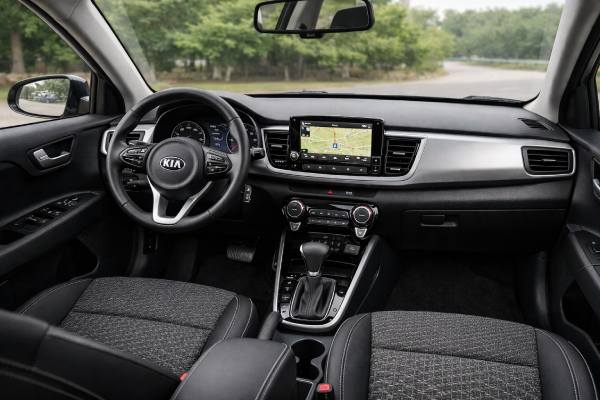
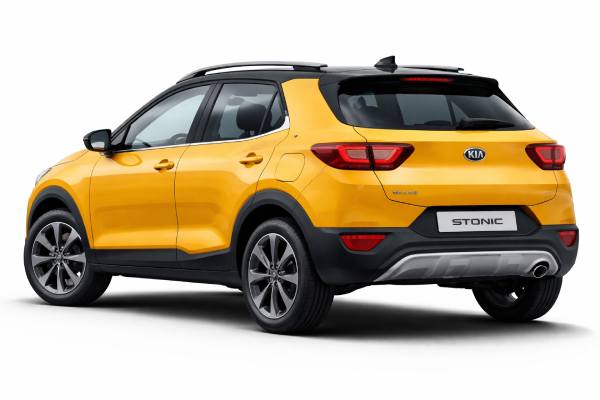
The 2017–2020 Kia Stonic YB with the 84 hp naturally aspirated petrol engine is the simple, low-stress version of Kia’s small crossover. In official Kia Europe material, this engine is listed as a 1.25-litre, 1,248 cc MPI four-cylinder with 84 PS, even though many databases round it to 1.2 litres. That matters, because this version appeals for its straightforward hardware: front-wheel drive, a five-speed manual, and no turbocharger or dual-clutch gearbox to complicate ownership. The Stonic itself sits closer to a raised supermini than a traditional SUV, which helps it feel tidy in town and easy to place on narrow roads. Kia also gave it generous standard connectivity and, in better trims, useful active-safety tech. Its weak point is not complexity but headroom for heavy loads, motorway pace, or buyers expecting the cabin and boot space of larger B-segment SUV rivals.
Owner Snapshot
- Simple non-turbo petrol setup makes it one of the easier Stonic variants to own long term.
- Light weight and compact dimensions suit city driving, tight parking, and lower tyre and brake costs.
- Standard smartphone connectivity and Kia’s long factory warranty were strong selling points when new.
- Do not buy one without checking recall status, annual service history, and clutch feel on a long test drive.
- Plan routine servicing every 15,000 km or 12 months in km-based markets, or 10,000 miles or 12 months in UK guidance.
Navigate this guide
- Kia Stonic YB overview
- Kia Stonic YB specs
- Kia Stonic YB trims and safety
- Reliability, issues and recalls
- Maintenance and buying advice
- On-road performance
- Stonic versus rivals
Kia Stonic YB overview
Kia launched the Stonic as a five-door, five-seat compact crossover for Europe, built with front-wheel drive and a choice of small petrol and diesel engines. The base petrol version is the simplest of the lot: Kia’s official launch data lists it as a 1.25-litre MPI four-cylinder with 84 PS, 122 Nm, and a five-speed manual transmission. That official description is worth noting because some catalogues call it a 1.2 or attach a different engine-family label, but the public Kia Europe technical release identifies the exact displacement as 1,248 cc.
In character, this Stonic is more “lifted Rio” than “mini Sportage.” Kia’s own press material leaned into that idea by stressing agile handling, straight-line stability, and a sporty feel rather than rugged off-road ability. The platform is steel-bodied, front-driven, and compact, with a 2,580 mm wheelbase and a relatively low overall height. That gives the car an easier, more car-like driving position and cleaner responses than many chunkier-looking small SUVs. It also explains why the Stonic still feels modern as a used buy: it is easy to see out of, easy to judge in traffic, and not oversized for city use.
Packaging is decent rather than class-leading. Kia quoted 352 litres of luggage space in VDA form, expanding to 1,155 litres with the rear seat folded. Front and rear legroom figures were generous on paper for the class, but the boot remained one of the Stonic’s more obvious compromises against roomier rivals. That makes this version a better fit for singles, couples, or small households than for buyers who regularly carry bulky baby gear or large holiday loads.
Why choose this 84 hp version instead of the turbo 1.0? Mostly because it trades performance for simplicity. There is no turbocharger, no direct injection, and no dual-clutch gearbox. For many used-car buyers, especially those keeping a Stonic beyond warranty, that makes the 1.25 MPI version the conservative pick. The flip side is that it is the slowest Stonic sold in Europe, so expectations need to stay realistic. Around town it is sufficient; on faster roads it asks for more revs, more gear changes, and more patience than the turbo car.
Kia Stonic YB specs
The table below focuses on the exact 84 hp front-wheel-drive petrol model as published in Kia’s Europe launch data and market price and spec sheets. Where Kia’s open public documents do not consistently publish a service fill quantity for this exact engine in the Stonic, it is better to treat the detail as VIN-specific rather than guess.
Powertrain and efficiency
| Item | Kia Stonic YB 84 hp |
|---|---|
| Engine | 1.25-litre MPI petrol |
| Code | Public Kia Europe launch data names the engine by displacement rather than a public engine code |
| Engine layout and cylinders | Inline-4, naturally aspirated |
| Displacement | 1.248 L (1,248 cc) |
| Valvetrain | 16 valves, 4 valves per cylinder |
| Bore × stroke | 71.0 × 78.8 mm |
| Compression ratio | 10.5:1 |
| Fuel system | Multi-point injection |
| Max power | 84 PS / about 83 hp / 62 kW at 6,000 rpm |
| Max torque | 122 Nm (90 lb-ft) at 4,000 rpm |
| Timing drive | Verify by VIN and engine-family documentation before parts ordering |
| Rated combined efficiency | 5.2 L/100 km |
| Urban / extra-urban | 6.4 / 4.6 L/100 km |
| CO2 combined | 118 g/km |
| Real-world highway at 120 km/h | Usually higher than the official figure because the engine works hard at motorway pace |
Transmission and driveline
| Item | Kia Stonic YB 84 hp |
|---|---|
| Transmission | 5-speed manual |
| Drive type | FWD |
| Differential | Open |
Chassis and dimensions
| Item | Kia Stonic YB 84 hp |
|---|---|
| Front suspension | MacPherson struts |
| Rear suspension | Coupled torsion beam axle |
| Steering | Electric rack-and-pinion |
| Steering ratio | 14.1:1 |
| Brakes | 280 mm front ventilated disc / 262 mm rear solid disc |
| Wheels and tyres | 185/65 R15 |
| Ground clearance | 165 mm |
| Length | 4,140 mm |
| Width | 1,760 mm |
| Height | 1,500 mm without rails / about 1,520 mm with rails |
| Wheelbase | 2,580 mm |
| Turning circle | 10.4 m |
| Kerb weight | 1,145 kg |
| GVWR | 1,600 kg |
| Fuel tank | 45 L |
| Cargo volume | 352 L seats up / 1,155 L seats folded, VDA |
Performance and capability
| Item | Kia Stonic YB 84 hp |
|---|---|
| 0–100 km/h | 13.2 s |
| Top speed | 165 km/h |
| Towing, braked / unbraked | 910 kg / 450 kg |
Fluids and service capacities
| Item | Guidance |
|---|---|
| Engine oil | Use the exact Kia-approved viscosity and specification for the VIN and market |
| Coolant | Verify by VIN before service |
| Transmission fluid | Verify by VIN before service |
| A/C refrigerant and compressor oil | Verify by VIN before service |
| Key torque specs | Confirm in the workshop manual before repair |
The main takeaway is that this is a light, basic, naturally aspirated small crossover. The numbers confirm the ownership case: modest performance, sensible tyre sizes, useful but not class-leading cargo room, and low mechanical complexity.
Kia Stonic YB trims and safety
Early-market Stonic trim structures varied by country, but the broad pattern was clear. In Ireland, the 1.25 petrol sat at the bottom of the range as the K1 model. Even that entry trim included idle stop-start, Bluetooth, a 7-inch screen, cruise control with speed limiter, privacy glass, a leather-trimmed gear knob, and 15-inch alloys. Higher K2 and K3 grades moved to the more powerful 1.4 petrol or 1.6 diesel, while upper trims added more driver assistance, camera tech, lighting upgrades, and cosmetic extras. In simple terms, the 84 hp car was the value version, not the luxury or performance version.
That matters in the used market because badges and wheel size tell you a lot. A 15-inch wheel car with the 1.25 MPI is usually the easier, cheaper Stonic to maintain. Once you move into higher trims you often gain more equipment, but you also increase the chance of extra sensors, more expensive wheel-and-tyre packages, and turbo or diesel running costs. If your priority is low ownership stress, the entry powertrain with honest, smaller wheels is often the sweet spot. If your priority is features, a better-equipped trim is the point where the Stonic starts to feel more complete.
Safety is more nuanced than many classifieds suggest. Euro NCAP gave the Stonic 85% for adult occupant protection, 84% for child occupant protection, 62% for vulnerable road user protection, and 25% for safety assist in its 2017 standard-equipment assessment. On that standard kit, the car carried a three-star rating, because autonomous emergency braking and lane support were part of an optional safety pack rather than included in the standard score. Kia also highlighted that Stonics equipped with the Advanced Driving Assistance Pack achieved a five-star Euro NCAP result. So both claims you will see in listings can be true, depending on equipment.
Basic structural safety was sound. Kia stated that the bodyshell used a high proportion of advanced high-strength steel and that six airbags plus rear ISOFIX anchor points were standard. Standard seatbelt reminders for front and rear seats were also part of the safety picture. For family buyers, that means even the simple 1.25 MPI version is not stripped to the point of feeling unsafe. The real difference between trims is active safety: buyer-assist technology was far better on well-equipped cars than on basic ones. For any used example, check the build sheet rather than assuming that a Stonic automatically has AEB, lane support, or blind-spot monitoring.
Reliability, issues and recalls
The strongest case for the 84 hp Stonic is that there is no broad, model-defining public pattern tied specifically to the 1.25 MPI petrol. This version avoids the turbocharged 1.0’s extra hardware and the diesel’s emissions and vacuum-pump complications. That does not make it fault-free, but it does make it easier to recommend as the cautious used buy in the range. Owner and review data generally point to decent rather than exceptional reliability, with electrical warning lights and minor faults appearing more often than catastrophic engine trouble.
For the petrol 1.25, the most likely real-world issues are the ordinary ones. Expect age-related 12 V battery weakness on low-mileage or short-trip cars, brake corrosion on lightly used examples, worn front consumables, and occasional trim rattles or infotainment annoyances rather than major engine drama. Because this engine is a simple port-injected unit, it also sidesteps one common direct-injection headache: intake-valve carbon build-up tends to be less of a talking point here than on some DI rivals. That helps the long-term ownership picture, especially for city drivers who want a small crossover without extra complexity.
The main recall headline visible in public UK and Irish recall databases is not a core 1.25 MPI petrol problem. It concerns certain later Stonic builds where a mesh filter inside the tandem pump could block, leading to interrupted oil supply and reduced brake vacuum assistance. Public recall reporting describes the remedy as removing the metal screen and checking the tandem pump. That recall affects vehicles built between late 2018 and late 2020, but it is associated with the affected pump system rather than the simple 1.25 MPI petrol as such. For a buyer of this exact petrol model, the lesson is still important: do not rely on assumptions. Run the VIN through Kia or your local official recall checker and ask for dealer proof of completed campaigns.
On inspection, focus on symptoms rather than forum folklore. A healthy 1.25 MPI should idle cleanly, pull evenly, and not show a persistent warning light. On the road, listen for wheel-bearing hum, check for clutch slip or a high bite point, inspect the rear brakes for corrosion, and make sure every electrical item works. Also verify that the car has had routine annual servicing, because a simple engine stays simple only if oil changes actually happened on time.
Maintenance and buying advice
For this Stonic, the sensible maintenance mindset is simple, regular, and documented. Kia’s public interval sheets give you the backbone: petrol Stonics in km-based guidance are scheduled at 15,000 km or 12 months, while Kia UK lists petrol Stonics at 10,000 miles or 12 months. Either way, annual servicing is the safe rule for most owners, and it matters more on the used market than chasing the lowest possible running cost.
A practical schedule looks like this:
- Engine oil and filter: every 12 months, or at the market-specific distance limit. Use the correct Kia-approved oil spec, and check the level between services.
- Cabin filter: yearly is sensible. Dirty filters quickly affect demisting and HVAC performance.
- Engine air filter: inspect at each annual service and replace sooner in dusty use.
- Brake fluid: inspect annually and replace every 48 months unless official VIN-specific documentation states otherwise.
- Coolant: Kia guidance commonly uses a long first interval, then shorter repeat intervals afterward; verify the exact fill and timing by VIN before a full coolant service.
- Drive belts and hoses: inspect from year six onward, and sooner if there is noise, cracking, or contamination.
- Manual transmission oil: many manuals describe it as long-life under normal use, but on older used cars a preventive fluid change is still sensible.
- Tyres, brakes, and battery: inspect at every service; rotate tyres based on wear pattern and test the battery before winter.
For buyers, the checklist is straightforward. Ask for stamped or itemised annual services, proof of recall completion, and evidence of recent tyres or brakes if mileage suggests they should have been done. On inspection, look for uneven front tyre wear, stone-chipped front-end paint, corroded rear brake hardware, weak battery cranking, clutch judder, and cheap replacement tyres that can make the car noisier and less settled. Inside, confirm that the touchscreen, Bluetooth, camera if fitted, steering-wheel buttons, air-conditioning, and every warning lamp behave properly.
The best versions to seek are tidy, unmodified 1.25 MPI cars with full history and modest wheel sizes. They are not the most exciting Stonics, but they are often the least risky. Avoid neglected examples with patchy service records, warning lights, or obvious budget repairs, because the whole point of this engine is dependable simplicity. Long term, that is exactly where the 84 hp Stonic makes sense.
On-road performance
On the road, the 84 hp Stonic feels lighter and more car-like than many small SUVs, but it is not especially quick. Kia’s official figures put it at 13.2 seconds from 0–100 km/h and 165 km/h flat out, which tells you most of what you need to know: it is adequate for everyday use, but not a strong overtaking car when loaded or climbing. The five-speed manual helps keep costs down, yet it also means wider spacing than the turbo six-speed cars, so you work the gearbox more often.
The good news is that the chassis suits the engine’s brief. Kia developed the Stonic for European roads and highlighted its straight-line stability, direct responses, and specific suspension tuning. Review sources broadly agree on the shape of the experience: the Stonic is tidy and easy to drive, with controlled body movements, but the ride is firmer than some rivals and the gearchange is not the slickest in class. That makes it pleasant in town and on back roads, though less relaxed over broken surfaces than the softest competitors.
Fuel use is one of the 1.25’s better points if you drive within its comfort zone. Official combined consumption is 5.2 L/100 km, equal to about 45.2 mpg US or 54.3 mpg UK. In mixed real use, many owners land closer to the mid-5 to low-7 L/100 km range depending on traffic, weather, speed, and load. That result makes sense: the engine can be economical, but only if you avoid asking it to do turbo-car work.
NVH is acceptable, not exceptional. Because this engine needs revs, motorway overtakes and steep grades bring more noise into the cabin than in the 1.0 T-GDi. The payoff is predictable throttle response and none of the small-turbo hesitation some drivers dislike. Around town, that straightforward response makes the car easy to meter in traffic. On rural roads, the Stonic’s lower-slung stance relative to taller rivals also helps it feel secure and less top-heavy than its styling suggests.
For towing or heavy-load work, the numbers say enough: 910 kg braked is modest, and the 122 Nm engine is not the Stonic to choose for frequent trailer duty. Keep it light, use good tyres, and treat it like a compact crossover rather than a mini-SUV with surplus torque. That is when the 84 hp Stonic feels honest and well matched.
Stonic versus rivals
Against core B-segment SUV rivals, the Stonic 1.25 MPI wins on simplicity and warranty appeal more than outright space or performance. It sits lower than many competitors, which is part of its charm. That lower, more hatchback-like stance helps the Stonic feel direct and easy to place, but it also signals the trade-off: this is one of the more car-like entries in the class, not one of the roomiest.
The biggest compromise is cargo space. With 352 litres, the Stonic trails several key rivals, including roomier versions of the Peugeot 2008, Skoda Kamiq, and Renault Captur. So if boot volume or rear-seat flexibility is your priority, the Stonic is not the class leader. In that sense, it behaves like a Kia Rio with extra ride height and crossover styling, not like a mini family-hauler.
Where it fights back is value and ownership ease. The used-market case for the Stonic is helped by generous equipment, Kia’s long factory warranty, and the fact that the 1.25 MPI avoids the complexity of more powerful turbo options. So the Stonic is not the dynamic benchmark, but it is often the safer-feeling ownership bet for a buyer who wants fewer surprises and more straightforward maintenance.
A simple buying guide by rival looks like this:
- Choose the Stonic 1.25 MPI if you want straightforward petrol ownership, low-risk hardware, compact size, and strong equipment for the money.
- Choose a SEAT Arona or Skoda Kamiq if you need more cabin and boot space and a more polished manual gearbox.
- Choose a Renault Captur or Peugeot 2008 if rear-seat flexibility and luggage room matter more than mechanical simplicity.
- Choose the Stonic 1.0 T-GDi instead only if you regularly drive loaded or on faster roads and are willing to accept more complexity.
That is the verdict in one line: the 84 hp Stonic is rarely the class champion, but it is one of the more rational used choices when you value simplicity over flash.
References
- Kia Motors Ireland Announces Details of the All New Stonic: an eye-catching and confident compact crossover 2018 (Press Release)
- Kia Stonic 2017 (Safety Rating)
- Kia Service Intervals 2023 (Service Intervals)
- Engine Oil Grades and Capacities 2023 (Service Guide)
- KIA STONIC 2019 – vehicle recalls – GOV.UK 2023 (Recall Database)
Disclaimer
This article is for informational purposes only and is not a substitute for professional diagnosis or repair. Specifications, torque values, service intervals, and procedures vary by VIN, market, model year, and equipment, so always verify the final details against the correct Kia service documentation for your exact vehicle.
If this guide helped you, please consider sharing it on Facebook, X, or your preferred social platform to support our work.