
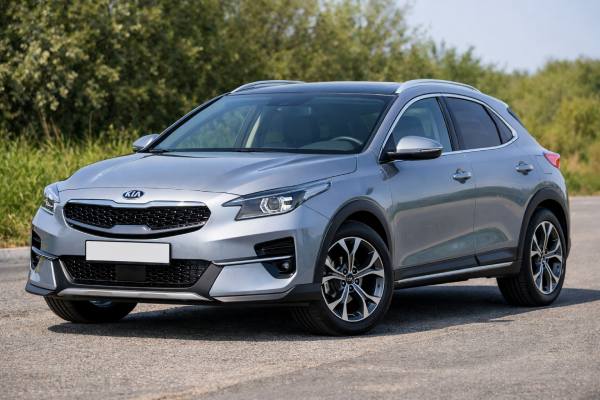
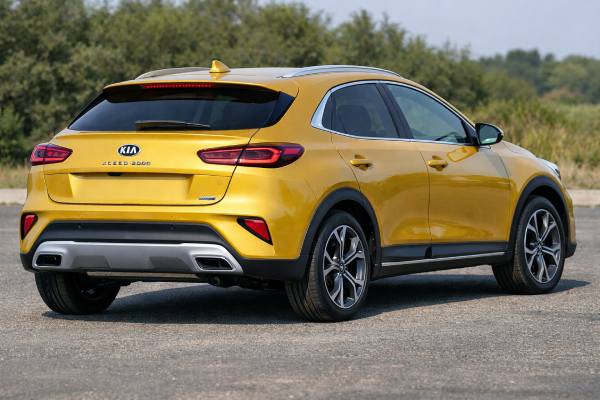
The 2019–2020 Kia XCeed 1.4 T-GDi sits in a useful middle ground between a conventional hatchback and a taller compact crossover. That balance is its main appeal. It keeps the Ceed family’s tidy road manners, but adds extra ride height, easier access, and a more relaxed driving position without becoming heavy or awkward. The 1.4-litre Kappa II turbo petrol is also a good fit for the car. With 140 hp and a broad torque band, it gives the XCeed enough performance to feel modern and flexible, while avoiding the higher cost and sharper character of the 1.6 T-GDi GT version. For owners, the engineering story is sensible: front-wheel drive, a chain-driven direct-injection engine, manual or 7-speed dual-clutch transmission, and a genuinely practical 426-litre boot. The caveat is that the best examples are the ones with correct servicing, the right trim, and careful attention to transmission behavior on DCT cars.
What to Know
- The 1.4 T-GDi gives the XCeed a strong balance of everyday torque, decent pace, and reasonable running costs.
- A 426 L boot, useful rear-seat space, and lighter crossover styling make it more practical than many coupe-styled alternatives.
- Manual cars are the simpler long-term choice, while DCT cars need a careful low-speed test drive.
- The engine is chain-driven, but regular oil service matters because it is a direct-injection turbo petrol.
- A sensible baseline is every 10,000 miles or 12 months for oil service, with shorter intervals under heavy short-trip use.
On this page
- Kia XCeed CD Character
- Kia XCeed CD Specs Matrix
- Kia XCeed CD Trims and Safety Tech
- Reliability Trends and Service Actions
- Maintenance Planning and Buying Advice
- Driving Feel and Real Performance
- XCeed Against Key Rivals
Kia XCeed CD Character
The XCeed was designed to fill a very specific gap. Kia did not want a full SUV in this size class, and it did not want to leave buyers with only the lower, more conventional Ceed hatchback. The result was a raised crossover-hatch that shares much of the Ceed’s engineering but alters the body, seating position, suspension tune, and market focus. That matters because the XCeed is best understood as a road-biased crossover, not a mini off-roader. It is front-wheel drive only in 1.4 T-GDi form, and its best qualities come on normal roads, not on rough tracks.
That focus works well. The body is longer and wider-looking than many small crossovers, and the proportions help it avoid the top-heavy look that affects some rivals. It also stays useful. The 426-litre boot is a real family-car number, and the rear seats fold to give 1,378 litres. Those figures make the XCeed more than a style exercise. It can do school runs, airport trips, and weekly shopping without feeling compromised. The slightly raised ride height also improves visibility and ease of entry, which is a practical gain owners notice every day.
The 1.4 T-GDi engine is central to the car’s appeal. At 140 hp and 242 Nm, it lands in the sweet spot of the original XCeed range. It is notably stronger than the 1.0 T-GDi without carrying the extra cost, insurance, and more aggressive character of the 1.6 T-GDi. In manual form, it is a tidy, well-matched everyday powertrain. In DCT form, it can feel more relaxed in traffic and quicker in mid-range responses, but it also asks buyers to be more careful about clutch behavior and service history.
The chassis setup supports the same middle-ground idea. The XCeed rides higher than the hatchback, but it is still based on a compact family-car platform with front struts and a multi-link rear arrangement. That helps it keep composed handling and stable straight-line manners. It is not as crisp as the lower Ceed hatch, but it is more controlled than many taller crossovers with softer suspension tuning. That is one reason the XCeed has aged well. Even now, it feels like a thoughtful engineering answer rather than a trend-led body style.
Its limitations are easy to understand. This is not an AWD adventure car, not a full SUV, and not the quietest or most plush compact crossover on the market. Rear-seat headroom is fine rather than exceptional, and trim differences can affect both comfort and safety equipment more than some buyers expect. Even so, as a used proposition, the 1.4 T-GDi XCeed makes sense. It gives you a tasteful crossover body, strong everyday usability, and a powertrain that feels appropriately modern without becoming too complex.
Kia XCeed CD Specs Matrix
For the 2019–2020 XCeed 1.4 T-GDi, Europe provides the clearest baseline because this engine and model mix were sold most widely there. Output is commonly listed as 140 PS or 138 bhp in some English-language brochures, but the important figure is 103 kW, with 242 Nm of torque. The 1.4 came with a 6-speed manual or optional 7-speed dual-clutch transmission.
| Item | Kia XCeed 1.4 T-GDi 2019–2020 |
|---|---|
| Engine code | Kappa II T-GDi |
| Engine layout | Inline-4, DOHC, 4 valves per cylinder |
| Cylinders | 4 |
| Displacement | 1.4 L (1,353 cc) |
| Bore × stroke | 71.6 × 84.0 mm (2.82 × 3.31 in) |
| Induction | Turbocharged |
| Fuel system | Direct injection |
| Compression ratio | 10.0:1 |
| Max power | 140 hp (103 kW) @ 6,000 rpm |
| Max torque | 242 Nm (179 lb-ft) @ 1,500–3,200 rpm |
| Timing drive | Chain |
| Rated efficiency | WLTP combined about 6.4–6.9 L/100 km on 16- and 18-inch wheel versions, transmission dependent |
| Real-world highway at 120 km/h | Roughly 5.8–6.8 L/100 km in good condition |
| Item | Transmission and Driveline |
|---|---|
| Transmission | 6-speed manual or 7-speed DCT |
| Drive type | FWD |
| Differential | Open |
| Final drive | Varies by gearbox version |
| Drive modes | Normal drive profile; no AWD terrain modes |
| Item | Chassis and Dimensions |
|---|---|
| Front suspension | MacPherson strut |
| Rear suspension | Multi-link |
| Steering | Electric power steering |
| Steering ratio | Not consistently published in open source sheet; 2.44 turns lock-to-lock shown |
| Brakes | Four-wheel discs; exact rotor sizes vary by trim and market |
| Most common tyre sizes | 205/60 R16 or 235/45 R18 |
| Ground clearance | 172 mm on Concept and Drive, 184 mm on Tech and Emotion style trims |
| Approach / departure angle | 15.9° / 27° |
| Length / width / height | 4,395 / 1,826 / 1,483–1,495 mm |
| Wheelbase | 2,650 mm |
| Turning circle | About 10.6 m kerb-to-kerb |
| Kerb weight | About 1,345–1,511 kg, gearbox and trim dependent |
| GVWR | About 1,840–1,860 kg |
| Fuel tank | 50 L (13.2 US gal / 11.0 UK gal) |
| Cargo volume | 426 / 1,378 L (15.0 / 48.7 ft³), VDA |
| Item | Performance and Capability |
|---|---|
| 0–100 km/h | 9.4 s manual, 9.5 s DCT |
| 80–120 km/h | 9.1 s manual, 6.7 s DCT |
| Top speed | 200 km/h (124 mph) |
| Braking distance | Not consistently published in open official source sheets |
| Towing capacity | 1,410 kg braked / 600 kg unbraked |
| Payload | Verify by VIN plate and trim |
| Item | Fluids and Service Data |
|---|---|
| Engine oil capacity | 4.2 L (4.4 US qt) |
| Recommended oil grade | ACEA C2 |
| Recommended viscosity | 0W-30 in Kia UK oil guide |
| Coolant | Verify by VIN-specific service documentation |
| Transmission fluid | Verify by gearbox type and VIN |
| Differential / transfer case | Not applicable |
| A/C refrigerant | Verify by VIN-specific service data |
| Key torque specs | Use official service documentation before repair work |
| Item | Safety and Driver Assistance |
|---|---|
| Euro NCAP context | Ceed family safety rating applies to the related platform family |
| Euro NCAP rating | 4 stars standard, 5 stars with safety pack context for Ceed family assessment |
| Euro NCAP breakdown | 88% adult, 85% child, 52% vulnerable road users, 68% safety assist |
| IIHS | Not applicable |
| ADAS availability | AEB, lane-keeping assist, lane-following assist, blind-spot warning, rear cross-traffic alert, driver attention alert, trim and market dependent |
The practical reading of these figures is straightforward. The XCeed 1.4 T-GDi is not a heavyweight crossover and does not need huge numbers to feel capable. Its strength is balance: adequate pace, sensible towing ability, low mechanical drama, and packaging that remains useful without the bulk of a larger SUV.
Kia XCeed CD Trims and Safety Tech
Trim structure varied by market, so the smartest way to shop an XCeed is by equipment rather than badge. In some countries the main grades were Concept, Drive, Tech, and Emotion. In others, buyers saw names like ‘2’, ‘3’, GT-Line, and GT-Line S. Underneath those labels, the same logic usually applied: lower trims brought the 16-inch wheel and lower ride height setup, while higher trims added the larger wheels, richer cabin materials, more infotainment, and a broader driver-assistance package.
For the 1.4 T-GDi, that matters because the car feels quite different depending on specification. A 16-inch version on a simpler trim often rides more sweetly and may be the better long-distance choice. An 18-inch Tech, Emotion, or GT-Line type car looks better and usually carries the more desirable safety and comfort features, but it also rides more firmly and can be more expensive to tyre. Neither choice is automatically right or wrong. It depends on whether you value comfort, equipment, or style more highly.
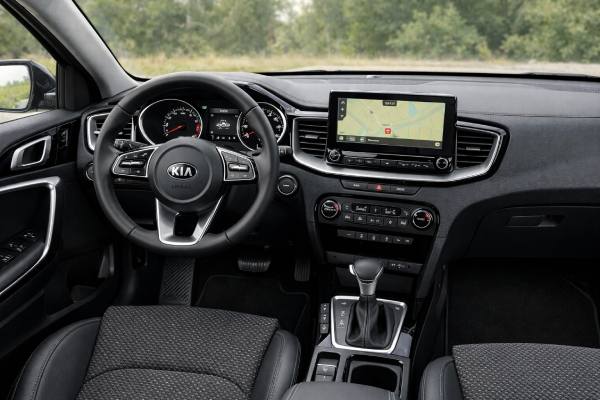
The most useful trim differences sit in technology and daily comfort. Mid- and upper-tier XCeeds often add the larger infotainment screen, navigation, heated seats and steering wheel, upgraded lighting, parking sensors, a reversing camera, and stronger smartphone integration. Those are the features most owners actually use. On the used market, they matter more than decorative trim details or small appearance-package changes.
Safety equipment deserves special attention. The XCeed’s safety case is closely tied to the Ceed family Euro NCAP assessment. In period Kia materials, the Ceed family, including XCeed, was presented with a four-star standard-equipment result and a five-star result when fitted with the optional safety pack. That distinction is important because it means the structure and core crash performance were strong, but the final verdict depended heavily on active safety specification. In plain terms, the safest XCeeds are not only the newest ones. They are the ones with the right equipment confirmed.
The key systems to look for include autonomous emergency braking, lane-keeping assist, lane-following support, blind-spot warning, rear cross-traffic alert, and driver attention warning. Airbags, ESC, ISOFIX, and core passive systems are more consistent across the range, but it is the higher-level ADAS features that separate an acceptable used buy from a truly strong one. If the car has had a windscreen replacement or front-end repair, it is also wise to confirm that any camera-based systems were recalibrated correctly.
For buyers, the sweet spot usually sits in the middle-to-upper trim range rather than at either extreme. An entry-grade XCeed can still be a solid purchase if the price is right and the history is strong, but most people will find that the extra equipment of a better-specified car improves the ownership experience enough to justify the difference. As with many Kia models of this era, the right trim is not just about luxury. It shapes safety, comfort, and resale logic in a very direct way.
Reliability Trends and Service Actions
The XCeed 1.4 T-GDi has a generally sound mechanical layout, but like most modern direct-injection turbo petrol cars, it rewards careful servicing more than casual ownership. The broad picture is encouraging. The engine is chain-driven, the platform is mature, and the car does not carry the weight or complexity of a larger SUV. But that does not make it immune to predictable wear patterns.
The main reliability trends fall into a few groups.
- Common, low to medium cost: rear brake corrosion, uneven pad wear, and noise from lightly used cars. This is typical of many modern front-drive cars that spend most of their lives in urban driving.
- Common, low to medium cost: tyre-related ride and steering complaints caused by poor replacement tyres, damaged sidewalls, or neglected alignment. The XCeed is sensitive enough to tyre quality that a bad set can make the car feel worse than it really is.
- Occasional, medium cost: ignition-related rough running, hesitation, or weak cold idle. Symptoms often point to spark plugs, coils, or air-intake issues before they point to anything dramatic.
- Occasional, medium cost: DCT low-speed shudder or awkward take-up on automatic cars. Symptoms are most obvious in stop-start traffic or hill pullaways. The likely causes are clutch wear, calibration drift, or old fluid strategy assumptions from owners who treat it like a conventional automatic.
- Occasional, medium cost: intake deposit build-up over higher mileage, especially on short-trip cars. This can show up as a less eager engine, rough idle, or poorer economy.
- Rare, higher cost: turbocharger or boost-control issues, usually preceded by whistle, underboost feel, or stored fault codes rather than sudden failure.
The engine itself is not known for a major belt-related maintenance burden, which is helpful. The timing chain is an ownership advantage, though it still depends on good oil. Missed oil changes, incorrect low-quality oil, or long periods of short-trip use are exactly the conditions that shorten the comfortable life of turbocharged direct-injection engines. On this car, service history matters more than mileage alone.
On the chassis side, the XCeed is fairly ordinary, which is a good thing. Bush wear, anti-roll-bar links, and wheel alignment issues are the kinds of items you would expect rather than fear. Steering-rack failures do not stand out as a defining pattern in public discussion, and corrosion risk is generally manageable, though any used example from harsh winter regions still deserves an underside check around brake lines, suspension hardware, and rear subframe coating.
In open official sources reviewed for this article, I did not surface a broad 1.4 T-GDi-specific recall that defines all 2019–2020 XCeeds. That should be read carefully. It does not mean every car is automatically clear. It means VIN-level recall checking remains essential because campaign status depends on exact build and market. Buyers should ask for dealer records, outstanding-campaign proof, and evidence of software updates where relevant. On a modern car with camera-based safety systems and optional DCT, good paperwork is part of reliability.
Maintenance Planning and Buying Advice
A practical maintenance plan for the XCeed 1.4 T-GDi starts with one simple rule: do not stretch the oil service. Kia’s oil guide for the 2019–2020 CD family lists the 1.4 Kappa T-GDi at 4.2 litres, ACEA C2, 0W-30, with a 10,000-mile or 12-month interval. That is the right baseline to anchor ownership. On a turbocharged direct-injection petrol engine, clean oil matters far more than chasing the longest possible interval.
A sensible owner-focused schedule looks like this:
| Item | Practical interval | Notes |
|---|---|---|
| Engine oil and filter | 10,000 miles / 12 months | Shorten for heavy short-trip use |
| Engine air filter | Inspect yearly, replace around 30,000 km | Sooner in dusty use |
| Cabin air filter | Every 2 years or sooner | Replace earlier if airflow drops |
| Spark plugs | Inspect by about 60,000 km, replace by service-book guidance | Earlier if misfire appears |
| Timing chain | No routine fixed replacement | Inspect if noise or timing faults appear |
| Coolant | Check annually; follow VIN-specific schedule | Do not assume across all markets |
| Manual gearbox oil | Inspect for leaks and condition | Replace on condition or hard use |
| DCT service | Verify official schedule; earlier care under severe use is sensible | Test low-speed behavior carefully |
| Brake fluid | Every 24 months | Important even on low-mileage cars |
| Brake pads and rotors | Inspect at every service | Rear corrosion can build quietly |
| Tyre rotation and alignment | Inspect regularly | Alignment check with any odd wear |
| 12 V battery | Start testing after year 4 | Especially on lightly used cars |
| Auxiliary belts and hoses | Inspect annually after year 4 | Replace on condition |
For used buying, the inspection should be practical rather than dramatic. Ask for:
- Full service history with evidence of correct oil.
- VIN-based recall and campaign confirmation.
- Cold start and cold idle check.
- Test drive that includes urban crawling and open road.
- Careful DCT pull-away test, if fitted.
- Scan for stored or pending fault codes.
- Even tyre wear and quality-brand tyres.
- No vibration under acceleration.
- Clean brake feel with no grinding or binding.
- Full operation of infotainment, cameras, and driver aids.
The best versions to seek are usually well-kept mid- or upper-spec 1.4 T-GDi cars with either the manual gearbox or a demonstrably smooth DCT. Avoid cars with patchy oil history, multiple cheap tyres, unexplained warning-light stories, or obvious evidence of delayed maintenance stacking up all at once. This is especially true on cars that look attractive because of price and trim but have vague records.
Long-term durability outlook is good enough to recommend, with conditions. The XCeed 1.4 is not unusually fragile. It is simply a modern turbo petrol crossover-hatch that wants regular servicing, sensible tyres, and honest buying discipline. Buy the paperwork as much as the car itself.
Driving Feel and Real Performance
The XCeed’s road manners are one of its strongest reasons to exist. It drives more like a well-sorted hatchback than a mini SUV, and that makes it easier to enjoy and easier to trust. The raised body does not ruin the car’s balance. Instead, the XCeed trades a little of the regular Ceed’s crispness for a more relaxed ride height and better outward visibility. That is a sensible bargain.
The 1.4 T-GDi powertrain suits the car well. The engine’s 242 Nm plateau arrives early, so normal driving feels flexible rather than rev-hungry. In manual form, the car is easy to keep in the useful mid-range, and the throttle response is clean enough that it rarely feels strained. In DCT form, the XCeed can feel quicker in rolling acceleration, which helps explain the stronger 80–120 km/h time. The trade-off is the usual dual-clutch question at low speeds: it can be smooth, but only when the system is healthy and not being masked by a short test drive.
Ride quality depends a lot on wheels and trim. The 16-inch cars are usually the comfort choice. They absorb broken surfaces more naturally and suit long-distance everyday use very well. The 18-inch cars look sharper and can feel a little more tied down in initial turn-in, but they also bring a firmer edge over expansion joints and rough urban patches. Neither setup is bad. The smaller wheel is simply the more forgiving one.
Straight-line stability is good, and the XCeed feels planted on motorways in a way some taller compact crossovers do not. Steering feel is light to moderate rather than especially rich, but it is accurate enough to make the car easy to place. Cabin noise is acceptable for the class. Wind and tyre noise are not absent, but they are well managed enough that the XCeed still works as a long-trip car rather than only as an urban commuter.
Real-world fuel economy is usually slightly worse than the headline WLTP combined figures, but still reasonable. In mixed use, owners can expect roughly 6.5–7.5 L/100 km depending on route, gearbox, and tyres. A steady 120 km/h cruise often lands in the high-5 to mid-6 L/100 km range in good conditions. Short cold-weather trips, heavy traffic, and 18-inch wheels can push the number higher. None of that is unusual. It simply reflects the reality of a small turbo petrol crossover doing normal work.
As a complete road car, the XCeed 1.4 T-GDi feels thoughtful rather than flashy. It is not trying to be a hot hatch, and it is not trying to impersonate a serious SUV. It succeeds because it knows exactly what it is: a comfortable, slightly raised compact family car with enough engine, enough practicality, and a pleasantly grown-up chassis.
XCeed Against Key Rivals
The XCeed’s closest rivals are not always traditional SUVs. In many ways, it competes with raised hatchbacks and crossover-flavored compact cars more than with boxier small SUVs. That actually helps explain its appeal.
Against the Ford Focus Active, the XCeed feels more design-led and a little more upmarket in cabin impression, while the Ford answers with a slightly more playful chassis. If you value steering precision first, the Ford is hard to ignore. If you want the more polished-looking interior and broader crossover appeal, the Kia has the edge.
Against the Mazda CX-30, the XCeed gives away some perceived interior richness and premium feel, but usually counters with a better value proposition and more straightforward practicality. The Mazda feels more expensive; the Kia often feels more rational. The XCeed’s boot and Ceed-based packaging also make it easier to justify as a family car.
Against the Skoda Kamiq, the comparison is about priorities. The Kamiq is upright, spacious, and very easy to live with. The XCeed is lower, sleeker, and more hatchback-like to drive. Buyers who want the most SUV-style practicality may prefer the Skoda. Buyers who want a crossover that still behaves like a road car may prefer the Kia.
That last point defines the XCeed best. It is not the most rugged option, not the most premium one, and not the roomiest in every dimension. What it does offer is a very coherent compromise: hatchback manners, crossover access, strong everyday practicality, and a powertrain that suits the body well. For many drivers, that is enough to make it more appealing than rivals that are stronger in one area but less balanced overall.
References
- Especificaciones técnicas Kia XCeed 2019 (Technical Data)
- Official Kia Cee’d 2019 safety rating 2019 (Safety Rating)
- Engine Oil Grades and Capacities 2023 (Service Guide)
- Car Safety Recalls | What They Are & What To Do | Kia UK 2026 (Recall Guidance)
Disclaimer
This article is for informational purposes only and is not a substitute for professional diagnosis or repair. Specifications, torque values, intervals, procedures, and equipment vary by VIN, market, trim, and gearbox, so always verify critical details against official service documentation and dealer records before maintenance or repair work.
If this guide helped you, please consider sharing it on Facebook, X, or another platform to support our work.