
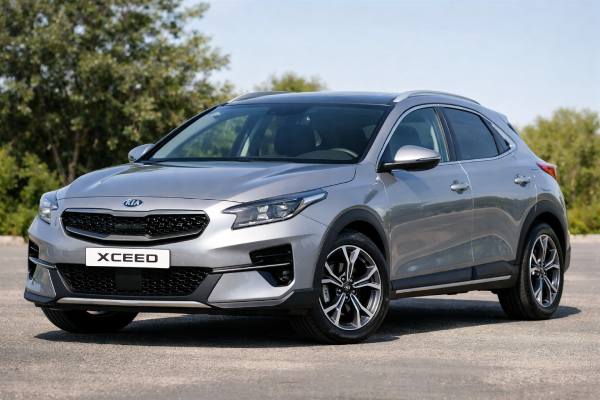
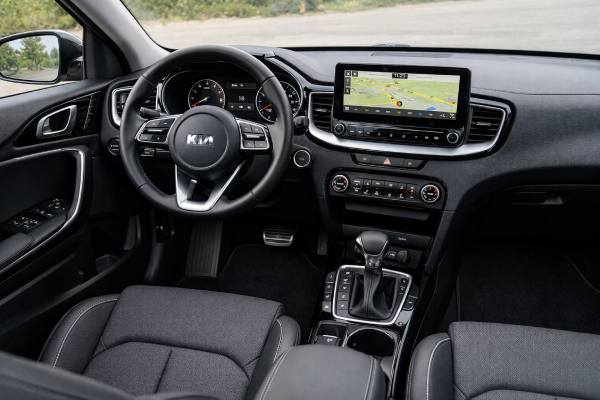
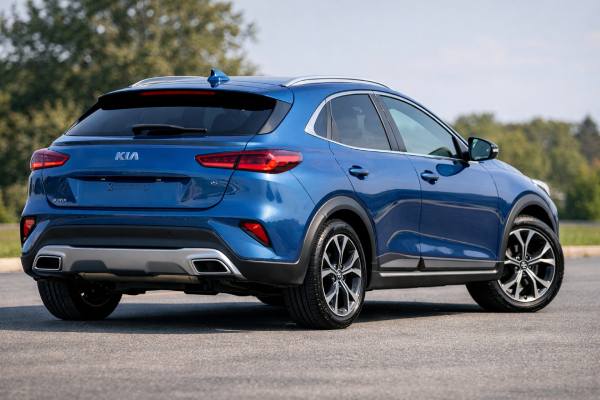
The 2021–2022 Kia XCeed 1.5 T-GDi 160 is one of the most interesting versions of the early XCeed range because it fixes the one weakness some buyers found in the smaller petrol models: effortless mid-range performance. It keeps the XCeed’s core appeal intact, with a slightly raised driving position, smart packaging, and more car-like road manners than many compact crossovers, but adds a stronger 1.5-liter turbocharged petrol engine that feels better matched to the chassis. This is also the point where the XCeed became more modern under the skin, because the 1.5 replaced the older 1.4 T-GDi in many markets and, depending on region, could be paired with mild-hybrid support, an intelligent manual gearbox, or a dual-clutch automatic. For owners, that makes it both more desirable and more maintenance-sensitive. Done right, it is one of the most rounded petrol XCeeds. Done badly, it becomes a modern direct-injection turbo car with the usual service-history risks.
At a Glance
- The 1.5 T-GDi gives the XCeed the torque and pace the body style always deserved.
- Multi-link rear suspension and hydraulic rebound control help it ride and corner more like a good hatchback than a soft SUV.
- Boot space is a useful 426 L, so it stays practical without growing awkward in town.
- Direct injection, turbocharging, and some market-specific mild-hybrid hardware make oil quality and service timing more important than on the older 1.4.
- A sensible oil-service interval is every 10,000 miles or 12 months, whichever comes first.
Contents and shortcuts
- Kia XCeed CD Turbo Character
- Kia XCeed CD Technical Figures
- Kia XCeed CD Grades and Safety Tech
- Known Faults and Official Fixes
- Service Schedule and Used-Buy Tips
- On-Road Manners and Fuel Use
- How This XCeed Stacks Up
Kia XCeed CD Turbo Character
The 2021–2022 XCeed 1.5 T-GDi sits in a very useful sweet spot in the range. It is quicker and more flexible than the smaller 1.0-liter petrol, lighter and cheaper to run than the 1.6 T-GDi GT-oriented version, and easier to justify for mixed family use than a diesel if your mileage is moderate. That is why it tends to be the version many used buyers look for once they understand the XCeed lineup.
The engineering story matters here. This 1.5-liter Smartstream turbo petrol replaced the earlier 1.4 T-GDi in the Ceed family and brought more torque, more power, and a broader spread of useful performance. Official output sits at 160 PS, or about 158 bhp in UK literature, with 253 Nm of torque. In practice, that gives the XCeed a much stronger middle of the rev range than the basic petrol models. It does not turn the car into a hot hatch, but it stops it from feeling like a lifted family hatchback that is always working too hard.
That stronger engine fits the XCeed’s chassis well because the car itself is more resolved than many buyers expect. Although it looks like a compact crossover, the XCeed remains closely tied to the Ceed hatchback underneath. The wheelbase is unchanged at 2,650 mm, the body stays relatively low by SUV standards, and the rear suspension is a proper multi-link setup rather than a simpler torsion-beam arrangement. Kia also gave the XCeed dedicated tuning with front hydraulic rebound stoppers and softer spring rates to improve ride quality without letting body control go loose.
The result is a car that feels more mature than many style-led crossovers. The raised seating position is noticeable, but the center of gravity is still low enough to keep the car composed on faster roads. It is easier to get in and out of than a regular hatchback, yet it does not drive like a tall SUV.
There is one market-specific complication worth knowing. In some countries, the 1.5 T-GDi appeared as a plain ISG petrol with a six-speed manual. In others, Kia added 48V mild-hybrid support with an intelligent manual transmission or a seven-speed dual-clutch automatic. So when shopping the used market, treat “1.5 T-GDi 160” as the engine family and then verify the exact gearbox and electrical setup by VIN and build sheet.
As an ownership proposition, the 1.5 T-GDi is attractive because it offers the most natural all-round petrol balance in the early XCeed range. Its only catch is that it is modern enough to punish vague servicing. That is the real dividing line between a good one and a costly one.
Kia XCeed CD Technical Figures
The 2021–2022 XCeed 1.5 T-GDi shares most of its core engineering across markets, but exact trim, wheel, and transmission combinations vary by country. The figures below reflect the 160 PS family and note where manual, DCT, or mild-hybrid variations change the details.
| Powertrain and efficiency | Kia XCeed CD 1.5 T-GDi 160 |
|---|---|
| Code | Smartstream G1.5 T-GDi |
| Engine layout and cylinders | Inline-4, DOHC, 4 valves per cylinder, dual CVVT, 71.6 × 92.0 mm (2.82 × 3.62 in) |
| Displacement | 1.5 L (1,482 cc) |
| Induction | Turbocharged |
| Fuel system | Direct injection |
| Compression ratio | 10.5:1 |
| Max power | 160 PS (117.7 kW) @ 5,500 rpm |
| Max torque | 253 Nm (187 lb-ft) @ 1,500–3,500 rpm |
| Timing drive | Chain |
| Rated efficiency | About 6.1–6.3 L/100 km combined in common 2021–2022 WLTP figures |
| Real-world highway @ 120 km/h | Usually about 6.7–7.4 L/100 km |
| Transmission and driveline | Kia XCeed CD 1.5 T-GDi 160 |
|---|---|
| Transmission | 6-speed manual; market-dependent 7-speed DCT and 48V iMT/MHEV variants in some regions |
| Transmission code | Not clearly published in open owner-facing Kia sources |
| Drive type | FWD |
| Differential | Open |
| Chassis and dimensions | Kia XCeed CD 1.5 T-GDi 160 |
|---|---|
| Suspension (front/rear) | MacPherson strut with hydraulic rebound stoppers / multi-link rear |
| Steering | Electric rack-and-pinion; 2.44 turns lock-to-lock |
| Brakes | Front discs, 305 × 25 mm or 320 × 28 mm depending on trim; rear discs 272 × 10 mm or 284 × 10 mm with EPB |
| Wheels/Tyres | 205/60 R16 or 235/45 R18 |
| Ground clearance | 172 mm (6.8 in) on 16-inch wheels; 184 mm (7.2 in) on 18-inch wheels |
| Length / Width / Height | 4,395 / 1,826 / 1,483–1,495 mm (173.0 / 71.9 / 58.4–58.9 in) |
| Wheelbase | 2,650 mm (104.3 in) |
| Turning circle (kerb-to-kerb) | 10.4 m (34.1 ft) |
| Kerb weight | About 1,370–1,446 kg (3,020–3,188 lb) in common UK-spec figures |
| GVWR | About 1,840–1,870 kg (4,057–4,123 lb) |
| Fuel tank | 50 L (13.2 US gal / 11.0 UK gal) |
| Cargo volume | 426 / 1,378 L (15.0 / 48.7 ft³), VDA |
| Performance and capability | Kia XCeed CD 1.5 T-GDi 160 |
|---|---|
| 0–100 km/h | 9.0 s manual, about 9.2 s DCT |
| Top speed | About 208 km/h (129 mph) |
| Braking distance | About 35 m from 100 km/h is typical in instrumented magazine testing, but Kia does not publish a single official open figure |
| Towing capacity | Up to 1,410 kg braked / 600 kg unbraked (3,108 / 1,323 lb) in UK-spec data |
| Payload | Roughly 470–500 kg (1,036–1,102 lb), trim dependent |
| Fluids and service capacities | Kia XCeed CD 1.5 T-GDi 160 |
|---|---|
| Engine oil | ACEA C2 / API SN Plus 0W-20 in current Kia UK guidance; 4.2 L (4.4 US qt) |
| Coolant | Phosphate-based ethylene glycol coolant; VIN-specific fill volume should be confirmed from workshop data |
| Transmission/ATF | Manual and DCT fluids are gearbox-specific; verify by VIN and gearbox type |
| Differential / Transfer case | Not applicable |
| A/C refrigerant | Verify from under-bonnet label |
| A/C compressor oil | Verify from workshop data |
| Key torque specs | Public owner-facing sources are limited; confirm wheel, brake, and suspension fastener torques from model-specific service documentation |
| Safety and driver assistance | Kia XCeed / Ceed family |
|---|---|
| Crash ratings | Euro NCAP standard-equipment baseline: 4 stars; Adult 88%, Child 85%, VRU 52%, Safety Assist 68% |
| Safety-pack result | 5 stars when fitted with the fuller optional safety package |
| IIHS / headlight rating | Not applicable |
| ADAS suite | FCA, LKA, DAW, HBA common; SCC, LFA, BCW, RCCW, and speed-limit assistance depend on trim and market |
The big practical point is that the XCeed 1.5 T-GDi is not only quicker than the smaller petrol versions. It is also usefully spacious, properly tow-capable for the class, and more substantial in its chassis design than many similarly styled crossovers.
Kia XCeed CD Grades and Safety Tech
Trim structure matters a lot on the 2021–2022 XCeed because the engine stayed consistent while the equipment ladder changed by market. In the UK, the 1.5 T-GDi commonly appeared in trims such as ‘2’, ‘3’, ‘GT-Line’, and ‘GT-Line S’. In other European markets, the same engine could be offered with different naming, different safety packages, and different gearbox pairings. So if you are buying used, the engine is only half the story.
As a rule, the best-value XCeeds are usually not the most basic and not the most style-heavy. Entry and mid trims tend to make the most sense because they often keep the 16-inch wheels, which suit the ride best, while still bringing useful cabin and safety equipment. Better-equipped cars add genuinely worthwhile features, but they can also bring 18-inch wheels that sharpen the look more than they improve the car.
A simplified trim pattern looks like this:
- ‘2’ or equivalent: 16-inch alloys, rear parking sensors, reversing camera, lane keeping assist, cruise control, 8-inch touchscreen, cloth trim, and the core safety package.
- ‘3’ or equivalent: adds larger infotainment, more convenience features, more cabin trim detail, and often the broader driver-assistance spread.
- GT-Line: sportier appearance, 18-inch wheels, more aggressive exterior detailing, richer seat trim, and a visual identity closer to the hotter Ceed family models.
- GT-Line S or top trim: panoramic roof, better audio, larger cluster, blind-spot warning, extra parking assistance, and the most complete convenience package.
This matters because the XCeed’s safety story depends on equipment. The underlying Ceed-family crash structure is sound, but the published Euro NCAP result distinguishes clearly between standard-equipment and safety-pack cars. In real buying terms, that means you should not treat every XCeed as equally equipped just because they share the same shell.
The more useful active systems offered across the range include:
- Forward Collision-Avoidance Assist,
- Lane Keeping Assist,
- Driver Attention Warning,
- High Beam Assist,
- cruise control,
- reversing camera and rear parking sensors,
- and, on better trims, Blind-Spot Collision Warning, Rear Cross-Traffic Collision Warning, Lane Following Assist, and Smart Cruise Control.
On the 1.5 T-GDi, those higher-level systems are especially worth having because this is the engine most likely to be used for regular motorway and mixed-distance driving. Blind-spot support, better cruise control logic, and lane-centering assistance add real daily value here.
There is also a practical service angle to the safety tech. Any car with camera- or radar-based assistance needs careful calibration after windscreen replacement or front-end repair. So on a used XCeed, ask direct questions:
- Has the windscreen ever been replaced?
- Was ADAS calibration carried out afterward?
- Has the front bumper or radar area had paint or repair work?
These are better questions than asking only whether the car has “full options.” For most buyers, the sweet spot is a mid- or upper-mid XCeed 1.5 on 16-inch wheels with the broader ADAS set, heated features, and a clear service record. That gives you the best mix of comfort, safety, and long-term value.
Known Faults and Official Fixes
The 1.5 T-GDi XCeed is not a model with a single defining mechanical flaw, but it is a modern direct-injection turbo petrol and should be judged accordingly. Its reliability outlook is good when maintained properly, yet the usual weaknesses of this type of engine still apply. The most important thing to understand is that neglected service history matters more here than on the older naturally aspirated Kia petrols.
The risk map looks like this.
Common, low- to medium-cost issues
- Weak 12 V battery and stop-start complaints: This often shows up first as inconsistent idle stop-start behavior, sluggish restarting, or nuisance warning messages.
- Ignition-related misfire: Worn plugs or a weak coil can cause hesitation under load, rough idle, or a flashing engine light.
- Brake corrosion and rear brake drag: Lightly used cars can build rear-disc corrosion surprisingly quickly.
Occasional, medium-cost issues
- Carbon build-up on intake valves: Because this engine uses direct injection, fuel does not wash the backs of the intake valves. Cars used for many short runs can become more vulnerable as mileage rises.
- Boost or charge-air leaks: Split hoses, clamp issues, or sensor faults can produce underboost symptoms, hesitation, or limp-home behavior.
- DCT drivability complaints: On cars fitted with the seven-speed dual-clutch box, repeated crawling traffic, poor clutch adaptation, or rough low-speed use can bring shudder or awkward engagement.
Less common but worth watching
- Timing-chain noise or correlation faults: This is not a routine replacement engine in owner literature, but chain systems still depend on clean oil and correct change intervals.
- GPF or sensor-related emissions warnings: Petrol particulate filters do not behave like diesel DPFs, but repeated short-trip use and sensor faults can still trigger warnings.
- Cooling-system seepage: Small leaks around hose joints or housings should be caught early before they become overheating events.
The most important insight is that this engine usually gives warning before expensive failure. Rough running, underboost, odd idle quality, or rising fuel use should not be ignored. A well-maintained 1.5 T-GDi generally stays convincing; a neglected one often starts asking for several medium-cost repairs at once.
Software and calibration matter too. Kia’s owner-facing sources do not point to one broad public reflash campaign that defines this engine, but infotainment, ADAS, and gearbox adaptation updates can still matter on individual cars. That is why a dealer-history printout is more useful than a seller simply saying “it was serviced.”
For recalls and service actions, use a VIN-first method. Public recall pages and government portals vary by country, and the XCeed’s fitted equipment changes by market. Before buying, ask for:
- full service history,
- proof of recall or campaign completion,
- evidence of correct oil grade use,
- and, on DCT or ADAS-equipped cars, repair invoices rather than just stamps.
The 1.5 T-GDi is not fragile by design. But it is the kind of engine that rewards precise maintenance and exposes vague ownership faster than a simpler older petrol Kia would.
Service Schedule and Used-Buy Tips
The XCeed 1.5 T-GDi should be maintained like a modern turbo petrol, not like an old-school naturally aspirated commuter engine. Kia’s owner-facing service guidance for the Ceed family commonly points to 10,000 miles or 12 months for oil service, and that is a sensible maximum. If the car lives on short trips, frequent cold starts, or heavy traffic, a shorter interval is simply good practice.
| Maintenance item | Practical interval |
|---|---|
| Engine oil and filter | Every 10,000 miles / 16,000 km or 12 months max |
| Engine air filter | Inspect every service; replace around 30,000–45,000 km |
| Cabin air filter | Every 12 months or about 15,000–20,000 km |
| Spark plugs | Replace every 75,000 km (50,000 miles) |
| Coolant | First replacement at around 180,000 km / 120 months, then every 30,000 km / 24 months after that |
| Brake fluid | Every 2 years is a smart real-world interval |
| Manual gearbox oil | No routine replacement in owner literature, but inspect for leaks and consider refresh on condition |
| DCT fluid | Usually described as no scheduled service in owner guidance; monitor behavior and leaks closely |
| Drive belts | Inspect at 90,000 km / 72 months, then every 30,000 km / 24 months |
| MHSG belt on MHEV cars | Inspect every 15,000 km / 12 months and replace according to market schedule |
| Brake pads and discs | Inspect every service |
| Tyre rotation | About every 10,000–12,000 km |
| Alignment check | Yearly, and after pothole impacts or uneven tyre wear |
| 12 V battery test | Start annual testing from year 3 onward |
| Timing chain | No fixed replacement interval; inspect when noisy or if timing faults appear |
The most useful fluid and ownership figures are:
- engine oil fill: 4.2 L,
- oil spec: ACEA C2 / API SN Plus 0W-20 in Kia UK guidance,
- fuel tank: 50 L,
- brake fluid: DOT 4 LV,
- luggage capacity: 426–1,378 L.
The used-buyer checklist should stay disciplined and mechanical:
- Start the engine fully cold and listen for chain rattle, rough idle, or metallic noise.
- Drive the car gently and hard enough to feel whether boost delivery is smooth and clean.
- Check for misfire, hesitation, or flat response above low revs.
- Inspect the service book and invoices for oil grade and oil timing.
- Test every driver-assistance function that is fitted.
- On DCT cars, check parking-speed smoothness, reversing, and hill starts.
- Look at tyre brand match and rear brake condition.
- Inspect for front-end repair signs and ask about ADAS calibration.
The best 2021–2022 1.5 T-GDi to buy is usually a mid- or upper-mid trim with the broader safety package, 16-inch wheels if possible, and a complete record of annual servicing. I would be more cautious with style-heavy cars on 18s that have patchy maintenance, or with DCT cars that spent most of their life in urban stop-start traffic. Long-term durability looks promising, but only when the car has been maintained with modern turbo-petrol discipline.
On-Road Manners and Fuel Use
The XCeed 1.5 T-GDi is one of those cars that feels right almost immediately. The reason is not raw speed. It is proportion. The engine output, torque delivery, and chassis tuning line up in a way that makes the car feel complete. This is the XCeed where you stop noticing what the car lacks and start noticing how well the parts work together.
In daily driving, the engine feels noticeably stronger than the 1.0 T-GDi. The extra torque means fewer downshifts, calmer overtakes, and easier progress with passengers or luggage on board. Peak torque arrives early, so the car does not need to be worked hard to feel responsive. That said, it is still a small turbo petrol, so the cleanest response comes when the engine is already in its useful band rather than being asked to pull from almost idle.
The manual suits the car well. It keeps the drivetrain simple and plays to the engine’s strong mid-range. The DCT, where fitted, makes the XCeed feel more premium and relaxed in traffic, but it also introduces the usual dual-clutch caveats around low-speed finesse and long-term wear if used badly.
The chassis remains one of the XCeed’s strongest features. Because it sits lower than most compact SUVs and uses a multi-link rear setup, it feels more settled and predictable than many rivals. The front hydraulic rebound stoppers also help the ride over sharp edges and poor surfaces. On 16-inch wheels, the car is at its best, with a mature mix of compliance, control, and low tyre noise. On 18s, it looks better and still turns in smartly, but the ride edge becomes more noticeable.
Straight-line stability is strong, steering is accurate if not overflowing with feel, and body roll stays well controlled for a car with this seating height. Cabin refinement is generally good, though the 1.5 does make its presence known more under hard acceleration than the smoother-cruising diesel.
Real-world fuel use is respectable rather than exceptional. A realistic ownership picture looks like this:
- city: about 7.8–8.9 L/100 km,
- steady secondary-road use: about 5.6–6.2 L/100 km,
- 120 km/h motorway cruising: about 6.7–7.4 L/100 km,
- mixed use: about 6.5–7.2 L/100 km.
These numbers move with wheel size, traffic, temperature, and gearbox choice, but they show the XCeed 1.5’s real strength. It gives you the pace most owners want without turning into a thirsty, heavy crossover.
Towing and full-load use are also decent. With over 1.4 tonnes of braked towing capacity in some spec sheets, the car is more capable than many buyers assume. More importantly, it feels stable and confident under moderate load. That gives the XCeed 1.5 T-GDi a broader range of use than the smaller petrol models, which is one reason it remains such a strong all-rounder.
How This XCeed Stacks Up
The XCeed 1.5 T-GDi 160 competes in an unusual space, and that is one of its advantages. It is not a traditional upright SUV, but it is not just a hatchback with plastic cladding either. That leaves it competing with both compact crossovers and slightly raised hatch-based alternatives.
Against a Ford Puma 1.0 EcoBoost, the Kia usually gives away some playful agility and clever cargo tricks, but it answers with a more grown-up ride, a roomier feel, and a stronger sense of long-distance maturity. Against a Volkswagen T-Roc 1.5 TSI, the XCeed often matches the basic engine appeal well while undercutting it on value and offering a more distinctive balance between hatchback road manners and crossover seating position.
Against a Peugeot 2008 1.2 PureTech, the Kia feels more conservative in cabin design, but many used buyers will prefer that. The XCeed also tends to feel more planted and less style-led in the way it drives. Against the closely related Hyundai Bayon or Kona, the XCeed comes across as the more road-focused option, with a stronger chassis story and a more mature C-segment feel.
Its real competition may actually be internal. Compared with the XCeed 1.0 T-GDi, the 1.5 is the better all-round petrol car. Compared with the 1.6 diesel, the 1.5 is the more sensible answer if your annual mileage is moderate and mostly mixed. Compared with the 1.6 T-GDi GT-related model, it is the calmer, easier ownership choice for real daily use.
That gives the 1.5 T-GDi a clear target audience:
- buyers who want more pace than the base petrol,
- drivers who do not want diesel complexity,
- families who want genuine practicality without moving into a bulkier SUV,
- and owners who care about balanced road manners more than brand prestige.
Its weaknesses are easy to state. It is not the cheapest XCeed to maintain if neglected, it is not as frugal as the diesel on long runs, and it is not as fast as the top engine. But that is also why it works. It avoids the extremes.
For many used buyers, the XCeed 1.5 T-GDi 160 is the most coherent non-plug-in petrol version of the 2021–2022 range. It has the right engine, the right body, and the right balance of comfort, performance, and practicality. As long as the service history is strong, that combination is hard to ignore.
References
- The Kia XCeed. 2023 (Brochure)
- XCeed 2021 (Price List and Technical Data)
- Kia XCeed gets refreshed design, enhanced tech and powerful GT-line trim 2022 (Press Kit)
- Official Kia Cee’d 2019 safety rating 2019 (Safety Rating)
- Engine Oil Grades and Capacities – Kia 2023 (Service Guide)
Disclaimer
This article is for informational purposes only and is not a substitute for professional diagnosis, repair, or VIN-specific service guidance. Specifications, torque values, service intervals, procedures, and equipment can vary by VIN, market, trim, gearbox, and production date, so always verify them against the official owner documentation, workshop literature, and dealer records for the exact vehicle.
If this guide was useful, please consider sharing it on Facebook, X/Twitter, or another platform to support our work.