
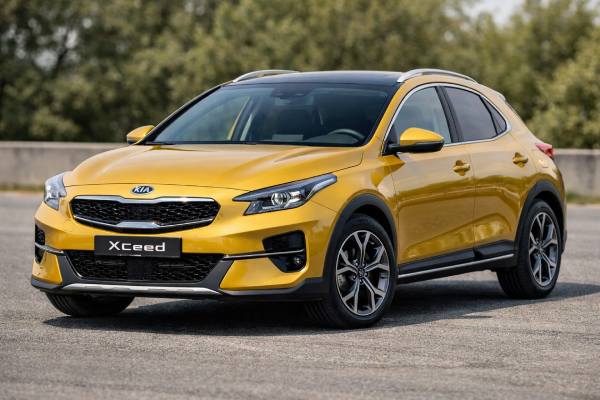
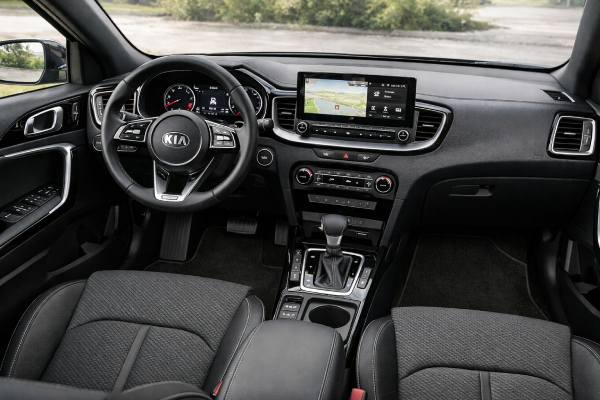
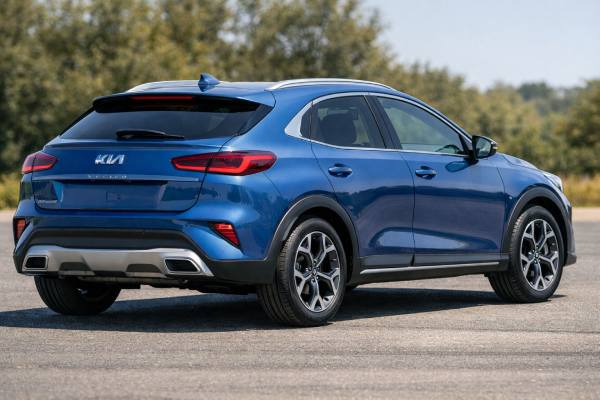
The 2019–2022 Kia XCeed 1.6 T-GDi 204 is the performance-minded version of Kia’s coupe-like crossover. It takes the practical shape, higher seating position, and useful boot of the regular XCeed, then adds the same 1.6-litre turbocharged petrol engine used in the Ceed GT and ProCeed GT. The result is not a full hot hatch, but it is much quicker and more engaging than most compact crossovers in this class. For the right buyer, that makes it one of the most interesting early XCeed variants.
Its appeal is easy to understand. You get 204 hp, strong mid-range torque, front-wheel drive, and usually a 7-speed dual-clutch transmission in the launch-era continental European specification. At the same time, you keep real family usefulness and a relatively compact footprint. The main ownership caution is just as clear: this is a direct-injection turbo petrol with performance tyres and, in many markets, a DCT, so servicing discipline matters more than on the smaller engines.
Fast Facts
- The 204 hp 1.6 T-GDi gives the XCeed genuine pace without losing the model’s everyday practicality.
- Strong mid-range torque and stable road manners make it a better long-trip crossover than many style-led rivals.
- The larger 1.6 T-GDi brake package and sportier tuning make it feel more substantial than lower-power XCeed versions.
- Buy on service history, tyre quality, and gearbox behavior, because this variant is less forgiving of neglected maintenance.
- A sensible baseline is annual oil service or 10,000 miles / 12 months, whichever comes first.
On this page
- Kia XCeed CD T-GDi character
- Kia XCeed CD 204 specs
- Kia XCeed CD grades and safety kit
- Reliability patterns and recalls
- Service schedule and buyer checks
- Real performance and fuel use
- Compared with T-Roc, Puma and CX-30
Kia XCeed CD T-GDi character
The XCeed was designed to sit between a hatchback and a compact SUV. That sounds like familiar marketing language, but in this case it describes the car quite well. It uses the Ceed family platform and keeps much of the hatchback’s road feel, yet its body is longer, a little taller, and easier to get in and out of. For the 204 hp 1.6 T-GDi version, that combination works better than you might expect. The extra power does not turn the XCeed into a true performance car, but it gives the chassis enough energy to feel properly special within the range.
At launch, Kia’s own Europe-facing material treated the 1.6 T-GDi as the flagship XCeed powertrain. It was the same basic turbocharged four-cylinder engine found in the Ceed GT and ProCeed GT, producing 204 PS and 265 Nm. In the launch-era Austrian press kit, Kia described the 204 hp XCeed as the quickest model in the lineup, reaching 100 km/h in 7.5 seconds and topping out at 220 km/h. That tells you what Kia wanted this variant to be: the fast, expressive XCeed, not just the expensive one.
The engine also changes the way the XCeed fits into the market. Lower-output petrol and diesel versions make sense as everyday transport, but the 204 hp car is aimed at drivers who still want some pace without buying a low-slung hatch or a much larger SUV. The raised ride height does not make it an off-roader. It simply gives the car a slightly more commanding seating position and easier access, while the underlying package remains compact and road-focused.
Body proportions are part of the appeal. The XCeed is 4,395 mm long, 1,826 mm wide, and sits on the same 2,650 mm wheelbase as the rest of the Ceed family. Kia’s launch material also makes clear that it sits lower than a Sportage and keeps a lower centre of gravity, which helps explain why it feels more tied down than many rivals. The boot is also a strong point at 426 litres in VDA form, expanding to 1,378 litres with the rear seats folded. That means the 204 hp XCeed is not only about speed. It is one of the few compact crossovers that can carry family gear without looking or driving like a full SUV.
There is one important nuance. Depending on market and year, the 204 hp XCeed was most commonly paired with the 7-speed dual-clutch transmission, though some later technical material in continental Europe listed both manual and DCT pairings. For this article, the main reference point is the launch-era continental European 7DCT car, because that is the most widely documented version of the early 204 hp XCeed.
Kia XCeed CD 204 specs
The table below focuses on the 2019–2022 Kia XCeed CD with the 1.6 T-GDi 204 hp petrol engine in its commonly documented continental-European specification. In most launch-era material, that means front-wheel drive with the 7-speed dual-clutch transmission.
Powertrain and efficiency
| Item | Kia XCeed 1.6 T-GDi 204 |
|---|---|
| Code | Gamma II T-GDi |
| Engine layout and cylinders | Inline-4, 4 cylinders, turbocharged |
| Valvetrain | DOHC, 16 valves, 4 valves per cylinder |
| Bore × stroke | 77.0 × 85.44 mm (3.03 × 3.36 in) |
| Displacement | 1.6 L (1,591 cc) |
| Induction | Turbo |
| Fuel system | Direct injection |
| Compression ratio | 10.0:1 |
| Max power | 204 hp (150 kW) @ 6,000 rpm |
| Max torque | 265 Nm (195 lb-ft) @ 1,500–4,500 rpm |
| Emissions equipment | Three-way catalyst and gasoline particulate filter |
| Timing drive | Chain |
| Rated efficiency | About 6.2–6.5 L/100 km combined in launch-era official data |
| Real-world highway @ 120 km/h (75 mph) | Usually about 7.0–8.0 L/100 km depending on wheel size, traffic, terrain, and weather |
Transmission and driveline
| Item | Kia XCeed 1.6 T-GDi 204 |
|---|---|
| Transmission | 7-speed DCT in the main launch-era specification |
| Drive type | FWD |
| Differential | Open |
| Drive modes | Normal / Sport on DCT-equipped versions |
Chassis and dimensions
| Item | Kia XCeed 1.6 T-GDi 204 |
|---|---|
| Suspension, front | MacPherson struts |
| Suspension, rear | Independent multi-link |
| Steering | Rack-and-pinion with electric assistance |
| Steering ratio | 12.7:1 |
| Brakes | 320 mm front discs / 284 mm rear discs for 1.6 T-GDi brake package |
| Wheels and tyres | 205/60 R16 or 235/45 R18, depending on trim and market |
| Ground clearance | About 172–174 mm on 16-inch wheels / 184 mm on 18-inch wheels |
| Length | 4,395 mm (173.0 in) |
| Width | 1,826 mm (71.9 in) |
| Height | 1,483 mm on 16-inch wheels / 1,495 mm on 18-inch wheels |
| Wheelbase | 2,650 mm (104.3 in) |
| Turning circle | 10.6 m (34.8 ft) |
| Kerb weight | About 1,340–1,365 kg (2,954–3,009 lb), depending on trim |
| GVWR | About 1,900–1,920 kg (4,189–4,233 lb) |
| Fuel tank | 50 L (13.2 US gal / 11.0 UK gal) |
| Cargo volume | 426 L seats up / 1,378 L seats folded, VDA |
Performance and capability
| Item | Kia XCeed 1.6 T-GDi 204 |
|---|---|
| 0–100 km/h | 7.5 s |
| Top speed | 220 km/h (137 mph) |
| Towing capacity, braked | Up to 1,500 kg (3,307 lb), depending on market approval |
| Towing capacity, unbraked | 650 kg (1,433 lb) |
| Payload | Roughly 450–550 kg, depending on trim and equipment |
Fluids and service capacities
| Item | Specification |
|---|---|
| Engine oil | ACEA C2, 5W-30; 4.0 L (4.2 US qt) |
| Coolant | Verify by VIN and market workshop data before refill |
| Transmission / DCT fluid | Verify by VIN-specific workshop literature |
| Differential / transfer case | Not applicable |
| Brake fluid | DOT 4 low-viscosity fluid is the correct service baseline |
| A/C refrigerant | Verify under-bonnet label before service |
| A/C compressor oil | Verify by VIN and refrigerant type before service |
| Key torque specs | Confirm with official workshop literature before repair |
Safety and driver assistance
| Item | Kia XCeed 1.6 T-GDi 204 context |
|---|---|
| Closest official Euro NCAP benchmark | 2019 Kia Ceed |
| Standard-equipment rating | 4 stars |
| Safety-pack rating | 5 stars |
| Adult / child / vulnerable road user / safety assist | 88% / 85% / 52–68% / 68–73%, depending on configuration |
| IIHS | Not applicable |
| ADAS availability | FCA, LKA, LDW, DAW, HBA widely available; ACC, blind-spot warning, rear cross-traffic alert, and richer lane support were grade or pack dependent |
The headline is simple: this XCeed combines compact-crossover practicality with numbers that are much closer to a warm hatchback than a typical family crossover.
Kia XCeed CD grades and safety kit
The 204 hp XCeed was never the entry-level choice. In most early continental-European markets, it sat high in the range and was tied to richer trim structures, larger wheels, and a stronger list of comfort and safety equipment. That is important for used buyers, because a 204 hp XCeed is not only more powerful than the smaller-engine cars. It is often more heavily equipped, more expensive to repair, and more sensitive to tyre and wheel condition.
Launch-era trim names varied by country, but the pattern was similar. Lower XCeed trims focused on 16-inch wheels, core infotainment, and a solid safety baseline. Mid-range versions added larger displays, climate control, parking sensors, folding mirrors, and upgraded interior materials. The 204 hp engine usually appeared in better-equipped trims, often with 18-inch wheels, more aggressive exterior details, stronger seating trim, and depending on market, LED lighting or larger navigation screens.
That makes wheel choice one of the most useful identifiers. A 16-inch XCeed usually means a more comfort-focused lower-power car. An 18-inch car with larger brakes and richer trim is much more likely to be one of the stronger petrols or a top diesel. In ownership terms, the 18-inch setup looks good and improves grip, but it also raises tyre bills and makes ride quality firmer. On a used 204 hp XCeed, a cheap tyre set is a warning sign. This version deserves decent rubber, and you feel the difference immediately.
Safety equipment is better than many older crossovers in the class, but it is not identical across the range. The official 2019 Euro NCAP result belongs to the Ceed rather than a separately listed XCeed, yet it is still the closest structural benchmark because the XCeed is part of the same CD family. That rating is also a reminder that equipment matters. The Ceed scored 4 stars in standard form and 5 stars with the optional safety pack. For an XCeed buyer, that means you should not assume every car has the same active-safety capability simply because the body shell is related.
In practical terms, many early XCeed trims already included forward collision avoidance, lane-keeping support, lane-departure warning, driver-attention warning, and high-beam assist. Higher trims or option packs added adaptive cruise control, blind-spot warning, rear cross-traffic alert, and more advanced lane-centering functions. That is exactly the kind of equipment spread that affects long-term value. A well-equipped 204 hp car feels more modern and more complete today, but it also carries extra cost if cameras, sensors, mirrors, or bumper-mounted systems need calibration after repairs.
For most buyers, the sweet spot is a well-maintained mid-to-high trim with good equipment but no neglected cosmetic modifications. The 204 hp engine already adds enough character. You do not need aftermarket wheels, remaps, or cut-price body add-ons to make the car interesting.
Reliability patterns and recalls
The 1.6 T-GDi 204 XCeed does not show a strong public pattern of catastrophic factory weakness in official open-source material. That is reassuring. The bigger ownership story is that this is the most stressed early XCeed petrol engine, and in many markets it is paired with a dual-clutch gearbox. That does not make it fragile, but it does make it less tolerant of neglect than the smaller petrol versions.
The first important point is the engine itself. This is a turbocharged direct-injection petrol with a gasoline particulate filter. Those features bring performance and emissions benefits, but they also bring extra service sensitivity. Missed oil changes, poor-quality oil, long cold running, and a life spent on short trips are more likely to matter here than on a simple non-turbo MPI engine. Over time, the usual direct-injection concerns can appear: intake-valve deposits at higher mileage, ignition weakness under load, and turbo-related wear if the oil history is poor.
The second key area is the transmission. The 7-speed DCT suits the 204 hp car’s character, and it is a major reason the XCeed feels quick on paper. But like many dual-clutch systems, it deserves inspection rather than blind trust. A healthy car should pull away cleanly, creep predictably, and shift without heavy shudder. Some hesitation or slight low-speed awkwardness can be normal in this kind of gearbox, but repeated clutch judder, hot-traffic jerkiness, or warning messages deserve attention. On used performance-flavoured crossovers, this is one of the first places budget ownership starts to show.
There are also ordinary chassis wear points. The 204 hp XCeed uses larger brakes and often runs on 18-inch wheels, so tyres, alignment, front drop links, and suspension bushes can wear faster than on lower-power versions. That does not mean the car is badly built. It simply means the faster version asks more from its consumables.
On recalls and service actions, there is no open official source pointing to a defining recall unique to the 1.6 T-GDi 204 XCeed. However, a 2025 Irish recall affecting certain Ceed and XCeed vehicles cited possible contamination of the hydraulic clutch actuator printed circuit board, which could cause an electrical short and a thermal incident in the engine bay. That is not proof of a blanket issue on every 204 hp XCeed, and applicability depends on VIN, production date, and transmission setup. But it is an important reminder to check official recall status rather than assuming a sporty petrol variant sits outside wider model-family campaigns.
The best way to think about reliability is this: the 204 hp XCeed is not a horror story, but it is a “maintenance matters” car. The ideal used example has annual oil service, good tyres, no gearbox warnings, no boost leaks, and clear proof that all campaigns were completed. The wrong example is not the one with high mileage. It is the one with patchy service history and signs of enthusiastic use without proper upkeep.
Service schedule and buyer checks
The maintenance strategy for this XCeed should be conservative, not optimistic. Kia’s published oil guide for the CD-family 1.6 Gamma T-GDi lists a 4.0-litre fill, ACEA C2 5W-30 oil, and a 10,000-mile or 12-month service interval in the UK oil guide. Some continental launch literature also referenced broader service intervals with annual petrol oil changes. Put simply, the safe ownership rule is easy: service it every year and do not stretch the oil.
A practical schedule looks like this:
| Item | Practical interval |
|---|---|
| Engine oil and filter | Every 10,000 miles or 12 months, whichever comes first |
| Engine air filter | Inspect every service; replace around 30,000 km or sooner in dusty use |
| Cabin air filter | Replace every 12–24 months |
| Spark plugs | Inspect by schedule; a practical change around 60,000 km is sensible on a turbo DI petrol |
| Coolant | Long-life coolant; verify VIN-specific replacement timing in official service literature |
| DCT fluid | Treat as a real service item on long-term cars, especially if driven hard or in hot traffic |
| Brake fluid | Inspect yearly; practical replacement every 2–3 years |
| Brake pads and discs | Inspect at every service |
| Tyre rotation and alignment | Check regularly, especially on 18-inch-wheel cars |
| 12 V battery | Test annually after the first few years |
| Timing chain | No routine replacement interval, but inspect for abnormal noise or timing-correlation faults at high mileage |
The oil choice matters more than buyers often think. This engine combines turbocharging, direct injection, and a particulate filter, so using the correct low-ash oil specification is not a minor detail. It is part of the engine’s long-term health. That is also why a vague “serviced recently” statement is not enough when buying used. Ask what oil grade was used and where it was serviced.
The buyer’s checklist should focus on performance-version realities:
- Start it cold and listen for unusual chain, injector, or top-end noise.
- Check for engine warning lights, limp-mode history, or misfire under load.
- Test the DCT in town, on hills, and after warming up in traffic.
- Inspect the tyres closely. Cheap tyres on a 204 hp XCeed are a red flag.
- Look for front-brake lip wear, steering-wheel vibration, and uneven tyre wear.
- Confirm the car still feels straight and composed at motorway speed.
- Check every ADAS feature, especially if the car has had bumper or mirror repairs.
- Run the VIN for open recalls and ask for evidence of completed campaign work.
The best used 204 hp XCeed is often a standard-looking car with full history, good tyres, and no modifications. The worst is the one that looks exciting but has mixed tyres, a hesitant DCT, and vague maintenance paperwork. Long term, this is a very likeable car when owned by someone who understands that “fast Kia crossover” still means “regularly serviced Kia.”
Real performance and fuel use
The 204 hp XCeed feels quicker than most small crossovers need to be. That is the point. Kia’s official figure of 7.5 seconds from 0–100 km/h and a 220 km/h top speed puts it well beyond the class norm for style-led compact crossovers of its time. More importantly, it delivers that performance in a usable way. Peak torque arrives early, the DCT keeps the engine in its stronger band, and the car’s relatively low centre of gravity helps it feel more secure than its body style might suggest.
Straight-line pace is only one part of the story. The XCeed also benefits from being lower and more hatchback-like than a true SUV. It turns in more neatly than many crossover rivals, and the multi-link rear suspension helps the rear axle feel settled on fast roads. Kia also tuned the steering and dampers to keep the XCeed from feeling soft and vague, even though it still prioritises everyday usability over outright sportiness.
That balance is important. This is not a hot hatch disguised as a crossover. There is still more ride height and more weight transfer than in a Ceed GT or ProCeed GT. But the 204 hp engine gives the XCeed a genuine sense of pace, and the chassis is good enough to support it without feeling overmatched. On 18-inch wheels, the grip is strong and the front-end response is respectable, though the ride becomes firmer on rough roads. On 16-inch wheels, the car would likely be more comfortable, but most 204 hp cars were specified to look the part.
The DCT suits motorway and back-road use better than stop-start city crawling. At speed, it shifts quickly and helps the engine feel eager. In slow traffic, it can feel a little more mechanical than a traditional torque-converter automatic. That is normal for the type, but it is one reason some buyers will still prefer a simpler lower-power XCeed if performance is not a priority.
Fuel economy is decent rather than brilliant. Official combined figures in the launch-era data sat around the low-6 to mid-6 L/100 km range. In real use, expect something like this:
- City: roughly 8.0–9.5 L/100 km depending on traffic and trip length.
- Highway at 100–120 km/h: about 7.0–8.0 L/100 km.
- Mixed use: about 7.4–8.5 L/100 km.
That makes the 204 hp car noticeably thirstier than the smaller petrol or diesel XCeeds, but still reasonable for a 204 hp crossover-shaped petrol. Cold weather, short journeys, and heavy 18-inch tyres will move the numbers upward, while long steady motorway runs can pull them down.
Towing is another useful surprise. A 1,500 kg braked rating gives the 204 hp XCeed more real-world versatility than many sporty compact crossovers. It is still front-wheel drive, so traction on wet ramps or steep starts is not perfect, but the powertrain has enough reserve for moderate towing. Under load, expect a 20–30 percent fuel-use penalty and pay close attention to tyre condition and trailer balance.
Compared with T-Roc, Puma and CX-30
The 204 hp XCeed occupies an unusual corner of the market. Most compact crossovers focus on style, efficiency, or comfort. Kia added a real performance option to a practical family crossover, and that gives the car a distinct identity even now.
Against the Volkswagen T-Roc, the XCeed feels lower, more car-like, and generally more eager when fitted with the 204 hp engine. The VW counters with stronger SUV branding and, in some markets, a wider range of premium-feeling trim combinations. But the Kia often feels like the more interesting driver’s choice, especially if you value steering response and a less top-heavy body style.
Against the Ford Puma, the comparison depends on what you want. The Puma is typically more playful in lower-power forms and feels lighter on its feet, but most versions are not as fast as the 204 hp XCeed. The Kia is bigger, more stable on the motorway, and generally more mature as a long-distance car. The Ford’s clever packaging is strong, but the Kia’s larger boot and stronger mid-range pace make it a more rounded high-mileage choice.
Against the Mazda CX-30, the story flips slightly. The Mazda tends to feel more premium in cabin ambience and steering polish, while the Kia counters with stronger outright performance in this 204 hp form and a more obviously turbocharged punch. If you want a quiet, mature-feeling crossover with an upscale interior, the Mazda remains attractive. If you want speed and crossover practicality together, the XCeed makes a stronger case.
There is also an internal rival worth mentioning: the Ceed GT and ProCeed GT. They share the same 1.6 T-GDi engine and give up the XCeed’s elevated seating position for lower, sharper hatchback or shooting-brake dynamics. If driving feel is the priority, those GT models are the purer answer. But if you want easier access, crossover styling, and almost the same engine appeal in a more practical all-round body, the XCeed is the more versatile compromise.
That is the real verdict. The 204 hp XCeed is not the logical choice in the range. It is the enjoyable one that still manages to stay useful. It costs more to run than the smaller engines and asks more from tyres, brakes, and maintenance discipline. Yet it offers something many rivals do not: a compact crossover that is genuinely quick, still comfortable enough for family use, and practical enough to justify itself after the first burst of acceleration.
References
- Pressemappe Kia XCeed 2019 (Press Kit)
- Official Kia Cee’d 2019 safety rating 2019 (Safety Rating)
- Engine Oil Grades and Capacities – Kia 2023 (Service Guide)
- Kia Service Intervals 2023 (Service Intervals)
- Recalls by manufacturer (2025) – RSA.ie 2025 (Recall Database)
Disclaimer
This article is for informational purposes only and is not a substitute for professional diagnosis or repair. Specifications, torque values, service intervals, capacities, towing limits, and procedures can vary by VIN, market, trim, gearbox, and model year, so always verify final details against the official Kia service documentation for your exact vehicle.
If this guide helped you, please consider sharing it on Facebook, X, or your preferred platform to support our work.