
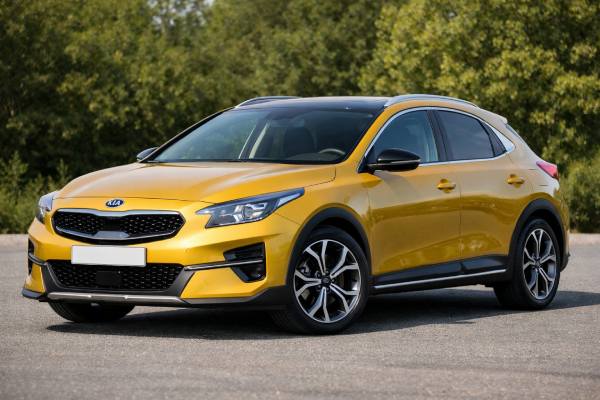
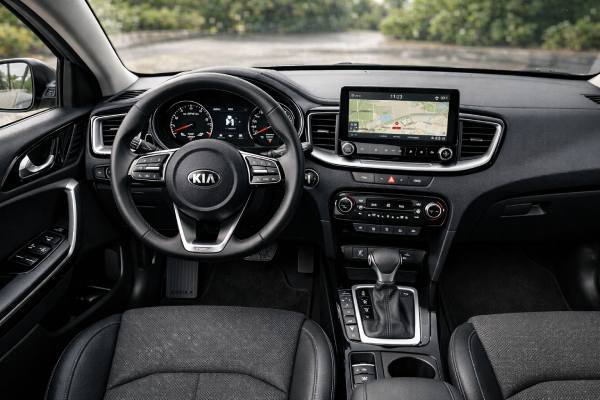
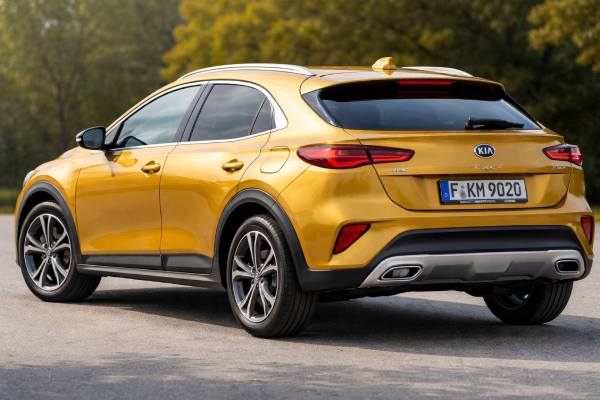
The 2019–2022 Kia XCeed 1.6 CRDi 136 sits in a very useful middle ground. It offers the higher seating position, easier access, and crossover look that many buyers want, but it is still based on the Ceed family’s lower, lighter, more car-like platform. That gives it a different personality from taller compact SUVs. In diesel form, it is especially appealing for drivers who cover longer distances and want strong mid-range torque without stepping into a much larger vehicle. The 1.6 CRDi also matters because it brings one of the most convincing real-world fuel-use profiles in the XCeed range. The trade-off is that ownership quality depends heavily on use pattern and service history. Short-trip driving, delayed oil changes, and ignored diesel emissions warnings can turn a strong long-distance car into an expensive one. For the right owner, though, the XCeed 1.6 CRDi is one of the most balanced versions of the early XCeed lineup.
Owner Snapshot
- The 1.6 CRDi 136 gives the XCeed the torque and cruising range that suit its chassis better than the smaller petrol engines.
- Multi-link rear suspension and a lower center of gravity than a typical SUV help the XCeed feel composed and mature on faster roads.
- Boot space is strong at 426 L, so it stays practical without becoming bulky in town.
- The main caveat is diesel-specific upkeep: DPF, EGR, SCR, and AdBlue health depend on regular longer runs and correct servicing.
- A sensible oil-service baseline is every 20,000 miles or 12 months, whichever comes first, with earlier changes for hard use.
What’s inside
- Kia XCeed CD Diesel Foundation
- Kia XCeed CD 1.6 CRDi Specs
- Kia XCeed CD Trims and Protection
- Reliability Trends and Service Actions
- Maintenance Planning and Buyer Advice
- Driving Feel and Real Efficiency
- Kia XCeed Versus Key Alternatives
Kia XCeed CD Diesel Foundation
The XCeed was designed to sit between a conventional hatchback and a full SUV, and the 1.6 CRDi 136 is one of the clearest examples of that idea working well. It gives you the raised ride height and visual confidence many buyers want, but it keeps the Ceed family’s more disciplined chassis layout underneath. That matters because the XCeed does not drive like a tall, soft crossover. It feels closer to a well-sorted C-segment hatch with a higher hip point and more ground clearance.
This version also stands out because it uses the stronger diesel tune, not the lower-output 115 PS version. In 136 PS form, the 1.6 CRDi has enough muscle to make the XCeed feel properly matched to long-distance driving. Official torque figures depend on gearbox. Manual versions sit at 280 Nm, while dual-clutch versions rise to 320 Nm. That is a useful difference in daily driving. The manual already feels strong from low revs, but the DCT car is the more effortless motorway tool.
The engine story changed slightly during this period. Early 2019–2020 cars were straightforward diesel models with six-speed manual or seven-speed dual-clutch options depending on market. Later cars in some regions added EcoDynamics+ mild-hybrid support with a 48V battery and iMT or DCT pairing. The core appeal remains the same across the range: low-rev torque, strong real-world economy, and relaxed cruising.
What makes the XCeed more interesting than many rivals is the chassis. Unlike simpler B-segment crossovers, it uses a multi-link rear suspension layout. Kia also retuned the dampers and springs to better handle the extra ride height, including front struts with hydraulic rebound control. That sounds like a small engineering note, but it affects the whole car. The XCeed is more settled over broken roads than many style-led crossovers, and it does a better job controlling body movement without becoming harsh.
The packaging is another reason this model still makes sense on the used market. At 4,395 mm long, it fits easily into normal urban life, yet it offers a 426-liter boot and enough rear-seat room for adult use. Ground clearance is meaningfully higher than the standard Ceed, at 174 mm on 16-inch wheels and 184 mm on 18s.
So the XCeed 1.6 CRDi is best understood as a long-distance crossover for drivers who still value a car-like base. It is not a rugged SUV, and it is not a budget diesel hatch in disguise. It sits in the middle, and that middle ground is exactly why it remains attractive.
Kia XCeed CD 1.6 CRDi Specs
The official figures for the XCeed 1.6 CRDi 136 vary slightly by market, trim, and gearbox, but the underlying mechanical picture is very consistent. The tables below focus on the 2019–2022 136 hp diesel family and note where manual and DCT versions differ.
| Powertrain and efficiency | Kia XCeed CD 1.6 CRDi 136 |
|---|---|
| Code | 1.6 CRDi / New U-III Diesel / Smartstream diesel family, market naming varies |
| Engine layout and cylinders | Inline-4, double overhead camshafts, 4 valves per cylinder, 77.0 × 85.8 mm (3.03 × 3.38 in) |
| Displacement | 1.6 L (1,598 cc) |
| Induction | Turbocharged, variable-geometry turbo |
| Fuel system | Common-rail direct injection |
| Compression ratio | 15.9:1 |
| Max power | 136 PS (100 kW) @ 4,000 rpm |
| Max torque | 280 Nm (206 lb-ft) @ 1,500–3,000 rpm, manual; 320 Nm (236 lb-ft) @ 2,000–2,250 rpm, DCT |
| Timing drive | Public owner-facing Kia literature does not clearly state the timing-drive type; confirm by VIN-based workshop data when ordering service parts |
| Rated efficiency | About 4.1–4.4 L/100 km combined in lighter early-market figures; about 4.3–4.6 L/100 km in later WLTP-heavy trim mixes |
| Real-world highway @ 120 km/h | Usually about 5.0–5.8 L/100 km |
| Transmission and driveline | Kia XCeed CD 1.6 CRDi 136 |
|---|---|
| Transmission | 6-speed manual or 7-speed dual-clutch automatic |
| Drive type | FWD |
| Differential | Open |
| Chassis and dimensions | Kia XCeed CD 1.6 CRDi 136 |
|---|---|
| Suspension (front/rear) | MacPherson strut / multi-link rear suspension |
| Steering | Electric power steering, rack-and-pinion |
| Steering ratio / turns | 2.44 turns lock-to-lock |
| Turning circle | 10.6 m (34.8 ft) |
| Brakes | Ventilated front discs, 305 × 25 mm or 320 × 28 mm depending on trim; rear discs 272 × 10 mm or 284 × 10 mm with EPB |
| Wheels/Tyres | 205/60 R16 or 235/45 R18 |
| Ground clearance | 174 mm (6.9 in) on 16-inch wheels; 184 mm (7.2 in) on 18-inch wheels |
| Length / Width / Height | 4,395 / 1,826 / 1,483 mm on 16-inch wheels; 1,495 mm on 18-inch wheels (173.0 / 71.9 / 58.4–58.9 in) |
| Wheelbase | 2,650 mm (104.3 in) |
| Kerb weight | Roughly 1,415–1,571 kg (3,120–3,464 lb), market and gearbox dependent |
| GVWR | About 1,900–1,920 kg (4,189–4,233 lb) |
| Fuel tank | 50 L (13.2 US gal / 11.0 UK gal) |
| AdBlue / SCR tank | 12 L (3.2 US gal / 2.6 UK gal) |
| Cargo volume | 426 / 1,378 L (15.0 / 48.7 ft³), VDA |
| Performance and capability | Kia XCeed CD 1.6 CRDi 136 |
|---|---|
| 0–100 km/h | About 10.1–10.6 s depending on gearbox |
| Top speed | About 196–198 km/h (122–123 mph) |
| Braking distance | Not consistently published in open factory material |
| Towing capacity | Up to 1,500 kg braked / 650 kg unbraked (3,307 / 1,433 lb) |
| Payload | About 480–485 kg (1,058–1,069 lb), specification dependent |
| Fluids and service capacities | Kia XCeed CD 1.6 CRDi 136 |
|---|---|
| Engine oil | ACEA C5 / C2 / C3, 5W-30 in Kia UK oil guide; 4.4 L (4.6 US qt) |
| Coolant | Public owner-facing XCeed diesel literature does not consistently publish one stable fill figure; verify by VIN-based workshop data |
| Transmission / DCT fluid | Verify by gearbox code and VIN |
| Differential / Transfer case | Not applicable |
| A/C refrigerant | Verify from under-bonnet label |
| A/C compressor oil | Verify from workshop data |
| Key torque specs | Public owner-facing XCeed diesel literature is limited; confirm wheel, brake, and suspension torques from market-specific workshop data |
| Safety and driver assistance | Kia XCeed / Ceed family |
|---|---|
| Crash ratings | Euro NCAP standard-equipment baseline: 4 stars, Adult 88%, Child 85%, VRU 52%, Safety Assist 68% |
| Optional safety-pack rating | 5 stars when fitted with the higher ADAS package |
| IIHS / headlight rating | Not applicable |
| ADAS suite | FCA, LKA, DAW, HBA commonly available; Smart Cruise Control, Blind Spot Collision Warning, Rear Cross-Traffic Warning, and Lane Following Assist depend on market and trim |
The important reading is that the XCeed diesel is not just efficient. It is also usefully capable. It has enough towing ability, enough boot space, and enough torque to feel like a mature family car rather than a dressed-up compact hatch.
Kia XCeed CD Trims and Protection
The 2019–2022 XCeed was sold in a wide spread of trims depending on country, and that matters more here than it does on simpler Kia models. A diesel XCeed in one market might have a very different wheel package, seat trim, and safety suite from a same-engine car in another. So when looking at used stock, trim names are useful only as a starting point. The real value is in the equipment list.
At launch and through the pre-facelift period, common trim themes included entry and mid-range versions on 16-inch wheels and richer, sportier versions on 18s. Lower and mid trims usually make the most sense for the diesel. They often bring the better ride, lower replacement-tyre costs, and the most relaxed fuel economy. Higher trims look sharper, but the larger wheels add a little noise and impact harshness while doing nothing to improve the diesel’s actual character.
Typical trim distinctions looked like this:
- lower trims often included 16-inch alloys, cloth or mixed upholstery, manual or simpler automatic climate control, rear camera, and the core passive safety package;
- mid trims typically added larger screens, more cabin trim detail, parking aids, heated features, and upgraded driver assistance;
- upper trims often added 18-inch wheels, more aggressive styling, darker trim, richer materials, and the broader ADAS package.
The safety story is one of the XCeed’s stronger points, but only if you read it correctly. The Ceed family’s 2019 Euro NCAP result gave the standard-equipment car a four-star rating, while the optional advanced safety pack lifted it to five stars. Since the XCeed shares the Ceed family structure, that matters directly. It means the model’s basic body and restraint performance is solid, but the final rating depends on which driver-assistance features the car actually has.
Across the XCeed range, Kia’s official material shows systems such as:
- Forward Collision-Avoidance Assist,
- Lane Keeping Assist,
- Driver Attention Warning,
- High Beam Assist,
- Vehicle Stability Management,
- Electronic Stability Control,
- seven airbags,
- and, on better-equipped versions, Blind Spot Collision Warning, Rear Cross-Traffic Collision Warning, Smart Cruise Control, and Lane Following Assist.
That means a used XCeed with the same engine can differ a lot in real safety value. A basic diesel can still be a good car, but a better-specified one with the fuller ADAS suite is noticeably easier to recommend.
There is also a service point hidden inside the safety equipment list. Camera- and radar-based systems are only as good as their calibration. If the car has had a windscreen replacement, front bumper repair, or front-end impact, ask whether calibration was completed. This is especially important on cars with Smart Cruise Control, blind-spot monitoring, or Lane Following Assist. A diesel XCeed is often bought for long motorway use, which makes those systems more relevant in daily driving than they are on a purely urban runabout.
The best trim balance for most buyers is usually a mid-spec diesel on 16-inch wheels with the broader ADAS package, heated features, and a clear service record. That gives you the most useful parts of the XCeed without forcing the car into a more style-driven setup than the diesel really needs.
Reliability Trends and Service Actions
The XCeed 1.6 CRDi 136 is generally a strong long-distance ownership prospect, but it is not a diesel that tolerates neglect well. The car is at its best when used the way the powertrain was designed to be used: regular longer trips, good oil discipline, and prompt attention to emissions-system warnings. Used that way, it can be a durable and efficient crossover. Used mainly for short, cold urban runs, it becomes much less convincing.
The most useful reliability map looks like this.
Common, low to medium cost
- Rear brake corrosion and sticky operation: Like many cars in this class, lightly used examples can develop rusty rear discs and uneven pad wear.
- Battery weakness and stop-start issues: The system may become erratic before the battery feels obviously weak.
- Tyre wear and alignment neglect: The XCeed is sensitive enough that poor tyres or missed alignment can make it feel noisier and less settled than it should.
Occasional, medium cost
- DPF loading: Symptoms include repeated cooling fan operation, rising fuel use, frequent regeneration behavior, warning lights, or limp mode. The likely cause is repeated short-trip use without allowing full regeneration. Remedy: forced regeneration or cleaning if caught early, replacement if ignored too long.
- EGR and intake soot build-up: Hesitation, uneven running, emission warnings, or reduced performance can point to soot-related restriction. Remedy: diagnose properly, then clean or replace affected components as needed.
- SCR / AdBlue issues: Range countdown warnings, NOx-sensor faults, and emissions warnings usually point to the SCR system rather than the base engine itself. Remedy: sensor, injector, heater, or software diagnosis before parts swapping.
Less common, higher-cost
- DCT drivability complaints: On dual-clutch cars, shudder, rough engagement, or awkward low-speed control can appear if the transmission has had a hard life in heavy traffic.
- Turbo or boost-control faults: Usually linked to age, contamination, or hose/actuator issues rather than immediate catastrophic failure.
- Suspension wear: Front links and bushes, plus occasional rear-end wear items, are the likely sources of knocks.
The diesel itself has good fundamentals. Common-rail injection, a proper torque band, and solid economy make it attractive. But it is still a modern Euro 6 diesel, which means the emissions hardware is part of the engine’s real maintenance story. DPF, SCR, NOx control, and AdBlue operation are not side notes. They are central to how well the car ages.
The later mild-hybrid diesel versions add one more layer. In some 2021–2022 markets, the 1.6 CRDi EcoDynamics+ used a 48V battery and related support hardware. Public owner-facing sources do not show a broad, model-defining failure trend there, but buyers should still inspect these cars more carefully for battery health, belt-driven support-system noise, and complete service records.
As for recalls and service actions, public market-wide summaries do not show one single diesel-XCeed problem defining the whole run. That is why VIN-based checking matters more than rumor-based shopping. Always ask for:
- official recall completion proof,
- dealer service history,
- recent oil-service invoices,
- DPF or emissions-system repair history,
- and calibration records if the car has had front glass or accident repairs.
The XCeed diesel is not unusually fragile. But it is a car that clearly rewards the right usage pattern and punishes the wrong one.
Maintenance Planning and Buyer Advice
The best way to own an XCeed 1.6 CRDi well is to treat it as a serious diesel, not as a casual runabout. The official owner-facing oil guidance for the CD-family 1.6 New U-III Diesel is 20,000 miles or 12 months in Kia UK material, and that is a reasonable maximum. For hard use, repeated short journeys, or cars that spend a lot of time regenerating the DPF, earlier oil changes are a good idea.
| Maintenance item | Practical interval |
|---|---|
| Engine oil and filter | Every 20,000 miles / 32,000 km or 12 months max; shorten if the car does heavy urban use |
| Engine air filter | Inspect every service; replace around 30,000–45,000 km |
| Cabin air filter | Every 12 months or about 15,000–20,000 km |
| Fuel filter | Inspect by schedule; replace on time because diesel fuel quality matters to injector life |
| Coolant | Replace by VIN-specific factory schedule |
| Brake fluid | Every 2 years is a smart real-world interval |
| Manual gearbox oil | Inspect for leaks and condition; refresh on condition or around 80,000–100,000 km |
| DCT service | Follow gearbox-specific workshop guidance and monitor behavior every service |
| DPF / SCR system | Monitor regeneration behavior, AdBlue consumption, and fault history at each service |
| Brake pads and discs | Inspect every service |
| Tyre rotation | About every 10,000–12,000 km |
| Alignment check | Yearly, and after pothole impacts or uneven tyre wear |
| 12 V battery | Test annually from year 3 onward |
| 48V system, if fitted | Check battery condition and related mild-hybrid hardware during routine diagnosis |
| Auxiliary belt and hoses | Inspect every service |
| Timing components | Public owner-facing data is limited; inspect for abnormal noise or timing-related faults and verify service approach by VIN |
The core fluid data that is clearly published is still useful:
- engine oil fill is 4.4 L,
- oil spec is ACEA C5 / C2 / C3, 5W-30 in Kia UK guidance,
- fuel tank is 50 L,
- SCR / AdBlue tank is 12 L.
The main buyer’s checklist should focus on diesel health, not just cosmetics:
- Start the car cold and listen for smooth idle and clean start-up.
- Check for engine-management or emissions warnings.
- Ask how the car was used. Long motorway miles are not a disadvantage here.
- Inspect for evidence of repeated short-trip use, such as heavy soot, weak battery behavior, and poor brake condition.
- Test the gearbox at parking speeds and in rolling traffic.
- Look at tyre quality and wear pattern.
- Check AdBlue warning history and service records.
- Confirm recall and campaign completion by VIN.
The best versions to buy are usually mid-spec cars with the broad ADAS package, 16-inch wheels, and a complete history. I would be cautious with lightly used city-only diesels, especially if they have patchy records. I would also inspect DCT cars more closely than manuals if the previous use was mostly urban. Long-term durability looks good when the XCeed is used for the job it was built for. It becomes a weaker proposition only when buyers choose a diesel for the wrong driving pattern.
Driving Feel and Real Efficiency
The XCeed 1.6 CRDi 136 is one of those cars that makes more sense the farther you drive it. Around town, it feels composed, easy to place, and more refined than many small crossovers, but its strongest qualities only fully show on faster roads. The diesel torque suits the body well, and the car’s lower stance compared with a taller SUV helps it feel stable and tied down at speed.
The engine character is exactly what many diesel buyers still want. The manual version delivers a strong, clean shove from low revs, and the DCT version makes the car feel even more relaxed. This is not a high-revving, sporty powertrain. It works best in the middle of the rev range, where the torque does the work and the car settles into an easy rhythm. In-gear response is strong enough to make motorway overtakes easy, especially compared with smaller petrol rivals.
The chassis is one of the XCeed’s biggest advantages. The multi-link rear suspension gives it a more polished ride and body-control balance than many style-led crossovers with simpler rear-axle setups. Kia’s ride tuning also helps. The XCeed is firm enough to feel disciplined, but not brittle. On 16-inch wheels it is usually at its best, combining decent compliance with low noise and good steering precision. On 18s it looks more assertive and still handles well, but the ride edge becomes more noticeable.
Steering is light to medium in weight and quick enough to keep the car feeling alert. It is not a deeply communicative setup, but it is accurate and easy to trust. Braking is confident and consistent, though open factory data does not give a single published stopping-distance figure across all diesel trims.
Real-world economy is one of the model’s strongest selling points. A practical ownership picture looks like this:
- city: about 5.6–6.7 L/100 km,
- steady secondary-road use: about 4.3–4.9 L/100 km,
- 120 km/h motorway cruising: about 5.0–5.8 L/100 km,
- mixed use: about 4.8–5.6 L/100 km.
Those numbers depend on tyres, traffic, temperature, and regeneration behavior, but they explain why this XCeed still appeals to high-mileage drivers. It offers the crossover seating position and family usability people want without paying the usual crossover fuel penalty.
Towing behavior is also respectable for the class. With up to 1,500 kg braked capacity in the right specification, the diesel has enough torque to feel stable with a small trailer, though of course consumption rises noticeably under load. More important than the headline tow number is the general impression: the car feels like it has a solid reserve of usable energy rather than just enough power to pass a test figure.
If your driving includes long commutes, regional trips, or motorway-heavy family use, the XCeed diesel feels very well judged. If your driving is mostly five-kilometer errands, the diesel’s strengths become harder to justify.
Kia XCeed Versus Key Alternatives
The XCeed 1.6 CRDi 136 does not compete like a conventional compact SUV. It sits in a more interesting space. It is lower and more car-like than many rivals, but more practical and easier to access than a standard family hatch. That means its real alternatives include both crossovers and lifted hatch-based models.
Against a Ford Focus Active diesel, the XCeed usually fights back with a more distinctive body style, stronger crossover packaging, and a more polished cabin feel in the better trims. Against a Volkswagen T-Roc 2.0 TDI, the Kia often gives away some badge strength and interior material quality, but it remains competitive on practicality and can feel like the smarter value choice. Against a Peugeot 308-based crossover alternative, the XCeed makes a strong case through its combination of conservative engineering and useful torque.
The closest conceptual rival is often the Ford Puma, but that comparison breaks down by engine choice. The Puma wins on agility and packaging tricks in petrol form, while the XCeed diesel answers with better motorway character, more relaxed long-distance economy, and a more grown-up cruising feel. Against a Hyundai Kona diesel from the same era, the XCeed often feels more settled and more spacious, with a chassis that better suits extended highway use.
Where the XCeed really earns its place is in the compromise it offers:
- better ride and body control than many upright crossovers,
- more useful entry and visibility than a standard hatch,
- stronger diesel economy than most comparable petrol models,
- and enough boot space to work as a genuine family car.
Its weaknesses are clear too. It is not cheap to neglect, and it is not the right answer for low-mileage city use. The diesel emissions hardware needs the right driving pattern. It also does not offer true SUV traction or rough-road ability, despite the styling.
So who should buy it? The best fit is the driver who wants a compact crossover shape but still values car-like dynamics and long-distance running efficiency. That buyer will usually get more from the XCeed diesel than from a heavier, blunter small SUV. The least suitable buyer is the one who wants a diesel mainly for resale logic or badge appeal while mostly driving in town.
In the right use case, the XCeed 1.6 CRDi 136 is one of the most coherent versions of the early XCeed range. It combines the model’s best chassis traits with the engine that makes the most sense for distance. That is not true for every owner. But for the right one, it is easy to recommend.
References
- The Xceed – Kia 2020 (Brochure)
- Discover the Kia XCeed | Kia Europe 2025 (Model Overview)
- Engine Oil Grades and Capacities – Kia 2023 (Service Guide)
- Official Kia Cee’d 2019 safety rating 2019 (Safety Rating)
- Five-star Euro NCAP safety rating for full Ceed model range 2019 (Press Release)
Disclaimer
This article is for informational purposes only and is not a substitute for professional diagnosis, repair, or VIN-specific service guidance. Specifications, torque values, service intervals, procedures, and equipment can vary by VIN, market, trim, gearbox, and production date, so always verify them against the official owner documentation, workshop literature, and dealer records for the exact vehicle.
If this guide was useful, please consider sharing it on Facebook, X/Twitter, or another platform to support our work.