
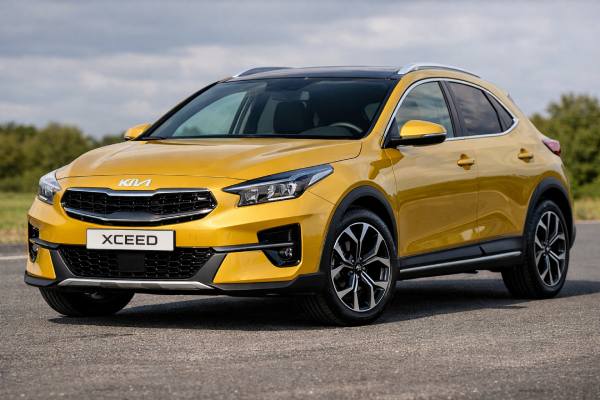
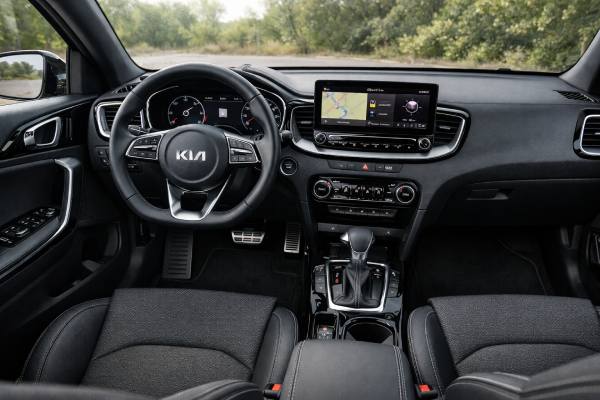
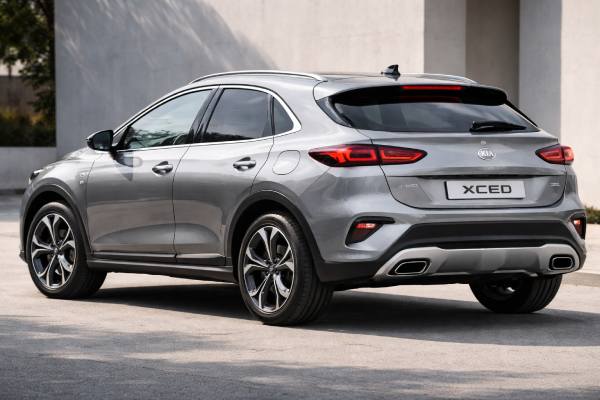
The facelifted Kia XCeed CD with the 1.0-litre Kappa II T-GDi is one of those cars that makes more sense the longer you look at it. It is not a full SUV, and that is exactly why many buyers like it. Kia kept the Ceed family’s lower center of gravity, independent rear suspension, and tidy road manners, then added crossover styling, a higher seating position, and more visual presence. In 1.0 T-GDi form, the facelift-era XCeed gives you useful turbo torque, a six-speed manual, front-wheel drive, and lower running costs than the larger 1.5 and 1.6 petrol versions.
This guide focuses on the facelift-era 120 hp continental-European specification, because later market brochures are not fully uniform. In some countries, the same facelift family was later listed as 113 bhp or 100 hp. For owners, though, the key story stays the same: this is a stylish, practical crossover-hatch that drives better than many taller alternatives, but it still depends on careful servicing to stay that way.
Quick Specs and Notes
- The facelifted 1.0 T-GDi keeps the XCeed light enough to feel responsive in daily driving, even with only 120 hp.
- The compact multi-link rear suspension gives it a more settled ride and cornering balance than many torsion-beam crossovers.
- Boot space remains one of the strongest points in the class, with 426 L seats up and 1,378 L seats folded on the non-hybrid petrol.
- The main caveat is routine care: this small turbo direct-injection engine does not reward skipped oil changes.
- A practical service rhythm is every 15,000 km or 12 months, with shorter oil intervals for hard urban use.
Start here
- Kia XCeed CD Facelift Profile
- Kia XCeed CD Data Points
- Kia XCeed CD Safety and Trims
- Reliability Watchpoints and Updates
- Maintenance Routine and Buyer Tips
- Driving Feel and Running Costs
- How XCeed Compares Today
Kia XCeed CD Facelift Profile
The facelifted XCeed did not reinvent the car. Kia revised the front and rear styling, improved the cabin tech, sharpened the trim structure, and updated the engine range, but the basic idea stayed intact. This is still a Ceed-based crossover hatch rather than a mini SUV. That distinction matters because it explains why the XCeed feels different from many small crossovers the moment you drive it. It sits a little higher, but it does not feel tall, soft, or vague. The platform underneath still behaves like a well-sorted C-segment hatchback.
For the 1.0 T-GDi, the facelift era is especially interesting because it represents the last moment when the smallest petrol still made real sense as a mainstream choice. In early facelift continental-European technical sheets, Kia continued to offer the 1.0 T-GDi at 120 hp with a six-speed manual. That engine remained attractive because it gave the XCeed enough torque to feel usable without pulling buyers into the higher purchase price and running costs of the 1.5 T-GDi or the plug-in hybrid.
The 1.0’s role is simple. It is not there to make the XCeed fast. It is there to keep the car affordable, lighter over the nose, and cheaper to run than the bigger engines, while still offering enough low-rev pull to avoid feeling underpowered in town. That is why the engine works better here than a naturally aspirated small petrol would. With 172 Nm arriving from 1,500 rpm, the car feels stronger in everyday traffic than the power figure alone suggests.
There is, however, one detail buyers need to understand. The facelift family is not perfectly consistent from one country to another. Some current-market pages show a 1.0 T-GDi at 113 bhp, which is essentially the same output expressed in imperial horsepower and, in some cases, tied to mild-hybrid calibration differences. Other later brochures moved to a lower 100 hp version. This guide stays focused on the facelifted 120 hp manual version because that is the specification named in the prompt and still clearly documented in early facelift European material.
From an ownership perspective, this version makes sense for buyers who want:
- crossover style without full-SUV bulk
- manual-transmission simplicity
- strong cargo room for the footprint
- lower running cost than the larger petrol engines
- a lighter, tidier driving feel than many B-SUV or C-SUV alternatives
The drawback is equally clear. A three-cylinder turbo petrol in a C-segment crossover body will never feel effortless on a fully loaded motorway trip. It is capable, but it needs planning. That is why the 1.0 XCeed suits mixed commuting, suburban use, and occasional long-distance driving better than constant heavy-load family touring. Used within that brief, it is one of the most convincing versions of the facelift XCeed.
Kia XCeed CD Data Points
For the facelifted 1.0 T-GDi XCeed, the best official data comes from continental-European technical sheets supported by Kia’s owner documentation. The table below centers on the 2022-onward 1.0 T-GDi 120 hp front-wheel-drive manual car. Where workshop-level figures vary by market, the table says so.
Powertrain and efficiency
| Item | Specification |
|---|---|
| Code | Kappa II 1.0 T-GDi |
| Engine layout and cylinders | Inline-3, 3 cylinders, DOHC, 12 valves, 4 valves/cyl |
| Bore × stroke | 71.0 × 84.0 mm (2.80 × 3.31 in) |
| Displacement | 1.0 L (998 cc) |
| Induction | Turbocharged |
| Fuel system | Direct injection |
| Compression ratio | Public facelift technical sheets reviewed do not publish a single confirmed ratio for every market |
| Max power | 120 hp (88.3 kW) @ 6,000 rpm |
| Max torque | 172 Nm (127 lb-ft) @ 1,500–4,000 rpm |
| Timing drive | Chain |
| Rated efficiency | WLTP combined 5.9–6.4 L/100 km (39.9–36.8 mpg US / 47.9–44.1 mpg UK), depending on trim |
| Real-world highway @ 120 km/h (75 mph) | About 6.5–7.2 L/100 km (36.2–32.7 mpg US / 43.5–39.2 mpg UK) |
Transmission and driveline
| Item | Specification |
|---|---|
| Transmission | 6-speed manual |
| Drive type | FWD |
| Differential | Open |
| Drive modes | Not a major headline feature on this exact manual variant; richer trims in the facelift family vary by transmission |
Chassis and dimensions
| Item | Specification |
|---|---|
| Suspension, front / rear | MacPherson strut / multi-link |
| Steering | Rack-and-pinion with MDPS electric assist |
| Steering ratio | Public open consumer documents reviewed do not publish a single numeric ratio |
| Brakes | Front ventilated discs / rear solid discs |
| Front brake size | 305 × 25 mm (12.0 × 0.98 in) |
| Rear brake size | 272 × 10 mm (10.7 × 0.39 in) |
| Wheels and tyres | 205/60 R16 or 235/45 R18 |
| Ground clearance | About 172 mm (6.8 in) on 16-inch wheels; about 184 mm (7.2 in) on 18-inch wheels |
| Length / width / height | 4,395 / 1,826 / 1,483 mm on 16-inch trims; 1,495 mm on 18-inch trims (173.0 / 71.9 / 58.4–58.9 in) |
| Wheelbase | 2,650 mm (104.3 in) |
| Turning circle (kerb-to-kerb) | About 10.4 m (34.1 ft) |
| Kerb weight | 1,347–1,468 kg (2,970–3,237 lb), depending on trim and equipment |
| GVWR | 1,820 kg (4,012 lb) |
| Fuel tank | 50 L (13.2 US gal / 11.0 UK gal) |
| Cargo volume | 426 / 1,378 L (15.0 / 48.7 ft³), VDA, non-hybrid petrol |
Performance, fluids, and safety
| Item | Specification |
|---|---|
| 0–100 km/h (0–62 mph) | 11.5 s |
| Top speed | 186 km/h (116 mph) |
| Braking distance | No open official Kia consumer figure published for this exact facelift 1.0 variant |
| Towing capacity | 1,000 kg (2,205 lb) braked / 500 kg (1,102 lb) unbraked |
| Payload | About 352–473 kg (776–1,043 lb), depending on trim and kerb weight |
| Engine oil | 3.6 L (3.8 US qt); facelift CD-family guidance commonly lists 0W-20 API SN Plus or 0W-30 ACEA C2 depending market |
| Coolant | 5.5 L (5.8 US qt); ethylene-glycol with phosphate-based coolant |
| Manual transmission fluid | 1.5–1.6 L (1.6–1.7 US qt); API GL-4 SAE 70W |
| Differential / transfer case | Not applicable |
| Brake / clutch fluid | DOT-4 LV / ISO 4925 Class 6 |
| A/C refrigerant | Verify by VIN and under-bonnet label before service |
| Key torque specs | Not published in open Kia consumer documents; use VIN-specific workshop information |
| Crash ratings | Euro NCAP public reference remains the CD-platform Ceed, with equipment-dependent 2019 results |
| IIHS | Not applicable |
| ADAS suite | FCA, LKA, LFA, HBA, ISLW, SCC, HDA, BCA, RCCA, and SEW depending on trim, pack, and transmission |
The most important spec takeaway is not the power figure alone. It is the whole combination: light weight for the class, useful torque, independent rear suspension, and a practical cargo area. That is what makes the facelift XCeed 1.0 more than just a styled-up Ceed.
Kia XCeed CD Safety and Trims
Trim choice matters a great deal on the facelifted XCeed 1.0 because the car’s personality changes more with equipment than with the engine itself. In France, for example, the facelift 1.0 T-GDi 120 was sold in Motion, Active, and GT-line Premium grades. In Belgium, the same engine appeared in Pure, Pulse, and GT Line versions. The names differ, but the hierarchy stays familiar: entry trim, middle trim, and richer style-led trim.
The entry-level XCeed is usually the smartest buy for owners who care most about value, ride comfort, and tyre cost. These cars typically sit on 16-inch wheels, which suit the suspension well and keep running costs lower. They still get the essential safety basics, LED lighting in many markets, and the same core drivetrain. They simply avoid the expensive cosmetic extras and the widest tyres.
Mid-trim versions are often the sweet spot. This is where the XCeed starts to feel genuinely premium for the price. You usually get better infotainment, more camera and sensor support, richer interior materials, and a stronger active-safety package. For many buyers, this is the trim that best matches the car’s concept: a crossover-hatch with real daily comfort, not just crossover styling.
The upper trim adds the emotional appeal. GT-line-style versions bring 18-inch alloys, more distinctive bumpers, darker detailing, upgraded cabin finishes, and a broader list of comfort and safety equipment. They look more special, but they also raise tyre cost and can ride a little more firmly on broken roads.
Safety equipment is one of the strongest areas of the facelift car, but it is also one of the easiest places to misunderstand the lineup. The platform’s Euro NCAP public reference point is still the 2019 Ceed test program. That matters because the XCeed was not treated as a completely separate crash-test program in the way buyers sometimes assume. Euro NCAP’s public Ceed-family material showed equipment-dependent results in 2019, with a 4-star outcome on standard equipment and a 5-star outcome when the safety pack was included. For used buyers, the practical lesson is obvious: do not rely on a star number alone. Check the actual equipment fitted.
The facelifted trim sheets show that the core safety content is strong:
- front, side, and curtain airbags
- ABS, ESC, HAC, and TPMS
- ISOFIX on the outer rear seats
- Lane Keeping Assist
- Lane Following Assist
- Forward Collision Avoidance Assist for cars and pedestrians
Higher trims or transmission-specific packages can add:
- cyclist detection within FCA
- blind-spot collision assistance
- rear cross-traffic braking support
- adaptive cruise control with Stop and Go
- Highway Driving Assist
- Intelligent Speed Limit Warning
- Safe Exit Warning
One detail matters more than buyers expect: some of the richer driver-assistance systems are linked to DCT versions or specific option packs rather than to every 1.0 manual trim. That means the same engine can come with very different safety depth depending on market and build.
For used ownership, calibration quality matters too. Windscreen replacement, camera alignment, and radar-related front-end repair can affect how well lane and collision systems work. A higher-trim XCeed is only the better buy if those systems are fully functional and correctly set up.
Reliability Watchpoints and Updates
The facelifted XCeed 1.0 T-GDi is not a car with one dominant catastrophic flaw. Its reliability profile is more typical of a modern small turbo petrol hatch-based crossover: generally sound, sensitive to neglect, and best owned by someone who understands that basic servicing is not optional.
The easiest way to read the car is by issue type.
Common and low-cost
- Spark plug and ignition wear: Rough running, a flashing engine light under load, or hesitant acceleration often points to plugs or a coil rather than a serious internal engine problem.
- 12 V battery fatigue: Stop-start weakness, sluggish cranking, and nuisance warnings are common on short-trip cars after a few years.
- Tyre wear and alignment issues: Eighteen-inch cars are especially sensitive to poor alignment, pothole strikes, and cheap replacement tyres.
- Brake wear: The XCeed is not especially heavy, but urban use still wears front brakes faster than many owners expect.
Occasional and medium-cost
- Boost plumbing leaks: A split hose, weak clamp, or intake leak can cause flat mid-range response, uneven pull, or mild overboost-related fault behavior.
- Carbon deposits: As with many direct-injection petrol engines, intake-valve deposits can build over time, especially on cars used mainly for short urban trips.
- Cooling-system faults: Thermostat behavior, sensor drift, or small leaks deserve early attention because turbo engines dislike running outside their intended temperature band.
- Clutch wear: The six-speed manual is usually a strength, but hill-heavy city use or frequent creeping traffic can shorten clutch life.
Less common but higher priority
- Timing-chain wear from poor oil history: There is no routine chain replacement interval, but cold-start rattle, timing-correlation faults, or inconsistent idle should be treated seriously.
- Turbo wear from neglected oil changes: This engine depends on clean oil and correct grade more than a basic naturally aspirated unit does.
- Electronic nuisance faults after body repair: Richer trims carry more ADAS and infotainment hardware, so poor-quality repair work can create persistent warnings or feature faults.
Software and updates are part of the picture too. Facelift-era XCeeds sold from mid-2021 onward gained support for a limited number of over-the-air navigation and controller updates in some markets. That is useful for infotainment and map freshness, but it does not replace dealer-level checks for drivability, sensor faults, or calibration issues. If a seller claims the car is “fully updated,” that should still be backed by dealer records or software history where possible.
One encouraging point is what this exact version avoids. The 1.0 manual does not bring plug-in hybrid battery concerns, and it avoids the extra transmission complexity of the DCT variants. That makes it one of the cleaner long-term bets in the facelift XCeed lineup, provided the engine has not been starved of servicing.
Official recall detail in public sources does not point to one widely discussed facelift 1.0 XCeed-specific campaign dominating the ownership conversation. That is useful, but it is not the same as a guarantee. The right approach is still VIN-based verification through Kia recall tools and dealer records.
For buyers, the reliability verdict is simple. The XCeed 1.0 T-GDi is usually dependable when maintained well, but it is not the car to buy with gaps in its oil-change history. On this engine, paperwork matters.
Maintenance Routine and Buyer Tips
The facelift XCeed 1.0 T-GDi is easy to keep healthy if you stay ahead of the basics. The car does not need exotic servicing, but it does need consistency. Owners who treat it like an older-school small petrol usually run into trouble sooner than those who service it like the modern turbocharged direct-injection engine it is.
Practical maintenance schedule
| Item | Sensible interval | Notes |
|---|---|---|
| Engine oil and filter | Every 15,000 km / 12 months, or about 10,000 miles / 12 months | Shorten for city use, dust, towing, or repeated cold starts |
| Engine air filter | Inspect every service; replace about every 20,000–30,000 km | Earlier in dusty or polluted environments |
| Cabin air filter | Every 20,000–30,000 km or 12–24 months | Cheap and worth keeping fresh |
| Coolant | Inspect yearly; replace to official schedule and whenever condition is poor | Correct phosphate-based coolant matters |
| Spark plugs | About every 45,000–60,000 km is a good practical interval | Earlier replacement is cheap insurance |
| Manual transmission fluid | Inspect at higher mileage; many careful owners change it around 80,000–100,000 km | Helps long-term shift quality |
| Brake fluid | Every 24–36 months | Time matters as much as mileage |
| Brake pads and discs | Inspect at every service | Especially important on 18-inch trims |
| Timing chain | No fixed routine replacement interval | Investigate noise, poor oil history, or timing codes early |
| Belts and hoses | Inspect from midlife onward | Replace on age, cracks, or noise |
| Tyre rotation and alignment | Check about every 10,000 km or when wear pattern changes | Important for steering feel and tyre life |
| 12 V battery | Test yearly after year four | Replace proactively before winter if weak |
The oil specification is one of the most important decisions. Public Kia guidance for the facelift CD-family 1.0 usually points to 3.6 L drain-and-fill capacity, with 0W-20 or 0W-30 depending on market and document set. That is why owners should not assume a single universal oil answer across every country. The safest practice is to match the official specification for the exact VIN and market, then stay consistent.
For a used-car inspection, focus on these points:
- start the engine cold and listen for chain noise or uneven idle
- check for clean boost delivery in second and third gear
- inspect coolant level and look for seepage around hoses and connections
- test clutch take-up and hill-start behavior
- inspect tyres closely for mismatched brands or uneven shoulder wear
- verify every safety feature, camera, and parking aid that the trim should have
- confirm recall and software history where possible
- prioritize a complete service file over cosmetic condition
The best facelift 1.0 cars are usually middle trims with strong paperwork and 16-inch wheels. They give you the XCeed’s core strengths without unnecessary cost. Richer GT-line versions are still appealing, but only if you want the extra equipment and accept the higher tyre and trim-repair exposure.
Long-term durability should be good if the car has been serviced properly. The body and cabin generally wear well, the chassis is fundamentally strong, and the manual transmission is a reassuring part of the package. The weak point, as usual, is neglect. A tidy-looking car with poor service history is a much riskier buy than a well-kept car with honest miles.
Driving Feel and Running Costs
The facelift XCeed’s strongest trick is that it still feels like a proper hatchback underneath. Many crossovers trade steering precision and body control for extra ride height. The XCeed does not. It gives you easier entry and a more commanding seating position, but it keeps the more disciplined feel of the Ceed platform.
Around town, the 1.0 T-GDi suits the car well. The steering is light enough for parking, visibility is good, and the early turbo torque makes low-speed driving more relaxed than the 120 hp number implies. In stop-go traffic, the car feels lighter and more manageable than taller crossovers of similar price.
The engine character is linear for a small turbo unit. There is some lag if you ask for a big surge from very low rpm, but in normal use it responds cleanly and predictably. The six-speed manual is a good fit because it lets the driver keep the engine in its useful torque band without the hesitation that can make some small turbo automatics feel lazy.
On faster roads, the XCeed’s chassis stays impressive. Straight-line stability is strong, cornering balance is tidy, and the multi-link rear axle helps the car feel planted on imperfect surfaces. It is not a hot hatch, but it is noticeably more composed than many crossover-style rivals built around simpler rear suspension designs.
The trade-off is power reserve. With one or two people aboard, the car feels lively enough. With four adults, luggage, or a long uphill motorway section, the 1.0’s limits show quickly. Overtaking needs planning, and full-throttle acceleration is more workmanlike than effortless. Buyers who drive heavily loaded most of the time may prefer the 1.5 T-GDi.
Ride quality depends strongly on wheel size. Sixteen-inch trims are the most convincing all-rounders. They smooth out rough surfaces better and reduce tyre roar. Eighteen-inch trims look sharper and bring a slightly tighter response, but the difference in everyday road noise and impact harshness is noticeable.
Real-world efficiency is respectable:
- City: about 6.8–7.6 L/100 km (34.6–31.0 mpg US / 41.5–37.2 mpg UK)
- Highway at 110–120 km/h: about 6.5–7.2 L/100 km (36.2–32.7 mpg US / 43.5–39.2 mpg UK)
- Mixed: about 6.0–6.7 L/100 km (39.2–35.1 mpg US / 47.1–42.1 mpg UK)
Cold weather, short-trip driving, and larger wheels can add around 0.5–1.0 L/100 km. Cheap tyres and poor alignment hurt the results more than many owners realize because this car depends on relatively modest power and careful rolling resistance to hit its best figures.
Towing is possible but should be viewed realistically. The 1,000 kg braked figure is useful for a light trailer, but this is not the engine to choose if regular towing is a core part of the job.
In everyday use, the facelift XCeed 1.0 is at its best as a stylish, comfortable mixed-road family car. It rewards drivers who value balance over brute force.
How XCeed Compares Today
The facelifted XCeed 1.0 T-GDi competes in a narrow but useful space. It is not as tall as a typical small SUV, and it is more practical than many design-led hatchbacks. That gives it a slightly different rival set from the average crossover.
Against the Volkswagen T-Roc 1.0 TSI, the Kia feels more like a lower, better-planted C-segment car and less like a raised small crossover. The Volkswagen often benefits from stronger badge pull in some markets, but the XCeed typically answers with more equipment value and a more distinct middle-ground package.
Against the Ford Focus Active 1.0 EcoBoost, the Kia is close in concept. The Ford often feels a touch sharper in steering response, but the XCeed usually brings a more premium-feeling cabin and a slightly more special sense of design. The Kia’s cargo packaging is also a real selling point.
Against the Hyundai Kona 1.0 T-GDi, the XCeed offers a roomier and more mature-feeling platform. The Kona is easier to place in tight urban environments, but the XCeed feels more composed and less compromised on longer trips.
Against the Mazda CX-30, the Kia gives away some premium cabin polish and engine smoothness, especially when the Mazda uses a larger naturally aspirated petrol. The XCeed counters with lower typical ownership cost and a livelier low-rev feel from its turbo torque.
Its closest in-house competitor is the Ceed hatchback. The hatch is slightly purer dynamically and may be the smarter choice for buyers who do not care about style or seating position. The XCeed wins when the buyer wants easier entry, more crossover presence, and a more versatile visual identity without moving to a taller, heavier SUV.
Where the facelift XCeed 1.0 wins:
- crossover style without the full dynamic penalty of an SUV
- strong boot space for the footprint
- better-than-expected road manners
- simple manual transmission ownership
- good trim value in the middle of the range
Where it loses ground:
- motorway performance is only moderate when loaded
- the small turbo engine punishes neglected maintenance
- richer trims can add tyre and repair cost without improving the core car
- later market confusion around 120 hp, 113 bhp, and 100 hp versions can complicate used buying
The final verdict is straightforward. The facelifted Kia XCeed CD 1.0 T-GDi 120 is not the class leader for outright pace or premium cachet. It is one of the more rational and enjoyable choices if you want a raised, stylish family car that still drives like a proper hatchback and keeps ownership relatively simple. For the right driver, that is a very strong combination.
References
- Kia XCeed. 2023 (Technical Data)
- The Kia XCeed Specifications | Kia UK 2026 (Specification Page)
- Official Kia Cee’d 2019 safety rating 2019 (Safety Rating)
- Kia Ceed – Euro NCAP 2019 Results – standard equipment 4 stars and with safety pack 5 stars 2019 (Safety Rating)
- Recommended lubricants and capacities – Kia Owner’s Manual 2026 (Owner’s Manual)
Disclaimer
This article is for informational purposes only and is not a substitute for professional diagnosis, repair, or VIN-specific service guidance. Specifications, torque values, maintenance intervals, procedures, trim content, and safety equipment can vary by market, model year, build date, and vehicle identification number, so always verify details against official Kia service documentation for the exact vehicle.
If this guide helped you, please consider sharing it on Facebook, X, or another social platform to support our work.