
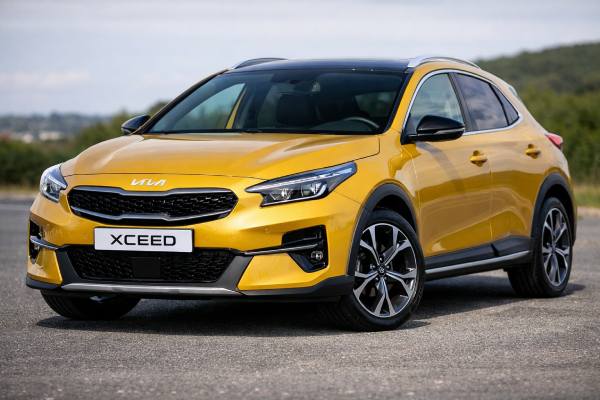

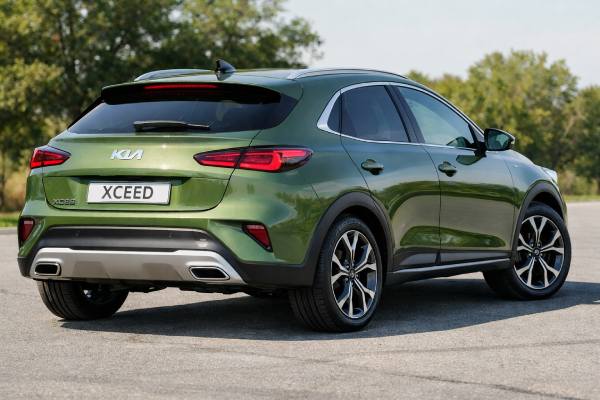
The facelift Kia XCeed 1.5 T-GDi 160 is the version that makes the non-plug-in petrol XCeed range feel complete. It keeps the raised seating position, sharp styling, and hatchback-based chassis that made the XCeed stand out in the first place, but adds a stronger 1.5-liter turbo engine with enough mid-range torque to suit the body properly. That matters in real ownership. The smaller petrol options are adequate, but this one feels more relaxed with passengers, luggage, and motorway work. The facelift also brought updated lighting, fresher cabin technology, and a stronger safety story in better trims. The trade-off is clear: this is a modern direct-injection turbo petrol, and in some markets it also adds mild-hybrid hardware or a dual-clutch transmission. That raises the importance of oil quality, software updates, and careful used-car inspection. For buyers who want the most rounded regular-petrol XCeed, this is usually the version to focus on.
Core Points
- The 1.5 T-GDi gives the XCeed the easiest all-round petrol performance in the range.
- It combines crossover seating height with a multi-link rear suspension and more car-like body control than many compact SUVs.
- The facelift improves cabin tech, front-end design, and available driver assistance.
- Ownership depends on service history, because turbocharging, direct injection, and market-specific 48V hardware leave less room for neglect.
- A sensible oil-service rhythm is every 10,000 miles or 12 months, whichever comes first.
On this page
- Kia XCeed CD Facelift Focus
- Kia XCeed CD 1.5 Numbers
- Kia XCeed CD Grades and Aids
- Failure Points and Campaigns
- Care Schedule and Buying Checks
- Road Behaviour and Consumption
- Rival Comparison and Value
Kia XCeed CD Facelift Focus
The facelift XCeed still occupies an unusual place in the market, and that is one of its biggest strengths. It is not a tall, heavy compact SUV, but it also is not just a normal hatchback with plastic cladding. Kia kept the Ceed family’s basic platform, wheelbase, and lower center of gravity, then added extra ride height, different bodywork, easier access, and a more crossover-like image. That formula works particularly well with the 1.5 T-GDi 160.
This engine matters because it corrects the one weak point some buyers felt in the smaller petrol XCeeds: effortless flexibility. The 1.5 is a four-cylinder turbocharged direct-injection unit with 160 PS and 253 Nm, and that is enough to make the XCeed feel properly matched to its size. It does not turn the car into a hot hatch, but it does make it feel confident on faster roads, less strained with passengers, and calmer during overtakes.
The facelift itself added more than cosmetic changes. Kia revised the front-end design, sharpened the lighting signature, improved some cabin materials and graphics, and widened the appeal of the GT-Line. It also leaned harder into technology, with better digital displays and stronger availability of lane-centering, upgraded cruise logic, and blind-spot functions in higher trims. That means the facelift car feels more current than the pre-facelift model, even when the core body dimensions remain familiar.
There is one practical complication to understand before shopping. The 1.5 T-GDi 160 did not have one perfectly uniform global specification. In some markets it appeared as a straightforward petrol with a six-speed manual. In others, it was offered with a seven-speed DCT, or as part of a mild-hybrid setup using 48V support and Kia’s intelligent manual transmission. That affects both the driving experience and the boot floor packaging in some markets. It also means two XCeeds with the same engine badge can feel slightly different in daily ownership.
The broader chassis story remains very good. The XCeed uses a multi-link rear suspension, not the simpler rear axle many rivals rely on, and Kia’s suspension tuning includes front hydraulic rebound stops. Those details help explain why the car feels more mature on real roads than many style-led crossovers.
So the facelift 1.5 T-GDi should be understood as the regular petrol XCeed for buyers who want balance. It is strong enough to suit the body, practical enough for family use, and still low-slung enough to feel more like a well-sorted car than a fashion crossover.
Kia XCeed CD 1.5 Numbers
The 2022-present facelift XCeed 1.5 T-GDi family is mechanically consistent, but exact figures vary a little by market, trim, wheel size, and whether the car uses a plain ISG setup or a 48V mild-hybrid layout. The most important numbers stay stable: 1,482 cc, 160 PS, 253 Nm, front-wheel drive, and either manual or DCT transmission depending on market.
| Powertrain and efficiency | Kia XCeed CD 1.5 T-GDi 160 facelift |
|---|---|
| Code | Smartstream G1.5 T-GDi |
| Engine layout and cylinders | Inline-4, DOHC, 4 valves per cylinder, 71.6 × 92.0 mm (2.82 × 3.62 in) |
| Displacement | 1.5 L (1,482 cc) |
| Induction | Turbocharged |
| Fuel system | Direct injection |
| Compression ratio | 10.5:1 |
| Max power | 160 PS (117.7 kW) @ 5,500 rpm |
| Max torque | 253 Nm (187 lb-ft) @ 1,500–3,500 rpm |
| Timing drive | Chain |
| Rated efficiency | About 6.1–6.5 L/100 km combined depending on wheel size, market, and gearbox |
| Real-world highway @ 120 km/h | Usually about 6.7–7.4 L/100 km |
| Transmission and driveline | Kia XCeed CD 1.5 T-GDi facelift |
|---|---|
| Transmission | 6-speed manual, intelligent manual in some MHEV markets, or 7-speed DCT |
| Drive type | FWD |
| Differential | Open |
| Chassis and dimensions | Kia XCeed CD 1.5 T-GDi facelift |
|---|---|
| Suspension (front/rear) | MacPherson strut with hydraulic rebound control / multi-link rear |
| Steering | Electric rack-and-pinion |
| Brakes | Front discs 305 × 25 mm or 320 × 28 mm depending on trim; rear discs 272 × 10 mm or 284 × 10 mm with EPB |
| Wheels/Tyres | 205/60 R16 or 235/45 R18 |
| Ground clearance | 172 mm (6.8 in) on 16-inch wheels; 184 mm (7.2 in) on 18-inch wheels |
| Length / Width / Height | 4,395 / 1,826 / 1,483–1,495 mm (173.0 / 71.9 / 58.4–58.9 in) |
| Wheelbase | 2,650 mm (104.3 in) |
| Turning circle | 10.4 m (34.1 ft) |
| Kerb weight | About 1,370–1,446 kg (3,020–3,188 lb) in common petrol specifications |
| GVWR | About 1,840–1,870 kg (4,057–4,123 lb) |
| Fuel tank | 50 L (13.2 US gal / 11.0 UK gal) |
| Cargo volume | 380–426 / 1,332–1,378 L (13.4–15.0 / 47.0–48.7 ft³), depending on market packaging and hybrid hardware |
| Performance and capability | Kia XCeed CD 1.5 T-GDi facelift |
|---|---|
| 0–100 km/h | About 9.0–9.2 s |
| Top speed | About 208 km/h (129 mph) |
| Braking distance | No single open official Kia figure published across all trims |
| Towing capacity | Up to 1,410 kg braked / 600 kg unbraked (3,108 / 1,323 lb), market dependent |
| Payload | Roughly 470–500 kg (1,036–1,102 lb) |
| Fluids and service capacities | Kia XCeed CD 1.5 T-GDi facelift |
|---|---|
| Engine oil | ACEA C2 / API SN Plus 0W-20 in current Kia UK guidance; 4.2 L (4.4 US qt) |
| Coolant | VIN-specific fill volume should be verified from workshop data |
| Transmission/ATF | Manual and DCT fluids are gearbox-specific; verify by VIN |
| Differential / Transfer case | Not applicable |
| A/C refrigerant | Verify from under-bonnet label |
| A/C compressor oil | Verify from workshop data |
| Key torque specs | Confirm from service documentation for the exact VIN |
| Safety and driver assistance | Kia XCeed / Ceed family |
|---|---|
| Crash ratings | Euro NCAP standard-equipment baseline: 4 stars; Adult 88%, Child 85%, VRU 52%, Safety Assist 68% |
| Safety-pack result | 5 stars with the fuller optional safety package |
| IIHS / headlight rating | Not applicable |
| ADAS suite | FCA, LKA, LFA, DAW, HBA common; SCC, BCW, RCCW, and navigation-linked functions vary by trim and market |
The most useful interpretation is that the facelift 1.5 T-GDi is not just quicker than the smaller petrol XCeeds. It is also the version that best combines useful towing ability, strong daily pace, and family-friendly practicality without moving into the higher-cost GT-oriented end of the range.
Kia XCeed CD Grades and Aids
The facelift XCeed 1.5 T-GDi was sold with enough trim variation to make badge-only shopping a mistake. In the UK, trims such as ‘2’, ‘GT-Line’, ‘3’, and ‘GT-Line S’ shaped the equipment mix. Elsewhere in Europe, the same engine appeared with different names, different option packs, and different transmission combinations. That means the smart way to buy one is not by trim label alone, but by wheels, safety hardware, infotainment setup, and service documentation.
The general hierarchy still follows a clear pattern. Lower trims usually bring 16-inch wheels, a simpler but useful standard equipment set, and the best comfort-to-cost balance. Mid-spec cars add the features most owners actually value, such as larger screens, heated items, better lighting, and more parking support. Higher trims add the most complete ADAS spread, richer seat materials, panoramic roof options, and the stronger visual identity, but they often sit on 18-inch wheels that cost more to replace and make the ride slightly firmer.
A practical way to think about the trim ladder is this:
- entry and mid trims often give the best ride, lower tyre cost, and cleaner value,
- GT-Line brings the sharper look and sportier cabin feel,
- upper trims add the most useful highway-oriented safety systems,
- and DCT availability can depend on both market and trim.
The safety story is more important than it looks on paper. The Ceed family’s published Euro NCAP result gave the standard-equipment version four stars and the better-equipped safety-pack version five stars. That is a strong reminder that the XCeed’s actual protection and driver-assistance value depends on what is fitted to the individual car. Two 1.5 T-GDi cars can have very different real-world safety equipment.
Common and desirable systems include:
- Forward Collision-Avoidance Assist,
- Lane Keeping Assist,
- Lane Following Assist,
- Driver Attention Warning,
- High Beam Assist,
- reversing camera and parking sensors,
- Blind-Spot Collision Warning,
- Rear Cross-Traffic Collision Warning,
- Smart Cruise Control,
- and, on some facelift cars, navigation-linked cruise functions that slow the car for zones or curves.
This matters because the 1.5 T-GDi is the XCeed most likely to be used for mixed commuting, regional travel, and motorway work. Better cruise control and lane-centering support add real day-to-day value here, not just brochure appeal.
There is also a calibration angle buyers should not ignore. If the car has front camera or radar-based assistance, ask whether any windscreen replacement or front-end repair was followed by ADAS calibration. A well-specified XCeed with unverified repair work is less attractive than a slightly simpler car with full documentation.
For most buyers, the sweet spot is a 1.5 T-GDi on 16-inch wheels with the broader assistance package, heated features, and a clear maintenance history. That combination captures most of the facelift XCeed’s real strengths without paying extra for appearance upgrades that do less for ownership.
Failure Points and Campaigns
The facelift XCeed 1.5 T-GDi does not have a single dominant flaw that defines the model, but it should still be read as a modern turbo petrol rather than a low-stress older Kia engine. That means service quality matters, and the likely issues tend to arrive as medium-cost faults rather than one dramatic failure.
A practical reliability map looks like this.
Common, low- to medium-cost
- Weak 12 V battery or stop-start complaints: These often show up first as inconsistent idle-stop behavior, slow restarting, or random warning messages.
- Ignition misfire: Rough running, hesitation under load, or a flashing engine light often points to spark plugs or a coil issue.
- Rear brake corrosion: Lightly used cars can build rear-disc rust and uneven wear sooner than owners expect.
- Trim rattles and hatch-area noises: Not serious, but worth checking because they can hint at how the car was used.
Occasional, medium-cost
- Carbon build-up on intake valves: Because the engine uses direct injection, fuel does not clean the backs of the valves. Cars that do many short trips are more exposed over time.
- Boost-control or charge-air leaks: Split hoses, clamps, or sensor-related issues can cause flat response, underboost faults, or limp-home behavior.
- DCT low-speed shudder: Cars fitted with the seven-speed dual-clutch transmission can develop awkward crawl-speed manners if used heavily in stop-start traffic or if clutch adaptation is poor.
Less common but worth watching
- Timing-chain noise or correlation faults: This is not a routine interval engine in public Kia literature, but chain systems still rely on clean oil and timely servicing.
- GPF or sensor-related warning lights: Petrol particulate filter systems are usually less troublesome than diesel DPFs, but repeated short-trip use can still produce warning events.
- Cooling-system seepage: Minor hose-joint or housing leaks should be fixed early rather than topped up repeatedly.
The most useful ownership insight is that this engine often gives warning before a bigger bill arrives. Flat performance, rough idle, higher fuel use, or repeated warning lights deserve proper diagnosis, not guesswork. A well-maintained 1.5 T-GDi usually stays convincing. A neglected one can ask for plugs, coils, tyres, brakes, and boost-related diagnosis at the same time.
Software also matters. There is no single open public campaign that defines the whole 1.5 T-GDi facelift run, but infotainment updates, driver-assistance calibration, and gearbox behavior on DCT cars can all improve with the right dealer attention. That is why invoices and dealer printouts are more useful than a stamped service book alone.
For recalls and service actions, the correct method is always VIN-based. Different countries and equipment packs can produce different campaign histories. Before buying, ask for:
- recall completion proof,
- dealer service history,
- oil-service invoices showing proper intervals,
- and calibration or repair paperwork for any ADAS-equipped car.
The facelift XCeed 1.5 T-GDi is not a fragile car, but it is one that rewards careful ownership and exposes vague maintenance faster than older simple petrol Kias did.
Care Schedule and Buying Checks
The facelift XCeed 1.5 T-GDi should be maintained like a modern direct-injection turbo petrol. Kia’s owner-facing guidance commonly points to 10,000 miles or 12 months for service timing on this engine, and that is a sensible ceiling. For heavy urban use, repeated short cold starts, or cars that spend much of their life in traffic, earlier oil changes are cheap insurance.
| Maintenance item | Practical interval |
|---|---|
| Engine oil and filter | Every 10,000 miles / 16,000 km or 12 months max |
| Engine air filter | Inspect every service; replace around 30,000–45,000 km |
| Cabin air filter | Every 12 months or about 15,000–20,000 km |
| Spark plugs | Every 75,000 km (50,000 miles) |
| Coolant | First replacement around 180,000 km / 120 months, then every 30,000 km / 24 months |
| Brake fluid | Every 2 years is a strong real-world interval |
| Manual gearbox oil | Inspect for leaks and condition; refresh on condition |
| DCT fluid | Follow gearbox-specific workshop guidance and check behavior every service |
| Drive belts | Inspect around 90,000 km / 72 months, then at regular intervals after that |
| Mild-hybrid support belt, if fitted | Inspect at routine service and replace by market-specific schedule |
| Brake pads and discs | Inspect every service |
| Tyre rotation | About every 10,000–12,000 km |
| Alignment check | Yearly, and after pothole hits or uneven wear |
| 12 V battery test | Start annual testing from year 3 onward |
| Timing chain | No fixed belt-style interval; investigate noise or timing faults promptly |
The key consumable data owners should know is straightforward:
- engine oil fill is 4.2 L,
- current Kia UK guidance uses 0W-20 full synthetic with modern petrol specification,
- brake fluid should be DOT 4 LV,
- fuel tank capacity is 50 L.
The used-buyer checklist should focus on condition, not just appearance:
- Start the engine cold and listen for chain rattle, rough idle, or metallic noise.
- Drive gently and then harder to confirm smooth boost delivery.
- Check for hesitation, misfire, or flat response under load.
- Read the service history for interval discipline, not just dealer stamps.
- Test the camera, lane systems, cruise-control functions, and parking sensors.
- On DCT cars, test reversing, hill starts, and stop-start crawling.
- Inspect all four tyres and the rear brakes carefully.
- Look for signs of front-end repair and ask about ADAS calibration.
The best buy is usually a mid- or upper-mid trim with the broader safety package, 16-inch wheels, and a clear annual service record. I would be more cautious with DCT cars used mostly in dense urban traffic and with style-heavy 18-inch cars that have patchy maintenance. Long-term durability looks good when the car has been maintained with discipline. When it has not, the fact that it is a modern turbo petrol shows up quickly.
Road Behaviour and Consumption
The facelift XCeed 1.5 T-GDi is the version that most clearly shows why the XCeed exists. It offers the raised seating position and easier access that buyers want from a crossover, but because it still sits relatively low and uses a more serious rear suspension layout than many rivals, it behaves more like a well-sorted hatchback on the move.
The engine is the key part of that balance. With 253 Nm available from low revs, the car no longer feels as if it is making excuses for itself. Around town, the engine pulls cleanly and does not need much work. On faster roads, it has enough mid-range to overtake calmly rather than dramatically. It still is not a performance car, but it feels properly matched to the body, which is exactly what many buyers want.
The manual suits the car well because it keeps the drivetrain simple and works naturally with the engine’s torque band. The DCT, where fitted, can feel more premium and easier in commuting use, but like many dry-clutch dual-clutch units, it is least happy when made to creep for long periods in heavy traffic. Buyers choosing between the two should think honestly about where they drive.
The chassis is one of the XCeed’s strongest assets. The front hydraulic rebound control helps soften sharp impacts, while the multi-link rear keeps the car more settled over uneven roads than many compact crossovers. On 16-inch wheels, the ride is especially good: composed, quiet enough, and mature. On 18s, the car looks more dramatic and still corners neatly, but you feel more edge from rough surfaces and tyre replacement costs rise.
Steering is accurate and light to medium in weight. It is not deeply talkative, but it gives the XCeed a clean, confident feel. Straight-line stability is strong, and the car does a better job of feeling planted at speed than many taller rivals.
Real-world economy is sensible for a 160 PS turbo petrol. A realistic ownership picture looks like this:
- city: about 7.8–8.9 L/100 km,
- secondary roads: about 5.6–6.2 L/100 km,
- 120 km/h motorway cruising: about 6.7–7.4 L/100 km,
- mixed use: about 6.5–7.2 L/100 km.
Those figures shift with wheel size, gearbox, temperature, and traffic, but they explain the appeal of this engine. It offers enough performance to feel modern without turning the XCeed into a thirsty crossover.
Towing and full-load use are also better than many buyers expect. The 1.5 T-GDi has enough shove to handle passengers and luggage without losing composure, and its towing figures are respectable for the class. That makes it more than just the “nice petrol version.” It is the XCeed that makes the broadest day-to-day sense for many private owners.
Rival Comparison and Value
The facelift XCeed 1.5 T-GDi does not compete in the usual compact-SUV way, and that is part of its appeal. It is lower, more car-like, and more road-focused than many rivals, yet still offers the easier entry, visibility, and lifestyle image people want from a crossover.
Against a Volkswagen T-Roc 1.5 TSI, the Kia often gives away some brand prestige and a little interior polish, but it fights back with strong chassis tuning, generous equipment, and a more distinctive balance between hatchback manners and crossover usability. Against a Ford Puma 1.0 EcoBoost, the XCeed usually loses on playful agility and cargo cleverness, but wins on refinement, longer-distance comfort, and a more grown-up feel on faster roads. Against a Peugeot 2008 1.2 PureTech, the Kia is less dramatic in design, yet often feels more conservative and easier to trust as a long-term used buy.
The closest internal comparison is within Kia’s own range. Compared with the facelift XCeed 1.0 T-GDi, the 1.5 is the better all-round petrol. Compared with the diesel, it is the more sensible answer if your mileage is moderate and your driving is mixed rather than motorway-heavy. Compared with the stronger GT-oriented model, it is easier to justify as a daily family car.
That makes the 1.5 T-GDi especially well suited to:
- buyers who want more ease than the base petrol offers,
- drivers who do not want diesel emissions-system complexity,
- families who need genuine practicality without the bulk of a larger SUV,
- and owners who care about balanced road manners more than outright badge status.
Its weaknesses are also clear. It is not as frugal as the diesel on long highway runs. It is not as simple as an old naturally aspirated petrol. And if neglected, it will punish vague servicing more than earlier Kia engines did.
Even so, this is one of the strongest versions of the facelift XCeed for normal private ownership. It offers the right engine, the right chassis, and the right level of practicality without drifting into either underpowered or overcomplicated territory. For many buyers looking at the 2022-present XCeed line, that makes it the most convincing non-plug-in petrol choice.
References
- The Kia XCeed. 2023 (Brochure)
- The Kia XCeed Specifications | Kia UK 2026 (Specifications)
- Kia XCeed gets refreshed design, enhanced tech and powerful GT-line trim 2022 (Press Kit)
- Official Kia Cee’d 2019 safety rating 2019 (Safety Rating)
- Engine Oil Grades and Capacities – Kia 2023 (Service Guide)
Disclaimer
This article is for informational purposes only and is not a substitute for professional diagnosis, repair, or VIN-specific service guidance. Specifications, torque values, service intervals, procedures, and equipment can vary by VIN, market, trim, gearbox, hybrid configuration, and production date, so always verify them against the official owner documentation, workshop literature, and dealer records for the exact vehicle.
If this guide helped you, please consider sharing it on Facebook, X/Twitter, or another platform to support our work.