
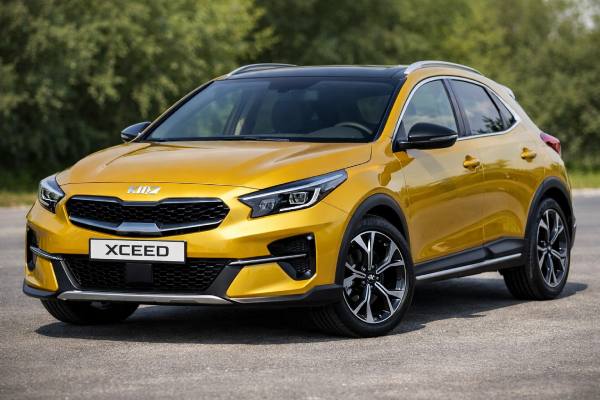

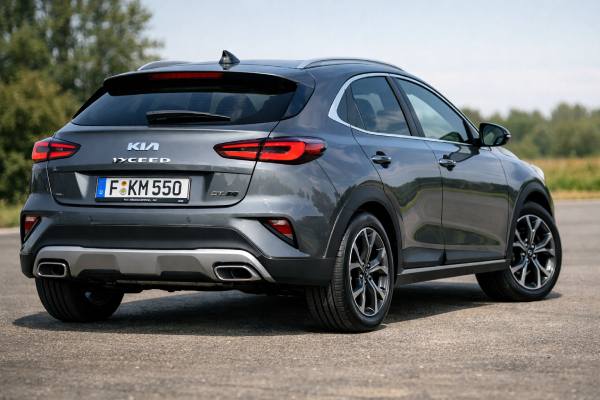
The facelifted Kia XCeed PHEV is one of the more thoughtful plug-in hybrids in the compact crossover class. It does not try to be a full SUV, and that is part of its appeal. Instead, it combines the lower, tidier road manners of a hatchback with a slightly raised driving position, easier access, and a plug-in hybrid system that makes short daily trips far cheaper and quieter. The 1.6-litre gasoline engine, transmission-mounted electric motor, and 8.9 kWh battery deliver a combined 141 hp, which is enough for smooth, easy everyday pace without turning the car into a heavy performance model. For owners, the strengths are clear: useful EV range for town work, a refined low-speed driving character, and familiar Kia ergonomics. The trade-offs are equally clear. Boot space drops compared with petrol XCeeds, public charging speed is modest, and the best ownership experience still depends on careful servicing, battery health, and buying the right trim.
Fast Facts
- The XCeed PHEV works especially well for short daily journeys, where the electric range can cover a large share of normal commuting.
- Ride height, cabin layout, and easy controls make it more user-friendly than many style-first compact crossovers.
- The plug-in system is smooth and efficient, but it is still heavier and less spacious than the equivalent petrol XCeed.
- Battery condition, charging habits, and a fault-free hybrid system check matter more here than on a conventional petrol model.
- A practical service baseline is every 10,000 miles or 12 months, with the engine oil still needing regular attention even on low-fuel-use cars.
Start here
- Kia XCeed PHEV Facelift Basics
- Kia XCeed PHEV Technical Data
- Kia XCeed PHEV Trims and ADAS
- Ownership Risks and Updates
- Service Plan and Buyer Tips
- Everyday Driving and EV Use
- XCeed PHEV Versus Rivals
Kia XCeed PHEV Facelift Basics
The facelifted XCeed PHEV succeeds because it stays disciplined. Kia did not turn it into a bulky small SUV, and it did not chase headline power numbers that would only make the car heavier and more expensive. Instead, it refined the original XCeed idea and gave the plug-in hybrid version a clearer identity. The facelift brought updated lighting, a sharper front end, revised trim logic, and a more modern digital interface, but the core engineering concept stayed the same: compact front-wheel-drive crossover-hatch proportions, independent rear suspension, and a plug-in hybrid system designed around normal road use rather than image.
That balance is important. Many compact PHEVs look attractive in a spec sheet but feel compromised in daily use because the battery adds weight without enough benefit in the way the car is actually driven. The XCeed avoids most of that problem. Its system output of 141 hp is modest, but the car does not need huge numbers. It needs smooth step-off, decent mid-range response, and low running costs on short trips. In exactly those areas, the XCeed PHEV makes sense. The electric motor helps at low speed, the drivetrain moves cleanly between electric and hybrid operation, and the body remains compact enough for town use without becoming cramped in the cabin.
The practical side is more mixed. Compared with petrol XCeed versions, the plug-in hybrid gives up a noticeable amount of cargo room because the battery packaging eats into the boot area. The difference is large enough that buyers who often carry bulky luggage should think about it carefully. That said, the cabin still works well for normal family use. Front-seat comfort is good, rear legroom is decent for the class, and the raised driving position makes the car easier to enter and easier to judge in traffic than a regular hatchback.
The facelift also helps the XCeed feel more current inside. Better digital displays, improved connectivity, and a stronger ADAS story make it feel like a modern compact crossover rather than a simple electrified derivative. In higher trims, that improvement is easy to notice. The result is a car that suits a very specific buyer: someone who wants real plug-in-hybrid utility, but does not want the size, weight, or visual bulk of a full SUV.
Its limits should be clear from the start. This is not a long-range electric car, not a fast-charging road-trip machine, and not the most spacious compact crossover in its class. But for urban and suburban owners with regular home charging, it lands in a very sensible place. That is why the facelifted XCeed PHEV deserves attention. It is not spectacular in one headline area. It is simply well judged across the things most owners use every day.
Kia XCeed PHEV Technical Data
The facelifted XCeed PHEV uses a familiar Kia plug-in-hybrid layout, but it packages the system neatly in a lower crossover body. Depending on source and market, output is quoted as 139 bhp or 141 hp, but the combined system figure is the same 103.6 kW class. For clarity, this guide uses the widely recognized 141 hp figure. The key point is not the difference in unit conversion. It is how the system behaves: a naturally aspirated 1.6 GDi petrol engine, a transmission-mounted electric motor, a small hybrid starter generator, and a 6-speed DCT driving the front wheels.
| Item | Kia XCeed PHEV Facelift 2022–present |
|---|---|
| Powertrain type | Plug-in hybrid, parallel system |
| Engine | 1.6 GDi petrol |
| Engine layout | Inline-4, DOHC, 4 valves per cylinder |
| Cylinders | 4 |
| Displacement | 1.6 L (1,580 cc) |
| Induction | Naturally aspirated |
| Fuel system | Direct injection |
| Engine power | 105 hp (77.2 kW) @ 5,700 rpm |
| Engine torque | 147 Nm (108 lb-ft) @ 4,000 rpm |
| Hybrid system type | TMED transmission-mounted electric device |
| HSG type | Synchronous motor |
| HSG power | 8 kW |
| HSG torque | 35.3 Nm |
| Main drive motor type | Synchronous motor |
| Main drive motor power | 44.5 kW (about 60.5 hp) |
| Main drive motor torque | 170 Nm (125 lb-ft) |
| Battery chemistry | Lithium-ion polymer |
| Battery capacity | 8.9 kWh |
| System voltage | 360 V |
| Combined system power | 141 hp (103.6 kW) @ 5,700 rpm |
| Combined system torque | 265 Nm (195 lb-ft) |
| Timing drive | Chain |
| Item | Transmission and Driveline |
|---|---|
| Transmission | 6-speed DCT |
| Drive type | FWD |
| Differential | Open |
| Drive modes | Normal and Sport in published trim data |
| Item | Chassis and Dimensions |
|---|---|
| Front suspension | MacPherson strut |
| Rear suspension | Multi-link |
| Steering | Electric power steering |
| Brakes | Four-wheel discs; front 16-inch / rear 15-inch disc format in one official spec sheet |
| Most common tyre size | 235/45 R18 |
| Ground clearance | Around 184 mm on many higher-spec PHEV-related trim descriptions |
| Length | 4,395 mm (173.0 in) |
| Width | 1,826 mm (71.9 in) |
| Height | 1,490 mm (58.7 in) |
| Wheelbase | 2,650 mm (104.3 in) |
| Kerb weight | About 1,609–1,635 kg (3,548–3,605 lb), market dependent |
| GVWR | 2,030 kg (4,476 lb) |
| Fuel tank | 37 L (9.8 US gal / 8.1 UK gal) |
| Cargo volume | 291 / 1,243 L (10.3 / 43.9 ft³) |
| Item | Performance and Efficiency |
|---|---|
| 0–100 km/h | 11.0 s |
| Top speed | 160 km/h (99 mph), about 120 km/h in EV mode |
| EV range, combined WLTC | 42 km (26.1 mi) |
| EV range, urban WLTC | 54 km (33.6 mi) |
| Electric consumption | 13.2 kWh/100 km |
| Weighted combined fuel consumption | 1.7 L/100 km |
| Fuel consumption with low battery | About 5.7 L/100 km in official WLTC data |
| Towing capacity | 1,300 kg braked / 600 kg unbraked |
| Item | Charging and Service Data |
|---|---|
| Onboard AC charger | 3.3 kW |
| AC charging time | About 2 h 15 min from 0–100% at 3.3 kW |
| Emergency AC charging | About 5 h 02 min from 0–100% at 2.3 kW |
| Engine oil capacity | 3.8 L (4.0 US qt) |
| Engine oil specification | ACEA A5 |
| Engine oil viscosity | 5W-30 in Kia UK oil guide |
| Coolant, DCT fluid, refrigerant, torque values | Verify by VIN-specific service documentation |
For day-to-day ownership, the most important numbers are not the headline 141 hp or the official 1.7 L/100 km weighted figure. They are the smaller, more practical ones: a 37-litre fuel tank, a 3.3 kW charger, and a 291-litre boot. Those are the numbers that shape how the XCeed PHEV actually lives with you.
Kia XCeed PHEV Trims and ADAS
The facelifted XCeed PHEV was not always sold with the same trim names in every country, so buyers should think in terms of equipment tiers rather than badges. In the UK market, the plug-in hybrid sat in a clearly identified “3 PHEV” position in the official specification sheet, while mainland European markets often used names such as Style and Evolution. The underlying pattern is the same: the PHEV usually sits higher than a basic entry trim, but not every market gives it the full luxury or GT-style treatment.
That matters because the trim changes how complete the car feels. The PHEV is already paying a packaging penalty in boot space and weight, so buyers usually want the comfort and technology benefits that justify the extra complexity. In that sense, the better-equipped versions make the strongest case. Official Kia material shows the PHEV commonly paired with features such as dual-zone climate control, heated front seats, heated steering wheel, a 10.25-inch navigation display, Kia Connect services, reversing camera, rear parking sensors, and an electronic parking brake. In some markets and higher trims, the feature list also extends to items such as smart key access, front parking sensors, panoramic roof, power seat memory, wireless charging, and smart power tailgate.
Safety equipment is one of the strongest reasons to choose the facelift carefully. The published UK specification sheet shows a healthy base spread of active safety on the XCeed range, including forward collision-avoidance assist with city, pedestrian, and cyclist functions, lane-follow assist, lane-keep assist, high-beam assist, driver attention warning, ESC, hill-start assist, and tyre-pressure monitoring. That is a strong starting point for a compact crossover.
The step above that is where the trim choice becomes more important. Some of the more desirable features, such as blind-spot warning, rear cross-collision assist, intelligent speed-limit warning, and higher-level cruise and highway-assist functions, depend more directly on trim and gearbox. The product-highlight material also shows Highway Driving Assist, Navigation-assisted Smart Cruise Control, Rear Cross-Traffic Collision-Avoidance Assist, and Blind-Spot Collision-Avoidance Assist higher in the range, with some functions limited to DCT-equipped upper trims. That is exactly why a buyer should not assume that every facelift XCeed PHEV has the same safety capability.
Crash-test context also needs a careful reading. The public Euro NCAP reference remains the Ceed family result originally published in 2019, with later annual and facelift reviews preserving that assessment framework. The key scores most buyers care about are still respectable: 88 percent adult occupant, 85 percent child occupant, 52 percent vulnerable road users, and 68 percent safety assist in the safety-pack context. That does not mean a 2025 or 2026 car was crash-tested as a completely new model. It means the public rating basis continues from the Ceed family structure and equipment review process. In practical terms, the lesson is simple: if safety equipment matters to you, verify the exact car.
The best-used trim is usually the one that balances comfort, charging convenience, and the stronger ADAS set without adding unnecessary cost or fragile luxury features. On this model, trim is not just decoration. It changes the value of the whole vehicle.
Ownership Risks and Updates
The XCeed PHEV has a reassuringly familiar hybrid layout, but buyers should still treat it like an electrified car first and a normal petrol crossover second. The broad reliability picture is positive. Kia’s 1.6 GDi plug-in-hybrid system has been used across several models, and it does not carry the same public reputation for widespread battery disasters or exotic charging failures that some more complex PHEVs have earned. Still, it has its own pattern of likely issues.
The first category is low to medium severity and mostly age-related. Rear brake corrosion is common on plug-in hybrids because regenerative braking reduces how hard the friction brakes work. That sounds like a benefit, and it is, but it can also let discs and pads age poorly if the car spends a lot of time in light urban use. The symptoms are familiar: rough brake feel, noisy first stops, or uneven rear wear. The remedy is equally familiar: proper inspection, cleaning, and parts replacement when needed.
The second category is hybrid-system-related but not automatically alarming. Like many PHEVs, the XCeed depends on healthy communication between its high-voltage battery, power electronics, charging hardware, and hybrid control systems. Warning messages, failed charging sessions, or reduced EV operation do not always mean major failure, but they do mean the car needs a proper diagnostic scan rather than guesswork. A used example should be checked for stored hybrid-system faults even if the dashboard looks clear during a short test drive.
Battery health is central to the ownership story. The battery is small enough that you will feel degradation more quickly than on a large EV pack if the car has been used hard or charged carelessly for years. That said, Kia’s warranty position is reassuring: for EVs and PHEVs, the company states a minimum 70 percent battery-capacity guarantee within the warranty period and mileage limits. That does not mean every old pack will feel new. It does mean buyers have a useful benchmark for what Kia itself treats as acceptable battery health.
On the engine side, the 1.6 GDi is simpler than a small turbo petrol, but it is still a direct-injection petrol engine. That means intake deposit build-up over long mileage is possible, especially on short-trip cars. Cooling-system health still matters, and oil still matters even if the owner boasts about rarely visiting a fuel station. PHEVs can disguise neglected engine maintenance because the combustion engine simply runs less often. That is not a benefit if the oil ages badly or service discipline disappears.
Transmission behavior also deserves attention. The 6-speed DCT in hybrid service is usually smoother than some dry-clutch small-car dual-clutch units, but it is still not something to ignore. Hesitation, shudder, or odd take-up in traffic are all reasons to scan the car properly.
In the official open sources reviewed for this article, there is no single broad XCeed PHEV facelift campaign that defines the whole ownership picture. That is useful, but not a reason to relax. The right habit is still VIN-based recall and campaign checking, plus dealer service-record confirmation. On a plug-in hybrid, software status matters almost as much as stamped paper history.
Service Plan and Buyer Tips
The XCeed PHEV responds best to a maintenance plan that respects both halves of the car. Buyers sometimes fall into one of two mistakes. They either treat it like a fully electric car and neglect the engine, or they treat it like a normal petrol car and ignore the hybrid hardware. The sensible approach is in the middle. This is still a gasoline car with oil, coolant, filters, plugs, and a transmission. It also has a high-voltage battery, charging system, regenerative braking behavior, and control electronics that need to be healthy.
A practical service plan looks like this:
| Item | Practical interval | Notes |
|---|---|---|
| Engine oil and filter | 10,000 miles / 12 months | Still important even if fuel use is low |
| Engine air filter | Inspect yearly, replace around 30,000 km | Sooner in dusty conditions |
| Cabin air filter | About every 2 years | Replace sooner if airflow drops |
| Spark plugs | Inspect by about 60,000–75,000 km | Use correct specification |
| Timing chain | No routine fixed replacement | Inspect for noise or timing-related faults |
| Coolant | Follow VIN-specific schedule | Hybrid cooling health matters |
| DCT fluid | Follow official guidance by VIN and duty cycle | Do not assume “sealed for life” means ignore forever |
| Brake fluid | Every 24 months | Important because friction brakes may see less regular heavy use |
| Brake pads and rotors | Inspect every service | Regen can hide corrosion until late |
| 12 V battery | Start testing after year 3 or 4 | PHEVs still rely heavily on it |
| HV battery check | Review state of health through dealer-level diagnostics when buying used | Especially important after the original warranty period starts narrowing |
| Charge port and cable inspection | Check regularly | Look for damage, poor latch action, or corrosion |
The oil side is the clearest published figure. Kia’s oil guide lists the Ceed family plug-in hybrid at 3.8 litres, ACEA A5, 5W-30, with a 10,000-mile or 12-month interval. That is the anchor point most buyers should use unless a VIN-specific dealer record says otherwise. On a PHEV, the calendar interval matters just as much as mileage because the engine may do fewer miles while the oil still ages through time and short-cycle operation.
The used-buyer checklist should be practical and hybrid-specific:
- Full service history, not just charging anecdotes.
- VIN-based recall and campaign check.
- Hybrid-system scan for stored faults.
- Smooth cold start of the petrol engine.
- Stable transition between EV and hybrid running.
- Healthy charging behavior on AC.
- No charge-port damage or charging interruption.
- Brake inspection with attention to rear corrosion.
- Good tyres and even alignment wear.
- Battery-capacity and warranty-position discussion, not avoidance.
The best buys are usually examples with regular servicing, working charging cables, and evidence that the car has been used as intended rather than neglected because it “hardly uses petrol.” Cars to avoid or heavily discount include those with unexplained hybrid warnings, poor charging history, stuck-on low-voltage battery issues, or clearly neglected brakes. Long-term durability looks good enough to recommend, but only if the owner respects both the electric and combustion sides of the vehicle.
Everyday Driving and EV Use
The XCeed PHEV is at its best in the exact environment many compact crossovers live in: mixed town, suburban, and moderate-speed commuting. That is where the plug-in system pays back. In EV mode, the car feels quiet, smooth, and well suited to traffic. Step-off is cleaner than in a non-hybrid petrol XCeed, and the electric motor covers the first part of the speed range well enough that the car feels calmer than its modest power figure suggests.
The transition between electric and hybrid operation is one of the car’s biggest strengths. It is not invisible in every situation, but it is smoother than many earlier plug-in hybrids that always seemed to remind the driver when the engine had joined in. In normal driving, the XCeed usually just gets on with the job. That is exactly what you want. A family-oriented PHEV should feel coherent, not theatrical.
The 6-speed DCT also suits the powertrain better than some CVT-style alternatives suit their rivals. It gives the car a more normal road feel at steady speeds, and it avoids the high-rev drone that can make some hybrids seem less refined on a climb. The compromise is that it still behaves like a dual-clutch transmission in low-speed maneuvering. A healthy one is perfectly acceptable. A worn or poorly calibrated one will still show itself in parking-lot creep and stop-start traffic.
Ride quality remains one of the XCeed’s quieter achievements. The car feels more composed than many small SUVs because it is lower and less top-heavy. The extra battery weight is there, but it is not badly managed. Straight-line stability is good, steering accuracy is tidy, and the body does not lurch around in the way some soft compact crossovers do. It is not a hot hatch, and it is not trying to be. But it is more satisfying to guide along a fast road than a lot of taller alternatives.
Real-world efficiency depends heavily on how honestly you charge it. If you plug in frequently and mostly do short daily trips, fuel use can be extremely low. If you never plug in, you are carrying battery weight for little benefit. In real mixed use with regular charging, many owners can expect something like 30–40 km of usable EV distance in normal conditions and more in gentle urban work. In colder weather, that can drop noticeably. Once the battery is largely depleted, fuel use often lands around the mid-5 to low-7 L/100 km range depending on speed, tyres, and route. At a real 120 km/h motorway cruise with little battery support left, the car behaves more like a normal compact petrol crossover than a magic economy tool.
Charging performance is simple rather than fast. The 3.3 kW onboard charger is enough for overnight home charging and useful workplace top-ups, but it is not a fast public-charging solution. That is fine if you understand the car’s purpose. The XCeed PHEV is built for regular predictable charging, not for rapid-charge road-trip strategy.
XCeed PHEV Versus Rivals
The XCeed PHEV competes in a part of the market where design, packaging, and daily usability matter almost as much as raw efficiency figures. Against the Ford Kuga PHEV, the Kia is smaller, tidier, and more road-car-like in feel. The Ford usually wins on cabin space and EV range, but it also carries more bulk and feels more obviously SUV-like. Buyers who want the more spacious family tool may prefer the Kuga. Buyers who want a lighter-feeling compact crossover-hatch may find the XCeed easier to live with.
Against the Toyota C-HR Plug-in Hybrid, the comparison is more philosophical. The Toyota usually feels more design-led and more overtly hybrid in character, while the Kia feels more conventional and straightforward. The XCeed offers a more practical rear cabin and boot access, even if its PHEV battery cuts luggage space more than the petrol XCeed does. The Toyota may appeal more to buyers who prioritize style and brand-hybrid identity. The Kia makes a stronger case for people who want plug-in functionality without learning a dramatically different cabin or driving personality.
Against the Peugeot 308 Plug-in Hybrid, the XCeed looks less premium inside but often feels more honest in its mission. The Peugeot aims higher on perceived design flair and digital atmosphere. The Kia leans toward clarity, visibility, and easier everyday ergonomics. For some buyers, that simplicity is a real advantage, especially once the car is several years old and being judged on ownership logic rather than showroom effect.
That ownership logic is where the XCeed PHEV stands out. It is not the segment leader in EV range, not the fastest-charging PHEV, and not the most premium cabin. What it offers instead is a cohesive package: a compact body that still feels practical, a plug-in system that makes sense for real commuting, a mature chassis, and a less bulky character than many SUV-shaped alternatives. That combination matters because most owners do not buy these cars for one headline number. They buy them to solve a routine transport problem with as little friction as possible.
So where does the facelift XCeed PHEV land? It is strongest for buyers who can charge at home, drive a lot of short or medium trips, and want a compact crossover that still behaves like a road car. It is less ideal for drivers who rarely charge, regularly carry bulky luggage, or want class-leading motorway EV range. As a complete used proposition, though, it remains easy to understand. Choose a well-kept car with proven charging health, good trim, and clean service records, and the XCeed PHEV makes a convincing case.
References
- xceed-specification.pdf – Kia 2023 (Technical Specifications)
- XCeed PHEV – Kia 2023 (Technical Data)
- Official Kia Cee’d 2019 safety rating 2019 (Safety Rating)
- Engine Oil Grades and Capacities – Kia 2023 (Service Guide)
- Car Safety Recalls | What They Are & What To Do | Kia UK 2026 (Recall Guidance)
Disclaimer
This article is for informational purposes only and is not a substitute for professional diagnosis or repair. Specifications, torque values, service intervals, procedures, battery performance, and equipment vary by VIN, market, trim, model year, and software level, so always verify critical details against official service documentation and dealer records before maintenance, diagnosis, or purchase.
If this guide was useful, please consider sharing it on Facebook, X, or another platform to support our work.