
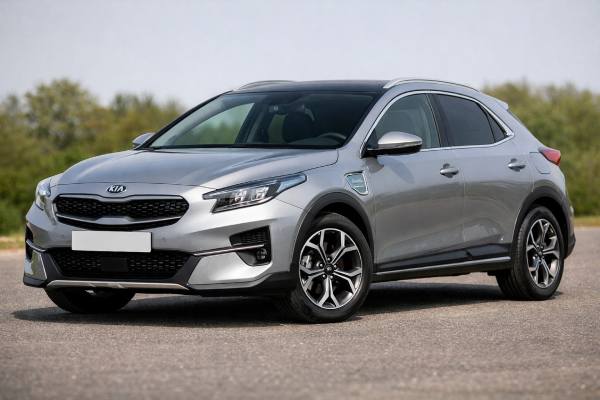
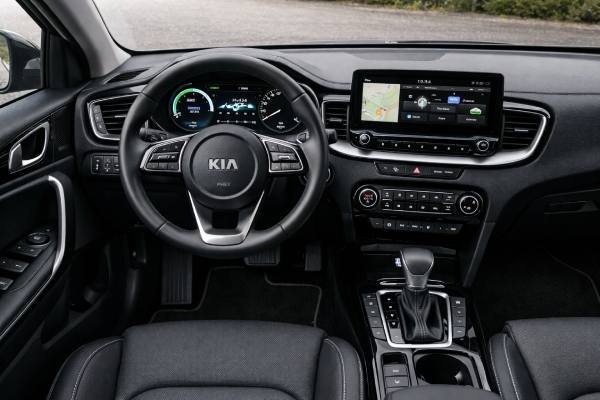
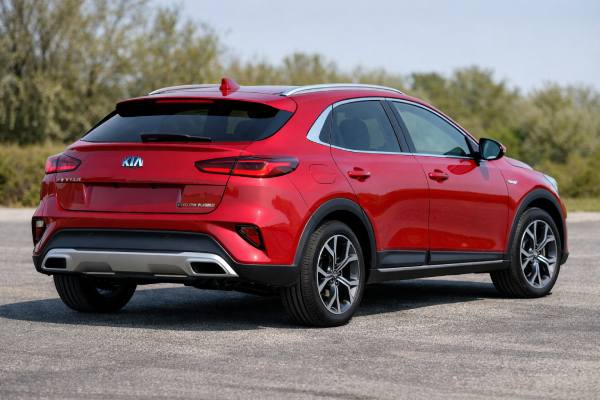
The 2020–2022 Kia XCeed Plug-in Hybrid takes a smart approach to electrification. Instead of turning the XCeed into a heavy, over-complicated crossover, Kia added a compact 8.9 kWh battery, a transmission-mounted electric motor, and a six-speed dual-clutch gearbox to a familiar 1.6-litre petrol engine. The result is a car that can cover short daily trips on electric power, then behave like a normal petrol crossover when the battery runs low. That balance is the real appeal here.
The trade-offs are just as important. The battery cuts boot space to 291 litres, the 37-litre fuel tank is smaller than in the regular XCeed, and the official weighted fuel number only tells part of the ownership story. Still, for drivers who can charge at home or work and want a compact crossover that feels more natural than an e-CVT hybrid, the XCeed PHEV remains one of Kia’s more thoughtfully packaged electrified models.
At a Glance
- The PHEV system gives the XCeed useful electric commuting ability without losing the familiar feel of a geared transmission.
- Ride comfort, cabin quality, and motorway refinement are stronger than many buyers expect from a compact crossover.
- Official AC charging is simple and fairly quick at 3.3 kW, with a full charge in about 2 hours 15 minutes.
- The main ownership compromise is practicality: boot volume and fuel-tank size are both reduced versus non-hybrid XCeeds.
- Kia lists the Ceed family Plug-in Hybrid service interval at 15,000 km or 12 months, whichever comes first.
Contents and shortcuts
- Kia XCeed PHEV in focus
- Kia XCeed PHEV technical picture
- Kia XCeed PHEV grades and protection
- Weak spots and campaign history
- Service schedule and shopper tips
- Real-world drive and efficiency
- Rival choices and verdict
Kia XCeed PHEV in focus
The XCeed Plug-in Hybrid works because Kia did not try to turn it into something it is not. Underneath, it remains a Ceed-family crossover with front-wheel drive, a relatively low center of gravity for the class, and a chassis that feels more hatchback-derived than SUV-derived. The plug-in system adds useful electric driving rather than a completely different character.
That matters in daily use. The 1.6 GDi petrol engine is not especially exciting on its own, but in the PHEV setup it becomes part of a broader system. Kia paired it with a 59 kW electric motor and an 8.9 kWh lithium-ion polymer battery, giving the car 141 PS combined output and 265 Nm combined torque. The electric motor is mounted in the transmission, so power delivery still feels tied to real gear changes. Buyers moving from a conventional petrol or diesel hatchback often like that, because the car behaves more naturally under throttle than many hybrid crossovers with continuously variable transmissions.
The XCeed’s packaging tells the rest of the story. The battery sits under the rear seat and beneath the luggage floor, so the cabin remains practical enough for everyday family use, but there is an obvious price to pay in cargo space. A regular petrol XCeed offers a much more generous boot. In the PHEV, that drops to 291 litres seats up. For some buyers, that is the single biggest compromise in the whole car.
The other compromise is honesty about range. Official weighted WLTP figures make the car look extremely cheap to run, and it can be, but only if you actually charge it. On short commutes, school runs, and city errands, the XCeed PHEV can feel impressively efficient and quiet. On longer motorway drives with the battery depleted, it behaves more like a compact petrol crossover carrying extra mass and a smaller fuel tank. That does not make it bad. It just means usage pattern matters more here than with a regular mild hybrid.
Where the XCeed PHEV scores well is overall cohesion. It has a more premium feel than many mainstream compact crossovers, the driving position is easy to like, and the ride is settled without feeling dull. It also avoids the overly tall stance that can make some crossovers feel heavy or vague. For buyers who can plug in regularly and want a compact crossover with real electric capability but no drastic change in driving habits, the 2020–2022 XCeed PHEV remains a well-judged package.
Kia XCeed PHEV technical picture
The table below focuses on the 2020–2022 Kia XCeed Plug-in Hybrid as sold in Europe. Some public sources list combined output as 141 PS, while certain UK-market materials show 139 bhp. In practice, this is the same 104 kW system.
Powertrain and efficiency
| Item | Kia XCeed 1.6 GDi PHEV |
|---|---|
| Code | 1.6 GDi PHEV system |
| Engine layout and cylinders | Inline-4, naturally aspirated, 4 cylinders |
| Displacement | 1.6 L (1,580 cc) |
| Motor | Transmission-mounted electric motor, single front axle motor |
| Motor output | 59 kW |
| System voltage | 360 V |
| Battery chemistry | Lithium-ion polymer |
| Battery capacity | 8.9 kWh |
| Induction | Naturally aspirated |
| Fuel system | Gasoline direct injection |
| Max power | 141 hp class (104 kW) combined |
| Max torque | 265 Nm (195 lb-ft) combined |
| Timing drive | Public open-access Kia sheets do not consistently publish belt or chain details for this exact PHEV system; verify by VIN |
| Rated efficiency | 1.7 L/100 km weighted WLTP in one Irish-market sheet |
| Real-world highway at 120 km/h | Usually far higher than the weighted figure; expect roughly high-6 to low-7 L/100 km once charge-sustaining on motorway runs |
Transmission and driveline
| Item | Kia XCeed 1.6 GDi PHEV |
|---|---|
| Transmission | 6-speed dual-clutch automatic (6DCT) |
| Drive type | FWD |
| Differential | Open |
Chassis and dimensions
| Item | Kia XCeed 1.6 GDi PHEV |
|---|---|
| Front suspension | McPherson strut |
| Rear suspension | Multi-link |
| Steering | Motor-driven power steering |
| Steering ratio | Public PHEV spec sheets do not consistently publish a ratio |
| Brakes | Front and rear disc brakes |
| Brake diameters | Public open-access Kia PHEV spec sheets do not clearly publish rotor diameters |
| Most common tyre size | 235/45 R18 |
| Ground clearance | Wheel-size dependent in the XCeed range; verify exact PHEV figure by market |
| Length | 4,395 mm (173.0 in) |
| Width | 1,826 mm (71.9 in) |
| Height | 1,490 mm (58.7 in) |
| Wheelbase | 2,650 mm (104.3 in) |
| Turning circle | 10.6 m (34.8 ft) |
| Kerb weight | 1,594–1,635 kg (3,514–3,605 lb), market-dependent |
| GVWR | 2,030 kg (4,475 lb) |
| Fuel tank | 37 L (9.8 US gal / 8.1 UK gal) |
| Cargo volume | 291 L seats up / 1,243 L seats down (10.3 / 43.9 ft³) |
Performance and charging
| Item | Kia XCeed 1.6 GDi PHEV |
|---|---|
| 0–100 km/h | 11.0 s |
| Top speed | 188 km/h (117 mph) |
| EV-only top speed | 120 km/h (75 mph) |
| Electric range | 42 km (26.1 mi) weighted |
| Electric range city | 54 km (33.6 mi) weighted |
| AC charging | Type 2 single-phase up to 3.3 kW |
| AC 0–100% time | 2 h 15 min |
| Emergency 3-pin charging | Up to 2.3 kW, about 5 h 02 min |
| Towing | 1,300 kg braked / 600 kg unbraked (2,866 / 1,323 lb) |
| Tow ball limit | 100 kg (220 lb) |
Fluids, service, and safety
| Item | Practical guidance |
|---|---|
| Engine oil | ACEA A5 5W-30; 3.8 L (4.0 US qt) |
| Coolant | Exact type and fill quantity should be verified by VIN; PHEV cooling circuits make this more important than on a simple petrol model |
| Transmission fluid | Verify exact DCT fluid specification and fill by VIN |
| Differential | Not separate from the transaxle on this FWD layout |
| A/C refrigerant | Verify by VIN and market-specific service data |
| A/C compressor oil | Verify by VIN and market-specific service data |
| Wheel nut torque | 107–127 Nm (79–94 lb-ft) |
| Crash ratings | No standalone Euro NCAP XCeed PHEV page is published; the related Ceed hatchback platform was rated 4 stars in standard form and 5 stars with safety pack in 2019 |
| IIHS | Not rated |
| Headlight rating | Not applicable |
| ADAS | FCA, LKA, LFA, smart cruise control, reversing camera, and parking sensors varied by trim and market |
The most useful technical takeaway is not the headline power number. It is the way the system is packaged: a modest battery, a proper geared transmission, and enough electric range to cover many daily trips if the owner charges consistently.
Kia XCeed PHEV grades and protection
The XCeed PHEV did not exist in every trim or market in the same way, so used buyers need to focus on the actual equipment list rather than just the badge. In the UK, the key PHEV trim was often called 3 PHEV. In Ireland, the early PHEV was commonly offered as a single, fairly well-equipped trim. That means many used examples already include a stronger feature set than entry-level petrol XCeeds.
Typical PHEV identifiers are easy to spot. The closed-style grille, left-front charging flap, PHEV badging, and dual-clutch-only setup separate it from the conventional petrol and diesel cars. Inside, many cars have EV/HEV drive displays, charging indicators, and hybrid-specific menus in the instrument cluster and infotainment system. Some markets also used 18-inch wheels as standard on the PHEV, though certain UK examples wore 16-inch wheels.
Equipment content is generally good. Irish-market material lists smart cruise control with stop and go, forward collision avoidance assist, lane keep assist, lane follow assist, reversing camera, rear parking sensors, automatic air conditioning, wireless charging, and an 8-inch navigation system as part of the PHEV package. UK-market PHEV trim information also highlights drive mode select, smart cruise control, and trim-specific visual details. The result is that the PHEV usually feels closer to a mid- or upper-mid trim XCeed than to a stripped base model.
Safety needs careful wording. Euro NCAP does not publish a dedicated XCeed PHEV crash page in the way it does for many stand-alone models. The closest official benchmark is the related Kia Ceed hatchback, tested in 2019, where standard-equipment cars earned four stars and cars with the optional safety pack earned five stars. That does not mean every XCeed PHEV should simply be called a five-star car. It means buyers should verify the exact safety equipment fitted to the individual car.
In practical terms, the XCeed PHEV usually gives you a strong safety baseline: front, side, and curtain airbags, ISOFIX on the outer rear seats, ESC, ABS, hill-start assist, and active lane and collision systems. Higher or better-specified cars add stronger assistance features such as blind-spot monitoring and rear cross-traffic support, depending on market.
A final ownership detail matters here. As safety systems become more camera- and radar-dependent, correct calibration becomes part of normal repair quality. Windscreen replacement, front bumper repairs, and even alignment work on an ADAS-equipped XCeed PHEV should be treated as calibration-sensitive jobs. On a used car, paperwork showing proper post-repair calibration is increasingly valuable.
Weak spots and campaign history
The XCeed PHEV is still young enough that official public data does not show a huge list of age-driven failures unique to this model. That is good news. But it would be a mistake to assume that a plug-in hybrid with a petrol engine, a traction battery, and a dual-clutch gearbox is maintenance-proof. The real risk pattern is less about dramatic design collapse and more about a few specific watchpoints.
Common, low to medium cost: rear brake corrosion and uneven brake use. Like many PHEVs, the XCeed can rely heavily on regeneration and engine braking in routine driving. That reduces wear, which sounds good, but it can also mean the friction brakes do less work than expected. Cars used mostly on short, gentle trips can develop rusty rear discs and sticky pads. The fix is usually straightforward if caught early: cleaning, lubrication, and sometimes new discs and pads.
Common, low to medium cost: stale fuel and poor engine-use patterns. Owners who do many short electric trips sometimes leave fuel sitting too long or run the petrol engine only occasionally. That is not a defect, but it can affect drivability, oil condition, and general combustion cleanliness. A PHEV still needs the petrol engine exercised properly from time to time.
Occasional, medium cost: DCT behavior complaints. The six-speed dual-clutch is one of the XCeed PHEV’s advantages because it feels more natural than an e-CVT, but it still has dual-clutch traits. Low-speed creep, repeated parking maneuvers, steep hill starts, and heavy stop-start use can expose hesitation or abrupt engagement. Not every hesitation means failure, but a test drive should include slow maneuvering, incline work, and repeated restart conditions.
Occasional, medium cost: 12V battery weakness and hybrid warning messages. Modern PHEVs rely heavily on healthy low-voltage systems. A tired 12V battery can cause strange warning behavior, charging oddities, or refusal of certain hybrid functions. On a used example, battery testing is cheap and worthwhile.
Electrified-model watchpoints: battery cooling, charging-port condition, and cable-lock behavior. Public rescue-sheet data confirms the high-voltage pack sits beneath the luggage floor and rear seat, and battery cooling matters if the pack has suffered damage or coolant loss. There is no strong public evidence of widespread pack failure in this model, but charging hardware and related fault codes deserve a scan.
Official campaign history: the most important current public recall item is the 2025 Irish recall for certain Ceed and XCeed vehicles built between 03 December 2019 and 14 August 2023. The issue involved contamination of the hydraulic clutch actuator printed circuit board with fluid, creating a risk of electrical short and possible thermal incident in the engine bay while driving. This matters directly because the PHEV is DCT-only. On a used car, recall completion should be verified by VIN and dealer record, not assumed.
For a pre-purchase inspection, ask for full service history, recall proof, a cold start, a hybrid-system scan, a charging test, and a brake inspection. On this car, documentation quality is a major part of the condition story.
Service schedule and shopper tips
The XCeed PHEV rewards owners who remember that it is two cars in one: an electrified commuter and a conventional petrol drivetrain that still needs proper service. Kia’s public interval for the Ceed family plug-in hybrid is 15,000 km or 12 months, whichever comes first. That is the sensible baseline. Time matters as much as mileage because many PHEVs cover very few petrol miles while still aging their fluids and filters.
Practical maintenance schedule
| Item | Practical interval |
|---|---|
| Engine oil and filter | Every 12 months or 15,000 km maximum |
| Engine air filter | Inspect yearly; replace around 20,000–30,000 km depending on conditions |
| Cabin air filter | Replace about every 24 months, sooner in dusty or urban use |
| Coolant | Verify by VIN; PHEV cooling systems make correct timing more important |
| Spark plugs | Inspect on schedule and replace at the manufacturer interval for the 1.6 GDi engine |
| Brake fluid | Replace on time, not by feel |
| DCT fluid | Inspect and monitor condition; for long-term ownership, a preventive service before very high mileage is sensible |
| Brake pads and discs | Inspect at every service, with special attention to rear-disc corrosion |
| Tyre rotation | Every 10,000–12,000 km if wear pattern allows |
| Wheel alignment | Check yearly or after pothole strikes, curb damage, or uneven wear |
| 12V battery | Test from year 4 onward |
| HV battery and charging system | Scan for stored faults during annual servicing |
| Timing components | Inspect by condition and fault-code history; replace if timing-related symptoms appear |
Fluid and capacity notes
Public Kia oil data is more precise than some of the other service fluids. For the Ceed-family 1.6 plug-in hybrid, Kia lists:
- 3.8 L oil capacity,
- ACEA A5 oil specification,
- 5W-30 viscosity,
- and a 10,000-mile / 12-month oil-service pattern in the UK guide.
Other fluids are more VIN-sensitive. That is especially true for coolant and DCT service details. For the PHEV, do not assume a generic Ceed petrol fill chart is close enough. Battery cooling, petrol-engine cooling, and hybrid packaging make exact service information more important.
Buyer’s guide
The best-used XCeed PHEV is not simply the lowest-mileage one. The better choice is usually the car with:
- complete annual service history,
- proof of charging-cable use and regular charge cycles,
- clean brake condition,
- full recall completion,
- and no stored hybrid or charging faults.
During inspection, check the charging flap, cable-lock operation, rear-brake condition, boot-floor fit, and signs of water ingress around the luggage area. Also pay attention to how the car transitions between electric and petrol operation. It should feel smooth and deliberate, not hesitant or clumsy.
Long-term durability looks promising if the car is serviced properly and actually used as a PHEV rather than neglected as a tax-driven purchase. The main risk is not the concept. It is buying a car whose hybrid functions, maintenance history, and recall status were never taken seriously.
Real-world drive and efficiency
The XCeed PHEV’s biggest dynamic advantage is that it feels normal. That may sound faint, but it matters. Many electrified crossovers ask the driver to adapt to a transmission that drones, an overly synthetic brake pedal, or a heavy body that blunts responses. The Kia avoids most of that. It still feels like a Ceed-family car with a slightly taller stance, and that makes it easier to trust from the first drive.
Ride quality is one of its strengths. The XCeed already had a more settled, mature feel than some small crossovers, and the plug-in version preserves that. It is not especially sporty, but it is composed on the motorway, stable in fast bends, and well matched to broken roads. The multi-link rear suspension helps here. Steering is light but accurate, and the car turns in more neatly than many buyers expect from a crossover-shaped body.
The powertrain character changes depending on battery state. With charge available, the car pulls away quietly and smoothly, and urban driving can feel far more relaxed than in the regular petrol models. At lower speeds, it often feels stronger than the numbers suggest because the electric motor fills the torque gap immediately. Once the battery is depleted or the car is driven harder, the 1.6-litre petrol engine becomes much more noticeable. It is not unpleasant, but it is clear that this is a system designed around efficiency first, not pace.
The 6DCT is central to the experience. Unlike an e-CVT hybrid, it delivers actual shifts and a more mechanical connection between throttle input and road speed. That is one reason some drivers prefer this setup. The downside is that low-speed DCT behavior can be less silky than a torque-converter automatic in very tight maneuvering.
Real-world economy depends heavily on charging discipline. If the car is charged daily and used for shorter commutes, running costs can be genuinely low. If it is driven mostly on longer trips with little charging, the official weighted 1.7 L/100 km figure becomes almost meaningless. In charge-sustaining mixed use, expect something closer to a normal 1.6 petrol automatic. On steady 100–120 km/h motorway runs, that usually means something in the high-6 to low-7 L/100 km range. The 37-litre tank also limits long-distance range more than many buyers expect.
Charging performance is straightforward rather than advanced. There is no DC fast charging. AC charging up to 3.3 kW is enough for home and workplace charging, and a full charge in about 2 hours 15 minutes is perfectly usable in daily life. That is the right mindset for this car: frequent convenient charging, not rapid top-ups on long journeys.
Rival choices and verdict
The XCeed PHEV sits in a narrow but interesting part of the market. It is not a pure hatchback, not a full SUV, and not a full hybrid. That means its closest rivals are the compact crossovers and hatchback-based PHEVs that combine moderate battery size with everyday practicality.
Against the Ford Kuga PHEV, the Kia is smaller, lighter, and easier to place, but it loses on rear-seat room and cargo flexibility. The Ford feels more like a family SUV. The Kia feels more like a raised hatchback with plug-in ability. Buyers who spend more time in towns and tighter parking spaces may actually prefer the XCeed’s footprint.
Against the Volkswagen Golf eHybrid or Cupra Leon e-Hybrid, the Kia gives up some system sophistication and cabin polish, but it counters with a more crossover-like seating position and a calmer, less aggressively high-tech ownership feel. The VW-group cars can feel faster and more polished. The XCeed often feels simpler and more approachable.
Against Kia’s own Niro PHEV, the choice is especially interesting. The Niro is the more obvious electrified family car, with better hybrid packaging and a more dedicated eco personality. The XCeed, however, is the better choice for buyers who want a lower, sleeker shape, stronger road manners, and a more conventional driving feel.
Against plug-in rivals from Peugeot or Renault, the Kia’s main strength is balance. It does not dominate on range, pace, or interior drama, but it avoids big weaknesses. The system is easy to understand, the car feels mature on the road, and the charging performance is sufficient for the real job most PHEVs do: short daily trips with regular overnight charging.
That leads to a clear verdict. The XCeed PHEV is not the right electrified car for every buyer. If you rarely charge, a conventional hybrid or efficient petrol model is likely the better financial choice. If you need maximum boot space, this is also not the sweet spot in the range. But for drivers who can charge consistently and want a crossover that still feels like a normal car to drive, the 2020–2022 XCeed Plug-in Hybrid remains a strong and sensible option.
Its biggest strengths are easy to summarize:
- useful electric commuting range,
- a natural-feeling geared hybrid system,
- solid comfort and refinement,
- and good everyday cabin quality.
Its main drawbacks are just as clear:
- reduced boot space,
- a smaller fuel tank,
- weighted efficiency figures that flatter real-world long-distance use,
- and the need to verify DCT-related recall completion.
Used well, though, it is one of the more convincing compact plug-in hybrids of its generation.
References
- The new XCeed – Kia 2022 (Technical Specification)
- Engine Oil Grades and Capacities – Kia 2023 (Service Guide)
- Kia Service Intervals 2023 (Service Guide)
- Official Kia Cee’d 2019 safety rating 2019 (Safety Rating)
- Recalls by manufacturer (2025) – RSA.ie 2025 (Recall Database)
Disclaimer
This article is for informational purposes only and is not a substitute for professional diagnosis, repair, or VIN-specific workshop guidance. Specifications, torque values, intervals, procedures, software status, and equipment can vary by VIN, market, trim, production date, and charging hardware. Always verify the exact details for your vehicle against official Kia service documentation and dealer records before carrying out maintenance or repair work.
If this guide was useful, please consider sharing it on Facebook, X, or another platform to support our work.