

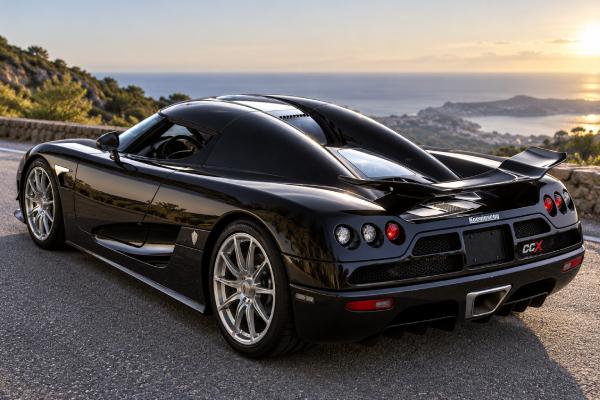
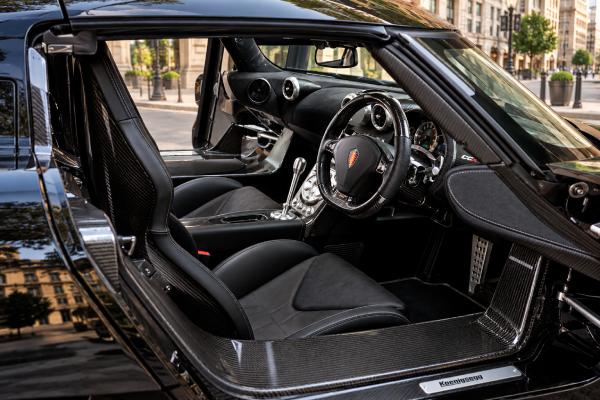
The Koenigsegg CCX Edition is not simply a CCX with a cosmetic package. It is a two-car, factory-built development of the gasoline-powered CCX, distinguished by a 4.8-liter twin-supercharged V8, 888 hp, revised aerodynamics, track-focused chassis tuning, 11-spoke wheels, and an exposed-carbon presentation. Those changes place it between the regular 806 hp CCX and the ethanol-capable CCXR family, while its tiny production run makes correct identification especially important. A buyer is evaluating a hand-built historical object as much as a performance car, so provenance, originality, mechanical condition, and factory support matter more than a conventional mileage comparison. This guide explains what makes the Edition different, how its engineering affects the driving experience, which specifications are dependable, how to approach maintenance without inventing generic service intervals, and what to verify before purchase. It also clarifies where factory figures describe ideal performance rather than a promise that every surviving car will reproduce them today.
Table of Contents
- What Makes the CCX Edition a Separate Model
- CCX Edition Technical Data and Hardware
- How the 888 hp Edition Delivers Its Performance
- Aerodynamics, Chassis Tuning, and Road Behavior
- Maintenance Strategy for a Low-Volume Hypercar
- Authentication and Pre-Purchase Inspection
- Who the CCX Edition Suits Best
What Makes the CCX Edition a Separate Model
The defining fact is simple: Koenigsegg produced only two CCX Edition cars, and each combined the gasoline CCX concept with a larger 4.8-liter engine and a more aggressive chassis-and-aerodynamics package. It should not be confused with the four-car CCXR Edition, which used flex-fuel calibration and produced 1018 hp on ethanol fuel.
The Edition arrived during a period when Koenigsegg was turning the CCX platform into several sharply differentiated derivatives. The regular CCX had already represented a major redesign rather than a mild update of the CCR. It used an enlarged carbon-fiber monocoque, a new in-house-developed V8 configuration, revised suspension, and packaging intended to satisfy broader international requirements. The CCX Edition then concentrated on additional power, visible carbon, downforce, and track response without abandoning the removable-roof road-car format.
Several identifying features are central to the model:
- A factory-designated 4.8-liter, twin-supercharged Koenigsegg V8 producing 888 hp.
- A production total of two examples.
- An exposed visible-carbon body and carbon chassis presentation.
- Distinctive 11-spoke wheels.
- A unique rear wing and additional side winglets.
- Lower, firmer, more circuit-oriented suspension calibration.
- The CCX fuel strategy rather than the CCXR’s E85-focused flex-fuel identity.
The small production number changes how the car should be discussed. With mainstream limited editions, buyers can often compare several examples and estimate a normal market range. For the CCX Edition, one transaction may involve a car with different market equipment, later factory work, paint or carbon repairs, wheel changes, or owner-requested details. The correct question is therefore not merely, “Is this a CCX Edition?” It is, “Does this specific chassis retain the specification, history, and documentation expected of one of the two factory cars?”
The model-year description also deserves care. The assignment scope is 2008–2009, but hand-built exotic production, registration dates, public debuts, and model-year labeling do not always align neatly. A car may be discussed by build year in one record and first-registration year in another. The chassis identity and factory documentation should control any purchasing decision rather than an advertisement’s year alone.
CCX Edition Technical Data and Hardware
The CCX Edition is a rear-wheel-drive, mid-engine, two-seat removable-roof car powered only by an internal-combustion engine. Its central engineering story is the pairing of a carbon-fiber monocoque with a 4.8-liter twin-supercharged V8 and a transverse six-speed transaxle, producing extreme performance without hybrid assistance, all-wheel drive, or modern electronic torque vectoring.
| Specification | Value | Notes |
|---|---|---|
| Powertrain type | Gasoline internal-combustion engine | No hybrid system |
| Engine | Koenigsegg aluminum V8 | Mid-mounted, dry-sump layout |
| Displacement | 4.8 L | Factory Edition designation |
| Valvetrain | Double overhead camshafts, four valves per cylinder | 32 valves total |
| Induction | Twin centrifugal superchargers | Response-oriented forced induction |
| Fuel system | Sequential multipoint injection | Gasoline specification |
| Maximum power | 888 hp (653 kW) | Edition output |
| Maximum torque | 920 Nm (679 lb-ft) | Published for the 888 hp configuration |
| Lubrication | Dry sump | Supports oil control under high cornering load |
| Specification | Value |
|---|---|
| Transmission | Koenigsegg-developed transverse six-speed gearbox |
| Drive type | Rear-wheel drive |
| Differential | Torque-sensitive limited-slip differential |
| Clutch | Dual-plate, 240 mm |
| Shift control | Manual configuration or factory paddle-shift equipment depending on the individual car |
| Measure | Factory figure | Condition or context |
|---|---|---|
| 0–100 km/h (0–62 mph) | 3.0 seconds | Traction and surface dependent |
| 0–200 km/h | 9.05 seconds | Factory claim |
| 0–200–0 km/h | 13.85 seconds | Acceleration and braking combined |
| Estimated top speed | More than 400 km/h (250 mph) | Quoted without the high-downforce rear wing |
| 100–0 km/h braking distance | 32 m (105 ft) | Surface, tire, and temperature sensitive |
| Lateral acceleration | 1.5 g | Factory figure |
| Weight-to-power ratio | 1.44 kg/hp | Factory figure |
| Specification | Value |
|---|---|
| Body style | Two-door, two-seat targa-style coupe |
| Roof | Detachable carbon-fiber hardtop, stowable under the front hood |
| Primary structure | Carbon-fiber monocoque with aluminum honeycomb |
| Fuel-tank arrangement | Integrated into protected sections of the monocoque |
| Body construction | Pre-impregnated carbon fiber/Kevlar with lightweight sandwich reinforcement |
| Weight distribution | 45% front, 55% rear |
| Dry weight | About 1280 kg (2822 lb) |
| Luggage volume | 120 L (4.2 cu ft) |
| Fuel capacity | 70 L (18.5 US gal) |
| Specification | Value |
|---|---|
| Length | 4293 mm (169.0 in) |
| Width | 1996 mm (78.6 in) |
| Height | 1120 mm (44.1 in) |
| Wheelbase | 2660 mm (104.7 in) |
| Ground clearance | Approximately 100 mm (3.9 in), with hydraulic lift assistance |
| Front suspension | Pushrod-operated double wishbones with adjustable gas-hydraulic dampers |
| Rear suspension | Pushrod-operated double wishbones with adjustable gas-hydraulic dampers |
| Steering | Electro-hydraulic power-assisted rack and pinion |
| Turning circle | 11 m (36.1 ft) |
| Component | Specification | Ownership significance |
|---|---|---|
| Wheels | Edition-specific 11-spoke center-lock wheels | Originality and condition strongly affect authenticity |
| Front tire size | 255/35 R19 | Confirm approved current replacement specification |
| Rear tire size | 335/30 R20 | Age matters even when tread appears deep |
| Front brakes | 380 mm ventilated carbon-ceramic discs with eight-piston calipers | Inspect disc condition and measured wear |
| Rear brakes | 362 mm ventilated carbon-ceramic discs with six-piston calipers | Replacement cost justifies specialist assessment |
| Rear aerodynamics | Unique Edition wing | Adds downforce but reduces maximum-speed efficiency |
| Front/side aerodynamics | Splitter and side winglets | Check for impact damage and correct mounting |
These figures should be treated as a specification map, not a substitute for the build record of either individual car. Koenigsegg’s low-volume construction allowed customer choices and later factory work, so equipment may differ in details while the core Edition identity remains unchanged.
How the 888 hp Edition Delivers Its Performance
The CCX Edition’s performance is defined less by the headline number than by the way 888 hp reaches only the rear tires through a relatively light, compact car. Unlike newer all-wheel-drive or hybrid hypercars, it asks the driver, tire, differential, and road surface to manage the entire output without a powered front axle filling in lost traction.
Centrifugal superchargers behave differently from the positive-displacement blowers often associated with immediate low-speed torque. Their compressor speed and airflow rise with engine speed, which helps the Edition build power progressively as revs increase. That does not make the car gentle; 920 Nm is substantial in a 1280 kg dry-weight platform. It does, however, give the throttle a more linear relationship to engine speed than an abruptly spiking torque curve would.
The six-speed gearbox is also part of the character. Modern performance cars can shift almost invisibly, but the CCX-generation transaxle presents a more mechanical event. The powertrain, clutch, differential, and rear tires need to be in agreement. On a road test, smooth low-speed engagement, clean selection when warm, and consistent behavior during moderate acceleration are more useful indicators than a dramatic full-throttle demonstration.
Factory acceleration figures assume suitable tires, surface preparation, temperatures, and a healthy drivetrain. A 3.0-second 0–100 km/h claim says the platform had exceptional capability for its era; it does not mean an owner should repeatedly launch a now-rare car to prove the number. Launches create concentrated clutch, driveshaft, tire, and differential loads. For an inspection, progressive acceleration in several gears can reveal far more about boost delivery, misfire behavior, fueling, cooling, and shift quality while imposing less risk.
The estimated 400-plus km/h top speed also needs context. Koenigsegg specifies the figure without the rear wing because downforce costs drag. The Edition package was designed for a broader performance envelope, including stability and cornering, rather than for a single low-drag maximum-speed run. That is why the 1.5 g lateral figure and the distinct aero hardware are as important to the model’s purpose as the speed claim.
Aerodynamics, Chassis Tuning, and Road Behavior
The Edition’s strongest dynamic distinction is its balance of additional downforce and firmer control, not merely its extra 82 hp over the regular CCX. Its wing, side elements, lower stance, stiffer springs, revised dampers, and anti-roll calibration were intended to make the car more precise at speed.
A stiff carbon monocoque is crucial because it gives suspension engineers a stable reference. When the structure twists, wheel alignment changes in ways the dampers and springs cannot fully control. The CCX platform’s carbon tub was exceptionally rigid for a removable-roof car, allowing Koenigsegg to tune response through suspension components rather than masking a flexible body with excessively harsh rates.
The pushrod arrangement moves spring-and-damper loads inboard. This can reduce unsprung mass and gives the designer freedom over motion ratios and packaging. For the owner, the important point is not racing vocabulary but condition: rod ends, bushings, damper seals, mounting points, ride-height mechanisms, and alignment settings all need specialist evaluation. A car can look pristine yet feel vague if age, storage, or incorrect setup has affected these parts.
The aerodynamic pieces are functional and vulnerable. A low splitter can contact ramps, transport decks, road crowns, or parking stops. Wing mounts and side winglets can be damaged by careless handling or can develop finish differences after repair. Visible carbon makes this more demanding than repainting a conventional panel. A proper inspection should look for weave distortion, resin cracking, cloudy clearcoat, mismatched gloss, sanding marks, edge repairs, and non-original fasteners.
On public roads, the hydraulic lifting system is essential. It does not turn the CCX Edition into a high-clearance car; it provides temporary help over obstacles. The driver still needs to approach transitions slowly and at an angle where appropriate. Before purchase, operate the lift repeatedly, observe whether both sides rise evenly, check for fluid seepage, and confirm that the car returns to its normal setting without warning messages or delayed movement.
The removable roof adds another ownership dimension. Its ability to stow in the front compartment makes open-air use practical, but the panel, seals, latches, storage supports, and painted or carbon surfaces must all be protected. Wind noise or water entry may result from seal condition, alignment, or prior handling rather than a structural problem. The roof should be removed and refitted during an inspection, not merely photographed in place.
Maintenance Strategy for a Low-Volume Hypercar
The safest maintenance approach is factory-led and condition-based: establish the exact chassis specification, obtain its service history, and agree on a plan with a Koenigsegg-authorized or factory-recognized specialist. Generic exotic-car intervals should not be copied into the record of a two-car model.
Low mileage does not eliminate aging. In some areas it makes diagnosis harder because long storage periods can hide problems until the car is heat-cycled and driven. A credible maintenance program should address the following systems.
Fluids, seals, and heat cycles
Engine oil, coolant, brake fluid, gearbox lubricant, and hydraulic fluid age differently, but all require the correct specification and service method. Ask for invoices showing dates, products, quantities, and the organization that performed the work. A stamp without detail is less useful on a car where an incorrect fluid or filling procedure can create expensive consequences.
Inspect hoses, seals, reservoir connections, and fittings both cold and after a controlled warm-up. Dry residue can reveal an old leak even if the surface was cleaned. The dry-sump oil system also needs the correct checking procedure; a casual dipstick reading on a cold engine may be meaningless or misleading.
Supercharger and fuel-system health
The twin-supercharged engine should build power cleanly, without belt noise, unstable boost, hesitation, or abnormal smoke. Service records should identify inspection or replacement of drive components when performed. Because the car may sit for extended periods, old fuel, deposits, corrosion, injector condition, and tank ventilation deserve attention. Use the fuel grade specified for the individual car and market, and avoid assuming that a modern pump label automatically matches its calibration.
Tires, brakes, and center-lock hardware
Tire date codes are as important as tread depth. A lightly used tire can become unsuitable through age, heat history, flat spotting, or storage conditions. Replacement selection must consider not only size but load rating, speed rating, construction, clearance, and the car’s handling calibration.
Carbon-ceramic discs need measured assessment rather than a visual guess. Chips, surface condition, oxidation indicators, pad compatibility, and remaining service life should be recorded. Center-lock wheels require the prescribed tools, torque procedure, locking method, and cleanliness. Evidence of hammering, improvised sockets, or damaged nuts is a warning about prior workmanship.
Battery, electronics, and hydraulic equipment
The CCX electrical architecture uses networked solid-state control rather than a conventional collection of simple relays and fuses. Stable battery voltage is therefore important during storage, diagnosis, and starting. Confirm the approved battery-maintenance method, inspect charging behavior, and scan the car with appropriate equipment. Test the lift system, climate control, warning display, tire-pressure monitoring, audio functions, lighting, and door operation in one session so intermittent voltage-related issues are easier to identify.
Finally, exercise should be purposeful. Repeated idling in storage does not warm the gearbox, brakes, wheel bearings, or driveline properly and may add moisture to the engine and exhaust. A planned drive that reaches normal operating temperature, followed by inspection for leaks and fault codes, is more useful when conditions and insurance allow.
Authentication and Pre-Purchase Inspection
A CCX Edition purchase should be treated like the acquisition of a documented technical artifact. The inspection must confirm identity first, condition second, and market value only after the first two questions are settled.
Begin with documentary continuity:
- Match the chassis number on the car to factory records, registration documents, invoices, shipping papers, and prior sales material.
- Obtain written confirmation of the car’s Edition status and original specification from Koenigsegg or an accepted authority.
- Build a dated ownership and service timeline, noting gaps rather than filling them with assumptions.
- Record every repaint, carbon repair, mechanical rebuild, software update, wheel change, interior retrim, and factory return.
- Verify that taxes, import approvals, emissions documentation, and road-registration status are correct for the destination market.
Then inspect the physical identifiers and Edition equipment. Confirm the 4.8-liter specification, 11-spoke wheels, wing, side winglets, visible-carbon finish, suspension configuration, interior details, and any known customer-selected options. Do not reject a car solely because a later factory update is present, but demand documentation explaining who performed it and why.
A compression or leak-down test may be useful, but only when the factory or specialist approves the procedure for the engine’s condition and access. Equally important are cold-start behavior, hot restart, oil pressure, coolant stability, fuel trims, fault memory, boost consistency, and evidence of contamination in fluids. The car should be examined on a lift with underbody panels removed as appropriate. Inspect the flat floor, venturi areas, splitter, suspension pickups, wheel wells, subframes, exhaust, gearbox, driveshafts, and lifting-system lines.
The test drive should be structured rather than theatrical. Start with clutch take-up, steering assistance, brake feel, low-speed differential behavior, and ride-height operation. Continue with moderate load after full warm-up, listening for driveline vibration and checking that the engine pulls evenly. Finish with a post-drive scan and leak inspection. A seller who encourages a high-speed demonstration but resists basic diagnostic access is prioritizing spectacle over evidence.
Transport and storage deserve their own review. Confirm suitable tie-down points, loading-angle requirements, roof-panel security, battery procedure, tire-pressure plan, fire protection, humidity control, and insurance conditions. Damage often occurs during handling rather than driving, especially with a low splitter and exposed carbon.
Who the CCX Edition Suits Best
The CCX Edition suits an owner who values analog rear-wheel-drive performance, early Koenigsegg engineering, and exceptional rarity—and who is prepared to manage the car as a long-term technical relationship. It is a poor fit for someone seeking anonymous service access, predictable running costs, or a car that can be evaluated mainly by mileage.
Its appeal comes from several layers. It preserves the original CC-series silhouette and signature doors, but it also represents Koenigsegg’s third-generation engineering platform. It adds the stronger 4.8-liter engine and Edition aerodynamics without changing to the CCXR’s ethanol-led identity. It is open-top when desired, carries its roof on board, offers a usable front luggage compartment, and still presents a driving experience centered on a large mechanical connection between engine, gearbox, differential, and rear tires.
The compromises are inseparable from that appeal. The car is almost two meters wide, extremely low, sensitive to tire condition, costly to transport correctly, and dependent on specialist knowledge. Visible carbon can make even a small cosmetic event technically and financially significant. Long periods without use do not make ownership free; they shift attention toward seals, fluids, batteries, fuel quality, and careful recommissioning.
For a buyer choosing among CCX-family cars, the decision should follow the desired identity:
- Choose a regular CCX for the original 806 hp third-generation model and a broader production pool.
- Choose the CCX Edition for gasoline power, 888 hp, Edition aerodynamics, and two-car rarity.
- Choose a CCXR or CCXR derivative for the 1018 hp flex-fuel story and its different fuel-management demands.
Insurance and valuation should be organized before delivery rather than after the car reaches storage. An agreed-value policy needs a description that distinguishes the two-car Edition from a normal CCX, supported by the chassis record, current inspection, photographs, and documented options. Coverage should address transport, display, track exclusions, spare parts, and who may drive the car. The storage provider should also understand that a minor-looking contact with the splitter, roof, wing, or visible carbon can require specialist assessment. Clear responsibilities reduce the chance that an incident becomes a dispute over whether damage is cosmetic, structural, or a loss of originality.
The best CCX Edition is not automatically the car with the lowest odometer reading or the brightest presentation. It is the example with confirmed factory identity, transparent history, documented specialist care, intact carbon and Edition hardware, current tires and fluids, fully functioning systems, and a realistic plan for continued support. That combination protects both the driving experience and the historical value of one of Koenigsegg’s rarest early production derivatives.
References
- CCX | Koenigsegg 2026 (Manufacturer Model Page)
- CCX – Technical Specifications | Koenigsegg 2026 (Manufacturer Technical Data)
- Engines and Powertrains | Koenigsegg 2026 (Manufacturer Engineering Overview)
- Carbon Fiber Chassis | Koenigsegg 2026 (Manufacturer Engineering Overview)
- Stowable Removable Roof | Koenigsegg 2026 (Manufacturer Engineering Overview)
- Koenigsegg Doors – Dihedral Synchro-Helix | Koenigsegg 2026 (Manufacturer Engineering Overview)
Disclaimer
This article is for informational purposes and is not a substitute for professional diagnosis or repair. Inspection and maintenance must be handled by appropriately qualified specialists. Specifications, torque values, service intervals, fluids, and procedures can differ by VIN, market, equipment, and later factory work; verify every detail against the car’s official service documentation. Please share this guide on Facebook, X/Twitter, or another appropriate platform if it helps support informed specialist-car ownership.