
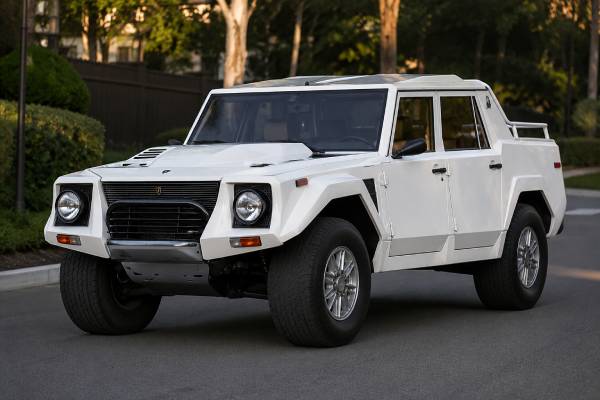
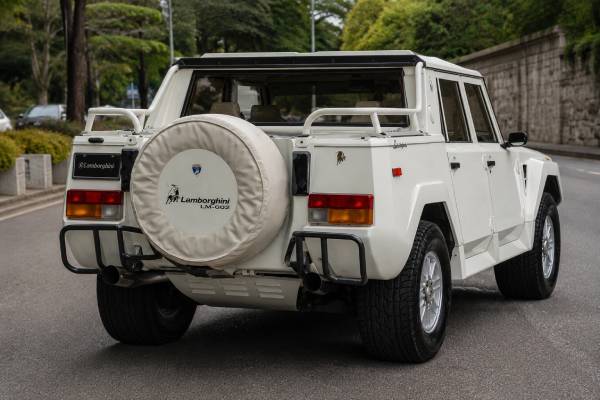
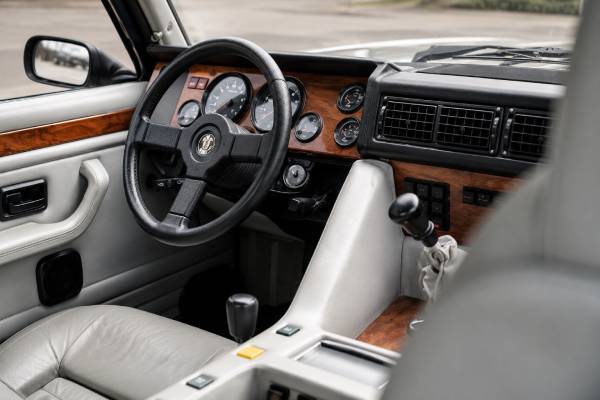
The Lamborghini LM/American is the rarest and most U.S.-focused form of the LM002, the Countach-powered off-roader that arrived decades before the modern exotic SUV became normal. Built at the end of LM002 production, it kept the truck’s wild formula—front-mounted V12, manual gearbox, heavy-duty four-wheel drive, desert-ready tires, leather-lined cabin, and hand-built drama—but added fuel injection and emissions equipment for North American certification. The result was not a soft luxury SUV. It was a 2.7-ton Lamborghini with military-project roots, supercar hardware, truck-like toughness, and a personality no later performance SUV has truly copied. For buyers and collectors, the LM/American is especially interesting because authenticity, condition, documentation, and correct technical details matter far more than mileage alone. A good example is spectacular. A neglected one can become a very expensive restoration project.
Table of Contents
- Why the LM/American Still Matters
- V12 Drivetrain, Chassis, and Core Specs
- Production Details and LM/American Identification
- Design, Engineering, and Desert Hardware
- How the LM/American Drives
- Maintenance, Restoration, and Known Risks
- Market Values and Buying Checklist
Why the LM/American Still Matters
The LM/American matters because it is the most developed U.S.-market version of Lamborghini’s original V12 off-roader. It took the already outrageous LM002 and added the fuel-injected LIE 52/12 system, catalytic converters, market-specific trim, and final-series details that make it especially desirable to collectors.
The LM002 story began long before the word “Super SUV” became part of Lamborghini’s official language. Lamborghini had explored military-style off-road projects through the Cheetah, LM001, LMA, LM003, and LM004 concepts. The key engineering breakthrough was moving away from the rear-engine layout of the earliest prototypes. A rear-mounted engine made the front axle too light in difficult terrain, especially during climbs and acceleration. Giulio Alfieri’s solution was simple in principle and radical in result: put a Lamborghini V12 at the front and build the vehicle around it.
The production LM002 arrived in 1986 after desert testing and prototype development. It was not a normal luxury 4×4 with a famous badge. It used a front-mounted Countach Quattrovalvole-derived V12, a ZF five-speed manual gearbox, low-range gearing, self-locking differentials, a tubular steel chassis, and specialized Pirelli Scorpion BK tires. Its role was unusual even for Lamborghini: part exotic car, part desert vehicle, part luxury statement, and part leftover military dream.
The LM/American sits near the end of that timeline. North American certification required changes that earlier carbureted LM002s did not need. The most important was electronic fuel injection. Lamborghini developed the LIE 52/12 multipoint system to make the 5,167 cc V12 cleaner and more manageable under U.S. emissions rules. Power was certified at 420 hp in SAE net terms, which explains why some sources quote lower output for the American model than the roughly 450 CV used for European carbureted cars.
That distinction matters. The LM/American is not simply a regular LM002 wearing U.S. trim. It represents a technical change in the model line. Collectors value it because it combines the final-series character with documented rarity, U.S.-market usability, and specific exterior and interior identifiers. It also has a direct link to Lamborghini’s later SUV strategy. The Urus became a commercial giant, but the LM002 proved that the company had already imagined a high-performance Lamborghini off-roader decades earlier.
Today, the LM/American’s reputation rests on three ideas. First, it is genuinely rare. Second, it is mechanically special, with a V12 and manual drivetrain layout that no modern luxury SUV offers. Third, it is difficult and expensive enough to own that correct examples separate themselves quickly from neglected ones. For enthusiasts, it is unforgettable. For buyers, it demands careful inspection.
V12 Drivetrain, Chassis, and Core Specs
The key specification is the 5,167 cc Lamborghini L503 V12 with LIE 52/12 electronic fuel injection, rated at 420 hp in U.S. SAE net form. It drives through a five-speed ZF manual gearbox, dual-range transfer case, and four-wheel-drive hardware built for serious off-road use rather than appearance alone.
| Category | Specification |
|---|---|
| Model | Lamborghini LM/American, also known as LM002A or U.S.-spec LM002 |
| Production era | 1990–1992 for the LM/American specification |
| Engine | L503 60-degree V12, four valves per cylinder, dual overhead camshafts per bank |
| Displacement | 5,167 cc, commonly rounded to 5.2 liters |
| Fuel system | Lamborghini LIE 52/12 multipoint electronic fuel injection |
| Output | 420 hp SAE net for U.S.-market fuel-injected specification |
| Transmission | ZF five-speed manual with dual-range transfer case |
| Drivetrain | Selectable four-wheel drive with self-locking differentials |
| Construction | Tubular steel frame with aluminum and fiberglass body panels |
| Suspension | Independent suspension with double wishbones and coil-spring dampers |
| Brakes | Servo-assisted front discs with dual calipers per side and rear drums |
| Wheelbase | About 2,950 mm |
| Length | About 4,790 mm |
| Width | About 2,000 mm |
| Height | About 1,850 mm |
| Curb weight | More than 2,700 kg depending on equipment and market specification |
| Top speed | Approximately 210 km/h when correctly tuned and healthy |
The engine is the heart of the LM/American’s appeal. Its architecture came from Lamborghini’s supercar world, not from a truck catalog. The 60-degree V12 has four camshafts, 48 valves, a high-revving character for such a heavy vehicle, and a sound that feels completely out of place in a boxy off-roader. The American version’s LIE 52/12 fuel injection changed the driving character compared with the earlier Weber-carbureted cars. It generally gives cleaner starting, improved emissions compliance, and more predictable fuel delivery, although it also adds electronic and diagnostic complexity.
The drivetrain is equally important. The ZF manual gearbox gives the LM/American a mechanical link to its driver that later automatic performance SUVs do not have. Low-range gearing gives the truck real off-road ability, while the differential layout reflects the desert and military-development background. This was not a fashion-based all-wheel-drive system tuned only for wet roads and quick launches.
The chassis uses a strong tubular steel frame, with body panels attached in a way that suits small-volume production. This structure is part of what makes restoration expensive. Damage to the frame, mounting points, suspension pickup areas, or body panel attachment points is not a normal body-shop repair. It needs a specialist who understands how these vehicles were built.
The brake layout surprises many modern buyers. Dual-caliper front discs sound exotic, but the rear drums remind you that this was a heavy-duty 1980s off-road machine, not a modern track SUV. Braking performance depends heavily on correct adjustment, hydraulic condition, tire condition, and whether the vehicle has been sitting. A properly maintained LM/American can feel secure for its age and mass. A neglected one can feel alarming.
Production Details and LM/American Identification
The LM/American is valuable because it is a small sub-series within an already tiny model line. Total LM002 production is usually cited at roughly 300 to 301 factory-built examples, with the LM/American accounting for the final U.S.-market batch.
Exact counts can vary by source because low-volume Lamborghini production records from the era are not always presented in one simple modern format. The safest way to treat any car is to verify its identity by VIN, engine number, factory records, import history, and model-specific equipment rather than relying only on a seller’s description.
The LM/American is commonly associated with these identifiers:
- Fuel-injected 5.2-liter V12 with LIE 52/12 electronics.
- U.S.-market emissions equipment, including catalytic converters.
- OZ alloy wheels on many documented examples.
- Chrome bumper treatment and market-specific exterior trim.
- LM/American badging or trim details on correct cars.
- Leather-lined cabin with luxury equipment typical of the late LM002 period.
- U.S. lighting, compliance, and documentation details.
A buyer should not treat one feature as proof by itself. Wheels can be changed. Badges can be added. Bumpers can be refinished or replaced. The engine-management system, emissions layout, chassis identity, import paperwork, service history, and factory documentation carry more weight.
Why documentation matters
Documentation can be the difference between a collectible LM/American and an expensive curiosity. The best cars have a consistent paper trail: factory or heritage information, old titles, service invoices, emissions-related records, import documents, mileage records, and specialist inspection notes. A well-documented car with older paint may be more desirable than a freshly detailed example with missing history.
For the LM/American, documentation should confirm not only that the truck is an LM002, but that it is the correct U.S.-specification version. Serious buyers should look for:
- VIN consistency across title, chassis tags, and stamped locations.
- Engine number records and evidence that the installed engine matches the car’s history.
- Invoices from recognized Lamborghini or exotic-car specialists.
- Records for fuel-injection work, cooling-system service, clutch hydraulics, brake service, and suspension renewal.
- Photos from earlier ownership periods to confirm original body, trim, color, and accident history.
- Any Lamborghini Polo Storico or marque-specialist verification available.
Factory colors, interiors, and special-order appeal
LM002s were hand-built, low-volume vehicles, and many received bold color and trim combinations. Interior presentation has a strong effect on desirability because the cabin is part of the LM002’s strange charm. A truck that combines brutal military proportions with white leather, wood trim, power windows, air conditioning, and a roof-mounted stereo captures the model’s period excess better than a heavily modernized interior.
Originality matters. Recolored leather, incorrect carpets, aftermarket stereos cut into original trim, missing rear cargo covers, non-original wheels, and incorrect tire fitment all reduce collector confidence. Some changes may improve usability, but they should be reversible and well documented.
Design, Engineering, and Desert Hardware
The LM/American looks the way it does because it was built around extreme packaging needs: a front V12, serious cooling, off-road geometry, large tires, and a practical four-door cabin. Its design is angular, heavy, and functional rather than conventionally beautiful, which is exactly why it has become iconic.
The exterior is all presence. The flat panels, broad stance, exposed hinges, squared wheel openings, front brush guard, rear cargo area, and huge tires give it a tactical character. Yet the details are pure Lamborghini excess. The hood bulges and vents exist because the engine bay is busy and hot. The wide body is dictated by the track width, tire size, and suspension. The rear bed gives the vehicle a utility-truck quality, but the cabin feels more like an exotic grand tourer from a company that did not believe in subtlety.
The construction combines a steel tubular frame with aluminum and fiberglass body sections. That sounds simple, but the reality is hand-built and model-specific. Panel gaps, mounting points, trim fit, and weather sealing can vary from car to car. This is normal to a point, but poor repairs, impact damage, corrosion around mounting areas, and distorted panels should be treated seriously.
The Pirelli Scorpion BK tire story
The LM002’s tires are one of its defining engineering features. Pirelli developed the Scorpion BK specifically for the vehicle, including the famous shoulder “ears” that helped the tire float over soft sand. The tire had to support enormous mass, withstand desert temperatures, handle high speed, and still work on road. It was not a normal SUV tire adapted to fit a Lamborghini.
For collectors, correct tires matter for three reasons. First, they affect the way the vehicle looks. A substitute tire can make the truck sit wrong or lose its original desert-machine stance. Second, they affect drivability. Tire age, sidewall construction, and correct sizing change steering effort, braking, and ride. Third, they affect authenticity. A car on correct Scorpion BK rubber makes a better impression at inspection, show, and sale.
Cooling, airflow, and packaging
Heat management is one of the LM/American’s most important technical themes. A front-mounted V12 in a tall, heavy off-roader creates a major cooling challenge, especially in hot climates or slow off-road use. The grille, hood vents, engine-bay layout, large oil and coolant capacity, fans, hoses, and radiators all need to function correctly.
A healthy LM/American should not run hot in normal use, but age changes everything. Old hoses, weak fans, partially blocked radiators, tired thermostats, corroded fittings, incorrect coolant, and poor bleeding can turn the engine bay into a risk area. Any pre-purchase inspection should include a warm idle test, a road test, fan operation checks, and careful inspection for coolant seepage.
The cabin as a contrast
The cabin is one of the LM/American’s great contradictions. You climb into something that looks ready for a desert patrol and find leather, wood, air conditioning, electric windows, thick carpets, and period audio equipment. The driving position is upright. The dashboard is broad. The view forward is commanding, but the corners are not easy to place in traffic. The roof-mounted stereo and heavy trim add to the sense that Lamborghini built the truck for wealthy clients who wanted both shock value and comfort.
Preserving that cabin matters. Replacement interior materials should match the original grain, stitching, piping, and color tone as closely as possible. A cheap retrim can damage value even if it looks clean in photos.
How the LM/American Drives
The LM/American drives like a huge mechanical event, not like a modern performance SUV. It is fast for its age and weight, but its real appeal is the combination of V12 sound, manual shifting, tall seating, heavy controls, and the strange feeling of commanding a Lamborghini supercar engine from an off-road truck.
Starting a properly sorted fuel-injected LM/American should be easier than living with an earlier carbureted car, especially after sitting. The engine still needs mechanical sympathy. Oil pressure, coolant temperature, idle quality, and fuel smell should be watched carefully. Once warm, the V12 pulls with a smooth, expensive sound that becomes sharper as revs rise. The engine does not turn the LM/American into a lightweight sports car, but it gives the truck a character no diesel, V8, or modern turbo hybrid can imitate.
Acceleration is strong rather than explosive by modern standards. Period figures vary, but a healthy LM002 can reach 100 km/h in roughly the high-seven to low-eight-second range. That is ordinary today, but it was remarkable for a hand-built off-roader weighing well over 2.7 tons. More important, the sensation is bigger than the number. The hood rises, the V12 hardens, the driveline works, and the whole vehicle feels alive.
The manual gearbox is central to the experience. Shifts should feel deliberate, not delicate. The clutch should take up cleanly without slipping, chatter, or hydraulic weakness. Any difficulty selecting gears, especially when warm, deserves investigation. Linkage adjustment, clutch hydraulics, worn components, and gearbox condition all matter.
Steering is heavy compared with modern SUVs. Feedback depends heavily on tire condition, alignment, suspension bushings, and steering components. A tight LM/American has weight and stability. A worn one wanders, tramlines, clunks, or feels vague. Because the vehicle is wide and tall, small defects in the suspension can make it feel much older than it is.
Braking requires realistic expectations. The LM/American is heavy, and its brake system should be judged as a period exotic off-roader, not as a modern carbon-ceramic performance SUV. The pedal should be firm and progressive. Pulling, vibration, long travel, dragging drums, aged hoses, contaminated fluid, or inconsistent braking are warning signs.
On highways, the LM/American is loud, wide, thirsty, and memorable. In town, it attracts attention everywhere and demands space. On mountain roads, it rewards smooth inputs rather than aggression. Off road, it has genuine hardware, but most collector examples are now too valuable and too difficult to repair for careless use. Owners who do use them properly should inspect tires, underbody, brake lines, suspension mounts, and cooling performance afterward.
The best way to understand the LM/American is to avoid comparing it with a Urus, G-Class AMG, Cayenne Turbo, or Range Rover Sport. Those are modern luxury performance SUVs. The LM/American is a hand-built V12 artifact from a different era. It is less polished, more demanding, and far more theatrical.
Maintenance, Restoration, and Known Risks
The main ownership rule is simple: buy the best, most documented LM/American you can afford, because deferred maintenance can cost more than the apparent discount. This is a low-volume Lamborghini with V12 running costs, unique body hardware, rare trim, and specialist-only repair needs.
Routine service is only the beginning. Even basic work can become complex because of access, age, parts availability, and model-specific knowledge. A shop that can service a modern Lamborghini may not automatically understand an LM002. The right specialist needs experience with older Lamborghini V12s, manual drivetrains, vintage fuel injection, cooling systems, handmade interiors, and heavy off-road suspension hardware.
Engine and fuel injection
The L503 V12 is robust when maintained, but neglect is expensive. Buyers should look for clean starting, even idle, stable oil pressure, no smoke, no fuel odor, no overheating, and smooth throttle response. The LIE 52/12 injection system is a major LM/American identifier, but it also requires careful diagnosis. Poor running may come from sensors, wiring, fuel pressure issues, vacuum leaks, injectors, ignition components, or aged connectors.
Important inspection areas include:
- Fuel lines, injector seals, pumps, filters, and pressure regulation.
- Ignition leads, distributors, coils, plugs, and grounding points.
- Cooling hoses, radiator condition, thermostat function, and fan operation.
- Oil leaks around cam covers, sump areas, and seals.
- Exhaust condition, catalytic converters, and heat shielding.
- Evidence of regular fluid service rather than long storage gaps.
Driveline, clutch, and four-wheel-drive hardware
The manual drivetrain is a major part of the car’s value. Clutch work can be costly, and poor adjustment or tired hydraulics can make the vehicle unpleasant to drive. During inspection, the truck should shift cleanly, hold gears, engage low range properly, and show no harsh driveline noises. Differential and transfer-case leaks are common concerns on old, rarely used vehicles. Any grinding, binding, clunking, or vibration should be treated seriously.
Suspension, brakes, and tires
The LM/American’s weight works every wear item hard. Bushings, dampers, ball joints, wheel bearings, brake hydraulics, rear drum adjustment, and steering components all affect how the truck feels. A suspension refresh can transform drivability, but parts and labor are not cheap.
Tires deserve special attention. Correct Pirelli Scorpion BK tires are part of the car’s identity, but age matters as much as tread. Old exotic tires can look fine and still be unsafe. A buyer should check date codes, sidewall condition, correct size, spare condition, and whether the tire choice matches the vehicle’s collector purpose.
Body, frame, corrosion, and accident repair
The frame and body require a careful lift inspection. Look at suspension pickup points, underbody tubes, floors, mounts, fuel tank areas, lower body seams, door bottoms, cargo-bed structure, bumper mounts, and repairs around the front brush guard. Aluminum and fiberglass panels may hide previous damage, and poor cosmetic restoration can cover structural issues.
Because the LM002 is wide and difficult to place, minor impacts are not unusual. What matters is repair quality. A truck with documented, expert metalwork is less frightening than one with fresh paint, uneven panel fit, and no invoices.
Interior and electrical systems
Interior restoration can be surprisingly expensive. Leather, wood, switchgear, power-window components, air-conditioning parts, gauges, and roof-mounted audio details all matter. Electrical faults often come from age, storage, poor alarm installations, stereo modifications, weak grounds, or brittle connectors. Every switch should be tested. Air conditioning should blow cold. Windows should move properly. Gauges should read plausibly. A non-functioning cabin is not a small issue on a collector-grade LM/American.
Market Values and Buying Checklist
The LM/American sits in a strong collector niche because it is rare, dramatic, historically important, and expensive to replicate correctly. Current public auction data places many good LM002 sales in the high six-figure collector-SUV range, with exceptional examples, rare specifications, and unusually strong provenance commanding more.
The market has changed sharply from the period when LM002s were viewed as strange, thirsty, hard-to-sell oddities. The rise of exotic SUVs has helped collectors understand the LM002 as a pioneer rather than a failed experiment. The LM/American benefits even more because it is tied to the U.S. market, final-series equipment, fuel injection, and recognizable special trim.
Value depends less on mileage alone than on condition, originality, documentation, and correctness. A low-mileage LM/American that has sat for years can be worse to own than a higher-mileage truck maintained by experts. Storage causes fuel-system issues, brake problems, seals to dry, cooling systems to corrode, and electrical faults to appear. Regular specialist care is a major value factor.
| Value factor | Why it matters |
|---|---|
| Confirmed LM/American identity | Correct U.S.-specification status is central to desirability. |
| Original drivetrain | The L503 V12, fuel injection, gearbox, and transfer case define the car. |
| Documentation | Factory, ownership, import, and service records reduce uncertainty. |
| Correct trim | Wheels, bumpers, badging, interior materials, and cargo details affect authenticity. |
| Specialist maintenance | Invoices from respected shops make the car easier to trust. |
| Body and frame condition | Structural repairs can be complex, costly, and difficult to verify. |
| Interior originality | Hand-built cabin details are expensive to restore correctly. |
| Correct tires | Scorpion BK fitment supports originality, appearance, and driving character. |
Buyer inspection checklist
A serious buyer should inspect the LM/American like a collector Lamborghini and a specialized off-road vehicle at the same time. The following checks are more important than ordinary used-car advice:
- Confirm VIN, chassis markings, engine number, title, and U.S.-specification identity.
- Verify the LIE 52/12 fuel-injection system and emissions equipment are present and working.
- Review service invoices for cooling, fuel, ignition, clutch, brakes, suspension, and tires.
- Perform a cold start and warm running test, including idle stability and fan operation.
- Check all gearbox, transfer-case, and differential functions during a proper road test.
- Inspect the frame, suspension mounts, underbody, cargo area, and bumper structures on a lift.
- Test air conditioning, power windows, gauges, lighting, stereo, wipers, and charging system.
- Inspect leather, carpets, wood trim, headliner, cargo-bed details, and rear jump-seat equipment.
- Check tire brand, size, date codes, sidewalls, spare, and wheel condition.
- Have a Lamborghini classic specialist produce a written pre-purchase inspection report.
Examples to seek and avoid
The best LM/American to buy is not always the shiniest. Seek a car with known ownership, correct specification, honest cosmetics, strong mechanical records, a healthy V12, clean cooling behavior, correct tires, and no mystery around its identity. A well-used but carefully maintained example can be a better long-term decision than a museum-like truck needing full recommissioning.
Avoid cars with unclear import history, missing emissions hardware, non-original engine-management conversions, poor interior retrims, heavy corrosion, unexplained VIN inconsistencies, overheating, weak brakes, gearbox trouble, or recent cosmetic work without mechanical invoices. Also be careful with heavily modified trucks. Some upgrades may improve usability, but collector value usually favors reversible changes and original parts retained with the car.
Long-term collectability looks strong because the LM/American has a rare combination of traits: Lamborghini V12 power, manual transmission, true off-road hardware, U.S.-market rarity, final-series status, and a clear place in the story that led to the Urus. The risks are equally clear. Parts availability, specialist labor, and restoration quality will separate excellent cars from problem cars more sharply over time.
References
- Lamborghini LM002 Turns 40: The First Super SUV 2026 (Manufacturer Heritage)
- Scorpion BK: the tyres “with ears” are back 2023 (Tyre Engineering)
- Recall Campaign | Lamborghini.com 2026 (Recall Information)
- 1990 Lamborghini LM002A 4×4 | Hagerty Valuation Tool® 2026 (Valuation Guide)
- Lamborghini LM002 Market – CLASSIC.COM 2026 (Market Data)
Disclaimer
This article is for informational purposes only and is not a substitute for professional diagnosis, repair, appraisal, or pre-purchase inspection. Specifications, torque values, service intervals, emissions equipment, procedures, and correct parts can vary by VIN, market, production date, and equipment. Always verify details against official Lamborghini service documentation and a qualified specialist before buying, repairing, restoring, or driving an LM/American.
If this guide helped you, please share it on Facebook, X/Twitter, or your favorite car community to support our work.