
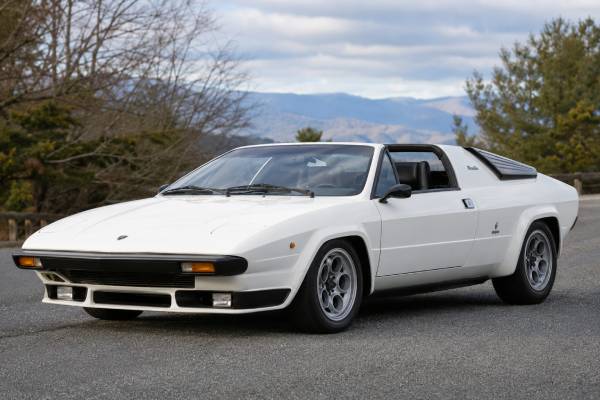
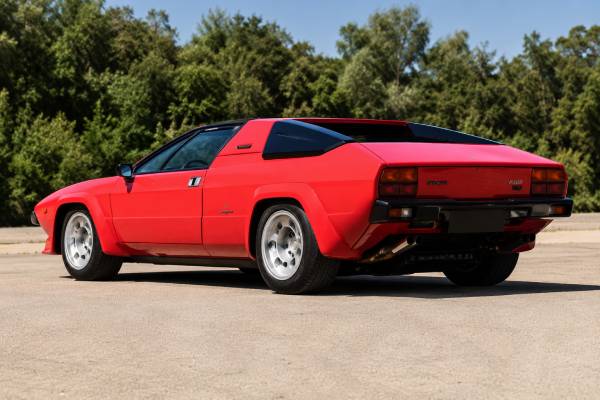
The Lamborghini Silhouette P300 is one of the rarest production Lamborghinis of the 1970s and one of the most overlooked V8 cars from Sant’Agata. It took the Urraco P300 platform, removed the rear seats, added a removable targa roof, widened the stance, and gave Lamborghini a sharper rival for the Ferrari 308 GTS. The result was not a commercial success, but that is exactly why it matters today: the Silhouette is scarce, transitional, hand-built, and packed with period character.
For collectors, the appeal is rarity, Bertone design, and its place between the Urraco and Jalpa. For drivers, the appeal is a compact mid-engine Lamborghini with a carbureted 3.0-liter V8, a manual gearbox, and a raw open-roof experience. The challenge is ownership. Parts, documentation, corrosion, carburetion, and restoration quality matter more here than mileage alone.
Table of Contents
- From Urraco Roots to Lamborghini’s First Open V8
- L302 V8 Specs and Chassis Data
- Production Numbers, Variants, and Authenticity
- Bertone Targa Design and Engineering Details
- Road Feel, Performance, and Character
- Maintenance, Restoration, and Weak Points
- Market Values and Buyer Inspection Guide
From Urraco Roots to Lamborghini’s First Open V8
The Silhouette is best understood as Lamborghini’s first production open-roof car and the bridge between the Urraco and Jalpa. It was not a clean-sheet model; it was a focused attempt to turn the Urraco P300 into a more desirable, sharper, two-seat targa.
Lamborghini entered the 1970s with big ambition but limited stability. The Miura had already changed the idea of the supercar, the Countach had become the poster car of the era, and the Urraco was meant to give the company a smaller, more usable V8 model. The Urraco concept made sense: a mid-mounted V8, compact dimensions, Bertone styling, and a price point below the V12 cars. In practice, the Urraco was difficult to build profitably, and its 2+2 layout lacked the pure glamour of a strict two-seater.
The Silhouette arrived in 1976, presented at Geneva, as the more dramatic answer. Bertone reshaped the Urraco idea into a lower, wider-looking, open-roof car with squared wheel arches, a removable roof panel, deep air dam, and much wider rear tires. The rear seats disappeared, leaving space behind the cabin for the roof panel. The basic architecture remained familiar: transverse mid-mounted V8, rear-wheel drive, steel structure, five-speed manual transmission, and compact proportions.
Its historical value comes from several overlapping facts:
- It was Lamborghini’s first production model with a removable roof.
- It continued the company’s early V8 line after the Urraco.
- It previewed themes later developed more successfully in the Jalpa.
- It was designed during one of Lamborghini’s most fragile periods.
- It was built in tiny numbers, making surviving examples important collector cars.
The Silhouette also has a complicated reputation. It never had the fame of the Countach, the beauty of the Miura, or the broader usability of the later Jalpa. It was not officially established in the U.S. market in the way Lamborghini needed. Production was extremely low, and the company’s financial trouble limited development, marketing, and dealer support.
That should not be mistaken for lack of importance. The Silhouette shows Lamborghini experimenting under pressure. It took a struggling platform and gave it a clearer identity: open-air, two-seat, wedge-shaped, and visually more aggressive. Today it attracts collectors who like rare transitional cars, buyers who want something far less obvious than a Countach, and enthusiasts who appreciate the rawness of carbureted mid-engine Lamborghinis.
The car’s significance is strongest when viewed as a whole. It is not just a rare Urraco derivative. It is the first open Lamborghini production car, an early V8 Lamborghini, a Bertone-shaped targa, and the direct ancestor of the Jalpa. That combination gives it a special place in the brand’s history.
L302 V8 Specs and Chassis Data
The Silhouette P300 uses a 3.0-liter naturally aspirated Lamborghini V8 mounted transversely behind the cabin. Its headline output is usually quoted at 260 hp at 7,500 rpm, with performance in the high six-second range to 100 km/h depending on test source and condition.
The engine is the center of the car’s personality. It is an all-alloy 90-degree V8 with dual overhead camshafts, two valves per cylinder, chain-driven cams, and four twin-choke Weber downdraft carburetors. In period, this was a sophisticated compact exotic engine, not a lazy grand-touring unit. It needs revs, correct carburetor setup, proper ignition condition, and healthy cooling to deliver the response expected from a Lamborghini badge.
| Category | Specification |
|---|---|
| Production years | 1976–1979 |
| Body style | Two-door, two-seat targa with removable roof panel |
| Layout | Transverse mid-engine, rear-wheel drive |
| Engine | L302 3.0-liter naturally aspirated V8 |
| Displacement | 2,996 cc |
| Valvetrain | Dual overhead camshafts, two valves per cylinder |
| Fuel system | Four twin-barrel Weber 40 DCNF carburetors |
| Power | 260 hp at 7,500 rpm |
| Torque | About 201–203 lb-ft, source dependent |
| Transmission | Five-speed manual |
| Brakes | Ventilated discs front and rear |
| Steering | Rack and pinion |
The chassis is closely related to the Urraco, with a steel body and structure rather than the later exotic carbon or aluminum solutions modern readers may expect. The front suspension uses MacPherson struts with lower control arms, while the rear uses a strut-based layout suited to the compact transverse drivetrain. It is period engineering: simple in concept, but not simple to restore because geometry, bushings, dampers, wheel condition, and tire choice strongly affect the way the car drives.
| Item | Figure |
|---|---|
| Wheelbase | 2,450 mm |
| Length | 4,320 mm |
| Width | 1,880 mm |
| Height | 1,120 mm |
| Approximate weight | About 1,240 kg |
| Weight distribution | About 45/55 front/rear |
| Front tires | 195/50 VR15 Pirelli P7-type fitment |
| Rear tires | 285/40 VR15 Pirelli P7-type fitment |
| 0–100 km/h | About 6.2–6.8 seconds, source dependent |
| Top speed | About 147–161 mph, source dependent |
Performance numbers vary because period data, factory claims, gearing, test conditions, and individual car condition differ. A perfectly tuned Silhouette can feel much stronger than a tired one. Carburetor balance, ignition health, valve adjustment, compression, fuel delivery, and exhaust condition all affect the final result.
The brake setup is also worth noting. Ventilated Girling discs at all four corners were serious hardware for the time, but buyers should not judge them by modern carbon-ceramic standards. Correctly rebuilt brakes should feel firm and progressive. A long pedal, pulling under braking, vibration, old hoses, or uneven caliper action should be treated as restoration issues, not “normal old Lamborghini behavior.”
The wide rear wheels and tires are central to the car’s look and handling balance. They give the Silhouette its planted stance, but they also make tire age and availability important ownership factors. Old tires can make the car feel nervous, heavy, or vague even when the suspension is sound.
Production Numbers, Variants, and Authenticity
The Silhouette’s rarity is one of its strongest value drivers. Most sources place production at roughly 52 production cars, often with two additional prototypes or modified Urraco-based development cars included in broader totals.
This is not a model with many formal variants. There was no long-running facelift program, no high-output factory edition, and no major series split in the way collectors see with some Ferraris, Porsches, or later Lamborghinis. Instead, the important differences are tied to build history, steering position, market specification, color, originality, and documentation.
Production identity
The key collector point is that the Silhouette is rare enough that individual car history matters. Buyers should not rely only on a badge, a chassis plate, or a seller’s description. A serious inspection should connect the chassis number, engine identity, body details, trim, paperwork, old photos, import documents, restoration invoices, and ownership history.
Typical points to verify include:
- Chassis number and factory identity.
- Engine number and whether the engine is original to the car.
- Gearbox identity and history.
- Body repairs, especially around the roof structure and rear quarters.
- Steering position and any conversion history.
- Original exterior color and interior trim.
- Evidence of accident repair or corrosion repair.
- Import history, especially for grey-market cars.
- Restoration invoices from recognized specialists.
- Old registrations, service books, correspondence, or period photographs.
Because production was tiny, “matching numbers” and provenance have real weight. A car with continuous history, original engine, correct colors, and documented restoration will usually be more desirable than a shinier car with gaps, undocumented mechanical changes, or unclear identity.
Left-hand drive and right-hand drive
Most Silhouettes were left-hand drive, with a much smaller number built in right-hand drive. Right-hand-drive cars are especially interesting in the UK, Australia, South Africa, Japan, and other right-hand-drive collector markets, but condition still matters more than steering position alone.
A rare steering configuration does not rescue a poor restoration. On a car this scarce, buyers should avoid assuming that “rare” automatically means “valuable.” The best examples combine rarity with correct details, strong mechanical health, and evidence-backed history.
Factory equipment and colors
The Silhouette was a hand-built exotic from a financially stressed manufacturer, so small variations and later changes are common. Period colors, leather trim, Campagnolo wheels, correct roof panel details, proper bumpers, correct lighting, and original-style interior fittings all matter. Cars that spent decades with owners who treated them as used exotics may have non-original paint, aftermarket switches, modern audio equipment, improvised wiring, incorrect trim materials, or modified cooling systems.
Some changes are reversible. Others are expensive to correct. A changed stereo or retrimmed seat is one thing; a poorly repaired roof aperture, missing unique trim, incorrect wheels, or replacement engine is much more serious.
Documentation to seek
The best Silhouette files are thick and boring. That is a compliment. Look for dated invoices, specialist inspection reports, engine and gearbox work orders, brake and suspension rebuild records, carburetor service notes, cooling-system repairs, paint photographs, and ownership records. Factory or heritage confirmation is valuable where available, but it should support—not replace—a physical inspection.
A useful file should answer these questions:
- Is the engine original and healthy?
- Has the car been restored or merely repainted?
- Who maintained it, and did they understand Lamborghini V8s?
- Were rare parts repaired correctly or replaced with improvised items?
- Has the car been driven enough to prove the restoration works?
- Are import, tax, and registration documents clean?
With the Silhouette, authenticity is not just concours trivia. It directly affects drivability, parts sourcing, resale confidence, and the cost of putting the car right.
Bertone Targa Design and Engineering Details
The Silhouette’s design works because it makes the Urraco look wider, lower, and more purposeful without hiding its 1970s Lamborghini roots. Bertone gave the car a sharper open-roof identity, and the engineering changes were aimed at making that identity usable.
The most obvious feature is the targa roof. Lamborghini did not create a full convertible. Instead, it used a removable roof panel that preserved more structure than a soft-top conversion while giving drivers the open-air experience that was becoming increasingly important in the sports-car market. The panel could be stored behind the seats, which explains the loss of the Urraco’s rear seating.
Visually, the Silhouette is defined by:
- Squared and flared wheel arches.
- Very wide rear tires and deep-dish rear wheels.
- A low front spoiler.
- Angular Bertone body language.
- A removable roof panel.
- A compact upright rear window and buttress-like rear treatment.
- A short, muscular stance compared with the longer visual drama of the Countach.
The body changes were not just decoration. The wider wheels and Pirelli P7 tires gave the car a more serious footprint. The deeper front spoiler helped high-speed stability. The roof arrangement required structural thought because removing roof metal from a mid-engine car can create flex, squeaks, leaks, and alignment problems if not handled correctly.
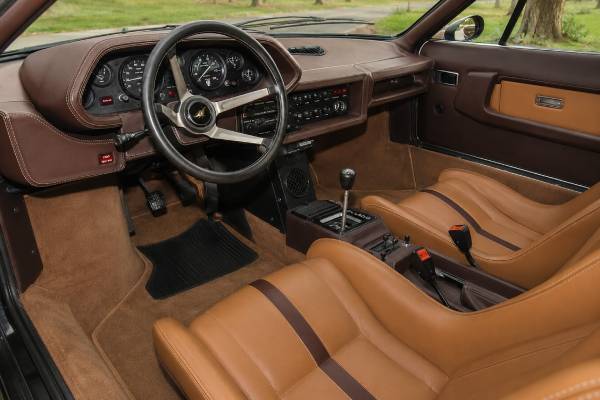
The cockpit is pure 1970s Italian exotic. It is low, intimate, and more driver-focused than luxurious by modern standards. The dashboard layout can feel busy, the switches are period-specific, and ventilation is not the same as a modern climate-control system. Still, a correct cabin has charm: leather, gauges, a manual shifter, thin pillars by modern standards, and the sense that the mechanical parts are close around the driver.
The engine placement is central to the car’s character. The V8 sits transversely behind the occupants, with the gearbox and final drive packaged compactly. This layout helped keep the car short and gave it a distinctive mechanical feel. It also means service access is not as easy as on a front-engine classic. Heat, fuel hoses, ignition components, carburetor linkages, and cooling hardware must all be inspected with the understanding that the engine bay is tight and heat-cycled.
The sound is different from Lamborghini’s V12 cars. A Silhouette does not have the long, operatic howl of a Miura or Countach. It has a harder-edged, carbureted V8 note, with intake noise from the Webers and a crisp mechanical texture when properly tuned. The best cars feel alert and eager above the midrange. The worst cars cough, hesitate, run hot, smell of fuel, and convince casual observers that old Lamborghinis are impossible to live with. Usually, that difference comes down to preparation.
The Silhouette also matters because it previewed the Jalpa. The later car used a larger 3.5-liter V8 and a more developed package, but the basic idea—a compact V8 Lamborghini with a removable roof—was already here. That makes the Silhouette less a dead end and more a rough but fascinating first draft.
Road Feel, Performance, and Character
A healthy Silhouette feels compact, mechanical, and more agile than its dramatic shape suggests. It is not effortless like a modern supercar; it rewards warm-up, clean inputs, and a driver who understands old carbureted engines.
The driving experience starts before the car moves. Cold starting depends on setup and technique. Carbureted V8s need correct fuel pressure, clean jets, synchronized carburetors, and a strong ignition system. A well-sorted car should settle into a stable idle once warm. A car that spits, loads up, hunts badly, or smells heavily of raw fuel needs attention.
Acceleration is brisk rather than shocking by modern standards. The 260 hp figure was serious in the late 1970s, especially with the car’s low weight and mid-engine layout. Today, a hot hatch can match or beat the numbers, but it cannot copy the sensation: low seating, open roof, carburetor response, manual gear selection, engine heat behind the cabin, and a sense that the machine is asking for involvement.
The V8 likes revs. Below the sweet spot, it can feel a little soft if the carburetors are not perfectly tuned. Above the midrange, the car becomes more urgent and sounds more exotic. The throttle response should be clean, not snatchy or lazy. Flat spots often point to carburetor, ignition, vacuum, or fuel-delivery issues.
The five-speed manual gearbox is part of the appeal. It should feel mechanical and deliberate. It should not crunch, jump out of gear, or require force once the oil is warm. Clutch action may be heavier than a modern sports car, but excessive judder, slipping, dragging, or a poor bite point should be investigated.
Steering is unassisted and weight builds at parking speeds. Once moving, the rack-and-pinion setup should give useful feedback. If the car feels vague, wanders, or follows road camber too aggressively, look at tires, alignment, bushings, steering joints, dampers, wheel condition, and previous accident repairs. These cars are sensitive to setup.
Ride quality depends heavily on tire condition and suspension health. The Silhouette is low and firm, but it should not crash, hop, or feel brittle on normal roads. Old dampers, hardened bushings, incorrect tires, and tired suspension mounts can turn the car into a noisy, unsettled experience.
Cornering balance is one of the car’s pleasures when sorted. The mid-engine layout and rear tire width give strong traction, but this is still a 1970s exotic without modern stability systems. It should be driven with respect, especially in the wet, on cold tires, or on uneven mountain roads. Lift-off behavior, old tire compounds, and abrupt inputs can make any mid-engine classic unforgiving.
Usability is honest but limited. Cabin heat, ventilation, noise, low ground clearance, roof seals, luggage space, and visibility all require period expectations. The Silhouette is better for early morning drives, events, and special journeys than daily commuting. It is not fragile when properly maintained, but it is not a car to neglect, overheat, or leave unused for long periods.
A freshly restored car should not be assumed to drive well. Some restorations focus on paint and leather while leaving the mechanical sorting unfinished. The best Silhouettes are the ones that have been restored, tested, driven, adjusted, and maintained after the invoice work was completed.
Maintenance, Restoration, and Weak Points
The Silhouette is not difficult because it is mysterious; it is difficult because it is rare, hand-built, old, and expensive to correct after poor work. A buyer should budget for specialist care from the start, even if the car looks excellent.
The engine needs regular attention from someone who understands Lamborghini’s early V8s and Weber carburetors. Carburetor synchronization, ignition setup, valve adjustment, cooling-system condition, fuel hose quality, and oil leaks all matter. A car that has sat for long periods can need more work than one with steady use.
Important mechanical inspection areas include:
- Carburetor condition, jetting, linkage wear, and synchronization.
- Fuel hoses, fuel pump, filters, and tank contamination.
- Ignition coils, distributor condition, plug leads, and plugs.
- Timing chains, tensioners, and valve-train noise.
- Compression and leak-down results.
- Cooling fans, radiator condition, thermostat, hoses, and water pump.
- Oil leaks from cam covers, seals, sump areas, and drivetrain joints.
- Gearbox synchros, bearings, clutch operation, and shift linkage.
- Brake calipers, master cylinder, servo assistance, discs, hoses, and fluid.
- Suspension bushings, dampers, ball joints, wheel bearings, and alignment.
- Steering rack wear and play.
- Exhaust condition, heat shielding, and mounting.
Cooling deserves special attention. Many old exotics develop a reputation for overheating because they are run with partially blocked radiators, weak fans, old hoses, incorrect thermostats, poor wiring, or trapped air. A healthy Silhouette should manage normal driving without drama, but the system must be clean and correctly assembled.
Electrical reliability depends on age, previous repairs, and storage history. Look for brittle wiring, weak grounds, poor fuse-box repairs, aftermarket alarm damage, added stereo wiring, non-original switches, slow window motors, failing relays, and inconsistent lighting. Electrical work can be time-consuming because access and originality both matter.
Corrosion is a major concern. The Silhouette’s steel structure and body can hide rust under paint, trim, underseal, and previous filler work. Inspect sills, floor areas, suspension pickup points, wheel arches, door bottoms, roof surround, windscreen base, lower panels, and areas around repaired accident damage. A beautiful repaint can hide expensive structural problems.
The roof system adds another layer. Check panel fit, seals, latch condition, storage hardware, wind noise, water entry, and cracking around the roof aperture. Poor roof fit can indicate worn seals, past accident damage, body flex, or careless restoration.
Parts availability is uneven. Some mechanical items can be rebuilt or cross-referenced, but Silhouette-specific trim, body, glass, roof, wheel, and interior pieces are rare. Missing parts are often more dangerous than worn parts. A worn original component can sometimes be restored; a missing unique component may take years to find.
Restoration quality should be judged coldly. Many classic exotics have been repainted, retrimmed, or recommissioned more than once. The question is not whether work was done, but whether it was done correctly. Look for photographs of bare-metal bodywork, engine-out service records, specialist invoices, proper materials, and post-restoration mileage.
Ownership tradeoffs are unavoidable. Some upgrades can improve safety and usability, such as better cooling fans, modern hose materials, improved relays, or discreet ignition improvements. But visible modifications, incorrect wheels, non-original interior designs, or major drivetrain changes can hurt collector value. The safest approach is reversible improvement with original parts retained.
Market Values and Buyer Inspection Guide
The Silhouette market is thin, so condition and documentation matter more than guidebook averages. Public sales are rare enough that one weak car or one exceptional car can distort the apparent market.
Recent public data places average-condition examples around the low six-figure dollar equivalent or roughly the £80,000 range, with recorded public results varying widely by year, condition, location, and car identity. Exceptional private transactions may sit outside visible auction data, while project cars can become financially dangerous even when the entry price looks tempting.
The Silhouette remains undervalued compared with the most famous classic Lamborghinis, but it is not cheap to own. Its rarity cuts both ways. It makes the car collectible, but it also makes parts, expertise, and comparison shopping difficult. A buyer who treats it like a normal used sports car will make expensive mistakes.
| Value factor | Why it matters |
|---|---|
| Original engine and gearbox | Matching major components support authenticity and resale confidence. |
| Documented ownership history | Rare cars need a clear identity trail to reassure buyers. |
| Correct colors and trim | Factory-correct specification is more desirable than improvised restoration. |
| Body condition | Rust, accident repair, and poor roof fit can create major costs. |
| Mechanical sorting | A shiny but poorly tuned car can need deep specialist spending. |
| Rare missing parts | Silhouette-specific items can be difficult or slow to source. |
| Recent use | Cars driven and serviced regularly are often safer buys than static display pieces. |
Buyer inspection checklist
A proper pre-purchase inspection should be done by a specialist familiar with early V8 Lamborghinis, not just a general classic-car shop. The inspection should include a cold start, hot restart, road test, lift inspection, compression or leak-down testing where possible, paint-depth review, chassis and corrosion assessment, and documentation audit.
Focus on these areas before negotiating:
- Confirm chassis, engine, and gearbox identity.
- Review ownership, import, and registration documents.
- Check for evidence of accident repair or structural corrosion.
- Inspect the roof panel, seals, latches, and surrounding bodywork.
- Test cooling performance in real traffic conditions.
- Verify carburetor tuning, idle quality, throttle response, and hot starting.
- Assess clutch, gearbox synchros, and shift quality when warm.
- Inspect brake operation, caliper condition, hoses, and discs.
- Check suspension geometry, bushing condition, and tire age.
- Identify missing or incorrect Silhouette-specific parts.
Examples to seek
The best Silhouette to buy is not necessarily the lowest-mileage car. It is the car with the clearest history, most original identity, best body, strongest mechanical condition, and evidence that recent work has been tested on the road.
Seek cars with:
- Long-term ownership records.
- Original major components.
- Known specialist maintenance.
- Correct wheels, roof details, lighting, trim, and interior.
- Good hot and cold running.
- Clean corrosion inspection.
- Recent tires, brake service, cooling work, and fuel-system attention.
- Restoration photos and invoices.
- No major unresolved drivability faults.
Examples to avoid
Avoid cars where the seller’s story is stronger than the paperwork. A rare Lamborghini with unclear identity, fresh paint over unknown metal, poor mechanical behavior, and missing parts can become a restoration trap.
Be cautious with:
- Cars that cannot be inspected cold.
- Cars that overheat, misfire, or hesitate badly.
- Fresh restorations with no road miles after completion.
- Missing roof hardware, trim, wheels, or unique interior parts.
- Non-original engines without clear explanation.
- Heavy underseal hiding structural areas.
- Poor panel gaps around the roof, doors, and rear quarters.
- Sellers who dismiss every fault as “normal for an old Lamborghini.”
Long-term collectability looks favorable because the Silhouette has the right ingredients: rarity, Bertone design, Lamborghini history, first-open-car status, manual gearbox, carbureted V8, and a direct link to the Jalpa. It will probably remain a specialist collector car rather than a mainstream poster icon, but that may be part of its charm. The smartest buyers will not chase the cheapest example. They will buy the best-documented, best-sorted car they can find and preserve its originality carefully.
References
- Milestones | Lamborghini.com 2026 (Manufacturer History)
- Lamborghini Silhouette P300 – Specs & Performance – LamboCars 2015 (Specifications)
- Lamborghini Silhouette Guide — Supercar Nostalgia 2019 (Model History)
- Lamborghini Silhouette Market – CLASSIC.COM 2026 (Market Data)
- Lamborghini Silhouette For Sale & Price Guide 2026 (Market Data)
Disclaimer
This article is for informational purposes only and is not a substitute for professional diagnosis, inspection, repair, valuation, or restoration advice. Specifications, torque values, service intervals, procedures, parts, and market details can vary by VIN, market, equipment, production changes, and individual vehicle history. Always verify critical information against official service documentation and consult a qualified Lamborghini specialist before buying, repairing, restoring, or modifying a Silhouette P300.
If this guide helped you, please share it on Facebook, X/Twitter, or your favorite enthusiast community to support our work.