
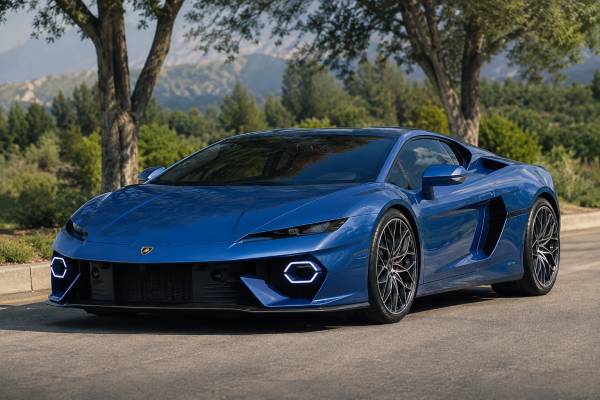
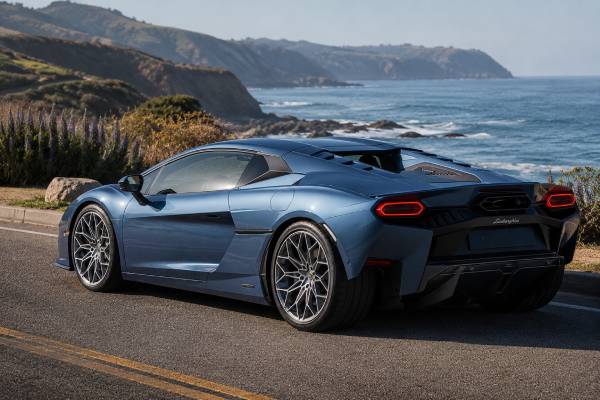
The Lamborghini Temerario is the Huracán successor, but it is not a simple replacement with a different engine. It marks a major change in Lamborghini’s mid-engine supercar line: the naturally aspirated V10 is gone, and in its place is a 4.0-liter twin-turbo V8 plug-in hybrid with three electric motors and a combined 920 CV output. That shift changes the sound, the weight, the servicing picture, and the buying logic, while keeping the car aimed at the same core audience: owners who want a usable, dramatic, road-and-track Lamborghini below the V12 flagship. For buyers, the Temerario is best understood as a new technical platform rather than the final chapter of the Huracán story. For enthusiasts, it is the car that shows how Lamborghini plans to keep emotional combustion performance alive in the hybrid era.
Table of Contents
- Temerario’s Place in Lamborghini History
- L411 V8 Hybrid Specs and Key Data
- Production, Options, and Alleggerita Package
- Aero, Spaceframe, Sound, and Cabin Design
- Road, Track, and Daily Driving Character
- Maintenance, Reliability, and Inspection Risks
- Market Value and Buying Guide
Temerario’s Place in Lamborghini History
The Temerario matters because it replaces one of Lamborghini’s most successful model lines while changing nearly every major technical ingredient. It succeeds the Huracán as Lamborghini’s V8-era entry into the mid-engine super sports car class, sitting below the Revuelto and alongside the Urus SE in a fully hybridized modern range.
Its internal development identity is commonly linked with LB634, while the new engine family is identified as L411. Lamborghini revealed the production Temerario in 2024, with customer-era production beginning for the 2025 model cycle. The car belongs to Lamborghini’s HPEV strategy, meaning High Performance Electrified Vehicle, and it is the second super sports car in that family after the Revuelto.
The historical break is obvious. The Gallardo and Huracán built Lamborghini’s modern mid-engine business around naturally aspirated V10 character. The Temerario replaces that formula with a clean-sheet V8 that revs to 10,000 rpm, two turbochargers, a compact plug-in hybrid system, electric all-wheel drive support, and a new aluminum spaceframe. That is a large philosophical move for a brand whose emotional identity has long depended on engine sound, throttle response, and visual theater.
The car is important for three reasons:
- It is Lamborghini’s first series-production super sports car with a twin-turbo V8.
- It gives the brand a hybrid mid-engine model below the V12 Revuelto.
- It tests whether buyers will accept electrified torque and turbocharged performance in place of the Huracán’s V10 voice.
For collectors, early Temerarios may become significant because they mark the first production years of a new powertrain era. For drivers, the appeal is more immediate: the Temerario is faster, more electronically sophisticated, and more usable than the Huracán, but it also carries more complexity, more weight, and more long-term inspection risk.
The car’s reputation will depend on how well Lamborghini preserves emotion. On paper, the answer is strong. The 920 CV combined output, 2.7-second 0–100 km/h claim, 343 km/h top speed, and 10,000 rpm engine ceiling give it numbers close to supercar exotica that once sat far above this class. The harder question is whether the car feels special after the first launch-control run. That is where the L411 engine, flat-plane crankshaft, high-rev tuning, steering feel, braking system, and chassis calibration matter more than headline output.
L411 V8 Hybrid Specs and Key Data
The Temerario’s main technical story is simple: Lamborghini replaced displacement and natural aspiration with revs, boost, and electric torque. The 4.0-liter V8 delivers the emotional center, while three electric motors fill torque gaps, support all-wheel drive, and enable limited electric operation.
| Category | Specification |
|---|---|
| Model years covered | 2025–present |
| Powertrain type | Plug-in hybrid electric vehicle, Lamborghini HPEV |
| Engine | L411 4.0-liter twin-turbo V8 |
| Displacement | 3995.2 cc |
| Combustion-engine output | 800 CV from 9,000 to 9,750 rpm |
| Combustion-engine torque | 730 Nm from 4,000 to 7,000 rpm |
| Combined system output | 920 CV / 677 kW |
| Electric motors | Three 110 kW motors, two at the front axle and one integrated near the V8 and gearbox |
| Battery | 3.8 kWh lithium-ion pack in the central tunnel |
| Charging | Up to 7 kW AC, with quoted full recharge in about 30 minutes |
| Transmission | 8-speed dual-clutch automatic |
| Drivetrain | Hybrid all-wheel drive with electric front axle torque vectoring |
| 0–100 km/h | 2.7 seconds |
| 0–200 km/h | Under 7.3 seconds |
| Top speed | 343 km/h |
| Dry weight | 1,690 kg |
| Weight distribution | 43.4% front / 56.6% rear |
The 920 figure is metric horsepower, or CV, which is why some markets describe the car as roughly 907 mechanical horsepower. For buying, registration, and insurance documents, use the market-specific official figure. For enthusiast discussion and SEO-style model naming, “920 hp” is common shorthand, but the factory technical figure is 920 CV / 677 kW.
The V8 is not a detuned SUV engine or a shared off-the-shelf unit. It is a clean-sheet Lamborghini engine built around high engine speed. The flat-plane crankshaft helps the engine rev quickly and gives the exhaust a sharper frequency than a traditional cross-plane V8. Titanium connecting rods reduce reciprocating mass, while the turbochargers sit in a hot-V layout for compact packaging and fast response.
The hybrid layout is not only about emissions. The electric motor between the engine and gearbox fills torque while the turbos build boost, works as a starter-generator, and helps smooth gearshifts. The two front electric motors add all-wheel drive when needed, allow electric torque vectoring, and reduce the need to use the brakes for stability corrections. That matters because the Temerario is heavier than the Huracán and needs clever power management to feel agile.
| Area | Temerario data |
|---|---|
| Structure | Multi-technology aluminum spaceframe |
| Wheelbase | 2,658 mm |
| Length | 4,706 mm |
| Width excluding mirrors | 1,996 mm |
| Height | 1,201 mm |
| Front tires | 255/35 ZR20 Bridgestone Potenza Sport |
| Rear tires | 325/30 ZR21 Bridgestone Potenza Sport |
| Front brakes | 410 x 38 mm carbon-ceramic discs, 10-piston calipers |
| Rear brakes | 390 x 32 mm carbon-ceramic discs, 4-piston calipers |
| WLTP combined consumption | 11.2 l/100 km plus 4.3 kWh/100 km |
| WLTP CO2 emissions | 272 g/km |
The useful takeaway is that the Temerario is less “small Lamborghini” than “compact hybrid supercar.” Its electrical system, battery location, brake cooling, aero targets, and drivetrain software are central to how it performs.
Production, Options, and Alleggerita Package
The most important Temerario specification choice is not only color or trim; it is whether the car is built as a comfort-focused road car or a lighter, sharper car with the Alleggerita package. Early buyers should document every factory option because originality and build-sheet accuracy will matter as the model ages.
The standard Temerario is a coupe at launch. Future open-roof or special-series versions may follow Lamborghini tradition, but a buyer should treat anything beyond confirmed factory specification as market expectation, not settled fact. The safest buying approach is to compare the VIN, dealer order sheet, factory build record, and visible equipment.
Key launch-era equipment and option themes include:
- Alleggerita lightweight package for more track-oriented buyers.
- Carbon exterior pieces, including splitter, mirror caps, side vents, and rear diffuser.
- Carbon interior trim for the central tunnel, air vents, door switch frames, steering wheel, and related cockpit parts.
- Cast, forged, or carbon wheels in 20-inch front and 21-inch rear sizes.
- Dedicated launch colors, including Blu Marinus and Verde Mercurius.
- Lamborghini Ad Personam personalization, with more than 400 body colors and special liveries.
- Standard comfort seats or optional carbon double-shell sport seats.
- Corsa-Tex/Dinamica microfiber and leather interior combinations.
- Sonus faber audio on selected specifications.
- Telemetry and connected performance functions, depending on market and option selection.
The Alleggerita package deserves special attention because it affects both value and inspection. Lamborghini says the package saves 12.65 kg through body components alone and more than 25 kg when combined with lightweight interior elements, carbon wheels, and titanium muffler. It also increases aero effectiveness and gives the car stronger track intent.
| Feature | Why it matters | Buyer check |
|---|---|---|
| Alleggerita package | Improves lightweight appeal and track credibility | Confirm factory package, not later carbon add-ons only |
| Carbon wheels | Reduce unsprung mass and add visual value | Inspect for cracks, curb damage, and repair history |
| Titanium muffler | Supports weight saving and sound character | Confirm factory fitment and emissions legality in the market |
| Carbon sport seats | Sharper cabin feel and collector appeal | Check bolster wear, shell damage, and comfort suitability |
| Ad Personam paint | Can increase uniqueness and value | Verify factory paint code and repair match quality |
| Telemetry equipment | Useful for track owners but may reveal hard use | Review data access, subscriptions, and service records |
For authenticity, the safest cars will have a full factory order record, original invoice, delivery photographs, option list, Lamborghini service history, and no unexplained changes to wheels, trim, exhaust, or software. On a modern hybrid supercar, “original” does not only mean original paint. It also means correct software, correct high-voltage components, unmodified emissions hardware, and no aftermarket tuning that could affect warranty coverage.
Aero, Spaceframe, Sound, and Cabin Design
The Temerario looks different because it has to cool, package, and communicate a different kind of Lamborghini powertrain. The body is not just a styling exercise; the lights, intakes, underbody, rear spoiler, and exposed engine all serve the hybrid V8 layout.
Lamborghini Centro Stile gave the car a cleaner and more technical shape than the Huracán. The hexagonal daytime running lights are not only a signature; they also work with air channels that help move air toward cooling and brake areas. The rear end is wide and mechanical, with an exposed V8, integrated exhaust outlets, a large diffuser, and bodywork shaped to feed the engine and turbochargers.
The aerodynamic target was broader than top speed. Lamborghini focused on high-speed stability, cooling, and braking efficiency. Compared with the Huracán EVO, the Temerario produces much more rear downforce, with the Alleggerita version increasing that advantage further. Brake cooling also receives special attention, including front ducting and rear NACA-style flow management.
The aluminum spaceframe is another major change. Lamborghini moved to a new multi-technology aluminum structure to handle the higher loads of the hybrid powertrain while keeping weight under control. The structure uses high-strength castings and hydroformed extrusions, and it increases torsional stiffness by more than 20 percent compared with the previous generation spaceframe. That stiffness matters because hybrid torque, larger tires, higher braking loads, and track use all put more stress into the body.
Why the sound is different
The Temerario cannot sound like a Huracán because it does not have a naturally aspirated V10. Lamborghini’s solution is to make the V8 feel special in its own way. The flat-plane crank, 10,000 rpm capability, turbo placement, exhaust routing, and body-mounted vibration tuning are all part of the sensory package.
At low speed, the car can be quiet in electric or comfort-focused modes. In Sport and Corsa settings, the engine becomes sharper and more intense, with higher-frequency sound and more physical vibration through the chassis. The goal is not to hide the hybrid system; it is to make the combustion engine feel like the emotional core while the electric motors support response.
Cabin and usability improvements
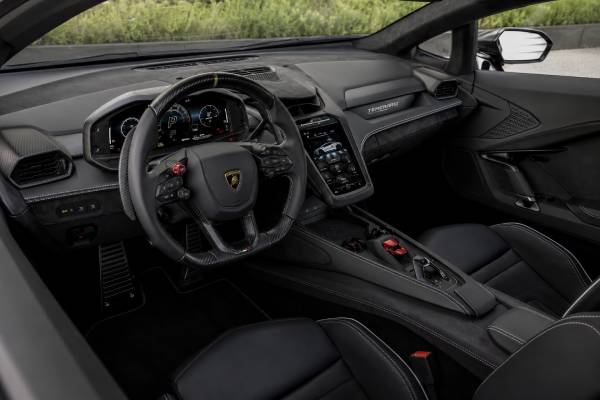
The interior is more digital and more spacious than the Huracán’s. The driver gets a 12.3-inch digital cluster, the center display measures 8.4 inches, and the passenger display measures 9.1 inches. The cabin keeps physical Lamborghini drama through the start switch, steering-wheel controls, mode rotors, and low seating position, but it also adds the modern screen logic buyers expect in a current supercar.
Practicality is still supercar-limited, but the Temerario is not designed as a weekend-only object. It has more cabin room, available 18-way comfort seats with heating and ventilation, and a quoted 112 liters of front luggage space. That makes it more realistic for long weekends than many older mid-engine Lamborghinis, especially when specified with lift system, comfort seats, and road-focused tires.
Road, Track, and Daily Driving Character
The Temerario should feel brutally quick but less old-school than the Huracán. Its defining driving trait is the blend of high-rev combustion drama with electric torque filling, torque vectoring, and rapid software-driven chassis control.
Acceleration is immediate because the electric system covers the low-rpm gap where a turbocharged combustion engine might otherwise feel soft. The rear motor helps response between the V8 and gearbox, while the front motors add traction and pull the car out of corners. The result should feel more continuous than a conventional turbo V8 and more explosive than a naturally aspirated V10 at low speed.
The drive modes are central to the car. Città, Strada, Sport, Corsa, and Corsa Plus shape the combustion engine, electrical output, stability systems, sound, and gearbox behavior. Recharge, Hybrid, and Performance settings add another layer of hybrid management. In normal use, this means the same car can creep quietly through town, cruise with a long eighth gear, or switch into a much more aggressive track setup.
On track, the Temerario’s key strengths are likely to be:
- Launch control traction from hybrid all-wheel drive.
- Strong corner-exit drive from electric torque vectoring.
- High-rpm power that keeps pulling near the top of the tachometer.
- Brake cooling designed for repeated high-energy stops.
- Fast dual-clutch shifts and sequential downshift behavior.
- Better stability from the stiffer spaceframe and rear aero.
The main compromise is weight. At 1,690 kg dry, the Temerario is not a lightweight analog supercar. Lamborghini counters that with torque management, powerful carbon-ceramic brakes, custom Bridgestone tires, and active electronic control, but physics still matters. Tire temperature, brake condition, alignment, and battery state of charge will strongly affect how sharp the car feels.
On the road, the best specification depends on the owner. A comfort-seat car on road tires will likely be the better long-distance Temerario. An Alleggerita car with carbon wheels and track-focused options will feel more special and may be more desirable to some collectors, but it can also be harsher, more expensive to repair, and more sensitive to road damage.
For city use, visibility, width, front overhangs, carbon wheel vulnerability, and parking clearance are bigger concerns than power. The lift system, tire sidewall condition, camera operation, and front splitter history should matter to any buyer who plans to drive the car regularly.
Maintenance, Reliability, and Inspection Risks
Temerario ownership risk is not about whether the car is “reliable” in a normal used-car sense. The real risk is the cost of diagnosing and repairing a new high-output hybrid supercar with turbochargers, carbon-ceramic brakes, high-voltage components, software-controlled systems, and expensive optional carbon parts.
Because the Temerario is still early in its life cycle, long-term failure patterns are not fully established. Buyers should avoid confident claims that the model has proven durability. Instead, judge each car by warranty status, Lamborghini dealer service history, software update record, usage pattern, and inspection results.
The highest-priority inspection areas are:
- High-voltage battery condition, state-of-health data, and charging behavior.
- Cooling systems for engine, turbochargers, battery, power electronics, and transmission.
- Carbon-ceramic brake disc thickness, surface condition, and pad life.
- Tire age, tire type, alignment, and evidence of track heat cycling.
- Front axle electric motors, inverters, and torque-vectoring operation.
- Dual-clutch transmission behavior at low speed, during launch, and under hard downshifts.
- Turbocharger oil and coolant lines, heat shielding, and signs of heat stress.
- Front lift system operation and any hydraulic leaks or sensor errors.
- Infotainment, driver display, passenger display, cameras, telemetry, and connected services.
- Carbon exterior parts for cracks, poor repairs, and underbody scrape damage.
The L411 V8’s high-rev design makes oil quality, warm-up discipline, and service timing especially important. This is not an engine to treat casually when cold. Owners should let temperatures stabilize before high load, avoid short-trip-only usage when possible, and document every service with invoices that show correct fluids and factory procedures.
The hybrid system adds another layer. A plug-in hybrid supercar that sits unused can create battery-management and 12-volt support issues if storage procedures are ignored. The car should be kept on approved maintainers, charged according to official guidance, and updated by a Lamborghini dealer when software campaigns are released.
What wears quickly on hard-used cars
Track use is not automatically bad, but undocumented track use is a problem. Temerarios used hard on circuit may need tires, brake pads, fluid services, alignment correction, and closer inspection of wheels, suspension, and underbody panels. The car’s telemetry features may help an honest seller prove usage, but they may also reveal repeated launch control, high brake temperatures, and aggressive sessions.
Carbon wheels deserve special caution. They are desirable and expensive, but impact damage can be hard to judge without specialist inspection. A car with carbon wheels should be checked for curb strikes, inner-barrel damage, delamination signs, and repair attempts.
Warranty and recalls
A current Temerario should ideally remain under factory warranty or an approved extended plan. Any open recall, service action, or software campaign should be checked by VIN through Lamborghini’s official systems and, where relevant, national recall databases. Do not assume that a model-wide search tells the full story. Recalls and service campaigns often depend on build date, market, equipment, and software version.
Market Value and Buying Guide
The Temerario is too new for a settled collector market, so value should be judged through allocation, specification, warranty, and delivery timing rather than long-term auction history. As of the early customer era, the strongest cars are likely to be well-optioned, documented, low-mileage examples with desirable factory colors, no modifications, and clean Lamborghini dealer records.
New-car pricing varies heavily by country, tax regime, currency, options, and dealer allocation. Public market listings and early used offers can sit far above base pricing, especially for delivery-ready cars in desirable specifications. That does not automatically mean every early Temerario will appreciate. Early premiums often soften once supply normalizes, unless the car has a rare configuration, factory significance, or exceptional provenance.
A sensible buyer should separate three types of value:
| Value type | What drives it | Risk |
|---|---|---|
| Early allocation premium | Immediate delivery, rare color, strong dealer relationship | Can shrink when production volume increases |
| Specification value | Alleggerita, carbon wheels, special paint, desirable interior | Over-optioned cars may not recover every option cost |
| Collector value | First-year status, originality, provenance, low mileage | Long-term importance is not proven yet |
The best cars to seek are factory-original examples with complete documentation, no aftermarket tune, no accident history, no unexplained paintwork, fresh tires, clean brake measurements, and confirmed hybrid-system health. The safest specification for long-term ownership is not always the most dramatic one. A tasteful color, useful comfort options, lift system, and full dealer history may be easier to own than an extreme build with fragile carbon parts and evidence of repeated track use.
Avoid cars with:
- Missing factory order documents or inconsistent option claims.
- Aftermarket ECU, exhaust, hybrid-system, or emissions modifications.
- Paintwork on structural or hard-to-match carbon areas without clear explanation.
- Track use with no supporting service history.
- Worn carbon-ceramic brakes or old high-performance tires.
- Warning lights, unresolved software faults, or charging irregularities.
- Imported-market equipment differences that complicate warranty or registration.
For an inspection, use a Lamborghini dealer or a specialist with current diagnostic access. A proper pre-purchase inspection should include a VIN options check, warranty and campaign status, battery and charging scan, gearbox adaptation review, brake measurements, tire date-code check, suspension and lift-system test, underbody inspection, paint-depth report, and road test from cold.
Long-term collectability looks promising, but not guaranteed. The Temerario has genuine first-of-kind importance for Lamborghini: first V8 hybrid mid-engine production supercar, first successor to the Huracán, and a key part of the brand’s complete hybrid transition. The cars most likely to stand out later will be early, highly documented, factory-original examples in strong colors or carefully chosen Alleggerita specifications. The cars least likely to age well will be poorly modified, badly repaired, heavily tracked, or ordered in confused specifications that lack either comfort appeal or serious lightweight intent.
References
- Temerario | Lamborghini.com 2026 (Official specifications) ([Lamborghini.com][1])
- Lamborghini Temerario: authentic “Fuoriclasse” 2024 (Official launch and technical details) ([Lamborghini.com][2])
- Lamborghini Temerario: a mechanical masterpiece 2025 (Official engine feature) ([Lamborghini.com][3])
- Temerario delivers on numbers at its dynamic launch 2025 (Official dynamic launch data) ([Lamborghini.com][4])
- Recall Campaign | Lamborghini.com 2026 (Recall lookup and owner guidance) ([Lamborghini.com][5])
Disclaimer
This article is for informational purposes only and is not a substitute for professional diagnosis, repair, valuation, or pre-purchase inspection. Specifications, torque values, service intervals, repair procedures, software status, recall eligibility, and equipment details can vary by VIN, market, production date, and option package. Always verify technical information against official Lamborghini service documentation and have any car inspected by a qualified Lamborghini dealer or specialist.
If this guide helped you, please share it on Facebook, X/Twitter, or your preferred car community to support our work.