
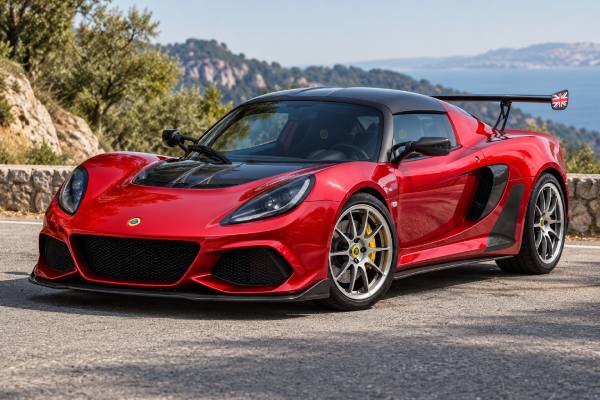
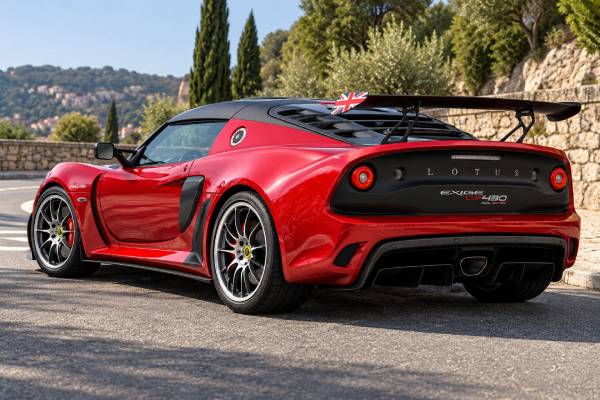
The 2021 Lotus Exige Cup 430 Final Edition is not a new mechanical generation; it is the last, most fully equipped factory expression of the road-legal Cup 430. Its 430 hp chargecooled V6, three-way Nitron dampers, adjustable Eibach anti-roll bars, AP Racing J-hook brakes, carbon aero, titanium exhaust, and six-position traction control were already proven. What made the Final Edition distinct was how Lotus marked the end of Exige production: a new TFT instrument display with road and race layouts, a flat-bottom steering wheel, a numbered-style Final Edition build plaque, revised seat trim and stitching, and a palette that revived historic Lotus colors. Factory 2021 data lists 1,110 kg unladen, 0–60 mph in 3.2 seconds, 174 mph, and 171 kg of maximum downforce. For buyers today, authentication is as important as performance. A genuine Final Edition should be assessed as a complete 2021 specification, not as an ordinary Cup 430 with later badges, a digital dash, or cosmetic additions.
Table of Contents
- What Makes the Cup 430 Final Edition Different
- TFT Display, Steering Wheel, Trim, and Final Edition Details
- How to Authenticate and Inspect a Cup 430 Final Edition
- 2021 Cup 430 Final Edition Specifications
- Carbon Aero and the Final Cup Chassis
- How the Final Edition Works on Road and Track
- Maintenance with Preservation in Mind
What Makes the Cup 430 Final Edition Different
The Cup 430 Final Edition is mechanically an evolved Cup 430 with a specific 2021 farewell specification, not a higher-output successor. Its significance comes from being the last version of the most powerful Exige, with final-year interior, instrumentation, trim, and color features fitted around the established 430 hp chassis.
Lotus introduced the Final Edition range as production of the Elise, Exige, and Evora approached its end. Within the Exige family, three final models covered different levels of performance: Sport 390, Sport 420, and Cup 430. The Cup remained the flagship. Unlike the Sport variants, it did not need a power increase for the farewell year because 430 hp already represented the peak production output for the V6 Exige.
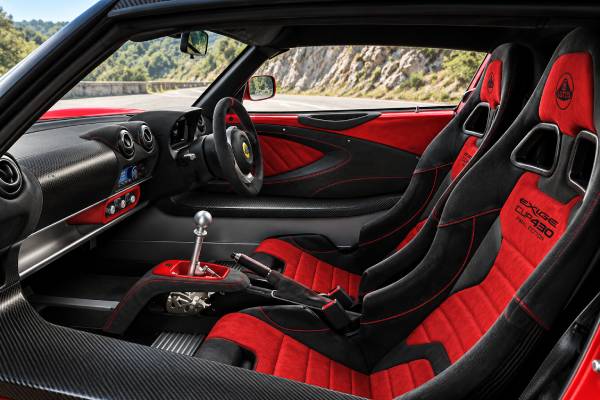
The most visible change is the digital instrument cluster. Earlier Cup 430s used conventional instrumentation; the Final Edition received a TFT display with two selectable presentations. One resembles a conventional road layout, while the other uses a race-style arrangement with a prominent digital speed readout and horizontal engine-speed bar. This is a genuine model-identification detail, not merely a modernization feature.
The steering wheel was also redesigned. It combines leather and Alcantara, uses a flat lower section, and improves knee clearance for taller drivers entering the narrow cabin. Every Final Edition also carries a dedicated build plaque, while new seat trim and stitching patterns distinguish the cabin from ordinary production cars.
Exterior colors were selected with Lotus history in mind. Factory material grouped them into Select, Heritage, and Special choices. Names included Daytona Blue, Fire Red, Metallic Orange, Motorsport Black, Racing Green, Nightfall Blue, Essex Blue, Calypso Red, Isotope Green, Vivid Green, Pearl Yellow, and Burnt Orange. Because Lotus Exclusive had already allowed considerable personalization on earlier cars, color alone cannot establish Final Edition identity.
Mechanically, the farewell Cup kept the features that had made the 430 exceptional: a chargecooled supercharged V6, baffled sump, titanium exhaust, forged wheels, Cup 2 tires, adjustable Nitrons, adjustable anti-roll bars, AP Racing brakes, carbon body pieces, and motorsport-derived variable traction control. In other words, Lotus did not soften the final Cup into a commemorative road cruiser.
This distinction is important for valuation. A Final Edition premium should reflect documented final-year identity and complete specification. A standard Cup 430 with a retrofitted TFT or Final Edition-style trim can still be an excellent car, but it is not the same object for a collector.
The Final Edition badge also changes what “original condition” means. On an ordinary track car, replacing worn seats, repainting a splitter, fitting a different steering wheel, or installing a newer dashboard may be sensible maintenance. On a farewell model, those same changes can erase part of the evidence that distinguishes the car. That does not mean owners should leave unsafe or damaged parts in place. It means replacements should be documented, original components retained when practical, and reversible modifications favored when the car is likely to have collector interest. A photograph set from delivery, the original purchase invoice, option list, manuals, keys, and removed factory hardware can become as relevant to provenance as the service stamps.
TFT Display, Steering Wheel, Trim, and Final Edition Details
The Final Edition’s cabin changes are the clearest way to distinguish it from an earlier Cup 430, but they should be authenticated as a group rather than checked one item at a time. The TFT cluster, redesigned wheel, plaque, and trim specification together form the final-year identity.
The TFT matters because it changes the driver interface without changing the car’s basic analogue controls. The Exige still has hydraulic-free steering, a physical manual lever, conventional pedals, and a compact cockpit. The digital display simply presents speed, revs, warning information, and track-oriented data more legibly. The two screen choices also let an owner select a conventional view for road use and the race-style display when the rev band matters more than decorative dials.
On a used car, test the display from cold. Check that it boots cleanly, both layouts can be selected, brightness is even, pixels and warning telltales operate correctly, and no intermittent reset occurs as the car warms. Electronics are a small part of the Exige experience, but the Final Edition’s unique display is expensive enough that faults matter.
The flat-bottom steering wheel is functional as well as commemorative. Entry into any Exige requires stepping over a wide sill and lowering yourself into a narrow seat. Extra clearance at the bottom of the wheel can make that movement easier, especially for taller owners. Inspect the leather and Alcantara for heavy wear, amateur retrimming, or a wheel swap, because originality can influence value.
The build plaque deserves close attention. It should correspond to a car that is otherwise documented as a 2021 Final Edition. A plaque is easier to reproduce than a factory build record, so treat it as supporting evidence, not conclusive proof. VIN information, sales invoice, original order sheet, market documentation, and dealer history provide a stronger chain.
Seat trim and stitching are similarly useful. Final Edition cars received revised patterns, and some examples were highly personalized. Photograph the cabin before purchase and preserve original pieces if wear later requires restoration. An exact re-trim can look excellent while still reducing originality if the factory material and stitching are lost.
Color can add interest but should not become a shortcut for authentication. Heritage shades were intentionally revived, yet earlier Exiges could also be painted in unusual colors through Lotus Exclusive. Look for original paint records and inspect repaint quality in the same way you would on any high-value composite-bodied sports car.
How to Authenticate and Inspect a Cup 430 Final Edition
Authentication should begin with the VIN and factory documentation, then move outward to the unique Final Edition features and Cup 430 hardware. Do not start with the plaque or paint color, because both are easier to imitate than the vehicle’s full build identity.
First, confirm that the car is a 2021 Cup 430 Final Edition in the relevant market records. Match VIN locations and registration documents, then request the original invoice, order sheet, certificate or dealer correspondence when available. Note the original paint, trim, wheels, options, and delivery dealer.
Second, check the final-year identifiers together: TFT cluster with both screen modes, flat-bottom leather/Alcantara wheel, Final Edition plaque, correct seat trim and stitching, and documented color. A missing or replaced component does not automatically make the car fraudulent, but the reason should be recorded.
Third, confirm the mechanical specification. Look for the chargecooled Edelbrock installation, titanium exhaust, forged wheels, Nitron three-way dampers, adjustable Eibach bars, AP Racing brakes, Cup 2-size fitment, carbon roof and aero pieces, and variable-traction rotary control. Photograph part numbers and labels where useful.
Then inspect condition with the assumption that either track use or long storage may have occurred. On a track-used car, examine discs, pads, wheel rims, tire shoulders, suspension joints, damper leakage, splitter and underbody damage. On a stored car, focus on aged tires, battery condition, fluid dates, seals, corrosion, cooling hoses, and evidence that the engine was run only for short periods.
A cold start should be followed by a fully warm road test. Verify stable temperatures, strong consistent power, clean clutch engagement, accurate shifting, straight braking, and steering that centers naturally. Test the TFT through both layouts and confirm every warning lamp performs its expected self-check. Also check that mileage shown by the replacement-sensitive digital display is supported by invoices and inspection records; any cluster replacement should have a paper trail explaining the recorded distance.
Accident repair needs specialist attention. The Exige uses a bonded aluminum chassis with composite clams, and correct repair methods are very different from conventional steel-body work. Fresh paint may be cosmetic, but unexplained work around suspension pick-up points or bonded sections requires expert inspection.
Finally, decide whether the asking price matches the car’s originality and intended use. A concours-oriented collector may value original paint, untouched trim, all factory take-off parts, and very low miles. A driver may prefer a higher-mileage example with recent dampers, brakes, tires, fluids, and evidence of careful track preparation. Both can be excellent; they are simply different purchases.
The Cup 430 Final Edition deserves careful, methodical verification before money changes hands today because its value comes from two things at once: it is an exceptionally capable Exige and a documented endpoint of the model line. Protecting both identities is the key to owning it well.
2021 Cup 430 Final Edition Specifications
For the Final Edition, the useful baseline is Lotus’s 2021 homologated data set: 1,110 kg unladen, 430 bhp at 7,000 rpm, 440 Nm, and a 174 mph limited maximum. Beneath those numbers is the established Cup architecture—a 3,456 cc chargecooled supercharged V6, six-speed manual and rear drive—but the lighter dry weights and 180 mph claim from the original 2017 launch belong to a different published specification and should not be folded into a 2021 data sheet.
| Specification | 2021 Cup 430 Final Edition |
|---|---|
| Engine family | Toyota 2GR-FE |
| Configuration | 3.5-liter DOHC V6, 24 valves, VVT-i |
| Displacement | 3,456 cc |
| Induction | Edelbrock supercharger with water-to-air chargecooling |
| Maximum power | 430 bhp / 436 PS / 321 kW at 7,000 rpm |
| Maximum torque | 440 Nm (325 lb-ft); technical data lists 2,600–7,000 rpm |
| Lubrication feature | Baffled sump |
| Drive | Rear-wheel drive |
| Specification | Value |
|---|---|
| Transmission | 6-speed manual |
| 0–60 mph | 3.2 seconds |
| 0–100 km/h | 3.3 seconds |
| Maximum speed | 280 km/h (174 mph) |
| Unladen weight | 1,110 kg (2,447 lb) |
| Power-to-weight ratio | 387 hp/tonne |
| Seats | 2 |
| Item | Specification |
|---|---|
| Total downforce at maximum speed | 171 kg (377 lb) |
| Front / rear downforce | 76 kg / 95 kg in 2021 Final Edition factory material |
| Carbon components | Front splitter, access panel, roof, diffuser surround, enlarged side-intake pods, one-piece tailgate, rear wing |
| Exhaust | High-flow titanium system |
| Front wheels | 7.5J × 17 forged alloy |
| Rear wheels | 10J × 18 forged alloy |
| Front tires | Michelin Pilot Sport Cup 2, 215/45 ZR17 |
| Rear tires | Michelin Pilot Sport Cup 2, 285/30 ZR18 |
| System | Specification |
|---|---|
| Dampers | Nitron three-way adjustable, with rebound and low-/high-speed compression adjustment |
| Anti-roll bars | Adjustable Eibach front and rear |
| Brake calipers | Forged AP Racing four-piston front and rear |
| Brake discs | Two-piece J-hook rotors, front and rear |
| Stability modes | Lotus DPM with road/track-oriented selectable modes |
| Variable traction control | Six-position rotary control; five slip settings plus off when ESP is disabled |
| Steering | Unassisted |
| Measure | Value |
|---|---|
| WLTP low | 16.8 L/100 km |
| WLTP medium | 9.9 L/100 km |
| WLTP high | 8.5 L/100 km |
| WLTP extra-high | 9.4 L/100 km |
| WLTP combined | 10.2 L/100 km (about 27.7 mpg UK / 23.1 mpg US) |
| Combined CO₂ | 230 g/km |
The factory narrative and technical table differ slightly in how they describe the torque band: promotional text mentions 440 Nm from 4,000 rpm, while the technical data gives 2,600–7,000 rpm. For specification work, the dedicated technical table is the better value to quote, while retaining the discrepancy in mind.
Carbon Aero and the Final Cup Chassis
The 2021 Cup 430 Final Edition retained an aero-and-chassis package designed as a single system, generating 171 kg of downforce while using adjustable suspension to control the resulting load. Preserving that balance is more important than fitting visually more aggressive aftermarket parts.
The carbon body components are extensive. The front splitter manages underbody entry flow. The access panel and roof save mass. Enlarged side-intake pods support cooling and airflow. The one-piece rear tailgate and race-derived wing contribute to the rear aero load, while the diffuser surround completes the high-speed package.
Factory Final Edition material quotes 76 kg of downforce at the front and 95 kg at the rear at maximum speed. That distribution differs from some earlier Cup 430 documentation, which is another reason not to use a 2017 setup sheet blindly on a 2021 car. Aero numbers depend on the exact body specification and test point.
Suspension is by double wishbones, with forged aluminum rear components and Nitron three-way dampers. The adjusters control rebound, low-speed compression, and high-speed compression. Eibach anti-roll bars are adjustable at both ends. That gives a competent driver or engineer plenty of scope to adapt the car, but it also gives an inexperienced owner many ways to move away from a coherent setup.
A sensible approach is to document the car before changing it. Record ride height, alignment, damper clicks, anti-roll-bar positions, tire pressures, and tire type. If a track-day change improves one circuit but makes the car nervous on the road, the original baseline can then be restored accurately.
The AP Racing braking system is designed for repeated thermal load. Two-piece J-hook discs offer higher capacity and help maintain a consistent surface, while forged four-piston calipers reduce mass and provide strong clamping. They remain consumables. A car can have only a few thousand miles yet be close to needing discs if those miles include hard circuit use.
Cup 2 tires should also be seen as consumables with a working window. Their 215-section front and 285-section rear sizes give the Cup 430 substantial dry grip, but cold or very wet conditions reduce the margin. Date codes and heat cycles matter alongside tread depth. A collector car on original 2021 tires may be interesting historically, but those tires should not automatically be trusted for high-speed use in 2026.
The unassisted steering ties everything together. It communicates tire load and surface texture with unusual clarity, which makes geometry and tire condition obvious. Persistent pull, a crooked wheel, excessive kickback, or nervous straight-line behavior should prompt measurements rather than being romanticized as “raw” character.
How the Final Edition Works on Road and Track
The Cup 430 Final Edition is usable on the road, but its design priorities remain track-first: high aero load, Cup 2 tires, adjustable dampers, powerful brakes, a loud titanium exhaust, and a manual gearbox all ask more of the driver than a conventional grand tourer. Its road appeal comes from feedback and compact size, not comfort or isolation.
At low speed, unassisted steering is heavy and the cabin demands flexibility. Visibility behind the car is limited by the body and wing, storage is minimal, and road noise is always present. Once moving, steering effort falls and the car begins to make sense. The driver sits low, close to the front axle, with the shift mechanism beside the thigh and the V6 just behind the seats.
The 430 hp output is more than enough for public roads. Supercharging gives immediate response, and the broad torque delivery means acceleration arrives without waiting for a turbocharger to build boost. The 3.2-second 0–60 mph figure illustrates traction and power-to-weight, but in real use the more important feature is how quickly speed accumulates in second, third, and fourth gear.
On circuit, the variable traction control becomes especially useful. With the stability system switched off, the rotary control provides five target slip levels before full off. That allows the driver to work toward less intervention as tires warm and confidence rises. The system should not be treated as a substitute for learning the car; it is a tool for managing a very responsive rear-drive chassis.
Brake temperature should guide session length. Even high-capacity hardware benefits from cool-down laps and inspection. Do not apply a hot parking brake immediately after a hard session if the official procedure advises against it, and avoid sitting stationary with the pedal clamped hard after severe stops when possible, because uneven heat transfer can contribute to judder.
The same principle applies to the engine. Give oil and coolant time to reach normal operating temperature before full load. After sustained high-speed running, a gentle final lap lets temperatures stabilize and gives the driver a chance to notice any warning signs. Check fluid levels according to the handbook before the next session.
The Final Edition’s collectibility can create a dilemma: preserve it or use it. There is no universal answer. What matters is documenting whichever choice is made. A low-mileage display car needs age-related maintenance; a frequently tracked car needs heat-related maintenance. Neither history should be disguised.
Maintenance with Preservation in Mind
A Cup 430 Final Edition should be serviced like a high-performance Exige and preserved like a final-year collectible. That means maintaining fluids, cooling, brakes, tires, suspension, and battery while also protecting unique 2021 trim, electronics, documentation, and original take-off parts.
Use the official Lotus service schedule for the exact VIN as the base. If the car attends track days, inspect it more frequently and replace fluids according to condition and use. Engine oil, brake fluid, gearbox lubricant, pads, discs, and tires face high thermal loads that are poorly represented by annual mileage.
The chargecooling circuit deserves specific attention. Check for coolant residue and pump or heat-exchanger problems if intake temperatures rise or performance fades when hot. The main cooling system, oil cooler, and fans also need to work correctly; a car that spends years in storage can develop issues just as a heavily used car can.
The lithium-ion starter battery requires a compatible charging approach. Use the maintainer type recommended for the installed battery chemistry and avoid assuming an old lead-acid charger is suitable. If the car is stored, confirm battery voltage and alarm/immobilizer behavior rather than waiting until deep discharge occurs.
Nitron dampers are rebuildable performance parts. Keep records of servicing, settings, and any seal work. Corrosion on adjusters or shafts can turn a valuable tuning component into a repair project. Exercise adjusters only according to the manufacturer’s guidance and return them to a documented baseline.
Carbon-fiber panels need different preservation priorities from metal bodywork. Inspect mounting points and edges for cracks, especially around splitters and the rear wing. Clearcoat can deteriorate from UV exposure, while stone chips are common. Protective film can be useful when professionally installed, but old film should be removed carefully to avoid clearcoat damage.
Preserve the Final Edition-specific pieces. If a steering wheel is retrimmed, retain photographs and invoices. If the TFT cluster is replaced, keep documentation that links the replacement to the VIN and mileage. If track wheels, exhausts, seats, or harnesses are fitted, store the original factory pieces when practical.
Service history should tell a story that another owner can follow. Record date, mileage, work performed, parts used, alignment values, brake measurements, tire dates, and any track events. That level of documentation supports both safe use and future collector value.
References
- Exige Cup 430 Final Edition – Lotus Cars Media Site 2021
- Lotus Exige – Raises the bar | Lotus Cars
- SAVING THE BEST ‘TIL LAST: THE LOTUS ELISE AND EXIGE FINAL EDITION CARS 2021
- New Lotus Exige Cup 430 Final Edition 2021
- Lotus Exige V6 (S3, 2011-2021) review – a mini supercar for Golf GTI money | evo 2026
- Lotus Automobile User Manuals Download | ManualsLib
Disclaimer
This article is for informational purposes and is not a substitute for professional diagnosis, repair, appraisal, or inspection. Specifications, torque values, service intervals, procedures, software, and equipment can vary by VIN and market; verify the exact 2021 car against official Lotus service and build documentation before work or purchase. If this guide was useful, please consider sharing it on Facebook, X/Twitter, or a Lotus enthusiast community to support our work.