
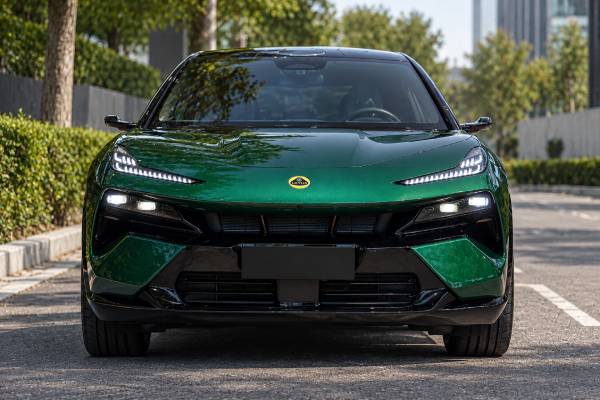
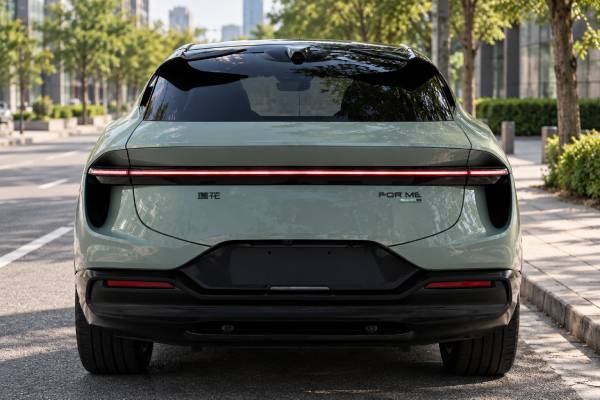
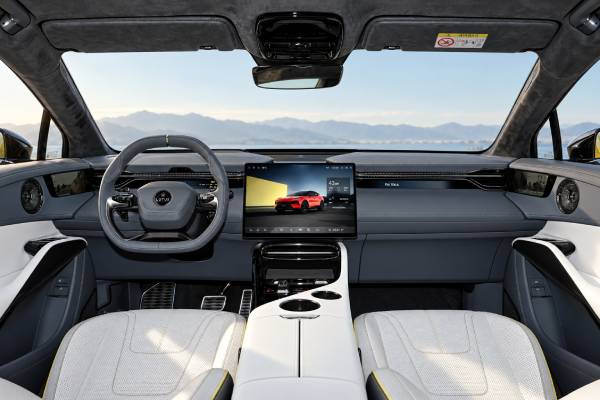
For Me SE is not the faster version of Lotus’s new Chinese-market X-Hybrid SUV. It keeps the same 700 kW, 935 Nm system, 70 kWh battery, 3.3-second 0–100 km/h time, and published CLTC ranges as the RMB 508,000 Standard model. The SE’s RMB 558,000 launch price instead buys a richer equipment position and, depending on configuration, greater rear-cabin emphasis and additional chassis or assistance features. That makes the purchase decision more subtle than comparing acceleration figures. Lotus’s own launch material and third-party Chinese configuration databases do not always describe optional and standard equipment in identical terms, so buyers should treat the exact order sheet and VIN-specific build record as the authority for a particular car. This guide focuses on that distinction: what is mechanically shared, what the SE is intended to add, how the 900 V system behaves in use, and which equipment claims deserve verification before money changes hands.
Table of Contents
- What the SE premium is really buying
- For Me SE technical data and packaging
- Cabin, rear-seat, and equipment priorities
- Same 700 kW output, different ownership mission
- Charging, range, and long-distance use
- Why build-sheet verification matters on SE equipment
- For Me SE buying guide
What the SE premium is really buying
For Me SE keeps the same headline performance, so what the se premium is really buying has to earn the price difference elsewhere. rear-seat equipment value is therefore a better buying clue than another comparison of identical 0–100 km/h figures.
Within what the se premium is really buying, sE equipment deserves line-by-line verification because launch releases and comparison databases do not always describe standard and optional items the same way. Treat rear-seat equipment value as a build-sheet question: inspect the actual hardware, operate it, and confirm it in the order record. That is more reliable than assuming every SE has an identical four-seat, roof, chassis, or assistance configuration.
For what the se premium is really buying, sE has no special range advantage simply because it costs more. Its drivetrain and battery figures match the Standard model in Lotus’s published specification, so wheel choice, seating configuration, climate use, and driving conditions may matter more to actual consumption than the badge. Buyers who prioritize chauffeured comfort or richer equipment should accept that those choices can sometimes trade a little efficiency for convenience.
As a what the se premium is really buying check, for SE, the final check is documentary as well as physical. Confirm rear-seat equipment value against the sales contract or factory build record, especially if the car is advertised with four-seat equipment, active chassis hardware, or an expanded assistance package. Paying the SE premium makes sense only when the buyer receives the features that matter to them; assumptions based on a trim name are not enough.
For Me SE technical data and packaging
For Me SE keeps the same headline performance, so for me se technical data and packaging has to earn the price difference elsewhere. four-seat versus five-seat cargo is therefore a better buying clue than another comparison of identical 0–100 km/h figures.
Within for me se technical data and packaging, sE equipment deserves line-by-line verification because launch releases and comparison databases do not always describe standard and optional items the same way. Treat four-seat versus five-seat cargo as a build-sheet question: inspect the actual hardware, operate it, and confirm it in the order record. That is more reliable than assuming every SE has an identical four-seat, roof, chassis, or assistance configuration.
For for me se technical data and packaging, sE has no special range advantage simply because it costs more. Its drivetrain and battery figures match the Standard model in Lotus’s published specification, so wheel choice, seating configuration, climate use, and driving conditions may matter more to actual consumption than the badge. Buyers who prioritize chauffeured comfort or richer equipment should accept that those choices can sometimes trade a little efficiency for convenience.
As a for me se technical data and packaging check, for SE, the final check is documentary as well as physical. Confirm four-seat versus five-seat cargo against the sales contract or factory build record, especially if the car is advertised with four-seat equipment, active chassis hardware, or an expanded assistance package. Paying the SE premium makes sense only when the buyer receives the features that matter to them; assumptions based on a trim name are not enough.
For Lotus For Me SE (Type 132), the tables below collect only the specifications that can be stated usefully for this exact powertrain scope. Market-specific options can change wheels, tires, equipment, homologated range, and sometimes charging hardware, so they should be read as a technical reference rather than a substitute for the vehicle’s own build data.
| Specification | Value |
|---|---|
| Powertrain type | Plug-in hybrid / electric-led X-Hybrid |
| Combined output | 700 kW (952 hp) |
| Combined torque | 935 Nm |
| Battery capacity | 70 kWh |
| Electrical architecture | 900 V |
| Combustion engine | 2.0-litre turbocharged four-cylinder |
| Generator | 150 kW |
| Drive | All-wheel drive |
| Transmission / hybrid drive | DHT / integrated hybrid drive, market-specific calibration |
| Specification | Value |
|---|---|
| Published electric range | 420 km CLTC electric |
| Published combined range | 1,416 km CLTC combined |
| Fuel tank | 52 L on Eletre X architecture |
| Charging | 20–80% DC charging in 9 minutes; 0–100% AC charging in 10.6 hours on a 7 kW supply |
| Battery role | Externally chargeable traction battery with high-output discharge capability |
| Thermal strategy | Liquid-managed high-voltage system designed for sustained performance |
| Specification | Value |
|---|---|
| 0–100 km/h | 3.3 seconds |
| Top speed | 230 km/h (143 mph) |
| Traction | All-wheel drive |
| Torque delivery | 935 Nm |
| Chassis concept | Air suspension with electronically controlled damping |
| Drive modes | Road-focused modes plus configurable dynamic settings; exact set varies by market |
| Specification | Value |
|---|---|
| Length | 5,103 mm (200.9 in) |
| Width | 2,019 mm (79.5 in) |
| Height | 1,636 mm (64.4 in) |
| Wheelbase | 3,019 mm (118.9 in) |
| Ground clearance | 184 mm (7.2 in), China specification |
| Cargo volume | 688 L five-seat; 610 L four-seat where offered |
| Cargo with five-seat rear backrests folded | 1,532 L |
| Body | Five-door high-performance SUV |
| Specification | Value |
|---|---|
| Tire priority | Use correct load rating, speed rating, size, and approved fitment |
| Brake check | Inspect rotor condition and pad thickness because regeneration can mask friction-brake wear |
| Battery check | Review charging behavior, warnings, and thermal-management operation |
| Suspension check | Look for warning messages, uneven ride height, noises, and leak-down |
| Software check | Confirm current updates, app pairing, cameras, sensors, and driver-assistance calibration |
| Documentation | Verify VIN-specific equipment, recalls, service actions, and warranty status |
Cabin, rear-seat, and equipment priorities
For Me SE keeps the same headline performance, so cabin, rear-seat, and equipment priorities has to earn the price difference elsewhere. active anti-roll equipment ambiguity is therefore a better buying clue than another comparison of identical 0–100 km/h figures.
Within cabin, rear-seat, and equipment priorities, sE equipment deserves line-by-line verification because launch releases and comparison databases do not always describe standard and optional items the same way. Treat active anti-roll equipment ambiguity as a build-sheet question: inspect the actual hardware, operate it, and confirm it in the order record. That is more reliable than assuming every SE has an identical four-seat, roof, chassis, or assistance configuration.
For cabin, rear-seat, and equipment priorities, sE has no special range advantage simply because it costs more. Its drivetrain and battery figures match the Standard model in Lotus’s published specification, so wheel choice, seating configuration, climate use, and driving conditions may matter more to actual consumption than the badge. Buyers who prioritize chauffeured comfort or richer equipment should accept that those choices can sometimes trade a little efficiency for convenience.
As a cabin, rear-seat, and equipment priorities check, for SE, the final check is documentary as well as physical. Confirm active anti-roll equipment ambiguity against the sales contract or factory build record, especially if the car is advertised with four-seat equipment, active chassis hardware, or an expanded assistance package. Paying the SE premium makes sense only when the buyer receives the features that matter to them; assumptions based on a trim name are not enough.
Same 700 kW output, different ownership mission
For Me SE keeps the same headline performance, so same 700 kw output, different ownership mission has to earn the price difference elsewhere. chauffeur use case is therefore a better buying clue than another comparison of identical 0–100 km/h figures.
Within same 700 kw output, different ownership mission, sE equipment deserves line-by-line verification because launch releases and comparison databases do not always describe standard and optional items the same way. Treat chauffeur use case as a build-sheet question: inspect the actual hardware, operate it, and confirm it in the order record. That is more reliable than assuming every SE has an identical four-seat, roof, chassis, or assistance configuration.
For same 700 kw output, different ownership mission, sE has no special range advantage simply because it costs more. Its drivetrain and battery figures match the Standard model in Lotus’s published specification, so wheel choice, seating configuration, climate use, and driving conditions may matter more to actual consumption than the badge. Buyers who prioritize chauffeured comfort or richer equipment should accept that those choices can sometimes trade a little efficiency for convenience.
As a same 700 kw output, different ownership mission check, for SE, the final check is documentary as well as physical. Confirm chauffeur use case against the sales contract or factory build record, especially if the car is advertised with four-seat equipment, active chassis hardware, or an expanded assistance package. Paying the SE premium makes sense only when the buyer receives the features that matter to them; assumptions based on a trim name are not enough.
Charging, range, and long-distance use
For Me SE keeps the same headline performance, so charging, range, and long-distance use has to earn the price difference elsewhere. build-sheet verification is therefore a better buying clue than another comparison of identical 0–100 km/h figures.
Within charging, range, and long-distance use, sE equipment deserves line-by-line verification because launch releases and comparison databases do not always describe standard and optional items the same way. Treat build-sheet verification as a build-sheet question: inspect the actual hardware, operate it, and confirm it in the order record. That is more reliable than assuming every SE has an identical four-seat, roof, chassis, or assistance configuration.
For charging, range, and long-distance use, sE has no special range advantage simply because it costs more. Its drivetrain and battery figures match the Standard model in Lotus’s published specification, so wheel choice, seating configuration, climate use, and driving conditions may matter more to actual consumption than the badge. Buyers who prioritize chauffeured comfort or richer equipment should accept that those choices can sometimes trade a little efficiency for convenience.
As a charging, range, and long-distance use check, for SE, the final check is documentary as well as physical. Confirm build-sheet verification against the sales contract or factory build record, especially if the car is advertised with four-seat equipment, active chassis hardware, or an expanded assistance package. Paying the SE premium makes sense only when the buyer receives the features that matter to them; assumptions based on a trim name are not enough.
Why build-sheet verification matters on SE equipment
For Me SE keeps the same headline performance, so why build-sheet verification matters on se equipment has to earn the price difference elsewhere. premium over Standard is therefore a better buying clue than another comparison of identical 0–100 km/h figures.
Within why build-sheet verification matters on se equipment, sE equipment deserves line-by-line verification because launch releases and comparison databases do not always describe standard and optional items the same way. Treat premium over Standard as a build-sheet question: inspect the actual hardware, operate it, and confirm it in the order record. That is more reliable than assuming every SE has an identical four-seat, roof, chassis, or assistance configuration.
For why build-sheet verification matters on se equipment, sE has no special range advantage simply because it costs more. Its drivetrain and battery figures match the Standard model in Lotus’s published specification, so wheel choice, seating configuration, climate use, and driving conditions may matter more to actual consumption than the badge. Buyers who prioritize chauffeured comfort or richer equipment should accept that those choices can sometimes trade a little efficiency for convenience.
As a why build-sheet verification matters on se equipment check, for SE, the final check is documentary as well as physical. Confirm premium over Standard against the sales contract or factory build record, especially if the car is advertised with four-seat equipment, active chassis hardware, or an expanded assistance package. Paying the SE premium makes sense only when the buyer receives the features that matter to them; assumptions based on a trim name are not enough.
For Me SE buying guide
For Me SE keeps the same headline performance, so for me se buying guide has to earn the price difference elsewhere. rear-seat equipment value is therefore a better buying clue than another comparison of identical 0–100 km/h figures.
Within for me se buying guide, sE equipment deserves line-by-line verification because launch releases and comparison databases do not always describe standard and optional items the same way. Treat rear-seat equipment value as a build-sheet question: inspect the actual hardware, operate it, and confirm it in the order record. That is more reliable than assuming every SE has an identical four-seat, roof, chassis, or assistance configuration.
For for me se buying guide, sE has no special range advantage simply because it costs more. Its drivetrain and battery figures match the Standard model in Lotus’s published specification, so wheel choice, seating configuration, climate use, and driving conditions may matter more to actual consumption than the badge. Buyers who prioritize chauffeured comfort or richer equipment should accept that those choices can sometimes trade a little efficiency for convenience.
As a for me se buying guide check, for SE, the final check is documentary as well as physical. Confirm rear-seat equipment value against the sales contract or factory build record, especially if the car is advertised with four-seat equipment, active chassis hardware, or an expanded assistance package. Paying the SE premium makes sense only when the buyer receives the features that matter to them; assumptions based on a trim name are not enough.
When comparing listings, avoid using a single advertised horsepower figure as proof that two cars are equivalent. Confirm the VIN, model year, market, wheel and brake specification, seat layout, charging equipment, and option packages. Ask for invoices or digital service records where possible. A seller who can explain how the car was charged, stored, updated, and serviced is usually providing more useful information than one who only points to cosmetic condition. For Lotus For Me SE (Type 132), this final suitability check should be made against the exact market specification and intended use.
For buyers comparing real cars is rear-seat equipment value. This is not an isolated detail on Lotus For Me SE (Type 132); it connects to the vehicle’s broader balance of performance, mass, software control, and expensive hardware. The safest way to evaluate it is with evidence from the exact car: consistent behavior on a test drive, clean diagnostic status, documented service work, and equipment that matches the build record. Avoid assuming that a feature shown in a launch car, another market, or a different trim is automatically present.
Practical use also changes the answer for Lotus For Me SE (Type 132) when considering rear-seat equipment value. A driver who mainly covers short urban trips will notice maneuverability, climate energy use, parking-camera reliability, and low-speed ride more often than maximum output. A high-mileage motorway user will care more about seat comfort, tire noise, rapid-charging or refueling access, thermal consistency, and the ease of cleaning driver-assistance sensors in bad weather. Someone buying for occasional performance use should pay closer attention to tire age, brake condition, wheel damage, alignment, and whether repeated hard acceleration produces warnings or reduced output. Those are different ownership profiles, so there is no single ideal setup.
For Lotus For Me SE (Type 132), a condition-led maintenance approach is especially useful around rear-seat equipment value. Record tire tread and pressures, inspect the inner wheel edges that are easy to miss, keep charge-port seals and contacts clean and dry, and respond early to suspension or cooling warnings. On high-voltage vehicles, do not improvise around orange cables, battery enclosures, power electronics, or coolant circuits. Qualified service equipment and the correct isolation procedures are essential. That discipline protects both safety and resale value, especially on a technically complex model whose future buyer will want confidence that repairs were done correctly.
From an engineering-use perspective is four-seat versus five-seat cargo. This is not an isolated detail on Lotus For Me SE (Type 132); it connects to the vehicle’s broader balance of performance, mass, software control, and expensive hardware. The safest way to evaluate it is with evidence from the exact car: consistent behavior on a test drive, clean diagnostic status, documented service work, and equipment that matches the build record. Avoid assuming that a feature shown in a launch car, another market, or a different trim is automatically present.
Practical use also changes the answer for Lotus For Me SE (Type 132) when considering four-seat versus five-seat cargo. A driver who mainly covers short urban trips will notice maneuverability, climate energy use, parking-camera reliability, and low-speed ride more often than maximum output. A high-mileage motorway user will care more about seat comfort, tire noise, rapid-charging or refueling access, thermal consistency, and the ease of cleaning driver-assistance sensors in bad weather. Someone buying for occasional performance use should pay closer attention to tire age, brake condition, wheel damage, alignment, and whether repeated hard acceleration produces warnings or reduced output. Those are different ownership profiles, so there is no single ideal setup.
For Lotus For Me SE (Type 132), a condition-led maintenance approach is especially useful around four-seat versus five-seat cargo. Record tire tread and pressures, inspect the inner wheel edges that are easy to miss, keep charge-port seals and contacts clean and dry, and respond early to suspension or cooling warnings. On high-voltage vehicles, do not improvise around orange cables, battery enclosures, power electronics, or coolant circuits. Qualified service equipment and the correct isolation procedures are essential. That discipline protects both safety and resale value, especially on a technically complex model whose future buyer will want confidence that repairs were done correctly.
References
* 技术参数 2026 * Lotus For Me SUV Officially Launches: Redefining Performance and Versatility with X-Hybrid Technology 2026 * Lotus enters hybrid race with For Me SUV to challenge Porsche 2026 * Lotus ForMe 2026 – detailed specifications and trim levels 2026 * Lotus ForMe 2026 – price, range, photos, specs 2026 * Lotus Eletre X – Explore Models | Lotus Cars 2026
Disclaimer
This article is for informational purposes only and is not a substitute for professional diagnosis, inspection, or repair. Specifications, torque values, service intervals, charging behavior, and procedures can vary by VIN, market, software version, and equipment; verify all work and technical data against the official Lotus service documentation for the exact vehicle.
If this guide helped you, please consider sharing it on Facebook, X/Twitter, or another automotive community to support our work.