
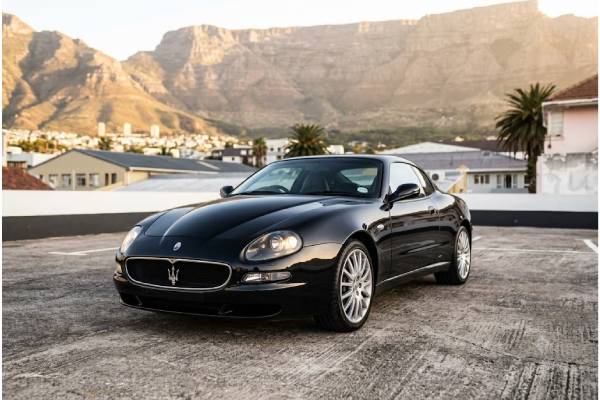
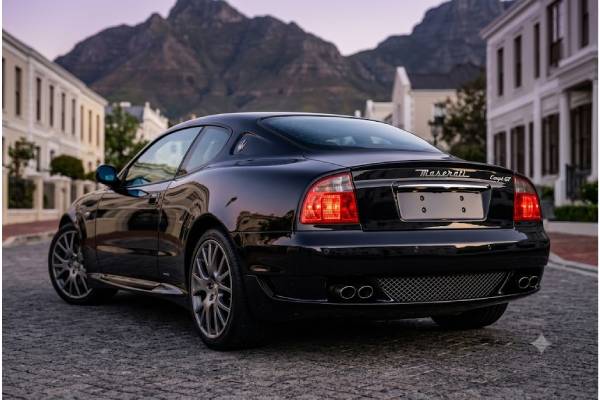
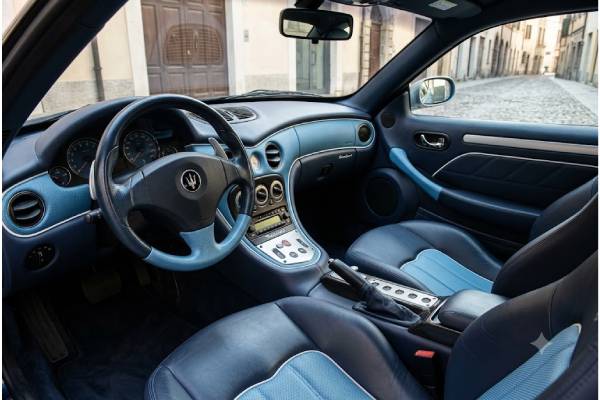
The Maserati GranSport is the factory-developed performance version of the M138 Coupé and the model that sharpened the platform without abandoning its grand-touring usefulness. Introduced in 2004, it raised output to 400 hp, quickened the Cambiocorsa transmission, lowered and retuned the Skyhook suspension, added 19-inch wheels, revised the aerodynamics, and gave the cabin more supportive seats and carbon-fiber trim. The changes sound modest on paper, but together they make the GranSport more immediate, louder, and more disciplined than a standard 390 hp Coupé. It remains a four-seat, leather-lined road car rather than a stripped track special, and that dual character explains its lasting appeal. Buyers must understand the aging single-clutch transmission, check the condition of the adaptive dampers and suspension joints, and verify that expensive GranSport-specific body and interior pieces are present. A sorted car feels compact and alive compared with later Maserati grand tourers. A neglected one may combine clutch wear, hydraulic faults, bent wheels, worn bushings, cooling problems, and deteriorated trim in one attractive-looking package.
Table of Contents
- The Sharper M138 Coupé
- 400 hp GranSport Specifications
- Production, Colors, and Special Versions
- Aero, Suspension, and Cabin Upgrades
- Fast-Road and Touring Behavior
- Cambiocorsa, Skyhook, and Aging Faults
- Choosing a Well-Sorted GranSport
The Sharper M138 Coupé
The GranSport is not merely a trim package; it is a coordinated evolution of the M138 Coupé’s engine, transmission, suspension, aerodynamics, exhaust, wheels, and interior. Maserati presented it at the 2004 Geneva Motor Show as a faster and more focused four-seat grand tourer.
The standard Coupé had already established the platform’s core qualities: a naturally aspirated V8, rear transaxle, hydraulic steering, double-wishbone suspension, and Giugiaro body. The GranSport refined each area that affected response. Power increased from 390 to 400 hp, the Cambiocorsa system shifted more quickly, ride height dropped, and external changes reduced lift and improved airflow.
Only the paddle-operated transmission was offered. That decision reflected Maserati’s desire to give the car a modern, competition-linked identity. It also means every buyer must evaluate clutch wear and electrohydraulic health. There is no regular factory three-pedal GranSport, despite occasional modified cars or inaccurate advertisements.
The model remained practical. It kept four seats and a useful boot, and its Skyhook dampers could provide reasonable comfort outside Sport mode. The cabin was more intimate than the standard Coupé’s because of deeply shaped seats, a slimmer center console, technical fabric or leather combinations, and carbon details.
Maserati produced 2,640 GranSport coupés from 2004 through 2007. That volume makes the model less common than the regular Coupé but still available in enough numbers for buyers to compare condition, color, and history. The limited MC Victory and regional 10th Anniversary derivatives sit above it in rarity, yet a standard car can be the better driver’s choice when it has been maintained and used.
The GranSport is historically significant as the final factory development of this body style before the larger GranTurismo. It belongs to a period when 400 hp was substantial, 19-inch wheels were visually dramatic, and paddle-shift road cars still delivered an obvious interruption of torque. Those period traits should be appreciated rather than measured only against modern dual-clutch cars.
Its market reputation has improved as enthusiasts recognize the combination of size, engine sound, and analog steering. Low values once encouraged deferred maintenance, so provenance remains critical. The badge does not guarantee that a car still drives as Maserati intended.
400 hp GranSport Specifications
The GranSport uses the 4,244 cc F136 RB V8, a faster-calibrated six-speed Cambiocorsa transaxle, and Skyhook adaptive suspension. Its 400 hp output and approximately 290 km/h top speed make it the quickest regular fixed-roof M138 derivative.
| Category | Specification |
|---|---|
| Production years | 2004–2007 |
| Model code | M138 |
| Engine code | F136 RB |
| Engine | 4,244 cc naturally aspirated 90-degree V8 |
| Construction | Aluminum block and cylinder heads |
| Valve train | DOHC, 32 valves, variable intake timing |
| Lubrication | Dry sump |
| Maximum output | 400 hp at 7,000 rpm |
| Maximum torque | Approximately 452 Nm at 4,500 rpm |
| Transmission | Six-speed Cambiocorsa electrohydraulic transaxle |
| Drivetrain | Rear-wheel drive with limited-slip differential |
| Body structure | Steel monocoque with front and rear subframes |
| Suspension | Double wishbones; lowered Skyhook adaptive dampers |
| Steering | Hydraulically assisted rack and pinion |
| Brakes | Ventilated steel discs with Brembo calipers |
| Wheels | 19-inch Trofeo-style alloy wheels |
| Tires | 235/35 ZR19 front; 265/30 ZR19 rear |
| Wheelbase | 2,660 mm |
| Length | Approximately 4,523 mm |
| Width | Approximately 1,822 mm |
| Official weight | Approximately 1,680 kg |
| Top speed | Approximately 290 km/h |
| 0–100 km/h | Approximately 4.85 seconds |
The F136 RB is an evolution of the 390 hp F136 R. Revised intake flow, valve-seat work, engine management, and exhaust breathing contribute to the additional output. The numerical gain is small, but the freer exhaust and calibration make the engine feel more eager and sound more aggressive.
The V8 retains a cross-plane crankshaft and dry-sump oiling. It produces meaningful torque in the middle of the rev range and continues pulling to the 7,000 rpm power peak. There is no turbocharger delay or sudden boost threshold; throttle response is immediate and proportional.
The rear transaxle places the gearbox and differential behind the cabin. A torque tube connects them to the engine. This distributes mass more evenly and helps the front end change direction without the heaviness expected from a front-engine V8 car.
GranSport Cambiocorsa software reduces shift time, particularly in Sport mode and at high throttle. The mechanism still opens a conventional dry clutch, changes gear, and closes the clutch. It cannot deliver uninterrupted torque like a dual-clutch unit, and low-speed crawling still wears friction material.
Ride height was reduced by about 10 mm, and the Skyhook calibration became firmer. Nineteen-inch wheels use lower-profile tires, increasing response and visual impact while reducing protection against potholes. Wheel straightness and tire quality are therefore central to how the car feels.
Aerodynamic revisions lowered drag slightly and reduced lift. The taller sixth-gear ratio and cleaner airflow support the 290 km/h claimed top speed. On public roads, the more useful benefit is stable, predictable behavior at ordinary motorway speeds.
Production, Colors, and Special Versions
The standard GranSport was produced in meaningful but limited numbers, and individual specifications vary enough that color, trim, options, and originality can strongly influence desirability. Maserati’s official total is 2,640 coupés between 2004 and 2007.
Common factory colors included Nero Carbonio, Grigio Alfieri, Grigio Touring, Blu Mediterraneo, Rosso Mondiale, Giallo Granturismo, and the striking multi-layer Bianco Fuji. Interiors used leather with technical fabric or full-leather combinations, often in black, nickel gray, or blue themes. Carbon-fiber trim and a thick-rimmed steering wheel distinguished the model from the regular Coupé.
Equipment varied by market. Navigation, audio, parking sensors, heated or powered seats, xenon lighting, colored calipers, and personalized upholstery appear frequently. A rare color is valuable only when it is original and well preserved. Build data should confirm any unusual combination.
The MC Victory of 2006 is the best-known limited derivative. Maserati produced 180 individually numbered cars to celebrate the 2005 FIA GT Manufacturers’ Cup. It added MC12-inspired carbon-shell seats, blue carbon-fiber aerodynamic parts, Italian flags, a revised front splitter, and steering changes.
The 10th Anniversary was a 2007 Japanese-market special linked to Maserati importer Cornes. It is commonly described as a 35-car run with unique color and trim combinations, anniversary plaques, and special details. Because documentation is less universal than for the MC Victory, a prospective buyer should obtain factory or importer evidence.
Other cars have been modified with MC Victory-style spoilers, aftermarket carbon, louder exhausts, or different wheels. These changes may suit an owner, but they should not be represented as factory limited-edition equipment. Correct GranSport bumpers, side skirts, rear lip, grille mesh, wheels, seats, and carbon trim are increasingly important as replacement parts become scarce.
Verifying an original GranSport
Match the VIN, engine designation, build sheet, paint and trim codes, and transmission data. The car should have the 400 hp F136 RB specification, Cambiocorsa controls, 19-inch wheels, sport seats, carbon console, lower body treatment, and GranSport-specific exterior pieces.
A service book alone does not prove originality. Early invoices, sales literature supplied with the car, photographs, and Maserati historical information help establish its delivered form. Keep records of any repaint, retrim, wheel restoration, or suspension substitution.
Aero, Suspension, and Cabin Upgrades
The GranSport’s design changes are functional as well as visual. Its revised bumpers, side skirts, rear lip, underbody treatment, lower stance, and wheel package work together to reduce lift and sharpen response.
The front grille is larger and more assertive than the standard Coupé’s, with chrome mesh and a prominent Trident. Lower openings improve the sporting appearance and feed cooling airflow. The bumper sits close to the ground, so inspect its underside, mounts, ducts, and paint for curb or ramp damage.
Side skirts visually connect the deeper front and rear treatments and manage air along the body. A subtle rear spoiler helps balance the aerodynamic package. Missing undertrays or poorly fitted aftermarket panels can disturb airflow and expose mechanical components.
The 19-inch wheels use trident-shaped spokes often called Trofeo style. They are central to the car’s appearance and steering feel. Their low-profile tires give less cushioning, making bent inner rims, cracks, poor repairs, and incorrect offsets especially important during inspection.
The suspension retains double wishbones at all four corners. Skyhook sensors and electronically controlled dampers adjust force as the car moves. Lower springs and sport calibration reduce roll and pitch. This works only when ball joints, bushes, links, sensors, and damper valves are healthy.
Inside, wide sport seats hold occupants more securely. The slimmer center console creates space for the seat bolsters and carries carbon-fiber trim. Elastic door pockets, technical fabric inserts, and a thicker steering wheel reinforce the performance theme. The rear seats remain present, though front-seat shape can make access more awkward.
Materials age in recognizable ways. Carbon clear coat may haze, technical fabric can snag, leather bolsters wear, and soft-touch coatings become sticky. Seat mechanisms, folding releases, and rear access should function without forcing rare trim.
The valve-controlled exhaust gives the GranSport a different personality from the normal Coupé. On start-up and under heavy throttle, it produces a harder, more open sound. Stuck valves, failed vacuum controls, or aftermarket modifications can alter both noise and fault behavior.
Fast-Road and Touring Behavior
The GranSport feels tauter and more immediate than the standard Coupé, but it preserves enough compliance and space to remain a genuine grand tourer. Its best environment is a fast, flowing route rather than a crowded city or rough urban street.
At low speed, Cambiocorsa requires the driver to minimize clutch slip. Let the system engage first gear cleanly, use the brake to hold the car on slopes, and avoid extended creeping. Automatic mode can be convenient, but thoughtful paddle use often produces smoother shifts and less unnecessary clutch work.
Normal upshifts improve with a slight reduction in throttle. In Sport mode at high revs, the gearbox completes changes more quickly and the exhaust becomes more vocal. The pause between ratios remains obvious because the clutch opens. That physical interruption contributes to the period character.
The engine pulls with useful strength from moderate revs, then becomes much more animated after roughly 4,500 rpm. Its response allows fine control of the rear tires. The final part of the tachometer delivers sound and urgency without the sudden surge of turbocharging.
Steering is quick, well weighted, and communicative. A correct car follows a line without nervousness. Tramlining, steering shake, or a tendency to wander are more likely to reflect tire age, wheel damage, alignment, or joint wear than an inherent GranSport trait.
The lowered suspension keeps the body disciplined through linked bends. On smooth roads, the car feels cohesive and stable. On broken surfaces, the 19-inch tires transmit sharp impacts. Comfort mode may provide better real-world grip because it lets the wheels follow uneven pavement.
Rear traction is strong on warm, matched tires. The limited-slip differential helps the car accelerate out of bends, but old rubber can make breakaway sudden. Stability control should remain active on public roads, especially in cold or wet weather.
The brakes offer good pedal modulation and adequate endurance for enthusiastic road driving. A GranSport used regularly on track should have documented fluid, pad, disc, wheel-bearing, and tire inspection. Its steel brakes are serviceable, but heat and vehicle weight still matter.
Long journeys reveal the model’s dual role. The seats support the body, the engine cruises comfortably in sixth, the boot is useful, and rear seats expand luggage capacity. Firm ride, road noise, and dated navigation are the main compromises. Compared with later GranTurismo models, the M138 feels smaller and more connected.
Cambiocorsa, Skyhook, and Aging Faults
The GranSport can be reliable when maintained proactively, but its major systems are now old enough that diagnosis by mileage alone is inadequate. Clutch calibration, hydraulic pressure, damper function, cooling airflow, and electrical voltage should all be tested directly.
Transmission and clutch
Use Maserati-capable diagnostics to read clutch wear estimates, clutch engagement data, hydraulic pressure, pump frequency, actuator errors, and adaptation values. The reported wear percentage is derived from calibrated positions, so it should be checked against invoices and actual driving behavior.
A healthy pump primes the system and then holds pressure for a reasonable period. Constant cycling may indicate a weak accumulator or internal leak. Slow selection, flashing gear display, harsh take-up, loss of reverse, or unexpected neutral can involve the pump, relay, actuator, sensors, clutch, or power supply.
Clutch life depends on use. Open-road driving is usually kinder than parking garages, city congestion, and uphill reversing. Replacement should include inspection of the flywheel, release bearing, seals, mounts, and connected wear items, followed by exact electronic setup.
F136 RB engine and cooling
Inspect for oil at cam covers, front covers, dry-sump hoses, tank fittings, and undertrays. Confirm regular oil changes and the correct warm-level procedure. The chain-driven cams reduce one scheduled service burden, but auxiliary belts, tensioners, plugs, filters, and fluids still age.
Cooling-system health depends on clean radiator and condenser fins, working fans, relays, thermostat, expansion tank, cap, and hoses. Watch temperature during stationary running with air conditioning and after hard road use. Repeated overheating can damage catalysts, wiring, plastics, and engine sealing.
Misfires must be addressed quickly. Coils, plugs, injectors, intake leaks, sensors, and exhaust faults are possible. Unburned fuel can overheat the catalysts. Check current and pending faults plus emissions readiness to identify recently cleared codes.
Suspension, wheels, brakes, and trim
Skyhook dampers can leak or fail electronically. Ball joints, control-arm bushes, anti-roll-bar links, tie rods, wheel bearings, and mounts wear. A lift inspection should follow any knocking, wandering, uneven tire wear, or suspension warning.
Check every 19-inch wheel for straightness and repair history. Replace old tires even if tread remains. Correct matching tires and alignment often improve a disappointing car more than performance modifications.
Brake discs can develop lips or vibration, caliper pistons can stick, and hoses and fluid age. Confirm a firm pedal and even braking. Inspect exhaust valves and mounts, especially if the sound changes unpredictably.
Cabin issues include sticky switches, shrinking leather, worn seat bolsters, sagging headlining, failed seat mechanisms, window problems, climate faults, and aging displays. Establish battery and charging health before diagnosing a group of unrelated electronic warnings.
Annual inspection is wise for low-mileage cars. Brake fluid, coolant, gearbox and differential oils, power-steering fluid, filters, belts, tires, and flexible hoses need time-based attention. Storage should include a good maintainer and periodic drives long enough to warm the complete drivetrain.
Choosing a Well-Sorted GranSport
A strong GranSport should feel tight, shift consistently, maintain temperature, and retain its specific equipment. The cheapest example is rarely the least expensive to own because several deferred systems can require attention at once.
Before viewing, obtain the VIN, build specification, service invoices, clutch data, tire dates, accident history, and photographs of the underside and interior. Ask whether the car has original wheels, seats, carbon trim, exhaust, and body pieces.
Commission an M138 specialist to perform:
- A cold start, warm road test, hot restart, and full electronic scan.
- Cambiocorsa clutch, pump, pressure, actuator, and calibration analysis.
- Cooling-system testing in traffic and after sustained load.
- Lift inspection of Skyhook dampers, joints, brakes, wheels, tires, transaxle, and underbody.
- Paint-depth readings and checks of bumpers, skirts, spoiler, and structural repair.
- Verification of every cabin function, exhaust valve, climate system, and warning lamp.
- Comparison of actual equipment with factory build data and any special-edition claim.
- Review of invoices for correct parts, fluids, and specialist calibration.
The road test should include slow maneuvering, reverse, normal and Sport shifts, full-throttle rolling acceleration, firm braking, rough surfaces, and motorway speed where legal. Gear engagement must remain stable after the hydraulic system becomes hot.
Prepare a reserve for first-year work. Baseline fluids, battery, tires, wheel straightening, alignment, sticky-control refinishing, and minor leaks are common. Major possibilities include clutch and actuator work, four dampers, cooling-system renewal, catalysts, suspension arms, and carbon or seat restoration.
Originality matters because GranSport components are harder to source than ordinary Coupé parts. Reversible upgrades may be sensible, including discreet audio connectivity, improved battery support, and documented serviceable damper solutions. Retain original parts and avoid cut wiring, generic body kits, or incorrect wheel offsets.
The right GranSport offers a distinctive balance: four-seat usefulness, compact dimensions, hydraulic steering, a free-revving V8, and an old-school paddle shift that still asks for driver involvement. Its maintenance needs are real, but careful selection preserves the qualities that made it the definitive regular-production M138 coupé.
References
- GranSport, GranSport Spyder – Gran Turismo models | Maserati (Maserati Classic)
- Maserati GranSport 2004
- Used Maserati Gransport 2004-2007 review (Used Car Review)
- Receive the Certification of Authenticity for your car | Maserati (Maserati Classiche)
Disclaimer
This article is for informational purposes and does not replace professional inspection, diagnosis, or repair. Specifications, torque values, service intervals, procedures, and equipment vary by VIN, production date, and market; verify all details against the official service documentation for the individual car. Please share this article on Facebook, X/Twitter, or your preferred automotive community if it helped you.