
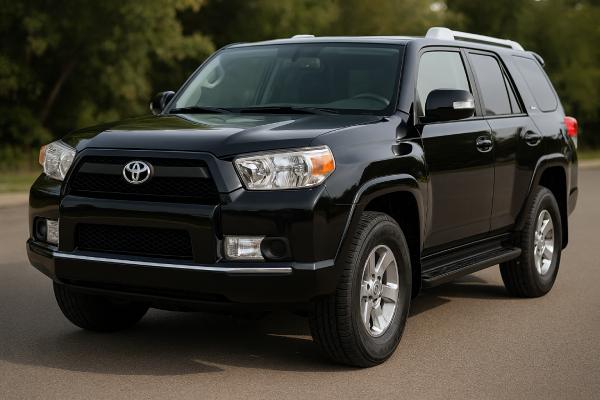
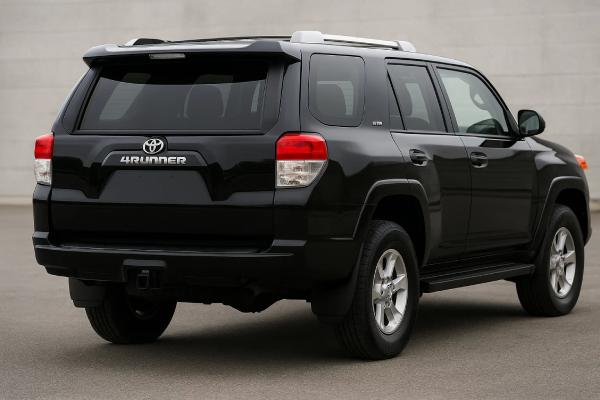
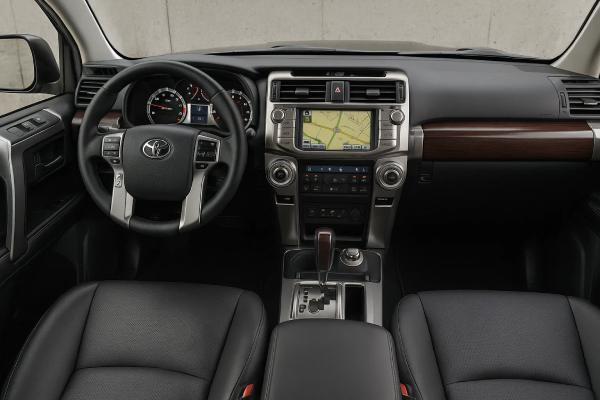
The fifth-generation Toyota 4Runner arrived for 2010 as one of the last mid-size, body-on-frame SUVs still engineered like a truck. This guide focuses on rear-wheel-drive (2WD) models built on the GRN280 platform from 2010 to 2013, powered by Toyota’s 1GR-FE 4.0-liter V6 (dual VVT-i) rated at 270 hp. In the lineup, this is the dependable, family-sized utility vehicle that sits below Land Cruiser/Lexus GX in luxury and hardware, but above crossovers in durability and towing confidence. Owners and shoppers care about real-world fuel economy, tow limits, long-term reliability, corrosion checks, and what maintenance keeps the 1GR-FE healthy past 200,000 miles. You’ll find clear specs, practical upkeep advice, and buyer-focused insight—including how these 2WD V6 models drive on highways, what they give up versus 4WD, and which options matter. Everything here aligns with North American configurations and test standards of the period to make decisions straightforward.
Top Highlights
- Stout body-on-frame chassis with quiet highway manners and a smooth 4.0-liter V6.
- Generous cargo space and a 5,000-lb (2,268-kg) tow rating when properly equipped.
- Proven 1GR-FE timing chain and wide parts availability keep lifetime costs predictable.
- Watch for frame and underbody rust in salted climates; inspect rear axle seals and bushings.
- Oil and filter every 5,000–7,500 miles (8,000–12,000 km) based on duty cycle and oil type.
Guide contents
- 4Runner 2WD overview 2010–2013
- GRN280 specifications and data
- Trims, options, safety and ADAS
- Reliability, issues and service actions
- Maintenance and buyer’s guide
- Driving and performance impressions
- How 4Runner 2WD compares
4Runner 2WD overview 2010–2013
Toyota kept the 4Runner squarely in the traditional SUV camp: ladder frame, solid rear axle with coil springs, and serious cooling and braking capacity for long trips and hot climates. The 2WD (rear-wheel-drive) configuration suits drivers who operate mainly on pavement or graded dirt but don’t need a transfer case. Compared with 4WD trims, you save weight, complexity, and cost while retaining the 1GR-FE V6 and most comfort features.
The 1GR-FE in these years uses dual VVT-i for a broad torque curve and cleaner emissions. It pairs with a 5-speed automatic (ECT-i) that favors smoothness and relaxed cruising; downshifts are decisive when you dig into the throttle. With proper hitch and cooling equipment, the tow rating reaches 5,000 lb. Cargo capacity is generous and the cabin features large-format controls that age gracefully.
Chassis tuning targets stability on highways and resilience on broken pavement. The front double-wishbone suspension controls dive well, and the rear four-link keeps the axle planted without pickup-truck hop. Noise, vibration, and harshness are lower than earlier generations due to improved body mounts, insulation, and aerodynamic tweaks. Safety equipment includes stability control, brake assist, multiple airbags, and a tire-pressure monitoring system; advanced driver aids were minimal, reducing long-term sensor maintenance.
Who should shortlist this model? Families in temperate regions, road-trippers who carry gear more than they rock-crawl, and owners who value long-haul durability and parts commonality with Toyota’s global truck family. If you frequently tow heavy or drive in snow/mud, you may prefer the 4WD variant; otherwise, the 2WD V6 offers easy ownership with fewer moving parts.
GRN280 specifications and data
Engine and Performance
| Item | Specification |
|---|---|
| Engine code | 1GR-FE V6, DOHC, 24-valve, dual VVT-i |
| Displacement | 4.0 L (3,955 cc) |
| Induction & fueling | Naturally aspirated, sequential multi-port injection |
| Rated power | 270 hp (201 kW) @ ~5,600 rpm |
| Rated torque | 376 Nm (278 lb-ft) @ ~4,400 rpm |
| Compression ratio | ~10.4:1 |
| Timing drive | Chain (no scheduled replacement; inspect by symptoms) |
| Fuel requirement | Regular unleaded (87 AKI) |
| Fuel tank | ~87 L (23.0 gal) |
| Aerodynamics | Cd ~0.36–0.37 (trim dependent) |
Transmission and Driveline
| Item | Specification |
|---|---|
| Gearbox | 5-speed automatic (ECT-i) |
| Drive | Rear-wheel drive (2WD) |
| Final drive ratio | ~3.73 (varies by axle build) |
| Rear differential | Open; traction via TRAC/VSC brake intervention |
| Towing (properly equipped) | Up to 5,000 lb (2,268 kg); 500 lb (227 kg) tongue typical |
Chassis and Dimensions
| Item | Specification |
|---|---|
| Platform | GRN280 body-on-frame, boxed ladder frame |
| Suspension | Front: independent double-wishbone; Rear: 4-link solid axle, coils |
| Steering | Rack-and-pinion, hydraulic assist |
| Brakes | 4-wheel discs, ABS, EBD, Brake Assist |
| Wheels/tyres (typical) | 17-inch wheels with 265/70R17 tyres |
| Wheelbase | 2,789 mm (109.8 in) |
| L × W × H | ~4,820 × 1,925 × 1,815 mm (189.8 × 75.8 × 71.5 in) |
| Ground clearance | ~229 mm (9.0 in) nominal |
| Approach/departure | ~25° / ~24° (tyre and trim dependent) |
| Curb weight | ~1,980–2,070 kg (4,365–4,565 lb) |
| GVWR | ~2,700–2,760 kg (5,950–6,085 lb) |
| Turning circle | ~11.0 m (36.1 ft) |
| Cargo volume | Seats up: ~1,310–1,335 L (46–47 cu ft); seats down: ~2,500+ L (~88–90 cu ft) |
Fluids and Capacities (verify by VIN before service)
- Engine oil: ~6.1–6.6 L (6.4–7.0 qt) of 0W-20 (later manual guidance) or 5W-20; API SN or better.
- Automatic transmission: Toyota WS; drain/fill typically ~3.5–4.2 L (3.7–4.4 qt).
- Rear axle: 75W-85 GL-5 (Toyota spec), ~2.3 L (2.4 qt).
- Coolant: Toyota Super Long Life (pink), ~11–12 L total system depending on equipment.
- Brake fluid: DOT 3 or DOT 4 compatible.
- Power steering: Dexron-III type ATF (where applicable).
Key torque values
- Wheel lug nuts: 113 Nm (83 lb-ft)
- Spark plugs: 18–22 Nm (13–16 lb-ft) on clean, dry threads
- Rear diff drain/fill: 49–59 Nm (36–44 lb-ft)
- Front caliper bracket bolts (typical): ~137–151 Nm (101–112 lb-ft)
Performance and Economy
| Metric | Realistic figure |
|---|---|
| 0–60 mph (0–97 km/h) | ~7.6–8.2 s (unladen) |
| Top speed | ~113 mph (~182 km/h) |
| EPA-type economy (2WD V6) | ~17–18 mpg city / 22–23 mpg highway / ~19–20 mpg combined |
| Observed highway at 75 mph (120 km/h) | ~20–22 mpg US (11.8–10.7 L/100 km) |
| Payload (typical) | ~600–700 kg (1,300–1,540 lb), minus passengers/accessories |
| Roof load | ~75–100 kg (165–220 lb) with approved crossbars |
Notes: Wheel/tire upsizing, roof racks, and lift kits reduce acceleration and fuel economy; stick close to stock diameter to preserve shift logic and speedometer accuracy.
Trims, options, safety and ADAS
Trims and option structure (2010–2013, 2WD focus)
- SR5 2WD: The common 2WD grade. Cloth or available SofTex-style seating, power driver seat, 17-inch wheels, roof rails, and a basic audio system with optional premium audio. Convenience and leather-appearance packages were frequent.
- Limited 2WD: Adds leather, dual-zone climate, JBL audio availability, X-REAS cross-linked dampers (ride/roll control), proximity entry, and 20-inch wheel packages.
- Trail: Off-road grade mainly combined with 4WD and low range; not applicable to most 2WD builds of these years.
Mechanical differences by trim
- X-REAS (Limited) improves on-road roll control and transient response.
- Cooling and tow prep packages add hitch, wiring, and sometimes upgraded alternator/fan mapping.
- Brakes/springs vary slightly with wheel/tire packages and payload ratings.
Quick identifiers
- VIN decode shows GRN28 sequence for 4.0-liter 2WD models.
- Under-hood layout: large top intake manifold, VVT-i actuator housings, and WS ATF service ports on the transmission.
Safety ratings (high-level)
- Strong crashworthiness results for the structure class in IIHS testing available for these years, with stable occupant compartments. NHTSA star ratings vary slightly by trim/equipment. Always check the specific vehicle’s results and airbag configuration.
Safety systems and ADAS
- Standard: ABS, EBD, Brake Assist, Vehicle Stability Control (VSC), Traction Control (TRAC), TPMS, front/side/curtain airbags, active head restraints, LATCH child-seat anchors.
- Limited ADAS: No factory automatic emergency braking, lane keeping, or adaptive cruise in 2010–2013 4Runner, which simplifies windshield and radar-sensor service (none to calibrate).
- Service note: After alignment or steering work, perform steering-angle sensor zero-point calibration to avoid VSC/TRAC anomalies.
Reliability, issues and service actions
Overall outlook
The 1GR-FE/5-speed combo is one of Toyota’s most durable truck powertrains. Most age-related issues are predictable wear items, fluids deferred past their useful life, or corrosion in severe-winter states. Here’s what to expect:
Common / low–medium cost
- Front lower control arm bushings and ball joints: Clunks and wander; replace bushings/ball joints or complete arms; align afterward.
- Sway-bar links/bushings: Rattles over small bumps; inexpensive wear items.
- Rear axle seals: Light seepage onto backing plates; replace seals and ensure the breather isn’t clogged.
- Brake pulsation: Warped rotors from heat or improper wheel-nut torque; machine/replace and torque wheels to 113 Nm.
Occasional / medium cost
- Radiator end-tank seep: Age-related weep at crimp joints; replacement prevents roadside events.
- Power steering rack seep: Wet boots over time; reman/new rack as needed.
- Door lock actuators and window regulators: Slowing or intermittent operation; replace the failed unit(s).
Less common / higher cost
- A/C condenser corrosion (coastal/salted regions): Reduced cooling; replace condenser, flush, leak-test.
- Frame and crossmember corrosion: Inspect thoroughly—inside frame rails, rear lower link mounts, spare-tire crossmember, and radiator support. Early treatment makes a big difference.
Engine-specific notes (1GR-FE)
- Timing chain: No scheduled replacement. Investigate only if there’s correlation faults, rattle, or metal in oil.
- Water pump: Weeping from the tell-tale hole after high mileage; replace with coolant service.
- Valve cover gaskets: Oil smell or minor leaks; reseal with grommets.
- Intake/throttle body: Periodic cleaning can smooth idle; port injection keeps intake valves clean compared with direct-injection engines.
Transmission and driveline
- 5-speed automatic (ECT-i) is heat-tolerant and reliable. Even if “lifetime” is mentioned, drain-and-fill with WS at 60k–90k miles (100k–150k km) by age/condition is prudent. Harsh downshifts typically respond to fresh fluid and an adaptation reset.
- Driveshaft/U-joints: Listen for clunks; grease serviceable joints (where fitted).
Recalls, TSBs, and extended coverage (headline items)
- Passenger airbag inflator (Takata-related campaigns affecting certain VIN ranges): inflator/module replacement.
- Accessory issues (regional port-installed items like exhaust tips or floor mats) addressed by campaigns or dealer fixes.
- Verification: Always run the official VIN portal before purchase and keep printed proof of recall completion with the vehicle records.
Pre-purchase essentials
- Full fluid history (engine oil, ATF, diff, coolant).
- Underbody corrosion inspection, including fuel and brake lines.
- Rear axle seal check, radiator end-tank area, and power-steering rack boots.
- Suspension wear (LCA bushings/ball joints, sway-bar links) and even tire wear patterns.
- Confirm proper hitch wiring and no trailer-brake controller hacks.
Maintenance and buyer’s guide
Practical service schedule (distance or time—whichever comes first; shorten for heavy towing, dust, or extreme climate)
- Engine oil + filter: 5,000–7,500 miles (8,000–12,000 km) or 6–12 months; use 0W-20 (later guidance) or 5W-20 to Toyota spec.
- Engine air filter: Inspect 15k (24k km); replace ~30k (48k km) or sooner in dust.
- Cabin air filter: 15k–20k (24k–32k km) or annually.
- Spark plugs: Iridium; typically 120k miles (193k km) or 10 years. Inspect coil boots at the same time.
- Coolant (SLLC): Long initial interval, then ~50k–60k miles (80k–96k km) or 5–6 years thereafter.
- ATF (Toyota WS): Drain/fill 60k–90k miles (100k–150k km) by age/condition.
- Rear differential: 75W-85 GL-5; 30k–60k miles (48k–96k km) depending on duty.
- Brake fluid: Replace every 2–3 years.
- Serpentine belt & pulleys: Inspect each oil service; replace 60k–90k miles.
- Tyre rotation: 5k–7.5k miles; align annually or after suspension work.
- 12-V battery: Test yearly after year four; typical life 4–6 years.
- Body/frame care: Wash underbody in winter; treat surface rust early; keep frame drain holes clear.
Fluid specifications, capacities (decision-grade)
- Oil: 0W-20 or 5W-20 API SN/ILSAC; ~6.4–7.0 qt (6.1–6.6 L) with filter.
- ATF: Toyota WS only; use temperature-based fill procedure.
- Coolant: Toyota Super Long Life (pink) premix.
- Rear diff: 75W-85 GL-5, ~2.3 L (2.4 qt).
- Brake: DOT 3/4.
- Steering: Dexron-III type ATF where applicable.
Essential torque values
- Wheels 113 Nm (83 lb-ft); spark plugs 18–22 Nm (13–16 lb-ft); rear diff plugs 49–59 Nm (36–44 lb-ft).
Buyer’s checklist
- Corrosion: Frame rails (inner and outer), spare-tire crossmember, rear lower control-arm mounts, radiator support, fuel/brake lines.
- Cooling system: Radiator crimps for pink residue; water pump weep hole.
- Driveline: Rear axle seals for wet backing plates; check diff breather.
- Suspension: Front LCA bushings/ball joints, sway links; look for uneven tire wear.
- Brakes: Rotor thickness variation (steering shimmy), parking-brake cable free play.
- Electrics: Window regulators, lock actuators, blower speeds.
- Accessories: Hitch wiring quality; avoid Scotch-locks—prefer OEM harnesses.
Which configuration to target
- SR5 2WD with tow prep: Best value for daily use and occasional towing; stick with stock-diameter tires for economy.
- Limited 2WD with X-REAS: Sharper on-road manners and upscale cabin; budget for damper service as miles accrue.
- Heavy towing or mountain driving: Consider axle ratio, cooling package, and brake condition; if regularly over ~3,500 lb (1,590 kg), plan for conservative speeds and more frequent ATF service.
Durability outlook
With routine fluid care and rust prevention, the 1GR-FE/5-speed driveline routinely surpasses 200k–300k miles (320k–480k km). Most “big ticket” repairs are age-related cooling components, suspension renewal, and occasional steering rack work rather than engine or transmission overhauls.
Driving and performance impressions
Ride, handling, NVH
For a body-on-frame SUV, the 4Runner 2WD rides impressively well. The separate frame isolates harsh impacts, and the coil-spring rear controls axle motion without the empty-bed hop of a pickup. On concrete highways, expansion joints are heard more than felt. Steering is light at parking speeds and gains natural effort at cruising speeds. The X-REAS system on Limited trims ties left-front to right-rear and vice versa, reducing roll and pitch during quick transitions. Brake feel is firm with predictable initial bite; long downhill grades favor engine braking to manage rotor temperatures.
Powertrain character
The 1GR-FE pulls strongly from 2,000–5,000 rpm with a smooth, even power delivery. There’s no turbo lag to manage, just linear throttle mapping. The 5-speed stays out of the way in commute driving and drops promptly for passes. Kickdown from fifth to third is decisive for 50–80 mph (80–130 km/h) merges. The tall overdrive keeps revs low at 70–75 mph (113–120 km/h), aiding cabin quiet and economy.
Efficiency
Expect ~19–20 mpg combined in mixed use with stock tires and no roof gear. Highway results vary widely with speed and wind: ~22–23 mpg US at 65–70 mph (10.7–10.2 L/100 km), ~20–22 mpg US at 75 mph (11.8–10.7 L/100 km). Larger all-terrains, lifts, and roof baskets can subtract 1–3 mpg. Winter blends and short trips also hurt.
Selective metrics
- 0–60 mph: around 8 seconds with healthy tune and stock tires.
- 50–80 mph: confident with a single or double downshift; plan space when fully loaded.
- Turning circle: ~36 ft; easy to maneuver in parking decks for the size class.
Load and towing behavior
With proper equipment and trailer brakes, 3,500–5,000 lb (1,590–2,268 kg) trailers are workable. Stability is good if tongue weight is in the 10–15% range and tires are at correct pressures. Expect a 20–35% fuel-consumption penalty when towing in flat country, more in hills or headwinds. Keep speeds conservative on long grades and consider an auxiliary transmission cooler if you frequently tow near the upper range in hot climates.
How 4Runner 2WD compares
Versus 4Runner 4WD (same generation)
- Pros (2WD): Lower entry price, fewer moving parts, slightly better fuel economy, less driveline maintenance.
- Cons: No low range or locking hardware; traction management relies on brake-based systems. For snow, sand, or technical trails, the 4WD is the right tool.
Versus unibody crossovers (Pilot, Explorer of the era)
- Pros: Superior durability on rough roads, better cooling and brake capacity for loads, traditional towing confidence.
- Cons: Heavier, thirstier, and less nimble; crossovers offer more car-like handling and often more advanced driver aids.
Versus other body-on-frame SUVs (Xterra, Grand Cherokee WK)
- Pros: Stronger long-term reliability record, wide parts availability, high resale values, and a family-friendly cabin.
- Cons: Less athletic steering than some rivals; Limited’s 20-inch wheels can ride firmer than SR5’s 17-inch setup.
References
- Gas Mileage of 2013 Toyota 4Runner 2013 (EPA Fuel Economy)
- 2013 Toyota 4Runner Features Bold Exterior Styling and Legendary Performance 2012 (Press Release)
- 2010 Toyota 4Runner Add to Rich Heritage With More Power and Better MPG 2009 (Press Release)
- 2010 Toyota 4Runner 4-door SUV 2010 (Safety Rating)
- 2010 Toyota 4Runner SUV/RWD 2010 (Recall Database)
Disclaimer
This article is for informational purposes and isn’t a substitute for professional diagnosis or repair. Specifications, torque values, service intervals, and procedures vary by VIN, market, and equipment. Always verify details against your vehicle’s official owner’s and service documentation and follow manufacturer procedures.
If this guide helped you, please share it with fellow owners on Facebook or X/Twitter to support xcar’s work.