

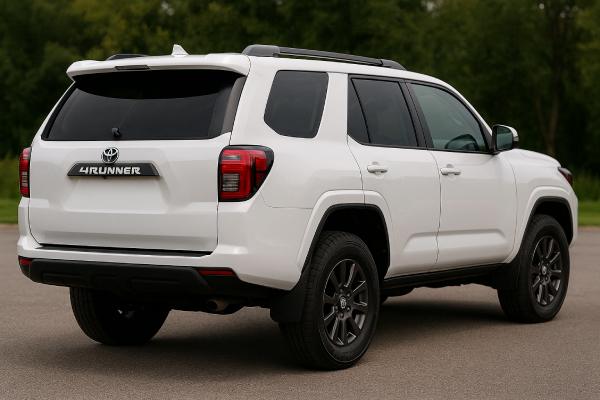
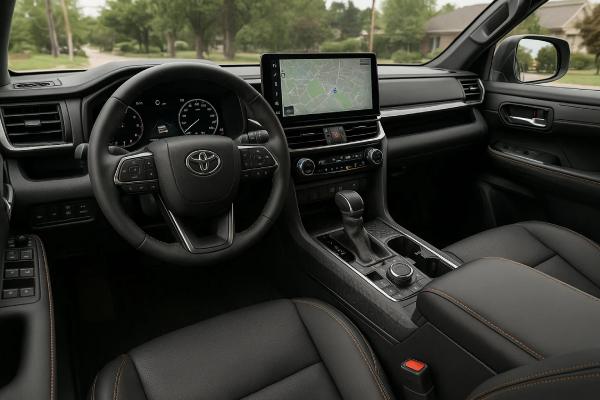
The sixth-generation Toyota 4Runner launches the long-running body-on-frame SUV into a more modern era while keeping the rugged, easy-to-live-with character that owners value. Riding on Toyota’s TNGA-F architecture, the 2025–present 4Runner 2WD uses the T24A-FTS 2.4-liter turbocharged four-cylinder (i-FORCE) paired with an 8-speed automatic. In this configuration it’s a rear-wheel-drive, five-passenger midsize SUV with a traditional ladder frame, generous ground clearance, and a cabin that finally gets the tech many shoppers expect today. This guide focuses on the 2WD models (SR5, TRD Sport, Limited and related 2WD grades) sold in North America from model year 2025 onward. We cover what it is, how it’s built, the specs that matter, how it drives, what it costs to maintain, and what to check before you buy. If you’re cross-shopping crossovers for commuting and light adventure, or you’re an owner planning a decade of reliable use with occasional towing and road trips, this article zeroes in on the 2WD variant so you can decide with confidence.
Fast Facts
- Strong, efficient i-FORCE 2.4-liter turbo: 278 hp (207 kW), 317 lb-ft (430 Nm); smoother and quicker than the outgoing V6 while using less fuel.
- Stout ladder frame (TNGA-F) brings better ride control and towing confidence; max tow rating up to 6,000 lb (2,722 kg) when properly equipped.
- Modernized cabin tech: standard Toyota Safety Sense 3.0, big screens available (8-in standard; 14-in available), improved driver ergonomics.
- Caveat: new-gen turbo engine needs high-quality oil and timely services; watch for charge-air, PCV, and carbon buildup patterns with mileage.
- Typical interval: engine oil and filter every 5,000–10,000 miles (8,000–16,000 km) or 12 months, depending on use and oil spec.
Explore the sections
- Detailed Overview
- Specifications and Technical Data
- Trims and Options, Safety and Driver Assistance
- Reliability, Common Issues and Service Actions
- Maintenance and Buyer’s Guide
- Driving and Performance
- How 4Runner Compares to Rivals
4Runner 2WD (N500) — detailed overview
The 2025-present 4Runner 2WD shifts from the long-serving fifth generation to a fully re-engineered platform shared with Toyota’s latest body-on-frame models. For buyers who don’t need four-wheel drive but still want a tough frame, tall driving position, and simple long-haul durability, the 2WD grades deliver a compelling blend of value and capability.
Under the hood is Toyota’s T24A-FTS i-FORCE 2.4-liter turbo four. It replaces the prior 4.0-liter V6 with higher torque delivered at lower revs and better efficiency on the highway. The engine feeds a conventional 8-speed torque-converter automatic that keeps revs low in steady-state cruising and kicks down promptly for passing. The rear-wheel-drive layout incorporates Auto LSD (a brake-based limited-slip function) that helps in wet or gravel conditions without the complexity of a transfer case.
Chassis-wise, the TNGA-F frame is stiffer than the previous generation, improving both crash performance and the ride/handling baseline. Coil-spring rear suspension with a multi-link layout helps the 4Runner feel more composed over choppy pavement than older truck-based SUVs, while maintaining payload and tow capacity. Steering transitions to electric power assist, which enables modern driver-assistance features while keeping steering effort consistent.
Inside, the 4Runner finally feels current: clear digital instrumentation, a fast infotainment stack with wireless smartphone mirroring, and a more ergonomic console with useful storage. Physical knobs remain for key functions, and the signature power rear glass continues (a practical boon for long cargo and for venting dusty cabins on trailheads). The cabin remains boxy and upright, so front/rear headroom is generous; the cargo bay is squared-off and tall.
For typical 2WD buyers—Sun Belt commuters, long-distance travelers, small-boat owners—the formula is sensible: lower purchase price and running costs than 4WD, fewer driveline parts to service, and better fuel economy, while retaining the brawny build that makes 4Runner ownership feel special.
Specifications and Technical Data
Engine and Performance
| Item | Detail |
|---|---|
| Engine code | T24A-FTS (i-FORCE) |
| Layout | 2.4-liter inline-4, turbocharged, DOHC, chain-driven cams |
| Displacement | 2,393 cc (2.4 L) |
| Induction & fueling | Intercooled single turbo; direct + port fuel injection |
| Rated output | 278 hp (207 kW) @ ~6,000 rpm |
| Rated torque | 430 Nm (317 lb-ft) @ ~1,700 rpm |
| Compression ratio | ~10.5:1 (turbo DI/port blend) |
| Fuel requirement | Regular unleaded acceptable; premium may optimize performance in extreme conditions |
| Fuel tank | ~65–70 L (17–18.5 gal) — verify by VIN/owner’s manual for exact capacity |
| Aerodynamics | Body-on-frame SUV; Cd not published; frontal area large (roof rack and tyre package dependent) |
| EPA-type economy (typical) | 22 mpg combined (10.7 L/100 km); up to ~26 mpg highway (9.0 L/100 km) depending on trim/tyres |
| Real-world highway @ 120 km/h (75 mph) | 10.5–11.8 L/100 km (20–22 mpg US) observed range; wind/tyres/loads vary |
Notes: Output and mpg figures vary slightly with trim, wheel/tire, and equipment; Limited 2WD often posts slightly lower highway mpg than SR5/TRD Sport due to tyres and aero.
Transmission and Driveline
| Item | Detail |
|---|---|
| Transmission | 8-speed automatic (torque converter) |
| Final drive | Rear-wheel drive (2WD) with open differential; Auto LSD (brake-based) |
| Overall gearing | Tall highway ratio to keep rpm low; responsive kickdown for passing |
| Tow rating (max) | Up to 6,000 lb (2,722 kg) with tow package |
| Refuel time | Conventional gasoline; ~5–7 minutes for 0–100% at typical pumps |
Chassis and Dimensions
| Item | Detail |
|---|---|
| Platform | TNGA-F ladder frame |
| Suspension | Front: independent double-wishbone; Rear: multi-link solid axle, coil springs |
| Steering | Electric power assist (rack-and-pinion) |
| Brakes | 4-wheel disc; ABS, EBD, brake assist |
| Wheels/tyres (typical 2WD) | 18-inch options on TRD Sport/Limited; 17-inch on SR5; touring-biased all-seasons common on 2WD |
| Wheelbase | ~2,850 mm (112.2 in) |
| Length/width/height | ~4,950 mm (194.9 in) / 1,980 mm (77.9–79.9 in) / 1,845–1,915 mm (72.6–75.5 in) depending on trim/roof rack |
| Ground clearance | ~205–257 mm (8.1–10.1 in) by trim/wheel/tyre |
| Approach/breakover/departure | Approx. 18–24° / 23–24° / 22–24° (2WD trims lean toward the lower end) |
| Curb weight | ~2,125 kg (4,685 lb) typical 2WD |
| GVWR | ~2,755 kg (≈6,075 lb) |
| Turning circle | ~12.0 m (39.4 ft) |
| Cargo volume | Seats up: ~48.4 cu ft (1,370 L) · Seats down: up to ~90.2 cu ft (2,555 L) |
Fluids and Capacities (owner-service essentials)
| System | Spec / Type | Capacity (approx.) | Notes & key torque values |
|---|---|---|---|
| Engine oil | API SP/GF-6 0W-20 synthetic or as labeled in cap | ~4.8–5.5 qt (4.5–5.2 L) | Drain plug ~39 Nm (29 lb-ft); oil filter housing ~25 Nm (18 lb-ft) if applicable |
| Coolant | Toyota Super Long Life (pink) | As labeled in manual | Replace only with compatible SLLC; bleed carefully |
| ATF | Toyota WS (world standard) | Filled for life; service if severe use | Pan bolts ~7–9 Nm (62–80 in-lb); fill/check at temp |
| Rear axle | 75W-85 GL-5 (Toyota spec) | ~1.1–1.3 L | Fill to bottom of plug |
| Brake fluid | DOT 3/4 | As required | Flush every 2–3 years; reservoir level checks monthly |
| Power steering | Electric assist | — | No fluid changes |
| Tyre pressures | As placard (typ. 32–35 psi / 220–240 kPa) | — | Set cold; adjust for heavy loads/towing |
Always confirm exact capacities and torque specs for your VIN in the official service information; some values vary by trim, axle, and options.
Performance and Economy
| Metric | Typical 2WD i-FORCE |
|---|---|
| 0–60 mph (0–100 km/h) | ~7.5–7.9 s (trim and tyre dependent) |
| Top speed | ~115–120 mph (185–193 km/h), electronically limited |
| Highway passing 50–80 mph | Confident; 8-speed drops 2–3 gears swiftly |
| EPA-type economy | ~22 mpg combined (10.7 L/100 km) for SR5/TRD Sport 2WD; Limited 2WD ~22 mpg combined with slightly lower highway |
| Towing/payload/roof | Tow: up to 6,000 lb (2,722 kg) · Payload: ~1,495–1,550 lb (678–703 kg) by trim · Roof: follow crossbar rating (often 165–220 lb dynamic) |
Trims and Options, Safety and Driver Assistance
2WD-focused grades and identifiers
- SR5 (2WD available): Cloth interior, LED headlamps, 8-in touchscreen, 18-in wheels optional, Auto LSD. Quick tells: simpler bumper trim, smaller screen, fabric seats.
- TRD Sport (2WD available): Sport-tuned shocks, unique 20-in (or 18-in depending on region) wheels and styling, SofTex-trimmed seats available. Quick tells: color-keyed accents, sport badging.
- Limited (2WD available): Chrome/brushed exterior details, available 14-in screen, leather-trimmed interior, advanced towing features, adaptive variable suspension on select builds. Quick tells: brighter grille/chrome, larger screen, luxury interior touches.
- Platinum/TRD Pro/Trailhunter: Generally 4WD; mentioned for context—these are not typical 2WD offerings.
Key options/packages that affect function
- Tow Technology Package: Integrated trailer brake controller, Straight Path Assist, surround view—valuable for towing and big-city parking.
- Audio/Tech Upgrades: 14-in infotainment, JBL 14-speaker system with dockable JBL FLEX portable speaker, 12.3-in digital cluster on certain packages.
- Wheels/Tyres: Larger wheels and aggressive tyres look great but can cost 1–2 mpg and add road texture; 2WD buyers often prefer touring all-seasons for quieter cruising.
Safety ratings (snapshot)
- Structure/airbags: High-strength steel frame sections; multiple airbags including curtain coverage; front pretensioners/load limiters; rear seat belt reminders.
- Crash-avoidance: Toyota Safety Sense 3.0 (TSS 3.0) standard across the lineup. This includes forward collision warning with automatic emergency braking (vehicle and pedestrian), lane departure alert with steering assist, lane tracing assist, full-speed dynamic radar cruise, road sign assist, automatic high beams, and Proactive Driving Assist.
- Headlights: Performance varies by headlamp variant; higher trims can test better thanks to projector tuning.
- Child seating: LATCH hardware across rear outboard positions with clear anchors.
ADAS calibration and service notes
- Windshield replacements and bumper repairs may require camera/radar calibration.
- Alignments and tyre size changes can affect lane tracing and radar-cruise behavior; keep rolling diameter close to stock.
- After collision or suspension work, verify that active safety systems report “ready” and lane-tracking works on a clearly marked road.
Year-to-year changes (early cycle)
- 2025 marks the launch year for the N500 4Runner with i-FORCE as the base powertrain. Equipment and trim mixes may vary slightly in subsequent model years; watch for headlight updates and software features added over-the-air or at MY change.
Reliability, Common Issues and Service Actions
It’s early days for the N500 4Runner, but the components are closely related to those in Toyota’s current truck family. Below are patterns to monitor, based on the engine family, platform, and typical use of turbocharged body-on-frame SUVs.
Engine & induction (ICE specifics)
- PCV and oil vapor management (common · low/medium cost): Turbo four-cylinders can pass more oil mist into the intake tract than naturally aspirated engines. Symptoms: oily film in charge pipes, slight smoke at startup on steep grades. Remedy: use the specified oil grade/intervals; ensure fresh PCV valve as needed; inspect charge pipes at major services.
- Charge-air plumbing/boost leaks (occasional · medium): Hose clamps at intercooler connections can relax with heat cycles. Symptoms: whooshing sound, loss of low-end torque, under-boost codes. Remedy: pressure test, re-clamp/replace couplers; verify no MAF contamination.
- Intake valve deposits (rare early · medium later): DI+port fueling mitigates carbon, but short trips can still cause buildup. Symptoms: rough cold starts, misfires. Remedy: run high-detergent fuel periodically; consider intake cleaning near 100k miles if symptoms present.
- Cooling system weeps (rare · low): Watch hose junctions and heater core fittings in the first years. Remedy: pressure test; replace seals under warranty when found.
Fuel & ignition
- High-pressure pump noise (occasional · low): Audible ticking is normal; changes in tone with load may indicate early wear. Remedy: confirm with scan data; replace only if pressure targets aren’t met.
- Spark plug wear (predictable · low): Turbo torque is hard on plugs under towing/heat. Remedy: inspect/replace at conservative intervals (see maintenance table).
Driveline/chassis
- Rear axle seep (occasional · low): Inspect pinion and cover area at 30k-mile services. Remedy: reseal; replace vent if clogged.
- Suspension bushings (long-term · medium): Heavy cargo/tow loads wear rear trailing-arm and sway-bar bushings. Symptoms: thumps over expansion joints. Remedy: inspect at 60k+ miles; replace as sets.
Electrical/infotainment
- Software updates (expected · low): Multimedia and ADAS ECUs receive periodic updates to improve camera behavior, Bluetooth stability, and lane-tracking logic. Remedy: apply updates at dealer; some are OTA.
- 12-V battery sensitivity (occasional · low): Big screens + short trips can age small batteries prematurely. Remedy: capacity test annually after year 3; replace proactively before winter trips.
Rust/corrosion
- The new frame uses improved coatings, but coastal/snowbelt vehicles still need attention. Checks: drain hole blockages in frame rails, seam sealer edges, rear lower control arm mounts, spare-tire well, hitch cross-member. Remedy: annual underbody wash and spray protectant; touch-up chipped paint.
Recalls/TSBs
- Always run a VIN recall check before purchase or service. Early-production bulletins frequently address infotainment updates, door glass run channels, or trim noises. Save proof of completion with service records.
Pre-purchase checklist (used or demo units)
- Full maintenance history with oil changes and any software updates.
- Axle/tow package verification (cooling, wiring, brake controller).
- Evidence of proper tyre rotations and alignments (lane-keep performance depends on this).
- Underside inspection for off-road scrapes, bent steps, or hitch impacts—even on 2WD trucks used for beach driving.
Maintenance and Buyer’s Guide
Practical maintenance schedule (time/distance whichever comes first)
- Engine oil & filter: 5,000–10,000 miles (8,000–16,000 km) / 12 months; 5,000-mile interval if frequent short trips, heat, or towing.
- Engine air filter: Inspect 15,000 miles (24,000 km); replace 30,000–45,000 miles depending on dust.
- Cabin filter: 12 months or 15,000–20,000 miles.
- Spark plugs (iridium): Inspect 60,000 miles (96,000 km); replace 60,000–90,000 miles depending on duty cycle/towing.
- Coolant (SLLC pink): First replacement ~100,000 miles (160,000 km) or 10 years; then every 5 years/50,000 miles.
- Serpentine belt & hoses: Inspect every 30,000 miles (48,000 km); replace on cracks/noise.
- Automatic transmission (WS): “Lifetime” fluid under normal conditions; for severe service (towing, high heat) consider drain/fill at 60,000–90,000 miles with filter/pan check.
- Rear axle gear oil (GL-5 75W-85): Check level at 30,000 miles; replace at 60,000–100,000 miles if towing/loads.
- Brake fluid: Flush every 2–3 years.
- Brakes (pads/rotors): Inspect 10,000–15,000 miles; watch for rear pad taper if frequently towing.
- Tyre rotation & balance: Every 5,000–7,500 miles; alignment annually or at first sign of edge wear.
- 12-V battery: Load test annually after year 3; expect 4–6 years typical life in hot climates.
Fluid specs and torques (essentials)
- Engine oil: 0W-20 API SP/GF-6; drain plug ~39 Nm (29 lb-ft).
- Lug nuts: ~113 Nm (83 lb-ft).
- Rear diff fill/drain: Tighten to manufacturer spec; verify crush-washer replacement.
- Spark plugs: Tighten per plug manufacturer (typically 18–25 Nm / 13–18 lb-ft with anti-seize guidance per OEM).
- Tyre pressure: Door placard—typically 32–35 psi (220–240 kPa); increase for heavy towing within placard range.
Buyer’s guide: what to look for in a 2WD 4Runner
- Best value trims (2WD): SR5 for affordability and simplicity; TRD Sport for sharper on-road feel; Limited 2WD for maximum daily comfort (often slightly lower highway mpg).
- Options to seek: Tow package (cooling, wiring, controller), 14-in infotainment if you value nav/visibility, surround-view if you park in tight cities.
- Items to inspect: Even panel gaps around tailgate, smooth operation of power rear glass, any headlight condensation, underbody scrapes, and hitch receiver integrity.
- Tyres: Many 2WD examples run highway all-seasons; check date codes and even wear—cupping indicates overdue rotations or worn dampers.
- Durability outlook: With routine maintenance and conservative fluid intervals, expect the 2.4T/8AT/2WD driveline to deliver long service life with fewer wear items than comparable 4WD systems.
Driving and Performance
Ride and handling, NVH
The N500 4Runner’s stiffer frame and revised suspension tuning make it more settled over broken pavement than the previous generation. The 2WD versions, typically fitted with touring-oriented tyres, ride quietly at urban speeds and stay impressively composed over long highway grooves. Body motions are still SUV-like—this is a tall, ladder-frame vehicle—but pitch and roll are well controlled. Wind noise is modest until you add roof racks or more aggressive tyre treads; road hum climbs with larger wheel diameters.
Powertrain character
Toyota’s i-FORCE 2.4T produces its best work at low and mid revs, so normal driving feels relaxed and torquey. Throttle response is crisp in “Normal,” more eager in “Sport,” and the transmission will quickly drop to the meat of the torque curve for on-ramp merges. Kickdown is decisive without hunting. In stop-and-go, the 8-speed’s first two ratios feel short enough to move the mass without drama. Compared with the outgoing 4.0 V6, the turbo four is quieter at cruise and quicker in mid-range passing.
Efficiency and range (2WD)
Typical owners see about 22 mpg US combined (≈10.7 L/100 km) in SR5/TRD Sport 2WD on stock tyres, with ~26 mpg US highway (≈9.0 L/100 km) achievable in steady 65–70 mph travel on level ground. At 75 mph (120 km/h), expect 20–22 mpg depending on wind/grade. Larger wheels, roof racks, and aggressive tyres can pull highway economy down 1–2 mpg. Cold weather and short trips have an outsized effect—let the engine fully warm before judging consumption.
Key performance metrics (contextual)
- 0–60 mph: mid-to-high 7-second range in typical 2WD trims.
- 50–80 mph passing: strong; two-gear kickdown, minimal lag.
- Braking feel: firm top-of-pedal and consistent; heavy towing will benefit from trailer brakes (required by law at certain weights).
- Turning circle: about 39.4 ft—reasonably maneuverable for the class.
Load and towing
The 2WD 4Runner’s 6,000-lb max tow rating covers small boats, campers, and utility trailers. Stability is good with weight-distribution hitches and properly inflated tyres. Expect a 15–30% fuel-economy penalty at 60–65 mph with a 3,500- to 5,000-lb trailer; more with tall frontal area. Transmission temps remain well managed if you use Tow/Haul mode and keep speeds reasonable. The optional Tow Tech features (Straight Path Assist, surround view) meaningfully reduce stress when backing trailers into tight spots.
How 4Runner Compares to Rivals
Versus Ford Explorer (RWD/longitudinal unibody): Explorer rides lower, handles more like a crossover, and returns better fuel economy in base trims. But it lacks the 4Runner’s ladder-frame toughness and tow-stability feel. If you never tow or venture beyond graded dirt, Explorer’s efficiency and road manners may win.
Versus Jeep Grand Cherokee (RWD base): Grand Cherokee offers a richer interior and supple ride, plus potent engine options. Ownership costs can be higher, and long-term durability is more variable. The Toyota trades a little cabin opulence for robust, simple long-haul running.
Versus Honda Pilot (FWD-based unibody): Pilot is quieter inside and more efficient, with excellent packaging. But if you value a frame, rear-drive dynamics, and straightforward towing hardware, the 4Runner fits better—especially when you prioritize durability under load.
Versus Toyota Highlander (FWD-based unibody): The Highlander is Toyota’s own case for a family crossover: kinder ride, better mpg, and more third-row practicality. Choose the 4Runner if you want a rear-drive foundation, a square cargo hold, and a traditional SUV feel with a brawnier tow posture.
Bottom line: In 2WD form, the new 4Runner is the “truck-feeling” alternative in a segment increasingly dominated by crossovers. If your daily life includes hauling, towing, highway miles, and the occasional sandy launch ramp or gravel road—without the need for low-range—the 2WD grades hit a sweet spot of simplicity and stamina.
References
- The All-New 2025 Toyota 4Runner: The Icon That Inspires Exploration 2024 (Press Release)
- 2025 Toyota 4Runner Refines Adventure Ready Heritage 2024 (Press Release)
- 2025 Toyota 4Runner – Toyota USA Newsroom 2024 (Vehicle Page)
- 2025 Toyota 4Runner 2025 (Safety Rating)
Disclaimer
This article is for informational purposes and is not a substitute for professional diagnosis or repair. Specifications, torque values, service intervals, and procedures can vary by VIN, market, and equipment. Always confirm details in your official owner’s manual and service documentation, and follow all safety instructions when performing maintenance.
If you found this guide useful, please consider sharing it on Facebook, X/Twitter, or with an owner’s group—your support helps more readers get accurate, practical information.