
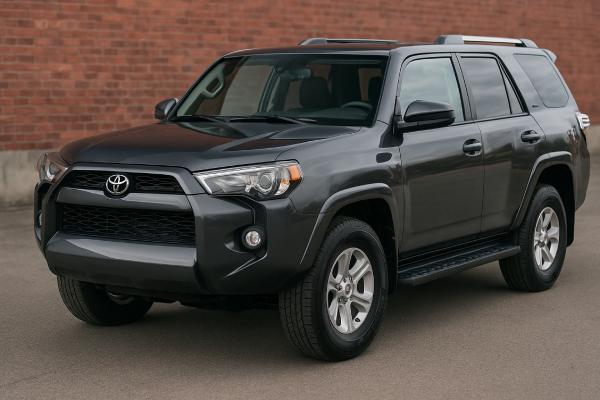
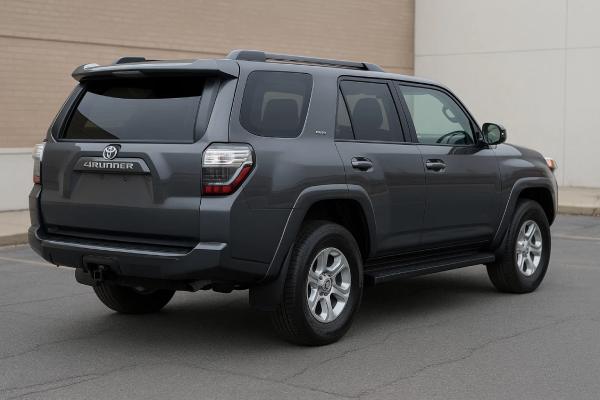
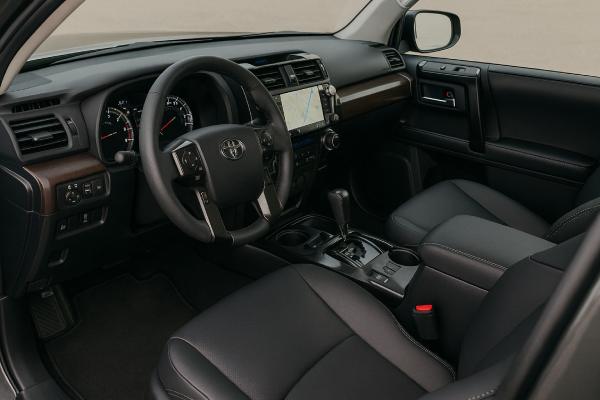
The facelifted 2014–2024 Toyota 4Runner 4WD (GRN285) is a midsize, body-on-frame SUV with serious long-term durability and simple, field-serviceable hardware. It sits above car-based crossovers in Toyota’s lineup and below full-size trucks, pairing a 4.0-liter 1GR-FE V6 (270 hp) to a 5-speed automatic and a robust 4×4 system. The 2014 refresh brought revised styling, interior updates, and incremental tech, while the fundamentals—ladder frame, double-wishbone front suspension, coil-sprung solid rear axle—stayed the course through the final 2024 model year. Buyers choose between part-time 4WD (SR5, TRD Off-Road) and full-time 4WD with a Torsen center differential (Limited). If you want confident towing, true low-range, and a cabin that swallows gear without drama, this generation focuses on function over flash. This guide covers the 4WD facelift years only—how it’s built, how it performs, what to watch as miles add up, how to maintain it affordably, and which trims and options make the most sense for daily use, road trips, and backcountry travel.
Key Takeaways
- Stout body-on-frame truck with real low-range, optional rear locker, and proven 1GR-FE V6 (timing chain).
- Choice of part-time 4WD (SR5/TRD Off-Road) or Limited’s full-time 4WD with lockable Torsen center differential.
- Square, practical cargo space: ~47.2 cu ft seats up; ~89.7 cu ft seats down; 5,000-lb tow rating.
- Caveat: modest fuel economy; lifts, racks, and aggressive tires further reduce mpg and braking margins.
- Typical rhythm: 0W-20 oil every 10,000 miles/12 months (severe duty: 5,000/6).
Guide contents
- 4Runner 4WD overview
- Specifications and technical data
- Trims and options, safety and driver assistance
- Reliability, common issues and service actions
- Maintenance and buyer’s guide
- Driving and performance
- How 4Runner compares to rivals
4Runner 4WD overview
The 2014–2024 4Runner 4WD stays true to the fifth-generation formula: traditional truck bones, a simple naturally aspirated V6, and a two-speed transfer case. The 1GR-FE engine uses dual VVT-i, port injection, and a timing chain—no routine timing-belt service—delivering a broad, predictable torque curve that pairs well with the Aisin five-speed automatic. While gear counts and infotainment lag newer rivals, the upside is durability, heat management on grades, and excellent parts availability.
Two distinct 4WD philosophies define this era:
- SR5 and TRD Off-Road (Trail earlier in the run): part-time 4WD with 2H/4H/4L. Use 2H on dry pavement; 4H for low-traction surfaces; 4L for technical terrain or heavy launches. TRD Off-Road adds terrain electronics (Multi-Terrain Select, Crawl Control) and, crucially, a locking rear differential. KDSS (Kinetic Dynamic Suspension System)—a hydraulically linked sway-bar setup—was optional on TRD Off-Road to increase articulation off-road while preserving on-road roll control.
- Limited: full-time 4WD with a Torsen center differential you can lock for loose surfaces. You can run 4H on dry pavement without driveline bind, making it the most set-and-forget for rain-slick highways and mixed weather.
The chassis blends a double-wishbone independent front suspension with a four-link, coil-sprung solid rear axle. Travel and tire sidewall do much of the comfort work. Brakes are four-wheel discs with conservative tuning; downhill grades reward manual-gate downshifts to protect rotor and ATF temperatures. Packaging is a strength: the cargo area is tall and square, the rear hatch glass powers down, and there’s ample room underbody for armor and skid plates without crowding fuel and exhaust routing.
In use, the 4Runner feels honest. It is not the quickest or quietest, but it takes a hit, carries a load, and shrugs off washboard that beats up crossovers. If your driving is split between commuting, mountain trips, and trailheads—with the occasional tow—the GRN285 is engineered for the long haul.
Specifications and technical data
Engine and Performance
| Item | Detail |
|---|---|
| Code / architecture | 1GR-FE, 4.0-L V6, aluminum block/heads, DOHC 24-valve, dual VVT-i |
| Displacement | 3,956 cc (4.0 L) |
| Induction / fueling | Naturally aspirated, port fuel injection |
| Compression ratio | ~10.4:1 |
| Rated output | 270 hp (201 kW) @ 5,600 rpm |
| Rated torque | 377 Nm (278 lb-ft) @ 4,400 rpm |
| Emissions/efficiency era | ULEV/Tier-2 Bin-5 transitioning toward LEV-III compliance by later years |
| Timing | Chain (no scheduled replacement) |
| Fuel tank | 87 L (23.0 gal) |
| Aerodynamics | Approx. Cd ~0.36 (tire/trim dependent) |
Transmission and Driveline
| Item | Detail |
|---|---|
| Transmission | Aisin A750F 5-speed automatic with manual gate |
| Transfer case | Part-time (SR5/TRD Off-Road): 2H/4H/4L · Full-time (Limited): Torsen center diff with lock, 4H/4L |
| Low-range ratio | ~2.57:1 |
| Differentials | Rear open (SR5/Limited), rear locker on TRD Off-Road; A-TRAC brake-based torque control |
| Final drive | ~3.73 (varies slightly by year/trim) |
| Tow rating | Up to 2,268 kg (5,000 lb); tongue 226 kg (500 lb) |
| Refuel to full | ~87 L (23.0 gal), regular unleaded |
Chassis and Dimensions
| Item | Detail |
|---|---|
| Platform | Body-on-frame, boxed ladder frame |
| Suspension | Front double-wishbone IFS; rear 4-link live axle (KDSS available on TRD Off-Road) |
| Steering | Hydraulic rack-and-pinion |
| Brakes | 4-wheel discs (front ventilated ~13.3 in; rear ~12.3 in), ABS/EBD/BA |
| Wheels/tyres | 17-in (SR5/TRD Off-Road), 20-in (Limited); P-metric A/T or H/T tires |
| Ground clearance | ~244 mm (9.6 in) |
| Approach/departure | ~25° / ~24° (bumper/tire dependent; TRD Off-Road typically better) |
| L × W × H | ~4,830 × 1,925 × 1,790 mm (190.2 × 75.8 × 70.5 in) |
| Wheelbase | 2,789 mm (109.8 in) |
| Turning circle | ~11.4 m (37.4 ft) |
| Curb weight | ~2,120–2,245 kg (4,675–4,950 lb) by trim/options |
| GVWR | ~2,858–2,903 kg (6,300–6,400 lb) |
| Cargo volume | 1,337 L (47.2 cu ft) seats up · 2,540 L (89.7 cu ft) seats down |
Fluids and Capacities
| System | Specification | Approx. capacity / torque |
|---|---|---|
| Engine oil | 0W-20 API/ILSAC synthetic | ~6.2 L (6.6 qt) with filter · drain plug ~40 Nm (30 lb-ft) |
| Coolant | Toyota Super Long Life (pink) | ~10.5 L (varies with HVAC) |
| Automatic transmission | Toyota ATF WS | ~10–11 L total (service fill less; temp-based level set) |
| Transfer case | 75W-90 GL-5 (Toyota equivalent) | ~1.0 L (fill to level) |
| Front / rear differential | 75W-90 GL-5 | ~1.5 L / ~3.0 L (fill to level) |
| Brake fluid | DOT 3 | Fill to mark; replace every 24–36 months |
| Wheel lug nuts | — | 113 Nm (83 lb-ft) |
Performance and Economy
| Metric | Typical figure (stock tires; altitude/weather sensitive) |
|---|---|
| 0–60 mph | ~7.6–8.4 s (TRD tires and roof gear trend slower) |
| Top speed | ~112–115 mph (180–185 km/h), governed |
| EPA fuel economy (4WD) | ~16–17 mpg city / ~19–21 mpg highway (varies by year/trim) |
| Real-world highway @ 75 mph | ~18–20 mpg (11.8–14.1 L/100 km) on stock tires |
| Payload (max) | ~610–725 kg (1,350–1,600 lb) |
| Roof load | ~54 kg (120 lb) with OEM rails/crossbars |
Notes: Dimensions, masses, and angles vary with wheels, fascias, sunroof/3rd-row hardware, and accessories. Off-road armor, racks, and lifts affect fuel economy, brake temperatures, and approach/departure.
Trims and options, safety and driver assistance
Trims (2014–2024) with 4WD availability
- SR5 4WD: Part-time 4×4, 17-inch wheels, cloth or SofTex, optional third row, basic off-road aids (A-TRAC, downhill assist). No factory rear locker.
- TRD Off-Road (Trail earlier): Part-time 4×4 plus Multi-Terrain Select, Crawl Control, rear diff lock, and optional KDSS. Skid plates, all-terrain tires, and geometry tweaks increase capability out of the box.
- Limited 4WD: Full-time 4×4 with Torsen center differential lock, 20-inch wheels, leather, premium audio, dual-zone climate, keyless start; calibration favors highway comfort and all-weather stability.
- Specials by year: Nightshade (Limited-based black-out), 40th Anniversary (appearance). TRD Pro is 4WD only but is tuned for off-road (shocks, springs, tires) and is outside this general 4WD overview unless shopping specifically for its hardware.
Option highlights
- KDSS (TRD Off-Road): Hydraulically links sway bars to reduce roll on-road and increase articulation off-road—useful for rocky two-tracks without sacrificing daily stability.
- Rear locker (TRD Off-Road): Mechanically locks axle shafts; use on low-μ surfaces only and disengage for turning on higher-grip terrain.
- Third row (SR5/Limited): Occasional-use seating; reduces cargo floor depth and can soften rear spring rate feel with load.
Year-to-year changes that matter
- 2014: The facelift—new fascia, interior tweaks, infotainment updates.
- 2019: Rolling infotainment/connectivity improvements in select trims.
- 2020+: Adoption of Toyota Safety Sense-P (TSS-P) across the board: pre-collision with pedestrian detection, lane departure alert, automatic high beams, and dynamic radar cruise (primarily at highway speeds). Larger screens and more USB ports.
- 2022+: TRD Off-Road and Limited content refinements; TRD Sport enters lineup (not covered here; it’s often 2WD or without locker).
- 2024: Final fifth-gen model year.
Safety ratings snapshot (generation context)
- Moderate overlap front, side, head restraints: typically Good.
- Small overlap front (driver): Marginal in this era.
- Roof strength: acceptable to good depending on build timing.
- Rollover resistance: as a tall, body-on-frame SUV, calculated rollover risk is higher than a car-based crossover; tires and load securement matter.
Safety systems and ADAS
- Airbags: front, front-seat side, full-length curtains; driver knee airbag in many years.
- Chassis electronics: ABS with EBD and BA; VSC stability control; A-TRAC; hill-start assist; downhill assist on off-road-oriented trims.
- TSS-P (2020–2024): automatic emergency braking with pedestrian detection, lane departure alert, automatic high beams, and radar cruise.
- Child seats: LATCH points in the second row; confirm tether anchor positions when a third row is fitted.
- Service implications: Windshield replacement, front bumper work, or alignments on TSS-P trucks may require camera/radar re-aim and steering-angle/yaw calibration to restore full function.
Reliability, common issues and service actions
The 4Runner’s reputation for longevity is deserved, but age, climate, and use patterns still matter. Below, issues are grouped by prevalence and cost severity, with symptoms and practical remedies.
Common (low–medium severity)
- Brake rotors/pads (heat and thickness variation): Heavy wheels/tires and mountain descents accelerate rotor wear. Symptoms: steering shudder under moderate braking, longer stopping distance on repeated stops. Remedy: quality pads/rotors, proper lug torque (113 Nm / 83 lb-ft), fluid flush every 24–36 months; consider higher-friction pads if you tow.
- Front lower control arm bushings and ball joints; rear links: Typical wear around 100–150k miles, sooner with off-road use. Symptoms: clunks, tramlining, inner shoulder wear. Remedy: OE-quality arms/joints; torque bushings at ride height and align afterward.
- Prop-shaft slip-yoke “thump” (PT 4×4 more often): Stick-slip after stops. Remedy: clean and re-grease with a suitable moly grease; replace components if play develops.
- Window regulators/switches (age/use): Slower movement or intermittent operation. Remedy: clean/replace switch; service regulator and tracks.
Occasional (medium severity)
- Water pump seep/leak: Pink SLLC residue or slow coolant loss around 90–140k miles. Remedy: replace pump, refresh coolant, inspect idlers/belt.
- Rear axle seals and differential seepage: Age plus blocked breathers weep fluid. Remedy: renew seals, ensure breather is clear, refill with 75W-90 GL-5.
- Wheel bearings: Off-road use and water crossings can shorten life, more commonly fronts on 4×4. Remedy: hub/bearing service; press work may be required.
Less common (can be high severity if ignored)
- ATF heat in sustained towing: The A750F is robust, but hot WS fluid ages quickly. Symptoms: delayed shifts, flare, dark/burnt odor. Remedy: downshift to keep the converter locked on grades, keep speeds moderate with boxy trailers, consider auxiliary cooling where appropriate, and shorten ATF service interval.
- Exhaust manifold gasket leaks/hairline cracks: Symptoms: ticking on cold start, small soot traces. Remedy: gasket/manifold replacement; renew hardware.
- Corrosion (salt/coastal): Frame rails, crossmembers, brake/fuel lines, and fasteners are the hotspots. Remedy: frequent underbody washes, annual inspection/treatment, early remediation of surface rust.
Electronics and software
- TSS-P calibrations (2020+): After windshield/bumper/suspension work, complete radar/camera aiming and steering-angle/yaw resets to avoid “temporarily unavailable” messages or false alerts.
- ECU/TCM updates: Periodic calibrations smooth drivability and refine diagnostics; not typically critical but worth applying when available.
Recalls, Technical Service Bulletins (TSBs), extended coverage
- Campaigns in this era tended to be targeted (supplier components, accessory wiring, fuel pump or airbag supplier actions spanning multiple Toyota models). The only reliable approach is to run the VIN and print the recall status and dealer completion records.
- For purchases, require proof of recall/TSB completion and keep copies with the service file.
Pre-purchase checks (what to request and inspect)
- VIN recall printout and complete service history—oil, coolant, plugs, ATF, gear oils.
- Driveline: confirm smooth 2H/4H/4L engagement (PT trucks) and center-diff lock/disengage (Limited). Listen for clunks or binding on turns.
- Cooling system: look for pink residue around the pump or radiator seams; check heater performance at idle.
- Suspension: inspect front LCA bushings/ball joints, rear links, shock leaks; KDSS cylinders/lines (if equipped) for seepage.
- Brakes/tires: measure rotor runout/thickness; inspect inner shoulders for alignment wear; verify tire date codes and match.
- Electronics: test Crawl Control/MTS, locker actuation (TRD Off-Road), keyless start, rear glass, and all cameras/sensors (2020+).
- Underbody: look for armor interference, crushed pinch welds, bent crossmembers, or exhaust contact from lifts.
Maintenance and buyer’s guide
Practical maintenance schedule (whichever comes first: time or distance)
- Engine oil & filter (0W-20): 10,000 miles / 12 months; 5,000 / 6 for severe service (towing, dusty, short trips). Capacity ~6.6 qt (6.2 L).
- Engine air filter: inspect 15,000 miles; replace 30,000–45,000 (earlier in dust).
- Cabin filter: 12 months / 15,000 miles.
- Coolant (Toyota SLLC): first at 100,000 miles / 10 years, then 50,000 / 5.
- Spark plugs (iridium): 120,000 miles / 12 years; inspect coils/boots for tracking.
- Serpentine/aux belt & hoses: inspect annually from 60,000; replace 90,000–120,000 or at the first sign of cracking/noise.
- Automatic transmission (ATF WS): brochure “lifetime,” but for longevity do a temperature-verified drain/fill every 60,000–90,000 miles (earlier if towing/hot climate).
- Transfer case and differentials (75W-90 GL-5): 30,000–60,000 miles depending on duty; verify breathers.
- Brake fluid (DOT 3): 24–36 months; more frequent in humid/salt climates.
- Brake pads/rotors: inspect each rotation; replace rotors when below spec or with significant thickness variation/blueing.
- Tyre rotation: 5,000–7,500 miles; keep pressures around ~35 psi (load dependent).
- Alignment check: annually, and after any suspension work or impacts.
- 12-V battery: load test annually after year 4; typical life 4–6 years.
- Body/drains: flush underbody after salt/sand; clean sunroof/tailgate drains to prevent leaks.
- Timing chain: no fixed interval—monitor for noise, correlation codes, or metal in oil; replace guides/tensioner only when out of spec.
Fluid specs, capacities, and essential torques (quick reference)
- 0W-20 engine oil, ~6.6 qt (6.2 L) with filter; drain plug ~30 lb-ft (40 Nm).
- Toyota ATF WS; level set at specified fluid temperature.
- 75W-90 GL-5 in front/rear diffs and transfer case; fill-to-level on level ground.
- DOT 3 brake fluid.
- Wheel nuts 83 lb-ft (113 Nm)—re-torque after wheel service.
Buyer’s guide: trims/options to target or skip
- Best all-rounder: TRD Off-Road with KDSS—a sweet spot for mixed highway/trail duty, with a rear locker and superior articulation.
- All-weather commuter/tourer: Limited—full-time 4WD is confidence-inspiring on wet/slick highways; quieter tire options.
- Value pick: SR5—lower buy-in, simpler hardware; add quality A/T tires and skid plates if you occasionally venture onto dirt.
- Consider avoiding or scrutinizing: trucks with poorly executed lifts (excessive spacer stacks, no alignment correction), oversized/heavy wheels, or significant rust. Budget for shocks/struts (~100–150k miles), tires (age out ~5–6 years), water pump, belts/hoses, and battery.
Long-term outlook
With fluids on schedule, sensible towing, and rust prevention, 300k-mile powertrains are common. Electronics are comparatively simple, and the accessory ecosystem is vast. Insurance and depreciation are favorable because demand for durable, truck-based SUVs remains high.
Driving and performance
Ride, handling, NVH
On stock 17-inch wheels and P-metric A/Ts, the 4Runner rides firmly yet predictably, absorbing sharp edges through travel and tire sidewall. The solid rear axle can hop slightly on broken pavement when unladen, but highway composure is good. Steering is medium-weight with modest on-center feel; the truck tracks truest on mild all-terrains at correct pressures. Wind noise is noticeable around the A-pillars with roof racks, and aggressive tires raise cabin hum on coarse asphalt.
Powertrain character
The 1GR-FE’s linear torque and conservative A750F logic prioritize temperature control and longevity. Kickdowns are deliberate; using the manual gate to pre-select 4th on grades keeps the converter locked, improves response, and preserves brakes. Limited’s full-time system delivers the most confidence on slick urban highways; TRD Off-Road’s locker pays off on decomposed granite, rock ledges, and rutted climbs where A-TRAC alone needs time to work.
Real-world efficiency and range
Expect 16–18 mpg mixed in stock form; 18–20 mpg at 70–75 mph on calm days. Lifts, roof baskets, and mud-terrains typically cost 2–4 mpg and lengthen stopping distances. Winter warm-ups and short trips push city figures to the mid-teens. With the 23-gal tank, trip legs of 350–400 miles are comfortable in highway use; towing a boxy trailer can raise consumption 30–50%.
Selective metrics that change the verdict
- 0–60 mph: high-7s to low-8s depending on tire and load.
- 50–80 mph passing: adequate; pre-select 4th for immediate response.
- 100–0 km/h braking: straight and consistent with quality pads/rotors; strongly tire- and mass-dependent.
- Turning circle: ~37.4 ft—handy on tight switchbacks and in parking structures.
Traction and control nuance
- Part-time 4WD (SR5/TRD Off-Road): Use 2H on dry pavement; 4H on low-mu surfaces; 4L for steep or technical work. Lock the rear diff only on low-mu surfaces and unlock before tight turns.
- Full-time 4WD (Limited): Everyday 4H with open center diff; lock the center for snow, mud, or sand; 4L as needed.
- KDSS (if equipped): Effectively “connects” on road for roll control and “loosens” off-road for articulation—no driver input required.
Load and towing behavior
With an appropriately braked trailer to 5,000 lb, the 4Runner tows confidently if you keep speeds moderate and manage transmission temps via gear selection. The longer the grade and the boxier the trailer, the more you benefit from downshifting early. Expect longer stopping distances—choose quality pads/rotors and watch tire load ratings and pressures.
How 4Runner compares to rivals
Jeep Grand Cherokee (WK2, 2014–2021)
- Strengths: Nicer on-road manners, richer cabin, V8 availability, advanced air suspension and sophisticated 4×4 systems on higher trims.
- Trade-offs: Unibody isn’t as tolerant of heavy armor or hard washboard; early-run electrical/powertrain gremlins appear in owner histories.
- Who should pick it: Highway-biased drivers wanting refinement and punch. Choose the 4Runner if your paths are rough and long.
Ford Explorer (5th/6th gen)
- Strengths: Better EPA fuel economy, family-friendly packaging, more modern infotainment.
- Trade-offs: FWD-based architecture, no low-range; long-term durability off-pavement is not its mission.
- Who should pick it: Families who stay on pavement; the 4Runner is the tool for dirt and towing in heat.
Honda Passport
- Strengths: Strong V6, quiet cabin, good road comfort and efficiency.
- Trade-offs: Lower tow ratings in many configurations, limited underbody clearance, and fewer hard-parts options for heavy trails.
- Who should pick it: Road-trip comfort seekers; pick the 4Runner for racks, armor, and rocky passes.
Toyota FJ Cruiser (overlap early on)
- Strengths: Shorter wheelbase, great factory geometry, shared driveline.
- Trade-offs: Poor visibility, smaller cargo, rear access compromises.
- Who should pick it: Trail-first owners; 4Runner is the livable long-distance companion.
Subaru Outback / AWD wagons
- Strengths: Efficiency, road manners, low load floor.
- Trade-offs: No low-range, lighter-duty hardware.
- Who should pick it: Snow-road commuters; choose the 4Runner for towing on washboard and repeated trail use.
References
- Gas Mileage of 2020 Toyota 4Runner 2020 (EPA Ratings)
- 2014 Toyota 4Runner 4-door SUV 2014–2024 (Safety Rating)
- 2014 4Runner Owner’s Manual 2014 (Owner’s Manual)
- Check for Recalls: Vehicle, Car Seat, Tire, Equipment – NHTSA 2025 (Recall Database)
Disclaimer
This article is for informational purposes and isn’t a substitute for professional diagnosis, safety inspections, or OEM repair procedures. Specifications, torque values, intervals, and procedures vary by VIN, trim, and equipment. Always verify against your vehicle’s official Toyota service documentation and current technical bulletins before performing work.
If this guide helped, please consider sharing it on Facebook or X/Twitter to support xcar’s work—thank you.