
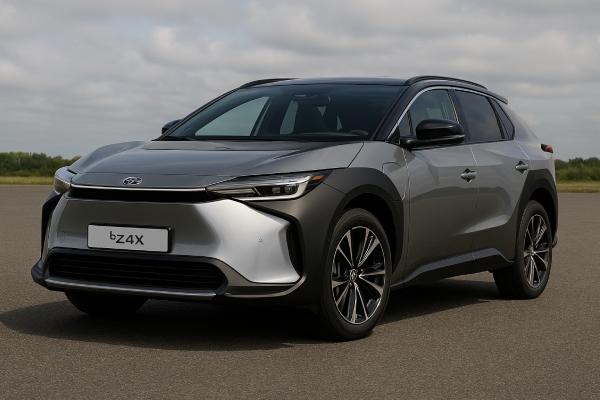
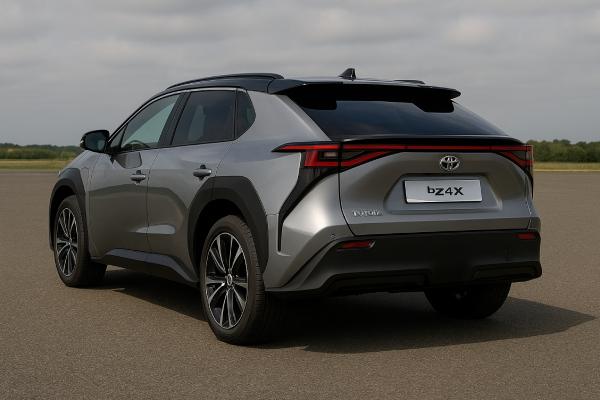
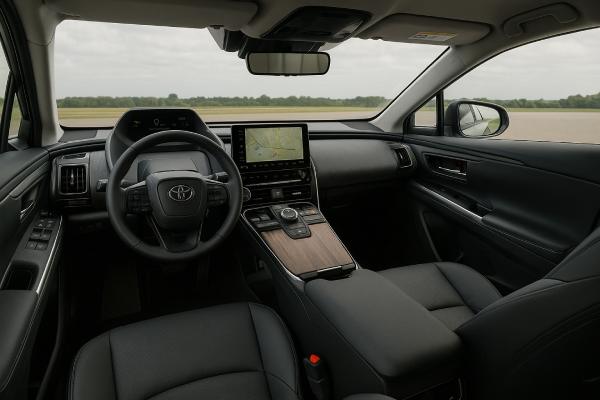
The facelifted Toyota bZ4X (XEAM10) refines the single-motor formula with a stronger front eAxle, smarter thermal control, and calmer road manners. This version pairs Toyota’s 1XM drive unit with a higher-output calibration (221 hp / 165 kW) and the larger 73.1 kWh battery. The update focuses on the ownership details that matter day to day: faster and more consistent DC charging in cold weather thanks to battery preconditioning, a quieter ride on rougher asphalt, and simpler software for route planning and station targeting. Inside, there is a cleaner dash layout and improved infotainment while keeping physical controls for high-frequency tasks. Efficiency remains competitive when driven steadily, and ride comfort is best on the 18-inch wheel package. If you value predictable range, low running costs, and a conservative engineering approach aimed at long battery life, the facelifted XEAM10 hits the brief. This guide translates the spec sheet into decisions—what to expect from charging and safety tech, what to inspect before buying, and how it stacks up against rivals that prioritize outright speed or max charging peaks.
Quick Specs and Notes
- Higher-output single motor (221 hp) with improved preconditioning; steadier winter fast-charging behavior.
- Quiet, easy commuter; best comfort and range on 18-inch tires; user-friendly controls and advanced safety standard.
- Watch for brake corrosion in salt climates and 12 V battery weakness on short-trip duty cycles.
- Rotate tires every 5,000–7,500 miles (8,000–12,000 km); plan brake-fluid replacement every 2–3 years.
Guide contents
- XEAM10 facelift explained
- Technical specs and data
- Trims, options and safety
- Reliability, issues and updates
- Maintenance and buying advice
- On-road performance and charging
- bZ4X versus rivals
XEAM10 facelift explained
Toyota’s mid-cycle update for the bZ4X reworks the single-motor front-drive XEAM10 around a revised 1XM eAxle and smarter thermal/charging logic. The headline figure is power: output rises to 221 hp (165 kW) with the larger 73.1 kWh battery. A new battery-preconditioning routine actively warms the pack on the way to a DC charger or when selected manually, which helps the car hold higher charging power in cold conditions. Peak DC remains a conservative 150 kW, but real-world averages improve because the pack reaches its “happy” temperature window more reliably and earlier in the session.
A second ownership-centric change is the availability of a higher-rate onboard AC charger (up to 22 kW three-phase on select grades), cutting home or depot charge times where the electrical service supports it. Software adds cleaner charging-stop planning, Plug-and-Charge compatibility where networks support it, and updates via the data connection.
Ride and refinement see incremental gains. Revised suspension tuning trims vertical motion at highway expansion joints while preserving the relaxed feel that makes the bZ4X easy to live with. Wind noise is well-controlled; tire roar varies with wheel and tire choice, rising on the 20-inch packages. Steering is calm on center, with just enough weight ramp to place the car confidently on a long commute.
Cabin updates target usability: a more straightforward instrument panel, a better-organized center console, and an infotainment system that boots quickly and responds without lag. The high cowl and relatively low dash aid forward visibility; the flat rear floor keeps knees comfortable for adults. The standard active-safety suite remains comprehensive, and headlight performance improves when specified with the updated lighting packages. Range remains sensitive to wheel/tire choice, ambient temperature, and speed—like any EV—but the facelift’s thermal strategy reduces the day-to-day “randomness” that owners notice in winter.
Note on regional differences: this 221-hp single-motor calibration and 22-kW AC hardware apply to facelifted European builds. Single-motor North American calibrations commonly list lower output and retain lower AC rates; shoppers there should confirm local specifications by VIN and window sticker.
Technical specs and data
Powertrain and Efficiency (EV)
| Item | Detail |
|---|---|
| Platform / code | e-TNGA / XEAM10 (single-motor, front-wheel drive) |
| Drive unit | 1XM eAxle (front) — integrated motor, reduction gear, and inverter |
| Motor type | AC permanent-magnet synchronous (PMSM) |
| System output | 221 hp (165 kW) — facelift calibration with 73.1 kWh battery |
| Estimated torque | ~265 Nm (195 lb-ft) |
| Battery | Lithium-ion traction battery, liquid-cooled; heat-pump HVAC integration |
| Nominal system voltage | ~350–400 V class |
| Rated efficiency (combined) | ~17–20 kWh/100 km (≈ 270–320 Wh/mi), grade and wheels dependent |
| Rated range (combined) | Up to ~573 km (356 mi) WLTP on efficiency-oriented grades; range varies by wheel/tire and options |
| Real-world highway @ 120 km/h (75 mph) | 19–22 kWh/100 km (305–355 Wh/mi) typical in mild temps; expect 10–25% reduction in deep winter with HVAC use |
| Aerodynamics | Cd ≈ 0.28–0.29 (varies by wheels and trim) |
Why it matters: On the road, the steadier charge-temperature control reduces trip-time variability in winter. Choosing 18-inch wheels yields the best blend of comfort, noise, and efficiency.
Charging (AC/DC) and Driveline
| Item | Detail |
|---|---|
| Drive type | Front-wheel drive (no rear drive unit on XEAM10) |
| Onboard AC charger | Up to 22 kW three-phase (availability by grade); common fitments remain 11 kW or 6.6–7.4 kW by market |
| DC fast-charge peak | 150 kW (pack preconditioning improves cold-weather sessions) |
| Typical replenishment | DC 10–80%: ~25–35 min in ideal temps; AC 0–100%: ~4–7 h at 22 kW, ~9–12 h on 7 kW home wallbox |
| Charge port | Type 2 / CCS2 in Europe (CCS1 in North America); Plug-and-Charge capability varies with provider |
Chassis and Dimensions
| Item | Detail |
|---|---|
| Suspension (front/rear) | MacPherson strut / multi-link, anti-roll bars |
| Steering | Electric rack-and-pinion; ~14:1 overall (approx.) |
| Brakes (front/rear) | Ventilated disc / ventilated disc; blended regen + friction |
| Wheels/Tires | 18×7.5 in (e.g., 235/60R18) or 20×7.5 in (e.g., 235/50R20) |
| Ground clearance | ~180–182 mm (7.1–7.2 in) |
| Length / Width / Height | ~4690 / 1860 / 1650 mm (184.6 / 73.2 / 65.0 in) |
| Wheelbase | 2850 mm (112.2 in) |
| Turning circle (curb-to-curb) | ~12.0–12.2 m (39.4–40.0 ft) |
| Cargo volume | ~452–470 L seats up (≈ 16.0–16.6 ft³) depending on measurement method; ~1500–1600 L seats folded |
| Curb weight | ~1830–1900 kg (4035–4189 lb) by grade and wheel/tire |
Performance and Capability
| Metric | Value |
|---|---|
| 0–100 km/h (0–62 mph) | ~7.2–7.5 s (typical road tests with 221 hp FWD) |
| 0–60 mph (0–97 km/h) | ~7.0–7.3 s |
| Top speed | ~160 km/h (99 mph) |
| Braking 100–0 km/h | Class-typical; smooth regen-to-friction handoff |
| Towing capacity | Market-specific; facelift EU AWD variant doubles rating; XEAM10 FWD towing varies—verify by VIN |
| Roof load | Typically up to 75 kg (165 lb) dynamic with OEM rails; check accessory guide |
Fluids and Service Capacities (EV-relevant)
| System | Spec / Notes |
|---|---|
| Coolant (battery/drive) | Toyota Super Long Life Coolant (pink); sealed loops; replace only per service docs |
| Reduction gear oil | Sealed within 1XM eAxle; inspect for leaks/noise only |
| Brake fluid | DOT 3/4; replace on time (see Maintenance) |
| A/C refrigerant | HFO-1234yf; charge amount per under-hood label |
| A/C compressor oil | ND-OIL Electric (quantity per service procedure) |
| Key torque | Wheel bolt torque 140 Nm (103 lb-ft); re-torque after wheel service |
Electrical
| Item | Detail |
|---|---|
| 12 V battery | AGM 12 V; DC-DC from traction pack; typical replacement 4–6 years |
| Lighting | LED headlamps; improved performance with updated packages |
| HV battery warranty | Commonly 8 years/100,000 miles baseline; extended battery-care programs by market with annual health checks |
Safety and Driver Assistance
| Item | Detail |
|---|---|
| Crash ratings | Euro NCAP: 5-star result on earlier assessment; IIHS (2025): strong results with award eligibility tied to headlights and build date |
| Headlights | Improved availability of good-performing units on higher grades |
| ADAS suite (standard) | AEB with pedestrian/cyclist detection, adaptive cruise with lane centering, lane departure with steering assist, blind-spot monitoring, rear cross-traffic alert; 360° camera and parking assist available by grade |
Trims, options and safety
Grade walk (facelift EU focus)
Toyota’s European lineup typically splits into entry, mid, and high grades, with equipment bands rather than major mechanical changes on the single-motor XEAM10. The larger battery and 221-hp calibration pair with front-wheel drive; the 22 kW AC charger is offered on high grade. Expect the following patterns:
- Entry grade (efficiency-first): 18-inch wheels, cloth upholstery, heat-pump HVAC, core ADAS, and the longest rated range.
- Mid grade: Adds seat/steering-wheel heat, more driver-assist features (e.g., junction AEB, enhanced lane guidance), and convenience items such as power tailgate on packages.
- High grade: Availability of 20-inch wheels, premium interior trims, 360° camera, Advanced Park, upgraded headlights, and optional 22 kW AC.
Options and identifiers
- Wheel/tire choice is the biggest lever on efficiency, noise, and ride. If you live on coarse asphalt or value winter tire flexibility, the 18-inch package is the one to get.
- Charging hardware: Confirm if your car has the 22 kW AC charger (where offered) and check for latest charging/preconditioning software.
- VIN / build code: Single-motor front-drive cars decode as XEAM10; the front eAxle is the 1XM unit.
Safety ratings—what to know quickly
- Euro NCAP testing of the bZ4X achieved a five-star outcome in earlier assessments, with robust occupant protection and effective AEB.
- IIHS publishes strong crash results for recent model years; award status depends on headlamp grade and build date. When comparing trims, prioritize the packages that carry the best headlight ratings.
Safety and child-seat provisions
- Airbags: Front, side, curtain, plus driver’s knee (content varies slightly by region and grade).
- LATCH/ISOFIX: Outboard rear lower anchors with top tethers; check the manual for combined child-weight limits and allowed seating positions.
- ADAS calibration after service: Windshield, front fascia, or suspension work can require camera/radar calibration; allow workshop time and verify completion on the repair order.
Running changes you may encounter
- Software: Charging screen behavior, battery preconditioning controls, and route-planning improvements arrive by OTA or dealer update.
- Convenience/driver assist: Traffic Jam Assist and Lane Change Assist appear on higher grades subject to subscription and regional availability.
- Lighting: Headlamp hardware and tuning see incremental improvements with the facelift; buyers driving rural roads should strongly prefer the upgraded units.
Reliability, issues and updates
Overall pattern: The single-motor bZ4X’s core driveline is mechanically simple; most owner-reported friction points live in software, winter charging consistency, and EV-typical brake hardware corrosion in salt climates. The facelift addresses winter charging with preconditioning, while ride and noise refinements reduce fatigue on long commutes.
Mapped issues by prevalence and impact
- Cold-weather DC charging performance
- Prevalence / impact: Common concern in sub-freezing climates; trip-time penalty if arriving with a cold pack.
- Symptoms → likely cause → remedy: Slow charging below freezing → pack below target temperature; conservative taper → use preconditioning via route guidance or manual selection; arrive at 10–20% SOC; favor shorter 10–60% hops in deep cold.
- 12 V battery vulnerability on short-trip usage
- Prevalence / impact: Occasional; can present as low-voltage warnings or “no-ready” after long parking.
- Why it happens: Repeated accessory power draws with short drives may not fully replenish the 12 V AGM via DC-DC.
- Remedy: Annual load test from year three; replace at 4–6 years proactively in cold regions; keep terminals clean and tight.
- Brake corrosion and sticky slide pins (salt regions)
- Prevalence / impact: Occasional; low to medium cost.
- Mechanism: Light friction-brake use due to regen lets rust bloom on rotor faces and caliper hardware.
- Remedy: Annual clean and lube of caliper pins; one or two firm stops each drive to refresh rotor faces; replace hardware if binding returns.
- Road-noise sensitivity on 20-inch tires
- Prevalence / impact: Common on coarse aggregate; comfort penalty.
- Remedy: Specify 18-inch wheels when ordering; consider acoustic tires if available.
High-voltage system notes
- Battery health and degradation: Conservative thermal strategy and moderate DC peaks support longevity. For pre-purchase, request a Battery State-of-Health printout and review charging history if available.
- Onboard charger (OBC) / DC-DC: Generally uneventful; intermittent charge faults are more often EVSE or connector related. Inspect for bent pins, debris, and secure latching.
- 1XM eAxle / reduction gear: Listen for abnormal whine during light throttle and coastdown; fluid is sealed—address only on symptom.
Software and calibrations worth confirming
- Battery preconditioning enabled and up to date.
- Infotainment/ADAS updates (lane centering, traffic-jam assistance behavior, parking assist refinements).
- Headlight leveling/aim after suspension work or heavy accessory loads.
Campaigns and service actions
- Safety-related HVAC/visibility software campaigns have appeared on specific VIN ranges; ensure recall completion proof is in the file.
- Wheel-hardware torque guidance is strict: clean mating faces and torque to 140 Nm (103 lb-ft); re-torque after tire swaps.
Pre-purchase requests
- Full service history with recall/campaign closure.
- 12 V test and recent brake inspection (pad thickness, slider condition).
- Alignment report, even tire wear, and a quiet-road sound check at 50–70 mph (80–113 km/h).
- Short DC fast-charge observation if feasible to confirm preconditioning behavior.
Maintenance and buying advice
Practical maintenance schedule (distance/time)
(Confirm by VIN and regional service literature; below is pragmatic owner guidance.)
- Tires and alignment: Rotate 5,000–7,500 miles (8,000–12,000 km); check pressures monthly and before trips; align annually or after impacts.
- Brake fluid: Replace every 2–3 years regardless of mileage.
- Friction brakes: Inspect annually / 12,000 miles (20,000 km); clean and lube caliper slides in salt regions.
- Cabin air filter: Replace 20,000–30,000 miles (32,000–48,000 km) or 24 months; sooner for dusty or high-pollen locales.
- Coolant loops (battery/drive/inverter): Inspect level and condition at each service; replace only per official procedures or when repair access opens the circuit.
- A/C service: Performance check seasonally; refrigerant is R-1234yf with ND-OIL Electric compressor oil.
- 12 V battery: Load-test annually after year three; typical replacement window 4–6 years.
- Reduction-gear oil (1XM): Sealed; no routine changes—inspect for leaks or noise.
- Body and seals: Rinse underbody after winter; treat stone chips promptly; inspect door and hatch seals to prevent wind noise.
Fluid specs and essential torques
- Wheel bolt torque: 140 Nm (103 lb-ft).
- Brake fluid: DOT 3/4.
- Tire pressures: Follow door-jamb placard (re-set TPMS after rotations as required by procedure).
Buyer’s guide—what to prioritize
- Best all-rounder: Single-motor 18-inch wheel grade with the 73.1 kWh battery; it rides quieter, goes farther, and offers better winter-tire options.
- Cold-climate users: Confirm preconditioning functionality, recent software level, and heat-pump operation; consider a home wallbox that supports your electrical service (11 or 22 kW three-phase where available).
- Feature seekers: Shortlist cars with upgraded headlights and 360° camera if you drive poorly lit roads or park in tight spaces.
- Avoid / verify: Cars lacking proof of recall completion; vehicles showing persistent DC fast-charge complaints without logs (may be site or usage related).
Durability outlook
A single-motor FWD layout, moderate DC peaks, and Toyota’s conservative pack management bode well for long-term ownership. Expect your primary running costs to be tires and periodic brake service. With periodic inspections and up-to-date software, the facelifted XEAM10 is set up for low-drama, low-maintenance EV life.
On-road performance and charging
Ride, handling, and noise
The XEAM10 leans toward comfort. Steering is light at parking speeds and settles with reassuring on-center weight by 65–75 mph (105–120 km/h). The long wheelbase helps the car float less over expansion joints than some peers, and body control is tidy without being harsh. Tire noise is the main variable: 18-inch all-season packages are quieter; 20-inch fitments add road texture on coarse surfaces.
Powertrain character
The updated 1XM calibration delivers smooth, predictable step-off and clean midrange. Sport mode quickens pedal response but does not transform the car into a sprinter; think “confidently adequate.” Passing from 80–120 km/h (50–75 mph) is composed, and the single-speed reduction gear avoids the shift flare/hunting traits of multi-speed automatics. Brake blending is natural; you will still use light pedal pressure to complete smooth stops, which helps keep rotors clean.
Real-world efficiency and range
In temperate mixed use on 18-inch tires, owners commonly match or exceed combined ratings. At steady 120 km/h (75 mph), plan on ~10–20% less than combined range; headwinds, rain, and winter tires add penalties. The heat pump and preconditioning while plugged in help winter performance, but very short trips in freezing weather remain energy-intensive.
Charging expectations and strategy
- AC (home/depot): Where service supports 22 kW three-phase, overnight empty-to-full is easy even after a long winter day; most homes will see 7–11 kW and a full charge by morning.
- DC (road trips): Peak remains 150 kW, but the average over the 10–80% window is what saves time. The facelift’s preconditioning helps the car reach and hold higher power earlier, especially in winter. For the best time-to-distance on cold trips, plan shorter hops (e.g., 10–60%) and arrive warm.
- Station behavior: If a site underperforms, try a different dispenser or location; station limits or shared cabinets often dominate more than vehicle limits.
Traction and stability
With appropriate tires, the FWD XEAM10 is composed in rain and snow. Stability-control tuning is progressive rather than intrusive, and torque management keeps the wheel calm on slick launches. If you frequently tackle deep snow or steep, unplowed grades, consider dedicated winters on 18-inch wheels—or the dual-motor variant for traction-led use cases.
Loads and towing
Regional towing ratings vary, and the facelift emphasizes increased capability on dual-motor grades. If towing matters, verify the rating on your car’s documentation and consider the energy penalty under load; expect 25–40% range reduction at motorway speeds with a medium-profile trailer.
bZ4X versus rivals
Hyundai Ioniq 5 (RWD/AWD)
- Strengths: 800-V architecture with very fast DC charging, strong acceleration, lounge-like rear space.
- bZ4X advantage: Quieter ride on smaller wheels, simpler controls, conservative battery thermal strategy that supports longevity, broad service network.
Kia EV6 (RWD/AWD)
- Strengths: Sportier steering and chassis tuning; robust DC curve.
- bZ4X advantage: Softer ride/noise balance for commuting; straightforward UX; often sharper value on efficiency-focused grades.
Volkswagen ID.4 (RWD/AWD)
- Strengths: Roomy cabin and cargo space; pricing with frequent incentives.
- bZ4X advantage: Calmer steering, cleaner control layout, low day-to-day learning curve.
Tesla Model Y (RWD/AWD)
- Strengths: Excellent charging ecosystem and trip planning, strong efficiency, frequent software features.
- bZ4X advantage: Traditional controls, gentler ride, and a servicing model familiar to long-time Toyota owners. If you mainly charge at home, the bZ4X’s lower DC peak is less impactful.
Nissan Ariya (FWD/AWD)
- Strengths: Upscale interior, smooth torque control especially on e-4ORCE AWD.
- bZ4X advantage: More compliant ride on 18-inch wheels; conservative thermal management; often lower total cost of ownership over time.
Bottom line: The bZ4X XEAM10 facelift emphasizes predictable charging, comfort, and low upkeep over headline numbers. If your routine is home charging, school runs, and steady motorway commutes, it stays pleasantly low-stress while nudging winter trip times down versus early builds.
References
- Toyota updates the battery-electric bZ4X for faster charging, more power and longer range 2025 (Manufacturer Newsroom)
- 2025 Toyota bZ4X 2025 (Safety Rating)
- Official Toyota bZ4X 2022 safety rating 2022 (Safety Rating)
- TOYOTA bZ4X TECHNICAL SPECIFICATIONS 2022 (Technical Reference)
Disclaimer
This article is for informational purposes only and is not a substitute for professional diagnosis or repair. Specifications, torque values, capacities, intervals, and procedures vary by VIN, market, build date, and equipment. Always verify against your vehicle’s official owner’s manual and service documentation before performing maintenance or repairs.
If this guide helped, please share it with fellow owners and shoppers on Facebook or X/Twitter to support xcar’s work.