
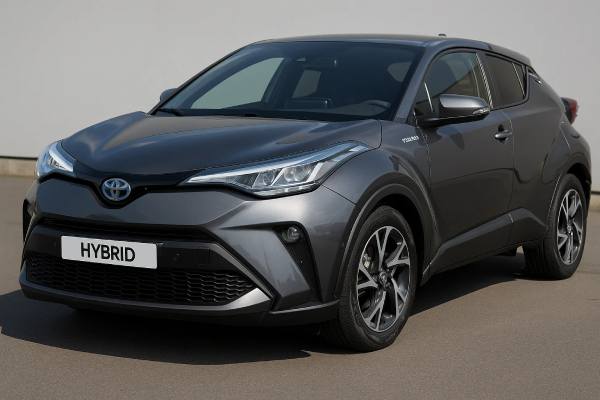
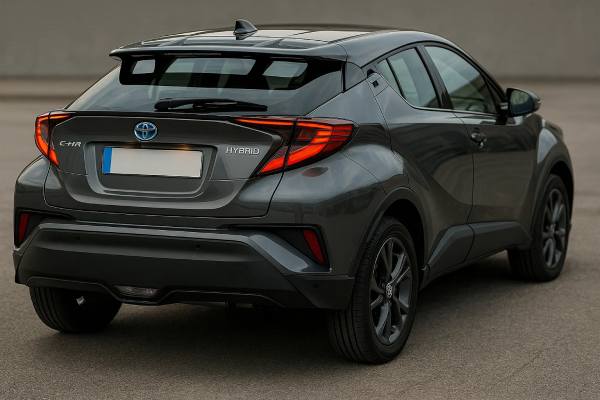
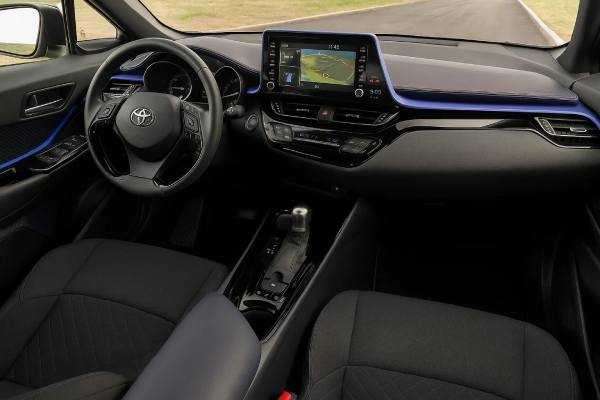
The facelifted (late-2019 to 2023) Toyota C-HR 2.0 Hybrid pairs Toyota’s fourth-generation hybrid system with the M20A-FXS Atkinson-cycle engine, delivering 184 hp (135 kW) through an e-CVT and front-wheel drive. This version sits above the 1.8 Hybrid in performance yet still returns impressive real-world economy and low running costs. Its compact GA-C platform, double-wishbone rear suspension, and thorough noise-vibration refinement make it a calm commuter with a confident highway stride. Inside, the cabin gained smartphone integration, improved infotainment, and grade-specific upgrades during the facelift years, while Toyota Safety Sense became increasingly comprehensive. For shoppers, the combination of a proven hybrid drivetrain, sensible servicing, and strong safety performance gives the C-HR 2.0 Hybrid enduring appeal—especially if you value smooth drivability over outright cargo space or tow ratings. This guide focuses on the European-market 2.0 Hybrid (MAXH10), which was not offered in North America.
At a Glance
- Strong hybrid drive: 184 hp system output with smooth e-CVT, brisk 0–100 km/h in ~8.2 s.
- Frugal for its class: WLTP combined typically 4.9–5.4 L/100 km (≈48–43 mpg US).
- Safety first: robust structure and Toyota Safety Sense with broad ADAS coverage.
- Caveat: cargo area is modest; rear visibility is average and tyre noise rises on 19-inch wheels.
- Typical service cadence: every 12 months or 15,000 km; brake fluid every 2 years.
Navigate this guide
- C-HR 2.0 Hybrid: Detailed Overview
- C-HR 2.0: Specifications and Technical Data
- C-HR 2.0: Trims, Safety and ADAS
- Reliability, Common Issues and Service Actions
- Maintenance and Buyer’s Guide
- Driving and Performance
- How C-HR Hybrid Compares
C-HR 2.0 Hybrid: Detailed Overview
Toyota’s 2.0-litre hybrid C-HR (model code MAXH10) arrived with the 2019 facelift as the performance-oriented hybrid option above the 1.8. It uses the M20A-FXS engine (Atkinson-cycle, part of Toyota’s “Dynamic Force” family) paired with an 80 kW permanent-magnet traction motor and a compact hybrid transaxle. Combined output is 184 hp (135 kW). The system prioritizes efficiency and seamless response: electric assist fills in low-rpm torque, while the engine operates in its most efficient zone more often than a conventional powertrain.
Chassis tuning complements the hybrid character. On the GA-C platform, the C-HR employs MacPherson struts up front and a double-wishbone rear axle, affording stable tracking, disciplined body control, and ride comfort that stays composed over patchy urban surfaces. Steering is electrically assisted with a relatively quick ratio, giving light effort around town and steady weighting on motorway cruises. Braking performance benefits from blended regen/friction braking; the pedal is easy to modulate once you acclimate.
The 2019–2023 update refined the cabin (materials, infotainment responsiveness) and rolled in smartphone integration. Grade-dependent features such as adaptive LED headlights and JBL audio were added or broadened. Toyota Safety Sense gained enhancements through the period (more on that below), and the lineup converged around hybrid powertrains.
Two ownership traits stand out. First, economy is genuinely achievable without hypermiling; mixed routes at European speeds often land in the mid-5s L/100 km. Second, annual servicing is straightforward and affordable by segment norms. The main trade-offs are a coupé-like rear quarter (tight rear visibility) and luggage space that is good enough rather than generous for a family getaway. If you like an easygoing, quiet drive with punch in reserve—and value low total cost of ownership—the 2.0 Hybrid deserves a top-tier spot on your shortlist.
C-HR 2.0: Specifications and Technical Data
Below are Europe-baseline figures for the 2.0 Hybrid (MAXH10). Ranges reflect grade/wheel differences and year-to-year tweaks within the 2019–2023 facelift window.
Powertrain & Efficiency
| Item | Specification |
|---|---|
| Code | M20A-FXS (engine); permanent-magnet synchronous motor (front) |
| Engine layout & cylinders | Inline-4, DOHC, 16 valves; VVT-iE (intake) and VVT-i (exhaust) |
| Bore × stroke | 80.5 × 97.6 mm (3.17 × 3.84 in) |
| Displacement | 1,987 cc (2.0 L) |
| Induction | Naturally aspirated (Atkinson cycle) |
| Fuel system | D-4S (combined direct/port injection) |
| Compression ratio | 14.0:1 |
| Max engine power | ~152 hp (112 kW) @ 6,000 rpm |
| Max engine torque | 190 Nm (140 lb-ft) @ 4,400–5,200 rpm |
| Traction motor (MG2) | 80 kW; 202 Nm (149 lb-ft) |
| System output | 184 hp (135 kW) |
| Hybrid battery | Nickel-metal hydride (NiMH), nominal ~216 V |
| Rated efficiency (WLTP combined) | 4.9–5.4 L/100 km (≈48–43 mpg US / 58–52 mpg UK) depending on wheels/grade |
| Real-world highway @ 120 km/h | ~5.5–6.2 L/100 km (≈43–38 mpg US) typical |
| Aerodynamics | Cd ≈ 0.32 |
Transmission & Driveline
| Item | Specification |
|---|---|
| Transmission | e-CVT hybrid transaxle (planetary gearset) |
| Drive type | Front-wheel drive (FWD) |
| Final drive (diff) ratio | ~3.605:1 |
| Differential | Open (front); brake-based torque control via stability system |
Chassis & Dimensions
| Item | Specification |
|---|---|
| Front / Rear suspension | MacPherson strut / Double wishbone |
| Steering | Electric power steering; quick ratio (≈13.6:1) |
| Brakes | Front ventilated discs ~298.5 mm (11.8 in); rear solid discs ~281 mm (11.1 in) |
| Wheels/Tyres | 215/60 R17; 225/50 R18; 225/45 R19 (by grade) |
| Ground clearance | ~142 mm (5.6 in) |
| Angles | Approach ~14°, ramp break-over ~26° (illustrative) |
| Length / Width / Height | ≈ 4,395 / 1,795 / 1,555 mm (173.0 / 70.7 / 61.2 in) |
| Wheelbase | 2,640 mm (103.9 in) |
| Turning circle (kerb-to-kerb) | ~10.4 m (34.1 ft) |
| Kerb (Curb) weight | ~1,490–1,525 kg (3,285–3,362 lb) |
| GVWR | ~1,930 kg (4,255 lb) |
| Fuel tank | ~43 L (11.4 US qt / 9.5 UK qt) usable |
| Cargo volume | ~377 L (13.3 ft³) VDA seats up; up to ~1,164 L (41.1 ft³) seats down (method-dependent) |
Note on cargo figures: Toyota documentation varies by method (VDA vs. to roof) and equipment; expect ~358–377 L with seats up depending on configuration.
Performance & Capability
| Metric | Value |
|---|---|
| 0–100 km/h (0–62 mph) | ~8.2 s |
| Top speed | ~180 km/h (112 mph) |
| Braking 100–0 km/h | Typical compact-SUV performance; plan ≈36–38 m on quality tyres |
| Towing capacity | 725 kg (1,598 lb) braked / 725 kg unbraked (market-dependent) |
| Payload | Approx. 405–440 kg (893–970 lb), depending on kerb weight |
| Roof load | Typically up to ~75 kg (165 lb) with approved bars (verify per VIN/accessory guide) |
Fluids & Service Capacities
| System | Spec / Capacity (typical) |
|---|---|
| Engine oil | Toyota-approved 0W-16 (ACEA/API per manual); capacity ~4.2–4.3 L (4.4–4.5 US qt) with filter |
| Engine coolant | Toyota Super Long Life Coolant; engine loop ≈6.0 L (6.3 US qt) |
| Inverter/e-motor coolant | Toyota SLLC; ≈1.6 L (1.7 US qt) |
| Hybrid transaxle | Toyota ATF WS; ~3.7–3.8 L (3.9–4.0 US qt) |
| A/C refrigerant | HFO-1234yf; charge ~470 g (16.6 oz) typical |
| A/C compressor oil | ND-Oil (per label); small charge for electric compressor |
| Key torque (examples) | Wheel nuts ≈103 Nm (76 lb-ft); always confirm by VIN and service data |
Capacities can vary by year/market and options. Always verify against the vehicle’s service literature or under-bonnet labels before servicing.
Electrical
| Item | Specification |
|---|---|
| 12V system | DC-DC converter (no alternator); 12V auxiliary battery in rear |
| 12V battery | ~45–50 Ah AGM (exact spec varies by grade/year); common European form factor |
| Spark plugs | Long-life iridium; typical service interval ~120,000 km (75,000 mi) or as condition dictates |
Safety & Driver Assistance
| Area | Summary (facelift range, by grade/year) |
|---|---|
| Crash ratings | Euro NCAP rating (2017 protocol) for C-HR: 5 stars; Adult 95%, Child 77%, VRU 76%, Safety Assist 78% |
| Headlights | Halogen/LED by grade; adaptive LED available/standard on upper grades |
| ADAS suite | Toyota Safety Sense: Pre-Collision System (with pedestrian/cyclist detection by MY), Lane Departure Alert/Lane Trace Assist, Adaptive Cruise Control, Road Sign Assist; Blind Spot Monitor, Rear Cross Traffic Alert/braking, parking sensors, and Simple Intelligent Park Assist depending on grade |
C-HR 2.0: Trims, Safety and ADAS
Grades and quick identifiers (Europe, 2019–2023 facelift):
- Design (2.0 available): 18-inch alloys, privacy glass, heated front seats with power lumbar, smart entry, parking sensors with Intelligent Clearance Sonar, auto-dimming mirror.
- Excel (2.0 available): adaptive LED headlights, leather upholstery, power driver’s seat, Blind Spot Monitor, Rear Cross Traffic Alert with auto braking, puddle lights.
- GR Sport (2.0 available): 19-inch wheels, GR seats and interior accents, sport styling, adaptive LED lighting on many markets; tuned wheel/tyre package with a firmer ride.
- Icon (generally 1.8 only during this period in many markets): entry specs, 17-inch wheels.
Mechanical/functional differences by grade:
- All 2.0 Hybrids share the same M20A-FXS/e-CVT/FWD driveline and braking hardware (vented front/solid rear discs).
- Wheel/tyre packages differ: 18- vs. 19-inch fitments bring minor changes in steering feel, ride compliance, and WLTP numbers.
- No factory AWD offered on the 2.0 Hybrid in this generation; all MAXH10 are FWD.
Year-to-year changes (highlights):
- MY2020 (launched late 2019): introduction of the 2.0 Hybrid; exterior light clusters revised; multimedia updated; wider Toyota Safety Sense availability.
- MY2021: Toyota Safety Sense upgrades (e.g., cyclist detection by day, Lane Trace Assist availability), smartphone integration broadened; GR Sport grade added in many markets.
- MY2022–2023: feature and package consolidations; running updates to infotainment mapping and connected services policies by market.
Safety ratings and context:
- Euro NCAP’s 2017-protocol 5-star rating applies to the C-HR range; Toyota’s running software and equipment updates helped maintain active safety relevance during the facelift window. Headlight performance and certain ADAS functions (adaptive headlights, rear cross-traffic braking) are grade-dependent—important for night driving and dense urban parking.
Child-seat and restraints:
- ISOFIX/i-Size mounts on outer rear seats; top tether points; deactivation switch for the front passenger airbag where fitted—check your vehicle’s labels. The rear door opening is adequate for most infant carriers, but the sloping roofline can make buckling toddlers slightly fiddlier.
Infotainment and calibration notes:
- After windscreen replacement or body repairs, radar/camera-based systems (PCS, LTA/LKA, RSA) may require calibration.
- ADAS function menus (sensitivity, alerts) are accessible via the cluster or infotainment; leave AEB enabled by default.
VIN/build codes and tells:
- MAXH10 denotes the 2.0 Hybrid variant. Look for 18–19-inch wheels, “Hybrid” badging, and (on GR Sport) unique seats and exterior accents. Engine cover is marked “Dynamic Force”.
Reliability, Common Issues and Service Actions
The 2.0 Hybrid C-HR benefits from Toyota’s mature hybrid architecture. Most owners experience routine, low-cost running with few surprises. Still, a well-informed buyer/owner should note the following:
Powertrain and hybrid system
- Hybrid battery and electronics (common, low–medium severity): The NiMH pack is thermally conservative and long-lived when the cooling intake is kept clear. Occasional fan cleanouts (dust, pet hair) help. Software updates can refine HV battery management and AEB/PCS logic; check with the dealer for campaign history.
- Engine oil usage (occasional, low): The M20A-FXS typically consumes little oil, but sustained high-speed operation or extended intervals can raise consumption. Stick to 0W-16 quality oil and the annual cadence; monitor level between services.
- E-CVT/Hybrid transaxle (rare, medium if neglected): Mechanically robust. Fluid is “lifetime” under normal use, but change ATF WS periodically if towing frequently, driving in mountainous heat, or keeping the car long-term (see schedule).
Chassis and body
- Wheel bearings/tyres (occasional, low–medium): 19-inch packages on GR Sport can accelerate inner shoulder wear if alignment is neglected. Rotate on time and request a four-wheel alignment annually or after impacts.
- Brake feel/noise (occasional, low): Because of regen, discs can see light duty in gentle driving and pick up surface rust after rainy weeks. An occasional firm stop helps keep faces clean; annual service should deglaze and check slider pins.
Electronics and ADAS
- Parking brake/Skid Control ECU (legacy topic): Early C-HRs (including pre-facelift) had EPB software campaigns in some markets. Verify that all recalls and service actions are complete.
- Camera/radar calibration (occasional, low): After windscreen replacement or front-end repairs, ensure ADAS calibration is performed; miscalibration may cause “Unavailable” messages or errant alerts.
Recalls, TSBs, extended warranties
- Action items:
- Run an official recall/VIN check and keep dealer printouts in your records.
- Ask for confirmation of completed software updates for PCS/LTA/ACC and hybrid control ECUs.
- Inquire about axle-shaft or EPB-related campaigns applicable to your VIN/market (where relevant).
- How to verify: Use the manufacturer’s recall checker and your national authority’s database, then cross-check with service invoices. Bring the VIN to a Toyota dealer for a campaign status print.
Prevalence & cost guide
- Common, low: infotainment glitches resolved by updates; brake surface corrosion after storage; 12V battery ageing (test annually after year 4).
- Occasional, medium: wheel alignment/tyre wear on large wheels; cabin creaks from rear plastics—addressed by felt tape or refit.
- Rare, high: collision-related sensor replacement and calibration; HV pack contactor faults (very uncommon on this model).
Pre-purchase checks to request
- Full service history (annual stamps).
- Written proof of open-campaign/recall completion.
- Recent brake inspection and tyre condition report (tread depth across the width).
- Hybrid health check (dealer) and 12V battery test.
- Evidence of windscreen or ADAS sensor replacements with calibration certificates.
Maintenance and Buyer’s Guide
Practical maintenance schedule (Europe-style cadence)
(Always confirm your VIN-specific schedule in the service book.)
- Engine oil & filter: every 15,000 km or 12 months (whichever comes first). Use 0W-16 of approved spec; capacity ~4.2–4.3 L with filter.
- Engine air filter: inspect at 15,000 km; replace 30,000–45,000 km or earlier in dusty conditions.
- Cabin filter: replace 15,000–20,000 km or annually if you value HVAC performance.
- Coolant: Toyota SLLC; first replacement typically 10 years/160,000 km, then per service schedule; top-off only with compatible SLLC.
- Hybrid transaxle fluid (ATF WS): “no scheduled replacement” under normal use; for longevity, consider 90,000–120,000 km changes—especially with heavy urban heat, mountain grades, or trailer duty.
- Spark plugs: long-life iridium; typical 120,000 km interval.
- Aux belts/hoses: inspect annually; replace on condition.
- Brake fluid: every 2 years regardless of km.
- Brake pads/rotors: inspect annually; clean/lube sliders due to light-use corrosion potential.
- Tyre rotation & alignment: rotate 10,000–15,000 km; alignment check annually or after impacts—essential for 19-inch tyres.
- 12V battery: test annually from year 4; typical life 4–6 years.
- Body & chassis: wash underbody in winter climates; inspect rear subframe and seams for early corrosion (rare but worth checking).
Fluid specs & essential torques (quick list)
- Oil: 0W-16; ACEA/API per manual.
- Coolant: Toyota Super Long Life Coolant (pink).
- ATF: Toyota ATF WS (hybrid transaxle).
- A/C refrigerant: HFO-1234yf; charge on label.
- Wheel nuts: ~103 Nm (76 lb-ft).
(Confirm all values by VIN; accessories like roof bars have their own limits.)
Buyer’s checklist
- VIN campaign status: printout from Toyota + national recall checker.
- Service book: annual stamps; ask for invoices showing oil grade and brake fluid dates.
- Tyres & wheels: inspect for inner-edge wear; verify the car drives straight and the wheel returns to center smoothly.
- Brakes: listen for grinding after an overnight sit (surface rust) and ensure consistent pedal feel during a long test route (mixed city/highway).
- Hybrid health: request the dealer Hybrid Health Check; confirm cooling intake cleanliness and fan noise level.
- ADAS & lights: verify adaptive LED operation (if fitted); check for warning messages after startup.
- Cargo and practicality: bring your child seats or luggage to test fit; rear window line and parcel shelf height can be limiting.
Recommended years/trims to target
- Design or Excel trims from 2020 onward strike the best balance of features (LED lighting, safety tech) and comfort.
- GR Sport suits drivers who favor sharper aesthetics and steering response; test the ride on your local roads.
- As always, condition and history trump minor spec differences—buy the best-kept example you can verify.
Long-term durability outlook
With annual servicing, correct fluids, and periodic ATF changes for heavy-duty use, the 2.0 Hybrid C-HR is a low-drama, long-life proposition. Expect typical wear-and-tear items (tyres, brakes, 12V battery) to dominate costs. The hybrid pack is conservatively managed; failures are rare in normal use, and Toyota dealers can assess state-of-health during routine visits.
Driving and Performance
Ride, handling, and NVH
The C-HR’s GA-C underpinnings deliver a settled, mature ride. On 18-inch wheels, it glides over urban edges and expansion joints with only a soft thump; 19-inch tyres tighten the feel but add a trace of patter on coarse asphalt. Straight-line stability is excellent for its size, and crosswind sensitivity is low. The chassis keeps roll tidy in quicker corners, with safe front-end push if you ask too much on all-season tyres. Steering effort is light at parking speeds and gains reassuring weight as speed builds, with predictable on-center.
Cabin noise is well controlled: engine note is subdued at a cruise, and Toyota’s sound-deadening additions during the facelift trimmed high-frequency road roar. You will hear more tyre texture on 19s and rough aggregate motorways; it’s acceptable for the class.
Powertrain character
The M20A-FXS loves efficiency. Around town, EV gliding and gentle launches put the engine to sleep surprisingly often. When you need to merge or overtake, the e-CVT flares revs to the engine’s sweet spot and the motor adds immediate torque—so you get clean, linear thrust without shift shocks. Drive modes subtly shape throttle mapping and power allocation. Engine-to-EV transitions are typically seamless; you notice them mainly by ear.
Performance metrics that matter
- 0–100 km/h (0–62 mph) in ≈8.2 s feels brisk in real traffic, especially from 30–100 km/h thanks to electric assist.
- 50–80 mph (80–130 km/h) passing is confident when you floor it; the e-CVT keeps the engine right on cam for a sustained pull.
- Braking is consistent once you adapt to the blended regen; a couple of firm stops after a rainy week keeps the discs bright.
- Turning circle (~10.4 m) makes tight urban maneuvers easy.
Real-world economy
- City: low-5s L/100 km are common with a calm right foot and plenty of regen opportunities.
- Highway (100–120 km/h): expect ~5.5–6.2 L/100 km depending on wheels, temperature, and load.
- Mixed: mid-5s are realistic for most owners. In winter, expect a modest uptick as the engine maintains cabin heat and the battery runs colder.
Load and towing
The official 725 kg braked and unbraked ratings are modest and reflect the platform’s focus on efficiency over heavy hauling. With four aboard and luggage, stability remains good; keep tyre pressures on spec and allow extra braking distance on long descents.
How C-HR Hybrid Compares
Honda HR-V e:HEV (EU): The HR-V’s series-parallel system prioritizes EV-like responses in town and can be quieter at low speeds. Toyota counters with better motorway economy and often richer grade content. The C-HR feels more planted at speed; the Honda offers a roomier rear bench and cargo flexibility.
Renault Captur E-Tech Hybrid: Clever multi-mode hybrid hardware and lots of cabin cubbies; efficiency is close, but the Toyota’s transaxle is smoother in transitions and its long-term reliability reputation is stronger. Captur’s boot is more configurable; C-HR rides more solidly.
Kia Niro Hybrid (pre-2022 gen and current): The Niro emphasizes space and infotainment polish. It’s efficient, too, but Toyota’s chassis tuning lends the C-HR a calmer, more refined demeanour on rougher roads. Warranty length favors Kia; dealership hybrid know-how and residuals often favour Toyota.
Nissan Juke Hybrid: A lively, newer-tech hybrid with a playful feel, but real-world economy tends to favour the Toyota on faster routes. C-HR’s cabin quality and safety equipment breadth in upper grades give it the edge for long-term family duty.
Bottom line: If you value refinement, predictable efficiency, and safety breadth, the C-HR 2.0 Hybrid sits near the top of the class. If your priorities are rear-seat space and a mega boot, consider Niro or Captur; for a sportier vibe, try GR Sport grades or look at segment straddlers like the Cupra Formentor (non-hybrid).
References
- TOYOTA C-HR TECHNICAL SPECIFICATIONS 2021 (Technical Specs)
- Toyota C-HR 2023 (Brochure)
- Updated: January 2021 THE TOYOTA C-HR 2021 (Press Kit)
- Official Toyota C-HR safety rating 2017 (Safety Rating)
- Recalls | Owners 2025 (Recall Information)
Disclaimer
This article is for informational purposes and is not a substitute for professional diagnosis or repair. Specifications, torque values, fluid types/capacities, and service intervals vary by VIN, market, software level, and equipment. Always verify details against your vehicle’s official service documentation, under-bonnet labels, and your Toyota dealer’s guidance. If you found this guide useful, feel free to share it on Facebook or X/Twitter to support xcar’s work.