
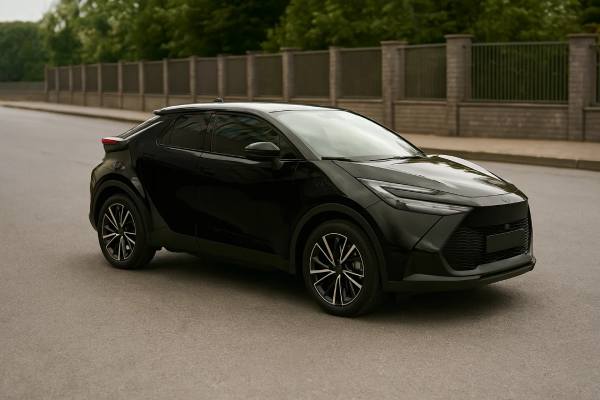
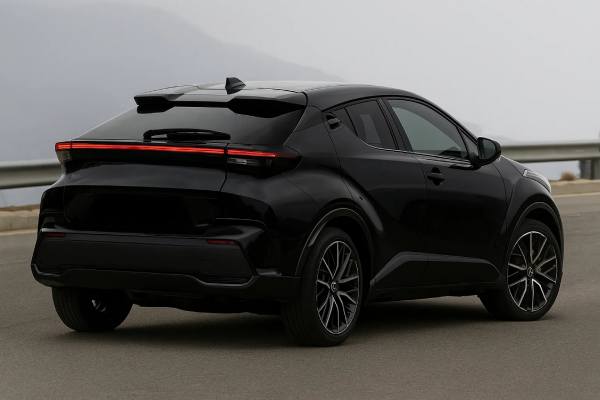
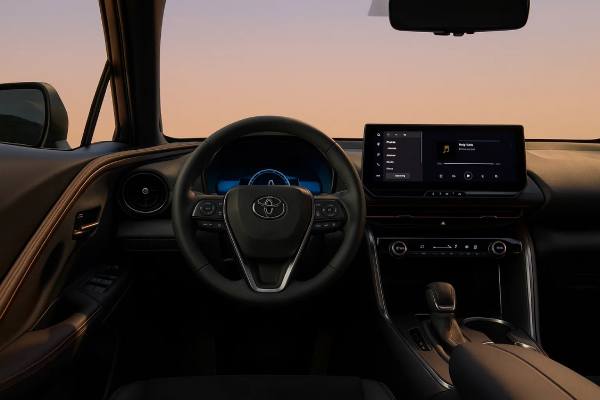
The second-generation Toyota C-HR Hybrid launched in Europe in late 2023 as a sharper, more refined evolution of Toyota’s coupe-styled compact crossover. Built on Toyota’s latest TNGA architecture with fifth-generation hybrid hardware, the 2.0-litre M20A-FXS powertrain targets quiet urban running and low fuel use without dulling everyday pace. Cabin tech, driver-assistance, and structure were also upgraded—resulting in a more polished daily companion than the first-gen model. Owners will appreciate the smoother e-CVT calibration, improved noise isolation, and thoughtful touches such as one-pedal-like deceleration in traffic and a tighter turning circle for city work. For buyers, the 2.0 Hybrid sits between the frugal 1.8 Hybrid and the punchier plug-in, striking a sweet spot for mixed city-motorway use. This guide focuses on the 2.0 Hybrid (MAXH20), covering the facts that matter: technical data, safety performance, running costs, real-world efficiency, and what to check before you buy.
Fast Facts
- Stronger hybrid: refined fifth-gen system with brisk 0–100 km/h in ~8.1 s and quiet cruising.
- Efficient in mixed use: combined WLTP around 4.9–5.2 L/100 km (≈ 47–58 mpg US / 57–62 mpg UK).
- Safety first: comprehensive Toyota T-Mate suite and recent five-star European crash performance.
- Caveat: big wheels (19–20 in) raise tyre costs and can add road noise on coarse surfaces.
- Typical interval: service every 12 months or 10,000 miles (16,000 km), whichever comes first.
What’s inside
- C-HR Hybrid MAXH20 Overview
- C-HR 2.0 Hybrid Specs
- C-HR Trims, Options and Safety
- Reliability, Issues and Service Actions
- Maintenance Plan and Buyer’s Guide
- Driving Impressions and Efficiency
- C-HR vs Key Rivals
C-HR Hybrid MAXH20 Overview
The MAXH20-code Toyota C-HR represents the 2.0-litre self-charging hybrid variant introduced for 2023. It pairs Toyota’s M20A-FXS Atkinson-cycle four-cylinder with an electric motor and compact lithium-ion battery, driving the front wheels through an e-CVT (electronically controlled planetary gearset). The system is tuned more assertively than earlier Toyota hybrids, giving the C-HR confident step-off in town and more linear acceleration at motorway speeds. The body is stiffer, the rear suspension remains a sophisticated double-wishbone layout for this class, and steering assistance is tuned for predictable on-centre feel.
Practicality improves in subtle ways. A longer wheelbase relative to the car’s size helps ride comfort, while careful packaging preserves useful luggage space for a style-led crossover (with volume varying by audio/spare-wheel specification). The turning circle is usefully tight for urban parking, and driver visibility is aided by available 360° cameras and cornering lights on upper trims.
Efficiency is a core appeal. In mixed commuting, owners commonly see figures near WLTP combined on 17–19-inch tyres, with the hybrid system easing into EV operation at low speeds and decelerations. Highway consumption climbs with speed (as in any small crossover), but the fifth-generation hybrid’s improved thermal efficiency and software logic keep fuel use competitive. Ride and noise levels are best on 18–19-inch wheels; the optional 20-inch package adds visual drama but transmits more coarse-chip texture and raises tyre replacement costs.
Safety is a standout. The latest T-Mate suite (Toyota’s branding for its driver-assistance technologies) includes an expanded pre-collision system, lane support with gentle centring, adaptive cruise, blind-spot with assist, and more advanced features on option packs (e.g., Front Cross Traffic Alert with Auto Brake and Lane Change Assist). Combined with recent five-star European crash results, the C-HR Hybrid is well suited to family duty.
Finally, the value case: scheduled servicing remains annual/10,000 miles (16,000 km) with transparent pricing at franchised dealers, and Toyota’s service-activated warranty policies in many European markets enhance long-term peace of mind. For shoppers who don’t need plug-in capability, the MAXH20 hits an effective efficiency-performance balance in a compact footprint.
C-HR 2.0 Hybrid Specs
Below are scannable, model-specific data for the 2.0 Hybrid (MAXH20). Figures can vary slightly by trim, options, tyre size, and country homologation.
Powertrain & Efficiency
| Item | Data |
|---|---|
| Code | MAXH20 (vehicle) / M20A-FXS (engine) |
| Engine layout & cylinders | Inline-4, DOHC, 16-valve (VVT-iE intake, VVT-i exhaust) |
| Valves/cyl; Bore × stroke | 4; 80.5 × 97.6 mm (3.17 × 3.84 in) |
| Displacement | 2.0 L (1,987 cc) |
| Induction | Naturally aspirated (Atkinson cycle) |
| Fuel system | D-4S (combined direct + port injection) |
| Compression ratio | 14.0:1 |
| Traction motor | Permanent-magnet synchronous motor (front) |
| Hybrid battery | Lithium-ion |
| System output | 197 hp (145 kW) @ 5,200 rpm |
| System torque | 206 Nm (152 lb-ft) @ 4,400–5,200 rpm |
| Rated efficiency (combined WLTP) | ~4.9–5.2 L/100 km (48–42 mpg US / 58–50 mpg UK) depending on spec |
| Aerodynamics | Cd ≈ 0.318 |
| Real-world highway @ 120 km/h (75 mph) | Approx. 5.5–6.2 L/100 km (43–38 mpg US / 52–46 mpg UK), tyre and temperature dependent |
Transmission & Driveline
| Item | Data |
|---|---|
| Transmission | e-CVT (planetary power-split) |
| Drive type | FWD |
| Final drive | Hybrid transaxle reduction (non-stepped; overall ratio varies with operating mode) |
| Differential | Open (with brake-actuated traction management) |
Chassis & Dimensions
| Item | Data |
|---|---|
| Platform | TNGA (GA-C) |
| Suspension (front/rear) | MacPherson strut / Double wishbone |
| Steering | Electric power-assisted rack-and-pinion |
| Brakes | Front ventilated disc; rear solid disc |
| Wheels/Tyres (common) | 17, 18, 19, or 20 in alloys (tyre sizes vary by trim) |
| Ground clearance | 137–161 mm (5.4–6.3 in) depending on configuration |
| Approach/Departure angles | ~14° / 27–28° |
| Length / Width / Height | 4,362 / 1,832 / 1,564 mm (171.7 / 72.1 / 61.6 in) |
| Wheelbase | 2,640 mm (103.9 in) |
| Turning circle (kerb-to-kerb) | 5.5 m (18.0 ft) tyre; 5.8 m (19.0 ft) body |
| Kerb (curb) weight | 1,475–1,520 kg (3,252–3,351 lb) |
| GVWR | ~1,955 kg (4,310 lb) |
| Fuel tank | 43 L (11.4 US gal / 9.5 UK gal) |
| Cargo volume (seats up)* | 310 / 364 / 388 L (10.9 / 12.8 / 13.7 ft³) to tonneau; varies by spec (*audio/spare-wheel/battery packaging) |
Performance & Capability
| Item | Data |
|---|---|
| 0–100 km/h (0–62 mph) | ~8.1 s |
| Top speed | ~179 km/h (111 mph) |
| Braking distance (indicative) | Class-typical; depends strongly on tyre package and ambient—fit quality tyres |
| Towing capacity | 725 kg (1,598 lb) braked / 725 kg (1,598 lb) unbraked (market-specific) |
| Payload (typical) | ~400–480 kg (880–1,058 lb) depending on trim |
Fluids & Service Capacities
(Always confirm by VIN; values may vary with market and calibration.)
| System | Specification | Capacity (approx.) |
|---|---|---|
| Engine oil | Toyota-approved 0W-16, ILSAC GF-6B | ~4.6 L (4.9 US qt) with filter |
| Coolant | Toyota Super Long Life Coolant (pink), premixed | Refer to owner’s manual (capacity varies) |
| e-CVT transaxle | Toyota ATF-WS (where specified for service) | Inspect/replace per service guidance |
| A/C refrigerant | R-1234yf | Charge quantity per HVAC label |
| Brake fluid | DOT 3 or DOT 4, per label | Fill to spec; replace on interval |
| Key torque values | Wheel nuts ~103 Nm (76 lb-ft); verify by VIN/manual |
Electrical
| Item | Data |
|---|---|
| 12V battery | Maintenance-free (AGM type in many specs), ~45–60 Ah depending on equipment |
| Spark plugs | Long-life iridium; replacement interval typically 90,000–120,000 miles (145,000–190,000 km), confirm by VIN |
Safety & Driver Assistance (T-Mate)
| Item | Data |
|---|---|
| Crash ratings (Europe) | Recent five-star overall with strong Adult/Child/VRU protection and high Safety Assist score |
| Headlights | Adaptive systems available; performance varies by trim and lamp type |
| Core ADAS (standard/available) | Pre-Collision System (vehicle/pedestrian/cyclist), Adaptive Cruise Control, Lane Departure Alert & Lane Tracing Assist, Road Sign Assist, Blind Spot Monitor, Rear Cross Traffic Alert (with Auto Brake on select trims), Parking Support Brake, Safe Exit Assist, 360° Panoramic View Monitor, Front Cross Traffic Alert with Auto Brake (pack-dependent) |
C-HR Trims, Options and Safety
Trims and quick IDs (Europe)
Line-up and names vary by country, but a typical spread includes: Icon, Design, Excel, GR SPORT, plus limited editions (e.g., Premiere/Orange Edition regionally). All 2.0 Hybrids are FWD via e-CVT. Quick visual tells:
- Icon/Design: 17–18-inch wheels, fabric upholstery, Toyota Smart Connect touchscreen, rear camera; simpler exterior detailing.
- Excel: 19-inch wheels, upgraded synthetic/leather-like upholstery, heated front seats and steering wheel in many markets, additional ambient lighting.
- GR SPORT: Sport exterior trim, 19–20-inch wheels, sport seats, GR badging, darker grille/surrounds, and typically a stiffer tyre package.
- Limited/Premiere packages: Bi-tone+ paint (black roof and rear quarter), panoramic glass roof availability, JBL 9-speaker audio, digital rear-view mirror, Head-Up Display.
Option packs and functional differences
- Tech/Audio: JBL premium audio with subwoofer; larger infotainment and extra USB-C ports; over-the-air updates.
- Safety Pack / Premium Pack: Driver Monitoring Camera, Adaptive High-beam System, 360° camera, Lane Change Assist (hands-on), Front Cross Traffic Alert with Auto Brake, digital mirror, and panoramic roof.
- Wheels/Tyres: 17–20-inch alloys. Bigger wheels sharpen turn-in but ride becomes busier; tyre replacement costs increase, and wet-grip depends on OEM fitment.
Mechanically, all 2.0 Hybrids share the same M20A-FXS system and e-CVT. There are no alternative final-drive ratios or big-brake options listed by trim for the 2.0 Hybrid; braking hardware is ventilated front/solid rear across the range. Tow rating is typically 725 kg braked/unbraked (check your registration documents). Some markets restrict tow equipment with certain style packs.
Safety ratings in brief
The latest European testing returned a five-star overall rating with high sub-scores for Adult Occupant, Child Occupant, Vulnerable Road Users, and Safety Assist. Structural performance benefits from the TNGA platform’s load paths and extensive active-safety fitment. Child-seat compatibility (ISOFIX/i-Size) is good on the outboard rear positions; some bulky rear-facing shells may require front-seat adjustments, so test-fit.
ADAS calibration after service
- Alignment/glass/body: After windscreen replacement or front-end structural work, camera/radar calibration is required; budget time and dealer capability.
- Wheel/tyre changes: Keep rolling circumference within OEM sizes; large deviations can affect speed calibration and driver-assist behaviour.
- Software updates: Infotainment and ADAS ECUs receive periodic updates; ensure campaign/recall and OTA updates are current at each service visit.
Reliability, Issues and Service Actions
The MAXH20 is new enough that long-term data are still building, but Toyota’s hybrid hardware has matured over five generations. The following items reflect observed patterns on related platforms and early ownership reports, mapped by prevalence and cost.
Powertrain and hybrid system
- Normal behaviour to know (common, low): Engine speed “flare” during heavy acceleration is characteristic of e-CVT power-split designs. It is not a fault; the calibration optimises engine efficiency and noise control.
- 12V battery state of charge (common, low): Short trips with heavy accessory use can leave the 12V battery low. Symptoms include intermittent “not ready” or infotainment reboots. Remedy: health check at service; consider a smart charger if under-used.
- Hybrid cooling & fans (occasional, low–medium): Blocked cabin-side battery cooling inlets can trigger reduced hybrid performance. Keep inlets clear; dealer can inspect fans/ducting during services.
- Software refinements (occasional, low): Toyota periodically releases updates for infotainment stability, driver-assist logic, and hybrid control smoothness. Ensure all campaigns and updates are applied during scheduled services.
ICE specifics (M20A-FXS)
- Oil and filters (common, low): Follow the 12-month/10k-mile (16k-km) schedule with 0W-16 oil. Hybrid operation still accumulates contaminants from frequent engine start/stop cycles.
- Cooling system (occasional, medium): Coolant level drifts should be investigated (water pump, hose clamps, reservoir cap). Use Toyota Super Long Life Coolant and sealed-system bleed procedures.
- Intake/EGR cleanliness (rare, medium): Atkinson engines are generally cleaner, but urban-only cycles can promote deposits over long intervals. Remedies include intake cleaning and software updates if drivability issues arise.
Driveline/chassis
- Brake corrosion (common in mild hybrid use, low–medium): Regenerative braking reduces pad use, but discs can corrode during long gaps between heavy stops. Mitigation: periodic firm braking on dry roads; inspect annually; clean/replace as needed.
- Wheel bearings/tyres (occasional, medium): Big-wheel trims accelerate tyre wear and may increase NVH on coarse surfaces. Ensure correct alignment after wheel impacts; rotate tyres on schedule.
Electrics and infotainment
- Connectivity/OTA updates (occasional, low): Intermittent app pairing or OTA failures are usually resolved by software updates or module resets. Ensure dealer checks for technical bulletins at each visit.
- Camera/radar alignment (rare, medium): After windscreen bodywork or bumper repairs, mis-aim can cause spurious alerts; professional recalibration is required.
Recalls, TSBs and extended coverage
- How to check: Use the official recall checker with your VIN/registration and keep dealer printouts in your records. This will also list customer satisfaction campaigns and software updates applicable to your car.
- Warranty policies: In many European markets, a service-activated warranty can extend vehicle coverage up to 10 years/100,000 miles, with hybrid battery coverage extended further when the Hybrid Health Check is performed annually. Keep invoices and digital records.
Pre-purchase requests (used)
- Full dealership service history (including hybrid battery health reports).
- Proof of recall/campaign completion and any infotainment/ADAS software updates.
- Recent brake service (clean/measure) and tyre tread/age, especially on 19–20-inch packages.
- Evidence of coolant and brake-fluid changes on time; inspect for leaks.
- Check all cameras, parking sensors, and the panoramic roof (if fitted) for proper operation; test drive on coarse surfaces to judge NVH.
Maintenance Plan and Buyer’s Guide
Practical maintenance schedule (typical Europe; verify by VIN)
- Every 12 months or 10,000 miles (16,000 km): Engine oil 0W-16 and filter; inspect brakes (pads/discs, sliding pins), tyres (wear/age/pressure), steering/suspension joints, lights, wipers, underbody shields, and fluid levels. Hybrid Health Check for battery/state-of-charge and cooling inlets.
- Every 24 months or 20,000 miles (32,000 km): Cabin pollen filter; brake fluid replacement; comprehensive chassis check; HVAC antimicrobial treatment if needed.
- Every 36 months or 30,000 miles (48,000 km): Engine air filter; inspect PCV and intake tract; wheel alignment check (especially on 19–20-inch tyres).
- Every 60 months or 50,000–60,000 miles (80,000–96,000 km): Coolant inspection/refresh per handbook; e-CVT transaxle fluid inspection (replace if contaminated or as local schedule prescribes).
- Spark plugs: Long-life iridium; replace per manual (often 90,000–120,000 miles / 145,000–190,000 km).
- Aux belts and hoses: Inspect annually; replace if cracked/glazed or per age limit.
- 12V battery: Test annually after year three; many units last 4–6 years depending on use.
- Brakes in hybrid use: Clean/lube slide pins and pad abutments at least every 24 months to prevent uneven wear.
- HV system checks: Dealer diagnostics and module/firmware status reviewed annually; visually check high-voltage orange cabling remains undamaged.
Fluid specs summary (decision-making)
- Engine oil: Toyota-approved 0W-16, ILSAC GF-6B.
- Coolant: Toyota Super Long Life (pink).
- A/C refrigerant: R-1234yf.
- Brake fluid: DOT 3 or DOT 4 to label.
- Tyre pressures: See door-jamb label; reassess for wheel size and load.
- Essential torques: Wheel nuts around 103 Nm; always verify for your VIN.
Buyer’s checklist
- Exterior/body: Inspect lower sills, hatch corners, and wheel-arch liners for trapped debris; check panel fit around the rear bumper and roof spoiler.
- Glass and cameras: Stone-chip-free windscreen? Test ADAS camera functions; verify headlight beam pattern and automatic high-beam operation.
- Wheels/tyres: Look for inner-edge wear on big-wheel trims; request alignment data.
- Brakes: Disc faces should be even, not heavily scaled; ensure parking brake holds firmly.
- HV/12V health: Ask for the latest Hybrid Health Check report and 12V battery test printout.
- Infotainment: Confirm OTA update status, Bluetooth stability, and map licence validity.
- Options you may want: 360° camera and Parking Support Brake (tight parking areas); heated wheel/seats (winter); JBL audio for highway listening; panoramic roof for cabin ambience (be mindful of headroom).
- Trims to shortlist: Many buyers find Excel offers the best mix of comfort kit and wheel size; choose GR SPORT if you value styling and steering feel, accepting firmer tyre behaviour.
Durability outlook
Toyota’s fifth-gen hybrid system has proven robust when serviced on time and used regularly. Major hybrid components (MGU, inverter, battery) typically run high mileages with minimal degradation when the cooling path stays clean. Expect standard wear items—tyres, discs/pads, and 12V battery—to dominate ownership costs. Keep software current and adhere to the annual schedule for the best experience.
Driving Impressions and Efficiency
Ride, handling, NVH
The C-HR’s double-wishbone rear end gives it an unusually composed feel for a small crossover. Body control is tidy over speed humps and patchwork tarmac, and straight-line stability at motorway pace is reassuring. Steering is light at parking speeds and settles to a natural, gently weighted effort on the move; it isn’t chatty, but it’s consistent. Road noise is well contained on 18–19-inch tyres; the 20-inch option adds texture over coarse asphalt. Brake feel—often a weak point in hybrids—has a clean hand-off from regen to friction once bedded in, with good repeatability on long descents.
Powertrain character
Throttle response at urban speeds is instant thanks to electric torque, and the e-CVT’s latest logic reduces the “rubber-band” sensation under hard throttle. Engine engagement is smooth, and the M20A-FXS stays subdued at light loads. On slip roads, combine Eco/Normal with a decisive pedal to avoid lingering in the midrange; Sport mode keeps revs higher for quicker passes. The hybrid’s ability to decelerate smoothly to a halt in EV mode enhances stop-start commuting comfort.
Real-world economy
Owners commonly see 4.9–5.5 L/100 km (48–43 mpg US / 58–52 mpg UK) in mixed use on 18–19-inch tyres, with 5.5–6.2 L/100 km (43–38 mpg US / 52–46 mpg UK) at a steady 120 km/h (75 mph). Cold weather, short trips, and roof boxes can add 0.5–1.5 L/100 km (-5 to -15 mpg US). City-heavy routes favour the hybrid; prolonged high-speed runs narrow the advantage versus efficient non-hybrid petrols, but the C-HR remains competitive.
Key performance metrics
- 0–100 km/h (0–62 mph): ≈ 8.1 s on standard tyres.
- 50–80 mph (80–129 km/h) passing: brisk for the class when the e-CVT is primed; use Sport mode for responsiveness.
- 100–0 km/h braking: class-average stopping distances; tyre quality dominates outcome.
- Turning circle: 5.5 m tyre (excellent for multi-storey car parks).
Traction and stability
All 2.0 Hybrids are FWD; winter performance depends on tyres. Traction and stability control are calibrated unobtrusively, allowing clean pull-aways on damp or light-snow surfaces with appropriate rubber. Hill-start assist and brake-hold ease stop-go gradients. If you live in a region with frequent snow, winter tyres make a bigger difference than chasing larger wheels.
Load and towing
With a rated tow figure around 725 kg, the C-HR handles small trailers or light garden loads. Expect a noticeable (10–25%) fuel-use penalty when towing or fully laden on grades; keep speeds moderate and leave extra margin for braking distances.
C-HR vs Key Rivals
Hyundai Kona Hybrid
Newer-gen Kona hybrids are spacious and efficient, with a calmer ride on smaller wheels. The Toyota counters with a more premium cabin vibe and a smoother hybrid hand-off. Kona’s longer load bay wins for family trips; C-HR handles with more polish.
Kia Niro Hybrid
The Niro prioritises utility and cabin storage. Its hybrid system is responsive but more “step-geared” in feel. Toyota’s e-CVT is calmer under steady throttle and often returns slightly better urban consumption. Niro’s squared-off rear offers easier child-seat access; C-HR’s design is the style pick.
Renault Captur E-Tech Full Hybrid
The Captur is keenly priced and efficient in town, but its multi-mode transmission can feel busy. Toyota’s drive is more consistent, with stronger high-speed refinement. Captur cargo flexibility is excellent; C-HR’s safety and perceived quality edge ahead.
Honda HR-V e:HEV
Honda’s hybrid is exceptionally smooth and frugal, with clever packaging. The C-HR rides with more composure at speed and typically offers more advanced ADAS options and a richer infotainment ecosystem. HR-V’s flat loading area is a plus; C-HR’s styling and cabin materials feel more upscale.
Nissan Juke Hybrid
The Juke’s hybrid improves performance over the pure petrol, yet real-world economy trails Toyota’s in many cases. C-HR’s chassis feels more mature, its safety suite broader, and resale values historically stronger. Juke counters with playful design and sharp pricing.
Bottom line
If you prioritise refinement, consistent hybrid behaviour, and an upmarket feel in a compact footprint, the C-HR 2.0 Hybrid is one of the class benchmarks. Those needing maximum cargo space may prefer boxier rivals; if you value style, safety, and low running costs, the MAXH20 belongs on your shortlist.
References
- Toyota C-HR 2024 (Brochure)
- Toyota C-HR 2024 (Safety Rating)
- Owner’s Manual | Toyota Europe 2025 (Owner’s Manual)
- Recalls | Owners 2025 (Recall Database)
- Toyota C-HR service: all you need to know – Toyota UK Magazine 2024 (Service & Intervals)
Disclaimer
This guide is for informational purposes and is not a substitute for professional diagnosis or repair. Specifications, torque values, capacities, safety features, and service intervals vary by VIN, market, production date, and equipment. Always verify details against your official owner’s manual, service documentation, and local dealer guidance before maintenance or repairs. If you found this helpful, please consider sharing it on Facebook or X/Twitter to support xcar’s work.