
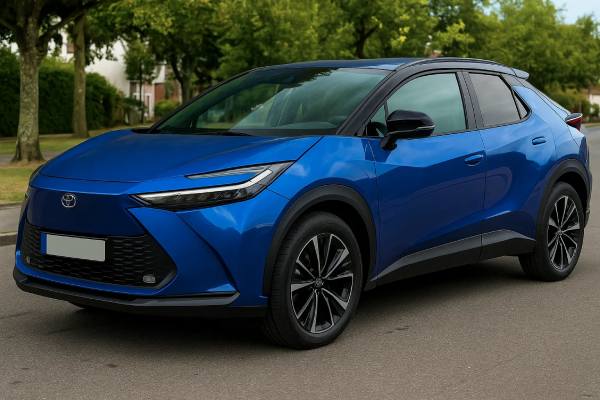
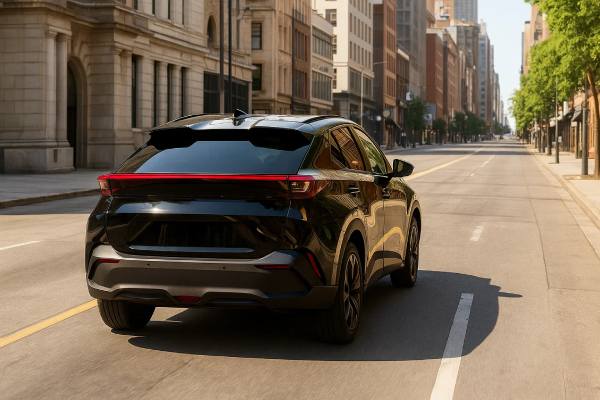
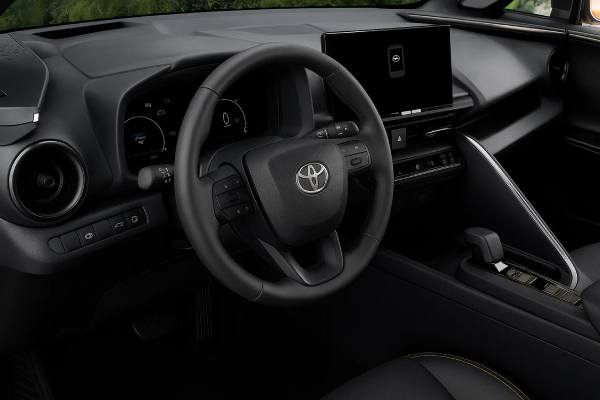
The second-generation Toyota C-HR Plug-in Hybrid (MAXH21) blends striking coupe-crossover styling with a well-sorted, fifth-generation hybrid system and a practical daily EV mode. Its 2.0-litre M20A-FXS Atkinson-cycle engine pairs with a high-output front e-motor and a lithium-ion battery to deliver strong combined performance (223 hp / 164 kW) while keeping ownership simple—no learning curve, reliable e-CVT behaviour, and familiar Toyota service intervals. Electric-only range is enough for typical commuting and errands, and the car reverts to efficient hybrid running once the battery is depleted. Chassis tuning and noise isolation are noticeably improved versus the first-gen C-HR, and the latest T-Mate (Toyota Safety Sense) driver assists are included across the range. If you want a compact PHEV that favours real-world usability over spec-sheet theatrics, this C-HR makes an honest case—especially for owners who can home-charge at 7 kW and appreciate Toyota’s long battery coverage.
Fast Facts
- EV-first daily use: up to ~66 km (≈41 mi) WLTP electric range; seamless switch to hybrid for longer trips.
- Strong combined output: 223 hp (164 kW) with responsive front-motor assist; 0–100 km/h in ~7.4 s.
- Polished ride and handling: double-wishbone rear, quick steering, low cabin noise at motorway speeds.
- Caveat: no DC fast-charging; plan around 7 kW AC home/work charging (≈2.5 h typical 0–100%).
- Typical maintenance anchor: service every 12 months/10,000 miles (15,000 km), alternating minor/major.
Navigate this guide
- Detailed Overview
- Specifications and Technical Data
- Trims and Options, Safety and Driver Assistance
- Reliability, Common Issues and Service Actions
- Maintenance and Buyer’s Guide
- Driving and Performance
- How Toyota C-HR Plug-in Hybrid Compares to Rivals
C-HR Plug-in Hybrid: Detailed Overview
Toyota’s second-generation C-HR Plug-in Hybrid focuses on frictionless electrified ownership rather than spec-sheet extremes. The M20A-FXS 2.0-litre Atkinson-cycle four-cylinder (long-stroke, high-efficiency Dynamic Force family) works with a high-output front traction motor and a lithium-ion pack mounted low in the floor. Combined output is 223 hp (164 kW), enough for confident overtakes while preserving the calm, low-rpm character hybrids are known for. The e-CVT power-split transaxle keeps revs in the sweet spot; software improvements reduce “flare” and increase directness under part-throttle.
The plug-in hardware adds meaningful EV-only capability (around 66 km / 41 mi WLTP combined) without sacrificing boot space to unusable levels. Compared with the 2.0 self-charging hybrid, the PHEV loses some cargo volume (to 310 L VDA to the tonneau) but gains stronger acceleration and the ability to cover many daily miles on electricity alone. Toyota’s decision to prioritise 7 kW AC recharging over DC fast-charge aligns with the intended use case: home, workplace, and destination top-ups where charge time and battery longevity matter more than rapid roadside sprints.
Chassis tuning is a highlight. The GA-C platform returns with a MacPherson-strut front and double-wishbone rear; geometry, bushings and damper valving were updated for the heavier PHEV. On higher grades, frequency-sensitive control dampers improve both body control and high-frequency isolation. Steering is quick off-centre (≈2.65 turns lock-to-lock), and the car’s compact footprint (4,362 mm long) and ~11 m kerb-to-kerb turning circle keep it friendly in tight streets.
Inside, the C-HR pushes quality and tech: Toyota Smart Connect multimedia with a crisp central display, a configurable driver’s screen, and remote services via the MyToyota app. T-Mate (Toyota Safety Sense) brings a broad ADAS suite as standard. Option packs add matrix LED headlights, panoramic roof, larger wheels (up to 20″), premium audio, and digital key features depending on market and grade.
The ownership story is plain-spoken Toyota: annual or 10k-mile services, straightforward consumables, and extended hybrid battery coverage when you complete the annual Hybrid Health Check. For commuters with routine charging access, fuel stops become occasional rather than weekly—and total running costs compare favourably to similarly priced petrol crossovers.
C-HR Plug-in: Specifications and Technical Data
Figures below reflect European-market data for the 2.0 Plug-in Hybrid (MAXH21). Where ranges are shown, they vary by wheel/tire package and grade.
Powertrain and Efficiency
| Item | Specification |
|---|---|
| Engine code | M20A-FXS (Dynamic Force) |
| Layout & valvetrain | Inline-4, DOHC, VVT-iE intake/VVT-i exhaust, 16 valves |
| Displacement | 2.0 L (1,987 cc) |
| Induction & fuel | Naturally aspirated; D-4S direct + port injection |
| Compression ratio (ICE) | ~14.0:1 (Atkinson cycle) |
| Electric motor | Permanent-magnet synchronous (front traction) |
| Motor output (max) | 120 kW; 208 Nm |
| System output (combined) | 223 hp (164 kW) |
| Hybrid battery | Lithium-ion; system voltage ~650 V |
| Rated EV range (WLTP) | up to ~66 km (≈41 mi), spec-dependent |
| Combined WLTP economy | from ≈0.8–0.9 L/100 km (≈294–261 mpg US) in charge-depleting cycles; real-world depends on charge share |
| Real-world at 120 km/h (battery depleted) | ~5.3–6.0 L/100 km (≈44–39 mpg US / 53–47 mpg UK) |
| Timing drive | Chain |
| Emissions standard | Euro 6e |
Transmission and Charging
| Item | Specification |
|---|---|
| Transmission | e-CVT power-split transaxle (front-wheel drive) |
| Differential | Open; electronic brake-based torque control |
| Onboard charger (AC) | 6.6–7.0 kW single-phase (typical EU 32 A) |
| DC fast-charge | Not supported on C-HR Plug-in Hybrid |
| Charge time (AC) | ~2.5 h (32 A, 7 kW); ~6.5 h (10 A domestic) |
| Drive modes | EV, Auto EV/HV, HV, Charge Hold; selectable regeneration including “Regeneration Boost” levels |
Chassis and Dimensions
| Item | Specification |
|---|---|
| Platform | TNGA GA-C |
| Suspension (f/r) | MacPherson strut / Double wishbone |
| Steering | Electric rack-and-pinion; ~2.65 turns lock-to-lock |
| Brakes (f/r) | Ventilated discs / solid discs; electronic parking brake |
| Wheels/Tyres | 18″, 19″ or 20″ alloys; e.g., 225/50 R19 or 245/40 R20 |
| Length / Width / Height | 4,362 / 1,832 / 1,564 mm (171.7 / 72.1 / 61.6 in) |
| Wheelbase | 2,640 mm (103.9 in) |
| Ground clearance | ~137 mm (5.4 in) (PHEV) |
| Turning circle (kerb-to-kerb) | ≈11.0 m (36.1 ft) |
| Aerodynamics | Cd ≈0.318 |
| Boot (to tonneau) | 310 L VDA (10.9 ft³); split-fold expands cargo |
| Kerb (curb) weight | ~1,645–1,695 kg (3,627–3,737 lb) |
| GVWR | ~2,130 kg (4,696 lb) |
| Fuel tank | 43 L (11.4 US gal / 9.5 UK gal) |
| Towing capacity | 725 kg (1,598 lb) braked / 725 kg unbraked |
| Roof load | Typically 75 kg (165 lb) with approved bars (confirm by VIN) |
Performance and Capability
| Metric | Value |
|---|---|
| 0–100 km/h (0–62 mph) | ~7.4 s (grade/wheel dependent) |
| Top speed | ~180 km/h (112 mph) |
| Braking 100–0 km/h | Typical class result; depends on tyre package—premium all-season or summer tyres recommended for shortest stops |
Fluids and Service Capacities (decision-making quick view)
| Fluid | Specification | Capacity (approximate) |
|---|---|---|
| Engine oil | Toyota-approved low-viscosity (market typically 0W-16 or 0W-20); API/SP or ACEA equivalent | ~4–5 L (4.2–5.3 qt) incl. filter (verify by VIN) |
| Engine/inverter coolant | Toyota Super Long Life Coolant (SLLC); premixed | Refer to service manual (drain-and-fill varies by loop) |
| Hybrid transaxle | Toyota ATF WS | Service per inspection; capacity varies by procedure |
| A/C refrigerant | R-1234yf | Charge mass varies by option; label under bonnet |
| Wheel fasteners (torque) | Confirm per VIN and wheel size | Dealer reference value required |
Always confirm fluid specs/capacities and torque values against the exact VIN in the official service documentation; trim, options and running changes affect numbers.
Electrical
| Item | Specification |
|---|---|
| 12 V battery | AGM or EFB type, compact form factor in boot; capacity varies by trim |
| High-voltage service | Automatic isolation on impact; interlock loop and service plug for trained technicians |
Safety and Driver Assistance
| Item | Detail |
|---|---|
| Crash rating (Euro NCAP, 2023) | 5 stars; Adult ≈85%, Child ≈86%, VRU ≈86%, Safety Assist ≈79% |
| Headlights | LED; matrix LED available by grade (auto high-beam, adaptive cut-off) |
| ADAS (T-Mate / Safety Sense) | Pre-Collision with pedestrian/cyclist detection and junction assist; adaptive cruise with lane centring; lane departure alert with steering assist; road sign assist; safe-exit assist; blind-spot monitor; rear cross-traffic alert/braking; parking assist; available 360° camera |
| Child-seat provision | ISOFIX/i-Size outer rear positions; top tethers; passenger airbag deactivation switch |
| Airbags | Multi-airbag system incl. centre airbag (market-dependent) |
Trims and Options, Safety and Driver Assistance
European grades commonly include Design, Excel and GR Sport for the Plug-in Hybrid, with limited-run appearance editions introduced periodically. Exact naming and content vary slightly by country, but the mechanical spec is consistent: front-wheel drive, e-CVT, same hybrid system output and battery, plus the 7 kW AC onboard charger.
Quick grade identifiers (typical EU patterns):
- Design – 18–19″ alloys, fabric/synthetic upholstery, Smart Connect infotainment, full T-Mate suite, key safety/comfort features standard.
- Excel – additional driver-comfort features (heated seats/steering wheel), upgraded upholstery, larger display, enhanced lighting; often opens options like panoramic roof and premium audio.
- GR Sport – sporty trim with 19–20″ wheels, unique seats, exterior/decor touches; matrix LEDs and other tech bundles frequently included or available. Ride compliance tightens slightly on 20″ tyres; winter drivers may prefer 18–19″.
Option highlights and mechanical notes:
- Wheels/Tyres: 18″, 19″, or 20″. Larger diameters reduce EV range slightly and lengthen braking distances on cold/wet roads relative to smaller, narrower tyres.
- Lighting: Matrix LED headlamps (where fitted) bring superb cut-off control and glare-free high beam.
- Dampers: Frequency-sensitive control dampers appear on selected models (notably GR Sport and some country-specific “Premiere” editions), improving low-freq body control without harming high-freq ride.
- Towing: All Plug-in Hybrids are rated to 725 kg braked/unbraked; verify local towbar approvals and cooling package requirements before fitting.
Safety ratings (Euro NCAP): The current C-HR generation achieves 5 stars with strong sub-scores. Ratings apply across the range provided safety equipment is equivalent; wheels/tyres and headlight spec can affect some sub-tests. For shoppers comparing across model years, check that matrix LED availability and driver-monitoring camera features match your expectations if you drive frequently at night or on motorways.
ADAS evolution and calibration considerations:
Toyota’s latest T-Mate introduces refined lane centring and junction-assist logic. After windscreen replacement, front radar removal, or camera misalignment, the system requires static and/or dynamic calibration with suitable targets and level surface. Post-collision repairs may also mandate steering angle neutralisation and ADAS health checks. If parking sonar or cross-traffic braking triggers false alerts following bodywork, dealer-level diagnostics will identify sensor alignment or software updates applicable to your VIN.
Reliability, Common Issues and Service Actions
The C-HR Plug-in Hybrid is young, but it inherits much of its hardware from Toyota’s fifth-generation hybrid family proven in other models. Early ownership data and Toyota’s track record suggest a low baseline risk if you keep up with routine inspections and software updates. Below is a practical, probability-weighted map of what to expect and how to respond.
Powertrain and high-voltage system
- Normal wear and tear (common / low severity): EV driving concentrates heat cycles in the onboard charger (OBC) and DC-DC converter. Symptoms are rare in year 1–4; if you see intermittent 12 V warnings, non-charging events, or infotainment reboots during charging, request a DC-DC/OBC diagnostic and check for software updates.
- HV battery health (occasional / low-medium): Lithium-ion chemistry is thermally managed and robust in temperate climates. Expect minimal degradation in the first 5–7 years with routine Hybrid Health Checks. Frequent 100% charges aren’t harmful at 7 kW AC when the car is used promptly; long-term storage is best at partial state of charge in a cool garage.
- Transaxle and e-CVT (rare / low): Fifth-gen calibration reduces flare/shudder complaints. If you notice correlation faults or abnormal bearing noise, insist on a technician road test; Toyota dealers can check for TSBs and fluid contamination without a blind “lifetime fluid” assumption.
Engine and cooling
- Oil usage (rare / low): The M20A-FXS typically exhibits negligible oil consumption. Use the specified low-viscosity oil; re-check level every few thousand kilometres.
- Coolant loops (rare / low): The Plug-in has dedicated cooling for engine, power electronics and sometimes battery modules. Air pockets after improper service can cause hot-soak gurgling or DTCs—bleed procedures and vacuum fill tools matter.
Chassis and NVH
- Tyres and alignment (common / low): 20″ packages look great but add impact harshness, tramlining and winter-weather braking distance. For mixed climates, 18–19″ wheels with all-weather or winter tyres in season are the smart choice.
- Brakes (common / low): PHEVs spend more time in regen, so friction brakes can corrode with low usage. Do regular motorway stops to keep discs clean and ask for a pad/slide-pin service at annual checks.
Body, electronics and ADAS
- Panel edges and seals (occasional / low): Coupe-style doors and frameless-look seals need careful alignment; wind rustle at speed usually traces to a minor seal seating issue rather than inherent design.
- ADAS sensor alignment (occasional / medium): After glass or bumper work, ensure full static/dynamic calibration; misalignment leads to lane-keeping dropouts or late AEB triggers.
Recalls, TSBs and extended coverage
- Toyota issues recalls and service bulletins as needed; coverage varies by VIN and market. Before purchase, use the official recall/VIN checker for your country and ask the seller for a dealer printout of completed campaigns and the latest Hybrid Health Check report. PHEV battery coverage typically starts at 5 years/100,000 km and can extend annually (up to 10 years) with hybrid health inspections—verify the current terms with your local Toyota network.
Pre-purchase checks to request
- Complete dealer service history, including brake-fluid date stamp, coolant service entries, and any ADAS calibration records.
- Battery state-of-health (dealer hybrid report) and at least one proof of correct 7 kW charging on the home circuit (no nuisance tripping).
- Road test for tyre roar and wind noise at 120 km/h; confirm wheel/tyre spec and pressures.
- Under-body inspection for arm/bushing wear and disc corrosion on low-mileage urban cars.
Maintenance and Buyer’s Guide
Service cadence (typical Europe): every 12 months / 10,000 miles (15,000 km), alternating minor/major visits. PHEV hardware doesn’t raise annual service complexity compared to self-charging hybrids, but you’ll add occasional checks specific to charging and HV cooling.
Practical schedule (summary):
- Engine oil and filter: 12 months / 10,000 miles (15,000 km). Use Toyota-approved low-viscosity oil (market often 0W-16; 0W-20 acceptable where specified).
- Cabin (pollen) filter: 12–24 months depending on environment.
- Engine air filter: Inspect yearly; replace ~30,000 miles (48,000 km) or sooner in dusty areas.
- Brake fluid: Replace every 2 years regardless of mileage.
- Coolant (engine/inverter/battery loops): Follow the official interval; many Toyota SLLC systems target the first change near 10 years/150,000 km, then ~5 years/75,000 km (confirm by VIN).
- Spark plugs: Iridium type with long intervals; hybrid duty cycles keep wear low—follow the official manual interval for your VIN.
- Hybrid transaxle ATF WS: Inspect for leaks and condition; change per official guidance or proactive maintenance around high mileage if towing or frequent motorway use.
- 12 V battery test: Annually; PHEV accessory loads and short urban trips can stress the small AGM/EFB battery.
- Tyre rotation and alignment: Rotate every 10,000–12,000 km; alignment check annually or after pothole impacts. Seasonal tyre sets strongly recommended in winter regions.
- HV system checks: Annual Hybrid Health Check to extend battery warranty eligibility; inspect charge port seal and cover hinge; verify OBC cooling intake is clear.
Fluid quick notes (owner-decision level):
- Oil capacity roughly in the 4–5 L range including the filter (varies by sump and filter design).
- A/C refrigerant is R-1234yf; charge mass printed on the under-bonnet label—use leak-tested equipment.
- Fuel tank is 43 L; when depleting the EV range frequently, expect infrequent fuel turnover—run at least one long hybrid trip monthly to refresh fuel.
Buyer’s checklist (used and nearly-new)
- Charging proof: Ask for at least one home-charge session recorded in MyToyota; look for 32 A installer certificate and RCD protection.
- Hybrid Health Check: Should be recent; confirms battery metrics and extends coverage.
- Tyres and wheels: Inspect for uneven wear from underinflation or aggressive kerb contact on 19–20″.
- Brakes: Check inner pads and slide pins (regen-heavy driving can leave corrosion).
- ADAS and glass: Verify camera and radar calibration records after any windscreen or bumper repairs.
- Options you may want: matrix LED lights (night driving), heated features, panoramic roof (mind headroom), 18–19″ wheels for comfort and winter grip.
Long-term outlook: The C-HR Plug-in Hybrid’s simple AC-charging approach, proven hybrid components, and conservative thermal management bode well for 8–12-year ownership. Plan on routine suspension consumables and brake upkeep; the hybrid transaxle, HV battery and power electronics historically enjoy long service life when maintained.
Driving and Performance
Ride, handling, NVH:
Around town, the PHEV’s EV mode masks drivetrain noise entirely; over coarse asphalt, tyre choice dominates cabin sound. On 18–19″ tyres, impact harshness is well controlled and the body remains settled over speed humps. The double-wishbone rear contributes to clean recovery after mid-corner bumps. Quick on-centre steering and a modest footprint make urban threading easy. At motorway speeds (100–130 km/h), the cabin stays composed; A-pillar wind rustle is minimal when door seals are properly seated.
Powertrain character:
Set to Auto EV/HV, the car behaves like a quiet EV at low-medium loads, waking the engine only for prolonged climbs or heavy throttle. The M20A-FXS is smooth and distant when it joins, thanks to reduced flare and smarter e-CVT logic. In HV hold, the system prioritises efficiency, reserving battery boost for responsiveness. Regeneration Boost provides stronger decel—useful in traffic or downhill—but still requires the brake pedal to stop; it’s a natural-feeling compromise that new EV drivers will master quickly.
Real-world economy:
Expect 0.0 L/100 km fuel consumption over short commutes when you start with a full charge and remain within EV range; the electricity meter will tell the story instead. On mixed journeys once the battery is depleted, anticipate roughly 5.3–6.0 L/100 km at 120 km/h (≈44–39 mpg US / 53–47 mpg UK) depending on tyres, temperature and load. Cold weather reduces EV range; pre-conditioning while plugged in helps.
Charging performance:
A 6.6–7.0 kW onboard charger is the sweet spot for this battery size—about 2.5 hours from empty to full on a 32 A wallbox (Type 2) and around 6.5 hours on a 10 A domestic socket (where permitted). There’s no DC fast-charging, but that isn’t a hardship for a PHEV with a petrol engine on board; the car is designed for predictable home/work top-ups and petrol-assisted touring.
Key metrics that change the verdict:
- 0–100 km/h: about 7.4 s in typical grades on 19″ tyres.
- Passing (80–120 km/h): brisk thanks to the motor’s immediate torque; the e-CVT keeps the engine at peak efficiency rather than hunting.
- Turning circle: ~11.0 m keeps tight city U-turns realistic.
- Braking feel: initially light due to regen, then builds—smooth and consistent once you adapt; periodic firm stops keep discs clean.
Load and towing:
Within its 725 kg braked rating, stability is acceptable provided you keep tongue weight within spec and maintain tyres at the trailer-pressure setting. Expect a 10–25% fuel-economy penalty in HV mode when towing at motorway speeds.
How Toyota C-HR Plug-in Hybrid Compares to Rivals
Versus Renegade/Compass 4xe and Captur/Arkana E-Tech Plug-in:
Toyota’s 7 kW AC-only stance looks conservative next to some PHEVs that advertise DC capability, but day-to-day it’s rarely a deal-breaker. The C-HR counters with a more polished hybrid system, excellent calibration, and typically stronger retained value. Ride refinement and cabin hush outclass many small-SUV PHEVs, especially on 18–19″ wheels. Renault’s E-Tech plug-in can feel more EV-like at very low speeds but often trails in perceived quality and noise isolation.
Versus Kia Niro PHEV and Hyundai Kona PHEV:
The Korean pair offer competitive EV ranges and feature sets. The C-HR Plug-in leans on superior steering feel, more consistent brake blending, and a more premium cabin ambience. Toyota’s hybrid-specific warranty extensions and dealer network depth also sway cost-of-ownership maths for long-term keepers. Niro/Kona infotainment is slick; Toyota Smart Connect has caught up with frequent OTA updates and robust phone integration.
Versus Cupra Formentor e-Hybrid/Peugeot 3008 Hybrid:
Those options skew sportier or roomier, respectively. If boot volume and rear legroom are your top priorities, a larger PHEV SUV may be better. If you favour compact outer dimensions, predictable efficiency and calm NVH, the C-HR Plug-in feels more cohesive, especially in mixed urban-motorway use where Toyota’s e-CVT avoids dual-clutch low-speed judder.
Bottom line:
For buyers who can reliably AC-charge at home or work, the C-HR Plug-in delivers the easiest transition into electrified daily driving: quiet EV miles when you want them, hybrid stamina when you do not, and Toyota’s mature safety and service framework backing the experience.
References
- TOYOTA C-HR TECHNICAL SPECIFICATIONS 2024 (Technical Spec Sheet)
- CHR-PHEV-PDF-GUIDE (MY25) 2025 (Product Guide)
- Toyota C-HR 2023 (Safety Rating)
- The all-new Toyota C-HR Plug-in Hybrid 2024 (Press Information)
- The new Toyota C-HR 2025 (Model Overview)
Disclaimer
This guide is for informational purposes and is not a substitute for professional diagnosis or repair. Specifications, torque values, service intervals and procedures vary by VIN, market and equipment. Always confirm details against your vehicle’s official owner’s manual and service documentation, and follow local regulations and safety guidance.
If you found this helpful, please consider sharing it on Facebook or X/Twitter to support xcar’s work. Thank you!