
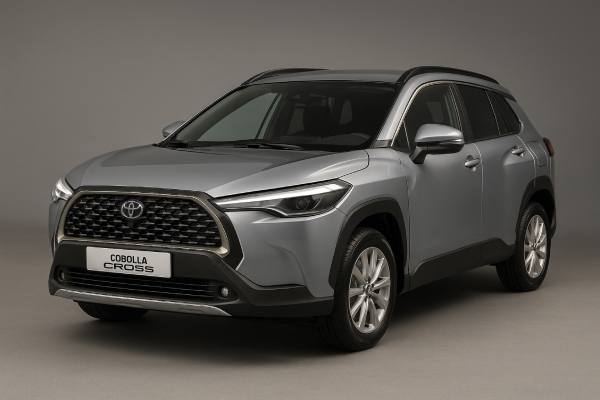
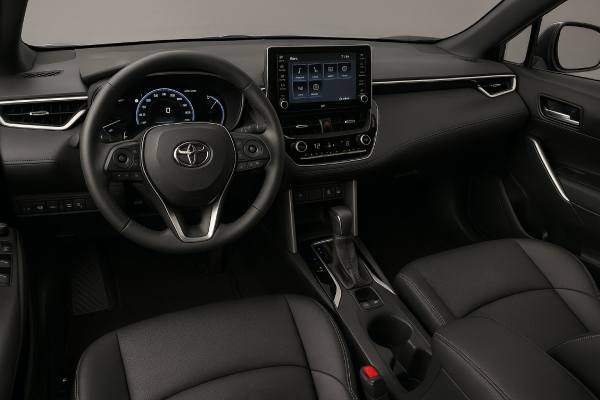
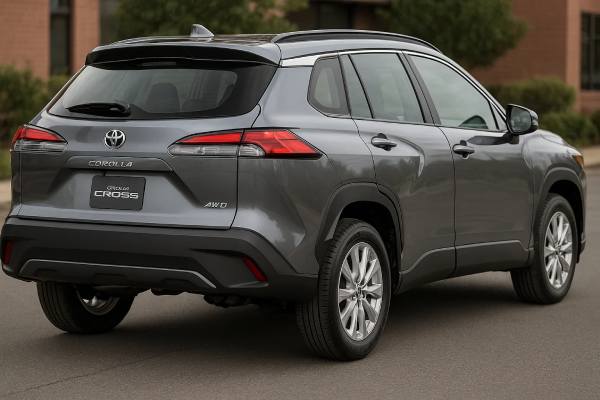
The Toyota Corolla Cross AWD takes the Corolla nameplate’s dependability and stretches it into a confident, year-round small SUV. Riding on Toyota’s TNGA-C architecture, it pairs the M20A-FKS 2.0-liter four-cylinder with a Direct-Shift CVT and an active, on-demand all-wheel drive system that can send torque to the rear axle when traction drops. Ground clearance, upright seating, a quiet cabin, and simple controls suit daily use, while Toyota Safety Sense and a straightforward 1,500-lb (680-kg) tow rating add versatility. For shoppers, the key differences come down to trim content (LE vs XLE), wheel/tire packages, and the gradual tech upgrades Toyota rolled into 2023–2025 (multimedia, driver aids, and calibrations). This guide distills the data that matters—dimensions, performance expectations, fuel economy, service needs, and known issues—so you can quickly confirm whether the Corolla Cross AWD matches your driveway, commute, and budget.
What to Know
- Strong everyday value: roomy seating, easy visibility, and predictable AWD traction.
- Efficient for the class: EPA-rated 30 mpg combined (AWD) with low running costs.
- Toyota Safety Sense with active driver aids became more capable in later years.
- Watch for open recalls (2022–2023 dash/airbag campaigns); verify by VIN before buying.
- Routine service anchors: engine oil 10,000 miles/12 months (0W-16), rotate tires every 5,000 miles.
Navigate this guide
- Corolla Cross AWD essentials
- Corolla Cross AWD specs
- Trims, options and safety tech
- Reliability and common issues
- Maintenance and buyer’s guide
- Driving and performance
- Corolla Cross vs rivals
Corolla Cross AWD essentials
The Corolla Cross AWD (chassis code MXGA15) is the gasoline all-wheel-drive member of Toyota’s small-SUV family. It uses the 2.0-liter M20A-FKS “Dynamic Force” engine (169 hp) and Toyota’s Direct-Shift CVT, which incorporates a small launch gear for crisper step-off before handing off to the belt-and-pulley drive. The AWD system is a proactive, on-demand arrangement that runs front-drive most of the time to save fuel and can direct up to roughly half the power rearward when the front tires slip or when the system anticipates wheelspin. That means sure-footed starts on wet or snowy days without the driveline drag found in always-on systems.
Size-wise, the Corolla Cross fits the “right-sized” brief for urban and suburban life: easy to park, but tall enough to load a stroller or bicycle without acrobatics. A long roof and square cargo opening help it swallow everyday gear, and an available power liftgate keeps life simple. Ride height and entry/exit are friendly for kids and older passengers. Toyota’s TNGA-C platform gives it a solid, quiet feel, with a multilink rear suspension on AWD models that takes the edge off broken pavement and helps the rear axle stay planted in quick transitions. The standard driver-assist suite (Toyota Safety Sense) matured through the years, adding improved pedestrian/cyclist detection and traffic-jam aids, while infotainment moved to Toyota’s newer touch interface with wireless phone integration.
Ownership focus is sensible rather than flashy. Fuel economy remains a strong reason to choose it—AWD versions post a combined 30 mpg—while insurance and maintenance costs tend to be predictable. Towing is a simple 1,500 lb (680 kg) rating for small utility trailers or weekend gear. If you want brisk acceleration or sporty steering, rivals exist; if you want a quiet commute, all-weather traction, and minimal surprises, the Corolla Cross AWD lands squarely in its element.
Corolla Cross AWD specs
Below are the core specifications for the gasoline AWD model (MXGA15) equipped with the M20A-FKS 2.0-liter engine and Direct-Shift CVT. Figures represent typical U.S./Canada configurations for model years 2022–2025.
Powertrain and Efficiency
| Item | Value |
|---|---|
| Engine code | M20A-FKS (Dynamic Force) |
| Layout & cylinders | Inline-4, DOHC, 16 valves |
| Bore × stroke | 80.5 × 97.6 mm (3.17 × 3.84 in) |
| Displacement | 2.0 L (1,986 cc) |
| Induction | Naturally aspirated |
| Fuel system | Toyota D-4S (direct + port injection) |
| Compression ratio | ~13.0:1 |
| Max power | 169 hp (126 kW) @ ~6,600 rpm |
| Max torque | ~205 Nm (151 lb-ft) @ ~4,400–4,800 rpm |
| Timing drive | Chain |
| EPA fuel economy (AWD) | 30 mpg combined (29 city / 31 hwy) ≈ 7.8 L/100 km combined |
| Real-world highway @ 75 mph | ~7.6–8.4 L/100 km (28–31 mpg US), sensitive to wind/temps/tires |
| Aerodynamics | Cd: not officially published |
Transmission and Driveline
| Item | Value |
|---|---|
| Transmission | Direct-Shift CVT (with launch gear) |
| Drive type | AWD (Dynamic Torque Control) |
| Rear torque capability | Up to ~50% rear transfer when needed |
| Differential(s) | Open (front/rear) |
| Tow rating | 680 kg (1,500 lb) |
| Refuel to full | ~5 minutes at a station |
Chassis and Dimensions
| Item | Value |
|---|---|
| Platform | TNGA-C |
| Suspension (front/rear) | MacPherson strut / Multi-link (AWD) |
| Steering | Electric power assist |
| Brakes | Front ventilated disc / Rear solid disc |
| Wheels/Tires (typical) | 215/65R17 or 225/55R18 |
| Ground clearance | 206 mm (8.1 in) |
| Length / Width / Height | 4,473 mm × 1,826 mm × 1,648 mm (176.1 × 71.9 × 64.9 in) |
| Cargo volume (seats up) | ~750 L (26.5 ft³) |
| Fuel tank | 50 L (13.2 US gal / 11.0 UK gal) |
Performance and Capability
| Metric | Value (typical) |
|---|---|
| 0–100 km/h (0–62 mph) | ~9.5–10.0 s (estimated; varies with load/tires) |
| 0–60 mph | ~9.2–9.7 s (estimated) |
| Top speed | Governed; not a performance target |
| Towing | 680 kg (1,500 lb) |
| Roof load | Check roof rack/crossbar rating; follow accessory spec |
Fluids and Service Capacities (high-level)
| System | Specification | Capacity (approximate) |
|---|---|---|
| Engine oil | SAE 0W-16, ILSAC GF-6B/API SP | ~4.5–4.8 qt (4.3–4.5 L) with filter |
| Engine coolant | Toyota Super Long Life Coolant (pink) | Factory premix; see service manual |
| Transmission | Toyota CVT fluid (Direct-Shift CVT) | Service by level/procedure; no dipstick |
| A/C refrigerant | HFO-1234yf | Per label under hood; service by weight |
| Brake fluid | DOT 3 or DOT 4 | Fill to MAX; replace on interval |
Notes: Always confirm by VIN in the owner’s/service manual and under-hood labels; capacities vary slightly by model year and options.
Safety and Driver Assistance
| Item | Details |
|---|---|
| Crash ratings (IIHS) | Strong performance in major categories for recent years; verify year/trim for headlight ratings and award status |
| Headlights | Projector/LED units; rating varies by trim and package |
| ADAS suite | Toyota Safety Sense (PCS with pedestrian/cyclist detection, lane departure alert, lane tracing assist, adaptive cruise, road sign assist); Blind Spot Monitor and Rear Cross-Traffic Alert commonly fitted/available; rear seat reminder and safe-exit aids added in later years |
Trims, options and safety tech
Trim structure (gas AWD): In North America, AWD availability concentrates on the LE and XLE grades across 2022–2025, with equipment levels rising mainly in comfort, lighting, and driver assistance. Early base grades were often FWD-only; check a specific VIN to confirm AWD hardware.
- LE AWD (volume trim):
- 17-inch wheels (215/65R17), cloth seating, manual driver seat.
- 8-inch Toyota Audio Multimedia with wireless Apple CarPlay/Android Auto, six speakers.
- Toyota Safety Sense with lane tracing and adaptive cruise; Blind Spot Monitor and Rear Cross-Traffic Alert commonly bundled.
- LED head/taillamps; single-zone climate; keyless entry; rear privacy glass.
- Options: power liftgate; roof rails; cold-weather package (heated front seats/steering wheel on later years); moonroof.
- XLE AWD (premium):
- 18-inch wheels (225/55R18), SofTex-trimmed seating with power driver seat and heating.
- More soft-touch interior trim; available two-tone interior on some colors.
- Front/rear parking sensors with automatic braking (later MYs); auto-dimming mirror.
- Full LED headlamps and accent lighting; available power liftgate (often with kick sensor).
- Optional convenience packages can add JBL audio, moonroof, wireless charging pad, and additional USB-C ports depending on year.
Year-to-year highlights:
- 2022 launch: New model; Direct-Shift CVT + AWD with multi-link rear suspension; Toyota Safety Sense 2.x; 8-in touchscreen with wired CarPlay/Android Auto.
- 2023: Multimedia transition in many Toyotas; wireless smartphone integration and over-the-air update capability roll in; incremental ADAS refinements.
- 2024–2025: Toyota Safety Sense 3.0 availability expands, with improved object detection, smoother lane-centering, and better traffic-jam behaviors; infotainment polish continues (voice assistant, cloud navigation where subscribed). Cosmetic wheel, color, and package tweaks appear.
Safety ratings and equipment notes:
- IIHS evaluations show solid crashworthiness; headlight performance and the availability of specific features (e.g., curve-adaptive lights) can determine award status and may differ by trim/options. If “Top Safety Pick” matters to you, match the exact year, trim, and headlight package before purchase.
- Child-seat provisions include LATCH anchors with accessible lower bars and clearly marked upper tethers. The back-seat cushion height and door opening are family-friendly.
- After windshield or radar-sensor service, calibration may be required for Toyota Safety Sense; plan for this at a dealer or qualified shop.
Quick identifiers for AWD models:
- Rear multi-link suspension visible behind the rear wheels (vs torsion beam on FWD).
- “AWD” badging on the liftgate (many units).
- VIN decoding and build labels (driver-door jamb) will list AWD.
Reliability and common issues
Toyota’s TNGA-C products have a strong reliability record, and the Corolla Cross AWD follows suit. Most owners report low running costs, normal wear items, and few surprises. That said, every model has patterns worth noting, especially across the first production years.
Common / low-severity
- Cabin air odor from A/C evaporator: Musty smell after humid use.
Symptom → Cause → Fix: Damp evaporator grows biofilm → residual moisture → clean condensate drain, treat evaporator core with approved cleaner, replace cabin filter, and run A/C briefly before shutdown to dry core. - Multimedia quirks (reboots/phone pairing):
Symptom: Intermittent wireless CarPlay/Android Auto. → Fix: Update head-unit software; delete/re-pair device; check USB-C cable quality if wired.
Occasional / medium-severity
- Windshield/camera calibration after glass work:
Symptom: ADAS warnings/limited function post-replacement. → Cause: Camera misalignment. → Fix: Perform static/dynamic calibration per Toyota procedure. - Road-salt surface corrosion (hardware, subframes):
Symptom: Rust on uncoated fasteners/brackets in harsh climates. → Fix: Preventive underbody rinses and periodic inspections; treat early oxidation; replace severely corroded hardware.
Less common / higher visibility
- CVT behavior at low speeds (flare, moan):
Symptom: Brief flare or low-speed drone on cold starts or steep grades. → Cause: Software mapping or fluid condition. → Fix: Apply TCU software updates; verify fluid level/procedure; inspect mounts/heat shields.
Recalls, TSBs, and service actions
- Instrument panel / passenger airbag recall (select 2022–2023):
Concern: The dash panel material around the passenger airbag may not deploy as designed in a crash. → Remedy: Replace dash panel and related components as specified.
Action: Run a VIN check and confirm recall completion before purchase or sale. - Software updates (Safety Sense 3.0 and multimedia):
Concern: Improved detection, reduced false alerts, voice assistant reliability. → Remedy: Apply available updates; some deploy over the air, others require a service visit. - Dealer TSBs for NVH or trim fit:
Examples: Rattles from cargo area or roof rails, tailgate latch alignment. → Fix: Clip replacements, felt tape, or latch adjustment per TSB.
Pre-purchase checks (ask the seller for):
- A complete maintenance history with dates/miles and receipts.
- Proof of recall completion (VIN printout) and any ADAS/sensor calibrations after windshield work.
- Recent fluid services (engine oil by time/miles; brake fluid by age; CVT inspection if used for towing or mountain driving).
- Tire set age and even wear (AWD prefers four matching tires within 2/32″).
- Underbody photos for corrosion, particularly in snowbelt regions.
- Clean diagnostics scan showing no stored driveline/ADAS faults.
Maintenance and buyer’s guide
Practical maintenance schedule (normal service)
(Adjust for severe use: frequent short trips, heavy loads, dusty/sandy environments, extreme cold/heat.)
- Engine oil and filter: Every 10,000 miles / 12 months with 0W-16 synthetic meeting ILSAC GF-6B/API SP. Short-trip or cold-climate driving? Consider 5,000–7,500 miles.
- Tire rotation and inspection: Every 5,000 miles / 6 months; keep tread depths closely matched on AWD to protect the coupling.
- Cabin air filter: Inspect 12 months; replace 15,000–20,000 miles or sooner in dusty areas.
- Engine air filter: Inspect 12 months; replace 30,000–45,000 miles based on conditions.
- Brake pads/rotors and fluid: Inspect at each rotation; replace pads as needed; flush fluid about every 3 years.
- Coolant (Toyota SLLC): First replacement typically around 100,000 miles/10 years, then ~50,000 miles thereafter; check level annually.
- Spark plugs (iridium): About 120,000 miles typical; inspect earlier if misfire or MPG drops.
- CVT inspection/service: No fixed drain interval in many schedules; check for leaks/condition every 30,000–60,000 miles. Severe-duty towing/mountain use? Discuss proactive CVT service with a Toyota-experienced shop.
- Belts/hoses: Visual check annually; replace serpentine belt on condition (usually 90,000–120,000 miles).
- 12-V battery: Test yearly after year three; typical replacement 4–6 years depending on climate.
- Alignment: Check annually or after impacts, tire replacements, or pull/wear symptoms.
- Body and underbody care: Rinse salt in winter; treat chips early to prevent corrosion.
Fluids you will ask for by name
- Engine oil: SAE 0W-16 (GF-6B/API SP).
- Coolant: Toyota Super Long Life Coolant (pink), premixed.
- CVT fluid: Toyota-specified CVT fluid for Direct-Shift CVT (service fills by procedure).
- Brake fluid: DOT 3 or DOT 4 as labeled; keep container sealed.
- A/C refrigerant: HFO-1234yf; service by weight with the correct oil charge.
Essential fasteners (typical)
- Wheel lug nuts: Many Toyotas specify ~103 Nm (76 lb-ft). Always confirm for your VIN and wheel size before tightening.
Buyer’s checklist
- Exterior/underbody: Look for uneven panel gaps at the dash-end/windshield (prior work), hitch wiring quality if equipped, and winter corrosion at subframes, fasteners, and brake lines.
- Tires and wheels: Even wear; avoid mixed brands/sizes on AWD. Check alloy wheels for curb rash and bends.
- Brakes and suspension: Listen for clunks over sharp bumps; check rear shock mounts and front sway-bar links.
- Powertrain: Smooth initial takeoff (launch gear), no hesitation shifting from R↔D, and no CVT drone at steady 40–50 mph.
- Tech and ADAS: Verify all cameras, radar cruise, lane-centering, and parking sensors. If a windshield has been replaced, ask for calibration documentation.
- Cargo and cabin: Power liftgate operation (where fitted), seat fold flatness, child-seat anchor access, and HVAC performance.
Which years/trims to target
- Best all-rounder: LE AWD with Convenience/Safety packages (adds blind-spot, power liftgate, heated items in cold climates) at a friendly price.
- Max comfort: XLE AWD for SofTex, power/heated seats, 18-inch wheels, and expanded parking aids.
- Tech priority: 2024–2025 units benefit from Toyota Safety Sense 3.0 and the latest multimedia—worth it if you rely on driver assistance and wireless phone integrations.
Long-term outlook
Expect a conservative, low-drama ownership path: consumables, periodic software updates, and normal wear. Keep tires matched, observe fluid checks, and address recalls/TSBs promptly to preserve the AWD system and resale value.
Driving and performance
Ride, handling, and NVH: The Corolla Cross AWD adopts a quiet, steady character. The body feels tight over railroad tracks and expansion joints, and the multi-link rear suspension helps it take a set in corners more cleanly than torsion-beam competitors. Steering is light at parking speeds and relaxes on the highway; straight-line tracking is stable even on grooved concrete. With 17-inch tires, impacts are well damped; 18-inch packages look sharper but transmit a bit more slap on potholes. Cabin noise is modest for the class—wind hush is good, tire thrum varies by brand.
Powertrain character: The M20A-FKS likes revs. In gentle driving, the launch gear lets it pull away like a conventional automatic before the CVT blends in; in a full-throttle merge, the engine will climb to its power band and hold there. It is not fast—expect mid-9-second 0–60 mph runs—but throttle response is predictable and passing at 50–70 mph is respectable with a downshift (or “virtual step”) from the CVT. Drive modes tweak pedal mapping and transmission logic; “Sport” makes the CVT mimic stepped ratios more aggressively.
AWD behavior and traction: The on-demand system stays invisible most of the time. On slick pavement, you can feel the rear axle nudge in to steady the launch. There is no low range or off-road programming; think confidence on snow-packed streets and muddy trailheads rather than rock gardens. Stability control is tuned conservatively to keep the small footprint tidy when grip falls away.
Braking feel: Pedal effort is light and consistent in daily traffic. Repeated hard stops reveal class-typical fade; switching to high-quality all-season or performance-oriented tires improves stopping distances more than any other single change you can make.
Real-world economy: In mixed suburban driving at 35–50 mph, many owners see high-20s to low-30s mpg. Highway results vary with speed and weather—at 60–65 mph, mid-30s mpg is achievable; at a steady 75 mph with winter gas and a crosswind, high-20s mpg is normal. Roof boxes, snow tires, and heavy loads can cut economy 10–20%.
Towing and load: The 1,500-lb (680-kg) tow rating covers small utility trailers and lightweight campers. Expect a noticeable climb in revs on grades; give the CVT time to settle and keep airflow through the transmission cooler unobstructed. A full cabin or cargo bay reduces ride compliance; set tire pressures correctly and consider a mid-cycle brake service if you tow frequently.
Corolla Cross vs rivals
Honda HR-V AWD: Roomy back seat, refined ride, and an efficient CVT, but its 2.0-liter engine feels slower and fuel economy trails slightly. HR-V’s cabin materials are excellent; the Corolla Cross counters with a quieter highway ride and an easier-to-learn infotainment interface in later years.
Subaru Crosstrek (2.0/2.5): Standard full-time AWD, generous ground clearance, and outdoorsy durability. The 2.5-liter option is stronger than Toyota’s 2.0; however, the Corolla Cross returns better fuel economy and usually lower running costs. If you live on unplowed roads, the Subaru’s AWD tuning is a plus; if you commute on freeways, the Toyota is calmer and thriftier.
Mazda CX-30: Best steering/handling in the class with an upscale cabin. The non-turbo 2.5-liter matches or beats the Toyota in midrange pull but returns lower mpg. The turbo CX-30 is legitimately quick (at a price). The Corolla Cross offers a softer, quieter ride and a friendlier rear door opening for child seats.
Hyundai Kona AWD: Lighter, more playful, and packed with tech value. Turbo versions are quickest here but can consume more fuel and deliver a firmer ride. Toyota’s advantage is simplicity: smooth daily manners, strong resale, and service ubiquity.
Chevrolet Trax (FWD-only): Big space and value, but no AWD. If you need all-weather traction, the Corolla Cross AWD is the straightforward pick.
Bottom line: If you prioritize low effort, high predictability, and winter footing, the Corolla Cross AWD is one of the safest bets. If you want acceleration or a sporty chassis, test a CX-30 or Kona turbo; if you want trail cred, cross-shop Crosstrek.
References
- 2023 Toyota Corolla Cross AWD 2023 (Fuel Economy)
- 2025 Toyota Corolla Cross 4-door SUV 2025 (Safety Rating)
- 2023 TOYOTA COROLLA CROSS 2023 (Recall Database)
- 2024 Corolla Cross 2024 (Brochure)
- 2025 Toyota Corolla Cross – Toyota USA Newsroom 2024 (Newsroom PDF)
Disclaimer
This guide is for informational purposes only and is not a substitute for professional diagnosis or repair. Specifications, torque values, fluid types, capacities, and service intervals can vary by VIN, model year, trim, and installed equipment. Always verify details against your vehicle’s official owner’s manual, service literature, and under-hood labels. If you found this useful, please consider sharing it with fellow owners on Facebook or X/Twitter to support xcar’s work.