
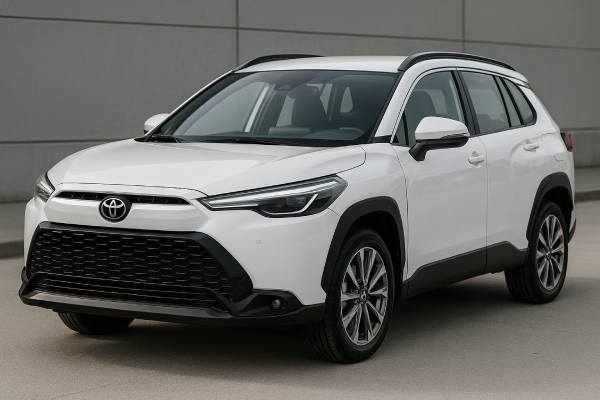
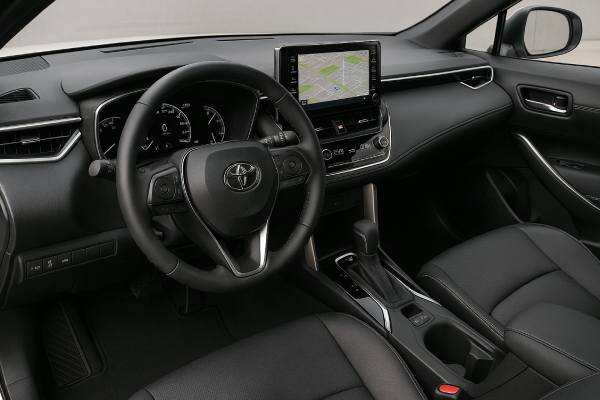
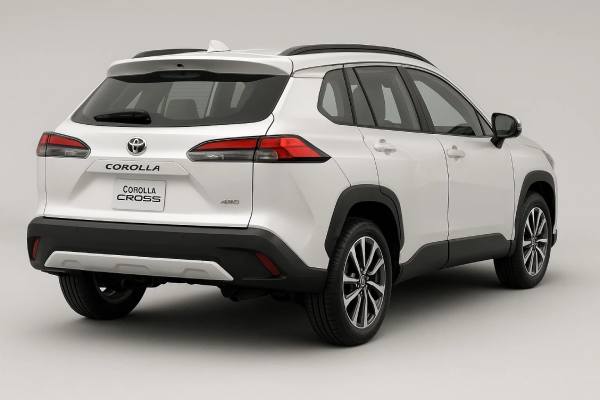
The facelifted Toyota Corolla Cross AWD (MXGA15) arrives with a calmer ride, cleaner cabin tech, and the same durable 2.0-liter M20A-FKS engine that has anchored Toyota’s compact lineup for years. The update focuses on refinement—noise reduction, touchpoints, screens, and safety logic—while keeping the formula that made the Corolla Cross popular: easy driving manners, useful cargo space, and all-weather capability at a sensible price. The direct-shift CVT with a physical launch gear improves low-speed response, and the on-demand AWD adds confidence on wet or snowy roads without a big fuel-economy penalty. Inside, the latest Toyota Audio Multimedia interface brings faster mapping and better voice control. For buyers, the story is straightforward: modest running costs, high predicted reliability, and strong resale value. This guide compiles the specs, what changed with the facelift, how it drives, and what to check before buying—so you can make a smart decision with zero guesswork.
Top Highlights
- Surefooted compact SUV: on-demand AWD, balanced ride, roomy cargo for the class.
- Proven M20A-FKS 2.0-liter with smooth direct-shift CVT; responsive off the line.
- Modern cabin tech (8–12.3 in displays) and Toyota Safety Sense 3.0 now broadly available.
- Watch for road-salt corrosion at rear subframe brackets; inspect annually in snow-belt states.
- Routine oil service about every 10,000 mi / 12 months (synthetic), tire rotation every 5,000 mi.
Explore the sections
- Facelifted Corolla Cross AWD
- AWD Corolla Cross specs
- Corolla Cross trims and safety
- Reliability and known issues
- Maintenance and buyer’s guide
- Driving and performance
- Corolla Cross vs rivals
Facelifted Corolla Cross AWD
The 2025 refresh (launched for the 2026 model year in North America) is a targeted update rather than a mechanical overhaul. Externally, the fascia and lighting signatures are cleaner, with a tidier grille texture and a more cohesive rear bumper. Cabin changes carry more weight: Toyota’s newer infotainment stack now runs on brisker hardware with an 8-inch center touchscreen on most grades and a larger 12.3-inch digital cluster available. Voice commands are more natural, wireless Apple CarPlay/Android Auto are standard, and over-the-air updates reduce future dealership trips for software.
Under the hood remains the M20A-FKS 2.0-liter naturally aspirated four-cylinder. This “Dynamic Force” engine combines a long stroke with high tumble ports, D-4S dual injection (port plus direct), and a high compression ratio for strong efficiency without turbo complexity. It pairs with Toyota’s direct-shift CVT, which uses a real first gear for launch before handing off to the continuously variable pulleys. That design makes parking-lot and urban takeoffs feel more conventional and helps drivability on hills.
All-wheel drive is the familiar on-demand system. In normal cruising, the Corolla Cross runs as a front-driver for efficiency. When slip is detected, an electromagnetic coupling routes torque rearward; the handoff is seamless, and you don’t need to preselect modes. The AWD layout also benefits traction when pulling away on loose surfaces or steep, wet driveways. For day-to-day owners, the net effect is confidence without drama, plus winter versatility if you pair it with proper snow tires.
Toyota Safety Sense 3.0 (TSS 3.0) brings camera and radar updates, wider pedestrian/cyclist detection, and improved lane-centering logic. Adaptive cruise control operates more naturally in traffic, and the system now better recognizes cut-ins. Structural carryover keeps the Corolla Cross light for the segment while giving good visibility and a useful cargo hold—an advantage for city garages and tight driveways. Most owners will notice the facelift in how quietly the cabin now feels on coarse asphalt, how tidy the controls are, and how predictable the AWD system is when weather breaks bad.
AWD Corolla Cross specs
Powertrain and Efficiency
| Parameter | Specification |
|---|---|
| Engine code | M20A-FKS (Dynamic Force) |
| Layout & valvetrain | Inline-4, DOHC, 16-valve, dual VVT-i (VVT-iE on intake) |
| Bore × stroke | 80.5 × 97.6 mm (3.17 × 3.84 in) |
| Displacement | 2.0 L (1,987 cc) |
| Induction & fuel system | Naturally aspirated; D-4S dual injection (port + direct) |
| Compression ratio | ~13.0:1 |
| Max power | 169 hp (126 kW) @ ~6,600 rpm |
| Max torque | 205 Nm (151 lb-ft) @ ~4,800 rpm |
| Timing drive | Chain |
| Emissions/efficiency std. | EPA light-duty (North America) |
| Rated economy (gas AWD) | ~27–30 mpg US combined (8.7–7.8 L/100 km); trim/tire dependent |
| Real-world highway @ 75 mph | ~31–33 mpg US (7.6–7.1 L/100 km) with AWD, light load |
| Aerodynamics | Cd n/a; compact SUV frontal area |
Notes: EPA ratings vary by wheel/tire and model year calibration. Expect the highest numbers on smaller wheels and all-season low-rolling-resistance tires.
Transmission and Driveline
| Parameter | Specification |
|---|---|
| Transmission | Direct-Shift CVT with launch gear (e-CVT-style pulleys + single fixed 1st) |
| Pulley ratio range | Continuously variable (no fixed step gears after launch) |
| Drive type | On-demand AWD (electromagnetic rear coupling) |
| Final drive (primary) | CVT-specific; overall ratio varies by operating point |
| Differential(s) | Open differentials; traction via brake-based torque control |
| Tow rating | 680 kg (1,500 lb) braked; light-duty trailer wiring recommended |
Chassis and Dimensions
| Parameter | Specification |
|---|---|
| Platform | TNGA-C |
| Front / rear suspension | MacPherson strut / multi-link |
| Steering | Electric power rack-and-pinion |
| Brakes | 4-wheel discs; ABS with EBD and BA |
| Wheels/tires (typical) | 17–18 in alloys; 215/65R17 or 225/55R18 all-season |
| Ground clearance | ~206 mm (8.1 in) |
| Length / width / height | ~4,460 / 1,825 / 1,640 mm (175.6 / 71.9 / 64.6 in) |
| Wheelbase | 2,640 mm (103.9 in) |
| Turning circle (curb-to-curb) | ~10.8–11.0 m (35.4–36.1 ft) |
| Curb weight (AWD) | ~1,520–1,565 kg (3,350–3,450 lb) |
| GVWR | ~2,000 kg (approx.; varies by trim) |
| Fuel tank | 50 L (13.2 US gal / 11.0 UK gal) |
| Cargo volume (seats up) | ~714 L (25.2 ft³, SAE) — AWD |
| Cargo volume (seats down) | ~1,900 L (≈ 67 ft³, max floor to roof) |
Performance and Capability
| Parameter | Specification |
|---|---|
| 0–60 mph (0–97 km/h) | ~8.4–8.9 s (instrumented tests vary by grade/tire) |
| 0–100 km/h (0–62 mph) | ~9.0–9.4 s |
| Top speed (governed) | ~185 km/h (115 mph) |
| 100–0 km/h braking | Class-average with all-seasons; improves with touring/snow tire choice |
| Towing capacity | 680 kg (1,500 lb) |
| Roof load | ~75 kg (165 lb) with OEM crossbars |
Fluids and Service Capacities
| System | Specification / Capacity |
|---|---|
| Engine oil | SAE 0W-16 (ILSAC GF-6B); ≈ 4.2 L (4.4 qt) with filter |
| Engine coolant | Toyota Super Long Life Coolant (pink OAT); pre-mix 50/50; capacity varies by VIN (~6–7.5 L) |
| CVT fluid | Toyota CVT FE (or latest superseding spec); service by condition; capacity varies |
| Rear drive unit oil | Hypoid gear oil, 75W-90 class; inspect for leaks/noise |
| A/C refrigerant | R-1234yf; charge mass per label (≈ 450–550 g typical) |
| A/C compressor oil | ND-OIL 12 (R-1234yf); charge per label |
| Key torque examples | Wheel lug nuts 103 Nm (76 lb-ft); drain plug torque per service manual |
Capacities differ by calibration and sub-assembly; always confirm with the under-hood label and service manual for your VIN.
Electrical
| Parameter | Specification |
|---|---|
| Alternator | ~130 A (engine-driven) |
| 12-V battery | AGM/flooded lead-acid, compact form factor (group varies by trim/climate) |
| Spark plugs | Iridium, long-life; gap set from factory (inspect at 60k mi; replace ~120k mi) |
Safety and Driver Assistance
| System / Rating | Notes |
|---|---|
| Crashworthiness | Strong small/overlap and side test performance for recent model years |
| Headlights | LED projectors; ratings vary by trim/equipment (Adaptive Front Lighting available) |
| Toyota Safety Sense 3.0 | AEB with pedestrian/cyclist detection (day/night), lane-keeping/centering, adaptive cruise, road sign assist |
| Airbags | Front, side, curtain, driver knee, front passenger seat-cushion (count varies by trim) |
| Child seats | LATCH anchors in outboard rear positions; extra LATCH positions available in some trims |
| Calibration notes | ADAS camera/radar require recalibration after windshield or bumper service; follow service procedures |
Corolla Cross trims and safety
Grades and identifiers. The gasoline AWD lineup typically spans L/LE/XLE, with Nightshade or sport-accent packages appearing in certain years. Wheel designs are the easiest street-spot tells: 17-inch multi-spokes on entry grades and 18-inch machined alloys on higher trims. Inside, LE commonly brings the 8-inch touchscreen and fabric seats; XLE adds SofTex upholstery, heated front seats, dual-zone climate control, and the availability of the larger 12.3-inch driver display. A black exterior package may add dark badges and mirror caps. VIN build tags will list “MXGA15” for AWD gasoline (north-American coding), which is useful when ordering parts.
Functional differences by trim. XLE’s larger wheels and more features add weight, slightly softening acceleration and nudging economy down by 0.5–1 mpg versus LE on 17s. Brake hardware remains four-wheel discs across the board; pedal feel improves with higher-friction pads, but stay with OE-equivalent compounds for cold bite and low dust. Suspension calibrations are comfort-oriented on all grades; there’s no factory limited-slip differential, so winter grip depends on tires and the AWD logic reacting quickly to slip.
Infotainment and audio. Toyota’s latest Audio Multimedia supports wireless CarPlay/Android Auto on all trims, cloud-based navigation on higher configurations, and a stronger microphone/beamforming setup for clearer calls. Some packages add JBL audio with an external amp; if you retrofit, note that the factory amp is LIN-bus controlled and not drop-in replaceable without an interface.
Safety and driver assistance. TSS 3.0 is standard, combining pedestrian and cyclist detection, Automatic High Beam, lane tracing (centering), and full-speed adaptive cruise. Trims with the Adaptive Front Lighting System (AFS) and better headlight optics earn higher headlight ratings. The Corolla Cross also scores well on child-seat anchor accessibility; ensure any center-seat lower-anchor “borrowing” is done per the manual. After collision repairs or windshield replacements, camera and radar units must be calibrated; plan for a shop with Toyota scan-tool and a level target area.
Year-to-year updates. The facelift introduces refinements: revised exterior styling, quieter cabin materials, and updated displays/UX; AWD and powertrain carry over. Some equipment shuffles between grades during a model-year run—always check the Monroney or OEM brochure for your build month.
Reliability and known issues
Overall outlook. With a naturally aspirated four-cylinder, conventional exhaust after-treatment, and a beltless accessory drive, the Corolla Cross AWD has a straightforward hardware set. Owners benefit from long spark-plug intervals, extended coolant life, and a CVT design with a mechanical first gear that reduces heat on takeoff. Most vehicles run many years with little beyond fluids, tires, and brakes.
Common to occasional items (low to medium cost).
- Windshield and ADAS camera alignment: Replacing a windshield requires camera recalibration; if skipped, expect lane-centering drift or warning lights. Remedy: OE-spec glass and static/dynamic calibration with Toyota procedures.
- Brake noise or surface rust after storage: The rear rotors can flash-rust when parked outdoors, especially in coastal or snow-belt climates. Remedy: a few firm stops often clear it; if pitting sets in, turn/replace rotors and fit coated replacements.
- CVT shudder at very low speed (rare): Often tire or mount-related rather than internal CVT wear. Remedy: verify engine/trans mounts, update ECU/TCU software if available, perform CVT fluid condition check.
- Door and hatch seal squeaks in winter: Rubber stiffening causes creaks over speed bumps. Remedy: silicone-based rubber care or glycerin; inspect striker alignment.
Less common but worth checking (medium cost).
- Rear subframe bracket corrosion (snow-belt): Road salt accumulates at brackets and fastener heads. Remedy: annual rinse of underbody, inspect at each tire rotation, treat with rust inhibitor where allowed, replace hardware if compromised.
- Wheel-bearing hum above 50 mph: Typically after many winters or pothole impacts. Remedy: confirm with chassis ears, replace hub assembly; perform alignment afterward.
- HVAC blend-door ticks: Occasional actuator gear wear. Remedy: actuator replacement; cycle actuators during diagnosis to confirm.
Rare issues (low to high cost).
- EVAP system small leak codes: Loose cap or cracked hoses cause P0456/P0457. Remedy: smoke test, cap replacement, or hose repair.
- A/C performance swing at idle in heat waves: Condenser saturation and fan strategy; ensure fins are clear, verify fan speeds with scan-tool.
Software and calibration notes. The facelift’s infotainment runs newer firmware—expect over-the-air (OTA) map and app updates. Powertrain and ADAS modules may receive periodic service calibrations; driveability refinements (idle flare, creep feel) and lane-tracking behavior can improve after updates. A steering-angle sensor calibration is required after front-end alignment or steering-wheel removal.
Recalls and service campaigns. Use the official VIN lookup to check your exact vehicle for open campaigns. Items in past years across Toyota small SUVs include passenger-airbag module inspections and sensor logic updates. Always verify completion in dealer records and the OEM portal before purchase.
Pre-purchase checklist.
- Full maintenance history with dates/mileage; confirm oil and coolant services.
- Four matching tires with recent date codes; even wear pattern and ≥ 5/32 in tread.
- Brake pad thickness and rotor condition (no ridging or heavy pitting).
- Evidence of ADAS calibrations after glass or front-end work.
- Underbody corrosion, especially rear subframe and brake-line brackets.
- Cabin electronics: camera views, parking sensors, CarPlay/Android Auto stability.
- Roof-rail mounts and hatch wiring grommet for water intrusion (rare, but inspect).
Maintenance and buyer’s guide
Practical maintenance schedule (gas AWD).
(Intervals are time/mileage—whichever comes first. Severe service = short trips, heavy stop-and-go, extreme cold/heat, or towing.)
- Engine oil & filter: Every 10,000 mi / 12 months with 0W-16 synthetic; halve to 5,000 mi for severe service or frequent short trips.
- Tire rotation & brake inspection: Every 5,000 mi / 6 months; check pad thickness, rotor runout, sliding pins, and rear caliper boots.
- Cabin air filter: Inspect 12 months/15,000 mi; replace 15–20k mi or sooner in dusty/pollen seasons.
- Engine air filter: Inspect 15,000 mi; replace 30,000–45,000 mi (earlier in dusty regions).
- Coolant (SLLC pink): First replacement at 100,000 mi / 10 years; then every 50,000 mi / 5 years (drain-and-fill; vacuum fill preferred).
- Spark plugs (iridium): Inspect at 60,000 mi; replace at ~120,000 mi.
- Brake fluid: Replace every 3 years regardless of mileage.
- CVT fluid (Toyota CVT FE): Inspect condition at 60,000 mi; service by condition or ~90,000–120,000 mi if towing/mountains. Use correct temperature fill procedure.
- Rear drive unit oil: Inspect for leaks/noise at each tire service; change at 100,000 mi in severe use.
- Serpentine/aux belts & hoses: Visual check every 30,000 mi; replace on cracks, glazing, or swelling.
- Alignment: Check annually or if you notice drift/uneven wear.
- 12-V battery: Load test annually after 4 years; typical life 4–6 years.
- HVAC & A/C: Clean condenser fins annually; replace cabin filter on time to protect evaporator.
Fluids at a glance.
- Oil: SAE 0W-16, ILSAC GF-6B; ~4.2 L (4.4 qt) with filter.
- Coolant: Toyota SLLC pink; pre-mixed; follow VIN label capacity.
- CVT: Toyota CVT FE (latest supersession).
- Brake fluid: DOT 3 or DOT 4 per cap label; replace on time, not by color.
- Differential: 75W-90 GL-5 equivalent (rear unit).
Essential torque values.
- Wheel lugs: 103 Nm (76 lb-ft)
- Oil drain plug: as specified for M20A engine (use new washer; verify in service manual)
- Caliper bracket bolts: per service manual (varies by supplier)
When in doubt, defer to the official service documentation for your VIN.
Buyer’s tips and what to look for.
- Wheels/tires: 18-inch wheels look sharp but add impact harshness; for maximum comfort and winter grip, 17-inch with quality all-weather or dedicated snow tires is ideal.
- AWD use case: If you’re in a mild climate, AWD is still helpful on wet leaves and dirt roads. For deep-snow regions, prioritize winter tires over AWD alone.
- Options worth having: Heated seats (XLE), blind-spot monitoring with rear cross-traffic alert, power driver’s seat with lumbar, and roof rails if you carry bikes/boards.
- Avoidable costs: Big aftermarket wheels/low-profile tires increase unsprung mass and can raise CVT and wheel-bearing stress on rough roads.
Long-term durability outlook. The Corolla Cross AWD’s naturally aspirated engine, conservative state of tune, and simple AWD coupling bode well for 10- to 15-year ownership. Keep salt washed off the underbody, follow fluid intervals, and expect predictable costs: tires every 30–45k mi (driving dependent), front pads/rotors every ~40–60k mi, rear ~60–80k mi, and a 12-V battery around year 5.
Driving and performance
Ride, handling, and NVH. The tune targets comfort first. The front struts filter sharp edges well on 17-inch wheels; 18s tighten initial response but add a touch of chatter on cracked city pavement. Mid-corner bumps don’t upset the chassis, and highway undulations are settled with a single rebound. Cabin noise is notably lower after the refresh—less tire roar on coarse asphalt and better wind sealing around the mirrors. Straight-line stability is excellent; you can set the adaptive cruise and relax without steering corrections in moderate crosswinds.
Steering and braking. Effort builds naturally off-center with a relaxed ratio; it’s tuned for accuracy, not sport. Brake feel is progressive and easy to modulate in traffic. Panic-stop performance depends heavily on tire compound; fitting a high-quality grand-touring all-season narrows stopping distances and helps wet traction.
Powertrain character. The M20A-FKS is smoother than many rivals at high rpm and feels more energetic than its specs suggest thanks to the CVT’s launch gear. Tip-in is linear, and passing power from 50–80 mph (80–130 km/h) is adequate, especially if you trigger the CVT’s “kickdown” logic with a decisive throttle press. The transmission simulates upshifts under heavier acceleration to avoid the “drone” typical of older CVTs; at light throttle, it holds low revs for quiet cruising.
AWD behavior and traction. On slick inclines, the system sends torque rearward quickly enough that you notice grip, not slip. There’s no rock-crawl or terrain knob—this is a road-biased setup—yet gravel trailheads and snowy commutes are well within its wheelhouse. Hill-start assist prevents rollback on steep ramps; stability control calibration is conservative but predictable.
Real-world economy. Expect around 27–30 mpg US combined (8.7–7.8 L/100 km) for AWD gas, varying by wheel size, climate, and route. At a steady 75 mph (120 km/h) on level highway, 31–33 mpg US (7.6–7.1 L/100 km) is a reasonable target with 17-inch wheels and proper pressures. Winter blends, headwinds, and roof boxes can trim these numbers by 10–15%. Keep tires at placard pressures (often 33–35 psi cold), avoid long warm-ups, and use “Eco” drive mode if you’re frequently in stop-and-go traffic.
Load and towing. The Corolla Cross’s short wheelbase and compliant calibration keep trailers up to 1,500 lb (680 kg) relaxed at 55–60 mph, assuming correct tongue weight (10–12%) and trailer brakes where legally required. Expect a 15–25% hit to economy when towing or carrying a full rooftop box; check CVT fluid condition sooner if you tow in hilly terrain during summer heat.
Corolla Cross vs rivals
Honda HR-V (AWD). The HR-V rides superbly and has a premium cabin feel, but its non-turbo 2.0-liter is modest at altitude and the infotainment isn’t as snappy. Corolla Cross counters with better low-speed punch thanks to its launch-gear CVT and a simpler options walk. Toyota’s ownership costs and resale are typically lower over five years.
Subaru Crosstrek (AWD standard). Subaru offers standard symmetrical AWD and extra ground clearance; it’s the class pick for unpaved adventures. The base 2.0-liter is slower; the 2.5-liter fixes that but pushes price higher. Corolla Cross is quieter at highway speeds and usually returns better fuel economy. If you do frequent trail work, the Crosstrek’s X-Mode and angles are real advantages; otherwise, Toyota’s comfort and tech win daily.
Mazda CX-30 (AWD). The CX-30 handles best and offers an optional turbo; it also has a tighter rear seat and firmer ride on big wheels. Corolla Cross brings easier ingress/egress, better outward visibility, and a gentler suspension tune that families appreciate. Toyota’s cabin tech is simpler to use, with faster boot-up and reliable wireless phone mirroring.
Kia Seltos (AWD). Kia delivers value and features per dollar, including an available turbo and crisp infotainment. Corolla Cross often feels more solid over time, especially regarding squeaks/rattles and paint durability. Toyota’s resale and long-term parts availability remain strengths.
Hyundai Kona (AWD). The Kona is fun to drive and stylish, but rear seat and cargo are tighter. Corolla Cross offers the roomier back bench, smoother ride, and familiar maintenance. For urban parking, the Kona’s smaller footprint is a real plus; for road trips, Toyota’s comfort and cargo win out.
Bottom line. If you want a compact SUV that behaves like a mature small car—quiet, easygoing, efficient—with true four-season capability, the facelifted Corolla Cross AWD is exactly that. It isn’t the sportiest or the most off-road capable, but it’s the one many owners will be happiest to live with.
References
- 2026 Toyota Corolla Cross Debuts with Fresh Style Inside and Out 2025 (Press Release)
- 2025 Toyota Corolla Cross 2025 (Safety Rating)
- Turning the Page: Toyota Debuts its 2025 Model Year Lineup 2024 (Press Release)
Disclaimer
This guide is for informational purposes and is not a substitute for professional diagnosis or manufacturer procedures. Specifications, torque values, fluid types/capacities, and service intervals vary by VIN, market, build date, and equipment. Always verify details against your vehicle’s official owner’s manual, service manual, and under-hood labels, and consult qualified technicians for safety-critical work.
If you found this helpful, please share it with other owners on Facebook or X/Twitter to support xcar’s work.