
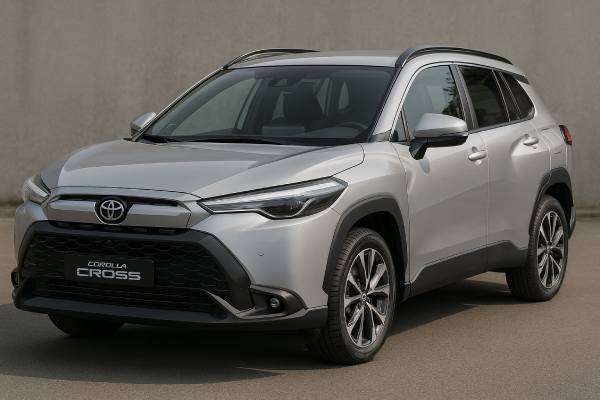
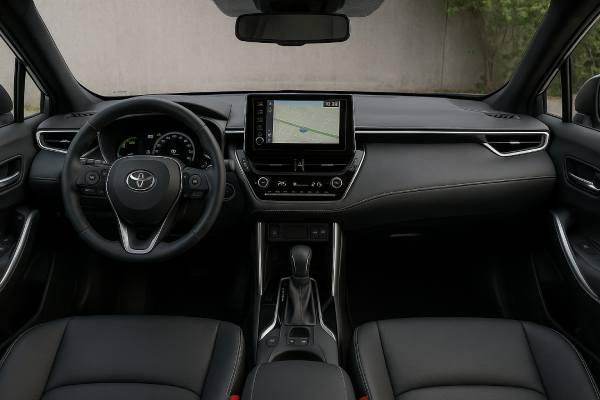
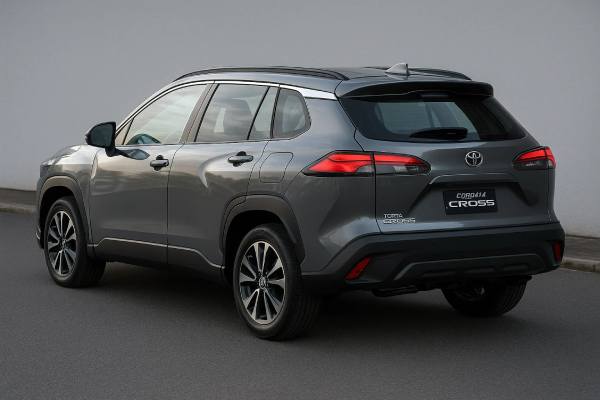
Toyota’s refreshed 2025–present Corolla Cross FWD focuses on measurable improvement where owners feel it daily: cabin tech, active safety coverage, and overall refinement—while keeping the simple, durable 2.0-litre M20A-FKS engine and efficient CVT with launch gear. The facelift brings cleaner front and rear styling, an upgraded infotainment stack with better voice control and wireless smartphone integration, and wider availability of driver assistance features across trims. Crucially, the fundamentals remain familiar: compact exterior footprint, upright seating, multi-link rear suspension on most builds, and a balanced ride tuned for real roads, not spec sheets. If you are cross-shopping small crossovers for dependable commuting, easy parking, and predictable ownership costs, the Corolla Cross continues to hit those targets. This guide compiles the key specs, maintenance practices, reliability patterns, and buying tips specific to the 2025+ facelifted FWD model so you can purchase and own with confidence.
Fast Facts
- Strong value: proven 2.0-L four-cylinder, smooth e-CVT with launch gear, and efficient highway cruising (typically ~30–32 mpg US combined / 7.8–7.4 L/100 km).
- Everyday usability: upright seating, simple controls, generous cargo for size; easy step-in height.
- Safety coverage: broad Toyota Safety Sense (AEB with pedestrian/cyclist detection, lane support, ACC); solid crash-test performance history for the line.
- Caveat: CVT and brake service benefit from fluid and hardware inspections earlier than “lifetime” myths—budget for proactive maintenance.
- Typical interval: engine oil and filter every 10,000 miles / 12 months (or 5,000 miles / 6 months in severe/cold use).
Navigate this guide
- Corolla Cross FWD overview
- Corolla Cross FWD specs
- Trims and safety tech
- Reliability and common issues
- Maintenance and buyer’s guide
- Driving and performance
- How it compares to rivals
Corolla Cross FWD overview
For the 2025 facelift, the Corolla Cross FWD keeps the formula that made it popular with first-time buyers and downsizers alike: a friendly footprint for urban streets, credible long-trip comfort, and running costs that remain among the lowest in the class. The bodywork gets a tidier front fascia, revised lighting signatures, and small aero tweaks. Inside, you will notice faster infotainment responses, a crisper instrument display, and standard wireless smartphone mirroring on most trims. Toyota continues to emphasize cabin ergonomics (physical knobs for core functions), wide door openings, and a rear bench that sits high enough for good outward visibility.
Under the hood, the naturally aspirated 2.0-L M20A-FKS (169 hp / 126 kW) remains a pragmatic choice. It uses Toyota’s D-4S dual injection (port + direct), a high compression ratio, and variable valve timing including VVT-iE on the intake cam for cold-start efficiency. The “Direct-Shift” CVT adds a physical launch gear for quicker step-off, then blends to the steel belt for cruising. The result: smooth response in traffic and relaxed highway revs. Owners moving up from a compact sedan will appreciate the cargo bay (square opening, low load floor) and the way the suspension filters sharp impacts without feeling floaty.
Safety is a central part of the facelift story. Toyota Safety Sense expands or becomes standard more widely, with pedestrian/cyclist AEB, lane tracing assist, adaptive cruise, and road sign assist. Headlamp performance improves with available LEDs that track steering on upper trims. While exact test results vary by model year and equipment, the pre-facelift line already scored well in independent crash testing, and the structure/airbag coverage carries forward.
The real draw, however, is predictability. The Corolla Cross FWD aims for hassle-free ownership: sensible service intervals, easy access to filters and bulbs, reasonable tire sizes, and widely available parts. If you’re after a small crossover that favors dependability over theatrics, the facelifted Corolla Cross FWD lands near the top of the shortlist.
Corolla Cross FWD specs
Below are scannable, owner-useful specifications tailored to the 2025–present facelifted FWD gasoline model with the 2.0-L M20A-FKS. Figures can vary slightly by trim, options, and certification; verify by VIN/window sticker when exactness matters.
Engine & Performance (ICE)
| Item | Data |
|---|---|
| Code | M20A-FKS |
| Layout & valvetrain | Inline-4, DOHC, 16-valve; VVT-iE (intake) + VVT-i (exhaust) |
| Bore × stroke | 80.5 × 97.6 mm (3.17 × 3.84 in) |
| Displacement | 2.0 L (1,987 cc) |
| Induction | Naturally aspirated |
| Fuel system | D-4S dual injection (direct + port) |
| Compression ratio | ~13.0:1 |
| Max power | 169 hp (126 kW) @ ~6,600 rpm |
| Max torque | ~205 Nm (151 lb-ft) @ ~4,400–4,800 rpm |
| Timing drive | Chain |
| Emissions/efficiency standard | U.S. SULEV class (varies by state) |
| Rated efficiency (typical) | ~7.8–7.4 L/100 km (30–32 mpg US / 36–38 mpg UK) combined |
| Real-world highway @ 120 km/h (75 mph) | ~7.1–7.6 L/100 km (33–31 mpg US) depending on load/tires |
| Aerodynamics (Cd, approx.) | ~0.33–0.34 (trim/roof rails dependent) |
Transmission & Driveline
| Item | Data |
|---|---|
| Transmission | Direct-Shift CVT (physical launch gear + CVT) |
| Drive type | Front-wheel drive (open differential) |
| Final drive ratio | ~4.0 (varies slightly by trim/wheel) |
| Manual mode | Simulated stepped ratios via paddle/shift gate (trim dependent) |
| Refuel time | ~5 minutes (gasoline) |
Chassis & Dimensions
| Item | Data |
|---|---|
| Platform | TNGA-C |
| Suspension (front/rear) | MacPherson strut / torsion beam (most FWD builds) |
| Steering | Electric power steering; ratio ~14–15:1 equivalent |
| Brakes | 4-wheel discs; front ventilated ~295 mm (~11.6 in), rear solid |
| Wheels/Tires (typical) | 215/65 R17, 225/55 R18 (rim 17–18 in) |
| Ground clearance | ~203 mm (8.0 in) |
| Length / Width / Height | ~4,460 / 1,825 / 1,640 mm (175.6 / 71.9 / 64.6 in) |
| Wheelbase | 2,640 mm (103.9 in) |
| Turning circle (curb-to-curb) | ~10.8 m (35.4 ft) |
| Curb weight | ~1,420–1,470 kg (3,130–3,240 lb) by trim |
| GVWR | ~1,900–2,000 kg (4,190–4,410 lb) |
| Fuel tank | ~47 L (12.4 US gal / 10.3 UK gal) |
| Cargo volume (SAE) | ~748 L (26.4 ft³) seats up; ~1,892 L (66.8 ft³) seats down (approx.) |
Performance & Capability
| Item | Data |
|---|---|
| 0–100 km/h (0–62 mph) | ~9.0–9.5 s (FWD, 17–18 in tires) |
| Top speed | ~190 km/h (~118 mph), electronically limited (typical class) |
| 100–0 km/h braking | ~38–41 m (125–135 ft) with all-season tires |
| Towing capacity | Up to ~680 kg (1,500 lb) braked (accessories and cooling dependent) |
| Payload | ~385–430 kg (850–950 lb), by trim |
| Roof load | ~68–75 kg (150–165 lb), rail type dependent |
Fluids & Service Capacities (always verify by VIN)
| System | Specification | Capacity (approx.) |
|---|---|---|
| Engine oil | Toyota Genuine or API SP/ILSAC GF-6B 0W-16 | ~4.5 L (4.8 US qt) w/ filter |
| Engine coolant | Toyota Super Long Life Coolant (pink), premixed 50/50 | ~6–7 L (6.3–7.4 US qt) |
| CVT (transaxle) | Toyota Genuine CVT Fluid FE | ~7–8 L (7.4–8.5 US qt) for drain/fill ~3–4 L |
| A/C refrigerant | R-1234yf | ~0.43–0.55 kg (15–19 oz) |
| A/C PAG oil | ND-OIL 12 (YF) | ~60–90 mL (2–3 fl oz) |
| Wheel lug nuts | — | 103 Nm (76 lb-ft) |
| Oil drain plug | — | ~40 Nm (30 lb-ft) |
| Spark plugs | Iridium, long-life; gap ~0.8 mm (0.031 in) | — |
Electrical
| Item | Data |
|---|---|
| Alternator output | Integrated starter/alternator; ~130–150 A class |
| 12V battery | 45–55 Ah class; common form factor Group 35 (varies) |
| Spark plugs | Iridium, long-life (100k-mile class) |
Safety & Driver Assistance
| Feature/Rating | Details |
|---|---|
| Crash ratings | Strong results for the line in recent model years; structure and airbags carry forward with facelift. |
| Headlights | LED projectors on many trims; adaptive lighting available on upper trims. |
| ADAS (Toyota Safety Sense) | AEB (vehicle/pedestrian/cyclist), ACC w/ stop-go, Lane Departure Alert + Lane Tracing Assist, Road Sign Assist, Blind-Spot Monitor + Rear Cross-Traffic Alert (trim/pack dependent). |
| Airbags | Front, side, curtain, driver’s knee (coverage by trim). |
| Child seats | LATCH/ISOFIX anchors rear outboard; top tethers x3. |
Trims and safety tech
Trim walk (typical FWD line): Expect a three-to-four-grade lineup that mirrors Toyota’s current strategy—an affordable base with cloth seats and 17-inch wheels, a value-rich mid-grade (often adding proximity entry, roof rails, blind-spot monitor), and an upper trim with 18-inch wheels, premium fabric or SofTex, power driver’s seat, and expanded LED lighting. Option packages typically bundle a power moonroof, roof crossbars, a power liftgate, heated front seats, and an audio upgrade. Wheel/tire packages are the biggest mechanical difference by grade; braking hardware is shared. FWD models use the torsion-beam rear axle; AWD adds a multi-link rear in some markets (not covered here).
Infotainment and connectivity: The facelift brings a snappier touchscreen (wireless Apple CarPlay/Android Auto on most trims), improved natural voice commands, and updated cloud-nav capability. A 7-inch instrument display is common, with a larger cluster on upper trims. USB-C ports move to higher power ratings, and wireless charging is available.
Driver assistance: Toyota Safety Sense now features wider detection and intervention ranges. Adaptive cruise with lane tracing performs smoothly in light traffic; lane-keep gently nudges rather than tugs. Blind-spot monitoring and rear cross-traffic alert are included/optional depending on trim. Forward collision mitigation recognizes pedestrians and cyclists; junction-support warns when turning across oncoming traffic. After collision or windshield work, some sensors/cameras require calibration—budget time at a dealer or qualified shop.
Year-to-year changes (facelift specifics): The 2025+ FWD facelift prioritizes lighting updates, infotainment responsiveness, and packaging tweaks that bring sought-after features to lower trims. Cosmetics (wheel designs, grille textures) and color availability rotate yearly. Powertrain ratings remain 169 hp/151 lb-ft. EPA-rated economy typically remains around the low-30s mpg combined for FWD with 17-inch tires.
Quick identifiers: Facelifted cars show a revised front bumper and lighting signature, infotainment with updated UI, and subtle interior trim textures. Door-jamb build stickers list model codes; many FWD cars historically use “MXGA10,” while AWD uses “MXGA15”—if your paperwork reads differently, verify against VIN and the Monroney label to confirm drivetrain.
Reliability and common issues
Toyota’s TNGA-C platform and the M20A-FKS engine have favorable field histories. Most owners experience years of routine service with few surprises. Still, every model has patterns worth knowing:
Common to occasional (low–medium cost):
- Brake wear and surface rust: Short-trip or salted-road use can leave rear rotors rusty and noisy. Symptom: scraping, pulsing. Root cause: corrosion and uneven pad deposits. Remedy: deglaze/turn rotors if within spec or replace with coated rotors; add once-a-year highway “bed-in” drives and 2-year brake fluid flushes.
- Wind noise or hatch creaks: Symptom: ticking over bumps. Root cause: hatch bump stops out of adjustment or weatherstrip pressure. Remedy: adjust bump stops, silicone-treat seals, retorque striker.
- Infotainment hiccups (post-update): Symptom: dropped Bluetooth or slow voice wake. Root cause: mixed firmware versions or phone OS changes. Remedy: apply the latest head-unit update; re-pair devices; reset network settings.
Less common but noted (medium cost):
- CVT service neglect leading to shudder: Symptom: flare or slip on gentle throttle at 40–60 mph. Root cause: aged fluid and thermal cycling. Remedy: proactive drain/fill with Toyota CVT FE every 60,000–80,000 miles if driven hot or with frequent hills; software adaptations reset if needed.
- Wheel bearing growl (high-mileage or pothole regions): Symptom: speed-related hum that changes in turns. Root cause: bearing wear. Remedy: replace affected hub; align afterward.
Rare but worth a note (variable cost):
- EVAP and fuel-system sensor flags: Symptom: intermittent MIL, small leak codes. Root cause: loose cap or valve/sensor sensitivity. Remedy: verify cap seal, smoke test EVAP; replace valves if failing.
- A/C performance in peak heat: Symptom: warm at idle, cold when driving. Root cause: condenser debris or over-oil/under-charge. Remedy: clean condenser fins; recover/evacuate/recharge to sticker mass; verify condenser fan operation.
Software/calibration updates: Toyota periodically releases ECU/TCU and ADAS camera/radar updates that refine drivability, lane-keeping, and audio/telematics stability. If you notice surging, hunting, or ADAS warnings after windshield replacement, ask a dealer to check for calibrations and TSBs by VIN.
Recalls/TSBs: Model-wide campaigns change by build date. Always run a VIN recall search before purchase and at every service; keep proof of completion in the maintenance file.
Pre-purchase checklist (used or CPO):
- Scan the full vehicle with a professional tool and print the report.
- Inspect tires for even wear; mismatched brands on FWD can hint at alignment issues.
- Check for rotor lip/rust ridges; budget pads/rotors if needed.
- Verify HVAC performance at idle in hot weather.
- Confirm all ADAS functions engage with no dash warnings; look for windshield replacement (proper camera calibration).
- Review service records for engine oil quality (0W-16), coolant change at time/mileage, and any CVT fluid service.
Maintenance and buyer’s guide
A proactive, time-based plan protects value and keeps the Corolla Cross feeling tight. Severe service = frequent cold starts, short trips, dusty roads, extreme heat/cold, frequent idling, or heavy stop-and-go.
Service schedule (owner-practical)
- Engine oil + filter: 10,000 miles / 12 months on normal duty; 5,000 miles / 6 months in severe climates. Use API SP/ILSAC GF-6B 0W-16.
- Engine air filter: Inspect at 15,000 miles / 24 months; replace 30,000–45,000 miles (shorter if dusty).
- Cabin (pollen) filter: 12 months or 15,000 miles.
- Coolant: Toyota SLLC long-life; inspect annually; replace ~100,000 miles / 10 years first, then every 50,000 miles / 5 years (time wins if low mileage).
- Spark plugs: Iridium long-life; inspect 60,000–90,000 miles, replace 100,000–120,000 miles.
- CVT fluid (FE): Inspect 30,000-mile intervals; proactive drain/fill every 60,000–80,000 miles if hot climates/hills/towing; otherwise by condition.
- Brake fluid: Replace every 2–3 years regardless of mileage.
- Brake pads/rotors: Inspect every 10,000 miles; clean/grease slide pins annually in salted regions.
- Serpentine/aux belt and hoses: Inspect 60,000 miles; replace 90,000–120,000 miles or on cracks/noise.
- Alignment and tire rotation: Rotate every 5,000–7,500 miles; align annually or after impacts; keep pressures at door-jamb values.
- 12 V battery: Test annually from year 3; typical replacement window 4–6 years.
- A/C service: Clean condenser annually; replace cabin filter; recover/evacuate/recharge only when needed; avoid “top-offs.”
- Body/corrosion care: Wash underbody in winter; wax annually; inspect hatch seams and subframe points.
Fluids and torques (quick sheet)
- Oil: 0W-16, ~4.5 L (4.8 qt) w/ filter; drain plug ~40 Nm (30 lb-ft); filter housing per tool spec—hand-tight + 3/4 turn for spin-on or torque per cartridge cap if equipped.
- Lugs: 103 Nm (76 lb-ft).
- Coolant: Toyota SLLC (pink) premix.
- CVT: Toyota CVT FE only; check level per temperature-based fill procedure.
- Refrigerant: R-1234yf to label mass; PAG ND-12.
Buyer’s guide—what to look for
- Best value trims: Mid-grade FWD with 17-inch wheels balances ride quality, tire cost, and ADAS coverage; upper trims add lighting and convenience without changing core mechanics.
- Options to seek: Blind-spot monitor with rear cross-traffic alert; roof rails (if you carry gear); heated seats in colder regions; power liftgate if tailgate use is frequent.
- Items to avoid or budget for: Oversized 18-inch wheels if you live with potholes; aftermarket remote starts that upset CAN bus; neglected CVT servicing in hot climates.
- Durability outlook: With routine maintenance and sane tire choices, expect 200,000+ miles with minimal drivetrain drama. The engine and cooling system are conservative; most “surprises” come from deferred brake/fluids service and curb impacts.
Driving and performance
Ride, handling, NVH: The Corolla Cross FWD focuses on calm progress. Spring and damper rates target compliance first, with just enough roll control to keep responses tidy. Over broken pavement, the body settles quickly without after-shake. Road noise is modest on 17-inch tires; 18-inch packages add tread slap on coarse asphalt. Straight-line stability is strong up to typical U.S. highway speeds; crosswinds nudge but don’t require correction. Steering is light in parking lots and builds a natural weight off-center; feedback is filtered but honest enough for lane placement.
Powertrain character: The M20A-FKS is at its best below 4,500 rpm, where intake cam phasing and the physical launch gear provide good step-off. The CVT slips into a low ratio for gentle city work and then allows revs to drop quickly during cruise. Press deeper and it simulates stepped ratios to reduce “drone.” Passing performance 50–80 mph (80–130 km/h) is adequate rather than quick; plan merges with a healthy throttle press or downshift request.
Real-world efficiency: Expect mixed consumption around 30–32 mpg US (7.8–7.4 L/100 km) on 17-inch tires, dipping 1–2 mpg with 18-inch wheels or winter compounds. At 75 mph (120 km/h), typical readings land near 31–33 mpg US (7.6–7.1 L/100 km) with two adults and weekend luggage. Cold weather, short trips, and roof boxes can lower results by 10–20 percent.
Braking and control: The pedal feels firm at the top with progressive build. Repeated hard stops on all-season tires show class-typical fade; higher-friction pads help if you descend long grades. Stability control is well-calibrated and rarely intrusive in the dry; it steps in predictably on wet paint or sand.
Load and towing: Light towing (up to ~1,500 lb / 680 kg with proper equipment) is feasible with conservative speeds and generous following distances. Expect a 20–30 percent fuel-economy penalty when towing or carrying a full cabin plus cargo. Watch transmission temperatures in high-heat hill states and shorten CVT fluid intervals accordingly.
How it compares to rivals
Honda HR-V (2.0 NA): HR-V prioritizes chassis polish and cargo flexibility, but its 2.0-L engine feels flatter and its CVT programming less eager off the line. Corolla Cross offers similar comfort with a simpler feature walk and often better real-world economy.
Mazda CX-30 (2.5 NA/Turbo): CX-30 drives with more verve and a premium sheen inside. It can also get pricey quickly—especially turbo models—and ride quality stiffens on bigger wheels. The Toyota counters with lower running costs and a friendlier second row.
Hyundai Kona (2.0/1.6T): Kona’s tech and warranty appeal, and the 1.6T brings punch. The Corolla Cross is quieter, more relaxed on long trips, and typically holds value longer. Toyota’s ADAS tuning is also among the least fussy for daily commuting.
Subaru Crosstrek (2.0/2.5, std. AWD): Crosstrek’s standard AWD and suspension travel make it a dirt-road champ. In FWD form, the Corolla Cross returns better fuel economy and has a lower entry price; AWD shoppers should cross-shop carefully.
Nissan Rogue Sport/Qashqai (where available): Comfortable and efficient, but parts availability and resale vary by market/year. Toyota brings a stronger dealer network and long-term value retention.
References
- 2024 Toyota Corolla Cross 2024 (Safety Rating)
- Car Emissions Testing and Results 2025 (Fuel Economy)
- Toyota Owners: Resources For Owners 2025 (Owner’s Manuals and Maintenance Guides)
Disclaimer
This guide is for informational purposes and is not a substitute for professional diagnosis, repair, or official service literature. Specifications, torque values, fluid capacities, and service intervals can vary by VIN, market, model year, trim, and options. Always confirm details against your vehicle’s owner’s manual, service manual, and official technical documentation. If this article helped you, please consider sharing it with friends or on Facebook/X to support xcar’s work.