
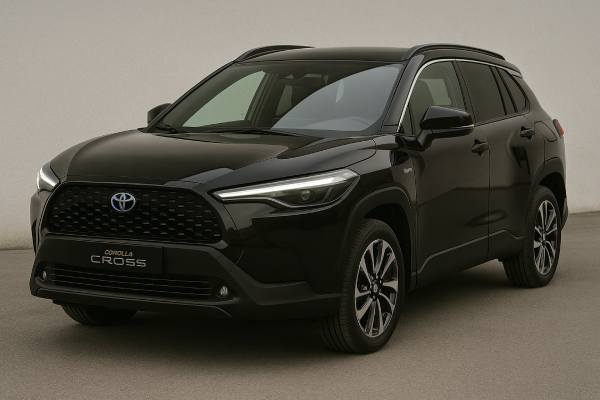
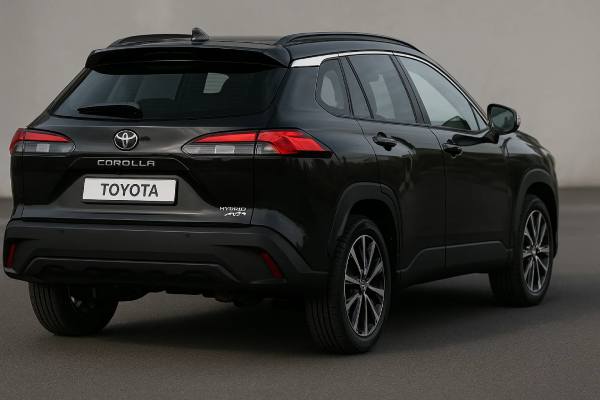
The Toyota Corolla Cross Hybrid AWD-i pairs the familiar practicality of a compact SUV with Toyota’s fifth-generation hybrid know-how. It’s built on the TNGA-C platform, adds an electric rear axle for confident all-weather traction, and delivers class-leading efficiency without giving up day-to-day usability. Owners like the simple controls, easy ingress/egress, and upright seating position; shoppers appreciate Toyota’s reputation for longevity and strong resale. Under the hood, the 2.0-liter M20A-FXS four-cylinder works with a trio of electric motors through an eCVT, producing brisk urban response and relaxed highway cruising. Standard active-safety tech and a spacious rear seat make it a straightforward choice for families and commuters. Do note that published output numbers vary slightly by market (North America quotes 196 hp; Europe 197 hp), and model-year content can shift. This guide focuses on North American equipment where relevant and notes European differences only when helpful.
Fast Facts
- Real-world frugality: typical mixed driving near 5.6 L/100 km (≈42 mpg US).
- Standard e-AWD traction with confident winter manners and smooth hybrid transitions.
- Quiet, roomy cabin with easy cargo access; battery lives under rear seat to preserve space.
- Watch for recall/TSB completion on brake-assist software; verify by VIN before purchase.
- Basic service rhythm: tyre rotation and multi-point inspection every 5,000 mi / 8,000 km; engine oil and filter typically every 10,000 mi / 16,000 km or 12 months.
Quick navigation
- Corolla Cross Hybrid AWD-i Overview
- Corolla Cross Hybrid AWD-i Specs
- Grades, Options and Safety Tech
- Reliability, Issues and Service Actions
- Maintenance Plan and Buyer Advice
- On-Road Behavior and Efficiency
- How It Stacks Against Rivals
Corolla Cross Hybrid AWD-i Overview
Toyota designed the Corolla Cross Hybrid AWD-i to slot between city-friendly footprint and family-ready utility. The recipe is straightforward: a compact footprint for parking, a tall roof for headroom, and a hybrid drivetrain that sips fuel in traffic and settles quietly on the highway. The M20A-FXS Atkinson-cycle 2.0-liter engine is the heart of Toyota’s fifth-gen hybrid system, combined with a planetary eCVT and two primary motor-generators up front. A dedicated electric motor at the rear axle engages transparently to form the “AWD-i” system, improving traction on wet or snowy surfaces and stabilizing corner exits without the parasitic drag of a mechanical driveshaft.
Output and performance are right in the sweet spot for the class. Around town, the immediate electric torque makes the Corolla Cross Hybrid feel spry off the line; at highway speeds, the calibrated eCVT keeps revs low once you’re settled in, while a Sport mode sharpens response for ramps and passing. With the compact lithium-ion pack packaged under the rear seat, cargo volume remains usefully square, and the rear backrest folds near-flat to handle bikes, strollers, or bulk shopping.
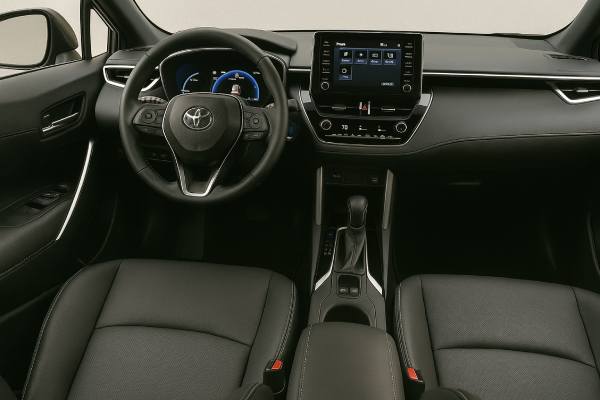
The cabin takes the latest Toyota multimedia interface with wireless smartphone integration and over-the-air feature updates. Physical dials for climate remain, and visibility is excellent thanks to thin pillars and a high seating point. Toyota’s active-safety suite (pre-collision braking with pedestrian/cyclist detection, adaptive cruise, lane-centering, traffic-sign assist) is standard, with blind-spot monitoring and rear cross-traffic alert common on SE/XSE grades.
A quick market note: North American models list a combined output around 196 hp and launched for the 2023 model year; European literature often rounds to 197 hp and includes 2022 availability. In daily use the difference is academic—both deliver a calmly capable 0–60 mph in roughly eight seconds and genuinely strong efficiency.
Corolla Cross Hybrid AWD-i Specs
Powertrain & Efficiency
| Item | Detail |
|---|---|
| Code | M20A-FXS (2.0-L Dynamic Force, Atkinson cycle) with fifth-gen hybrid system |
| Engine layout & cylinders | Inline-4, DOHC, 16-valve; dual VVT-i; electronic throttle |
| Bore × stroke | 80.5 × 97.6 mm (3.17 × 3.84 in) |
| Displacement | 2.0 L (1,987 cc) |
| Induction | Naturally aspirated (Atkinson cycle) |
| Fuel system | Direct + port injection (combined) |
| Compression ratio | ~14.0:1 (Atkinson cycle) |
| Electric motors (HEV) | Front MGs for traction/generation; rear e-motor for AWD-i (permanent-magnet) |
| System voltage | High-voltage lithium-ion; nominal ~216–230 V (Toyota hybrid range) |
| Battery location | Under rear seat (no cargo floor hump) |
| Max system power | ~196–197 hp (146–147 kW) combined |
| Max engine torque | ~188 Nm (139 lb-ft) ICE; electric motors add low-rpm torque |
| Emissions/efficiency standard | EPA fuel economy (NA); WLTP (EU) |
| Rated economy (NA) | ~5.6 L/100 km (42 mpg US / 50 mpg UK) combined |
| Real-world highway @ 120 km/h | 6.2–6.7 L/100 km (35–38 mpg US) typical in mixed climates |
| Aerodynamics (Cd) | ~0.33–0.34 (model/trim dependent) |
Notes: Combined power is a system value, not a simple sum of ICE and motor peaks. Published output may vary by region and test procedure.
Transmission & Driveline
| Item | Detail |
|---|---|
| Transmission | eCVT (planetary gearset, electronic control) |
| Drive type | AWD-i (front hybrid transaxle + independent rear e-motor) |
| Final drive | ~3.6–3.8 (overall eCVT ratio variable) |
| Differential | Open front; rear e-axle acts on demand |
| Drive modes | Normal / Eco / Sport; EV mode at low load/speed |
Chassis & Dimensions
| Item | Detail |
|---|---|
| Platform | TNGA-C (high-strength steel, multi-load path structure) |
| Suspension (front/rear) | MacPherson strut / multi-link (hybrid AWD-i) |
| Steering | Electric power steering; rack-assist |
| Brakes | 4-wheel discs with regen coordination; ABS, EBD, BA |
| Wheels/Tires | 17-in alloys (S/SE); 18-in alloys (XSE); all-season |
| Ground clearance | ~206 mm (8.1 in) |
| Length / Width / Height | 4,460 / 1,825 / ~1,645 mm (175.6 / 71.9 / ~64.8 in) |
| Wheelbase | 2,640 mm (103.9 in) |
| Turning circle (curb-to-curb) | ~11.0 m (36.1 ft) |
| Curb weight | ~1,485–1,565 kg (3,275–3,450 lb) depending on grade |
| GVWR | ~2,000 kg (4,410 lb) class |
| Fuel tank | ~50 L (13.2 US gal / 11.0 UK gal) |
| Cargo volume | ~608 L (21.5 ft³) seats up; ~1,700 L (~60 ft³) seats folded (SAE) |
Performance & Capability
| Metric | Value |
|---|---|
| 0–100 km/h (0–62 mph) | ~8.2 s (≈ 0–60 mph in ~8.0 s) |
| Top speed | ~180 km/h (112 mph), electronically limited |
| Braking 100–0 km/h | ~36–38 m (118–125 ft), tyre-dependent |
| Towing capacity | ~680 kg (1,500 lb) braked (hitch/market equipment dependent) |
| Payload | ~430–530 kg (950–1,170 lb) typical |
| Roof load | ~68–75 kg (150–165 lb) with crossbars |
Fluids & Service Capacities (VIN-specific—verify for your car)
| System | Specification | Capacity (approx.) |
|---|---|---|
| Engine oil | Toyota-approved 0W-16; API SP/ILSAC GF-6B | ~4.0–4.4 L (4.2–4.6 US qt) w/filter |
| Engine coolant | Toyota Super Long Life Coolant (pink), premixed 50/50 | ~5–7 L (5.3–7.4 US qt) total system |
| eCVT transaxle | Toyota WS (World Standard) ATF | ~3–4 L (3.2–4.2 US qt) drain/fill |
| Rear e-axle/final drive | Toyota gear oil (GL-5) where serviceable | ~0.7–1.0 L (0.7–1.1 US qt) |
| A/C refrigerant | R-1234yf; PAG ND-11 compressor oil | Charge varies by climate pack (~400–550 g) |
| Key torque specs | Wheel lugs ~103 Nm (76 lb-ft); drain plugs ~39–49 Nm (29–36 lb-ft) typical |
Electrical
| Item | Detail |
|---|---|
| 12-V battery | AGM style; compact form factor (DIN/LN group; location under hood) |
| Alternator | Not applicable—DC-DC converter from HV battery |
| Spark plugs | Iridium; long-life; gap ~0.8 mm (0.031 in) |
Safety & Driver Assistance
| Area | Highlights |
|---|---|
| Crash ratings (IIHS) | Strong front-crash performance; updated moderate overlap rated Acceptable; updated side test Acceptable; ratings apply across 2022–present body series with variations by headlights/trim. |
| Headlights | Projector or premium LEDs by grade; performance varies—aim and tyre choice affect results. |
| ADAS suite | Pre-collision braking with pedestrian/cyclist detection, lane-departure alert with steering assist, lane-tracing assist, full-speed dynamic radar cruise, road-sign assist; blind-spot monitor and rear cross-traffic alert widely fitted. |
| Child seats | ISOFIX/LATCH anchors in outboard rear seats; top tether anchors for all rear positions. |
Grades, Options and Safety Tech
Grades and key identifiers (North America)
- S (Hybrid): 17-inch alloys, LED headlamps, sport-tuned suspension, 8-inch touchscreen, smart key. Exterior details include a distinctive front fascia and hybrid badging; interior uses durable cloth with contrast accents.
- SE: Adds privacy glass, roof rails, paddle shifters for eCVT logic requests, plus blind-spot monitor and rear cross-traffic alert. Quick tells: roof rails and darker exterior trim.
- XSE: 18-inch alloys, premium LED lighting (with fogs on many builds), SofTex-trimmed heated front seats, and power driver’s seat. Interior tells include blue accent stitching and soft-touch panels.
Functional differences by grade
All hybrid grades share the same e-AWD system and hybrid hardware. The XSE’s 18-inch tyres and slightly firmer damper tuning bring crisper response at the expense of a touch more impact feel and marginally higher road noise on coarse asphalt. Braking hardware is consistent; pedal feel is chiefly software-tuned and tyre-dependent.
Infotainment/audio tiers
Every grade takes Toyota’s latest multimedia with wireless Apple CarPlay/Android Auto and OTA updates. Wi-Fi hotspot capability and cloud navigation are available via subscription. Audio: base 6-speaker system; some regions offer an upgraded system on XSE.
Interior packaging
Rear seatbacks fold 60/40 with a low load floor and squared opening. The hybrid battery’s position under the rear bench keeps the cargo bay flat and preserves overall volume; cargo cover and roof-crossbars are common accessories.
Year-to-year notes
- 2023: Hybrid model introduction; S/SE/XSE sport grades launch with e-AWD standard and the fifth-gen hybrid system.
- 2024: Nightshade Edition option (blacked-out trim/wheels) appears; minor feature reshuffles, color updates.
- 2025: Color/menu updates continue; core hybrid hardware remains the same, including output and e-AWD logic.
Safety ratings in brief
The Corolla Cross body series performs well in IIHS frontal evaluations and holds Acceptable scores in the updated moderate-overlap and side tests on many trims. Headlight ratings can vary by lamp and aim; SE/XSE premium LEDs tend to score better. When shopping, check a specific VIN/trim’s IIHS headlight rating and ensure ADAS sensors are calibrated after windshield, bumper, or suspension work.
Child-seat and family usability
Two ISOFIX/LATCH positions in the outboard rear seats are easy to access; top tether anchors exist for all rear positions. Rear door openings are tall enough for installing rear-facing seats without contortions. The flat cargo floor accepts most compact strollers lengthwise.
Reliability, Issues and Service Actions
Overall pattern
Toyota’s fifth-gen hybrid hardware has been robust to date, with most owner-reported issues centering on software calibrations rather than hard-part failures. The e-AWD rear motor is sealed and essentially maintenance-free aside from routine inspections. As with many modern compacts, tyre quality and alignment are critical to keeping cabin noise low and efficiency high.
Common / Occasional / Rare
- Common (low severity):
- Brake feel variability on rough or low-µ surfaces. Symptom: change in initial bite switching from regen to friction on potholes or expansion joints. Cause: ABS/regen coordination logic. Remedy: latest ECU software; ensure tyres with proper load index and cold pressures (kPa/psi) are maintained.
- Squeaks/rattles from cargo cover and rear seat latch. Remedy: felt tape, latch adjustment.
- Occasional (medium severity):
- Wheel alignment drift after impacts. Symptom: off-center wheel, feathered tyre wear. Cause: subframe/arm bushing compliance. Remedy: 4-wheel alignment; check bushing play; rotate tyres at 5,000 mi/8,000 km intervals.
- 12-V battery aging in cold climates (short-trip use). Symptom: sluggish boot, warning messages. Remedy: proactive testing each winter season; replace around 4–6 years as needed.
- Rare (higher impact):
- Brake-assist software recall. Symptom: temporarily hard brake pedal during cornering; potential increased stopping distance. Remedy: dealer reprogramming of skid control ECU; verify campaign completion by VIN.
- Windshield camera/radar misalignment after glass or bumper repairs. Symptom: lane-keep/cruise warnings, deactivation. Remedy: ADAS calibration with alignment rack targets; ensure static/dynamic procedures are completed.
Hybrid-specific notes
- HV battery health: Lithium-ion pack thermal management is passive-air with optimized ducting; location under rear seat reduces cargo-bay heat. Normal degradation is slow with highway-heavy use. Keep cabin filters clean to maintain airflow.
- Onboard charging/OBC: Not driver-accessible; ensure clean, tight 12-V grounds; a weak 12-V battery can throw hybrid system alerts.
- Regen brake corrosion: In salted regions, use hybrid “B” mode sparingly; periodically perform several firm stops from moderate speeds to keep rotors clean and pad transfer even.
Recalls/TSBs—what to verify
- Skid-control ECU software (brake assist in corners): Confirm remedy completed; request printout from the dealer and keep in records.
- ADAS sensor updates: After windshield replacements, bumper repairs, or wheel/suspension work, insist on documented camera/radar calibrations.
- Infotainment OTA: Apply system updates for improved Bluetooth stability and voice-assistant performance.
Pre-purchase checklist
- Run an official VIN recall check and obtain the dealer campaign history.
- Review service receipts for regular 5,000-mi/8,000-km inspections and tyre rotations.
- Inspect tyres for even wear; listen for wheel-bearing hum on coarse pavement.
- Test ADAS features on a short drive (lane-centering, adaptive cruise, blind-spot).
- Confirm both smart keys, cargo cover, and tyre repair kit/jack are present.
- For northern cars, check underbody and suspension arms for corrosion onset.
Maintenance Plan and Buyer Advice
Practical maintenance schedule (typical North America guidance)
- Every 5,000 mi / 8,000 km or 6 months: Rotate tyres; inspect brakes (clean/lube slide pins in salted areas), measure tread and adjust pressures; inspect suspension, steering, CV boots, and underbody; check for software updates and ADAS calibration status.
- Every 10,000 mi / 16,000 km or 12 months: Replace engine oil and filter (0W-16); inspect cabin air filter; inspect engine air filter (replace if dusty); inspect coolant level/condition; visual check of hybrid coolant loops and hoses.
- Every 20,000–30,000 mi / 32,000–48,000 km: Replace cabin air filter (earlier in dusty/pollen regions); clean throttle body/MAF if idle quality drifts.
- Every 30,000–40,000 mi / 48,000–64,000 km: Replace engine air filter; brake fluid test/replace if moisture >3% or every 3 years in humid/salted regions.
- Every 60,000 mi / 96,000 km: Alignment check; inspect eCVT fluid condition (service with Toyota WS if towing/hot-climate or long hills common).
- Every 100,000–120,000 mi / 160,000–192,000 km: Spark plugs (iridium long-life); cooling system service where prescribed; inspect water pump weep.
- Annually before winter: 12-V battery test; wash and protect underbody; ensure wipers and tyre depth suit conditions.
Fluid picks & essentials
- Engine oil: Toyota-approved 0W-16, API SP/ILSAC GF-6B.
- Coolant: Toyota Super Long Life (pink), premixed, long-life; typical first change near 100,000 mi/160,000 km, then 50,000 mi/80,000 km thereafter (follow your manual).
- eCVT/Final drive: Toyota WS ATF; inspect for contamination at major services; rear e-axle is sealed but check for leaks.
- Brake fluid: DOT 3 or DOT 4 per cap; maintain fresh fluid to preserve ABS/regen feel in cold weather.
- A/C: R-1234yf; use ND-11 oil only when servicing the electric compressor.
DIY torque touchpoints (typ.)
- Wheel lugs ~103 Nm (76 lb-ft).
- Oil drain plug ~39–40 Nm (29–30 lb-ft); replace crush washer.
- Underbody panel fasteners: snug by hand to avoid stripped clips.
Buyer’s guide—what to seek
- Trims: SE is the value sweet spot (roof rails, BSM/RCTA, 17-in tyres that ride quietly); XSE adds comfort features and sharper steering feel with 18-in wheels.
- Model years: 2023–2024 hybrids share core hardware. Prioritize cars with complete service records and documented software updates.
- Options to favor: All-weather mats, crossbars if you roof-mount bikes/skis, and a compact spare kit if your car shipped with a repair kit.
- What to avoid: Aftermarket oversized wheels; they raise unsprung mass, lengthen stops, and cut efficiency. Poor windshield replacements without ADAS calibration paperwork are red flags.
Long-term outlook
Expect 200,000+ miles (320,000+ km) with routine service. Hybrids reward gentle warmups and consistent tyre care; their batteries age slowly when the cabin filter stays clean and vents aren’t blocked. Resale tends to remain strong thanks to fuel prices and demand for compact AWD crossovers.
On-Road Behavior and Efficiency
Ride and handling
The TNGA-C chassis gives the Corolla Cross Hybrid a planted feel at 110–120 km/h (70–75 mph). Multi-link rear suspension keeps mid-corner bumps tidy, and the longer stroke relative to subcompact rivals helps it shrug off broken pavement. Steering weight is light at parking speeds and naturally builds on the move; on-center tracking is calm, aided by lane-trace assist on motorways. The 17-inch setup is the quietest on coarse concrete; 18-inch tyres sharpen response but transmit a bit more texture.
Powertrain character
Around town, the hybrid’s electric torque masks the modest peak output, gliding to 50 km/h (30 mph) briskly and merging with minimal drama. The eCVT keeps the engine in its sweet spot under load; in steady-state cruising it settles near a muted hum. Transitions between EV creep and engine-on are nearly seamless once warm. Sport mode holds revs longer for passing, while Eco softens throttle tip-in for city traffic. In cold weather the system prioritizes engine warmup; expect a temporarily higher idle and slightly reduced EV glide until coolant reaches temperature.
Braking and control
Pedal feel in hybrids depends on the blend of regenerative and friction braking. The Corolla Cross Hybrid’s tuning is natural once you’ve driven it a day or two—light initial regen, progressive bite, and stable ABS action on slick surfaces. On washboard or mid-corner bumps, ABS and regen re-blend can change feel momentarily; current software calibrations mitigate that. Stability control is unobtrusive, and the e-AWD nudges power rearward on slippery launches to keep the nose from scrabbling.
Observed efficiency
- City: 5.0–5.5 L/100 km (47–56 mpg US / 56–67 mpg UK) with gentle driving.
- Highway (100–120 km/h / 60–75 mph): 6.0–6.7 L/100 km (35–39 mpg US / 42–47 mpg UK), wind and temperature sensitive.
- Mixed: 5.4–6.0 L/100 km (39–44 mpg US / 47–53 mpg UK).
Winter reduces economy 5–15% due to warm-up and snow tyres; remote starts increase that penalty.
Noise, vibration, harshness
Cabin isolation is good for the class. Engine note is subdued under moderate load; wide-open throttle is audible but brief given the hybrid’s low-rpm torque. Road noise depends on tyre model—touring all-seasons hush the cabin; aggressive snow tyres add a low thrum. Wind noise remains low thanks to clean mirror and A-pillar shapes.
Load and towing
With the proper hitch kit, towing up to roughly 680 kg (1,500 lb) is manageable on rolling grades; plan for longer on-ramp distances and leave a larger following gap. Expect a 10–25% fuel-economy penalty with a small trailer or fully loaded cabin plus cargo pod. Downhill, “B” mode plus adaptive cruise keeps speeds in check without overheating brakes.
How It Stacks Against Rivals
Versus Honda HR-V (gas-only, AWD available)
HR-V rides well and has neat packaging, but it can’t match the Corolla Cross Hybrid’s economy or all-weather electric AWD traction. Toyota’s cabin tech and driver-assist stack are more current, and highway passing power is stronger.
Versus Subaru Crosstrek (gas and hybrid history, AWD standard)
Crosstrek’s ground clearance and rough-road poise are excellent, and the latest model is quieter than past generations. The Corolla Cross Hybrid counters with far better real-world efficiency and lower running costs. If you live on dirt roads, Crosstrek’s X-Mode is compelling; if you commute daily in mixed weather, Toyota’s hybrid makes more financial sense.
Versus Kia Niro Hybrid (FWD only)
Niro HEV nails efficiency and interior tech with a wagon-like feel. Without AWD, winter-market shoppers may prefer Toyota’s e-AWD confidence. Corolla Cross’s higher seating point also improves ingress/egress and visibility.
Versus Hyundai Kona Hybrid (where available)
Kona Hybrid offers sharp design and lively handling, but AWD hybrid availability is limited by market. Corolla Cross Hybrid’s broader dealer support and long-proven Toyota hybrid ecosystem tilt the ownership calculus in its favor.
Bottom line
If you value traction and low running costs, the Corolla Cross Hybrid AWD-i sits in a sweet spot: more efficient than most small AWD SUVs, simpler to own than a plug-in, and comfortable enough for long highway stints. It won’t thrill like a hot hatch, yet it’s consistently pleasant, easy to live with, and holds value well.
References
- REVEALED: First-Ever 2023 Toyota Corolla Cross Hybrid 2023 (Press Release)
- 2024 Toyota Corolla Cross Hybrid – Toyota USA Newsroom 2023 (Product Page)
- 2023 Toyota Corolla Cross 2024 (Safety Rating)
- 2023 – 2024 Toyota Corolla Cross 2024 (EPA Fuel Economy)
- Part 573 Safety Recall Report 24V-708 2024 (Recall Database)
Disclaimer
This guide is for informational purposes only and is not a substitute for professional diagnosis, repair procedures, or your official service literature. Specifications, torque values, fluid capacities, software levels, and maintenance intervals can vary by VIN, model year, trim, and market equipment. Always confirm with your vehicle’s owner’s manual, service manual, and authorized dealer records—especially for recalls, TSBs, and ADAS calibrations.
If you found this useful, please consider sharing it with fellow owners on Facebook or X to support xcar’s work.