
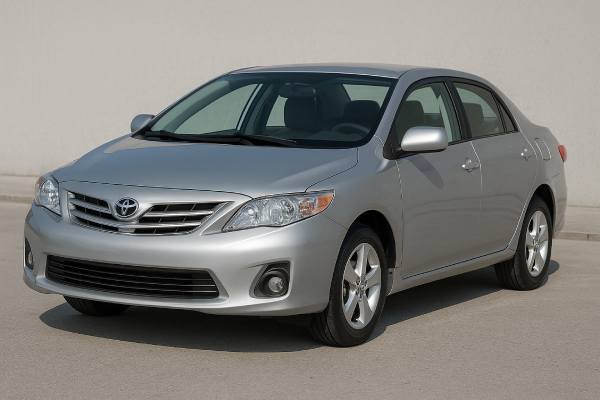
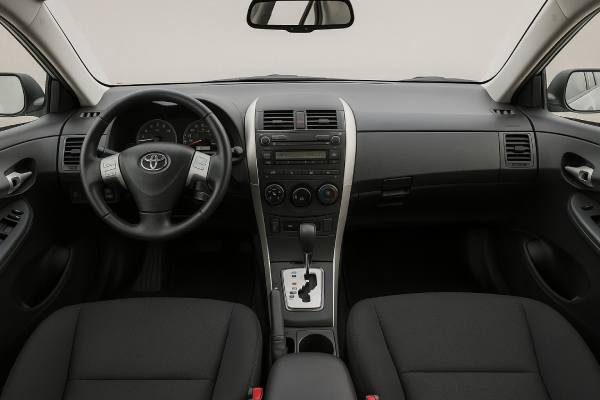
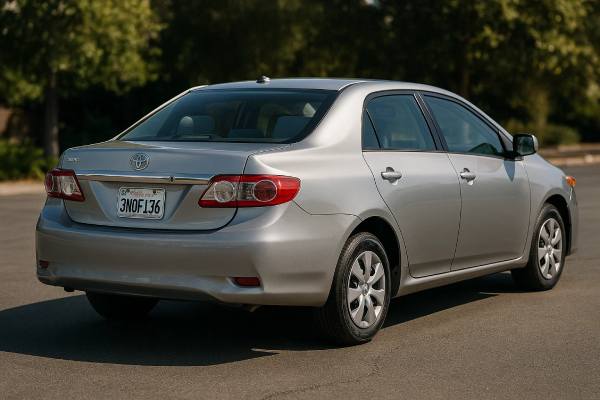
The 2010–2013 facelifted Toyota Corolla sedan (ZRE151) with the 1ZR-FAE 1.6-litre Valvematic engine is a quietly confident commuter that rewards owners with low running costs, simple servicing, and long-term durability. The Valvematic four-cylinder delivers 132 hp (97 kW) and 160 Nm (118 lb-ft), enough for relaxed daily use while keeping fuel use modest. A tidy chassis, compact footprint, and soft-touch interior updates from the facelift make it easy to live with, and typical Toyota ergonomics reduce ownership friction. Safety kit and structure were competitive for the era, and the cabin is practical with a class-average boot. The big wins are reliability and value; the watch-outs are age-related consumables and verifying recall completion. If you want a no-drama sedan with inexpensive upkeep—and you prefer a conventional feel over flash—the 1.6 Valvematic Corolla remains a smart buy.
Key Takeaways
- Proven 1.6 Valvematic engine: smooth, frugal, and typically long-lived.
- Comfortable ride and easy controls; compact size with a roomy 450 L boot.
- Parts are plentiful and affordable; most routine work is straightforward.
- Check airbag recall completion and listen for age-related suspension wear.
- Oil and filter: every 10,000–15,000 km or 12 months (use the stricter interval if the driving is mostly short trips).
What’s inside
- ZRE151 2010–2013 overview
- Corolla 1.6 Valvematic specs
- Corolla trims, options, and safety
- Reliability and known issues
- Maintenance and buyer’s guide
- Driving impressions and economy
- How it compares to rivals
ZRE151 2010–2013 overview
Toyota’s 10th-generation Corolla sedan received a mid-cycle refresh in 2010 that sharpened its exterior, improved interior materials, and consolidated powertrains around efficient, Euro-5-compliant engines. The headline petrol for many European markets was the 1.6-litre 1ZR-FAE Valvematic, producing 132 hp (97 kW) and 160 Nm (118 lb-ft). Valvematic varies intake valve lift as well as timing, allowing the engine to breathe efficiently without resorting to turbocharging. The result is a naturally aspirated character—polished, predictable throttle response, and fewer failure points than some boosted rivals of the era.
The facelift changes went beyond cosmetics. Noise control improved, steering wheels gained a better shape and feel, and common convenience features (USB, Bluetooth, and, on some trims, a reversing camera in the mirror) became easier to find. Safety kit was competitive for the class at launch, with multiple airbags, anti-lock braking with electronic brake-force distribution and brake assist, and stability control widely available or standard depending on market and trim.
In day-to-day use the ZRE151 rides comfortably, tracks straight on the motorway, and is easy to place in tight parking. The torsion-beam rear suspension keeps packaging simple, so the boot is a useful 450 L (VDA) and rear legroom is adequate for adults. Seat comfort is tuned for long commutes more than spirited drives, but the car is stable and predictable when you need to brake hard or swerve. Running costs are a strong suit: service items are inexpensive, fuel economy is very reasonable, and insurance is generally low.
Which buyers does this suit? If reliability, predictable costs, and unflustered road manners outrank performance or tech novelty, the 1.6 Valvematic Corolla fits well. If your use is mostly urban and suburban with occasional long trips, the six-speed manual is pleasant; where available, a CVT option adds ease in traffic (market-dependent). Owners stepping up from a supermini will appreciate the quieter cabin and boot space, while downsizers from larger saloons often praise its simplicity and parking ease.
Corolla 1.6 Valvematic specs
Engine and Performance
| Item | Detail |
|---|---|
| Code | 1ZR-FAE (Valvematic) |
| Layout and cylinders | Inline-4, DOHC, 16 valves (4 per cylinder) |
| Bore × stroke | 80.5 × 78.5 mm (3.17 × 3.09 in) |
| Displacement | 1.6 L (1,598 cc) |
| Induction | Naturally aspirated |
| Fuel system | Multipoint fuel injection (PFI) |
| Compression ratio | 10.7:1 |
| Max power | 132 hp (97 kW) @ 6,400 rpm |
| Max torque | 160 Nm (118 lb-ft) @ 4,400 rpm |
| Timing drive | Chain |
| Emissions standard | Euro 5 |
| Rated economy (mixed) | ~6.0–6.6 L/100 km (39–35 mpg US / 47–50 mpg UK), depending on trim and gearbox |
| Real-world highway @ 120 km/h (75 mph) | ~6.0–7.0 L/100 km (39–34 mpg US / 47–42 mpg UK), tyre and wind conditions dependent |
| Aerodynamics | Cd ≈ 0.28 (typical for model range) |
Transmission and Driveline
| Item | Detail |
|---|---|
| Transmission | 6-speed manual (EC6-series); market-dependent availability of an automated manual (MMT) or a CVT “Multidrive S” on selected trims |
| Drive type | Front-wheel drive |
| Typical 6-speed manual ratios* | 1st 3.538 · 2nd 1.913 · 3rd 1.310 · 4th 0.971 · 5th 0.815–0.82 · 6th 0.70–0.725 |
| Final drive (typical) | ~4.21–4.31 (varies with gearbox and market) |
| CVT overall ratio range (typical) | Pulley ratio ~2.24–0.45; final drive ~4.0–4.3 |
*Ratios may differ by calibration; confirm by VIN or gearbox tag where critical.
Chassis and Dimensions
| Item | Detail |
|---|---|
| Platform | Toyota MC / New MC (E150 series) |
| Front suspension | MacPherson strut, coil springs, anti-roll bar |
| Rear suspension | Torsion beam, coil springs |
| Steering | Electric power steering |
| Brakes | Front ventilated discs; rear solid discs (typical for 1.6 Valvematic trims) |
| Wheels and tyres | Common fitment 205/55 R16; some trims 195/65 R15 |
| Ground clearance | ~150 mm (5.9 in) |
| Length × width × height | ~4,540 × 1,760 × 1,470 mm (178.7 × 69.3 × 57.9 in) |
| Wheelbase | 2,600 mm (102.4 in) |
| Turning circle (kerb-to-kerb) | ≈10.4 m (34.1 ft) |
| Kerb (curb) weight | ~1,270–1,330 kg (2,800–2,930 lb) depending on spec |
| GVWR | ~1,770–1,805 kg (3,902–3,979 lb) |
| Fuel tank | ~55 L (14.5 US gal / 12.1 UK gal) |
| Cargo volume (seats up) | ~450 L (15.9 ft³), VDA method |
Performance and Capability
| Metric | Figure |
|---|---|
| 0–100 km/h (0–62 mph) | ~9.9–10.9 s (manual quicker; tyre/spec dependent) |
| Top speed | ~195–200 km/h (121–124 mph) |
| Braking 100–0 km/h | Typical class performance for era; condition of pads/tyres dominates actual results |
| Towing (braked/unbraked)* | Up to ~1,300 kg / 450 kg (2,866 / 992 lb) where approved |
*Always verify local type-approval and the exact VIN plate.
Fluids and Service Capacities
| System | Specification | Capacity (approx.) |
|---|---|---|
| Engine oil | 0W-20 (preferred) or 5W-30 meeting Toyota spec; ACEA A1/B1 or A5/B5 per climate | ~4.2 L (4.4 US qt) with filter |
| Coolant | Toyota Super Long Life Coolant (ethylene glycol, pre-mixed pink) | ~5.5–6.0 L (5.8–6.3 US qt) |
| Manual transmission oil | 75W-90 GL-4/GL-5 (Toyota spec) | ~2.0 L (2.1 US qt) |
| CVT fluid (if fitted) | Toyota CVT Fluid FE | ~7–8.5 L (7.4–9.0 US qt) total fill; partial drain ~3–4 L |
| Brake fluid | DOT 3 or DOT 4 | Fill to reservoir markings |
| A/C refrigerant | R-134a | ~450–550 g (15.9–19.4 oz) |
| A/C compressor oil | ND-OIL 8 (PAG) | ~120–150 mL (4.1–5.1 fl oz) |
Electrical
| Item | Detail |
|---|---|
| Alternator output | ~100–120 A (variant dependent) |
| 12V battery | Typical 55–60 Ah, DIN form factor |
| Spark plugs | Iridium long-life, heat range per Toyota spec; gap typically ~0.7–0.8 mm (0.028–0.031 in) |
Safety and Driver Assistance
| Area | Key points |
|---|---|
| Structure and airbags | Front, side, curtain airbags common; driver’s knee airbag on many trims; ISOFIX rear outboard |
| Stability control | Vehicle Stability Control (ESC) widely fitted (standard on late-production, market-dependent) |
| Crash ratings | Strong Euro NCAP performance for the generation; pre-2009 protocol Corolla test achieved high adult protection for the class |
| Headlights | Halogen reflectors on most trims; aim and bulb quality significantly affect night performance |
| ADAS | Era-typical: no automatic emergency braking; cruise control often available; tyre-pressure monitoring varies by market and year |
Corolla trims, options, and safety
Trims and equipment (typical European markets)
Naming varies by country, but the structure generally runs from a basic grade (steel wheels, manual A/C, cloth) through mid-grade (alloys, more soft-touch, upgraded audio, steering-wheel controls, Bluetooth/USB) to a high grade with climate control, leather/Alcantara options, and extra styling pieces. Key options commonly encountered:
- Wheels and tyres: 15-inch steel or alloy on entry; 16-inch alloys widely available.
- Infotainment: Base head units with AUX/USB and steering-wheel switches; optional navigation or dealer-fit upgrades.
- Comfort and convenience: Rear parking sensors common; some markets offered a mirror-integrated reversing camera.
- Lighting: Fog lamps on mid/high grades; headlamp levelling standard.
- Seats and trim: Height-adjustable driver seat, split-fold rear bench; Alcantara upholstery offered in some high-grade packs.
Mechanical differences by trim
The 1.6 Valvematic’s core mechanicals are shared across the range: same engine tune and brakes. Wheel/tyre packages are the primary dynamic difference; 205/55 R16 tyres give a slightly firmer response than 195/65 R15. Some markets paired higher grades with CVT availability, while manuals were common at all levels.
Year-to-year highlights (facelift window)
- 2010: Facelift styling, updated cabin materials, improved audio integration (USB/Bluetooth).
- 2011–2012: Gradual standardisation of ESC in more markets; feature bundling rationalised.
- 2013: Final model-year adjustments before the next-generation sedan arrived in many regions.
Safety ratings and systems
The generation achieved strong results under the earlier Euro NCAP protocols, with robust adult occupant protection for the period. Equipment includes multiple airbags, pretensioners, load limiters, and ISOFIX anchors. Stability control, traction control, and brake assist are widespread; hill-start assist is rare on this era. Child-seat accommodation is straightforward—ISOFIX spacing is standard and top-tether anchorage clarity is good. Headrests and seat geometry provide solid whiplash mitigation when properly adjusted.
Calibration considerations
After front bumper or windscreen work, verify basic sensor and mirror-mounted camera alignment if fitted with a reversing camera display. For ESC/ABS, wheel-speed sensor wiring is routed close to the strut knuckle—secure after suspension service. No radar-based AEB systems exist on this model; alignment issues typically concern wheel geometry and steering angle sensor zeroing after major work.
Reliability and known issues
Overall picture
The 1ZR-FAE Valvematic Corolla is widely regarded as dependable with low total cost of ownership. Most issues are age- and mileage-related rather than design flaws. Below is a practical map of concerns with prevalence and cost tiers.
Engine (ICE specifics)
- Water pump seepage — Common / Low–Medium: Pink crust or coolant smell at the pump weep hole; replace pump and gasket, renew coolant.
- Auxiliary belt noise — Common / Low: Glazing or tensioner wear; inspect pulleys/tensioner and install a fresh belt.
- Coil packs and plugs — Occasional / Low–Medium: Misfire under load; coils can weaken with age. Use OE-quality coils and iridium plugs at the specified interval.
- Valvematic actuator or oil control valve sensitivity — Rare / Medium–High: Rough idle or fault codes if oil is degraded; respond with fresh oil and filter first. Persistent faults may require actuator cleaning/replacement.
- Oil consumption — Rare / Medium: Much less common than on some earlier Toyota engines; if present, verify PCV function and use the correct, approved oil.
Fuel and induction
- Carbon build-up — Rare / Low: Port injection keeps valves cleaner than direct-injection engines; occasional throttle-body clean can sharpen idle.
Cooling and HVAC
- Radiator top tank hairline cracks — Occasional / Medium: Age and heat cycles; inspect plastic tanks and replace radiator if brittle.
- A/C performance fade — Common / Low–Medium: R-134a seepage at O-rings or condenser fins; pressure-test, evacuate and recharge with the correct mass, replace dryer if the system was open.
Driveline and transmission
- 6-speed manual — Robust overall: Watch for a light clutch release bearing rattle at idle (often harmless); clutch engagement should be clean without judder. Replace clutch kit if slip/judder persists.
- Automated manual (MMT, where fitted) — Occasional / Medium: Jerky low-speed shifts when the clutch actuator needs calibration or clutch wear increases; follow the precise setup routine after any work.
- CVT (Multidrive S, where fitted) — Occasional / Medium–High: Whine or flare if fluid is old. Use Toyota CVT Fluid FE and adopt conservative drain-and-fill intervals (~60,000–80,000 km) for longevity.
Suspension and steering
- Front drop links and bushings — Common / Low: Knocks over sharp bumps; inexpensive to replace.
- Top mounts/bearings — Occasional / Medium: Creaks while steering; renew with quality parts.
- Rear beam bushes — Occasional / Medium: Thumps over expansion joints; pressing in updated bushes restores calm.
Braking
- Inner pad wear and slider corrosion — Common / Low: City use; clean and lubricate slider pins, replace pads/rotors as a set.
Body and corrosion
- Subframe and fastener surface rust — Occasional / Low: Treat early; inspect rear axle beam, front subframe, and exhaust clamps.
- Boot lid seam edges — Occasional / Low: Touch-up paint can prevent progression.
Electrical
- 12V battery ageing — Common / Low: Many cars are still on aftermarket replacements; test annually and fit a correct-size battery.
- Window switch packs — Occasional / Low: Intermittent operation cured by cleaning contacts or replacing the switch.
Recalls, TSBs, and extended coverage
This vintage may fall into airbag inflator campaigns. Always run the VIN through an official recall checker and retain proof of completion. Also request dealer records for prior campaign work (steering column intermediate shaft, fuel delivery components, or ECU updates if applicable in your market).
Pre-purchase request list
- Full service history (oil, coolant, brake fluid, spark plugs).
- VIN recall printout and completion proof.
- Recent brake and suspension inspection results.
- Two keys, radio code (if applicable), and tyre DOT dates.
- Cold-start demonstration and a full-throttle pull in 3rd to check for misfires.
Maintenance and buyer’s guide
Practical maintenance schedule (distance/time)
(Use the stricter interval if you do mainly short trips or frequent cold starts.)
- Engine oil and filter: 10,000–15,000 km or 12 months.
- Engine air filter: Inspect each 15,000 km; replace every 30,000–45,000 km.
- Cabin filter: 15,000–20,000 km or 12 months (more often in dusty or urban use).
- Spark plugs (iridium): 150,000–200,000 km or 10 years; replace sooner if misfire history exists.
- Coolant (SLLC pink): First replacement at 160,000 km or 10 years, then every 80,000 km or 5 years.
- Brake fluid: 2 years regardless of mileage.
- Manual transmission oil: Inspect for colour/odour at 60,000 km; replace by 90,000–120,000 km.
- CVT fluid (if fitted): Conservative drain-and-fill every 60,000–80,000 km.
- Serpentine/aux belt: Inspect each service; expect 90,000–120,000 km replacement.
- Fuel filter: In-tank strainer typically “lifetime”; replace only with symptoms or during pump service.
- Tyre rotation and alignment: Rotate every 10,000–15,000 km; align annually or after any suspension work.
- 12V battery test: Annually after year 4; typical life 5–7 years.
- Brake pads/rotors: Inspect at each service; city cars may need fronts at 30,000–50,000 km.
Essential torque values (typical, verify by VIN/manual)
- Wheel nuts: ~103 Nm (76 lb-ft).
- Spark plugs: ~18–22 Nm (13–16 lb-ft) on clean, dry threads (never anti-seize on plated plugs).
- Engine oil drain plug: ~39–40 Nm (29–30 lb-ft).
- Front caliper guide pins: ~30–35 Nm (22–26 lb-ft).
Fluids and parts buying tips
Stick with Toyota-approved oil and coolant. For brakes and suspension, OE or premium aftermarket (Textar, ATE, TRW, KYB) keep noise low and durability high. For ignition components, use OE-equivalent iridium plugs and quality coils.
Inspection checklist when buying used
- Engine bay: Look for dry, pink coolant residue at the pump; listen for belt and idler noises; scan for codes.
- Driveline: Clutch take-up should be smooth; CVT should pull cleanly without flare; no driveline vibration under load.
- Suspension: Knock test over small bumps; inspect drop links, top mounts, and rear beam bushes.
- Brakes: Even pad wear; no pulsation on a firm stop from motorway speeds.
- Body: Check boot seams, lower door edges, and subframe for rust; confirm jack points are straight.
- Interior electrics: All windows, locks, HVAC modes, and steering-wheel buttons should work; test AUX/USB and Bluetooth pairing.
- Tyres: Even tread; mismatched sets can mask alignment issues.
What to seek or avoid
- Seek: Cars with full records, documented coolant and brake-fluid changes, and recent tyres/brakes. Manuals are simple and robust; CVT cars with documented fluid care are fine.
- Be cautious: Neglected cars that stretched oil intervals or skipped fluid replacements. Automated manuals (MMT) require proper calibration—test drive thoroughly.
- Durability outlook: With routine care and timely fluids, 250,000–350,000 km is realistic for the drivetrain and chassis.
Driving impressions and economy
Ride, handling, and NVH
The facelifted Corolla favours comfort over aggression. The suspension soaks up patchy tarmac well, steering is light at parking speeds and settled on the motorway, and wind noise is subdued for the class. On 16-inch tyres the car feels a touch more tied-down without becoming harsh. Emergency manoeuvres are predictable; ESC interventions are smooth and rarely intrusive. Cabin acoustics are better than many peers from the same period thanks to improved door seals and dashboard materials introduced with the facelift.
Powertrain character
Valvematic gives the 1.6 a healthy top-end for a naturally aspirated engine while keeping low-rpm manners civil. Throttle mapping is progressive, and the chain-driven cams mean no scheduled belt change. The six-speed manual is the enthusiast’s pick here: light clutch, positive gates, tall sixth for relaxed cruising. Where fitted, the CVT prioritises efficiency and smoothness; use the simulated “steps” in manual mode if you prefer a conventional feel in overtakes.
Real-world fuel use
Owners who drive a mixed cycle typically see 6.0–6.8 L/100 km (39–35 mpg US / 47–50 mpg UK), with steady motorway runs at legal limits landing near the lower end when tyres are at the correct pressures. Winter short-trip use can push averages above 7.5 L/100 km; summer motorway holidays with a light foot can drop below 6.0. Good tyres at the recommended pressures (and a clean engine air filter) make a measurable difference.
Key performance metrics
The 1.6 Valvematic won’t set records, but it merges and overtakes cleanly. Expect 0–100 km/h in roughly 10 seconds with the manual, and an easy 80–120 km/h in the mid-range if you pick the right gear. Brake feel is reassuring with quality pads and fresh fluid; heat fade is rare in normal use. The turning circle of about 10.4 m makes tight city streets manageable, and sightlines are friendly for newer drivers.
Load and towing
With a 450 L boot and wide opening, the sedan handles luggage or flat-pack furniture days without fuss. If towing is on your list, verify the VIN plate and local approval—this era can be rated up to ~1,300 kg braked, but tow mass, nose weight, and cooling package vary by market. Expect a 10–25% fuel-use penalty under moderate tow or full-load motorway climbs.
How it compares to rivals
Versus Volkswagen Jetta 1.6/1.2 TSI (Mk5/6)
The Jetta often rides slightly firmer and can feel more planted at high speed, but maintenance on turbocharged petrols (timing chains, PCV, intake carbon) can be costlier. The Corolla counters with simpler NA hardware, cheaper routine service, and a reputation for long-term dependability.
Versus Ford Focus 1.6 (Mk2/Mk3)
Focus steering and front-end bite are class benchmarks, and many trims offer richer infotainment. The Corolla’s strengths are reliability, reduced NVH on the motorway, and a bigger boot opening in the sedan body. Parts cost favours the Toyota in many markets, especially for brake and suspension consumables.
Versus Hyundai Elantra/i30 1.6 (MD/FD)
Hyundai offers generous equipment lists and competitive warranties. The Corolla keeps its edge with smoother long-term ageing—fewer squeaks and rattles as miles rack up—and stronger used-market demand. If value is paramount and you find a well-cared-for i30, it’s close; if you plan to keep the car a long time, the Corolla’s durability record is persuasive.
Bottom line
The Corolla’s comparative advantage is predictability—predictable reliability, predictable costs, and a predictable driving experience that avoids surprises. If you want a sedan to disappear into your routine while quietly doing everything right, the 1.6 Valvematic makes its case.
References
- Corolla 2010 2010 (Press information)
- Toyota Corolla (2007) 2007 (Safety Rating)
- Owner’s Manual | Toyota Europe 2025 (Owner’s Manual)
- Check if a car has a safety recall 2017 (Recall Database)
Disclaimer
This guide is for informational purposes only and is not a substitute for professional diagnosis or repair. Specifications, torque values, capacities, and service intervals can vary by VIN, market, model year, and equipment. Always confirm procedures and figures with your official Toyota service documentation and follow all safety precautions. If this article helped, consider sharing it with friends on Facebook or X/Twitter to support xcar’s work.