
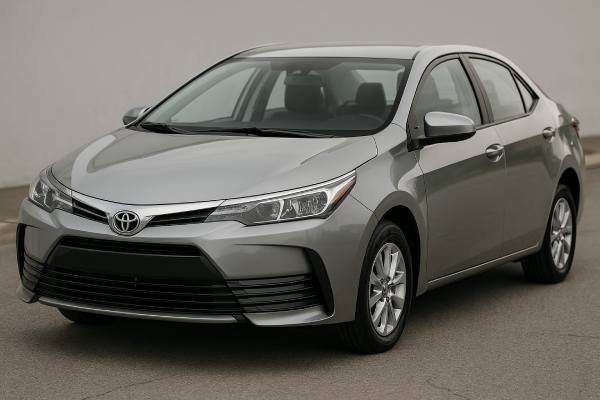
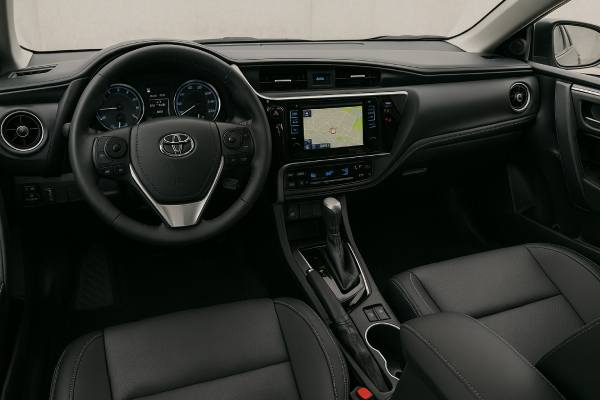
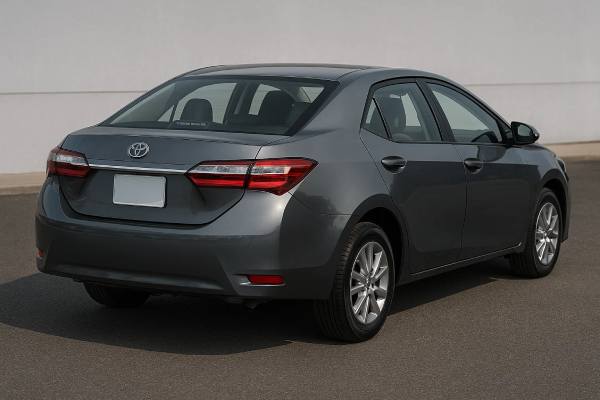
The Corolla ZRE172 facelift (2016–2019) pairs Toyota’s long-running E170 platform with the 2ZR-FAE “Valvematic” 1.8-litre four—an efficiency-focused tune that delivers 140 hp, low running costs, and a calm daily drive. For this facelift, Toyota standardized advanced driver aids, refined NVH, and kept the pragmatic cabin that buyers expect. The headline LE Eco trim uses optimized gearing, aero tweaks, and low-rolling-resistance tyres to stretch fuel economy on real highways. Meanwhile SE/XSE grades bring firmer damping and rear disc brakes for more consistent stops. The recipe is familiar—front-drive packaging, roomy rear seat, and a big boot—but the 2017 refresh made safety and infotainment feel current for the segment. If your priority is reliability, predictable handling, and simple servicing, the 2ZR-FAE Corolla is a strong value. Below you’ll find the hard numbers, common issues, maintenance planning, and how it stacks up against rivals so you can buy with clarity.
Quick Specs and Notes
- Valvematic 1.8 delivers 140 hp with relaxed, low-rpm cruising; CVTi-S tuned for smoothness.
- Spacious rear seat and 13.0 ft³ (368 L) boot; easy child-seat fit with wide door openings.
- Toyota Safety Sense (AEB, lane assist, radar cruise) standard from the 2017 model year.
- Watch for CVT shudder from old fluid or calibration; proactive servicing helps.
- Oil: 0W-20 synthetic every 10,000 mi / 12 months (16,000 km / 12 months) under normal use.
Explore the sections
- Corolla ZRE172 Facelift overview
- Corolla 2ZR-FAE specifications
- Trims, safety, and ADAS
- Reliability and service actions
- Maintenance and buyer’s guide
- Driving and performance
- How Corolla compares to rivals
Corolla ZRE172 Facelift overview
The 2016–2019 facelift keeps the E170 Corolla’s fundamentals while improving active safety and perceived quality. The 2ZR-FAE engine—Toyota’s Valvematic variant of the 1.8—adds continuously variable intake valve lift for finer airflow control than conventional VVT-i. In practice, you get easy low-rpm torque for city work and stable fuel use at motorway speeds. The LE Eco trim centers the 2ZR-FAE: its aero undertrays, unique final-drive ratio, low-rolling-resistance tyres, and specific ECU mapping target class-leading economy without sacrificing drivability.
Chassis tuning remains comfort-first. A front MacPherson strut and rear torsion beam prioritize durability, low unsprung mass, and packaging space. Steering is electric-assist with a light, progressive build-up around center. SE/XSE grades layer in firmer springs/dampers and larger wheel/tire packages that sharpen initial turn-in. Brakes are sized for daily use; SE/XSE employ rear discs for better thermal consistency on descents.
The 2017 model year refresh brings a revised front fascia, updated headlamps, and crucially, a standard driver-assist bundle (pre-collision with AEB, lane-departure alert with steering assist, radar cruise at highway speeds, and automatic high beams). Cabin improvements include a clearer touchscreen, revised trim textures, and additional sound deadening in the floor and firewall. Practicality remains a selling point: wide-opening rear doors ease child-seat installs, and a square boot with low liftover height makes weekly errands painless.
Ownership costs stay modest. The 2ZR family uses a timing chain, long-life iridium plugs, and Toyota Super Long Life Coolant. Routine service is straightforward; access to filters, coils, and belts is good. The CVTi-S transmission is calibrated for smoothness; fluid longevity improves with gentle thermal cycles (long highway runs) and timely changes in mixed urban use. If you’re cross-shopping older compacts, the facelifted Corolla’s standard ADAS and long service intervals make it a safer, simpler buy.
Corolla 2ZR-FAE specifications
Engine and Performance (ICE)
| Item | Specification |
|---|---|
| Code | 2ZR-FAE (Valvematic) |
| Layout & valvetrain | Inline-4, DOHC, 16 valves, dual VVT-i with Valvematic lift control |
| Bore × stroke | 80.5 × 88.3 mm (3.17 × 3.48 in) |
| Displacement | 1.8 L (1,798 cc) |
| Induction | Naturally aspirated |
| Fuel system | Sequential multiport fuel injection (SFI) |
| Compression ratio | ~10.0:1 |
| Max power | 140 hp (104 kW) @ ~6,100 rpm |
| Max torque | 171 Nm (126 lb-ft) @ ~4,000 rpm |
| Timing drive | Chain |
| Emissions / efficiency std. | EPA-rated (North America) |
| Rated efficiency (LE Eco CVT)** | ~7.0–6.7 L/100 km (34–35 mpg US / 41–42 mpg UK), wheel/tire dependent |
| Real-world highway @ 120 km/h | ~6.7–7.4 L/100 km (35–32 mpg US / 42–38 mpg UK) |
| Aerodynamics | Cd approx. 0.29 (LE Eco), ~0.30–0.31 others |
Notes: Efficiency varies with wheels, tyres, and option content.
Transmission and Driveline
| Item | Specification |
|---|---|
| Transmission | CVTi-S continuously variable (K313); 6-speed manual available (select SE trims) |
| Drive type | Front-wheel drive |
| Final drive (typical) | ~4.76 (CVT tune varies by trim) |
| Differential | Open |
| Refuel to full | ~3–5 min (50 L / 13.2 US gal tank) |
Chassis and Dimensions
| Item | Specification |
|---|---|
| Front / rear suspension | MacPherson strut / torsion beam |
| Steering | Electric power assist; ~10.8–11.0 m (35.4–36.1 ft) turning circle |
| Brakes | Front ventilated disc ~275 mm (10.8 in); rear drum (L/LE/LE Eco) or disc (SE/XSE) |
| Wheels / tyres | 15–17 in factory packages |
| Ground clearance | ~130 mm (5.1 in) |
| Length × width × height | ~4,650 × 1,775 × 1,455 mm (~183.1 × 69.9 × 57.3 in) |
| Wheelbase | 2,700 mm (106.3 in) |
| Kerb (curb) weight | ~1,295–1,350 kg (2,855–2,976 lb), by trim/transmission |
| GVWR (typical) | ~1,760–1,800 kg (3,880–3,970 lb) |
| Fuel tank | 50 L (13.2 US gal / 11.0 UK gal) |
| Cargo volume (SAE) | 368 L (13.0 ft³) |
Performance and Capability
| Metric | Value |
|---|---|
| 0–100 km/h (0–62 mph) | ~9.8–10.5 s (setup-dependent) |
| Top speed | ~185 km/h (115 mph) |
| Braking 100–0 km/h | ~39–41 m (128–135 ft) on quality tyres |
| Towing capacity | Not rated for towing in North America |
| Roof load | ~50–75 kg (110–165 lb), check crossbar rating |
Fluids and Service Capacities
| System | Spec / Capacity |
|---|---|
| Engine oil | API SN/SN Plus or SP, 0W-20 full synthetic; ~4.2 L (4.4 US qt) with filter |
| Coolant | Toyota Super Long Life Coolant (pink), 50/50 premix; ~6.0–6.5 L (6.3–6.9 US qt) total |
| CVT fluid | Toyota CVT FE; service drain ~3.5–4.0 L (3.7–4.2 US qt), dry fill ~7.4–7.8 L (7.8–8.2 US qt) |
| Manual trans oil | API GL-4/GL-5 75W-90 (check label); ~2.0–2.2 L (2.1–2.3 US qt) |
| A/C refrigerant | R-134a; ~500 ± 50 g (17.6 ± 1.8 oz) |
| A/C compressor oil | ND-11; ~120 mL (4.1 fl oz) |
| Key torque values | Wheel nuts 103 Nm (76 lb-ft); oil drain 39 Nm (29 lb-ft); spark plug 18 Nm (13 lb-ft) |
Electrical
| Item | Specification |
|---|---|
| Alternator | ~100 A |
| 12 V battery | ~45–60 Ah (Group 35 typical), ~410–550 CCA |
| Spark plug | Long-life iridium; gap 0.7–0.8 mm (0.028–0.031 in) |
Safety and Driver Assistance
| Area | Highlights |
|---|---|
| Crash ratings | Strong crashworthiness; AEB capable; headlight ratings vary by trim/option |
| ADAS suite | Pre-collision with AEB (pedestrian day), radar cruise (DRCC), lane departure alert with steering assist, automatic high beams |
| Child seats | Lower anchors (LATCH) with accessible top tethers; wide rear door apertures |
| Braking / stability | ABS, EBD, brake assist, stability and traction control standard |
Trims, safety, and ADAS
Trims and key mechanicals (North America)
- L / LE: Comfort-tuned suspension, 15–16 in wheels, rear drum brakes, CVTi-S standard (6MT generally not offered on these).
- LE Eco: Valvematic 2ZR-FAE (140 hp) with aero undertrays and LRR tyres; specific final-drive/ECU mapping for economy; rear drums.
- SE / XSE: Firmer damping, 17 in wheels/tyres, rear disc brakes, available 6-speed manual (SE). Heavier steering effort and more immediate brake bite.
- XLE: Feature-rich comfort trim with CVT, rear drums, and full safety tech.
Quick identifiers
- LE Eco: “Eco” badging, unique wheel covers/alloys, low-profile boot spoiler on certain builds.
- SE/XSE: Mesh grille, sport seats with thicker bolsters, leather-wrapped wheel, rear disc calipers visible through spokes.
- Build tags: Under-hood emission label lists engine family (2ZR). Doorjamb sticker aligns model code (e.g., ZRE172) and axle/trans codes.
Year-to-year highlights
- 2017 refresh: Revised front fascia and lighting; standard Toyota Safety Sense (PCS with AEB, LDA with steering assist, DRCC, AHB); updated infotainment graphics.
- 2018–2019: Running changes to audio features and trims; LE Eco continues to emphasise highway economy; SE/XSE cosmetic packages vary by model year.
Safety ratings (brief)
Corolla sedans from this period perform well in crash tests, with strong occupant protection and available (then later standard) front crash prevention. Headlight ratings vary by trim and option—LED projectors with proper aim rate higher than halogen reflector sets. When equipped with the better headlight packages, the car attains top-tier safety awards in its class for these model years.
ADAS and calibration notes
- Radar / camera: After windscreen replacement or front-end collision repairs, camera/radar calibration is required; aim and bracket integrity matter for reliable AEB/DRCC.
- Alignment and tyres: Lane-keeping steering assist performance improves with a recent alignment and even tyre wear.
- Headlights: Beam performance depends on lamp type and alignment; verify aim after bulb or housing replacement.
Reliability and service actions
Overall picture: The ZRE172 with 2ZR-FAE is one of the segment’s low-drama choices. The chain-driven engine, conservative specific output, and simple port injection keep long-term risks down. The CVTi-S is smooth and durable when serviced sensibly and kept cool; the rest of the car (steering, suspension, HVAC) is straightforward to maintain.
Common → occasional → rare issues (with symptoms and remedies)
- CVT judder or flare (common-occasional):
Symptoms: Shudder on light throttle, flare on kickdown, or a “rubber-band” feel at urban speeds.
Likely causes: Aged CVT fluid, contamination, or adaptation drift.
Remedy: Drain/fill with Toyota CVT FE (repeat twice if fluid is very dark), reset adaptations with a scan tool, update calibration when available, road-test warm. - Water pump seep (occasional):
Symptoms: Pink crust around pump, faint sweet smell, slow coolant loss.
Cause: Mechanical seal wear.
Remedy: Replace pump and gasket; refill/bleed with SLLC; verify for consequential belt noise. - Noisy front pads or pulsation (occasional):
Symptoms: Squeal at low speed, steering wheel shimmy under braking.
Causes: Pad glazing, rotor DTV (thickness variation), or low-quality aftermarket parts.
Remedy: Quality pads/rotors, proper hub cleaning, torque wheel nuts to spec (103 Nm). - EVAP system faults (occasional):
Symptoms: Check engine light with small/large leak codes; difficulty topping off fuel; fuel odour.
Causes: Canister or purge valve degradation; loose cap.
Remedy: Smoke test; replace faulty component; clear codes and verify monitors. - Interior blower resistor / fan noise (occasional):
Symptoms: Limited fan speeds or chirp behind glovebox.
Cause: Resistor pack or debris in the blower.
Remedy: Replace resistor; clean blower; fit fresh cabin filter. - Oil consumption (rare on 2ZR-FAE):
Symptoms: Top-ups between services.
Cause: High hours of idling/short trips; ring coking (less common with 0W-20 and highway use).
Remedy: Shortened intervals; piston soak; PCV check; compression test if severe.
Corrosion/watch points
- Rear subframe mounts and exhaust flange fasteners in salt climates; clean and coat early.
- Boot weatherstrip and tail lamp seals—ensure drains are clear to avoid damp boot lining.
Recalls / campaigns (verify by VIN)
- Airbag, seat sensor, or ECU-related actions may apply to certain build ranges. Always run a VIN recall check and confirm completion with dealer records before purchase.
- Headlamp or wiring-related bulletins appear in some markets; post-repair aim/calibration matters for safety-system performance.
Pre-purchase checks
- Full service records (oil at 10k mi/12 mo or shorter under severe use; coolant age).
- CVT drain/fill history (aim for within the last 60–90k mi / 100–145k km).
- Brake condition and tyre age/brand (LRR tyres on LE Eco affect economy).
- ADAS function test: verify AEB warning, DRCC lock-on, lane assist steering torque, and headlight aim.
Maintenance and buyer’s guide
Practical maintenance schedule (distance/time, whichever comes first)
- Engine oil & filter: 10,000 mi / 12 months (16,000 km / 12 months) on 0W-20; 5,000 mi / 6 months (8,000 km / 6 months) for heavy city, short-trip, or hot-soak use.
- Tyre rotation / alignment check: Rotate every 5,000–7,500 mi (8,000–12,000 km); alignment check annually or after impacts.
- Engine air filter: Inspect 15,000 mi (24,000 km); replace 30,000–45,000 mi (48,000–72,000 km) depending on dust.
- Cabin filter: 12–18 months or 15,000–20,000 mi (24,000–32,000 km).
- Coolant (SLLC pink): First at 100,000 mi / 10 years (160,000 km / 10 years), then every 50,000 mi / 5 years (80,000 km / 5 years).
- Spark plugs (iridium): 120,000 mi / 12 years (192,000 km / 12 years).
- CVT fluid (Toyota CVT FE): Inspect by condition; proactive drain-and-fill every 60,000–90,000 mi (100,000–145,000 km) improves shift quality and bearing life.
- Manual transmission oil: 60,000–90,000 mi (100,000–145,000 km).
- Brake fluid: Flush every 3 years; inspect slide pins at each pad service.
- Serpentine/aux belt & hoses: Inspect every 30,000 mi (48,000 km); replace on cracks, noise, or age.
- 12 V battery: Test annually from year 3; typical 4–6 year life.
- Timing chain: No scheduled replacement; monitor for noise or correlation faults.
- Fuel filter: In-tank strainer; no routine replacement unless diagnostics indicate restriction.
Fluid specs recap
- Oil: API SN/SN Plus or SP; 0W-20; ~4.2 L (4.4 qt).
- Coolant: Toyota SLLC (pink), premixed 50/50.
- CVT: Toyota CVT FE only (do not substitute “multivehicle” fluids).
- Brake fluid: DOT 3 or DOT 4 (don’t mix blindly; flush completely when upgrading).
- Power steering: Electric—no hydraulic fluid.
Essential torques
- Wheel nuts 103 Nm (76 lb-ft); oil drain 39 Nm (29 lb-ft); spark plug 18 Nm (13 lb-ft). Always verify per VIN.
Buyer’s guide: what to inspect
- CVT behaviour: Warm road test; check for shudder, flare, or harsh coast-down. Smooth, linear acceleration is the target.
- Brakes and tyres: Even wear across the axle; mismatched tyres can confuse lane-tracking and ABS tuning.
- Suspension noises: Clunks over sharp bumps suggest worn front links/bushes; SE/XSE sport packages reveal wear earlier.
- ADAS readiness: No warning lights; confirm radar emblem and windshield camera are clean and properly mounted.
- Interior and boot: Check for water ingress at tail lamps; inspect spare-wheel well for moisture.
- Service proof: Oil, coolant age, plug mileage, and any CVT fluid history.
Durability outlook
With routine fluid care and gentle thermal cycles, the 2ZR-FAE/ CVTi-S combination commonly exceeds 200,000 mi (320,000 km) of service. The simple rear suspension, chain-driven engine, and conservative brake sizing keep lifetime costs predictable.
Driving and performance
Ride, handling, and NVH
This Corolla rides quietly for the class, filtering out coarse-chip surfaces and expansion joints without float. Straight-line stability is secure at motorway speeds with mild crosswind sensitivity. Turn-in is calm, and the chassis prefers clean, single-input driving over rapid transient maneuvers—consistent with the torsion-beam rear. SE/XSE trims add a firmer spring/damper pairing and 17-inch tyres; they reduce roll and improve mid-corner support at the expense of a touch more road texture. Cabin noise is contained: wind hush is modest; engine presence rises above 4,000 rpm under heavy throttle.
Powertrain character
The 2ZR-FAE’s Valvematic system gives flexible breathing, so throttle response is tidy around town. Peak output lands above 6,000 rpm, but daily driving happens in the midrange where torque is adequate. The CVTi-S calibration simulates stepped ratios when you dig in, which reduces the “moped” sensation, though the most efficient way to travel is to let the revs sit where the ECU wants. The 6-speed manual (SE) provides more engagement and makes the powerband feel livelier, especially for passing between 80–120 km/h (50–75 mph).
Real-world economy
Expect ~7.0–7.4 L/100 km (34–32 mpg US / 41–38 mpg UK) on a steady 120 km/h (75 mph) motorway in mild weather with the LE Eco rolling on LRR tyres. Urban runs swing wider with climate control and short-trip penalties; cold climates can add 0.5–1.0 L/100 km (1–2 mpg US) to both city and highway numbers. Tyre choice matters—touring all-seasons can cost ~2–3% versus the factory LRR set.
Key metrics
- 0–100 km/h: roughly 10 seconds with CVT; ~9.8 s with the 6MT SE.
- 80–120 km/h passing: adequate with a clear, stable pull if the CVT allows revs to rise above 4,500 rpm.
- 100–0 km/h braking: ~39–41 m (tyre-dependent) with consistent pedal on SE/XSE rear discs.
Load and grades
Fully loaded cabins slightly lengthen braking distances and ask more of the CVT’s cooling on long grades. Maintain clean heat exchangers and fresh CVT fluid before road-trips; keep speeds moderate to avoid sustained high-slip operation.
How Corolla compares to rivals
Honda Civic (2016–2019, 2.0 i-VTEC / 1.5T):
Civic rides a stiffer platform and offers punchier acceleration (especially the 1.5T) with sharper steering. However, long-term reliability questions around early turbo oil dilution (cold climates) and CVT heat can tilt value back to Corolla for risk-averse buyers. Corolla’s standard ADAS and simpler port-injected engine are ownership-friendly, though Civic’s cabin tech and seats win for many drivers.
Mazda3 (2017–2018):
Mazda3 handles with more nuance and has a classier cockpit. Ride can be firmer on 18-inch wheels, and tyre/drone noise shows up on rougher motorways. Maintenance costs are similar; corrosion care is more relevant in salt states. If you prize steering feel and design, Mazda3 excels; for quiet commuting and straightforward service, Corolla stays ahead.
Hyundai Elantra (2017–2019):
Elantra undercuts on price and warranty length, and the 2.0 MPI is comparably simple. Cabin materials vary by trim; road noise can be higher on coarse asphalt. ADAS availability improves through the cycle but isn’t as universally standard early on as Corolla’s suite became for 2017.
Ford Focus (2016–2018):
Chassis dynamics are strong, but the dual-clutch automatic (PowerShift) on many trims is a long-term risk. If you must have an automatic compact with minimal drama, the Corolla’s CVTi-S—properly serviced—is the safer bet.
Nissan Sentra (2016–2019):
Roomy and affordable; the turbo SR is lively. Earlier CVTs earned a mixed reputation. Corolla counters with steadier resale, widespread parts availability, and historically fewer transmission complaints.
References
- 2017 Toyota Corolla 4-door sedan 2017 (Safety Rating)
- 2019 Toyota Corolla LE Eco 2019 (Fuel Economy)
- Recalls | NHTSA 2025 (Recall Database)
Disclaimer
This guide is for informational purposes and is not a substitute for professional diagnosis or repair. Specifications, torque values, fluid types, intervals, and procedures vary by VIN, market, model year, and equipment. Always verify against your vehicle’s official owner’s manual and service information before performing maintenance or repairs.
If this article helped, please consider sharing it on Facebook or X/Twitter to support xcar’s work. Thank you!